New Tweets

[🇧🇩] Forming Election Commission/Conducting Elections

G Bangladesh Defense
[🇧🇩] Forming Election Commission/Conducting Elections
297
7K
More threads by Saif


In quest of peaceful electioneering

MIR MOSTAFIZUR RAHAMAN

Published :
Feb 03, 2026 00:28
Updated :
Feb 03, 2026 00:28

1770079942527.webp


For the first time in nearly two decades, the people of Bangladesh are being offered a genuine opportunity to exercise their right to vote under a non-partisan interim government. The election scheduled for 12 February is more than a routine democratic exercise. It is a moment freighted with history, expectation and fragile hope.

Since Sheikh Hasina returned to power after the January 2009 parliamentary election. Bangladesh witnessed three more national polls -- in 2014, 2018 and 2024. All held under her government were deeply controversial. Opposition boycotts, allegations of voter suppression, irregularities, and pre-determined outcomes hollowed out public faith in the electoral process. To many citizens, elections turned out to be performative rather than participatory, rituals without real choice.

That is why the current transition matters. An interim government led by Nobel laureate Professor Muhammad Yunus has been entrusted with overseeing a pathway back to democratic legitimacy. For millions of voters, this election represents a rare chance to reclaim a basic civic right: to vote freely, without fear, coercion or foregone conclusions. Yet that promise is already under strain.

Since the Election Commission announced the election schedule, more than 200 incidents of violence have been reported across the country. At least five people have been killed in clashes affecting around 50 constituencies. These are not isolated scuffles or unavoidable frictions of political competition. They are warning signs that the culture of electoral intimidation, long normalised in Bangladesh's politics, has not yet been dismantled.

If such violence continues, it will not only endanger lives but also undermine the very purpose of this election. Voting cannot be an act of courage. It must be an act of exercising the right to vote.

Electoral violence in Bangladesh is not new. It has become an ingrained feature of the political landscape, cutting across party lines and election cycles. Activists clash, polling agents are threatened, candidates are attacked, and ordinary voters are caught in the middle. Over time, violence has been treated as inevitable -- an unfortunate but accepted by-product of political mobilisation.

This obviousness is dangerous.

Violence distorts competition, silences marginal voices and skews outcomes long before ballots are cast. It discourages turnout, particularly among women, older voters and first-time participants. It replaces persuasion with intimidation and turns elections into contests of muscle rather than mandate.

In the present context, the stakes are even higher. This election is meant to signal a break from the past. If fear dominates the streets, the credibility of the process will collapse -- domestically and internationally -- regardless of what happens on polling day.

The interim government cannot afford ambiguity. Its legitimacy rests almost entirely on its ability to deliver a peaceful, free and fair election. That requires decisive, visible and impartial action.

Professor Yunus and his advisers must make it unambiguously clear that political violence will not be tolerated, regardless of who instigates it. Statements of concern are not enough. What matters is enforcement.

Law-enforcement agencies must be deployed proactively, not reactively. According to media reports, police have already identified 33 constituencies as particularly vulnerable. This intelligence must be acted upon immediately. Adequate numbers of trained personnel should be mobilised to these areas, with clear instructions to prevent violence before it escalates.

Equally important is accountability. Perpetrators must be identified, arrested and prosecuted swiftly. When violence goes unpunished, it sends a signal that intimidation works. When the law is applied consistently, it restores public confidence and deters repeat offences.

Public apprehension about law and order is one of the greatest threats to turnout. Voters must believe not only that their vote will count, but that they can reach polling stations safely and return home without fear.

The responsibility for a peaceful election does not rest with the government alone. Political parties -- particularly the two dominant parties and their allies -- must confront their own role in poisoning the electoral environment.

In recent weeks, leaders and activists have engaged in a familiar blame game, accusing each other of instigating violence while absolving their own supporters. In some cases, rhetoric has descended into abuse and dehumanisation. Such language does not merely inflame tensions; it legitimises aggression.

Parties that claim to represent the people must act in the public interest. That means instructing supporters to exercise restraint, disciplining those who incite violence, and competing through ideas rather than intimidation.

Leadership matters. When senior figures speak responsibly, it filters down. When they offer tacit approval -- or strategic silence -- violence flourishes.

This election cannot be treated as a zero-sum battle in which victory justifies any means. If democratic rules are broken to win power, the victory itself becomes meaningless.

Bangladesh has a long tradition of festive elections. Older voters remember polling days that felt like communal events -- colourful, noisy, hopeful. Families turned out together. Participation was an expression of pride.

That spirit has been eroded over time, replaced by anxiety and cynicism. Restoring it requires more than procedural correctness. It requires a sense of collective ownership over the process.

A peaceful election is not merely the absence of violence. It is the presence of trust.

Voters must trust that the state will protect them. Candidates must trust that competition will be fair. Journalists must trust that they can report without harassment. And losers must trust that defeat does not mean exclusion or retribution.

These conditions cannot be created overnight, but they can be protected -- or destroyed -- in a matter of weeks.

The world is watching Bangladesh closely. After years of concern over democratic backsliding, this election is seen as a test to determine whether the country can reset its political trajectory.

Foreign governments, investors, development partners and multilateral institutions will judge not only the outcome, but the process. Images of violence, intimidation and chaos will travel far faster than official assurances.

But this election should not be conducted to satisfy external observers. It should be conducted to honour the rights and aspirations of Bangladeshi citizens.

Democracy is not validated by international approval alone. It is validated when people believe that their participation matters.

Moments like this are rare. After 18 years, the opening for democratic renewal is narrow and fragile. It can still close.

If violence is allowed to continue unchecked, disillusionment will deepen. Voters will retreat once again into apathy or anger. The opportunity to rebuild trust will be squandered.

Stopping poll violence is not a secondary concern. It is the central task of this transition.

The interim government must act firmly and fairly. Law-enforcement agencies must be vigilant and accountable. Political parties must restrain their supporters and clean up their rhetoric. Civil society and the media must continue to document abuses and demand transparency.

Above all, the right to vote must be treated as sacred.

On 12 February, Bangladeshis should go to the polls with anticipation, not apprehension. With confidence, not courage. With hope, not fear.

Anything less would betray the promise of this moment -- and the people who have waited nearly two decades for it.​
 
Analyze

Analyze Post

Add your ideas here:
Highlight Cite Respond

What's in store for post-poll govt?
SYED FATTAHUL ALIM
Published :
Feb 03, 2026 00:22
Updated :
Feb 03, 2026 00:29

1770080083647.webp


Following a consultation with Bangladesh at the end of January 2026, the global multilateral lender IMF in a press release made a rather cautious forecast about the economy under the post-election government. The IMF was somewhat positive about GDP's growth prospect amidst the recent economic slowdown. However, it projected the GDP growth at 4.7 per cent in 2026 and 2027. At the same time, the international lender cautioned that the economy would continue to face, what it termed, mounting macro-financial challenges arising from weak tax revenue and financial sector vulnerabilities. This was only expected as the interim government was not prompt enough to start the promised fiscal and financial reforms earlier. Evidently, as a post-July 2024 upsurge government, it failed to show the boldness it should have in carrying out the reform in the financial sector.

For instance, little progress has been made in rescuing the banking sector weighed down by non-performing loans (NPLs). So, the onus will be on the next administration to frame policies to implement comprehensive structural reforms on the medium-term with an eye to maintaining fiscal sustainability and strengthening macro-financial stability. The thrust of the medium-term reform should be on strengthening governance, creation of jobs and promotion of economic diversification. Obviously, the post-election government will be faced with a clouded outlook for the economy. That is due to a confluence of factors including structural weakness, stubbornly high inflation and financial sector vulnerabilities. These are a legacy of the past government that will continue to dog the next elected one. Notably, the financial fragility is due to a banking sector that is suffering from low level of capital and, as noted before, high level of non-performing loans and weak governance. Curbing inflation, which as predicted by IMF would be between 8.5 and 8.9 per cent in 2026, will remain the biggest challenge before the next elected government.

In fact, there is no short-cut formula to combat inflation other than by reducing excessive demand through increasing supply. The central bank, as it has been doing so far, has been trying to resolve the inflation issue through tightening money supply by raising interest rates. The money supply in the market can also be reduced by selling government bonds. The government can also cut its spending and/or raise taxes as part of its contractionary fiscal policy. Improving supply-side efficiency is yet another option that the government will need to focus on to ease inflation. At the same time, use of subsidies (keeping government spending within certain limits, though) and controlling commodity prices are some of the tools to tame inflation. A slide in the value of taka needs also to be arrested to check commodity price hike. In this context, higher income taxes or VAT to reduce disposable income should target the highest earners including both individuals and businesses, rather than taxing the lower income segments of the economy.

Establishing fiscal discipline towards a long-term fiscal sustainability and stability in public finances also helps reduce inflation risks. Increasing productivity through investing in technology and infrastructure can enhance efficiency and reduce production costs. This is one way of cost control as part of supply-side policies. Reducing high-interest debts, investing in inflation-resistant assets such as gold, real-estate, etc., are also tools used against inflation. To be frank, instead of applying a single tool like raising interest rate, a slew of measures can be used to tame the kind of intractable inflation that Bangladesh has been experiencing since long. Among other issues, increasing tax-to-GDP ratio, the focus should be on direct taxation, automation and simplification of tax laws to ensure compliance. Also, creating jobs for the growing number of graduates that the industry in its present stage cannot absorb will be a top priority area for the post-election government.​
 
Analyze

Analyze Post

Add your ideas here:
Highlight Cite Respond

Police classify ‘three-quarters’ of Dhaka polling centres as ‘high-risk’

bdnews24.com
Published :
Feb 03, 2026 23:38
Updated :
Feb 03, 2026 23:38

1770165454392.webp


With the parliamentary elections less than 10 days away, the Dhaka Metropolitan Police (DMP) has classified nearly three-quarters of the capital’s polling centres as “important”, reflecting concerns over potential “risks”, according to the home advisor.

The DMP oversees 2,131 polling centres across the city, which are being divided into “important” and “general” categories, Commissioner Sheikh Md Sazzat Ali said.

A senior officer said, “After area-based verification, 1,616 centres have been marked ‘important’ while 515 are considered ‘general’.

“That means 75.83% of all centres fall under the ‘important’ category.”

He added that 37 centres would receive “specially important” status.

Following a Jan 19 law-and-order meeting at the Secretariat, Home Advisor Jahangir Alam Chowdhury said 42,761 polling stations will operate nationwide.

Of these, 25,332 are classified as either “more important” or “important,” with “important” implying high-risk in terms of excitement and influence.

DMP divisions have mapped centres by constituency:

Wari: 327 centres, 280 “important” (Dhaka-4, Dhaka-5, part of Dhaka-6)

Lalbagh: 217 centres, 155 “important” (part of Dhaka-6, Dhaka-7, Dhaka-10)

Motijheel: 280 centres, 228 “important” (part of Dhaka-8, Dhaka-9, Dhaka-11)

Ramna: 167 centres, 109 “important” (part of Dhaka-8, Dhaka-10, Dhaka-13)

Tejgaon: 286 centres, 199 “important” (Dhaka-10, Dhaka-11, Dhaka-12, Dhaka-13, part of Dhaka-15)

Mirpur: 440 centres, 331 “important” (Dhaka-14, part of Dhaka-15, Dhaka-16, Dhaka-17)

Gulshan: 249 centres, 178 “important” (Dhaka-11, Dhaka-17, Dhaka-18)

Uttara: 165 centres, 136 “important” (Dhaka-18)

Ramna Deputy Commissioner Masud Alam said polling centres were classified as “important” based on multiple factors, including location, existing security arrangements, voter demographics, and candidate profiles.

“Security at these centres will be tighter than at other stations,” he added.

Voters and officials can expect heightened monitoring and precautions when polls open on Feb 12.​
 
Analyze

Analyze Post

Add your ideas here:
Highlight Cite Respond
Analyze

Analyze Post

Add your ideas here:
Highlight Cite Respond

Postal ballots of 380,000 expatriates reach Bangladesh

bdnews24.com
Published :
Feb 05, 2026 11:16
Updated :
Feb 05, 2026 11:16

1770277411691.webp


Nearly 380,000 postal ballots cast by expatriate Bangladeshis have reached the country so far.

Salim Ahmad Khan, team leader of the Election Commission’s Out of Country Voting (OCV) System Development and Implementation (SDI) Project, said that 379,924 postal ballots had arrived as of 9:30am on Thursday.

According to the postal ballot app, 480,416 expatriates have already voted. Of these, 444,952 have cast their votes and submitted their ballots to the post offices or mailboxes in their respective countries.

The Election Commission (EC) has sent out postal ballots to a total of 766,862 expatriates ahead of the 13th parliamentary election and referendum on Feb 12. As of Friday afternoon, 526,008 expatriates had received their ballots.

The EC had asked them to cast their votes “as soon as possible” and submit them to the nearest post office.

The ballots will only be counted if they reach the returning officer of the relevant constituency by 4:30pm Bangladesh time on Feb 12.

This time, over 1.53 million voters at home and abroad have registered to vote by postal ballot. More than half of them are expatriates.

In addition to expatriate Bangladeshis, voters engaged in electoral duties, government employees working outside their constituency, and voters in legal custody (prison) have the opportunity to vote by postal ballot.

The EC has sent postal ballots to 662,191 voters in the country as of Thursday morning.

Of these, 260,447 voters have collected their ballots, 211,122 have finished voting, and 168,519 have sent their ballots to the nearest post office or mailbox after voting.​
 
Analyze

Analyze Post

Add your ideas here:
Highlight Cite Respond

Parliamentary election: No to women candidates, yes to women to attract votes

Monoj Dey
Published: 04 Feb 2026, 08: 25

1770279436338.webp


Social media platform X (formerly Twitter) has now become the primary topic of debate, controversy, and argument among Bangladeshis. The incident began on Saturday afternoon when a verified X handle belonging to Jamaat-e-Islami's Ameer, Shafiqur Rahman, posted a message in English. One part of the message, when translated to Bengali, roughly states, "We believe that when women are taken out of the house in the name of modernity, they face exploitation, moral degradation, and insecurity. This is nothing but another form of prostitution."

Jamaat claims that their leader's X account was hacked in a highly conspiratorial manner. On the other hand, the BNP has questioned the credibility of the account's recovery claim made shortly after it was allegedly hacked.

In Bangladesh's current political climate, crafting narratives using social media algorithms has become more important than fact-checking. After three consecutive one-sided, controversial, night-time elections, an election atmosphere has emerged in the country. However, ethnic and religious minority voters remain concerned, fearful, and anxious about the election. About 9.5 per cent of voters are stuck in a dilemma: it's problematic whether they vote or not.


A discussion by the Centre for Governance Studies (CGS) recently revealed that minority voters could be a factor in around 80 constituency elections. Yet, out of 2,017 candidates from parties and independents alike, only 80 candidates belong to minority communities, with 12 candidates running as independents. Although 51 political parties are participating in this election, only 22 have fielded candidates from minority communities. The Communist Party of Bangladesh (CPB) fielded 17 candidates, BNP 6, and Jamaat-e-Islami 1.

Religious and ethnic communities may be counted as minorities by population, but women constitute the majority in the country. Women outnumber men by 1.6 million. However, the latest voter list shows that there are 2 million fewer female voters compared to male voters. In this election, only 78 out of a total of all party and independent candidates are women. Among them, 61 are from political parties and 17 are independents. Jamaat, along with 30 parties, did not field any female candidates. BNP has nominated 10 women. Other leftist parties, including CPB and BASAD, fielded a few female candidates.

Although two women have led Bangladesh as Prime Ministers over the past few decades, and have led the two biggest parties, women's participation in politics remains marginal. In no election in Bangladesh has the number of female candidates exceeded 5 per cent. Most women elected to positions have received nominations through their fathers, husbands, or children, with a few exceptions.

Allegations persist that decisions regarding women have been made without women in consensus commissions. After much negotiation, 26 political parties and alliances have agreed on nominating female candidates in at least 5 per cent of the seats. These parties came to an agreement in July. So, why would they break their promises now? What guarantees are there that winning a yes vote would mark the beginning of democracy-driven politics in Bangladesh?

In this election, political parties have nominated female candidates in only 3.4 per cent of the seats. Some of these candidates are nominated not as independent figures but due to family connections. Jamaat-e-Islami has not fielded any female candidates. In a recent interview with Al Jazeera, Jamaat Ameer Shafiqur Rahman stated that no woman can hold a leadership position in their party. However, he noted that the party is preparing to nominate female candidates.

After much drama and negotiation, the NCP promised a moderate approach in politics by allying with Islamist parties. Before forming an alliance, NCP had a list of 125 candidates, including 14 women. Several female politicians resigned from the party after the alliance with Jamaat was formed. This election, they have two female candidates.

Thousands of female activists from Jamaat-e-Islami have been canvassing over the past few months, reaching out to female voters. While there are allegations of using religion as a tactic to attract votes and even collecting voter ID cards from citizens, the party has also faced attacks while campaigning. One focal point of Jamaat's publicity has been the obstacles faced by their female activists during the campaign.

In some regions, candidates and leaders do not hesitate to make derogatory remarks and exhibit disrespectful behaviour towards women. In a television programme by a private channel, a candidate from the Barisal-5 constituency refused to sit on the same stage with a female BASAD candidate. In Barguna-2, while campaigning for a Jamaat candidate, a party leader said, "We have seen how, after the DUCSU elections, the DUCSU, which was a hub for drugs and prostitution, was transformed by the Islamic Chhatra Shibir." This sparked outrage, leading to his removal from all party positions.

Online hatred and vitriolic campaigns against female candidates and women have surged terrifyingly in the digital realm, with anti-women ''verbal wars'' becoming a popular political weapon for some. Narendra Modi in India and Donald Trump in the USA are prime examples of how organised, planned ''hate campaigns'' against a particular community can be a major tool for attracting voters.

Political leaders are claiming to want to establish rights and honour for women. The question is, if they are sincere about women's dignity and respect, why do they maintain ''bot armies'' on social media?

After the mass uprising in 2024, while pledges for an inclusive and pluralistic society were made across the board, it was women who were increasingly marginalised over the last 17 months. The misogynistic environment on the campaign trail is a continuation of the past 17 months. During this period, women's scope in public spaces has dwindled, with targeted ''hate campaigns'' against them on social media.

Women have been attacked in various ways outside the home or in public spaces. Unfortunately, very few political parties have protested against mob violence online and offline.

When the election is drawing near, those saying ''no'' to female candidates are employing ''yes'' strategies to attract voters. That is nothing but political hypocrisy.​

*Monoj Dey, editorial assistant at Prothom Alo
 
Analyze

Analyze Post

Add your ideas here:
Highlight Cite Respond

Army raises alarm over social media misinformation as ‘key threat’ before polls

bdnews24.com
Published :
Feb 05, 2026 19:33
Updated :
Feb 05, 2026 19:33

1770338276930.webp


The Bangladesh Army considers the spread of false and misleading information on social media the “biggest threat” to the national election, a senior officer has said.

On Thursday, he called for cooperation from all quarters, warning against the misuse of artificial intelligence (AI).

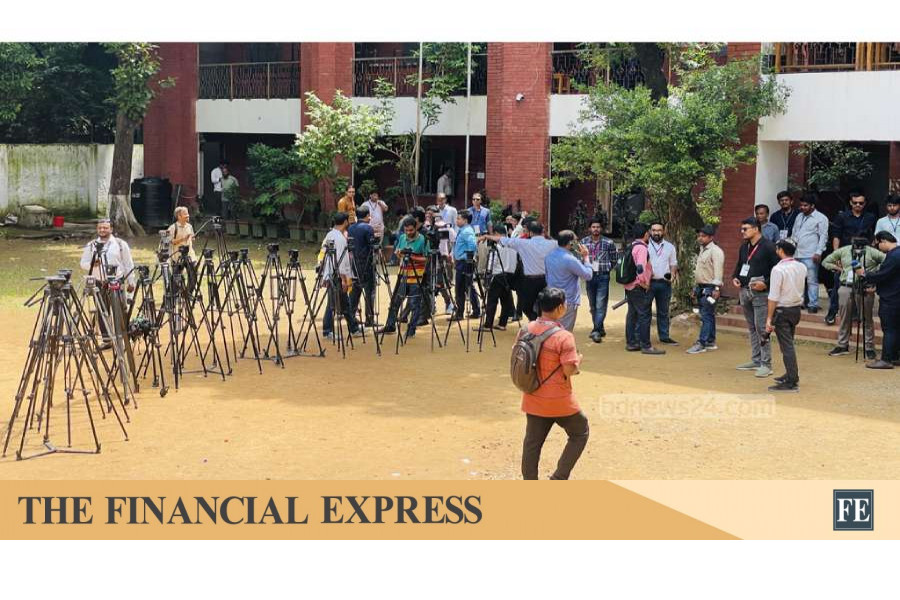
The remarks were made by Brig Gen Dewan Mohammad Monzur Hossain, director of the Military Operations Directorate at Army Headquarters, at a press conference at the Roller Skating Complex in Gulistan.

He said such disinformation is aimed at “portraying candidates or political parties negatively”, discouraging voters from going to polling centres, questioning the neutrality of individuals or institutions involved in the election, or exaggerating minor incidents to spread fear among the public.

“In preventing this propaganda, we seek your assistance. If objective, factual and timely news is published, it will be easier to counter this falsehood and misinformation,” he said.

Brig Gen Dewan said the Army has completed its preparations to ensure that the parliamentary election is free, fair and peaceful.

For the first time, he said, the Army will carry out its duties up to the polling centre premises so that voters can go to cast their ballots without fear.

Asked why more troops are being deployed than in previous elections, he said: “We have repeatedly said that we are deploying 100,000 Army personnel for this election.

“In previous elections, we deployed a maximum of 40,000 to 42,000 troops. Why this huge difference, why have we gone to the field in such large numbers—the difference this time is that the armed forces have been allowed to go up to the polling centre premises, which was not the case in previous elections.

“At that time, we were positioned at distant locations as a striking force.”

He said the chief of Army Staff deployed the minimum number of troops needed to ensure voters can safely reach polling centres and vote, while assigning the rest to ensure a credible election.

Due to insufficient transport, vehicles were sought from the civil administration, he added.

Referring to a Transparency International Bangladesh (TIB) report, he was asked why violence and killings occurred despite the Army’s presence.

He replied: “Up to Jan 20, 35,000 Army personnel were deployed. These incidents occurred when 35,000 were present. Would the situation have improved or worsened if we were not there?

“We need to understand these issues… We are a densely populated country. Even after deploying 100,000 troops, it is truly inadequate… Still, there has been no lack of effort.”

He said incidents declined after 100,000 troops were deployed after Jan 20 and claimed the Army’s presence has boosted public confidence.

He said the Army has set up 544 temporary camps across 62 districts, 411 Upazilas and metropolitan areas.

“After the deployment of 100,000 troops in the past 14 days, more than 150 weapons have been recovered… A total of 22,320 identified criminals have been arrested and handed over to police,” he said.

He added that troop deployment was based on threat assessments.​
 
Analyze

Analyze Post

Add your ideas here:
Highlight Cite Respond

Election in Bangladesh, so why is India, US and Pakistan being discussed?

Monoj Dey
Editorial Assistant at Prothom Alo
Published: 05 Feb 2026, 17: 35

1770340172786.webp


At an election rally, Tarique Rahman said, “It's neither about Delhi, nor Pindi, nor any other country, Bangladesh comes first.”Prothom Alo

In Bangladeshi politics, alongside conflict and violence, there is also a long history of lobbying foreign diplomats and knocking on the doors of foreign embassies. A confrontational and self-destructive political culture has, at various times, opened the door to foreign intervention in our internal politics.

As elections approach, such activity intensifies more than at any other time. From the mass uprising of the 1990s to the student–people’s uprising of 2024, within the fragile democracy and the increasingly authoritarian 34-year two-party system in between, we have repeatedly seen the same patterns recur.

Names such as Óscar Fernández-Taranco (former UN Assistant Secretary-General for Political Affairs) and Sujata Singh (former Foreign Secretary of India) have cropped up in discussions. Domestic political problems have been taken to the United Nations, the Commonwealth, or the US embassy. Such realities have created a public perception that attaining power requires the backing of global or regional powers. It is in this context that endless speculation and debate arise over which party is aligned with which “foreign power.” This card is constantly played in election campaigns to undermine opponents.

The context of this election, however, is somewhat different. Awami League, ousted from power in the 2024 mass uprising, is unable to take part in the election. The contest is set to be between the BNP and an 11-party alliance led by Jamaat-e-Islami, its former coalition partner. In this election, there is no visible surge in direct appeals to, or overt intervention by, foreign diplomats and embassies. Yet the “long shadow of foreigners” looms large over the electoral arena. It is being signalled through video content by social media influencers and statements by political leaders.

Although the election is taking place on Bangladeshi soil, Delhi and Washington are powerfully present in the campaign arena. In addition, alongside Islamabad, Ankara has newly entered the discussions.
This election has essentially become a battle over narratives. Party manifestos no longer appear to be a priority for political parties. Instead, candidates are making direct populist promises as they move from constituency to constituency. But the main contest is about capturing voters’ minds through narrative-building. Social media influencers, synchronized messaging by party leaders, AI-generated deepfake videos and images, and bot armies -- these four have become the common weapons in the arsenal of narrative construction.

Just before the formal election campaign began on 22 January, a report was published in The Washington Post, “The US seems to be friends with Jamaat.” The report said US diplomats in Dhaka believe that Bangladesh Jamaat-e-Islami could achieve its “best-ever results” in terms of votes in the 13th parliamentary election. Based on this assessment surrounding the election, the United States is seeking to move toward “friendship” by strengthening relations with the Islamist party. Citing information from a record of US diplomats, the newspaper reported on increased contact and efforts by US diplomats to improve relations with the party.

Following the Washington Post report, poet and thinker Farhad Mazhar, responding to a question from journalists at an event in Dhaka, said he viewed this (US relations with Jamaat) as a dangerous warning sign. He said, “I believe that every political party in our country is connected with the United States in one way or another, some directly, some indirectly. First of all, I think that after the 5 August mass uprising, the constitutional counter-revolution has been internationally framed as a regime change in favour of the United States.”

Referring to Farhad Mazhar’s remarks, BNP Secretary General and parliamentary candidate for the Thakurgaon-1 constituency, Mirza Fakhrul Islam Alamgir, said at an election rally on 23 January, “A news report was published in the papers today. Farhad Mazhar, a distinguished philosopher, has said that there has been a secret understanding between Jamaat and America. This understanding is not at all good for Bangladesh. It will harm the country.”

Following the Washington Post report, the issue of the United States’ relations with Jamaat has been discussed in political circles and among the public, but the party has not issued any official statement, response or explanation. Ahsanul Mahbub, head of Jamaat’s publicity department, told the online news portal bdnews, “These are just observations by a newspaper and one of their journalists. The country’s situation cannot be fully reflected in a single report.” However, one of the party’s candidates, at an election rally, stated that “America also wants a Jamaat-led government.”

According to Prothom Alo, Sultan Ahmed, Jamaat-e-Islami’s candidate for Barguna-2 (Bamna–Patharghata–Betagi), said, “America does not want an Islamic party to lead the government in any country. But this time, even the US is relying on Jamaat-e-Islami to advance a corruption-free, inequality-free society in Bangladesh.”

After the election campaign began, on 25 January, Jamaat’s ameer held a courtesy meeting with the British High Commissioner Sarah Cook, and on 29 January with US Ambassador Brent Christensen and European union (EU) Ambassador Michael Miller. Regarding the meeting with the US ambassador, Jamaat’s verified Facebook page posted that the meeting was conducted in a very cordial and friendly atmosphere. The discussion covered the existing political and economic situation in Bangladesh, industry and trade, the upcoming 13th parliamentary election, state reforms, the Rohingya issue, and other topics.

On 31 January, Islamic Movement of Bangladesh ameer Syed Muhammad Rezaul Karim, in an election rally in Narsingdi, criticised Jamaat-e-Islami over seat-sharing disputes, saying, “They say one thing publicly but do another. In front of us, they say one thing, but in secret they hold meetings at the US embassy. They say one thing publicly and secretly meet with India. Meetings may happen, but why in secret? There is something hidden in that secrecy. The people of this country understand it.”

India has given unconditional support to Awami League. After the 2024 uprising, a portion of Awami League leaders and activists are based in India, participating in press conferences, online meetings, and other political activities. Naturally, India has become the most discussed topic in election campaigning and narrative-building. Long before the campaign began, some NCP members and social media influencers started creating narratives portraying the BNP as a “pro-India party.” There were even attempts to claim that the BNP chairman returned to the country after reaching an understanding with India.

On the first day of the election campaign, 22 January, Jamaat-e-Islami’s naib-e-ameer Syed Abdullah Muhammad Taher said that reports had emerged claiming the leader of a rival party signed a three-condition agreement with India. The next day, hinting at the BNP, he said that a party wants to come to power through a secret understanding with India, compromising Bangladesh to India for ruling the country.

Most recently, on 2 February, LDP chairman Colonel (Retd.) Oli Ahmed, a member of the Jamaat alliance, claimed to be the first rebel against Pakistan and said that the BNP is acting as a broker for India. While the BNP relies on India in the election field to corner opponents, Jamaat’s manifesto emphasizes establishing peaceful, friendly, and cooperative relations with India, Bhutan, Nepal, Myanmar, and neighboring and nearby countries on the basis of mutual respect and fairness.

Bangladesh is at another political crossroads. On 12 February, the country’s election is set to take place at a moment when the death knell of the world order that began after World War II has already sounded.

On social media, attempts are being made to create the narrative that the BNP is “pro-India” by spreading deepfake videos and AI-generated fake images. Last week, four images were circulated claiming that two BNP leaders met with Indian intelligence officials. An investigation by Rumor Scanner revealed that the circulated images depicting the BNP leaders’ meeting were fake. The images had been created using artificial intelligence (AI).

Even though narrative-building strategies were used in the election campaign to portray the BNP as a “pro-India party,” the BNP has been much more restrained on this issue. On 23 January, in an official statement, the BNP called Jamaat-e-Islami naib-e-ameer Syed Abdullah Muhammad Taher’s claims about an agreement with India political propaganda. The party stated that there is no evidence to support the allegation of any agreement between the BNP and India, calling it a baseless and deliberately misleading attempt.

BNP chairman Tarique Rahman has not yet responded on this issue in his election campaign. In his first election rally, which started in Sylhet, he said, “It's neither about Delhi, nor Pindi, nor any other country. Bangladesh comes first. We believe that the people of this country are the source of all our political power.”

BNP’s election campaign is also highlighting Jamaat’s historical collaboration with the Pakistani army in 1971. On 2 February, at an election rally in Thakurgaon, BNP Secretary General Mirza Fakhrul Islam Alamgir said, “Jamaat-e-Islami obstructed the 1971 war. They did not cooperate with us in the Liberation War; instead, they aided the Pakistani army. Can we trust them to keep this country safe?”

Bangladesh is at another political crossroads. On 12 February, the country’s election is set to take place at a moment when the death knell of the world order that began after World War II has already sounded. Under Donald Trump’s leadership, the United States has clearly shown that there are no permanent allies. As a result, a unipolar world is now an undeniable reality replaced by a multipolar one. Our small territory is home to 180 million people.

The massive unemployment, widespread poverty, and the crisis of insufficient job creation provide enough “gunpowder” at any time to trigger a political explosion. Narrative-building and populist politics cannot offer real solutions to the real problems of people’s everyday lives.

* Manoj De is Assistant Editor, Prothom Alo​
 

Analyze Post

Add your ideas here:
Highlight Cite Respond

Latest Posts

Back
PKDefense - Recommended Toggle