[🇮🇳] India---News & Views

[🇮🇳] India---News & Views
101
5K
More threads by Saif

G   Indian Defense

India summons UK envoy after Sikh 'separatist' breaches Jaishankar’s security, tears national flag

1741305516111.webp

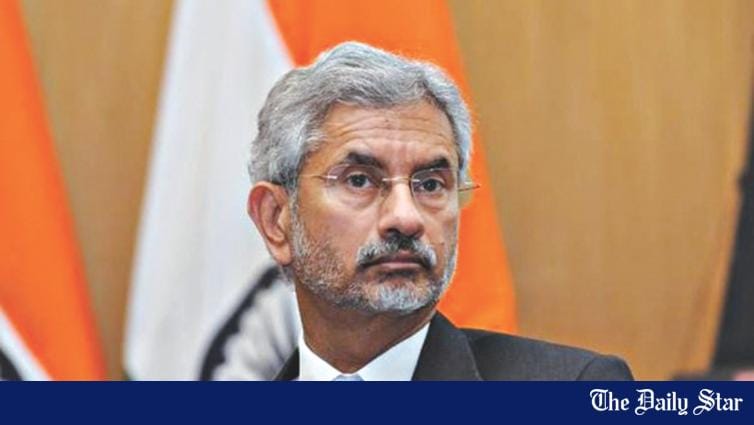
File photo of S Jaishankar

India today summoned the British charge d'affaires in New Delhi and lodged a strong protest against a breach in security for External Affairs Minister S Jaishankar in London as an alleged Sikh separatist protester tried to break through a police cordon and tried to stop his motorcade.

The UK charge d'affaires was summoned to the Ministry of External Affairs and was served a demarche, PTI reported quoting people familiar with the matter.

India condemned the incident and said it expects the host government to fully live up to their diplomatic obligations in such a case. It also deplored the "misuse of democratic freedoms" by the "small group of separatist" elements.

Video footage showed that the protester stood in front of the minister's car and tore the Indian flag before he was whisked away.

The videos posted on social media showed a handful of protesters waving flags of a Sikh separatist movement called "Khalistan" and shouting slogans outside think-tank Chatham House in London on Wednesday where Jaishankar was speaking.

Jaishankar is on a six-day trip to the UK and Ireland.

"We deplore the misuse of democratic freedoms by such elements. We expect the host government in such cases to fully live up to their diplomatic obligations," Randhir Jaiswal, spokesperson for the Indian MEA, said in a statement.​
 

Indian fugitive accused in nearly $2b bank fraud arrested in Belgium
FE ONLINE DESK
Published :
Apr 14, 2025 11:22
Updated :
Apr 14, 2025 11:22

1744672881960.webp


Indian fugitive Mehul Choksi, the jeweller accused of being involved in an alleged fraud of nearly $2 billion against Punjab National Bank in 2018, has been arrested in Belgium, a source with India's Enforcement Directorate said.

The Indian government had sent a request for Choksi's extradition prior to his arrest, but he is likely to challenge it on medical grounds, the source added.

Punjab National Bank, India's second largest state-run lender by assets, had announced in 2018 that it had discovered alleged fraud worth $1.8 billion at a single branch in Mumbai, reports Reuters.

The bank had filed a criminal complaint with India's federal investigative agency against several entities including billionaire jeweller Nirav Modi and Choksi, his uncle and the managing director of Gitanjali Gems, saying they had defrauded PNB.

Last week, a Pakistani-born Canadian businessman accused of helping orchestrate the 2008 attacks in Mumbai landed in New Delhi after the US extradited him in the first such transfer in a terrorism case.​
 

Rahul Gandhi, Priyanka Gandhi arrested

FE ONLINE DESK
Published :
Aug 11, 2025 13:57
Updated :
Aug 11, 2025 13:57

1754961640669.webp


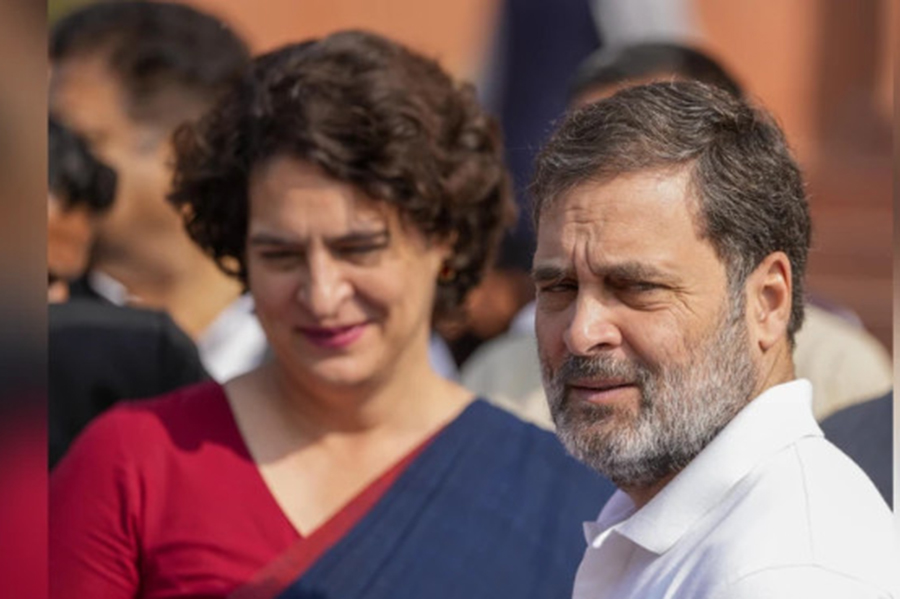
Delhi Police detained senior opposition MPs, including the Congress's Rahul Gandhi and Priyanka Gandhi Vadra, and Shiv Sena (UBT) leader Sanjay Raut, on Monday morning.

They were arrested as their protests over the Election Commission's 'collusion' with the ruling BJP spilled over into the streets of central Delhi, according to NDTV.

As Mr Gandhi and his colleagues were bussed away, he told reporters, climbing over each to get a quote, "This fight is not political... it is to save the Constitution. The fight is for 'one person, one vote'."

"The reality is they cannot talk... the truth is in front of the country," he declared.

Joint Commissioner of Police Deepak Purohit confirmed the detention but declined to give a number, telling reporters, "Detained INDIA bloc leaders have been taken to a nearby police station."

Mr Purohit said the opposition did not have police permission for a protest of this scale, and that only a group of 30 MPs had been allowed to march to the Election Commission and submit a complaint.

"The Election Commission said 30 MPs could visit them... but over 200 came marching. We stopped them to prevent any breakdown of law and order. They were then detained. Some MPs tried jumping barricades. They were also detained," Deputy Commissioner of Police Devesh Kumar Mahla said.

Visuals from the protest site outside the Parliament building showed a small army of politicians and party workers, many waving placards, shouting slogans, and pushing back against police barricades.

Another visual showed Samajwadi Party chief Akhilesh Yadav climbing over two police barricades.​
 
Neighbors growing wary of a militant Hindutva India

India’s recent political trajectory has been increasingly shaped by the rise of Hindutva, an ideology that seeks to define Indian national identity primarily through Hindu cultural and religious dominance. Championed most prominently by the Bharatiya Janata Party (BJP) and its affiliated organizations, Hindutva politics has moved from the fringes of Indian political life to the center of state power. While supporters frame it as a project of cultural revival and national strength, its practical consequences have proven deeply divisive—both within India and across South Asia.

At home, Hindutva has challenged India’s long-standing commitment to pluralism and secularism. Policies and rhetoric that marginalize Muslims, Christians, and other minorities—such as citizenship laws perceived as discriminatory, religiously charged political campaigns, and tolerance of vigilante violence—have raised serious concerns about democratic backsliding. These internal tensions do not remain confined within India’s borders. Instead, they spill outward, shaping how neighboring countries perceive India’s intentions and values.

Relations with Pakistan are perhaps the most visibly affected. Hindutva’s hardline stance on Kashmir, coupled with openly antagonistic rhetoric toward Muslims, reinforces Pakistan’s narrative that India is hostile not merely to the Pakistani state but to Islam itself. This deepens mistrust, escalates militarization, and makes diplomatic engagement politically risky on both sides. Even when opportunities for dialogue arise, ideological rigidity often prevents meaningful de-escalation.

Bangladesh, traditionally one of India’s closest regional partners, has also expressed unease. Communal violence and anti-Muslim rhetoric in India resonate strongly in Bangladesh, where the majority population is Muslim and historical memories of partition remain vivid. Statements implying that Bangladeshi migrants are “infiltrators” or demographic threats have strained goodwill and complicated cooperation on trade, security, and migration management.

Smaller neighbors such as Nepal and Sri Lanka have similarly grown wary. In Nepal, perceptions of Indian cultural and political interference—sometimes framed through a Hindu nationalist lens—have fueled nationalist backlash. Sri Lanka, while not directly targeted by Hindutva discourse, watches India’s internal religious polarization with concern, particularly given its own fragile ethnic and religious balance.

Ultimately, Hindutva politics risks undermining India’s soft power in South Asia. For decades, India’s influence rested not only on economic and military weight but also on its image as a diverse, democratic, and inclusive society. As that image erodes, neighboring countries are more likely to hedge their bets, seek alternative partnerships, and resist Indian leadership. In prioritizing a narrow vision of identity, India may be sacrificing the regional trust and moral authority that once anchored its role as South Asia’s natural leader.
 

🔥 India’s Neighbourhood Diplomacy: A Catalogue of Strategic Failures​


1. India touted a Neighbourhood First policy — a slogan, not a strategy. Instead of building trust, New Delhi’s approach has often been heavy-handed, ideological, and security-dominant, producing resentment rather than cooperation. Neighbours aren’t flocking to India; they’re hedging with China, Pakistan, and other powers to escape India’s shadow. The Diplomat+1​


2. Bangladesh’s relationship with India is seriously strained — to the point where Bangladesh now refuses to play some ICC matches in India due to security concerns and rising tensions. Reuters
Delhi also scrapped transit facilities Bangladesh relied on for exports, disrupting trade and fueling distrust. Reuters
This is not “friendly competition” — it’s a loss of influence in a country India once dominated diplomatically.​


3. Decades of conflict with Pakistan haven’t been resolved — and recent flare-ups have pushed the two nations closer to open confrontation again, with suspended treaties and closed borders instead of dialogue. AP News​


4. Nepal’s politics have flipped unpredictably, with anti-India sentiment and protests erupting, forcing New Delhi to tighten border security and divert resources to crisis management. Foreign Policy
Sri Lanka, once a partial ally, has slid into debt and political instability, opening space for competitors like China to move in. PMF IAS​


5. SAARC — once a platform India could steer — has been effectively dead for over a decade, frozen by India–Pakistan disputes and mistrust. Rokan's Journal
That’s a huge diplomatic embarrassment considering India’s economic clout in the region.​


6. Across Bangladesh, Nepal, Sri Lanka, Maldives, and Pakistan, China’s Belt and Road influence is expanding while India’s promises of trade and connectivity go unfulfilled or stalled. Analysts argue India is losing its diplomatic initiative region-wide as neighbours pivot toward Beijing to balance against Delhi’s perceived dominance. The Diplomat+1​


7. India’s focus on security — drone patrols, military exercises, ideological rhetoric — breeds suspicion among neighbours instead of trust, undercutting even the economic leverage India claims it has. The Diplomat​


💥 Summary: How Badly Has India Failed, Really?​


Let’s not sugar-coat it:
  • India’s “Neighbourhood First” policy has largely failed. Indian National Congress
  • Several neighbours are actively distancing themselves. The Diplomat
  • Regional cooperation has collapsed into paralysed multilateralism. Rokan's Journal
  • China is winning influence on almost every front India claims to lead. Reddit
This isn’t a few diplomatic missteps — it’s a strategic loss of ground in India’s own backyard. Instead of shaping South Asia’s future, New Delhi is now fighting just to maintain its legacy role, while neighbours assert independence or turn to rivals.
 
India’s miscalculations and regional reset

1768526462546.webp


BANGLADESH stands at a defining crossroads. With the close of Sheikh Hasina’s long and dominant political chapter, the country is entering an uncertain yet profoundly consequential phase. This transition is not merely a domestic political shift; it is embedded in the wider currents of South Asian geopolitics. From New Delhi to Washington, capitals are recalibrating their lenses, and India’s growing strategic unease rooted in fears of diminishing influence in Dhaka is becoming increasingly visible.

For decades, India sought to entrench itself as Bangladesh’s primary and almost exclusive political partner. In reality, however, policies articulated in the language of friendship often translated into asymmetric dependencies. On critical issues such as trade imbalances, border management, water sharing, maritime agreements and transit, Bangladeshi interests were frequently sidelined. Sheikh Hasina’s government proved to be a dependable custodian of Indian strategic priorities, but the relationship rarely rested on genuine equality. Over time, this imbalance fostered resentment among broad segments of Bangladeshi society sentiments that are now finding renewed political expression.


India’s foreign policy faces searching questions in this post-Hasina moment. New Delhi appears to have invested heavily in a single political equation, neglecting to cultivate broader and more resilient channels of engagement. This strategic short-sightedness is now evident as India’s traditional leverage in South Asia encounters mounting challenges. China, the United States, Turkey and several Middle Eastern countries are positioning themselves as alternative partners in Bangladesh’s evolving diplomatic landscape. As a result, Bangladesh is no longer a one-directional strategic space dominated by India; it has become a multi-actor arena of competition manifest in everything from medical diplomacy to people-to-people exchanges and commercial networks.

Domestically, Bangladesh’s internal transformation is amplifying these external dynamics. In the power vacuum left behind, a struggle to reconfigure the balance of authority has begun. Within the state apparatus often described as the ‘deep state’ calculations are underway. Military and civilian bureaucracies, intelligence agencies and diplomatic institutions appear engaged in quiet preparations aimed at engineering a controlled transition. Stability, or at least its appearance, remains the guiding objective. Yet a fundamental question persists: how compatible is a ‘managed transition’ with the demands of democratic renewal?

At the same time, long-suppressed opposition forces are re-emerging. The BNP and Bangladesh Jamaat-e-Islami claim to champion the restoration of genuine popular representation. Still, scepticism remains. Have these parties truly absorbed the lessons of the past and adapted to the political language of a new generation? Or are they once again constrained by leader-centric structures and cycles of reactive politics? The BNP, in particular, now confronts a defining choice: to lead a broad-based democratic reawakening or to relapse into fragmented, personality-driven resistance.


Jamaat-e-Islami faces an even more complex dilemma. Still burdened by the unresolved legacy of 1971, the party remains politically cornered. Survival in the new context demands more than tactical repositioning; it requires a substantive shift away from rigid religion-centric politics towards civic engagement, institutional legitimacy and constitutional norms. The international environment has also changed. Across the Middle East, even religiously inspired political movements are embracing pragmatic economic agendas and flexible foreign policies. Jamaat’s future hinges on whether it can learn the grammar of contemporary politics rather than remain trapped in outdated frameworks.

On the global stage, Bangladesh’s strategic geography has become its greatest asset. The Bay of Bengal, the geo-economic significance of the Padma–Meghna–Jamuna river system and the country’s centrality to South Asian transit routes have elevated its importance as never before. This moment presents a rare opportunity to redefine external relations on the basis of equality, to assert strategic autonomy and to participate in regional politics with dignity. But such an opportunity carries a clear condition the transformation must be people-centric, democratic and institutionally grounded.

For India, this juncture demands a fundamental reassessment of its neighbourhood policy. Sustainable regional leadership cannot be built on political loyalty alone; it must rest on mutual respect and balanced interests. Viewing post-Hasina Bangladesh as an inherently ‘unreliable’ strategic space would be a serious miscalculation. The political consciousness of Bangladesh’s younger generation, its vibrant social dynamism and the unrestrained flow of information have already eroded the effectiveness of traditional influence strategies. Enduring partnerships are forged through trust, dignity and reciprocity not coercion or complacency.

Post-Hasina Bangladesh, therefore, represents more than a transfer of power. It marks a moment of psychological and diplomatic reawakening. Democratic restoration, state restructuring and administrative reforms are now being tested simultaneously. India will watch this transition with concern, China will view it as an opportunity and the United States will assess it through the prism of regional stability. Amid this triangular diplomacy, Bangladesh’s greatest strength remains its people and their evolving political consciousness.

The question, in the end, is straightforward yet profound: can this transition be shaped into a future defined by dignity rather than dependency? Bangladesh now stands before that rare historical opening. If it succeeds in reimagining its politics, foreign policy and institutions with vision and inclusivity, a new balance in South Asia may well emerge, one in which Dhaka becomes a central axis of regional politics, not a peripheral appendage of New Delhi.

Shahidul Alam Swapan is a Switzerland-based private banking financial crime specialist, columnist and poet.​
 

Indian forces kill 16 Maoists
Agence France-Presse . New Delhi, India 24 January, 2026, 05:00

Indian security forces have killed 16 Maoist rebel fighters, including a senior commander, in the eastern state of Jharkhand as authorities step up efforts to quash the long-running insurgency.

More than 10,000 people have died in the decades-long rebellion waged by the guerrillas, who say they are fighting for the rights of marginalised indigenous people in resource-rich pockets of India.

New Delhi has launched an all-out campaign against the insurgents, also known as Naxalites after the village in the Himalayan foothills where the Maoist-inspired insurgency began nearly six decades ago, and vowed to end the rebellion by March 2026.

Since 2024, more than 500 Maoist rebels have been killed, including some of the top commanders, according to government figures.

The latest gunfight was reported from West Singhbhum district in Jharkhand state, home minister Amit Shah said in a social media post late Thursday.

One of those killed was a ‘notorious bounty-wanted Naxal Central Committee member’ named Patiram Manjhi, Shah said. He had a bounty of over $1,00,000 on his head.

‘We are committed to eradicating Naxalism, which has been synonymous with fear and terror for decades, before March 31, 2026,’ he said.

‘I once again appeal to the remaining Naxals to abandon the ideology that connects to violence, terror, and arms, and join the mainstream of development and trust.’

The Naxalite rebellion once held sway across nearly a third of the country, with an estimated 15,000 to 20,000 fighters at its peak in the mid-2000s, but it has been dramatically weakened in recent years.​
 

India-EU trade deal: a brief review

Muhammad Zamir
Published :
Feb 08, 2026 22:50
Updated :
Feb 08, 2026 22:50

1770684322326.webp


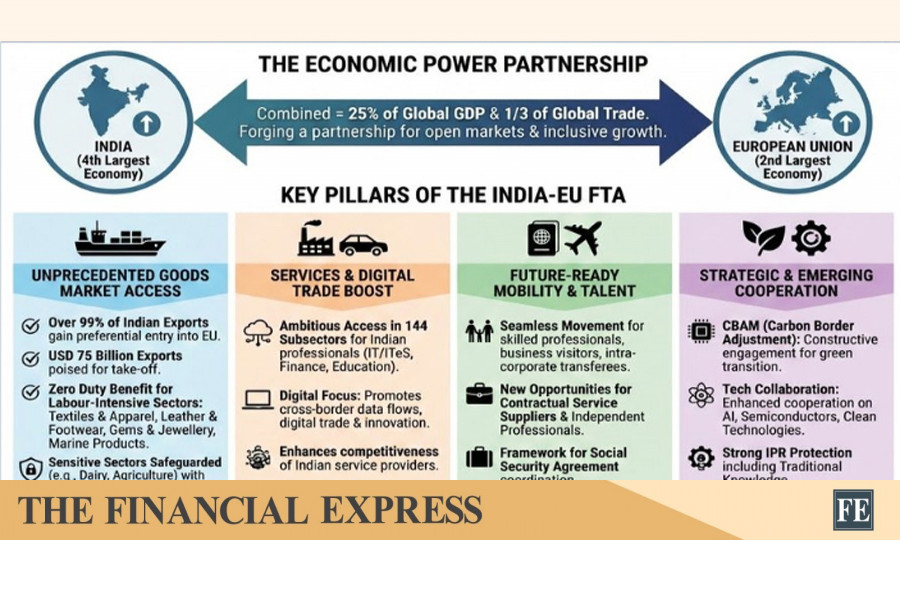
The European Union (EU) and India is signing free trade agreement that both sides have hailed as 'the mother of all deals'. The agreement came together after over nearly two decades of intermittent negotiations and during a geo-economic crisis triggered by United States President Donald Trump's trade war. The deal between India and the 27-nation EU covers about 2 billion people and represents a combined market of nearly US$ 27 trillion and about 25 per cent of the global gross domestic product (GDP). It is expected to significantly reduce tariffs for India and the EU as the deal is India's largest and most comprehensive trade agreement and covers goods, services and investments across the EU's customs union.

European Commission President Ursula von der Leyen and European Council President Antonio Costa were in New Delhi as honorary guests for the Indian Republic Day and its annual military parade and was joined by Indian Prime Minister Narendra Modi.

In 2023, the EU withdrew its generalised system of preferences (GSP) for India, exposing its exporters to higher tariffs. The new deal, analysts noted, could give India an edge in several sectors, including textiles, pharmaceuticals, machinery, steel, petroleum products and electrical equipment.

Overall, the EU is giving India access to 144 services subsectors while India is opening 102 subsectors to the EU, including in the financial, maritime and telecommunications industries.

Negotiations to reach a trade deal between India and the EU broke down in 2013 over New Delhi's reluctance to open its automobile sector. Under the deal announced on Tuesday last, however, New Delhi will open its domestic automobile market to EU imports, slashing tariffs on most cars from the EU to 30 to 35 per cent, which are to be then phased down to 10 per cent over several years.

HOW WILL THE DEAL BENEFIT THE EU: Indian tariffs on 30 per cent of goods imported from the EU will fall to zero immediately. Overall, tariffs on 96.6 per cent of EU goods exports to India will be eliminated or reduced, EU officials said. The deal will save up to 4 billion euros ($4.74bn) a year in duties on European products.

Besides the relaxation of tariffs on car imports from the EU, existing Indian tariffs of up to 44 per cent on machinery, 22 per cent on chemicals and 11 per cent on pharmaceuticals will, for the most part, be eliminated.

Tariffs on EU aircraft and spacecraft will also be eliminated for almost all products while those on optical, medical and surgical equipment will be eliminated for 90 per cent of products.

Meanwhile, spirits and wines imported to India from the EU, currently tariffed at 150 per cent, will be cut to 20 to 30 per cent for wines, 40 per cent for spirits and 50 per cent for beer.

India will also provide improved access for EU firms in financial and maritime services, and both sides will simplify customs rules and provide stronger intellectual property protections.

HOW WILL THE DEAL BENEFIT INDIA: The EU will scrap all tariffs on 90 per cent of Indian goods, and within seven years, that will be extended to 93 per cent of Indian goods.

Among those benefitting from zero tariffs immediately are marine/seafood products, such as shrimp and frozen fish (currently levied at up to 26 per cent); chemicals (12.8 per cent); plastics and rubber (6.5 per cent); leather and footwear (17 per cent); textiles (12 per cent); apparel (4 per cent); base metals (10 per cent); and gems and jewellery (4 per cent).

There will be partial tariff cuts and quotas for about 6 per cent of Indian goods, bringing the EU's average tariff rate down from 3.8 per cent to 0.1 per cent. Overall, 99.5 percent of bilateral trade will benefit from some form of tariff concession.

India is still seeking improvements in tariff-free steel export quotas, and the outcome of these talks is due by June 30 before EU rules take effect on July 1. Under the deal as it stands, India would be allowed to export 1.6 million tonnes of steel to the EU duty-free, but this is only about half of what it exports annually at present.

The EU has not granted India an exemption from its carbon border adjustment mechanism (CBAM), which taxes "carbon-intensive" goods - those that require large amounts of energy to produce, such as steel, cement, fertiliser and electricity.

Only countries that are associated with the EU, such as Norway, Iceland, Liechtenstein and Switzerland are exempt from these due to their participation in the EU emissions-trading system or related agreements. Countries whose emissions-trading systems are linked directly to the EU's, such as Switzerland, are also exempt.

The US remains the biggest overall trading partner for both India and the EU. However, over the past decade, goods trade between India and the EU has grown substantially, rising from about $74bn in 2020 to $136bn in 2024-2025, making the EU India's largest goods trading partner.

India is the EU's ninth largest trading partner, accounting for 2.4 per cent of its total trade, compared with 17.3 per cent for the US and 14.6 per cent for China.

From 2019 to 2024, India-EU trade in services also grew with Indian exports rising from $22.5bn to $44bn while EU exports increased from about $17bn to $34bn. The two mainly traded in business consulting and IT services. Currently, India has a favourable trade surplus with the EU of more than $15bn as its exports of $75.85bn outpace imports of $60.68bn. EU exports are heavy on machinery, transport equipment and chemicals while India mostly exports chemicals, base metals, mineral products and textiles. The two sides hope to increase that to about $200bn by 2030.​

The EU says about 6,000 European companies operate in India while about 1,500 Indian companies have a presence in the EU.

TENSIONS WITH THE US: Despite Modi having relatively good relations with the US president, India is one of the most heavily tariffed countries by the US - at 50 per cent on goods - as a result of Trump's trade war. Half of that is punishment for India's continued purchase of Russian crude oil, which White House officials said is financing the Kremlin's war on Ukraine.

EU tensions with the Trump administration have been building as well, particularly over Trump's insistence that the US be allowed to buy Greenland, which is a territory of EU member Denmark.

This month, Trump threatened additional tariffs of 10 per cent - rising to 25 per cent in June - against eight European countries that had objected to Trump's demand to buy Greenland. Both Greenland and Denmark have repeatedly stated that the island, which is politically part of Europe but is geographically located in North America, is not for sale.

The EU is still subject to up to 15 per cent tariffs by the US under an EU-US trade deal signed last year. Experts said the finalisation of the India-EU trade agreement has been expedited, in part, in response to this pressure from the Trump administration.

The White House has already criticised the agreement. US Treasury Secretary Scott Bessent lashed out at the EU over the pact with New Delhi.

IMPACT ON BANGLADESH: With Bangladesh set to graduate from LDC status in November 2026, and its preferential access to the EU market expected to erode after a three-year transition period, the timing of this deal could not be more unsettling. While trade agreements of other countries lie beyond Bangladesh's control, this one demands utmost seriousness in assessing how competitive conditions would reshape in its most important export destination, and what that implies for preparedness, policy priorities, and the sustainability of an export model built largely on preferential margins rather than enduring competitiveness.

For decades, Indian exports of garments, textiles, leather, and footwear entered the EU facing substantial tariffs. The EU-India FTA dismantles this constraint almost entirely. For instance, it would slash duties on footwear from 17 per cent to zero, and apparel and textiles from 9-12 per cent to zero, substantially strengthening India's competitiveness.

Moreover, given the safeguard provisions embedded in the EU's Generalised System of Preferences, there is a genuine risk that even if Bangladesh qualifies for GSP+ after graduation, its garment exports could still face full MFN tariffs, fundamentally altering the competitive balance in the EU market.

The structure of exports to the EU differs sharply between India and Bangladesh. In 2024, India exported about $80 billion worth of goods to the EU from a diversified basket dominated by engineering goods, chemicals, minerals, pharmaceuticals, and agricultural products, with textiles and apparel accounting for less than 10 per cent. Bangladesh's exports, by contrast, amounted to about $21.4 billion in FY25, more than 90 per cent of which came from garments. Such concentration leaves Bangladesh particularly vulnerable to shocks in a single sector, with limited scope to offset losses through diversification.

Muhammad Zamir, a former Ambassador is an analyst specialised in foreign affairs, right to information and good governance.
 

India budget to promote reforms as room for spending shrinks

REUTERS
Published :
Feb 01, 2026 09:36
Updated :
Feb 01, 2026 09:36

1770770767667.webp


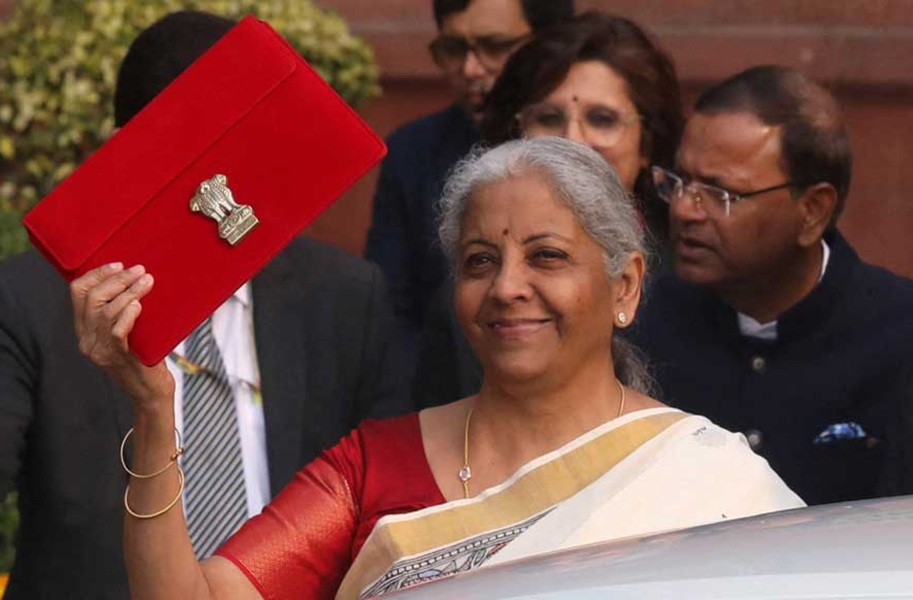
Indian Prime Minister Narendra Modi's government releases its annual budget on Sunday, expected to strengthen domestic policy reforms to cushion the economy from rising uncertainties such as steep US tariffs and broader geopolitical tensions.

But Finance Minister Nirmala Sitharaman, who presents the budget for next fiscal year at 11am, will have to restrain spending as a share of gross domestic product, particularly after tax cuts are expected to reduce revenue by 1.5 trillion rupees ($16 billion) for this fiscal year.

India's deficit target for the 12 months through March is 4.4% of GDP.

"The nation is moving away from long-term problems to tread the path of long-term solutions. Long term solutions provide predictability that fosters trust in the world," Modi said on Thursday before the government's economic survey forecast growth of between 6.8% and 7.2% for the fiscal year starting in April.

India will continue with "next-generation reforms", as the next 25 years will be key to meeting the goal of making the South Asian nation a developed economy, he said.

To spur private investment and demand, New Delhi has rolled out a series of reforms in recent months, including consumption and income tax cuts, overhaul of labour laws and steps to open up the tightly controlled nuclear-power sector. More policy changes are expected in the budget.

Modi's government also plans a third major push to boost manufacturing as a share of the economy, after two failed attempts. It is also expected to ease rules for investments in defence manufacturing.

Gross borrowing is expected to rise to between 16 trillion rupees and 16.8 trillion rupees for the year starting in April from this fiscal year's 14.6 trillion rupees.

India is also striking deals such as a landmark trade agreement with the European Union to offset the hit from the 50% tariffs President Donald Trump has imposed on some Indian goods shipped to the US.​
 

Galgotias University controversy explained: How a Chinese robot dog ended up being called an Indian innovation at country's biggest AI summit​


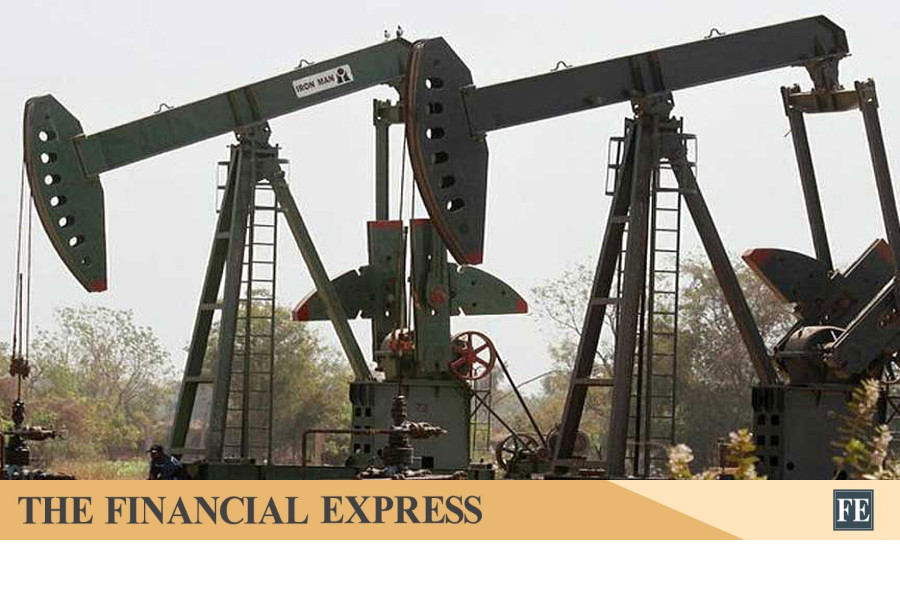
Oil price spike threatens economy of India

The oil price per barrel will reach $200 in near future. Being a large economy India is able to absorb economic shock arising from increased oil price. The same cannot be said about Bangladesh. We need to buy oil from Russia at a much cheaper price to reduce pressure on the economy. To buy oil from Russia requires the US nod of approval.
 
The oil price per barrel will reach $200 in near future. Being a large economy India is able to absorb economic shock arising from increased oil price. The same cannot be said about Bangladesh. We need to buy oil from Russia at a much cheaper price to reduce pressure on the economy. To buy oil from Russia requires the US nod of approval.
We are all in the same boat.

India is already rationing petroleum and LPG/Propane cylinders. Their ability to absorb shock is limited as they have scarce reserves themselves. These are all imported items - made by processing crude. I would not believe their propaganda.

Even if Modi grovels at Putin's feet, Putin won't budge. I have heard reports that mention, Putin has increased crude price for India at three times what used to be, prior to Trump's action with Iran.

The Thai tanker crossing the Hormuz Strait that got bombed by the Iranians was a Thai-owned tanker headed for Kandla, where Adani has a refinery. Goodbye to that crude for India.

Bangladeshi tankers have been given explicit green signal by the Iranians - Thank Allah.

It is tragicomic how the incumbent leadership in India, always chooses the wrong side in any conflict.
 

India confident of meeting summer power demand despite Middle East gas shock

REUTERS
Published :
Mar 21, 2026 22:35
Updated :
Mar 21, 2026 22:35

1774138338384.webp

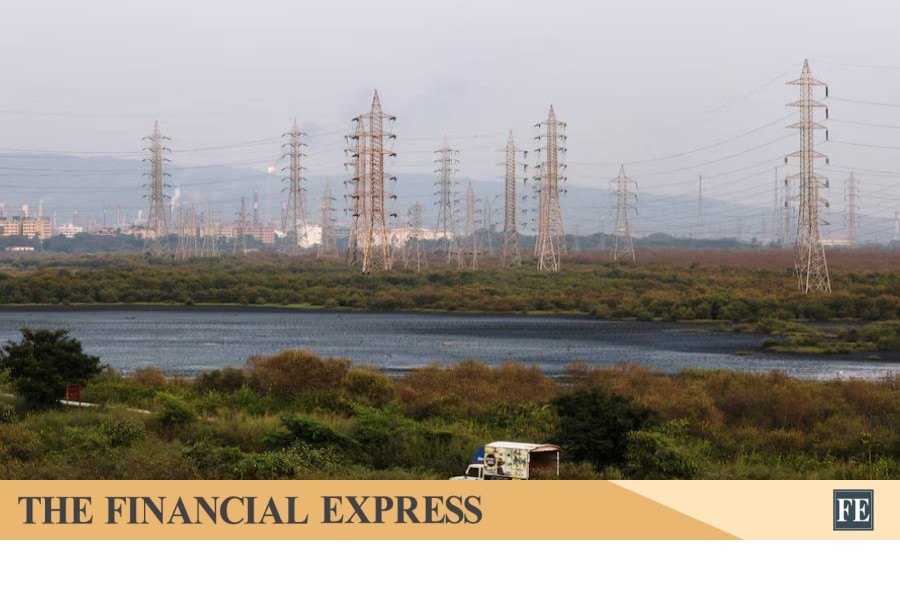
A general view of electricity pylons in Mumbai, India, October 13, 2021. Photo : REUTERS/Francis Mascarenhas

India does not expect the Middle East crisis to affect its ability to meet soaring power demand this summer, as the country has lined up coal and renewable capacity ‌to make up for any gas supply issues, a senior government official said on Saturday.

Although gas accounts for only around 2% of India's total power generation, the South Asian country uses about 8 gigawatts (GW) of gas power during peak-demand periods or heat waves.

"We are quite hopeful that this (Middle East) crisis is ⁠not going to impact us in terms of meeting demand," India's Power Secretary Pankaj Agarwal told Reuters on the sidelines of a power industry event.

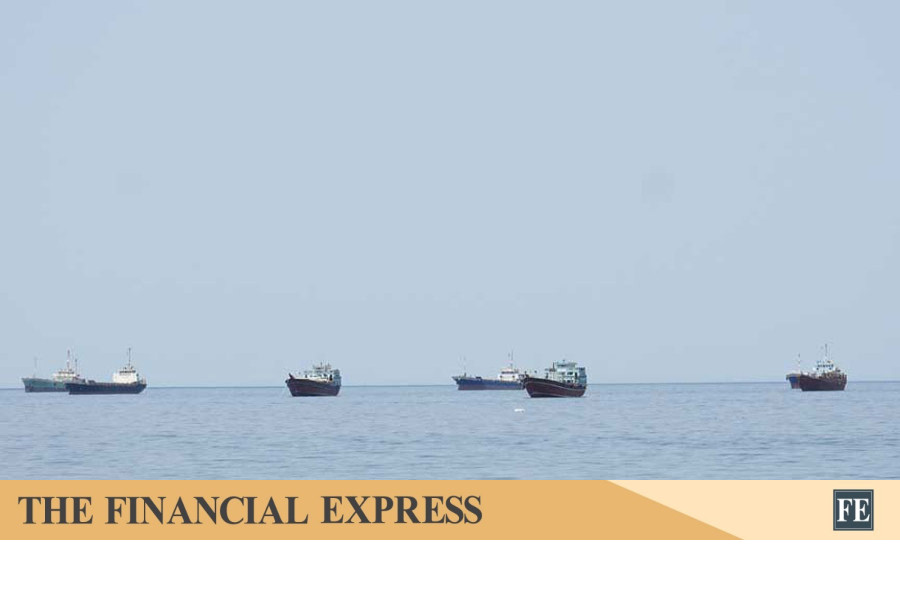
The U.S.-Israeli war on Iran has hit gas supplies, forcing suppliers to declare force majeure notices to customers and leaving India, the world's second-largest liquefied petroleum gas importer, facing its worst cooking gas crisis in decades as shipments through the Strait of Hormuz have been almost halted.

India is expecting a 4 GW coal power plant in the western state ‌of ⁠Gujarat to be restarted and additionally has a lot of wind energy projects on the verge of supplying electricity to the grid, Agarwal said.

There is enough solar power available to meet the peak day time power demand of 270 GW and the government is also ⁠working on speeding up completion of battery energy storage projects to meet evening demand, he added.

"About 2.5 gigawatt hours of battery storage is already under commissioning, and we hope that ⁠gets commissioned very fast," Agarwal said.

Meanwhile, India has produced 1 billion metric tons of coal for a second successive year, the coal ministry said on Saturday, which ⁠could be enough to meet summer power demand.

India has asked its domestic coal-based utilities to be prepared for supplying uninterrupted power in the absence of gas supplies, Reuters reported earlier this month.​
 

Fuel prices rise in India amid Mideast tensions

1774313957963.webp

Representational image. Collected photo.

Fuel prices in India increased on Friday, with premium petrol and industrial diesel becoming more expensive due to ongoing conflicts in the Middle East.

According to oil marketing companies, the price of premium petrol went up by about 2.30 Indian rupees per litre, while industrial diesel saw a much bigger jump of around 22 rupees per litre. The new prices took effect immediately.

The rise in fuel costs is linked to instability in the Middle East, which has been affecting global oil markets and supply.

Higher industrial diesel prices are expected to impact key sectors such as manufacturing, transport and power generation. This could lead to higher production and delivery costs, and eventually push up the prices of everyday goods, local media reported.

However, the government downplayed the increase in premium petrol prices, saying it would have limited impact as only a small portion — around 2 to 4 percent — of consumers use this type of fuel.​
 

India faces second year of sugar deficit as mills close early

REUTERS
Published :
Apr 02, 2026 18:04
Updated :
Apr 02, 2026 18:04

1775175743744.webp


India's sugar production is set to fall below consumption for a second straight year, as lower cane yields force mills to close faster than usual, trade officials told Reuters on Thursday.

Lower output, coupled with rising exports, is likely to reduce domestic stockpiles and support local prices, which had been under pressure due to surplus supplies.

"Sugar production is unlikely to exceed 28 million metric tons this season," said the India head of a global trade house based in Mumbai.

"Most sugar mills have already closed, with only a few still operational, which are expected to close in the coming weeks."

At the start of the season, industry bodies including the Indian Sugar & Bio-Energy Manufacturers Association (ISMA) and the National Federation of Cooperative Sugar Factories Ltd (NFCSF) had forecast production of around 31 million tons, against local demand of 28.5 to 29 million tons.

However, lower cane yields due to excessive rainfall had forced 467 of the 541 mills that began operations this year to shut by the end of March, according to NFCSF data. Last year, 420 mills had closed by the same time.

Indian sugar mills produced 27.12 million tons of sugar in the first half of the 2025/26 marketing year ending in Sept 2026, up 9 percent from a year earlier, NFCSF data showed.

Almost all mills in Maharashtra and Karnataka, India's largest and third-largest sugar-producing states, have shut earlier than expected, said a New Delhi-based dealer with a global trade house.

"The government allowed exports hoping for a large surplus. But now it is certain that production will not even meet domestic consumption," said the dealer.

In February, India raised its sugar export quota to 2 million tons, adding 500,000 tons to the 1.5 million tons approved earlier.

After last year's drop in production, the industry was counting on this season to increase stocks and export surplus, but lower output will reduce opening stocks for the next season, said an official with a leading industry body, who declined to be named.

"This season began with opening stocks of 5 million tons, but the next season will start with less than 4 million tons. This should help firm up sugar prices," the official said.​
 

India govt plan for more women in parliament fails vote
Agence France – Presse . New Delhi, India 18 April, 2026, 03:49

A proposal to expand India’s parliament to increase the number of women representatives fell through on Friday after the ruling coalition failed to secure enough votes for it in the lower house.

Women currently account for 14 per cent of the 543-seat Lok Sabha, the lower house of parliament in the world’s largest democracy of 1.4 billion people.

While boosting the number of women lawmakers has broad support in principle across the political spectrum, critics argue that achieving it by increasing the overall number of seats would primarily benefit prime minister Narendra Modi’s party.

Modi’s government convened a special sitting of parliament this week, hoping to pass several landmark bills that could overhaul India’s parliamentary system, including the proposal to fast-track the implementation of a 2023 law reserving 33 per cent of Lok Sabha seats for women.

In order to do so, the government said it planned to redraw parliamentary districts based on population, increasing the number of lower house seats to more than 800.

In a Friday vote, the bill failed get a two-thirds majority and did not pass, parliament speaker Om Birla said. Two other related bills were shelved as a result.

Opposition parties and critics have said that expanding seats in parliament would benefit states in the densely populated north, where Modi’s Hindu nationalist Bharatiya Janata Party (BJP) enjoys widespread support.

Opposition parties, which control states in southern India where the population is lower, fear they would lose overall power in parliament.

Lawmaker Jairam Ramesh from the opposition Congress Party hailed the defeat of what he called a ‘nefarious’ attempt to link ‘dangerous delimitation proposals to women’s reservation’.

Instead, Ramesh said in a social media post, the government should implement the 33-per cent quota ‘in the existing set up of the Lok Sabha for the 2029 Elections’.​
 

Mamata Banerjee’s warning of ‘taking Delhi’ leaves BJP’s Amit Shah ‘amused’

Published :
Apr 24, 2026 21:26
Updated :
Apr 24, 2026 21:26

1777074993254.webp


West Bengal Chief Minister Mamata Banerjee has launched an attack on the BJP as parts of Indian the state went to polls, asserting that she would shift her focus to Delhi after winning the assembly elections.

Speaking at a rally in Kolkata’s Chowringhee on Thursday, the chief minister, who has been in office for 15 years, said she would “dismantle” the BJP at the centre by bringing together Opposition parties, Indian broadcaster NDTV reported.

“Remember this, you cannot defeat us. We fight against injustice; we fight for our rights. I was born in Bengal, and I shall breathe my last in this very Bengal. I will take over Delhi once I have secured victory in Bengal. I will do so by rallying all the political parties together. I won’t want the seat (of power); I want the complete dismantling of the BJP in Delhi. While their destruction in Bengal is inevitable, the BJP must be ousted from Delhi as well,” the chief minister was reported as saying by NDTV.

Banerjee was campaigning for party candidate and two-time sitting MLA Nayna Bandopadhyay, who is contesting against the BJP’s Santosh Pathak.

Targeting the BJP, she reportedly said she had “noted down” the names of those working for the party.

Senior BJP leader Amit Shah, who is campaigning in Kolkata, was left “amused” by Banerjee’s remark.

NDTV reported him as saying, “There is nothing left here. How will she come to Delhi? What should I say?”

According to NDTV, while Banerjee was campaigning in Chowringhee on Thursday, around 33.5 million voters cast their ballots across 152 constituencies in other parts of the state.

The Chowringhee seat, held by the Trinamool Congress since 2011, is scheduled to vote in the second phase on Apr 29 along with other Kolkata constituencies.

NDTV also reported that in the first phase of polling, Bengal recorded a 92.8 percent voter turnout, marking a record level of participation after a 9 million deletion from the voter roll during a revision earlier this year.​
 

India's Modi celebrates 'record' win in opposition-held West Bengal

AFP
Kolkata
Updated: 04 May 2026, 21: 22

1777947075651.webp


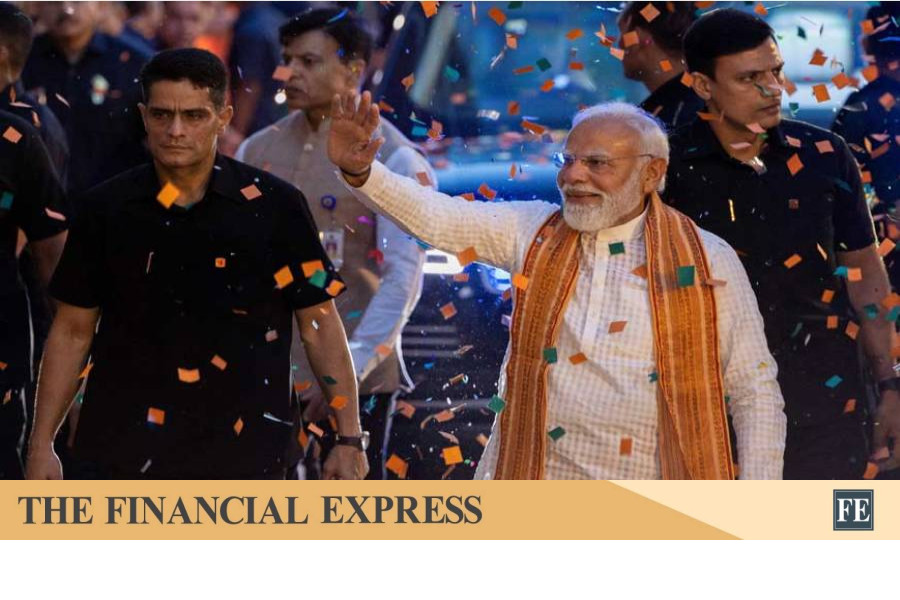
India's Prime Minister Narendra Modi arrives at the Bharatiya Janata Party (BJP) headquarters as BJP celebrates its win in the West Bengal and Assam states' assembly elections, in New Delhi, India, on 4 May 2026 Reuters

Indian Prime Minister Narendra Modi claimed a "record" victory on Monday in key elections in opposition-held West Bengal state after official trends and partial results showed a thumping majority for his Hindu nationalist party.

Votes were still being counted under tight security in the state of more than 100 million people, one of five states and territories that held elections in April and May where results were also being announced on Monday.

The results should put Modi on a stronger footing while he battles a series of economic and foreign policy challenges, including high unemployment rates and a pending US trade deal, ahead of a general election in 2029.


In keenly fought West Bengal, where Modi's Bharatiya Janata Party (BJP) has never won before, the party was leading in 156 of the 293 seats and had won 48 others, according to the Election Commission of India.

"The 2026 West Bengal Assembly Elections will be remembered forever," Modi said on social media. "People's power has prevailed and BJP's politics of good governance has triumphed."

"BJP's record win in West Bengal would not be possible without the efforts and struggles of countless Karyakartas (workers) over generations," Modi said.

Senior party leaders and thousands of supporters celebrated on the streets of the state capital Kolkata, joyously swaying to victory tunes.

The BJP, the ruling party in the national parliament, waged an aggressive campaign to dislodge the powerful regional party of firebrand leader Mamata Banerjee, in power in West Bengal since 2011.

Scuffles broke out outside several counting centres in the state, and police used batons to control the crowd. Past elections have resulted in violence.

This campaign was marked by protests over the removal of millions of names from voter rolls, billed as removing ineligible voters but which critics said was skewed against marginalised and minority communities.

'New face'

Veteran politician MK Stalin, chief minister of the southern state of Tamil Nadu, lost his seat in another major electoral shock.

Stalin's ruling Dravida Munnetra Kazhagam (DMK) came a distant second behind a party floated by the actor-turned politician C. Joseph Vijay.

Vijay, 51, one of India's most bankable actors, launched his TVK party in 2024 on the plank of youth employment and good governance in Tamil Nadu, a key industrial hub with more than 80 million people.

Results showed that Stalin, 73, had lost in his Kolathur stronghold to TVK's V.S. Babu.

The trends indicated a surprise result for TVK in a state where most exit polls had suggested Stalin's DMK would return to power.

"This result (in Tamil Nadu) shows that the youth want a new face. It is not just anti-incumbency," political scientist Ramu Manivanan told AFP.

"Vijay as an actor has a large female fan base as a cinema star. All that has influenced the outcome," Manivanan said.

In neighbouring Kerala, the Congress party-led alliance ousted the ruling Communists, bagging 63 out of 97 seats.

Congress leader Rahul Gandhi thanked the people of Kerala for a "truly decisive mandate".

He also heaped praise on party workers for ensuring a "hard-fought, well-run campaign".

The BJP returned to power in the northeastern state of Assam and in the small coastal territory of Puducherry, where it was a part of the ruling coalition.

Assam Chief Minister Himanta Biswa Sarma celebrated a "hat-trick" of wins in the state of more than 31 million after the BJP sealed victory for the third successive time.​
 

Modi urges limits on fuel use, travel and imports to save forex

REUTERS

Published :
May 11, 2026 22:42
Updated :
May 11, 2026 22:42

1778542834029.webp


India's Prime Minister Narendra Modi greets his supporters as he arrives at the Bharatiya Janata Party (BJP) headquarters as BJP celebrates its win in the West Bengal and Assam states' assembly elections, in New Delhi, India, May 4, 2026. Photo : REUTERS

Indian Prime Minister Narendra Modi on Sunday urged a spate of measures including fuel conservation, work-from-home practices and limits on travel and imports, as a surge in global energy prices puts pressure on the country's foreign exchange reserves.

People should prioritise a return to work-from-home and online meetings, widely adopted during the COVID-19 pandemic, saying it would help India use less fuel, Modi said.

"In the current situation, we must place great emphasis on saving foreign exchange," he said.

Modi also asked people to use public transport such as the metro and to carpool where possible to conserve fuel.

India, the world's third-biggest oil importer and consumer, late last month said there was no proposal to raise pump prices for diesel and gasoline, leaving it among the countries yet to raise prices despite the global surge.

Modi urged people to avoid buying gold -- which India spends on heavily during weddings -- and to cut non-essential overseas travel for at least a year to save foreign exchange.

He called on families to reduce cooking oil consumption, describing that move as both healthy and patriotic.

Modi also asked farmers to cut fertiliser use by as much as half.​
 

India scrambles to steady rupee as oil shock bites

AFP, Mumbai

1779064145496.webp

A trader counts Indian currency notes at a market in Kochi. India’s central bank has already poured billions of dollars to stabilise the currency. Photo: REUTERS/FILE

India is scrambling to salvage a sinking rupee as surging oil prices linked to the Middle East conflict threaten to disrupt the world’s fastest-growing major economy.

The currency has dropped more than five percent since the crisis erupted in February, extending losses from 2025 and making it Asia’s worst-performing major currency in 2026 so far.

It hit a record low of over 96 to the dollar on Friday, prompting officials to signal that halting further depreciation is a key macroeconomic priority.

India’s central bank has already poured billions of dollars to stabilise the currency, curbed speculative trading and offered a special credit line to oil importers to ease dollar demand.

Prime Minister Narendra Modi has also urged voluntary austerity measures to rein in dollar-guzzling imports, including cutting down on gold buying and foreign travel for a year.

But the pressure persists.

“The whole system has been disturbed,” said Dilip Parmar of stockbroker HDFC Securities, citing heavy foreign investor outflows, weaker growth prospects and elevated crude prices.

“That is the basic problem which you’re seeing replicated in the fall of the rupee,” he said, noting that it was ultimately “a function of demand and supply” with dollar demand being higher.

The rupee’s slide comes as India faces a widening current account deficit driven by costly energy imports.


The gap is likely to be over two percent of GDP this fiscal year, more than double last year’s level and potentially the widest since 2012–13, according to Bank of America Securities estimates.

WIDENING DEFICIT

At the same time, foreign investors have dumped more than $20 billion in Indian stocks since the start of the Mideast conflict, the fastest pace on record, while dollar inflows have slowed, opening the possibility of a balance-of-payments gap as large as $67–88 billion.

The 2027 fiscal year “will be our third year of a balance-of-payment deficit, which is certainly unusual,” economist Dhiraj Nim of ANZ Research told AFP.

This strain has weighed on the rupee, prompting the central bank to defend it by burning through foreign exchange reserves -- now at around $697 billion, down from over $720 billion before the Middle East war.

While still covering about 11 months of imports, the decline underscores the strain.

A weaker rupee is rippling through the domestic economy.

Manufacturers and food processors, many dependent on imported raw materials priced in dollars, are seeing costs surge.

Smaller firms often lack the ability to hedge currency risks.

In Kerala’s cashew industry, which mostly imports raw nuts from Africa, the impact has been acute.

“Imports have become far more expensive for the local market,” said Rajmohan Pillai, who runs a cashew firm, adding buyers can now afford only about 90 percent of last year’s volumes.

He estimates more than 80 percent of processing units have shut in recent years, with rupee volatility a contributing factor.

‘LAST STRAW’

India’s currency decline has also hit students looking to study abroad.

Education consultants say studying in the United States now costs more than one million rupees ($10,450) extra compared with a year ago.

“This is the last straw,” said Meghna Sen, a 17-year-old aspiring psychology student.

“Now we have to track (the rupee) movement to check how much we need for our grocery budgets.”

The depreciation has punctured India’s ambition to become the world’s third-largest economy.

Modi, who once criticised his predecessors over currency weakness, has seen India’s global economic ranking dented because GDP comparisons are measured in dollars.

The country has slipped behind the United Kingdom to the sixth place according to IMF data, largely due to the rupee’s fall.

Nomura analysts warn more drastic measures may be on the anvil.

These include possible fuel price hikes, tighter controls on overseas remittances and steps to attract dollar deposits from non-resident Indians -- a playbook used in past crises.

Still, economists caution that intervention can only smooth volatility, not reverse underlying pressures.

“Fundamental factors” remain to be resolved, Nim said, adding “I would not even rule out an interest rate hike which squarely targets future inflation”.

The Reserve Bank of India knows what its options are, he said.

“All that remains is to see what it decides to choose.”​
 

The rise of CJP and its implications for mainstream politics

Neil Ray

Published :
May 24, 2026 23:29
Updated :
May 24, 2026 23:29

1779681363648.webp


The exponential proliferation of followers of the satirical "Cockroach Janata Party (CJP)" on social media sites is a clear sign that people, particularly the young generations, are not happy with the existing system of governance in India. This parodic imitation of the Bharatiya Janata Party (BJP) has caught the imagination of Indian youths like wildfire. By Saturday, it amassed 21 million followers on Instagram and hundreds of thousands of members. No mainstream political party in India is even remotely compared to this number in terms of followers. But it is not a formal political party. An online movement of political satire, it pronounces an indictment on the traditional arrangement of political system called 'democracy'.

A political communications strategist and student at the Boston University, Abhijeet Dipke is the creator of this humorous nomenclature CJP. The origin of this cockroach coinage goes to the credit of that country's Chief Justice Surya Kant who allegedly compared unemployed young people drifting towards journalism and activism with cockroaches and parasites. Although he later clarified that he referred to those with fake and bogus degrees.

But by this time the damage was done. No one was ready to listen to such explanations. Both young and elderly people joined the chorus against this apparently derisive comment on unemployed youths. Clearly, such a controversial comment on young people was not to the liking of any segment of Indian society. It was uncalled for. Unemployment or a lack of opportunities is a problem facing the world at large. It is the governments' responsibility to provide them with jobs and this cannot draw flak from people in high position.

Ironically, cockroach is an insect that dates back to over 300 million years, predating dinosaurs. This is one of the most resilient pests the world has ever known. It has survived multiple mass extinctions, including the raining down of asteroids that wiped out dinosaurs from the face of this planet. This creature's ability to adapt to every terrestrial environment is phenomenal. So the satirical name of this informal party has a truth ingrained in it. Although, the intention of its founder may not have considered this aspect of resilience but it has however happened coincidentally.

The government of India should not feel comfortable with this CJP that has gone viral on social sites and it now seeks to stamp it out. Already it has been removed from X handles but it is going from strength to strength on the Instagram. On the face of it, it may look like one of the sweeping fads that take social sites by storm but the ugly truth inherent in today's perverse politics cannot be missed. The angry young members of society observe that politics bypass them if they are not diehard supporters of the ruling party.

Generation Z or Gen Z in short, gives through this huge following a message most stark and disturbing. The old guards fail to appreciate the young people's attributes and often undermine their potential. But the members of Gen Z are a force to reckon with. What happened in Bangladesh and Sri Lanka can more than vouchsafe for their unlimited energy and fighting power. There is a need for governments everywhere to stay cautioned particularly when the two sides confront each other.

The way this generation sees the world through their digital telescope is clear enough and political manoeuvres political governments resort to may fall short of meeting the challenge. The president of the most powerful nation is behaving like a crazy guy and the inconsistency in his policies and actions should have by now prompted the generation to reject him. Even if it does not happen now, most likely the Gen Z will dump him in the dungeon of history. The Cockroach Janata Party may prove a point if it influences political parties in opposition to adopt the strategy it successfully applied. The established political order may go into pieces before the 'cockroaches' breathe fresh air into politics of the largest democracy in the world.​
 

Could India's Gen-Z rebellion begin with cockroaches?

1779763709328.webp


What if, one fine morning, a call is extended — "Cockroaches of the world unite!" And suddenly millions of pointless, lazy little creatures swarm out from their ugly dens — from behind boxes, from under beds, from the dark corners of old cupboards?

Lazy, yet resilient, cockroaches refused to evolve for the last 150 million years. All they have done is survive and breed. You chase them away with a broom, smash them with sandals, spray them with "Hit," and still they return. When filth piles up, cockroaches are bound to appear.

"What if all cockroaches come together?" — this was the exact question asked by 30-year-old Abhijit Dipke after Justice Surya Kant, the Honourable Chief Justice of India, compared India's unemployed youth to "cockroaches" during a hearing on May 15.

Within 24 hours, Dipke launched a website and social media handles on X and Instagram under the name Cockroach Janata Party (CJP).

The name itself mocks the ruling party at the Centre. Then there is the logo: a cockroach sitting on a smartphone with full internet connectivity — reflecting the Chief Justice's further accusation that professionally worthless youngsters turn into media or social media activists and attack everyone.

But does a cockroach really attack anyone? Its clumsy wing-flutters may create a nuisance, and its flat existence may carry messages for future propagation. It troubles, certainly, but rarely harms.

Cockroaches are the outcome of a systematic betrayal

The Cockroach Janata Party expects its members to meet certain standards. Gender, caste, or religion do not matter. Interested individuals are encouraged to conduct an eligibility self-check to ensure that they are effectively unemployed, physically lazy, chronically online, and capable of ranting professionally.

1779763751580.webp

Abhijeet Dipke, founder of Cockroach Janata Party. Photo: X

These criteria perfectly echo how Indian society increasingly views Gen-Z. Justice Surya Kant's remark, his later clarification notwithstanding, was not merely a personal slip of tongue. It reflected the broader mindset of India's comfortable middle class, which does not endure the chronic financial and professional stress that the country's youth face.

Gen Z, or those born between 1997 and 2012, now constitutes more than a quarter of India's population. Yet nearly 40% of young graduates remain unemployed, according to the State of Working India 2026 report by Azim Premji University—only around 7% secure permanent salaried employment within a year of graduation.

In rural India, post-COVID dependence on agriculture has increased. In urban India, the rapid expansion of the gig economy continues to suppress wages and compromise job security. The Modi Government endlessly glorifies India's "demographic dividend," while offering little assurance regarding the educational, professional, or economic aspirations of the youth.

At the same time, inflation, rising fuel prices due to the Middle East crisis, and the growing fear that artificial intelligence will consume skilled jobs deepen existing anxieties. Affordable education, healthcare, and housing remain increasingly inaccessible. Meanwhile, the gradual transfer of national wealth toward crony capitalists like Adani and Ambani becomes harder to ignore. Public trust in the judiciary is eroding rapidly.

The political trend of apoliticism

The CJP's manifesto contains five demands: no Chief Justice should receive a Rajya Sabha seat after retirement; the Chief Election Commissioner should face UAPA charges if legitimate votes are deleted; 50% of cabinet positions should be reserved for women; media houses owned by Adani and Ambani should lose their licenses; and any MLA or MP defecting from one party to another should be barred from contesting elections or holding public office for twenty years.

Rallies, slogans, and street-corner speeches no longer engage educated youth the way they once did. Instead, youngsters express their political consciousness through satire, memes, parody, and comedy reels.

The party also demanded the resignation of the Union Education Minister following the recent cancellation of the 2026 NEET examination due to a question paper leak.

The demands primarily target corruption and institutional decay, which easily makes one recall the 2011 anti-corruption movement — popularly known as the Anna Andolan — which sought to address political corruption through the Jan Lokpal Bill.

That non-partisan civil movement eventually gave birth to Arvind Kejriwal's Aam Aadmi Party while simultaneously strengthening the BJP's anti-Congress narrative before the 2014 general election.

Could the CJP similarly evolve into a larger anti-establishment movement?

The speculation becomes stronger considering that Dipke himself was associated with the AAP between 2020 and 2023.

For now, however, the CJP primarily serves as a platform to raise issues and demand accountability. "The rest is satire," they say.

Their website carries a smart aesthetic. There are leaderboards ranking top citizens, top states, and top revolutionaries by the number of issues they raise. Their headquarters? "Wherever the WiFi works."

Within days of launching, the CJP's Instagram following far surpassed that of the BJP. In an interview with Al Jazeera, Dipke remarked, "Those in power think citizens are cockroaches and parasites… They should know that cockroaches breed in rotten places. That's what India is today."

The emergence of the CJP as a voice of Gen Z inevitably invites comparisons with recent youth-led mobilisations in Sri Lanka, Bangladesh, and Nepal, all of which successfully toppled their respective governments.

Yet Dipke himself told the Dawn, "Whatever we do, we will do within the rights of the Constitution. We will do it democratically and peacefully. It won't be something like Nepal or Bangladesh."

Even so, the CJP has already announced its first mobilisation campaign — BharatX: Phase One — asking supporters to walk silently at 6 a.m., carrying Indian flags, use black profile pictures, and spread the movement across youth spaces.

Their website declares, "This phase is not about politics. It is about awakening people, building discipline, and creating a national youth movement focused on change, action, and the future of India."

In contemporary India, spontaneous issue-based civil movements often inspire deeper trust among educated urban and semi-urban youth than organised political parties do.

The Rat Dakhal movement in Kolkata, following the rape and murder of an on-duty trainee doctor in 2024, witnessed an unprecedented level of public outrage. Likewise, spontaneous worker protests across the NCR last April forced the Uttar Pradesh Government to revise minimum wages despite police crackdowns.

The CJP, too, emerges from accumulated resentment — not resentment over a single incident, but years of failed promises suddenly crystallised by one careless remark from the country's top judicial office. This resentment is directed against a right-wing political order, but its roots also lie in the unfulfilled promises offered by the right-wing itself.

When the "lingo" replaces the language

Large sections of India's youth have become deeply disillusioned with conventional political parties. But what language can an alternative movement speak?

In an era of collapsing attention spans and endless streaming of digital content, all political parties compete within a brutal marketplace of attention. Yet traditional political vocabulary increasingly fails to keep pace with Gen-Z's anxieties, humour, and communication style.

The cockroaches no longer wish to be crushed silently. They want to return humiliation with humiliation. And they prefer the open, horizontal space of digital media over the rigid hierarchies of traditional political parties.

Rallies, slogans, and street-corner speeches no longer engage educated youth the way they once did. Instead, youngsters express their political consciousness through satire, memes, parody, and comedy reels. The popularity of comedians like Kunal Kamra, Varun Grover, Samdish Bhatia, or Vir Das reflects precisely this shift.

This phenomenon is not unique to India. Across the world, Gen-Z movements are discovering new forms of political communication and organisation.

Rather than conventional party politics, politically charged identities forged through collective humiliation are becoming more effective at mobilising support.

In India, direct criticism of the government is also becoming increasingly risky amidst rising threats from reactionary Hindutva, hyper-nationalism, and restrictive laws like the UAPA.

India's ranking in the World Press Freedom Index has continued to decline sharply.

Under such conditions, mockery becomes a political language. A recent example emerged in West Bengal, where sections of the Muslim community — responding to BJP-led restrictions on cow slaughter before Bakra Eid — protested by demanding that the cow be declared India's national animal.

Yet it would be mistaken to view the Cockroach Janata Party as a movement directed solely against the BJP. The party explicitly argues that no political force in India genuinely represents the younger generation. The mockery, therefore, is broader than electoral opposition. It is aimed at the political system itself.

The fate of the cockroaches

Political commentators remain understandably sceptical about the future of the CJP. Is this merely another viral digital moment, or does it signal something larger?

After all, there is nothing inherently revolutionary about allowing frustrated internet users to obtain symbolic party membership through a Google Form.

Yet the speed of the movement's popularity indicates something important: the cockroaches no longer wish to be crushed silently. They want to return humiliation with humiliation. And they prefer the open, horizontal space of digital media over the rigid hierarchies of traditional political parties.

Still, the larger question remains whether the ground for a mass movement truly exists in a country as vast, fragmented, and institutionally powerful as India.

Movements of that scale require a profound collapse of public faith in the existing system. That reality has not yet fully arrived in India. The BJP continues to dominate large parts of the country through so-called "double-engine" governments. Faith in Narendra Modi's "Vishwaguru" image, in slogans like Sabka Saath, Sabka Vikas, and in the broader Hindutva project, remains widespread — including among many young people visible on social media.

1779763808693.webp

The Cockroach Janata Party (CJP) uses sharp satire and striking imagery to channel Gen-Z's frustration over unemployment and systemic political decay. Photo: CJP Website

Why then was the BJP government so quick to block the CJP's Instagram account?

Because the BJP sensed a challenge.

The BJP seeks to occupy the political imagination of Gen-Z itself, and the sudden popularity of the CJP suggested the possibility of losing a section of that psychological ground.

This insecurity also explains the increasingly coercive character of the Indian state. Through processes such as the Special Intensive Revision (SIR), many people have reportedly lost their voting rights. Simultaneously, journalists, activists, and dissenting voices face growing legal and administrative pressure.

As political space continues to shrink and the BJP's dominance grows more assertive, the conditions for public anger also become ripe.

For now, it is reasonable to see the rise of the Cockroach Janata Party as one stage within that larger preparatory process.

Arka Bhaduri is an independent journalist, executive editor at The International and The Hammer magazine, and a columnist for the Morning Star. He writes extensively on the political dynamics of South Asia and Europe.​
 

‘Cockroach Party’ chief flies to New Delhi for protests
Agence France-Presse . New Delhi, India 06 June, 2026, 01:21

1780717348906.webp

Collected photo.

The founder of India’s satirical online ‘Cockroach People’s Party’ said he was flying back to New Delhi on Friday, to take the viral social media campaign to the streets.

Abhijeet Dipke, the 30-year-old Boston University graduate behind the online movement, said he was flying back from the United States, to seek police permission for a peaceful protest on Saturday against the education minister.

The parody ‘Cockroach Janta Party’ — echoing prime minister Narendra Modi’s Hindu-nationalist Bharatiya Janata Party — has won millions of online followers on social media since its launch last month.

CJP was set up after India’s Chief Justice Surya Kant reportedly called young people who criticised the government ’cockroaches’ and ‘parasites’ during a hearing. Kant later said his comments were taken out of context.

Dipke, a political communications strategist who formerly worked with the opposition Aam Aadmi Party, created the fictional party online on May 16.

Its popularity has soared, using the slogan ‘a political front for the youth, by the youth, for the youth’.

Dipke has called for the resignation of education minister Dharmendra Pradhan, who has faced criticism over alleged irregularities in several key examinations.

‘On my way to India... Leaving my fate in the hands of the Constitution,’ Dipke wrote in a post on X on Friday.

Sonam Wangchuk, 59, a prominent activist from India’s Ladakh region, who spent six months in detention after being arrested in September following deadly protests demanding autonomy for the Himalayan territory, has said he will join the protests.

India tightly regulates social media content, and some of the CJP’s social media handles have been blocked.

But its Instagram handle, still online in India, has more than 22 million followers — more than double the BJP’s nine million followers on the same site, as well as the main opposition Congress Party’s 13 million followers.

Dipke earlier called on followers not to gather at the airport upon his arrival.

‘The overwhelming response from those who want the resignation of Dharmendra Pradhan to our call to join us at Delhi Airport was beyond our imagination,’ he said, in a video message on X, posted on Thursday.

‘It is not feasible for so many people to assemble at the airport as it would cause inconvenience to the public and the security forces,’ he said.

He said he would go immediately to the police ‘to seek permission directly for our peaceful protest’ on Saturday.

‘We are law abiding citizens and have to act responsibly,’ he added. ‘So, please, be mindful that nobody should create any kind of disturbance.’​
 

Hundreds join protest led by India's viral 'Cockroach Party'

AFP
New Delhi
Published: 06 Jun 2026, 15: 11

1780793573811.webp

Cockroach Janta Party (CJP) supporters shout slogans during a protest over alleged irregularities in the country's major examinations, in New Delhi on 6 June, 2026. AFP

Hundreds of young students gathered in New Delhi on Saturday for the first street protest by the satirical "Cockroach People's Party" over alleged irregularities in recent major examinations.

Carrying paper cockroach masks and pamphlets, the protesters called for the resignation of Education Minister Dharmendra Pradhan who has faced criticism over the irregularities, including question paper leaks and technical glitches.

"We want accountability from the government," Utkarsh Raj, a medical college aspirant, told AFP at the protest site, which was watched closely by police officers in riot gear.

"How is it that exam papers get leaked in this country? How is this right?" added Raj, 16.

Protesters were led by Abhijeet Dipke, a 30-year-old Boston University graduate who arrived in New Delhi from the United States on Saturday.

His parody party -- "Cockroach Janta Party" (CJP), a play on Prime Minister Narendra Modi's Hindu-nationalist Bharatiya Janata Party (BJP) -- has won millions of followers on social media since its launch last month.

"The youth of the country will no longer fear anyone, they will fight," Dipke, a former political communications strategist for the opposition Aam Aadmi Party, told supporters at the rally.

"Cockroaches don't ever fear, they never die either," said Dipke, as others shouted in unison.

The movement emerged after India's Chief Justice Surya Kant reportedly likened young people who criticised the government to "cockroaches" and "parasites" during a court hearing, sparking outrage among the youth. Kant later said his comments were taken out of context.

CJP's popularity has soared, using the slogan "a political front for the youth, by the youth, for the youth".

'No credibility'

Protesters said young people were justifiably angry.

"India deserves better administration of such crucial exams by the government," said 20-year-old Sarthak, who gave only one name.

Last month, authorities scrapped the nationwide medical college entrance exam after investigators uncovered a question paper leak.

Indian media reported suicides of teenagers following the fiasco over the National Eligibility Entrance Test (NEET), one of the country's most competitive exams.

That came on top of another scandal related to online marking system in tests taken by nearly two million high school students.

"Young people have to give these exams and they can't have a situation where these exam systems have no credibility left," said Sapan Gyan, 52, who accompanied his sons to the protest.

The CJP's Instagram handle has over 22 million followers -- more than double the BJP's nine million followers on the same site, as well as the main opposition Congress Party's 13 million.

Despite rapid economic growth, millions of people in the world's most populous nation still struggle to find stable and well-paying jobs, fuelling discontent among the youth.

Youth unemployment in the country, typically covering people aged 15 to 24, was estimated at around 16 per cent, according to the International Labour Organization.

In recent years, some of India's neighbours including Bangladesh and Nepal have witnessed youth-led movements against perceived corruption and political apathy that toppled incumbent governments.​
 
As of 2026, Bangladesh has a higher internet penetration rate at 77.7%, compared to India's rate of 66.8%.

So much for "Digital India" - part of Viksit Bharat. :LOL::ROFLMAO:

This indicates that a larger percentage of the population in Bangladesh has access to the internet compared to India.

homefi.info

Incidentally - India has the highest number of people globally without internet access in 2026 (latest data)​

As of October 2025, about 440.12 million people in India were still without internet access. While this is the highest total worldwide.

Here are 10 countries with the largest offline populations, in millions:

Internet access statistics showing countries with the largest offline populations, including India, Pakistan, Nigeria, and China with millions of people without internet access

.
 

India ends restrictions on commercial gas
Agence France – Presse . New Delhi, India 26 June, 2026, 12:17

1782519715154.webp

An employee (L) rides a bike carrying liquefied petroleum gas (LPG) cylinders at a HP Gas distribution point in Bengaluru on June 26, 2026. | AFP photo

India has removed restrictions on supplies of commercial liquified petroleum gas imposed during the Middle East war when energy supplies were hit by the closure of the Strait of Hormuz.

India, the world's most populous country, is the second-largest importer of LPG, much of it from the Middle East. A fifth of global oil and gas usually pass through the waterway, which was shut after the start of the US-Iran war in late February.

The government ended the restrictions late Thursday on ‘non-domestic packed LPG and restored supplies to the levels prevailing prior to the West Asia crisis’, the petroleum ministry said in a statement.

‘The supply of bulk LPG, which had been suspended at the onset of the crisis, has been relaxed by 50 per cent of the pre-crisis consumption levels,’ the statement added.

‘The restoration follows the recent improvement in the LPG supply situation.’

The decision follows improved energy cargo passing through the Strait of Hormuz after Iran and the US signed a deal that included opening the strategic waterway.

During the crisis, the government raised prices for LPG, a primary cooking fuel for millions of households.

Last month India also approved a nearly $4 billion plan for expanding coal gasification -- a cleaner process to burn coal -- aiming to ease energy supply pressures caused by the war.

Supply disruptions through the Gulf routes piled pressure on India's economy, clouding growth forecasts.​
 

India PM Modi to visit Indonesia, Australia, New Zealand next week
Agence France – Presse . New Delhi, India 03 July, 2026, 17:51

1783135440482.webp

Indian prime minister Narendra Modi | AFP file photo

Indian prime minister Narendra Modi is scheduled to visit Indonesia, Australia and New Zealand next week, as New Delhi seeks to strengthen strategic ties in the region.

The July 8-11 tour comes after Modi’s visits to Mauritius March last year and Seychelles last month, reflecting what India’s external affairs ministry described as a shift in diplomatic focus to the eastern maritime region under its ‘Act East’ policy.

‘The focus has shifted to the eastern maritime zones of the Indian Ocean and our Act East engagement,’ senior Indian foreign ministry official Rudrendra Tandon, told reporters at a news briefing on Friday.

Modi will visit Indonesia on July 8 and 9, where he is scheduled to hold talks in Jakarta before travelling to the historic city of Yogyakarta and the UNESCO-listed Prambanan Temple complex, where India and Indonesia are planning to collaborate on conservation work.

Modi will review cooperation across a range of sectors during his visit to Indonesia, including maritime security, defence, trade and cultural ties, Tandon said.

It’s hoped this will build on talks held during Indonesian President Prabowo Subianto’s visit to India during Republic Day celebrations last year, Tandon added.

Modi will then travel to Melbourne on July 10 for the third India-Australia Annual Summit, an institutional dialogue established under the two countries’ Comprehensive Strategic Partnership launched in 2020.

Tandon said discussions would review cooperation across defence, foreign policy and trade while also focusing on newer areas including critical minerals, cybersecurity, supply chain resilience and emerging technologies.

Modi will finish the tour in New Zealand on July 11, where he will hold talks with Prime Minister Christopher Luxon.

Tandon said bilateral ties had gathered momentum since Luxon’s visit to India in 2025, describing it as ‘a kind of inflection in our relationship’.

‘This culminated in the signing of New Zealand FTA in a fairly short period of time,’ he said.

The India–New Zealand Free Trade Agreement (FTA), signed on April 27 this year, eliminated duties on 100 percent of Indian exports to New Zealand while securing a $20 billion investment commitment from New Zealand over the next 15 years.​
 

India Cabinet approves $9.6bn offshore oil and gas exploration scheme

1785540027071.webp


India has approved “Samudra Manthan”, the National Offshore Exploration Scheme, allocating Rs 84,084 crore or $9.6 billion for its implementation through FY2030-31.

Chaired by Prime Minister Narendra Modi, the decision of the Inion cabinet came on Friday as countries seek to strengthen energy security amid global supply uncertainties driven by geopolitical conflicts.

The initiative is designed to reduce India's dependence on imported hydrocarbons by expanding offshore exploration, increasing domestic production, and encouraging the use of advanced technologies, the Indo-Asian News Service (IANS) reports.

A statement says the government expects the programme to help discover more than 600 million metric tonnes of oil equivalent (MMTOE) in additional reserves.

It also aims to boost offshore exploration and production, create jobs, attract fresh investments across the energy value chain, strengthen domestic manufacturing under the Make in India and Atmanirbhar Bharat initiatives, and develop a globally competitive offshore services industry.

IANS reported that the scheme covers multiple stages of offshore exploration, including nationwide acquisition and interpretation of high-quality seismic data, faster drilling in deepwater and ultra-deepwater blocks, scientific exploration in frontier basins, construction of shared offshore production and evacuation facilities, and the creation of an integrated Oil and Gas Manufacturing and Services Zone.

Beyond exploration activities, the programme sets aside funding for digital project management, workforce training, technology deployment, stakeholder coordination and international collaboration.

Together, these measures are intended to create a more efficient ecosystem for offshore oil and gas development while improving the sector's long-term competitiveness, according to IANS.

The cabinet said the programme builds on a series of upstream sector reforms introduced over the past decade, including opening nearly all offshore areas for exploration, updating the legal and contractual framework, and strengthening the National Data Repository.

IANS cited the statement as saying, “Building on these reforms, Samudra Manthan will usher in a new era of accelerated offshore exploration through strategic public investment, cutting-edge technologies and world-class infrastructure.”​
 

Indian researchers working on using dogs’ sense of smell in detecting cancer

1789194485053.webp

This photograph taken on July 28, 2026 shows co-founder of the Dognosis Itamar Bitan holding a beagle inside a kennel at his facility in Kempohalli village on the outskirts of Bengaluru. | AFP photo.

Agence France-Presse . Dogs’ extraordinary sense of smell may be useful in detecting cancer 09 September, 2026, 10:45

When rescue dog Chloe is not tumbling across the grass on a farm outside India’s tech capital Bengaluru, she is learning to sniff human breath for cancer with a little help from AI.

Fitted with a 3D-printed helmet and harness packed with sensors, Chloe is part of experimental efforts to use dogs’ extraordinary sense of smell to develop a non-invasive test for the disease.

A growing body of global research suggests dogs can be trained to detect cancer and other human illnesses, from Parkinson’s to Covid-19.

The Bengaluru-based startup Dognosis is using AI to analyse dogs’ brain activity, respiration and body language — turning their reaction to scent into data.

‘In an hour, they can do thousands of sniffs,’ co-founder Akash Kulgod, 26, told AFP. ‘Each sniff can evaluate a sample.’

Dognosis hopes to launch commercially next year, which it says would make it the third company of its kind, after firms from Germany and Israel.

Early detection can make a crucial difference to cancer survival rates, but in India many patients are diagnosed only after the disease has advanced.

Dog sniffs could provide an easy and affordable first layer of screening to be deployed at scale, finding potential cases for further testing.

As it chases commercial approval, Dognosis — backed by venture-capital firms including Accel India — is collaborating with government medical institutions for its research.

Chloe, a Labrador mix, is one of 15 dogs being coached by the startup, clad in customised data-gathering helmets.

‘It’s like a doggy ‘Iron Man’ suit,’ said Kulgod, who comes from a family of doctors and studied cognitive science at the University of California, Berkeley.

Research suggests diseases can alter the chemicals released by the body, creating distinctive odours.

Dogs have around 300 million scent receptors, compared to about five million in humans.

The testing method is simple: a patient breathes into a cotton mask for about 10 minutes, and the mask is then sealed in a bag and taken to the lab. Patients do not meet the dogs.

A recent Dognosis study of more than 1,500 participants, involving six hospitals in Karnataka state, was published in the Journal of Clinical Oncology.

The company said it achieved an accuracy rate of more than 90 per cent across seven major types of cancer, and now plans to test in real-world programmes.

Cancer specialists in Bengaluru independent of the project voiced cautious optimism.

‘The study is promising, as an early signal,’ said Santhosh Kumar Devadas, head of oncology at Ramaiah Memorial Hospital.

‘But they need to do the study with a much larger group before we make any definitive conclusions.’

Neelesh Reddy, a senior consultant oncologist at Manipal Hospitals, told AFP that ‘only time will tell how this technology will be useful to the actual patients’.

India has described cancer as a major public health concern, saying one in nine of its 1.4 billion people are likely to develop the disease.

Dognosis says it aims to improve ‘proactive and preventative medicine’ while boosting ‘human-canine communication’.

Most of the dogs are beagles, along with some Malinois and Shepherd mixes, brought on board through adoption or legal breeders.

But only the best are selected, said Kulgod. The dog team individually lists each animal on the company website as an official ‘sniffer’, alongside their photographs.

All have a great ‘work-life balance’, with work time limited to around 30-45 minutes a day, he added.

At a centre called ‘Sniffspace’, dogs test human samples on platforms equipped with automatic feeders dispensing dog treats.

Kulgod’s co-founder Itamar Bitan, 28, who spent four years in an Israeli special-forces canine unit, said the dogs were trained using ‘positive reinforcement’ to detect a ‘specific funky smell’ for a reward.

‘Some of the dogs run directly to the feeder expecting rewards, some dogs freeze, some dogs will scratch the sample with excitement,’ Bitan said.

‘But as long as the machine that learns how the dogs react to the sample is very consistent, we don’t really mind.’​
 

India to get 100pc duty-free export access to New Zealand as FTA to come into force on 20 Oct

Reuters
New Delhi

1790057070497.webp

A mobile crane carries a container to stack at Thar Dry Port in Sanand in the western state of Gujarat, India, Reuters

A free trade agreement between India and New Zealand, signed in April, will come into force on October 20, Indian trade minister Piyush Goyal said on Monday, as New Delhi seeks to boost exports and attract investment amid shifts in global trade.

Both countries ratified the pact on Monday, with New Zealand Trade and Investment Minister Todd McClay exchanging documents with India's High Commissioner to New Zealand, Muanpuii Saiawi, at Parliament.

The deal comes as US President Donald Trump has signed a lawallowing tariffs of up to 100 per cent on countries such as India for buying Russian oil.

India has accelerated efforts to diversify export markets away from the US, its biggest market, through trade agreements with major economies, including Britain and the European Union.

New Zealand's parliament last week passed legislationneeded to implement the agreement.

"The New Zealand-India FTA will level the playing field and unlock access for Kiwi businesses in one of the fastest growing markets in the world," McClay said in a statement.

​
1790057112825.webp

​
A combination of photos shows the flags of India (left) and New Zealand (right).

Under the agreement, tariffs on about 95 per cent of New Zealand exports to India will be eliminated or reduced when the deal is fully implemented.

McClay said 57 per cent of New Zealand exports will be tariff-free from day one, including sheep meat, wool and coal, and more than 95 per cent of forestry and wood exports. Duty-free coverage will later rise to 82 per cent, while the remaining 13 per cent will face steep tariff cuts.

The agreement gives all Indian goods duty-free access to New Zealand and eases mobility rules for students and workers. Wellington has also agreed to invest $20 billion in India over the next ⁠15 years.

New Zealand exporters will receive preferential quota access for apples, kiwifruit and albumins. Wine tariffs will fall from 150 per cent to either 25 per cent or 50 per cent over 10 years, depending on product value.

Prime Ministers Christopher Luxon and Narendra Modi have committed to doubling bilateral trade by 2030, from about $2.3 billion in the 12 months through June.

"India and New Zealand show that we can agree to terms that are beneficial for trade and businesses," McClay said via video conference, citing rising tariffs and global business uncertainty.

India said last week that the new measures to levy tariffs over the purchase of Russian oil could impact bilateral ties with the United States, in a sharp response to the passing of the law.​
 

Gandhi Jayanti celebrations at Indian High Commission


1790985193212.webp


The 157th birth anniversary of Mahatma Gandhi was commemorated at the High Commission of India in Dhaka on Friday with a programme highlighting his ideals of truth, non-violence and selfless service.

The programme, organised by the Indira Gandhi Cultural Centre (IGCC) of the High Commission, began with poster-making and quiz competitions for university and college students from across Dhaka. Renowned Bangladeshi quiz master Ferdous Bappy led the competitions, which focused on Gandhi’s life, ideas and legacy.

Addressing the gathering, Indian High Commissioner Dinesh Trivedi recalled Gandhi’s enduring message of truth, non-violence and selfless service, and highlighted the continuing relevance of his ideals in contemporary society.

The competitions were followed by the closing ceremony of Seva Pakhwada 2026, which began with a multi-faith prayer by children and floral tributes at the bust of Mahatma Gandhi.

The cultural programme featured songs associated with Gandhi, including ‘Vaishnava Jana To’, ‘Jodi Tor Dak Shune Keu Na Ashe’, ‘Raghupati Raghava’ and Rabindra Sangeet, performed by Bangladeshi musicians of Gitimalika.

A Khadi presentation by Bishworang, led by Bangladeshi designer Biplob Saha, was followed by a folk-fusion musical performance by Krishnapaksha, a youth band comprising students of Dhaka University.

Khadi stalls by Friendship (Nodi Ltd.) and Prodip Kanti Saha of Comilla Khadi Ghor were also displayed at the venue, alongside artefacts from the Gandhi Ashrams of Noakhali and Jamalpur.

Members of the Indian community in Bangladesh, dignitaries from India and Bangladesh, representatives of cultural institutions and different faith communities, and youth and students from across Dhaka attended the event.​
 

Rahul, Priyanka Gandhi stage sit-in outside EC office

ANI
New Delhi
Updated: 06 Oct 2026, 15: 26

1791330834285.webp

Lok Sabha LoP Rahul Gandhi and Congress MP Priyanka Gandhi Vadra during the INDIA bloc-led protest march from Parliament House to Nirvachan Sadan, demanding Chief Election Commissioner Gyanesh Kumar's resignation over the alleged irregularities in the electoral roll, in New Delhi on 6 October 2026. RJD MP Manoj Kumar Jha present.Naveen Sharma/ANI

Lok Sabha LoP Rahul Gandhi and Congress MP Priyanka Gandhi Vadra were stopped from entering the Election Commission office complex on Tuesday, following which INDIA bloc MPs staged a sit-in outside the EC office after marching from Parliament to Nirvachan Sadan, demanding the resignation of Chief Election Commissioner Gyanesh Kumar.

Earlier, Gandhi climbed atop heavy iron barriers near the NITI Aayog office, waving the tricolour while marching towards the Election Commission of India (ECI) headquarters.

Samajwadi Party MP Zia-ur-Rehman Barq, along with his fellow MPs, was also seen atop the barricades as Delhi Police personnel attempted to halt the advancing march along the high-security corridor en route to Nirvachan Sadan.


Raising slogans demanding the resignation of Prime Minister Narendra Modi, Union Home Minister Amit Shah and CEC Gyanesh Kumar, the INDIA bloc leaders and supporters took to the streets of the national capital.

NCP-SP MP Supriya Sule, along with several other INDIA bloc MPs, took part in the protest march.

Taking a jibe at the Chief Election Commissioner, Gyanesh Kumar, Leader of Opposition in Lok Sabha and Congress MP Rahul Gandhi, in a post on X, said, “Gyanesh, it’s done, bro. Time to resign.”,

Congress president Mallikarjun Kharge accused the Modi government of trying to “snatch away” the rights granted to citizens after Independence and warned that people would not remain silent if their democratic rights were undermined during the INDIA bloc march against CEC Gyanesh Kumar.

Addressing the ongoing INDIA bloc protest march, Kharge said the rights secured for young voters, women, farmers and poor people after Independence were being threatened.

1791330912777.webp

Lok Sabha LoP Rahul Gandhi holds the tricolour while standing on a barricade near Akashvani Bhawan during the INDIA bloc-led protest march from Parliament House to Nirvachan Sadan, demanding Chief Election Commissioner Gyanesh Kumar's resignation over the alleged irregularities in the electoral roll, in New Delhi on 6 October 2026 Rahul Singh/ANI

“Rajiv Gandhi ji has given the rights to the young voters, women voters, farmers, poor people who have been given the rights after independence. Today, the Modi government is trying to snatch away those rights,” Kharge said.

Several other MPs joined the march on Tuesday, calling for the immediate resignation of CEC Gyanesh Kumar.

Congress MP Renuka Chowdhury said, "It is a matter of national shame that the corrupt people sitting there have compromised the integrity of one of the world's largest democracies. They have snatched away the common man's vote and constitutional rights... As Members of Parliament, it is our responsibility to raise the voice of the common man. Lakhs of people were removed in West Bengal."

Congress MP Sukhjinder Singh Randhawa said, "We should demand the resignation of the Prime Minister and the Home Minister, at whose behest these wrongdoings are taking place... If the decision within the Election Commission is to be taken by just one person, then why were two other individuals appointed? The system should be scrapped."​
 

Rahul, Priyanka detained
New Age Desk . Dhaka 08 October, 2026, 00:00

1791418405060.webp


The key leaders of the INDIA Bloc — including Rahul and Priyanka Gandhi — have been detained as they led a massive protest over the voter list revision and demanded the dismissal of chief election commissioner Gyanesh Kumar for the second consecutive day, Congress sources have claimed, NDTV reported on Wednesday.

Other protesters who were at the site were not spared either. The police were seen pushing them into waiting buses and driving off. Congress workers, however, punctured the tyres of one of the buses, the party said.

The Gandhis were taken into custody on Tuesday as well when they staged an impromptu sit-in demonstration at the Akashvani Bhavan when they were not allowed to go to the Election Commission headquarters.

Today, it was because they tried to hold a protest at the designated site, Jantar Mantar. The police contended that they did not seek prior approval.

The MPs had headed for Jantar Mantar after a strategy lunch at a central Delhi restaurant. But they were stopped by the police.

Initially, the leaders, including Rahul Gandhi were taken and made to sit in a bus. But as the police went to round up the others, the INDIA Bloc leaders got off and returned and sat down on the road.

Rahul and Priyanka Gandhi sat down on the road, declining police requests to move. Priyanka Gandhi lay down, daring anyone to move her. ‘This is how they treat MPs? This is unprecedented. We will not move from here,’ she said.

The siblings were finally dragged away by the police and shoved into the bus.

After a day of high drama, the opposition INDIA bloc assembled at Sagar Ratna restaurant on Delhi’s Janpath on the invitation of Congress president Mallikarjun Kharge to give shape to their next steps as part of efforts to up the ante over the ‘vote chori’ issue and push for the demand for chief election commissioner Gyanesh Kumar’s resignation.

Alleging that democracy is being destroyed, Kharge said that the opposition will take the issue of ‘vote chori’ to the people.

Buses were parked outside the Sagar Ratna restaurant at Janpath and the MPs boarded them after the lunch and headed towards Jantar Mantar. The police had barricaded all routes towards Jantar Mantar. The buses carrying the opposition MPs were stopped by the police on the way.

Delhi Police has said that prior permission is needed for holding any protest at Jantar Mantar. Applications seeking such permission are required to be submitted to the Deputy Commissioner of Police, New Delhi District, at least 10 days prior to the proposed event. Rahul Gandhi also said that the opposition MPs would protest at Jantar Mantar.

‘As I said yesterday, approximately 300 MPs wanted to meet the chief election commissioner, but they said that we could not hold a protest there. So, today, our plan is to go to the designated protest site, Jantar Mantar, and sit there together once again, and tell the country that, for us, Gyanesh Kumar is not the legitimate election commissioner of the country.

Modi Ji, Amit Shah Ji, Mohan Bhagwat, and Gyanesh Kumar have destroyed the democracy of the country,’ Rahul Gandhi said after the lunch.

Making light of the FIR against him over the dharna on Tuesday, Gandhi said that he wants a 100 FIRs filed against him. ‘There are 45 FIRs against me. My goal is 100,’ he said.

Gandhi and his sister Priyanka Gandhi were booked on Wednesday for entering Akashvani Bhavan without permission and staging a six-hour-long sit-in protest on the premises on Tuesday.

The lunch meeting came a day after Rahul Gandhi took centre stage at the opposition’s street protest, forcing a total lockdown of Parliament Street as he led an over eight-hour sit-in that ended with his forcible detention after opposition MPs were stopped from marching towards the Election Commission’s office nearby.​
 

India deploys thousands of police ahead of protest
Agence France-Presse . New Delhi, India

1791592094380.webp

India’s Congress party leader Rahul Gandhi walks towards the Presidential Palace demanding the resignation of India’s chief election commissioner over alleged ‘special intensive revision’ voter-roll irregularities in New Delhi on Friday. | AFP photo

Thousands of police were deployed across the Indian capital on Friday, a day before planned protests to demand the election commission chief step down over alleged voter-roll irregularities.

Demonstrations have erupted this month over the Election Commission of India’s ‘special intensive revision’ of electoral rolls, which the commission says is intended to remove duplicate and ineligible voters.

Opposition parties and critics allege the exercise could disenfranchise voters to the benefit of Prime Minister Narendra Modi’s ruling Bharatiya Janata Party.

A wave of street protests, including in New Delhi, has attracted key leaders from India’s main opposition Congress party, including Rahul Gandhi, who was briefly detained during rallies this week.

Protesters, including from the youth-led Cockroach Janta Party movement, are calling for mass rallies in New Delhi on Saturday.

Gandhi, the leader of the opposition in parliament, and other opposition leaders are expected to meet President Droupadi Murmu later Friday to complain about ECI chief Gyanesh Kumar.

The ECI, India’s constitutional body responsible for conducting elections, has rejected allegations of wrongdoing.

More than 20,000 police and paramilitary officers have been deployed in the capital ahead of the protest, the Press Trust of India news agency reported.

Yellow metal barricades have sprung up across key roads in the city centre, restricting access to the government-designated protest site of Jantar Mantar, AFP reporters saw.

Police have not authorised rallies at the site, and ordered the Delhi Metro subway system to close entry and exit gates at some stations from late Friday, according to media reports.

‘In view of proposed protests and the likelihood of unruly mob movement, Delhi Metro entry/exit gates across 57 stations may be closed from 9:00PM IST on Friday till the situation normalises on October 10,’ a police letter to the metro operator said.

Authorities have also cancelled several incoming trains at two key train stations in the city for Saturday, according to local reports.

The Cockroach Janta Party emerged online in May as a satirical political movement, and led protests at Jantar Mantar—which succeeded in a campaign to oust the then education minister.

The CJP has called for a ‘mass mobilisation’ in New Delhi on Saturday, including an intended march to Jantar Mantar.

The movement has claimed that its volunteers and supporters were being detained by police ahead of the planned demonstration—allegations police did not respond to.

‘Delhi police is working like the BJP’s private militia,’ CJP activist Saurav Das said in a post on social media.

CJP chief Abhijeet Dipke said on social media on Friday that ‘this intimidation is not going to work, Modi’.

‘The youth of this country are no longer scared of you,’ Dipke added.

‘I’ll be landing in Delhi tomorrow and will march to Jantar Mantar, come what may.’​
 

Is BJP's familiar playbook failing?


1791864223070.webp

A protester wears a mask depicting Chief Election Commissioner Gyanesh Kumar with the words "vote theft" during a recent protest demanding resignation of the CEC in Mumbai —Photo AP


India's confrontation over the independence of its election machinery has become a test not merely of the Bharatiya Janata Party's political instincts but also of the resilience of the world's largest democracy. The opposition's demand for Chief Election Commissioner Gyanesh Kumar's resignation, amid allegations of irregularities in electoral rolls and a sweeping security crackdown in Delhi, raises a fundamental question: is Narendra Modi's government responding to a democratic challenge with confidence or resorting to tactics that could ultimately weaken its own political standing?

For years, the BJP has demonstrated considerable skill in confronting political opposition. Strong leadership, effective communications, electoral organisation and a fragmented opposition have helped Modi's party weather protests and criticism. Congress-led campaigns have often struggled to convert public anger into a sustained national movement, despite widespread mobilisation over contentious citizenship legislation, agricultural reforms and other issues.

The BJP has frequently benefited from divisions among opposition parties over leadership, strategy and priorities. By portraying critics as politically motivated, the government has often contained challenges before they could develop into a broader threat. But the current agitation may prove more difficult to manage. Its central issues -- the integrity of electoral rolls, the right to vote and the independence of constitutional institutions -- touch the foundations of democratic legitimacy.

The government's response to the protests at Delhi's Jantar Mantar on 10 October suggests that its familiar playbook may be losing effectiveness. Rather than defusing tensions, mass detentions and restrictions on public movement risk giving the agitation fresh momentum.

At the centre of the controversy is the opposition's demand for Kumar's resignation over alleged irregularities in the Special Intensive Revision (SIR) of electoral rolls. Critics contend that eligible voters could be wrongly removed while ineligible names remain on the lists, potentially undermining the fairness of elections.

Accurate electoral rolls are essential to any democracy. The Election Commission is entitled to remove duplicate and ineligible entries, but such revisions must be transparent, verifiable and accompanied by effective safeguards against wrongful deletion. Allegations of deliberate manipulation require credible evidence; equally, they cannot be dismissed merely because they are politically inconvenient.

The chief election commissioner occupies a position that demands public confidence in impartiality. Even the perception that the electoral machinery favours the ruling party can damage trust in the democratic process. The question, therefore, extends beyond Kumar's tenure: it concerns whether the institution responsible for administering elections can demonstrate independence from political influence.

The opposition has every right to demand accountability, but its claims must be examined through evidence and established procedures. A transparent investigation would help establish the facts and either substantiate the allegations or dispel them. The government's interests would be better served by encouraging such scrutiny than by allowing the controversy to become a test of political strength.

The emergence of the Cockroach Janata Party (CJP) adds another dimension to the agitation. The youth-led movement, which grew from an online satirical platform into a vehicle for protest, has sought to mobilise students and young people around unemployment, educational opportunity and perceived failures of public institutions.

Its earlier campaign over examination-related grievances reportedly culminated in the resignation of Education Minister Dharmendra Pradhan. That episode gave the movement credibility and demonstrated its capacity to turn online mobilisation into political pressure. Its subsequent involvement in the campaign against Kumar indicates an attempt to broaden its appeal from youth-specific concerns to the integrity of democratic institutions.

The CJP's previous success does not establish the validity of its present allegations. Nevertheless, it suggests that the movement cannot simply be dismissed as a fringe group or an extension of established opposition parties. Its appeal among young people could bring new constituencies into a campaign that might otherwise struggle to reach beyond traditional political supporters.

The BJP should recognise this distinction. A movement rooted in concerns about jobs, education and voting rights may resonate with citizens who have little attachment to Congress or other opposition parties. Heavy-handed policing could strengthen that appeal by allowing the protesters to frame their struggle as one between ordinary citizens and an unresponsive state.

The reported detention of thousands of people in Delhi, including opposition leaders, former chief ministers, student activists and social media personalities, has consequently become a political issue in its own right. Although authorities have a responsibility to maintain public order, preventive action must be proportionate and consistent with the right to peaceful assembly.

The distinction between maintaining security and suppressing dissent is crucial. Large deployments of police, barricades and mass detentions may prevent a demonstration from gathering momentum in the short term. But they can also generate damaging images that overshadow the government's arguments and reinforce allegations of intolerance.

Restrictions on rail services, metro stations and roads are particularly counterproductive when they inconvenience people who have no involvement in the protests. Public transport is essential to the daily lives of millions. Disrupting journeys, obstructing access to workplaces and restricting movement can turn an otherwise distant political dispute into a personal grievance.

A government seeking to contain public anger may thus end up fueling it further. The more ordinary citizens experience the consequences of a security operation, the greater the risk that resentment will extend beyond the original protesters. Such measures also create an uncomfortable contradiction: a democracy cannot convincingly celebrate political participation while making it unnecessarily difficult for citizens to assemble and express dissent.

The Supreme Court's reported intervention over the voter-roll revision further underscores the importance of institutional scrutiny. Judicial oversight should be allowed to proceed without political pressure, while the Election Commission should explain its procedures clearly and provide accessible mechanisms for voters to challenge wrongful deletions.

The opposition, too, must act responsibly. Political mobilisation is a legitimate democratic instrument, but accusations must be supported by evidence and pursued through lawful means. The demand for Kumar's resignation should not become a substitute for establishing whether electoral irregularities occurred and who, if anyone, was responsible.

For Modi, the wisest course is to avoid treating every protest as a challenge to his authority. A confident government should be able to tolerate criticism, facilitate peaceful demonstrations and cooperate with independent scrutiny without fearing that doing so amounts to political surrender.

India's democratic standing rests on more than regular elections and high voter participation. It depends on public confidence in electoral institutions, respect for constitutional freedoms and the ability of citizens to question those in power without facing disproportionate punishment.

The demand for Kumar's resignation may ultimately succeed or fail. But the government's handling of the controversy will help determine whether public trust is strengthened or further eroded.

For the BJP, this is a moment to reconsider a familiar strategy before a manageable political dispute becomes a broader crisis of legitimacy. For India, it is an acid test of whether the world's largest democracy can maintain public order without compromising the freedoms that give democracy its meaning.

A prudent and rational response would not represent a concession to the opposition. It would demonstrate political maturity. The government must show that it is confident enough to listen, accountable enough to permit scrutiny and committed enough to protect every eligible citizen's right to vote.​
 

17 dead, 25 hurt in stampede at India religious gathering
​
  • The incident occurred Saturday during a Hindu Durga Puja gathering​
  • ​
  • Sudden rainfall and an announcement reportedly triggered panic among waiting devotees​
  • ​
1792283933268.webp

Police and emergency workers stand near the emergency building of Calcutta Medical College and Hospitalas relatives of Durga Puja Pandal stampede victims mourn in Kolkata on October 16, 2026. Photo: AFP

At least 17 people were killed and two dozen more injured Saturday in eastern India after a stampede that was likely caused by sudden rainfall during a Hindu religious gathering, officials said.

West Bengal’s Chief Minister Suvendhu Adhikari told reporters the fatalities included a seven-year-old girl, adding that 25 others were injured outside a pavilion “in a stampede” at the Hindu festival of Durga Puja in the city of Kolkata.

“Six bodies have so far been identified,” Adhikari said.

A senior police official at the scene told AFP an announcement caused “commotion” after it started raining at night and the “crowd waiting outside the pandal (pavilion) was pushing, pulling and rushing forward and fell on the ground, leading to the stampede.”

Deadly crowd incidents are a frequent occurrence at Indian mass events, such as religious festivals, due to poor management and safety lapses.

Last year, a stampede at India’s Kumbh Mela religious fair killed 30 people and injured several others, and 11 fans were crushed to death in Bengaluru during celebrations for the local cricket team’s first Indian Premier League title.

The same year, 36 people were killed after a stampede broke out at a campaign rally of a popular actor-turned-politician in southern Tamil Nadu state.

In 2024, 121 people were killed in northern Uttar Pradesh state during a Hindu religious gathering.​
 

17 dead, 25 hurt in stampede at India religious gathering
​
  • The incident occurred Saturday during a Hindu Durga Puja gathering​
  • ​
  • Sudden rainfall and an announcement reportedly triggered panic among waiting devotees​
  • ​
View attachment 29911
Police and emergency workers stand near the emergency building of Calcutta Medical College and Hospitalas relatives of Durga Puja Pandal stampede victims mourn in Kolkata on October 16, 2026. Photo: AFP

At least 17 people were killed and two dozen more injured Saturday in eastern India after a stampede that was likely caused by sudden rainfall during a Hindu religious gathering, officials said.

West Bengal’s Chief Minister Suvendhu Adhikari told reporters the fatalities included a seven-year-old girl, adding that 25 others were injured outside a pavilion “in a stampede” at the Hindu festival of Durga Puja in the city of Kolkata.

“Six bodies have so far been identified,” Adhikari said.

A senior police official at the scene told AFP an announcement caused “commotion” after it started raining at night and the “crowd waiting outside the pandal (pavilion) was pushing, pulling and rushing forward and fell on the ground, leading to the stampede.”

Deadly crowd incidents are a frequent occurrence at Indian mass events, such as religious festivals, due to poor management and safety lapses.

Last year, a stampede at India’s Kumbh Mela religious fair killed 30 people and injured several others, and 11 fans were crushed to death in Bengaluru during celebrations for the local cricket team’s first Indian Premier League title.

The same year, 36 people were killed after a stampede broke out at a campaign rally of a popular actor-turned-politician in southern Tamil Nadu state.

In 2024, 121 people were killed in northern Uttar Pradesh state during a Hindu religious gathering.​
No fire dept. rules on maximum occupancy, no fire exits marked or followed, this is the story of every South Asian public gathering. Nothing will change until authorities stop taking bribes to relax the rules and if there is no public outcry about it. No one gives a flying rat's behind about public safety in any South Asian country.

At least there were some changes in Bangladesh industrial factories after the Tazreen Fashions and Rana plaza disaster episodes regarding fire exits and their markings, and also earthquake reinforcements for buildings.
 

Is BJP's familiar playbook failing?


View attachment 29792
A protester wears a mask depicting Chief Election Commissioner Gyanesh Kumar with the words "vote theft" during a recent protest demanding resignation of the CEC in Mumbai —Photo AP


India's confrontation over the independence of its election machinery has become a test not merely of the Bharatiya Janata Party's political instincts but also of the resilience of the world's largest democracy. The opposition's demand for Chief Election Commissioner Gyanesh Kumar's resignation, amid allegations of irregularities in electoral rolls and a sweeping security crackdown in Delhi, raises a fundamental question: is Narendra Modi's government responding to a democratic challenge with confidence or resorting to tactics that could ultimately weaken its own political standing?

For years, the BJP has demonstrated considerable skill in confronting political opposition. Strong leadership, effective communications, electoral organisation and a fragmented opposition have helped Modi's party weather protests and criticism. Congress-led campaigns have often struggled to convert public anger into a sustained national movement, despite widespread mobilisation over contentious citizenship legislation, agricultural reforms and other issues.

The BJP has frequently benefited from divisions among opposition parties over leadership, strategy and priorities. By portraying critics as politically motivated, the government has often contained challenges before they could develop into a broader threat. But the current agitation may prove more difficult to manage. Its central issues -- the integrity of electoral rolls, the right to vote and the independence of constitutional institutions -- touch the foundations of democratic legitimacy.

The government's response to the protests at Delhi's Jantar Mantar on 10 October suggests that its familiar playbook may be losing effectiveness. Rather than defusing tensions, mass detentions and restrictions on public movement risk giving the agitation fresh momentum.

At the centre of the controversy is the opposition's demand for Kumar's resignation over alleged irregularities in the Special Intensive Revision (SIR) of electoral rolls. Critics contend that eligible voters could be wrongly removed while ineligible names remain on the lists, potentially undermining the fairness of elections.

Accurate electoral rolls are essential to any democracy. The Election Commission is entitled to remove duplicate and ineligible entries, but such revisions must be transparent, verifiable and accompanied by effective safeguards against wrongful deletion. Allegations of deliberate manipulation require credible evidence; equally, they cannot be dismissed merely because they are politically inconvenient.

The chief election commissioner occupies a position that demands public confidence in impartiality. Even the perception that the electoral machinery favours the ruling party can damage trust in the democratic process. The question, therefore, extends beyond Kumar's tenure: it concerns whether the institution responsible for administering elections can demonstrate independence from political influence.

The opposition has every right to demand accountability, but its claims must be examined through evidence and established procedures. A transparent investigation would help establish the facts and either substantiate the allegations or dispel them. The government's interests would be better served by encouraging such scrutiny than by allowing the controversy to become a test of political strength.

The emergence of the Cockroach Janata Party (CJP) adds another dimension to the agitation. The youth-led movement, which grew from an online satirical platform into a vehicle for protest, has sought to mobilise students and young people around unemployment, educational opportunity and perceived failures of public institutions.

Its earlier campaign over examination-related grievances reportedly culminated in the resignation of Education Minister Dharmendra Pradhan. That episode gave the movement credibility and demonstrated its capacity to turn online mobilisation into political pressure. Its subsequent involvement in the campaign against Kumar indicates an attempt to broaden its appeal from youth-specific concerns to the integrity of democratic institutions.

The CJP's previous success does not establish the validity of its present allegations. Nevertheless, it suggests that the movement cannot simply be dismissed as a fringe group or an extension of established opposition parties. Its appeal among young people could bring new constituencies into a campaign that might otherwise struggle to reach beyond traditional political supporters.

The BJP should recognise this distinction. A movement rooted in concerns about jobs, education and voting rights may resonate with citizens who have little attachment to Congress or other opposition parties. Heavy-handed policing could strengthen that appeal by allowing the protesters to frame their struggle as one between ordinary citizens and an unresponsive state.

The reported detention of thousands of people in Delhi, including opposition leaders, former chief ministers, student activists and social media personalities, has consequently become a political issue in its own right. Although authorities have a responsibility to maintain public order, preventive action must be proportionate and consistent with the right to peaceful assembly.

The distinction between maintaining security and suppressing dissent is crucial. Large deployments of police, barricades and mass detentions may prevent a demonstration from gathering momentum in the short term. But they can also generate damaging images that overshadow the government's arguments and reinforce allegations of intolerance.

Restrictions on rail services, metro stations and roads are particularly counterproductive when they inconvenience people who have no involvement in the protests. Public transport is essential to the daily lives of millions. Disrupting journeys, obstructing access to workplaces and restricting movement can turn an otherwise distant political dispute into a personal grievance.

A government seeking to contain public anger may thus end up fueling it further. The more ordinary citizens experience the consequences of a security operation, the greater the risk that resentment will extend beyond the original protesters. Such measures also create an uncomfortable contradiction: a democracy cannot convincingly celebrate political participation while making it unnecessarily difficult for citizens to assemble and express dissent.

The Supreme Court's reported intervention over the voter-roll revision further underscores the importance of institutional scrutiny. Judicial oversight should be allowed to proceed without political pressure, while the Election Commission should explain its procedures clearly and provide accessible mechanisms for voters to challenge wrongful deletions.

The opposition, too, must act responsibly. Political mobilisation is a legitimate democratic instrument, but accusations must be supported by evidence and pursued through lawful means. The demand for Kumar's resignation should not become a substitute for establishing whether electoral irregularities occurred and who, if anyone, was responsible.

For Modi, the wisest course is to avoid treating every protest as a challenge to his authority. A confident government should be able to tolerate criticism, facilitate peaceful demonstrations and cooperate with independent scrutiny without fearing that doing so amounts to political surrender.

India's democratic standing rests on more than regular elections and high voter participation. It depends on public confidence in electoral institutions, respect for constitutional freedoms and the ability of citizens to question those in power without facing disproportionate punishment.

The demand for Kumar's resignation may ultimately succeed or fail. But the government's handling of the controversy will help determine whether public trust is strengthened or further eroded.

For the BJP, this is a moment to reconsider a familiar strategy before a manageable political dispute becomes a broader crisis of legitimacy. For India, it is an acid test of whether the world's largest democracy can maintain public order without compromising the freedoms that give democracy its meaning.

A prudent and rational response would not represent a concession to the opposition. It would demonstrate political maturity. The government must show that it is confident enough to listen, accountable enough to permit scrutiny and committed enough to protect every eligible citizen's right to vote.​
 
The Bangladesh government has sought more information on Saudi Arabia's decision to execute the couple.

Let's take the conversation over to the Bangladesh section Bhai. This post above (and Egyptians' too) will be deleted as they are off-topic.


In the 2026 Global Hunger Index, India scores 24.1, placing it in the serious category.

In the 2026 Global Hunger Index, India ranks 100th out of 122 countries with sufficient data to calculate 2026 GHI scores.

1792397106093.webp


1792397159591.webp


1792397204361.webp
 

Attachments

  • 1792396955751.webp
    1792396955751.webp
    856 bytes · Views: 14

Ambani's Reliance breaks silence on Musk, says Jio awaits same clearances as Starlink


1792452872513.webp

Chairman and managing director of Reliance Industries Mukesh Ambani speaks during the Vibrant Gujarat Global Summit, at the Mahatma Mandir in Gandhinagar, Gujarat, India Jan 10, 2024.
Source: REUTERS

Indian billionaire Mukesh Ambani's Reliance said it welcomed competition from Elon Musk's Starlink and that its own satellite services were also awaiting clearance, its first response to accusations that Ambani was blocking Starlink's India launch.

Musk, the world's richest man, has repeatedly accused the Indian government and Ambani of stalling Starlink's years-long efforts to launch in a market of more than a billion internet subscribers. India has denied any bias in its approval process.

The Friday statement, which did not name Musk, comes days before Reliance Industries' digital unit Jio Platforms seeks a $108 billion valuation in India's largest IPO to date.

Jio houses Reliance's telecom arm, which has over 530 million customers and is a potential competitor to Starlink in India's internet market.

"At Reliance, we have never feared competition," the conglomerate said on Friday, addressing "remarks about Reliance and the Indian market" in a statement it said was intended to "place the facts on record".

Starlink responded on Friday saying it had worked with Indian regulators and the industry for more than five years and had built dedicated systems, gateways and other infrastructure in the country with the required government approvals.

"Starlink is ready to connect India with high-speed internet," the company said on X.

In a separate post responding to Reliance, Musk said: "Much appreciated".

India’s Long Wait For Satellite Internet

Musk's posts on X have ranged from asking whether Ambani was the "real boss" of India to addressing him as "Prime Minister Ambani" and asking whether he would allow Starlink to compete.

The attacks mark a sharp turn for Musk, who has a warm public rapport with Prime Minister Narendra Modi, and come as New Delhi courts foreign investment and negotiates a trade deal with Washington.

India has licensed Starlink, Jio's satellite internet arm and Bharti-backed Eutelsat OneWeb to operate services, but none has the security clearance needed to launch.

Satellite broadband could help to connect hundreds of millions of Indians who remain offline, mostly in rural and remote areas.

Musk has said he would price Starlink affordably in India to take on Jio's low-cost internet plans. Cheap data is how Jio built its presence in India, and Musk has used the same strategy in markets like Kenya to disrupt local telecom players.​
 

In the 2026 Global Hunger Index, India scores 24.1, placing it in the serious category.

In the 2026 Global Hunger Index, India ranks 100th out of 122 countries with sufficient data to calculate 2026 GHI scores.

View attachment 29930

View attachment 29931


View attachment 29932
A hungry India is a direct threat to Bangladesh's national security. I hope India cancels the $ 36 billion agreement with France to procure 114 RAFALE jets and divert the money to provide food to its poor.
 
A hungry India is a direct threat to Bangladesh's national security. I hope India cancels the $ 36 billion agreement with France to procure 114 RAFALE jets and divert the money to provide food to its poor.
Very astute observation and I fully agree.
 

Cyclone Arnab leaves at least six dead in India


1793318008396.webp

People walk on a beach following Cyclone Arnab, in Visakhapatnam, Andhra Pradesh, India, on October 28, 2026. — Reuters photo

At least six people were killed and power supply in several areas along India's eastern coast remained disrupted on Thursday, one day after Cyclone Arnab barrelled ‌through the region, bringing heavy rain and gusty winds, officials said.

The Times of India newspaper, citing local officials, put the death toll at nine, caused by electrocution as well as tree and house collapses.

The official death toll was six, an ⁠Andhra Pradesh state government official said.

Cyclone Arnab, classified by the India Meteorological Department as a very severe cyclonic storm – the third-highest category on its scale – made landfall in Andhra Pradesh early on Wednesday.

At least 15,000 electricity poles were damaged by the cyclone, state Chief Minister N Chandrababu Naidu was quoted as saying in a statement.

Power supply had been restored in most districts except for Konaseem and West ‌Godavari, ⁠the statement said.

Advances in technology enabled the government to identify the areas likely to face the greatest impact and limit loss of life and property, Naidu said.

A Marshall Island-flagged cargo vessel, with 20 crew members on ⁠board, that was grounded off the coast of Andhra Pradesh remained stalled on Thursday because of rough seas, officials said.

More than 180,000 people had ⁠been evacuated in the states of Andhra Pradesh and Odisha ahead of the cyclone's arrival.

Some schools were closed and some train and ⁠flight services cancelled.

Arnab formed over the Bay of Bengal, a major region for tropical cyclones that has spawned deadly storms on India's east coast.​
 
Back
Top