
 Indian Defense
Saif
Senior Member
- Jan 24, 2024
- 21,652
- 9,794
- Nation

- Residence
- Axis Group

Is BJP's familiar playbook failing?
India's confrontation over the independence of its election machinery has become a test not merely of the Bharatiya Janata Party's political instincts but also of the resilience of the world's largest democracy. The opposition's demand for Chief Election Commissioner Gyanesh Kumar's resignation, am
Is BJP's familiar playbook failing?
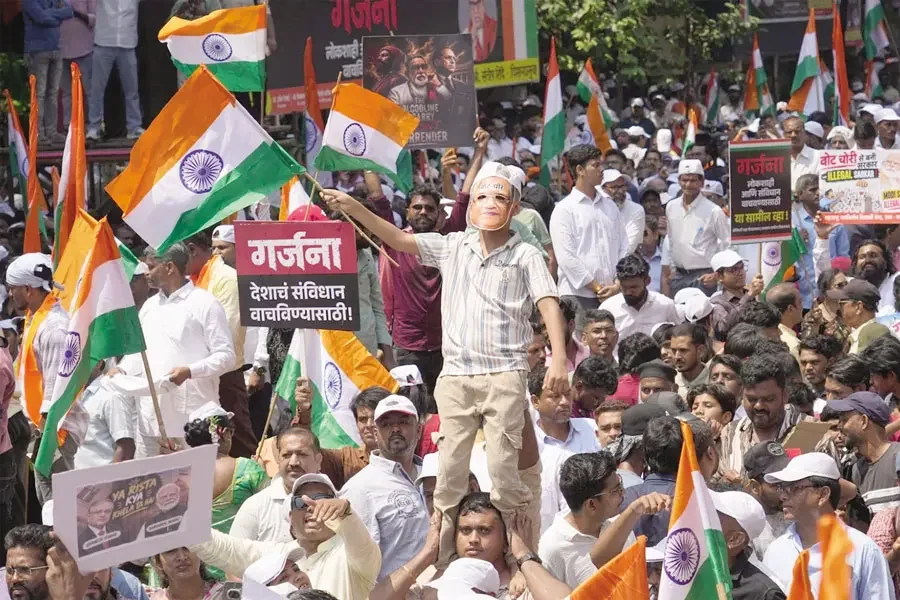
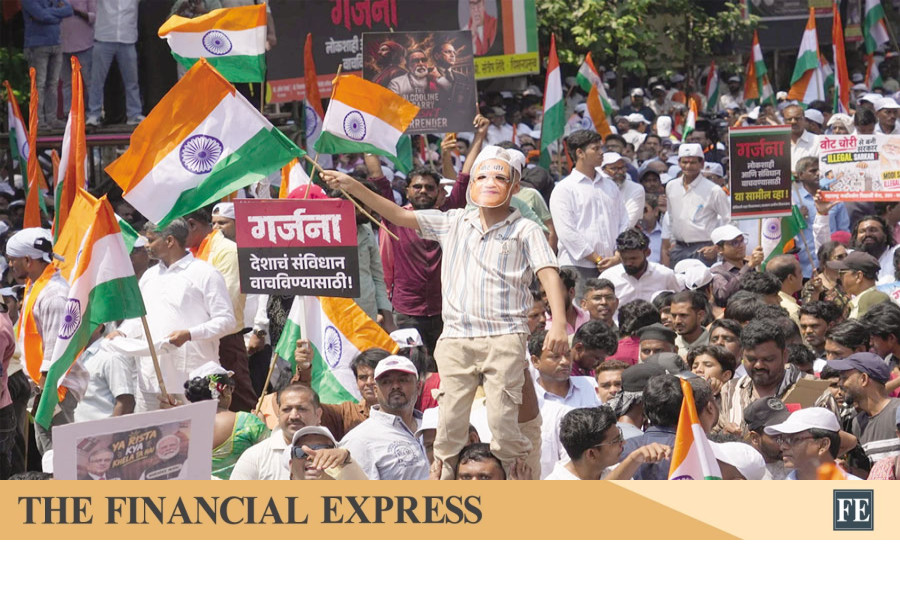
A protester wears a mask depicting Chief Election Commissioner Gyanesh Kumar with the words "vote theft" during a recent protest demanding resignation of the CEC in Mumbai —Photo AP
India's confrontation over the independence of its election machinery has become a test not merely of the Bharatiya Janata Party's political instincts but also of the resilience of the world's largest democracy. The opposition's demand for Chief Election Commissioner Gyanesh Kumar's resignation, amid allegations of irregularities in electoral rolls and a sweeping security crackdown in Delhi, raises a fundamental question: is Narendra Modi's government responding to a democratic challenge with confidence or resorting to tactics that could ultimately weaken its own political standing?
For years, the BJP has demonstrated considerable skill in confronting political opposition. Strong leadership, effective communications, electoral organisation and a fragmented opposition have helped Modi's party weather protests and criticism. Congress-led campaigns have often struggled to convert public anger into a sustained national movement, despite widespread mobilisation over contentious citizenship legislation, agricultural reforms and other issues.
The BJP has frequently benefited from divisions among opposition parties over leadership, strategy and priorities. By portraying critics as politically motivated, the government has often contained challenges before they could develop into a broader threat. But the current agitation may prove more difficult to manage. Its central issues -- the integrity of electoral rolls, the right to vote and the independence of constitutional institutions -- touch the foundations of democratic legitimacy.
The government's response to the protests at Delhi's Jantar Mantar on 10 October suggests that its familiar playbook may be losing effectiveness. Rather than defusing tensions, mass detentions and restrictions on public movement risk giving the agitation fresh momentum.
At the centre of the controversy is the opposition's demand for Kumar's resignation over alleged irregularities in the Special Intensive Revision (SIR) of electoral rolls. Critics contend that eligible voters could be wrongly removed while ineligible names remain on the lists, potentially undermining the fairness of elections.
Accurate electoral rolls are essential to any democracy. The Election Commission is entitled to remove duplicate and ineligible entries, but such revisions must be transparent, verifiable and accompanied by effective safeguards against wrongful deletion. Allegations of deliberate manipulation require credible evidence; equally, they cannot be dismissed merely because they are politically inconvenient.
The chief election commissioner occupies a position that demands public confidence in impartiality. Even the perception that the electoral machinery favours the ruling party can damage trust in the democratic process. The question, therefore, extends beyond Kumar's tenure: it concerns whether the institution responsible for administering elections can demonstrate independence from political influence.
The opposition has every right to demand accountability, but its claims must be examined through evidence and established procedures. A transparent investigation would help establish the facts and either substantiate the allegations or dispel them. The government's interests would be better served by encouraging such scrutiny than by allowing the controversy to become a test of political strength.
The emergence of the Cockroach Janata Party (CJP) adds another dimension to the agitation. The youth-led movement, which grew from an online satirical platform into a vehicle for protest, has sought to mobilise students and young people around unemployment, educational opportunity and perceived failures of public institutions.
Its earlier campaign over examination-related grievances reportedly culminated in the resignation of Education Minister Dharmendra Pradhan. That episode gave the movement credibility and demonstrated its capacity to turn online mobilisation into political pressure. Its subsequent involvement in the campaign against Kumar indicates an attempt to broaden its appeal from youth-specific concerns to the integrity of democratic institutions.
The CJP's previous success does not establish the validity of its present allegations. Nevertheless, it suggests that the movement cannot simply be dismissed as a fringe group or an extension of established opposition parties. Its appeal among young people could bring new constituencies into a campaign that might otherwise struggle to reach beyond traditional political supporters.
The BJP should recognise this distinction. A movement rooted in concerns about jobs, education and voting rights may resonate with citizens who have little attachment to Congress or other opposition parties. Heavy-handed policing could strengthen that appeal by allowing the protesters to frame their struggle as one between ordinary citizens and an unresponsive state.
The reported detention of thousands of people in Delhi, including opposition leaders, former chief ministers, student activists and social media personalities, has consequently become a political issue in its own right. Although authorities have a responsibility to maintain public order, preventive action must be proportionate and consistent with the right to peaceful assembly.
The distinction between maintaining security and suppressing dissent is crucial. Large deployments of police, barricades and mass detentions may prevent a demonstration from gathering momentum in the short term. But they can also generate damaging images that overshadow the government's arguments and reinforce allegations of intolerance.
Restrictions on rail services, metro stations and roads are particularly counterproductive when they inconvenience people who have no involvement in the protests. Public transport is essential to the daily lives of millions. Disrupting journeys, obstructing access to workplaces and restricting movement can turn an otherwise distant political dispute into a personal grievance.
A government seeking to contain public anger may thus end up fueling it further. The more ordinary citizens experience the consequences of a security operation, the greater the risk that resentment will extend beyond the original protesters. Such measures also create an uncomfortable contradiction: a democracy cannot convincingly celebrate political participation while making it unnecessarily difficult for citizens to assemble and express dissent.
The Supreme Court's reported intervention over the voter-roll revision further underscores the importance of institutional scrutiny. Judicial oversight should be allowed to proceed without political pressure, while the Election Commission should explain its procedures clearly and provide accessible mechanisms for voters to challenge wrongful deletions.
The opposition, too, must act responsibly. Political mobilisation is a legitimate democratic instrument, but accusations must be supported by evidence and pursued through lawful means. The demand for Kumar's resignation should not become a substitute for establishing whether electoral irregularities occurred and who, if anyone, was responsible.
For Modi, the wisest course is to avoid treating every protest as a challenge to his authority. A confident government should be able to tolerate criticism, facilitate peaceful demonstrations and cooperate with independent scrutiny without fearing that doing so amounts to political surrender.
India's democratic standing rests on more than regular elections and high voter participation. It depends on public confidence in electoral institutions, respect for constitutional freedoms and the ability of citizens to question those in power without facing disproportionate punishment.
The demand for Kumar's resignation may ultimately succeed or fail. But the government's handling of the controversy will help determine whether public trust is strengthened or further eroded.
For the BJP, this is a moment to reconsider a familiar strategy before a manageable political dispute becomes a broader crisis of legitimacy. For India, it is an acid test of whether the world's largest democracy can maintain public order without compromising the freedoms that give democracy its meaning.
A prudent and rational response would not represent a concession to the opposition. It would demonstrate political maturity. The government must show that it is confident enough to listen, accountable enough to permit scrutiny and committed enough to protect every eligible citizen's right to vote.
A protester wears a mask depicting Chief Election Commissioner Gyanesh Kumar with the words "vote theft" during a recent protest demanding resignation of the CEC in Mumbai —Photo AP
India's confrontation over the independence of its election machinery has become a test not merely of the Bharatiya Janata Party's political instincts but also of the resilience of the world's largest democracy. The opposition's demand for Chief Election Commissioner Gyanesh Kumar's resignation, amid allegations of irregularities in electoral rolls and a sweeping security crackdown in Delhi, raises a fundamental question: is Narendra Modi's government responding to a democratic challenge with confidence or resorting to tactics that could ultimately weaken its own political standing?
For years, the BJP has demonstrated considerable skill in confronting political opposition. Strong leadership, effective communications, electoral organisation and a fragmented opposition have helped Modi's party weather protests and criticism. Congress-led campaigns have often struggled to convert public anger into a sustained national movement, despite widespread mobilisation over contentious citizenship legislation, agricultural reforms and other issues.
The BJP has frequently benefited from divisions among opposition parties over leadership, strategy and priorities. By portraying critics as politically motivated, the government has often contained challenges before they could develop into a broader threat. But the current agitation may prove more difficult to manage. Its central issues -- the integrity of electoral rolls, the right to vote and the independence of constitutional institutions -- touch the foundations of democratic legitimacy.
The government's response to the protests at Delhi's Jantar Mantar on 10 October suggests that its familiar playbook may be losing effectiveness. Rather than defusing tensions, mass detentions and restrictions on public movement risk giving the agitation fresh momentum.
At the centre of the controversy is the opposition's demand for Kumar's resignation over alleged irregularities in the Special Intensive Revision (SIR) of electoral rolls. Critics contend that eligible voters could be wrongly removed while ineligible names remain on the lists, potentially undermining the fairness of elections.
Accurate electoral rolls are essential to any democracy. The Election Commission is entitled to remove duplicate and ineligible entries, but such revisions must be transparent, verifiable and accompanied by effective safeguards against wrongful deletion. Allegations of deliberate manipulation require credible evidence; equally, they cannot be dismissed merely because they are politically inconvenient.
The chief election commissioner occupies a position that demands public confidence in impartiality. Even the perception that the electoral machinery favours the ruling party can damage trust in the democratic process. The question, therefore, extends beyond Kumar's tenure: it concerns whether the institution responsible for administering elections can demonstrate independence from political influence.
The opposition has every right to demand accountability, but its claims must be examined through evidence and established procedures. A transparent investigation would help establish the facts and either substantiate the allegations or dispel them. The government's interests would be better served by encouraging such scrutiny than by allowing the controversy to become a test of political strength.
The emergence of the Cockroach Janata Party (CJP) adds another dimension to the agitation. The youth-led movement, which grew from an online satirical platform into a vehicle for protest, has sought to mobilise students and young people around unemployment, educational opportunity and perceived failures of public institutions.
Its earlier campaign over examination-related grievances reportedly culminated in the resignation of Education Minister Dharmendra Pradhan. That episode gave the movement credibility and demonstrated its capacity to turn online mobilisation into political pressure. Its subsequent involvement in the campaign against Kumar indicates an attempt to broaden its appeal from youth-specific concerns to the integrity of democratic institutions.
The CJP's previous success does not establish the validity of its present allegations. Nevertheless, it suggests that the movement cannot simply be dismissed as a fringe group or an extension of established opposition parties. Its appeal among young people could bring new constituencies into a campaign that might otherwise struggle to reach beyond traditional political supporters.
The BJP should recognise this distinction. A movement rooted in concerns about jobs, education and voting rights may resonate with citizens who have little attachment to Congress or other opposition parties. Heavy-handed policing could strengthen that appeal by allowing the protesters to frame their struggle as one between ordinary citizens and an unresponsive state.
The reported detention of thousands of people in Delhi, including opposition leaders, former chief ministers, student activists and social media personalities, has consequently become a political issue in its own right. Although authorities have a responsibility to maintain public order, preventive action must be proportionate and consistent with the right to peaceful assembly.
The distinction between maintaining security and suppressing dissent is crucial. Large deployments of police, barricades and mass detentions may prevent a demonstration from gathering momentum in the short term. But they can also generate damaging images that overshadow the government's arguments and reinforce allegations of intolerance.
Restrictions on rail services, metro stations and roads are particularly counterproductive when they inconvenience people who have no involvement in the protests. Public transport is essential to the daily lives of millions. Disrupting journeys, obstructing access to workplaces and restricting movement can turn an otherwise distant political dispute into a personal grievance.
A government seeking to contain public anger may thus end up fueling it further. The more ordinary citizens experience the consequences of a security operation, the greater the risk that resentment will extend beyond the original protesters. Such measures also create an uncomfortable contradiction: a democracy cannot convincingly celebrate political participation while making it unnecessarily difficult for citizens to assemble and express dissent.
The Supreme Court's reported intervention over the voter-roll revision further underscores the importance of institutional scrutiny. Judicial oversight should be allowed to proceed without political pressure, while the Election Commission should explain its procedures clearly and provide accessible mechanisms for voters to challenge wrongful deletions.
The opposition, too, must act responsibly. Political mobilisation is a legitimate democratic instrument, but accusations must be supported by evidence and pursued through lawful means. The demand for Kumar's resignation should not become a substitute for establishing whether electoral irregularities occurred and who, if anyone, was responsible.
For Modi, the wisest course is to avoid treating every protest as a challenge to his authority. A confident government should be able to tolerate criticism, facilitate peaceful demonstrations and cooperate with independent scrutiny without fearing that doing so amounts to political surrender.
India's democratic standing rests on more than regular elections and high voter participation. It depends on public confidence in electoral institutions, respect for constitutional freedoms and the ability of citizens to question those in power without facing disproportionate punishment.
The demand for Kumar's resignation may ultimately succeed or fail. But the government's handling of the controversy will help determine whether public trust is strengthened or further eroded.
For the BJP, this is a moment to reconsider a familiar strategy before a manageable political dispute becomes a broader crisis of legitimacy. For India, it is an acid test of whether the world's largest democracy can maintain public order without compromising the freedoms that give democracy its meaning.
A prudent and rational response would not represent a concession to the opposition. It would demonstrate political maturity. The government must show that it is confident enough to listen, accountable enough to permit scrutiny and committed enough to protect every eligible citizen's right to vote.
