Bangladesh Defense
Saif
Senior Member
- Jan 24, 2024
- 21,655
- 9,794
- Nation

- Residence
- Axis Group


US opens direct talks with Myanmar's generals, reversing years of isolation
The Trump administration has begun direct talks with Myanmar’s military-installed government, according to US officials and others familiar with the outreach, in a sharp reversal of Washington's efforts to isolate the country’s generals after the 2021 coup.
 en.prothomalo.com
US opens direct talks with Myanmar's generals, reversing years of isolation
Reuters
Washington
Published: 08 Oct 2026, 22: 50
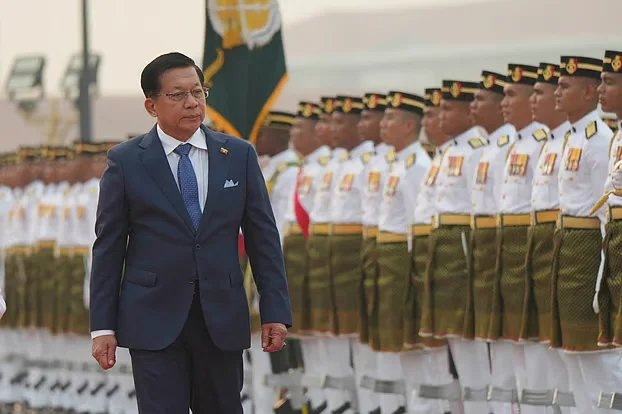
Myanmar’s President Min Aung Hlaing inspects an honor guard during a welcoming ceremony ahead of his meeting with Malaysia’s Prime Minister Anwar Ibrahim at the Prime Minister’s Office in Putrajaya, Malaysia, Thursday, 8 Oct 2026. Reuters
The Trump administration has begun direct talks with Myanmar’s military-installed government, according to US officials and others familiar with the outreach, in a sharp reversal of Washington's efforts to isolate the country’s generals after the 2021 coup.
The US Assistant Secretary of State for Intelligence and Research, Michael Vance, played a leading role in the outreach, which has focused on shutting down scam centers that target Americans but could lead to broader engagement, including on Myanmar’s rare-earth mineral deposits, according to seven current and former officials and others familiar with the policy shift.
Vance joined talks with coup leader-turned-president Min Aung Hlaing in the capital Naypyitaw on September 15-16. The meeting was aimed at securing the release of American businessman Adam Castillo but also provided an opening for further engagement, four of the people said.
Last month’s meeting — the highest‑level contact since the coup — underscores a broader Trump‑administration foreign policy tilt away from democracy promotion toward transactional engagement.
The presence of Vance, who was confirmed as the State Department’s top intelligence official in August, and his ongoing role in US policy toward Myanmar have not been previously reported.
Military leader remains under US sanctions
Min Aung Hlaing, the former military chief, remains under US sanctions for human rights abuses, including the 2016-2017 mass killings and expulsions of hundreds of thousands of Rohingya Muslims that Washington declared a genocide. Less than two weeks after Vance’s visit, Myanmar’s military conducted an airstrike on a crowded marketplace in Rakhine state, killing over 50 people and injuring scores more, according to United Nations human rights officials.
The State Department said it engages with all groups in Myanmar on issues affecting US interests and raises the need to cease violence and release political prisoners.
“You don't solve problems by ignoring them. You solve problems by addressing them,” spokesperson Tommy Pigott said in a statement.
A spokesperson for the military-backed government did not respond to a request for comment. Min Aung Hlaing, who has cited electoral fraud to justify the coup and labeled his opponents as terrorists, is seeking international legitimacy for his nominally civilian government.
Current and former officials say Vance has met players from all sides of Myanmar’s complex conflict and helped shape the Trump administration’s policy toward the country.
Intelligence chiefs — such as Vance — do not typically steer policy because of concerns about compromising analytic independence.
“If you let policy dictate to intelligence, you can't be sure you're getting a real honest assessment of the facts,” said Richard Betts, an adjunct senior fellow at the Council on Foreign Relations who has consulted for US intelligence agencies.
Pigott declined to address Vance’s role but said the administration “operates as a team with the president as the lead.”
A detained American, and an opening
Castillo, a former head of the American Chamber of Commerce in Myanmar, was detained at Yangon airport on 11 June by Myanmar authorities on what his supporters have described as trumped-up charges. The US government has not commented on whether Castillo was wrongfully detained.
People familiar with the matter said White House, National Security Council and State Department officials held back-channel negotiations with Myanmar officials to secure his release. One person said Myanmar asked only "to have an official engagement at the right level with the US government" in return.
Castillo declined to comment beyond crediting President Donald Trump for his release.
The meeting builds on a June meeting between US and Myanmar officials in Tokyo also involving Vance, four people said. One of the people said officials from the Treasury Department, which oversees sanctions, the Department of Homeland Security, and the Pentagon took part.
It was unclear who represented Myanmar at the talks.
Vance, who became involved in Myanmar policy while advising Vice President JD Vance on Asian affairs, has also met in person and virtually with the democratic opposition and ethnic armed groups fighting the military, five of the people said.
A major focus of the US push is getting Myanmar's help shuttering scam hubsoperating on its territory that run romance and other frauds, which have scammed Americans out of billions of dollars. Two people familiar with the matter said the FBI has had direct contact with Myanmar’s authorities on cyber scams.
Researchers say many scams are run from areas under militia control, with some proceeds flowing to the military, raising doubts about whether Myanmar’s leaders are serious about enforcement.
US officials also discussed access to Myanmar’s massive deposits of heavy rare earths that are used in electric vehicles and wind turbines. US officials acknowledge obstacles: the deposits mainly lie in territory held by ethnic armies fighting Myanmar’s military government, and China, currently the main importer, could see any US role as a challenge.
Still, with Washington seeking to diversify supply chains away from China, Myanmar's deposits remain a recurring topic in conversations, the people said.
From sanctions to engagement
After the 2021 coup, President Joe Biden's administration froze Myanmar's assets at the Federal Reserve Bank of New York and imposed sanctions on senior officers and military‑linked businesses.
In 2022, Congress authorized non-lethal support for the opposition, funding early-warning systems for airstrikes and incentives for officers to defect.
Most of those programs were cut during Trump’s foreign-aid overhaul last year, according to four current and former officials and State Department correspondence with Congress reviewed by Reuters.
The State Department said its engagement with the military government does not diminish its relationships with other groups. The US continues to provide assistance to areas outside military control, it said, without detailing that aid.
Representative Gregory Meeks, the top Democrat on the House Foreign Affairs Committee, said the shift was “contrary to both our values and our interests.”
“By engaging Min Aung Hlaing while failing to implement congressionally mandated sanctions and deploy appropriated democracy funding, Secretary (Marco) Rubio is ceding U.S. leadership and providing this murderous regime greater international legitimacy,” Meeks said in a statement to Reuters.
Myanmar's government, installed after elections criticized by rights groups as a sham, has hired lobbyists to press its case in Washington.
In April, Roger Stone, a longtime Trump adviser, began consulting for DCI Group on behalf of Myanmar's Ministry of Information, according to Foreign Agents Registration Act filings. Stone was convicted in 2019 of obstructing a congressional investigation into Russian interference in the 2016 election. Trump later pardoned him.
A newsletter distributed by DCI warned in June that Washington risked being shut out of access to critical minerals if it did not engage with Myanmar.
Reuters
Washington
Published: 08 Oct 2026, 22: 50
Myanmar’s President Min Aung Hlaing inspects an honor guard during a welcoming ceremony ahead of his meeting with Malaysia’s Prime Minister Anwar Ibrahim at the Prime Minister’s Office in Putrajaya, Malaysia, Thursday, 8 Oct 2026. Reuters
The Trump administration has begun direct talks with Myanmar’s military-installed government, according to US officials and others familiar with the outreach, in a sharp reversal of Washington's efforts to isolate the country’s generals after the 2021 coup.
The US Assistant Secretary of State for Intelligence and Research, Michael Vance, played a leading role in the outreach, which has focused on shutting down scam centers that target Americans but could lead to broader engagement, including on Myanmar’s rare-earth mineral deposits, according to seven current and former officials and others familiar with the policy shift.
Vance joined talks with coup leader-turned-president Min Aung Hlaing in the capital Naypyitaw on September 15-16. The meeting was aimed at securing the release of American businessman Adam Castillo but also provided an opening for further engagement, four of the people said.
Last month’s meeting — the highest‑level contact since the coup — underscores a broader Trump‑administration foreign policy tilt away from democracy promotion toward transactional engagement.
The presence of Vance, who was confirmed as the State Department’s top intelligence official in August, and his ongoing role in US policy toward Myanmar have not been previously reported.
Military leader remains under US sanctions
Min Aung Hlaing, the former military chief, remains under US sanctions for human rights abuses, including the 2016-2017 mass killings and expulsions of hundreds of thousands of Rohingya Muslims that Washington declared a genocide. Less than two weeks after Vance’s visit, Myanmar’s military conducted an airstrike on a crowded marketplace in Rakhine state, killing over 50 people and injuring scores more, according to United Nations human rights officials.
The State Department said it engages with all groups in Myanmar on issues affecting US interests and raises the need to cease violence and release political prisoners.
“You don't solve problems by ignoring them. You solve problems by addressing them,” spokesperson Tommy Pigott said in a statement.
A spokesperson for the military-backed government did not respond to a request for comment. Min Aung Hlaing, who has cited electoral fraud to justify the coup and labeled his opponents as terrorists, is seeking international legitimacy for his nominally civilian government.
Current and former officials say Vance has met players from all sides of Myanmar’s complex conflict and helped shape the Trump administration’s policy toward the country.
Intelligence chiefs — such as Vance — do not typically steer policy because of concerns about compromising analytic independence.
“If you let policy dictate to intelligence, you can't be sure you're getting a real honest assessment of the facts,” said Richard Betts, an adjunct senior fellow at the Council on Foreign Relations who has consulted for US intelligence agencies.
Pigott declined to address Vance’s role but said the administration “operates as a team with the president as the lead.”
A detained American, and an opening
Castillo, a former head of the American Chamber of Commerce in Myanmar, was detained at Yangon airport on 11 June by Myanmar authorities on what his supporters have described as trumped-up charges. The US government has not commented on whether Castillo was wrongfully detained.
People familiar with the matter said White House, National Security Council and State Department officials held back-channel negotiations with Myanmar officials to secure his release. One person said Myanmar asked only "to have an official engagement at the right level with the US government" in return.
Castillo declined to comment beyond crediting President Donald Trump for his release.
The meeting builds on a June meeting between US and Myanmar officials in Tokyo also involving Vance, four people said. One of the people said officials from the Treasury Department, which oversees sanctions, the Department of Homeland Security, and the Pentagon took part.
It was unclear who represented Myanmar at the talks.
Vance, who became involved in Myanmar policy while advising Vice President JD Vance on Asian affairs, has also met in person and virtually with the democratic opposition and ethnic armed groups fighting the military, five of the people said.
A major focus of the US push is getting Myanmar's help shuttering scam hubsoperating on its territory that run romance and other frauds, which have scammed Americans out of billions of dollars. Two people familiar with the matter said the FBI has had direct contact with Myanmar’s authorities on cyber scams.
Researchers say many scams are run from areas under militia control, with some proceeds flowing to the military, raising doubts about whether Myanmar’s leaders are serious about enforcement.
US officials also discussed access to Myanmar’s massive deposits of heavy rare earths that are used in electric vehicles and wind turbines. US officials acknowledge obstacles: the deposits mainly lie in territory held by ethnic armies fighting Myanmar’s military government, and China, currently the main importer, could see any US role as a challenge.
Still, with Washington seeking to diversify supply chains away from China, Myanmar's deposits remain a recurring topic in conversations, the people said.
From sanctions to engagement
After the 2021 coup, President Joe Biden's administration froze Myanmar's assets at the Federal Reserve Bank of New York and imposed sanctions on senior officers and military‑linked businesses.
In 2022, Congress authorized non-lethal support for the opposition, funding early-warning systems for airstrikes and incentives for officers to defect.
Most of those programs were cut during Trump’s foreign-aid overhaul last year, according to four current and former officials and State Department correspondence with Congress reviewed by Reuters.
The State Department said its engagement with the military government does not diminish its relationships with other groups. The US continues to provide assistance to areas outside military control, it said, without detailing that aid.
Representative Gregory Meeks, the top Democrat on the House Foreign Affairs Committee, said the shift was “contrary to both our values and our interests.”
“By engaging Min Aung Hlaing while failing to implement congressionally mandated sanctions and deploy appropriated democracy funding, Secretary (Marco) Rubio is ceding U.S. leadership and providing this murderous regime greater international legitimacy,” Meeks said in a statement to Reuters.
Myanmar's government, installed after elections criticized by rights groups as a sham, has hired lobbyists to press its case in Washington.
In April, Roger Stone, a longtime Trump adviser, began consulting for DCI Group on behalf of Myanmar's Ministry of Information, according to Foreign Agents Registration Act filings. Stone was convicted in 2019 of obstructing a congressional investigation into Russian interference in the 2016 election. Trump later pardoned him.
A newsletter distributed by DCI warned in June that Washington risked being shut out of access to critical minerals if it did not engage with Myanmar.