Bangladesh Defense
Saif
Senior Member
- Jan 24, 2024
- 21,011
- 9,685
- Nation

- Residence
- Axis Group


Why the Ganges water treaty needs a climate-ready reset
The 1996 Ganges Water Treaty (GWT) is approaching the end of its life cycle, with the 30-year treaty set to expire in December 2026.
Why the Ganges water treaty needs a climate-ready reset
Zillur Rahman
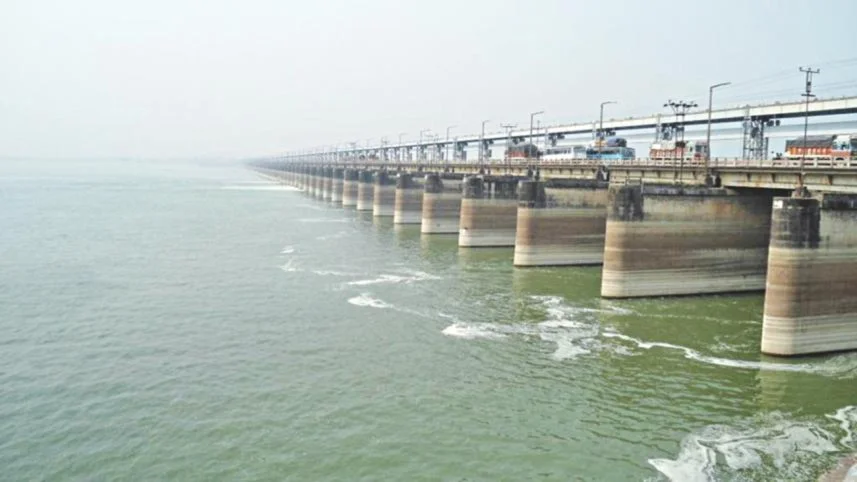
'Over the last two decades, empirical evidence has shown that the water regime in the Ganges has shifted in India's favour.' FILE PHOTO: STAR
The 1996 Ganges Water Treaty (GWT) is approaching the end of its life cycle, with the 30-year treaty set to expire in December 2026. While there are several questions floating around—including whether this treaty should be continued or terminated—the most important one is this: how can Bangladesh reach a fair and efficient agreement with India regarding the water use in the Ganges basin once the treaty expires? Currently, the main challenges posed to the GWT are related to climate change, upstream development, and the treaty’s inherent flaws.
The treaty established a scheme for sharing flows of the Ganges during the dry season between January and May, and its design relied on hydrological data from 1949 to 1988. One of the problems with this treaty was its reliance on historical average water flow data to decide water allocation in an ever-changing system. Most of the annual precipitation in South Asia is accumulated during the monsoon season, and the rest flows through the Ganges during the low-flow period. Thus, any shift in precipitation rates or upstream consumption or withdrawal will significantly affect this system, rendering historical average data irrelevant.
Over the last two decades, empirical evidence has shown that the water regime in the Ganges has shifted in India’s favour. In many cases, Bangladesh received lower water flow per 10-day period at Hardinge Bridge than the amounts allocated under the agreement—especially during the dry season—according to releases from the Farakka dam. According to a study that compared the actual yearly release from Farakka and the corresponding flow at Hardinge Bridge between 1997 and 2016, around 31 percent of the time (or, 94 out of 300 events), Bangladesh received less water at Hardinge Bridge compared to what presumably was released from Farakka.
The fact that a part of Bangladesh receives less water than it is supposed to receive under the treaty poses severe problems for the country. For the agricultural sector, fisheries, and ecosystems, what is crucial is the actual amount of flow at the downstream rather than its allocation at the upstream point. On the other hand, India’s perspective in negotiating over this issue should also be considered. The increasing upstream water demand, the water security of states in the region, and India’s emphasis on complying with the treaty frame its negotiation strategy.
These factors indicate one of the major flaws in the treaty design—the lack of a sound method for resolving disputes. Although joint monitoring and periodic discussion of disagreements can be considered a solution, no effective verification of release volumes nor dispute resolution mechanisms are envisioned in it. Thus, any dispute ends up in negotiations, often resulting in procrastination.
Climate change is intensifying these challenges by introducing even greater variability in the Ganges’ hydrological cycle. It is known that decreased snow persistence in the Himalayas and altered river regimes have resulted in lower flows and increased interannual variability. According to research, flows at Hardinge Bridge have fallen dramatically since the establishment of the treaty. Against the backdrop of this changing hydrologic picture, there is a need to rethink the whole framework of the treaty. Therefore, four major priorities arise for Bangladesh in negotiating over this agreement.
First, it is essential to achieve full data transparency to create mutual understanding between the two parties regarding the situation and to facilitate further cooperation. Second, the idea of guaranteeing flow volume should be revised, with Bangladesh emphasising the importance of guaranteed flow at Hardinge Bridge rather than at Farakka. Third, the allocation should be revised to account for climatic variability using a rolling baseline of hydrological data. Fourth, the dispute resolution mechanism should be introduced.
Apart from technical solutions, another challenge emerges concerning the strategic approach to negotiating the agreement. The current treaty is based on bilateral agreements, which may be too limited to address the problem at hand. Indeed, there are good grounds for considering cooperation with Nepal to manage flows of the Ganges River during the dry season. Nevertheless, while negotiating this kind of cooperation, it is important for Bangladesh to recognise several pitfalls, namely, substantial investments, a lengthy decision-making process, and political alignment among all parties involved. Therefore, the most practical solution would be to renegotiate the agreement in a bilateral format but incorporating recent changes into its provisions.
It goes without saying that allowing the treaty to expire without negotiating anything would be a dangerous choice. In the event of the termination of the existing agreement, Bangladesh will lose an already-established monitoring system, leaving it in an even more vulnerable position than before. On the other hand, merely renewing the agreement would mean repeating previous mistakes, thereby locking Bangladesh into a lengthy, problematic deal. The key lies somewhere in between.
Zillur Rahman is a political analyst and president at the Centre for Governance Studies (CGS) and hosts ‘Tritiyo Matra’ on Channel i.
Zillur Rahman
'Over the last two decades, empirical evidence has shown that the water regime in the Ganges has shifted in India's favour.' FILE PHOTO: STAR
The 1996 Ganges Water Treaty (GWT) is approaching the end of its life cycle, with the 30-year treaty set to expire in December 2026. While there are several questions floating around—including whether this treaty should be continued or terminated—the most important one is this: how can Bangladesh reach a fair and efficient agreement with India regarding the water use in the Ganges basin once the treaty expires? Currently, the main challenges posed to the GWT are related to climate change, upstream development, and the treaty’s inherent flaws.
The treaty established a scheme for sharing flows of the Ganges during the dry season between January and May, and its design relied on hydrological data from 1949 to 1988. One of the problems with this treaty was its reliance on historical average water flow data to decide water allocation in an ever-changing system. Most of the annual precipitation in South Asia is accumulated during the monsoon season, and the rest flows through the Ganges during the low-flow period. Thus, any shift in precipitation rates or upstream consumption or withdrawal will significantly affect this system, rendering historical average data irrelevant.
Over the last two decades, empirical evidence has shown that the water regime in the Ganges has shifted in India’s favour. In many cases, Bangladesh received lower water flow per 10-day period at Hardinge Bridge than the amounts allocated under the agreement—especially during the dry season—according to releases from the Farakka dam. According to a study that compared the actual yearly release from Farakka and the corresponding flow at Hardinge Bridge between 1997 and 2016, around 31 percent of the time (or, 94 out of 300 events), Bangladesh received less water at Hardinge Bridge compared to what presumably was released from Farakka.
The fact that a part of Bangladesh receives less water than it is supposed to receive under the treaty poses severe problems for the country. For the agricultural sector, fisheries, and ecosystems, what is crucial is the actual amount of flow at the downstream rather than its allocation at the upstream point. On the other hand, India’s perspective in negotiating over this issue should also be considered. The increasing upstream water demand, the water security of states in the region, and India’s emphasis on complying with the treaty frame its negotiation strategy.
These factors indicate one of the major flaws in the treaty design—the lack of a sound method for resolving disputes. Although joint monitoring and periodic discussion of disagreements can be considered a solution, no effective verification of release volumes nor dispute resolution mechanisms are envisioned in it. Thus, any dispute ends up in negotiations, often resulting in procrastination.
Climate change is intensifying these challenges by introducing even greater variability in the Ganges’ hydrological cycle. It is known that decreased snow persistence in the Himalayas and altered river regimes have resulted in lower flows and increased interannual variability. According to research, flows at Hardinge Bridge have fallen dramatically since the establishment of the treaty. Against the backdrop of this changing hydrologic picture, there is a need to rethink the whole framework of the treaty. Therefore, four major priorities arise for Bangladesh in negotiating over this agreement.
First, it is essential to achieve full data transparency to create mutual understanding between the two parties regarding the situation and to facilitate further cooperation. Second, the idea of guaranteeing flow volume should be revised, with Bangladesh emphasising the importance of guaranteed flow at Hardinge Bridge rather than at Farakka. Third, the allocation should be revised to account for climatic variability using a rolling baseline of hydrological data. Fourth, the dispute resolution mechanism should be introduced.
Apart from technical solutions, another challenge emerges concerning the strategic approach to negotiating the agreement. The current treaty is based on bilateral agreements, which may be too limited to address the problem at hand. Indeed, there are good grounds for considering cooperation with Nepal to manage flows of the Ganges River during the dry season. Nevertheless, while negotiating this kind of cooperation, it is important for Bangladesh to recognise several pitfalls, namely, substantial investments, a lengthy decision-making process, and political alignment among all parties involved. Therefore, the most practical solution would be to renegotiate the agreement in a bilateral format but incorporating recent changes into its provisions.
It goes without saying that allowing the treaty to expire without negotiating anything would be a dangerous choice. In the event of the termination of the existing agreement, Bangladesh will lose an already-established monitoring system, leaving it in an even more vulnerable position than before. On the other hand, merely renewing the agreement would mean repeating previous mistakes, thereby locking Bangladesh into a lengthy, problematic deal. The key lies somewhere in between.
Zillur Rahman is a political analyst and president at the Centre for Governance Studies (CGS) and hosts ‘Tritiyo Matra’ on Channel i.