โ˜• Support Us โ˜•
[๐Ÿ‡ง๐Ÿ‡ฉ] - Indo-Bangla Relation: India's Regional Ambition, Geopolitical Reality, and Strategic Options For Bangladesh | Page 55 | PKDefense

[๐Ÿ‡ง๐Ÿ‡ฉ] Indo-Bangla Relation: India's Regional Ambition, Geopolitical Reality, and Strategic Options For Bangladesh

Reply (Scroll)
Press space to scroll through posts
G Bangladesh Defense
[๐Ÿ‡ง๐Ÿ‡ฉ] Indo-Bangla Relation: India's Regional Ambition, Geopolitical Reality, and Strategic Options For Bangladesh
547
23K
More threads by Saif


Comparing Poverty Rates in India and Bangladesh: Why India Lags Behind
Shahos Datta

In recent years, Bangladesh has made remarkable progress in reducing its poverty rate, surpassing India in several key socio-economic indicators. While both countries have historically faced similar challenges, such as high population density, reliance on agriculture, and vulnerability to natural disasters, Bangladesh has managed to outpace India in poverty reduction. This article explores the comparative poverty rates of India and Bangladesh, analyzes the reasons behind Bangladeshโ€™s success, and examines why India lags behind.

Poverty Rates: A Comparative Overview

As of recent data:

Bangladesh: The poverty rate in Bangladesh has declined significantly, with less than 20% of the population living below the poverty line as of 2023. Extreme poverty (those living on less than $1.90 per day) has also seen a sharp reduction.

India: Indiaโ€™s poverty rate is estimated to be around 20-30%, with significant regional disparities. While urban areas have seen progress, rural poverty remains a persistent challenge.

Despite Indiaโ€™s larger economy and higher GDP, Bangladesh has outperformed India in reducing poverty and improving human development indicators such as life expectancy, maternal mortality, and gender parity in education.

Reasons Behind Bangladeshโ€™s Success

Focus on Social Development:


Bangladesh has prioritized investments in social sectors like education, healthcare, and womenโ€™s empowerment. Programs like the Female Secondary School Stipend Program have significantly improved girlsโ€™ education rates, leading to better economic outcomes.
The country has also achieved remarkable success in reducing child mortality and improving maternal health through targeted healthcare initiatives.

Textile and Garment Industry:

Bangladeshโ€™s booming ready-made garment (RMG) industry has been a major driver of economic growth and employment. The sector employs millions of workers, particularly women, providing them with stable incomes and lifting families out of poverty.
In contrast, Indiaโ€™s manufacturing sector has not grown at the same pace, and its labor-intensive industries have struggled to create jobs on a similar scale.

Effective Microfinance and NGO Involvement:

Bangladesh is home to pioneering microfinance institutions like Grameen Bank, which have empowered millions of low-income individuals, especially women, to start small businesses and improve their livelihoods.

NGOs like BRAC have played a significant role in poverty alleviation, providing education, healthcare, and financial services to marginalized communities.

Population Management:

Bangladesh has made significant strides in population control through family planning programs, resulting in a lower population growth rate compared to India. This has reduced the pressure on resources and allowed for more targeted poverty alleviation efforts.

Pro-Poor Policies:

The Bangladeshi government has implemented pro-poor policies, such as social safety nets, food security programs, and disaster management initiatives, which have directly benefited the poorest segments of society.

Why India Lags Behind

Inequality and Regional Disparities:


Indiaโ€™s poverty reduction efforts have been uneven, with states like Bihar, Jharkhand, and Uttar Pradesh lagging behind. Regional disparities in development and resource allocation have hindered overall progress.

In contrast, Bangladesh has achieved more uniform development across its regions.

Slower Growth in Labor-Intensive Industries:

Indiaโ€™s manufacturing sector has not grown as rapidly as Bangladeshโ€™s, particularly in labor-intensive industries like textiles. This has limited job creation for low-skilled workers, who form a significant portion of the poor.

Inefficient Implementation of Welfare Schemes:

While India has launched numerous poverty alleviation programs, issues like corruption, bureaucratic inefficiency, and lack of awareness have often diluted their impact.

Bangladeshโ€™s smaller size and more centralized governance structure have allowed for more effective implementation of social programs.

Higher Population Growth:

Indiaโ€™s population continues to grow at a faster rate than Bangladeshโ€™s, straining resources and making it harder to provide adequate services to all citizens.

Gender Inequality:

India lags behind Bangladesh in gender equality, particularly in education and workforce participation. Empowering women has been a key factor in Bangladeshโ€™s poverty reduction success, and Indiaโ€™s slower progress in this area has hindered its overall development.

Lessons for India

India can learn several lessons from Bangladeshโ€™s success in poverty reduction:

Invest in Social Sectors: Prioritize education, healthcare, and womenโ€™s empowerment to create a more inclusive and equitable society.

Promote Labor-Intensive Industries: Focus on sectors like textiles and manufacturing to create jobs for low-skilled workers.

Strengthen Implementation of Welfare Programs: Address corruption and inefficiency to ensure that poverty alleviation schemes reach their intended beneficiaries.

Encourage Microfinance and NGO Participation: Leverage the potential of microfinance institutions and NGOs to empower marginalized communities.

Control Population Growth: Implement effective family planning programs to reduce the pressure on resources and improve per capita outcomes.

Conclusion

While India and Bangladesh share similar historical and socio-economic challenges, Bangladeshโ€™s focused approach to social development, effective implementation of pro-poor policies, and success in labor-intensive industries have enabled it to outperform India in poverty reduction. India, with its larger economy and resources, has the potential to catch up and even surpass Bangladesh, but this will require addressing structural issues, reducing inequality, and prioritizing inclusive growth. By learning from Bangladeshโ€™s successes and addressing its own shortcomings, India can pave the way for a more prosperous and equitable future.​
 

India categorically rejects claim made by Bangladesh
Diplomatic Correspondent Dhaka
Published: 14 Dec 2025, 20: 39

1765760821222.webp


Bangladesh wants a swift end to anti-Bangladesh activities from India.

This message was conveyed to Indian High Commissioner Pranay Verma in Dhaka on Sunday morning.

Bangladesh also urged India that if those, who attacked Sharif Osman Hadi, convener of Inqilab Moncho, enter India, they should be arrested and sent back.

India categorically rejects the assertions made by the interim government of Bangladesh in its press note dated 14 December 2025.

The Ministry of External Affairs of India, in a press release, stated that it clearly rejects the statements raised in the press note of Bangladeshโ€™s interim government, issued on 14 December 2025.

The press release also sates that India has never allowed its territory to be used for activities inimical to the interests of the friendly people of Bangladesh.

"We have consistently reiterated our position in favour of free, fair, inclusive and credible elections being held in Bangladesh in a peaceful atmosphere," it added.

The press release also said, "We expect that the interim Government of Bangladesh will take all necessary measures for ensuring internal law and order, including for the purpose of holding peaceful elections."​
 

โ€˜We have been advised, we do not want advice on electionsโ€™

Diplomatic Correspondent Dhaka
Published: 17 Dec 2025, 19: 48

1766021359167.webp

Foreign affairs adviser Md. Touhid Hossain Prothom Alo file photo

Referring to what he described as โ€˜adviceโ€™ given by India regarding Bangladeshโ€™s upcoming national election, Foreign Affairs Adviser Md Touhid Hossain said that Bangladesh does not want advice on elections.

He made these remarks on Wednesday afternoon while responding to journalistsโ€™ questions at the Ministry of Foreign Affairs.

The Foreign Affairs Adviser said, โ€œWe do not want advice from our neighbours on what elections in Bangladesh should be like. We are now moving toward a fair election; at this moment, there is no need for anyone to advise us.โ€

Earlier in the morning, Indiaโ€™s Ministry of External Affairs summoned Bangladeshโ€™s High Commissioner to India, M Riaz Hamidullah, in Delhi. The Foreign Affairs Adviser was asked what had been discussed there.

In reply, Touhid Hossain said, โ€œWe have been advised in the most recent statement (from India). I do not think there is any need for that. We do not want advice from our neighbours on what elections in Bangladesh should be like.โ€

The Foreign Affairs Adviser said, โ€œThis government has been clearly saying since day one that we want to create an environment of a โ€˜very high standardโ€™โ€”an environment where people will go to vote, something that did not exist for the last 15 years. India is advising us on this (election). I find this completely unacceptable. They (India) know that the government that was in power over the last 15 years had extremely cordial relations with them. During that time, when the elections were farcical, they (India) did not utter a single word. Now, when we are moving toward a good election, there is no need whatsoever to advise us at this moment.โ€

Touhid Hossain said, โ€œWhat will we do? We will hold an election where people can vote, and those who receive the votes will be electedโ€”something that did not happen in the past 15 years.โ€

The European Union and several other countries and alliances have also commented on the upcoming national election. When it was pointed out that they too, like India, have made comments on the election, the Foreign Affairs Adviser said, โ€œBut the matter is not the same. We always have some level of communication with them, and they are also in contact with the Election Commission, because we want them to send their observers here.โ€

At this point, referring again to Indiaโ€™s statement, the Foreign Affairs Adviser said, โ€œThat is not the same as issuing a statement saying that our position is unacceptable, and alongside such remarks, saying that the election must be conducted in a particular way. We cannot accept this kind of adviceโ€”especially because we did not see this sentiment from them over the past 15 years. Why have they suddenly started demanding this now?โ€​
 

'If you believe in a shoot on sight policy, why should I follow a salute on sight policy?'

Hasnat Abdullah says relations with India must be based on fairness and mutual respect

1766022031736.webp

Photo: Screengrab from video

National Citizen Party (South) Chief Organiser Hasnat Abdullah said on Wednesday that relations with India must be based on fairness and mutual respect.

Speaking at a meeting in the Phultoli area of Cumilla, Hasnat, the party's nominated candidate for the Cumilla-4 constituency, questioned India's approach to Bangladesh.

Google News LinkFor all latest news, follow The Daily Star's Google News channel.
"If you believe in a shoot on sight policy, why should I follow a salute on sight policy?" he said.

His remarks came on the same day when media reports said India's Ministry of External Affairs had summoned the Bangladesh high commissioner to convey concerns over recent issues.

Referring to the reports, Hasnat criticised India for sheltering individuals linked to violence in Bangladesh.

He accused India of providing refuge, training, and financial support to Awami League activists, and said thousands had entered India without valid documents.

"You cannot expect friendly relations while sheltering terrorists and keeping Bangladesh in unrest," he said.​
 

โ€˜India stayed silent for 15 years, now offers advice on electionโ€™

Foreign Adviser Touhid says India's advice on Bangladeshโ€™s election not acceptable

1766022399219.webp

Photo: Collected

Foreign Adviser Touhid Hossain has said that India's "advice" on Bangladesh's election is not acceptable.

"In the latest statement they have given, some advice has been given to us. I do not think there is any need for us to be advised this way. We do not seek advice from our neighbours on how the election will be in Bangladesh," he told reporters at the foreign ministry today.

In a statement today, Indian Ministry of External Affairs said India is in favour of peace and stability in Bangladesh and have consistently called for free, fair, inclusive and credible elections, conducted in a peaceful atmosphere.

Touhid said the interim government has clearly stated from day one that it wants to create an environment where people can go and vote in a highly standard manner -- an environment that did not exist for the past 15 years.

March to Indian High Commission: Police block July Oikya procession in North Badda
"India is now advising us on this, and I find it completely unacceptable," he said. "For the past 15 years, when the government they enjoyed an extremely close relationship with conducted farcical elections, they did not utter a single word."

Touhid said the interim government is now moving towards a good election and there is no need to advise the government at this moment.

"We know what we will do. We will hold a good election where people can vote and those whom they vote for will be elected, which did not happen in the last 15 years," the foreign adviser said.

Touhid was also asked to comment on other countries, including the European Union, that offer advice on elections.

In response, he said the situations were not exactly the same. "We are always in communication with them, and they also maintain contact with the Election Commission, because we want them to send their observers here," he said.

"Issuing a statement and advising that the election must be like this or that is something different," he added.

"We cannot accept this advice, especially because this sentiment was not visible from them for the past 15 years. Why did it suddenly emerge now?" the foreign adviser said.​
 

Why would extremists be allowed to enter that area: Foreign affairs adviser

Diplomatic Correspondent Dhaka
Published: 21 Dec 2025, 19: 19

1766363918834.webp

Foreign adviser Touhid Hossain at the secreatariat todayProthom Alo

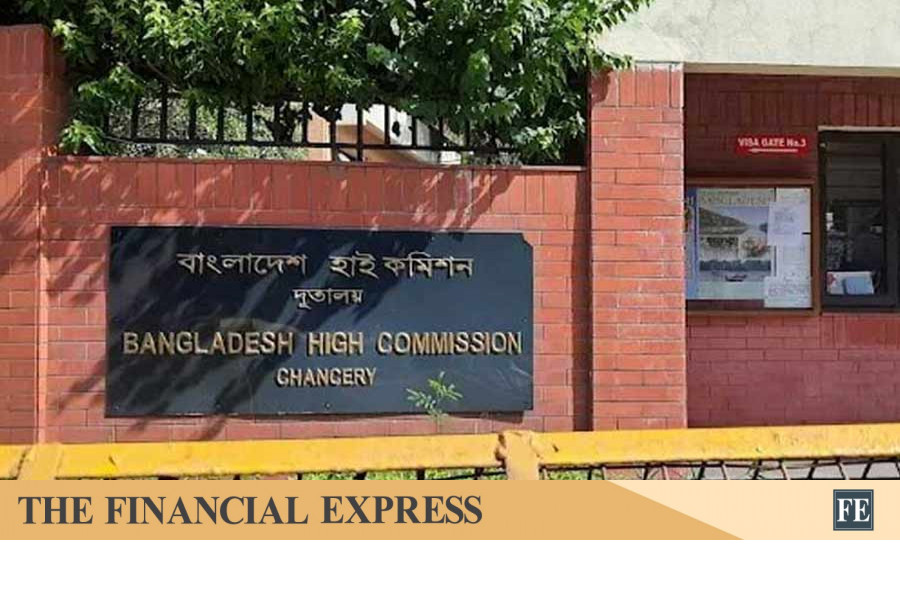
Foreign affairs adviser Touhid Hossain has questioned why members of an extremist Hindu organisation were allowed to gather in front of the Bangladesh High Commission in Delhi. He stated that, following the incident, the family of the Bangladesh High Commissioner posted in Delhi has been feeling at risk.

Responding to newspersons at the Ministry of Foreign Affairs on Sunday afternoon over the protest that took place in front of the Bangladesh High Commission in Delhi on Saturday night, adviser Touhid Hossain said that the Bangladesh mission is located in a highly secure area within the diplomatic zone in Delhi. He questioned how Hindu extremists could have entered that area, suggesting that it seemed as if they had been allowed in, which should not normally be possible.

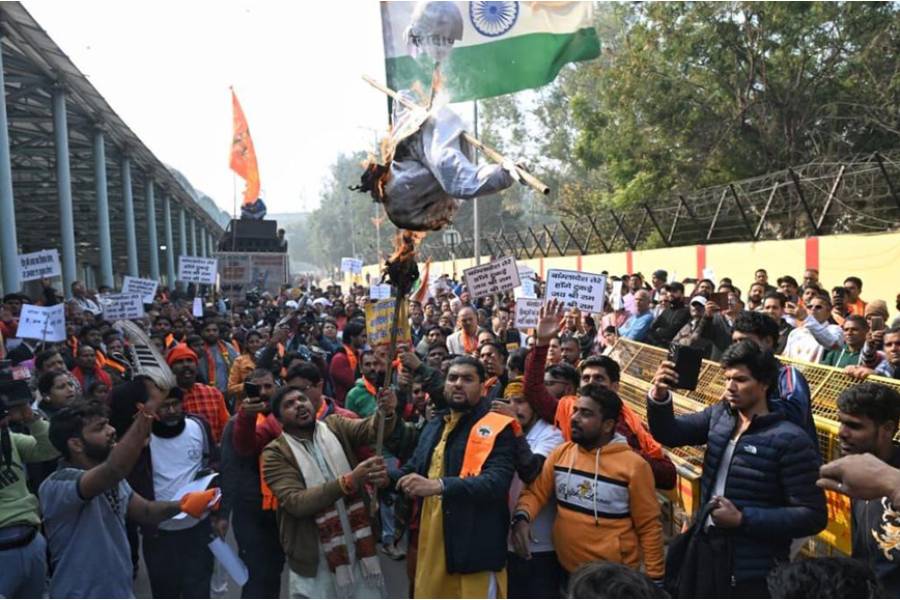
Late on Saturday night, a group of people staged a protest in front of the Bangladesh High Commission in Delhi under the banner of โ€˜Akhand Hindu Rashtra Senaโ€™. The group, numbering around 20 to 25, displayed a banner for roughly 20 minutes and shouted various slogans against Bangladesh. During the protest, the demonstrators reportedly threatened Bangladesh High Commissioner to India, Riaz Hamidullah.

Touhid Hossain said, โ€œThey claim it was a group of 20โ€“25 people. How could a small group of 25 or 30 Hindu extremists enter such a sensitive area? Were they allowed to? Normally, they should not have been able to get in. They did not simply protest against the killing of a Hindu citizen; they said many other things, which we are aware of.โ€

The Foreign affairs adviser added, โ€œI do not have proof, but we have heard that threats were made against the High Commissioner. Why would anyone come there just to threaten him?โ€ He also stated that since the incident, the High Commissionerโ€™s family in Delhi has been feeling threatened and unsafe.​
 

India-Bangladesh relations moving towards crisis

Foreign adviser questions why Indian authorities allowed protest near Bangladesh High Commission.

The India-Bangladesh ties, which came under strain following the August 5 political changeover, have deteriorated further, with both countries voicing concerns over security of their missions.

Yesterday, the Indian Visa Application Centre (IVAC) in Chattogram city suspended its operations until further notice, citing the recent security situation at the Assistant High Commission of India (AHCI) in the port city.

Last week, the IVACs in Dhaka, Khulna and Rajshahi remained partially closed for one day each, citing security concerns amid protests in the three cities.

Dhaka and New Delhi issued conflicting statements yesterday over a demonstration near the Bangladesh High Commission in New Delhi.

The Indian external affairs ministry said a group of 20-25 youths protested on Saturday against the killing of Dipu Chandra Das, a garment worker, by a mob in Mymensingh, and called for the protection of all minorities in Bangladesh, but did not create any security situation.

At a media briefing, Randhir Jaiswal, spokesperson for the Indian external affairs ministry, said they noticed misleading propaganda by some sections of the Bangladeshi media regarding the incident.

He said there was no attempt to breach the fence or create a security situation at any time, and that the police stationed at the spot dispersed the group after a few minutes.

In Dhaka, at a press briefing at the foreign ministry yesterday, Foreign Adviser Touhid Hossain questioned why the Indian authorities allowed protesters to enter and demonstrate in the secure diplomatic zone where the Bangladesh High Commission is located.

He rejected the Indian press note regarding the event, and said the matter was not as simple as it was portrayed.

"Our mission, the Bangladesh mission, is located deep within the diplomatic area. It is not situated on the outskirts or at the entrance of the diplomatic zone," he said.

"How could a group of 25 or 30 people from a Hindu extremist organisation manage to reach so far into a secure area?"

Touhid said those individuals normally would not have been able to enter in this manner unless they were permitted.

"Standing there, they did not just give slogans protesting the killing of the Hindu man; they said much more."

He said the information he received suggested that death threats were issued to Bangladesh High Commissioner Riaz Hamidullah, who resides there with his family. They felt threatened and panicked due to inadequate security as only two guards were present.

"Therefore, we believe it is the responsibility of that country to handle the situation more effectively."

Usually, when a protest group marches toward such a secure area, police stop them at a considerable distance from the zone. This is standard practice everywhere, including in Bangladesh, he said.

Touhid further said a Bangladeshi citizen was brutally murdered, and there is no justification for equating this with minority security issues here. Bangladeshi authorities took immediate action.

"Such incidents occur not just in Bangladesh; they happen across all countries in this region, and it is every country's responsibility to take appropriate measures. Bangladesh is taking such measures; others should do the same."

Referring to New Delhi's statement, he said Dhaka has taken note of India's commitment to ensuring the security of all Bangladesh missions in India.

He said both countries are maintaining regular contact regarding the security of their missions.

Asked whether Dhaka is considering reducing the number of staff in the mission, Touhid said they would do so if such a situation arises. For now, Dhaka trusts that India will take appropriate security measures.

Earlier, India had drastically restricted visa issuance and trade with Bangladesh following the August 5 changeover, when deposed prime minister Sheikh Hasina fled to New Delhi. On the other hand, Dhaka imposed restrictions on the import of Indian yarn through land ports.

While Delhi repeatedly expressed concerns over alleged attacks on minorities after the August changeover, Dhaka said these were internal matters and political in nature, and India should not intervene. Dhaka also spoke of exaggeration of certain incidents and the spread of misinformation and disinformation by sections of the Indian media.

Bangladesh repeatedly called on India to prevent Hasina from making incendiary comments, arguing that such remarks were creating instability in Bangladesh.

It also requested India twice -- once in December last year and again in November this year -- to extradite Hasina after the International Crimes Tribunal sentenced her and ex-minister Asaduzzaman Khan to death.

In a recent media interview, Indian External Affairs Minister S Jaishankar said it was up to Hasina to decide whether to return home -- a statement analysts view as an indication that India is unlikely to extradite Hasina anytime soon.

The latest escalation in Dhaka-Delhi tensions followed the shooting and subsequent death of Inqilab Moncho leader Sharif Osman Hadi. There were news reports that the alleged shooter reportedly fled to India.

On December 14, Bangladesh's foreign ministry summoned Indian High Commissioner Pranay Verma and drew attention to "anti-Bangladesh activities" by fugitive Awami League members currently based in India.

"These activities include planning, organising and facilitating terrorist acts inside Bangladesh with the objective of disrupting the forthcoming elections," said the ministry statement.

The ministry also said Hasina has been calling on her supporters to engage in terrorist activities aimed at destabilising the country and derailing the election.

It urged New Delhi to ensure the immediate arrest and extradition of suspects involved in the shooting of Hadi -- a key figure of the July uprising -- should they enter Indian territory.

Delhi rejected Dhaka's assertions the same day, saying India "never allowed its territory to be used for activities inimical to the interests of the friendly people of Bangladesh".

On December 17, the Indian foreign ministry summoned the Bangladesh High Commissioner to India to express strong concerns over the "deteriorating security environment" in Bangladesh.

In a statement later that day, it said, "India completely rejects the false narrative sought to be created by extremist elements regarding certain recent events in Bangladesh."

"It is unfortunate that the interim government has neither conducted a thorough investigation nor shared meaningful evidence with India regarding the incidents."

Delhi also said it supports peace and stability in Bangladesh and has consistently called for free, fair, inclusive, and credible elections conducted in a peaceful atmosphere.

In reaction to the statement, Touhid said that no advice was needed from India, which did not speak about any elections during the AL regime.

The same day, the IVAC at the Jamuna Future Park in Dhaka was shut at 2:00pm, citing security situation.

The announcement came as people under the banner of July Oikya planned to lay siege to the Indian High Commission, demanding repatriation of Hasina and her aides who fled to India. Police intercepted the march at Rampura.​
 

Bangladesh โ€˜suspendsโ€™ visa services at Delhi, Agartala missions

bdnews24.com
Published :
Dec 22, 2025 21:03
Updated :
Dec 22, 2025 22:55

1766450417223.webp


Bangladesh has reportedly suspended visa services at its missions in India.

On Monday, the foreign ministry officials, who declined to be named, said notices about the suspension have been affixed at the Bangladesh High Commission in Delhi and the Assistant High Commission in Agartala, Tripura.

The suspension comes amid a spate of tensions and conflicting statements about allegations of a commotion and threats outside the Bangladesh missiion in Delhi.

The move follows a series of protests in Dhaka on Thursday night over the killing of Sharif Osman bin Hadi, the convenor of the Inqilab Moncho.

That night, two newspaper offices and the Chhayanaut building were attacked in the capital.

Meanwhile, in Chattogram, a group of people protested outside the Indian Assistant High Commission, reportedly hurling stones at the mission.

As a result, operations at the Indian Visa Application Centre (IVAC) in the port city were suspended from Sunday until further notice.

On the same night in Bhaluka, a factory worker, Dipu Chandra Das, 28, was beaten to death following allegations of religious blasphemy. His body was then tied to a tree branch and set on fire.

On Saturday night in Delhi, 20โ€“25 members of an organisation called the โ€œAkhand Hindu Rashtra Senaโ€ protested outside the Bangladesh High Commission.

They reportedly shouted slogans against Bangladesh and allegedly threatened High Commissioner M Riaz Hamidullah.

Citing the high commissionโ€™s Press Minister Md Faisal Mahmud media reports on Sunday said the protestors spoke in a mix of Bengali and Hindi, raising slogans such as โ€œHindus must be protectedโ€ and โ€œcatch the high commissionerโ€.

โ€œThey shouted at the main gate briefly before leaving,โ€ he added.

In response, Indian foreign ministry spokesman Randhir Jaiswal said a small group of around 20 to 25 people gathered outside the mission on Dec 20 to protest the killing of Dipu Das in Mymensingh and to call for the protection of minorities in Bangladesh.

โ€œThere was no attempt to breach the fence or create a security situation at any time,โ€ Jaiswal said, adding that police officers stationed at the spot dispersed the group after a few minutes and that video footage of the incident was publicly available.

Indiaโ€™s foreign ministry said it remained committed to ensuring the safety of foreign diplomatic missions in line with its obligations under the Vienna Convention.

Jaiswal said India was โ€œclosely monitoringโ€ developments in Bangladesh and remained in contact with Bangladeshi authorities.

He said New Delhi had conveyed โ€œstrong concernsโ€ over attacks on minorities and urged that those responsible for the killing of Dipu Chandra Das be brought to justice.

Foreign Advisor Touhid Hossain rejected Indiaโ€™s account, saying the protesters from a โ€œHindu extremist organisationโ€ were allowed to reach the Bangladesh mission, which is located deep inside a diplomatic zone.

โ€œWe completely reject what has been said in the Indian press note,โ€ Touhid said. โ€œThe issue is not as simple as it has been presented.

He questioned how a group of 25 or 30 people from an โ€œextremist organisationโ€ could gain access to such a highly โ€œsanitisedโ€ zone.

The advisor said the protestors did more than raise slogans about the killing of Dipu Das, and media reports suggesting otherwise were partially โ€œmisleadingโ€.

โ€œThey did not just stand there and raise slogans protesting the killing of that Hindu citizen and then leave. They said many other things as well, we are aware of that,โ€ he said.

Raising questions over security arrangements, Touhid said protest groups are usually informed in advance and stopped at a distance by police, with only two representatives allowed to submit documents if necessary.

โ€œThis is the norm everywhere, including in our country,โ€ he said.

Responding to Indiaโ€™s call for ensuring the safety of minorities in Bangladesh, Touhid said the brutal killing of a Bangladeshi citizen should not be framed as a minority issue.

โ€œHe was a Bangladeshi citizen who was murdered, and Bangladesh has taken immediate action. Several arrests have already been made,โ€ he said.

โ€œSuch incidents do not occur only in Bangladesh. They happen across the region. It is the responsibility of every country to take appropriate action, and Bangladesh is doing so. Others should do the same. The way this has been presented is not acceptable,โ€ he added.

Touhid also said normal security protocols were not properly followed at the Bangladesh High Commission. โ€œWe believe the usual security rules were not properly enforced. India has said it ensures security at all missions, and we have taken note of that.โ€

Asked if the government would consider scaling back operations at the mission to ensure diplomatsโ€™ safety, he said such steps would be taken if the situation warranted it.

โ€œFor now, we still trust that India will take appropriate security measures.โ€

On whether there were security lapses at the mission, Touhid, who previously served at the Delhi mission, said the issue went beyond slogans being raised.

โ€œA family lives inside the mission. The high commissioner and his family reside there.

โ€œThey felt threatened and alarmed because adequate security was not in place. There were only two guards, and they stood by without intervening,โ€ he added.​
 

Members Online

Latest Posts

Latest Posts