Bangladesh Defense

Saif
Senior Member
- Joined
- Jan 24, 2024
- Messages
- 22,417
- Likes
- 9,875
- Nation

- Axis Group

The urgent need for legal reform for Rohingya refugees
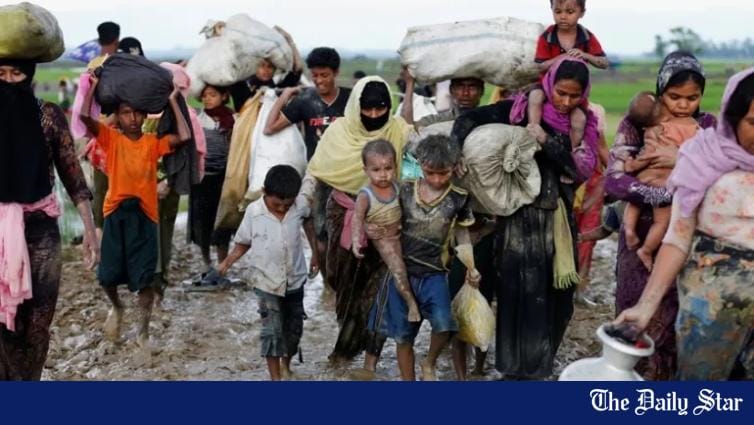
More than a million Rohingya people who took shelter here are yet to be accorded formal refugee status, although Bangladesh has been widely commended for being their host since 2017.
The urgent need for legal reform for Rohingya refugees

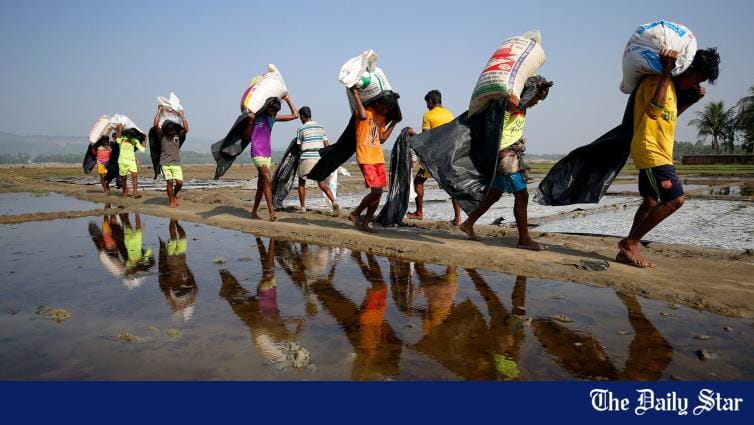
In Bangladesh, Rohingya continue to exist in a legal grey zone, neither citizens nor officially recognised refugees, and are therefore invisible to the courts. FILE PHOTO: REUTERS
More than a million Rohingya are living in refugee camps in southern Bangladesh, and they are deprived not only of citizenship but also of justice. Labelled as "forcibly displaced Myanmar nationals" (FDMNs), they are excluded from the country's formal legal protections and judicial system. What remains is a parallel, non-state, and unregulated justice system that provides no recourse to refugees, particularly women and the poor. More than a million Rohingya people who took shelter here are yet to be accorded formal refugee status, although Bangladesh has been widely commended for being their host since 2017. As a result, they exist in a legal grey zone, neither citizens nor officially recognised refugees, and are therefore invisible to the courts. Whether it is robbery, domestic abuse, or gun violence, their complaints are arbitrated within the camps by non-judicial actors who lack professional training or legal responsibility.
Designated for legal exclusion
This issue is not only humanitarian, it is constitutional. Article 31 of the Constitution of Bangladesh guarantees legal protection to "any other person" within the country. Article 35 offers protection against punishment without due process and the right to a fair trial. These rights are not reserved for citizens alone. In Abdul Latif Mirza v Bangladesh (1979), the Supreme Court affirmed that fundamental rights apply to "all persons" under the court's jurisdiction. However, in practice, these guarantees do not extend to the camps. The Rohingya refugees cannot go to the police to submit complaints, nor can they appear in court or seek legal assistance. Local power brokers—such as camp leaders, religious figures, and some NGOs—form a de facto legal system within the camps, informally adjudicating disputes. There are no legal norms, no due process, and no oversight.
Through the lens of international law and practice
Bangladesh has not ratified the 1951 Refugee Convention, but it is a party to several core human rights treaties, including the International Covenant on Civil and Political Rights (ICCPR). Article 14 of the ICCPR ensures the right to a fair and public hearing before a competent, independent tribunal. Article 2 obliges states to guarantee these rights to all individuals within their territory. Under General Comment No 32 (UN Human Rights Committee), the ICCPR's right to a fair trial must be upheld for anyone facing legal consequences, regardless of nationality. The European Court of Human Rights case MSS v Belgium and Greece also reaffirmed refugees' right to an effective remedy. While some argue that these principles are non-binding on non-signatories of the Refugee Convention, instruments such as the ICCPR and the Convention on the Elimination of All Forms of Discrimination Against Women (CEDAW) obligate Bangladesh to ensure due process, non-discrimination, and judicial integrity. Denial of justice to an entire community violates both domestic and international law.
Without a nation, but not without rights
The belief that statelessness equals a lack of legal entitlement is dangerously misguided. This is not supported in either domestic or international law. Justice is territorial; it does not depend on nationality. The Penal Code (1860) and the Code of Criminal Procedure (1898) apply to "any person" within the country's jurisdiction. These laws do not require one to be a citizen to report a crime or seek redress. Similarly, the Legal Aid Services Act (2000) makes no reference to immigration status. Yet, the Rohingya have no access to either.
There are legal and practical consequences to continuing to label Rohingya as FDMNs. This designation prevents their identification, documentation, and inclusion by the court system. It enables a structure where rights are not only denied but also nullified. Worse still, this void is filled by actors who represent quasi-courts with quasi-judicial authority. Camp-in-charges (CiCs) and majhis often resolve disputes through coercion or arbitrary decisions. Victims stay silent, while abusers, especially powerful local actors, go unpunished. Women, in particular, remain vulnerable to violence and exploitation within a justice system that is blind to their suffering.
Recognition by the courts vs policy paralysis
The courts in Bangladesh have demonstrated their understanding of the supreme value of justice. In Md Sadaqat Khan (Faqku) v Chief Election Commissioner (2008), the court ruled that the Bihari population, stateless at that time, had the right to registration and recognition. Their origins were not a sufficient reason to deny them legal personhood. Internationally, cases such as A v Australia (UNHRC) and RA v Thailand (CAT) have reaffirmed that legal status cannot be used to justify arbitrary detention or the denial of due process. Yet, despite these precedents, policy remains inert.
Bangladesh does not need to ratify the Refugee Convention to guarantee fundamental legal protections. The framework already exists—in its constitution, its courts, and the international treaties it has ratified. What is lacking is political will. A rights-based approach to refugee justice in Bangladesh must be credible, inclusive, and effective.
The following five steps would form a strong foundation:
Temporary legal identity: Provide refugees with documentation for a defined period that allows them to report crimes, file complaints, and seek legal support, without implying long-term resettlement.
Legal aid integration: Establish legal aid desks within the camps, operated by lawyers, paralegals, and interpreters, in accordance with the Legal Aid Services Act (2000).
Inclusion of criminal jurisdiction: Permit the state to investigate serious crimes and adjudicate them in formal courts. Consider also establishing in-camp courts administered by judicial magistrates.
Gender-sensitive mechanisms: Ensure legal support and court services align with Bangladesh's commitments under CEDAW, addressing the particular vulnerabilities of women and girls.
Independent oversight: Create an independent panel of judges, lawyers, human rights defenders, and civil society representatives to oversee camp justice, review cases, and report abuses.
These steps do not require reinvention, but respect for laws and principles that Bangladesh has already pledged to uphold. The Rohingya people are not demanding citizenship, nor seeking integration. They are seeking protection and dignity. And justice is the beginning of dignity. Preventing refugees from accessing the courts is not doing anyone any good. The deeper the delay, the deeper the wounds—not only for the displaced, but also for the rule of law itself. Justice is not a finish line to be awarded once political risk has passed. It is the foundation of legal order. And so, it must begin now.
Sakhawat Sajjat Sejan is assistant professor of the Department of Law at European University of Bangladesh.
Abu Bakker Siddiq is assistant professor of the Department of Law at Comilla University.