Donate ☕
201 Military Defense Forums
[🇧🇩] - Insurgencies in Myanmar. Implications for Bangladesh | Page 76 | PKDefense
Home Post Alerts Inbox Videos

[🇧🇩] Insurgencies in Myanmar. Implications for Bangladesh

Reply (Scroll)
Press space to scroll through posts
G Bangladesh Defense
[🇧🇩] Insurgencies in Myanmar. Implications for Bangladesh
387
14K
More threads by Saif


Skill training for local youths in areas hosting Rohingya

FE
Published :
Dec 19, 2025 22:27
Updated :
Dec 19, 2025 22:27

1766192119445.webp


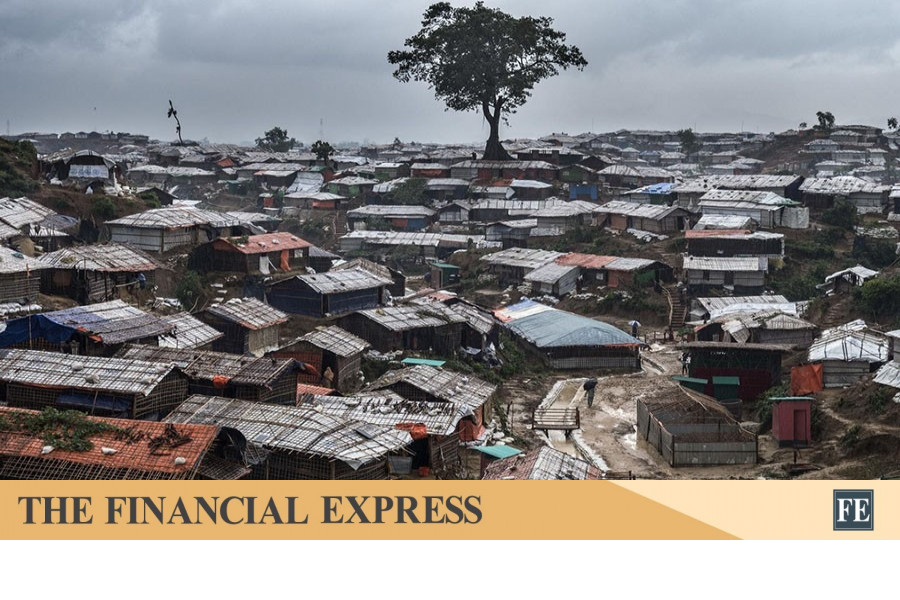
Undeniably, being the host to over one million Rohingya population displaced from their homeland in Myanmar, the Ukhia and Teknaf upazilas of Cox's Bazar are the most environmentally and socially challenged areas of Bangladesh. As reports go, environmentally, the localities where the Rohingya refugees are concentrated are marked by massive deforestation, biodiversity loss and water contamination. As a result, the local infrastructure has been strained. Socially, with massive increase in population, there have been severe labour market disruptions. Entry of such a large number of homeless people from across the border also means abundant cheap labour, which has significantly reduced income and employment opportunities of local day labourers and fishermen. Essential commodity prices and transportation costs have also risen markedly due to enhanced demand on the available supplies and services. This has led to social tension and, eventually, negative attitude towards the Rohingya refugees. Needless to say, these issues demand urgent addressing. Evidently, worse affected are the youth of the local communities who due to lack of employment opportunities are turning to drug addiction, crime and other anti-social activities. In this situation, alongside continuing the humanitarian services being extended to the Rohingya refugees, one cannot also be oblivious of the local communities, especially their youth members.

Against this backdrop, the youth and sports ministry of the government is learnt to have proposed two skill-development projects worth Tk 2.39 billion for youths from the local communities hosting Rohingya refugees in Cox's Bazar and across the Chattogram division. Notably, the financing of the project is reportedly coming from New Development Bank (NDB) of the BRICS countries. It is worthwhile to note that the BRICS is a major inter-governmental organization and economic bloc comprising emerging economies including 10 core members so far, namely, Brazil, Russia, India, China, South Africa, Egypt, Ethiopia, Iran, UAE and Indonesia representing nearly 40 per cent of the world's GDP. Formerly known as BRICS Development Bank, NDB is a multilateral financial institution. This multilateral bank is supporting the youth development projects for Cox's Bazar and Chattogram division that aims to generate employment in the areas as noted in the foregoing. The project is supposed to benefit some 30,000 unemployed youths seriously affected by, as the project document terms, the Forcibly Displaced Myanmar Nationals (FDMNs). Scheduled to start next year, 75 per cent of the allocation for Cox's Bazar part of the proposed youth employment project will go to train over 12,000 youths. Of the proposed skill development and employment generation project for Chattogram division, 93 per cent is learnt to be earmarked for training 20,000 youths.

As understood, the training activities on skill development would also involve awareness raising against drug abuse and human trafficking, which are admittedly the worst forms of degeneration and crimes destabilising the local communities. The varieties of trades to be covered by the said youth skill development and employment generation programme are no doubt impressive. Some of the activities to come under training, as mentioned in the report, include agro-processing and marketing, fisheries, tourism-related services, freelancing and basic technical skills etc. Once the project is implemented, hopefully it would open up wide opportunities of livelihoods for local youths and their families. And inclusion of sports-related activities would definitely help develop the local youths' physical and mental health.

The fact that the project tailor-made for Chattogram is aligned with the existing skill development agenda under the National Youth Policy 2017 is inspiring as it would obviously help reduce the number of youths Not in Education, Employment or Training (NEET). Hopefully, the envisaged youth training and employment project would be able to fulfil its stated objectives. However, the government needs also to work harder to repatriate the Rohingya to their homeland.​
 
Analyze

Analyze Post

Add your ideas here:
Highlight Cite Fact Check Respond
Analyze

Analyze Post

Add your ideas here:
Highlight Cite Fact Check Respond

Temporary solutions do little to help Rohingya women

1766710493538.webp

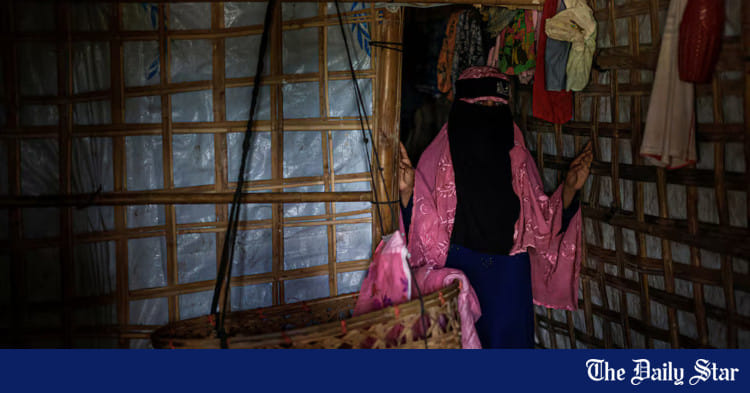
Begum, a 35-year-old mother of seven children, is marrying off one of her daughters, following the funding shortage, which shuttered thousands of schools in the refugee camps in June 2025. FILE PHOTO: REUTERS

Every so often, news reports surface to remind us of the painfully perpetual existence of the Rohingya crisis in our very own backwaters. It merely recedes from view from time to time. The headlines change, the focus areas shift, but the lives of the Rohingya at the centre of the news stories remain suspended in the same uncertain void—one shaped by displacement, abuse, repression and a future that continues to remain elusive.

The latest media reports from Al Jazeera and other international news outlets draw attention to a rise in early marriage among Rohingya girls, linking it to shrinking humanitarian aid, school closures, and the gradual dismantling of protection programmes in the refugee camps in Bangladesh. The concern is justified. The pattern is disturbing. But it is also unsurprising and predictable.

For Rohingya women and girls, vulnerability has been constant, layered, and cumulative. Long before aid reductions became the focus of international reporting, their lives were already defined by statelessness, restricted movement, limited access to education and work, and the persistent uncertainty of camp life. What we are witnessing now is not the emergence of a new crisis, but the intensification of an old one.

Early marriage, in this context, is frequently framed as a cultural practice of the Rohingya community resurfacing under pressure. It is an over-simplified explanation. By directly linking the problem to the Rohingya community, this narrative framing allows external actors to observe the situation from a safe distance with concern, while remaining unimplicated. Yet, such narratives hide more than they reveal. When families are forced to make decisions under conditions of protracted insecurity and exploitation, those decisions are rarely about culture or tradition. They are about real-life risks, survival, and the erasure of options.

When food rations are reduced and schools close, survival becomes a real threat. For many families, marrying off a daughter is seen not simply as an economic relief, but as a form of protection: from trafficking, from uncertainty, and from sexual violence in overcrowded camps, where privacy is scarce and accountability non-existent. In spaces where adolescent girls and young women face harassment day in and day out—many avoid going to the bathroom after dark in fear of criminal gangs—marriage is often seen as a shield, which is mostly illusory. That reality becomes visible later.

The tragedy lies not only in the act of early marriage itself, but in the conditions that make it appear reasonable. These conditions do not emerge spontaneously. They are created through flawed policy decisions, deteriorating funding crisis, and a humanitarian response that has mostly been sluggish at best.

What recurrent news reports on the crisis of Rohingya women suggest is the broader environment in which these marriages take place. Girls who remain unmarried are increasingly exposed to sexual exploitation, including coerced or paid sex work driven by hunger and desperation. Women take on informal, unsafe work—both inside and outside the camps—where abuse is common and recourse almost non-existent. Girls disappear from classrooms not only into marriages, but into domestic labour, factories, or shadow economies shaped by exploitation and fear.

Trafficking networks operate most effectively in such environments. Promises of work, safety, or marriage become tools of deception, drawing women and girls into situations of forced labour, domestic servitude, or sexual manipulation. These outcomes are often discussed as separate crises, each demanding its own response. In reality, they are interconnected expressions of the same systemic deprivation. When economic opportunities are denied and movement is restricted, exploitation does not arrive as an anomaly; it becomes an alternative.

Much of this unfolds quietly. Sexual abuse and exploitation are underreported not because they are rare, but because stigma, fear, and the absence of trustworthy reporting mechanisms keep them hidden. As protection services are cut, the few spaces where women might seek help shrink further and violence is often simply overlooked.

There is also a striking contradiction at the heart of the global humanitarian response to the Rohingya crisis. Internationally, there is no shortage of rhetoric about protecting women and girls, combating trafficking, and ending child marriage. These commitments feature prominently in policy statements and development agendas. Yet in practice, they appear remarkably shallow, vulnerable to shifting geopolitical priorities and donor agendas. Protection that depends on funding cycles is, by nature, temporary. And temporariness is precisely what Rohingya women can no longer afford.

These women are often portrayed as passive recipients of aid and abuse, but this portrayal does them a disservice. When education, skills training, or livelihood opportunities have been available, women have engaged with determination and purpose. They have demonstrated resilience through daily acts of endurance and adaptation. The problem has never been proper utilisation of available agency. It has been the steady erosion of the same.

What's more troubling is that prolonged crises often erode urgency. Practices that would once have provoked outrage, such as early marriage, forced labour, sexual exploitation, begin to appear as regrettable but expected realities of camp life. This normalisation is the outcome of concern without concrete action. For Rohingya women and girls, these gaps shape their futures and life trajectories in ways that are irreversible.

What is unfolding today at the Rohingya camps is not simply the result of displacement, uncertainty, or poverty taken separately. It is the outcome of a sustained failure to provide protection that is lasting, rights-based, and sensitive to gendered realities. Temporary solutions for the Rohingya community have long outlived their usefulness. It is more than evident that piecemeal actions cannot resolve a long-standing, large-scale crisis.

More reports on the Rohingya will continue to follow, for sure. More stories will be told, documenting preventable tragedies. The question, as always, is whether they will continue to compile a laundry list of consequences while leaving root causes largely unacknowledged, or whether collectively they will force a reckoning with the uncomfortable truth that this crisis persists not because solutions are unknown, but because responsibility has become too easy to defer.

For Rohingya women, the cost of that deferral is already being paid—quietly, repeatedly, and largely out of sight.

Tasneem Tayeb is a columnist for The Daily Star.​
 
Analyze

Analyze Post

Add your ideas here:
Highlight Cite Fact Check Respond


Stateless Rohingya rue Myanmar's election from exile
AFP Cox's Bazar, Bangladesh
Published: 26 Dec 2025, 20: 12

1766797159052.webp


This photograph taken on 18 December 2025 shows Rohingya refugees walking along a market at the Kutupalong refugee camp in Bangladesh's Ukhia. AFP

Myanmar's military portrays its general election as a path to democracy and peace, but the vote offers neither to a million Rohingya exiles, robbed of citizenship rights and evicted from their homeland by force.

"How can you call this an election when the inhabitants are gone and a war is raging?" said 51-year-old Kabir Ahmed in Bangladesh's Kutupalong, the world's largest refugee camp complex.

Heavily restricted polls are due to start Sunday in areas of Myanmar governed by the military, which snatched power in a 2021 coup that triggered civil war.

But for the Rohingya minority, violence began well before that, with a military crackdown in 2017 sending legions of the mostly Muslim group fleeing Myanmar's Rakhine state to neighbouring Muslim-majority Bangladesh.

The month-long election will be the third national poll since they were stripped of their voting rights a decade ago, but comes amid a fresh exodus fuelled by the all-out war.


Ahmed once served as chairman of a village of more than 8,000 Rohingya in Myanmar's Maungdaw township, just over the border from Cox's Bazar in Bangladesh.

After their eviction, the area is now a "wasteland", he told AFP.

"Who will appear on the ballot?" he asked.

"Who is going to vote?"

1766797216302.webp

This photograph taken on 18 December 2025 shows Rehana Bibi, a Rohingya refugee, speaking with AFP at the Balukhali refugee camp in Bangladesh's Ukhia.AFP

'Send us back'
Today 1.17 million Rohingya live crammed in dilapidated camps spread over 8,000 acres in Cox's Bazar.

The majority came in the 2017 crackdown, which is now the subject of a UN genocide court case, with allegations of rampant rape, executions and arson.

Civil war has brought fresh violence, with the Rohingya caught between the warring military and separatist group the Arakan Army, one of the many factions challenging the junta's rule.

Both forces have committed atrocities against the Rohingya, monitors say.

Some 150,000 people fled the persecution to Bangladesh in the 18 months to July, according to UN analysis.

The UN refugee agency said it was the largest surge in arrivals since 2017.

Aged 18, Mohammad Rahim would have been eligible to vote this year -- if he was back home, if his country acknowledged his citizenship, and if polling went ahead despite the war.

"I just want the war to end and for steps to be taken to send us back to Myanmar," said Rahim, the eldest of four siblings who have all grown up in the squalid camps.

The Arakan Army controls all but three of Rakhine's 17 townships, according to conflict monitors, meaning the military's long-promised polls are likely to be extremely limited there.

The military has blockaded the coastal western state, driving a stark hunger and humanitarian crisis.

Rahim still craves a homecoming.

"If I were a citizen, I would negotiate for my rights. I could vote," he said.

"I would have the right to education, vote for whoever I wanted, and work towards a better future."

Fate 'unchanged'
Successive military and civilian governments in Myanmar have eroded the citizenship of the Rohingya, dubbing them "Bengali" as descendants of immigrants who arrived during British colonial rule.

A 1982 law excluded them from full citizenship -- unlike the other 135 ethnic groups recognised in Myanmar -- and they were issued separate ID cards.

1766797279365.webp

This photograph taken on 21 December 2025 shows an aerial view of the Kutupalong refugee camp in Bangladesh's Ukhia. AFP

They were then deprived of the right to vote in 2015, just as most other people in Myanmar won more freedoms and military rule was relaxed.

"Will anyone who wins recognise us as citizens?" asked 52-year-old refugee Rehana Bibi.

"We are not a concern for anyone in Myanmar," the mother of six lamented in her tarpaulin-covered hut.

"Whether military-backed candidates or others win, the fate of the Rohingyas will remain unchanged."

In July, for the first time since their influx began eight years ago, Rohingyas held an election for their representatives inside 33 camps in Cox's Bazar.

"We printed ballot papers and ran awareness programmes on democracy with the hope that someday we would return home and practise it there," said 33-year-old community leader Sayed Ullah.

Ahmed, the exiled village chairman, still dreams of an election back home.

"I was a teacher, but my people wanted me to lead them," he said. "I won three times straight."

"I am sure I would win again if only I got the chance," he said, his face lighting up.​
 
Analyze

Analyze Post

Add your ideas here:
Highlight Cite Fact Check Respond
Teknaf, Ukhia border shaken in Myanmar explosion
Our Correspondent . Cox’s Bazar 29 December, 2025, 00:01

1766972584417.webp


The bordering areas along Teknaf and Ukhia upazilas in Cox’s Bazar and Naikhyangchari upazila in Bandarban were shaken in powerful explosions near the areas inside civil war-ridden Myanmar on Saturday night.

Panic gripped the areas as the explosions could be heard from the Whykong union of Teknaf upazila, Palangkhali and Rajapalang unions of Ukhia upazila and Ghumdhum union of Naikhyangchari upazila, said the locals and the members of the union councils.


In Whykong union, villagers said, the intensity of the explosions was felt at about 10:45pm on Saturday and the houses in the area trembled due to the explosions.

Abul Hasnat, a resident of the Unchiprang area of Whykong, said that a series of loud explosions suddenly shook the entire locality. Children and elderly people inside houses began screaming in fear, he added.

Another resident, Maulana Jasim Uddin, said that the explosions were so strong that he initially thought that it was an earthquake. Out of panic, he rushed outside with his family members to take shelter, he said.

He said that some of the inhabitants in his locality left home at night in fear but returned to their homes in the morning as no explosion could be heard later at night.

Teknaf upazila nirbahi officer Md Emamul Hafiz Nadim said that they, after receiving the information, contacted the Border Guard Bangladesh.

‘Residents of the border areas were also alerted and necessary measures were taken to ensure their safety,’ he said.

According to sources, clashes between Myanmar’s junta forces and the armed group Arakan Army are continuing in Rakhine State.

Sounds of gunfire could be heard earlier from Teknaf bordering areas on the nights following December 13 and December 17 due to intense fighting inside Myanmar.​
 
Analyze

Analyze Post

Add your ideas here:
Highlight Cite Fact Check Respond

Members Online

⤵︎

Latest Posts

Latest Posts