| Global Defense, OSINT & Geopolitics Wire

[🇧🇩] Insurgencies in Myanmar. Implications for Bangladesh

[🇧🇩] Insurgencies in Myanmar. Implications for Bangladesh
493
25K
More threads by Saif

G Bangladesh Defense

Turkey backs safe return of Rohingyas to Myanmar
Staff Correspondent 05 June, 2026, 15:34

1780717044694.webp


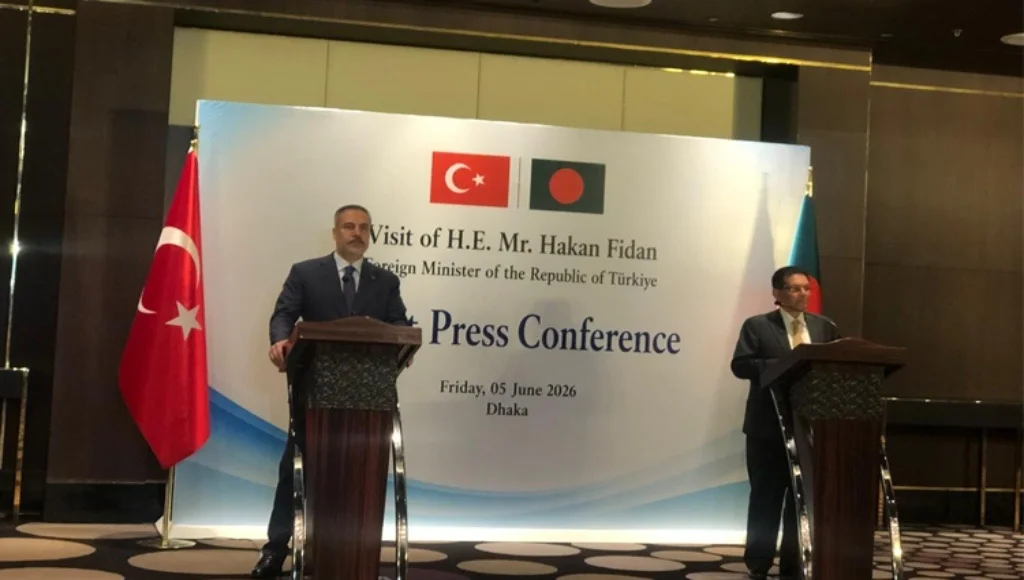
Turkish foreign minister Hakan Fidan and Bangladesh foreign minister Khalilur Rahman address a press conference at a hotel in Dhaka on Friday. | BSS photo

Bangladesh and Turkey in a bilateral meeting in Dhaka on Friday discussed the Rohingya crisis besides bilateral issues of cooperation in various areas to deepen relations between the two countries.

Turkish foreign minister Hakan Fidan, addressing a joint press conference in a city hotel after the meeting, said that they supported the ‘safe, voluntary, and dignified return of Rohingyas’ to their homeland Myanmar.

Turkey, he said, is working on the issue with neighbouring countries for a lasting solution to the protracted Rohinhya crisis.

He lauded Bangladesh’s role in hosting over 10 lakh forcibly displaced Rohingyas from the Rakhine state of Myanmar.

Bangladesh foreign minister Khalilur Rahman said that Dhaka would continue its efforts for peace and prosperity across the world.

He said that both sides had discussed the possibilities of free trade agreement and the preferential trade agreement between Bangladesh and Turkey.

The foreign minister-level meeting ended with the signing of a memorandum of understanding on cultural heritage protection between the two nations.

Khalilur invited Turkish businesses to invest in Bangladesh textiles, shipbuilding, and defence industry among other sectors in dedicated export processing zones.

The Turkish foreign minister would visit Rohingya camps in Cox’s Bazar to see for himself the humanitarian crisis before he would conclude his three-day official visit today.

Bangladesh has long been pressing for safe, voluntary, and dignified return of Rohingyas to their homeland.

Both sides refused to take any questions from journalists during the press conference.​
 

Shama stresses accountability, support for Rohingya repatriation

BSS

Published :
Jun 19, 2026 14:57
Updated :
Jun 19, 2026 14:57

1781912280823.webp


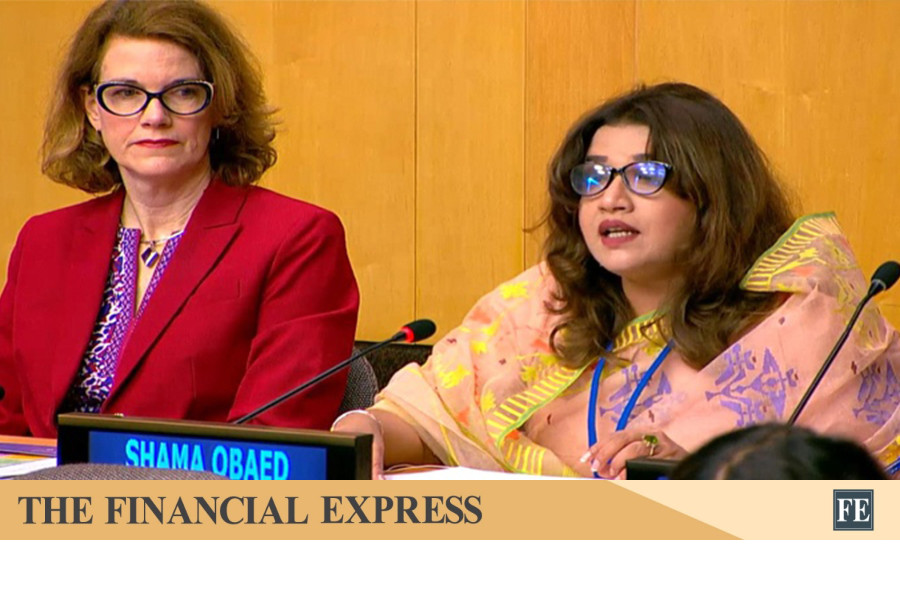
State Minister for Foreign Affairs Shama Obaed Islam has called for stronger global action to protect civilians, uphold international humanitarian law and ensure sustained international support for the safe and voluntary repatriation of Rohingyas to Myanmar.

Speaking at a high-level panel discussion during the 2026 ECOSOC Humanitarian Affairs Segment at the United Nations Headquarters in New York on Thursday, the state minister stressed the need for greater accountability for violations of international humanitarian law, according to a message received on Friday.

She underscored the importance of increased investment in conflict prevention and stronger coordination among humanitarian, peace and development actors to address growing global crises.

Shama also highlighted the critical role of women in peacebuilding and humanitarian operations, emphasising the need to ensure their meaningful participation in conflict resolution and recovery efforts.

Expressing concern over the increasing prevalence of digital harassment, disinformation and cyber abuse targeting women and girls, she reiterated Bangladesh's call for establishing a global platform to address technology-enabled violence.

The state minister voiced concern over funding cuts affecting Rohingya women and girls and warned that shrinking humanitarian support could further aggravate vulnerabilities within the displaced community.

Reaffirming Bangladesh's position on the protracted Rohingya crisis, she said the safe, voluntary and dignified repatriation of forcibly displaced Myanmar nationals to their homeland remains the only sustainable solution to the issue.

On the sidelines of the event, the state minister also met Dr Nguyen Minh Vu, Deputy Minister of Foreign Affairs of Vietnam, and discussed issues of mutual interest.​
 

Sustainable return of Rohingyas remains key goal: UK

UNB

Published :
Jun 20, 2026 21:46
Updated :
Jun 20, 2026 21:46

1781998730344.webp


The United Kingdom (UK) on Saturday said they will continue to support collective efforts to find durable solutions for Rohinyga refugees, alongside assisting host communities with essential services and livelihood opportunities, in partnership with the government of Bangladesh.

“While safe, voluntary, dignified and sustainable returns remain the ambition, the UK will also help ensure Rohingya refugees in Bangladesh can live safely and with dignity, while building self-reliance through meaningful livelihoods,” said the British High Commission Dhaka in a statement marking the World Refugee Day.

The British High Commission said they stand in solidarity with the 1.2 million Rohingya who fled from their homes in Myanmar and sought refuge in Bangladesh.

The UK is a leading donor to the Rohingya response, providing over £452 million to support the Rohingya and host communities since 2017.

The UK continues to provide life-saving assistance and shine an international spotlight on the crisis, to ensure that it is not forgotten amid emerging new crises.

The country thanked the government and people of Bangladesh for continuing to host the Rohingya in their time of need.

“We continue to honour the incredible resilience of the Rohingya people in adversity,” said the British High Commission.

This year’s observation of World Refugee Day also marks the 75th anniversary of the Refugee Convention.

The 1951 treaty, adopted in the aftermath of the Second World War, enshrined that anyone forced to flee war, conflict, or persecution has the right to seek safety and protection.

UN Secretary-General António Guterres issued a message calling for stronger support for people forced to flee and the communities that have welcomed them.

“As divisions deepen across our world, new and protracted conflicts are compelling millions of women, children and men to seek safety far from home,” he said.

He stressed that “these turbulent times” call for renewed solidarity and robust action to protect refugees. ​
 

World Refugee Day and Rohingya crisis

Atiqul Kabir Tuhin

Published :
Jun 21, 2026 00:13
Updated :
Jun 21, 2026 00:13

1781999024688.webp


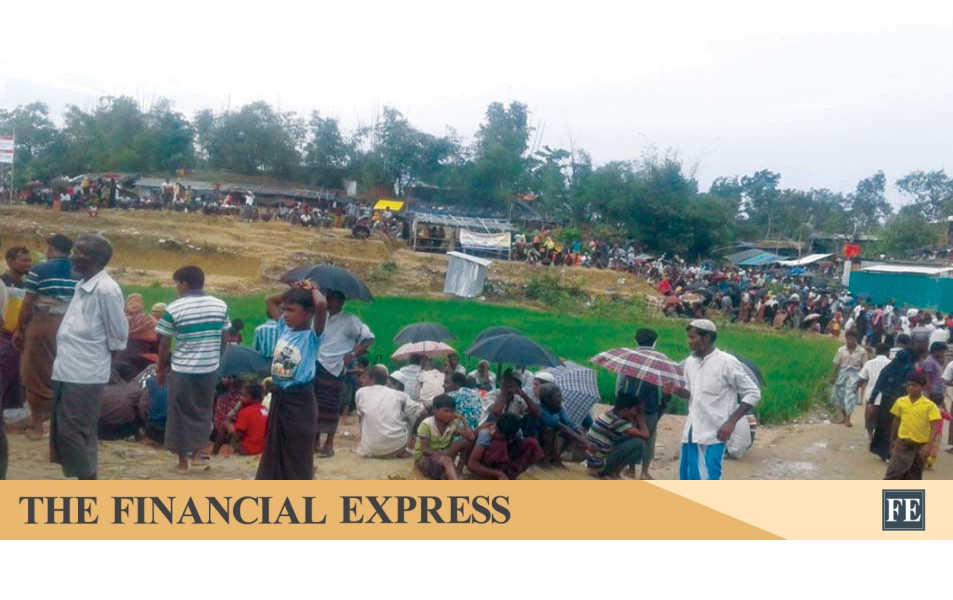
World Refugee Day was observed on June 20 under the United Nations theme, "Until Everyone Is Safe" - a call to stand in solidarity with refugees until every displaced person can live in safety, dignity, and hope. For Bangladesh, the theme carries a particularly poignant significance. As the world marked the day, about 1.3 million Rohingyas forcibly displaced from Myanmar remained stranded in refugee camps across Cox's Bazar, Ukhiya and Teknaf. Nearly nine years have passed since Bangladesh opened its borders in a remarkable act of humanitarian solidarity. What was expected to be a temporary refuge has instead become one of the world's most protracted displacement crises, with repeated promises of repatriation yielding little to no progress. Worse still, ongoing violence and instability in Myanmar continue to drive fresh waves of refugees across the border.

The Rohingya crisis did not begin in 2017. The first major influx into Bangladesh occurred in 1978, followed by subsequent waves over the decades as Myanmar systematically denied the Rohingyas citizenship, rights and security. The largest exodus came in 2017 after a brutal military crackdown that the United Nations described as a "textbook case of ethnic cleansing." Nearly a decade later, the underlying conditions that forced the Rohingyas to flee remain unchanged. Instead of moving toward a solution, the crisis has become further exacerbated.

The international response has also lost momentum. Global attention has shifted to other conflicts and humanitarian emergencies, while donor fatigue has steadily reduced financial support for Rohingya relief operations. Funding shortages have already affected food assistance, education and other essential services in the camps, while the prospect of repatriation seems more remote than ever.

Bangladesh has done more than many wealthier nations would have been willing to do under similar circumstances. We are neither a signatory to the 1951 Refugee Convention nor its 1967 Protocol and has no formal domestic asylum framework. Nevertheless, Bangladesh provided shelter to hundreds of thousands of desperate people and worked closely with the United Nations and humanitarian agencies to address their needs. But how long can Bangladesh be expected to shoulder a burden created by Myanmar's military janta and sustained by the international community's inability to resolve the crisis?

The international community must therefore move beyond expressions of sympathy and take meaningful action. Observers think addressing this crisis requires both national and global commitments to be pursued simultaneously across three key fronts. First, the chronic funding shortfall for the Rohingya response must be addressed. Donors need to increase their contributions not only to meet the refugees' basic humanitarian needs but also to support the host communities that have borne the economic and environmental costs of this prolonged crisis. Second, developed countries should expand third-country resettlement opportunities for vulnerable Rohingyas. While resettlement cannot be a substitute for repatriation, it can provide durable solutions for some refugees and help ease pressure on Bangladesh. Third, regional diplomacy must become more effective. As Myanmar is a member of ASEAN, countries such as Malaysia, Indonesia and Thailand have both a moral responsibility and a strategic interest in pressing Myanmar to create conditions conducive to the safe return of the Rohingyas. Without sustained regional pressure, the status quo is likely to persist.

As Bangladesh is set to assume the presidency of the 81st session of the United Nations General Assembly for the 2026-2027 term, with Foreign Minister Dr Khalilur Rahman elected to the post, it has a unique opportunity to place the Rohingya issue at the centre of the global agenda. The world praised Bangladesh for showing extraordinary generosity and humanity towards the suffering Rohingya. The Rohingya crisis is not Bangladesh's burden alone; it should a international responsibility. The promise made in this year's World Refugee Day theme will remain unfulfilled until the world demonstrates that solidarity means more than compassion.​
 

Dhaka mustn’t agree UN calls that harm Rohingya return

THE UN refugee agency has once again put out a call for Bangladesh to arrange for more land for the construction of shelters for the 150,000 Rohingyas who have freshly entered Bangladesh from Myanmar between November 2023 and April 27, 2025. The Office of the Refugee Relief and Repatriation Committee has said that the Office of the United Nations High Commissioner for Refugees has placed the demand before Bangladesh, which is yet to accept or decline the UN call. With the new arrivals, the number of the Rohingyas sheltered in Bangladesh stands at 1.3 million, estimated on the basis of an average birth rate of 30,000 a year, since the major influx that began in August 2017 amidst a military crackdown on the Rohingyas in Rakhine State in Myanmar. The Rohingyas are now sheltered in 33 camps at Ukhiya and Teknaf in Cox’s Bazar and another large camp set up on the island of Bhasan Char, historically administered under Noakhali but put under Chattogram in January 2026. The Myanmar wing at the Foreign Office says that intense crowding in camp areas is a concern of the donors. The managers of the camps should see what better they can do to manage the situation.

But such a state of the camps, with a declining international financial support and facing the threat of curtailment, should not be the basis for the UN refugee agency, which is, along with Myanmar and the international community, largely blamed for the failure to send the Rohingyas back to Rakhine State, to make such a call. Because, with Dhaka willing to make more spaces for the Rohingyas, this will not only encourage Myanmar to cause further exoduses of the Rohingyas but also dampen any prospect for the repatriation of the Rohingyas. UN agencies involved in the process for the Rohingya return have so far only limited their efforts to holding consultations and putting out calls for international financial support for the Rohingyas, which have mostly faltered. The United Nations in March 2025 announced a reduction in the monthly food aid, from $12.5 to $6 per person for more than a million Rohingyas, beginning on April 1 that year. UN agencies and the world community in 2021 also sought Dhaka’s engagement to encourage the adoption of government policies guaranteeing the Rohingyas administrative, civil and legal status and rights, which would in all likelihood create their permanence and local integration in Bangladesh.

Dhaka rightly stood up to the UN call then. It should stand up to the UN call now with similar steadfastness so as not to squander away any chance for the return of the Rohingyas. The world community, including the United Nations, must rather put in meaningful efforts to make Myanmar take back the Rohingyas. Any solution to the crisis that originated in Myanmar lies there.​