| Global Defense, OSINT & Geopolitics Wire

[🇧🇩] Insurgencies in Myanmar. Implications for Bangladesh

[🇧🇩] Insurgencies in Myanmar. Implications for Bangladesh
492
25K
More threads by Saif

G Bangladesh Defense

What Malaysia’s Rohingya repatriation plan means for Bangladesh
Mohammed Siraj


1790223358354.webp

Rohingya refugees cross a stream near the Naf River along the Bangladesh–Myanmar border in Palong Khali, Cox’s Bazar, on 1 November 2017. Photo: Adnan Abidi/Reuters
 

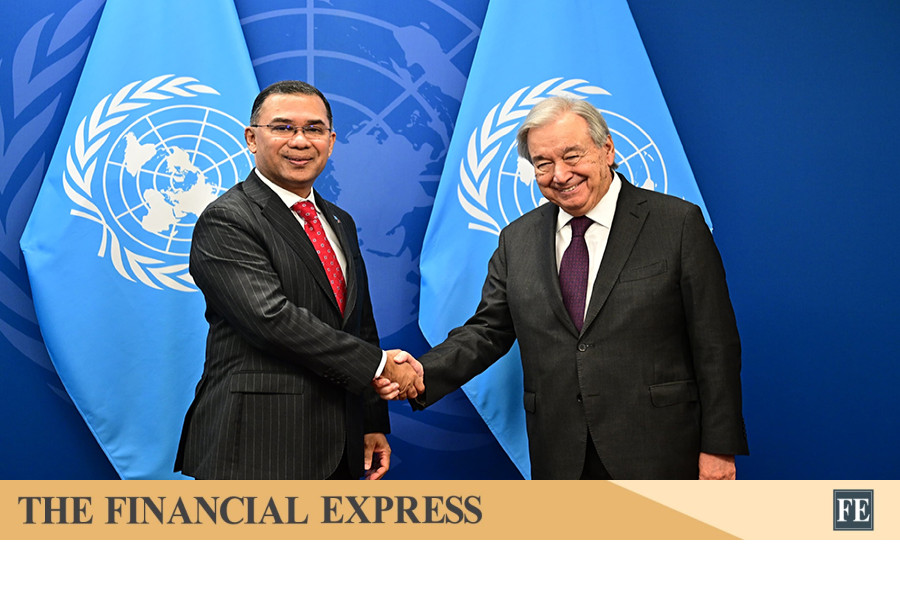
PM meets UN chief António Guterres, discusses Rohingya crisis


1790315348334.webp


Prime Minister Tarique Rahman has met United Nations Secretary-General António Guterres to discuss bilateral cooperation, a sustainable solution to the Rohingya crisis, climate change and key global and regional issues.

The meeting was held on Thursday on the 27th floor of the Secretariat Building at the UN headquarters in New York.

During the meeting, Mr Rahman highlighted the importance of UN cooperation and support for Bangladesh’s development, efforts to address the impacts of climate change and a lasting solution to the Rohingya crisis.

The two sides also discussed Bangladesh’s continued contributions to the UN’s peace, security and development activities, along with other issues of mutual interest.

The prime minister reaffirmed Bangladesh’s commitment to multilateralism, international cooperation, global peace and sustainable development.

Mr Guterres, meanwhile, stressed the importance of further strengthening the longstanding partnership between Bangladesh and the United Nations.

Both sides expressed their commitment to continuing mutual cooperation and working closely to address shared global challenges.​
 

Rohingya groups thank Tarique for raising their issues at UN
Staff Correspondent 25 September, 2026, 09:41

1790318801964.webp

Bangladesh prime minister addresses UN General Assembly in new York on Thursday | PMO Photo

Rohingya rights groups have thanked Bangladesh prime minister Tarique Rahman for raising the community's concerns at the United Nations and calling for a safe, voluntary and dignified return of the refugees to their homeland in Myanmar.

The Arakan Rohingya Society for Peace and Human Rights, in a statement posted on X, expressed its ‘deepest gratitude’ to the prime minister for raising the Rohingyas' call for justice at the UN General Assembly.

The organisation welcomed the five proposals put forward by Tarique, particularly those concerning the safe, voluntary and dignified return of Rohingya refugees and international accountability.

‘The five proposals he presented—especially those advocating for the safe, voluntary, and dignified return of Rohingya refugees and for international accountability—represent hope and a lifeline for our people,’ the organisation said. ‘The world must listen. We simply want to return home and live in peace,’ it added.

In a separate press statement issued on September 24, the United Council of Rohingya, described as an elected representative body of the Rohingya community, also welcomed the renewed international attention to the crisis and the five-point proposal Tarique presented at the September 23 high-level UN side event.

The UCR said the proposal addressed critical priorities - a credible roadmap for safe, voluntary, dignified and sustainable repatriation; an end to violence and restoration of Rohingya rights and security in Myanmar; sustained humanitarian assistance; justice and accountability, including through the International Court of Justice and the International Criminal Court; and stronger international cooperation against transnational crime.

‘The Rohingya crisis originated in Myanmar, and its durable solution requires addressing its root causes there,’ the UCR said, adding that Rohingyas must be able to return to their homeland ‘with citizenship, fundamental rights, freedom, security and dignity,’ and with credible guarantees that the persecution that forced them to flee will not be repeated.

The council said that for nearly a decade the international community had expressed solidarity with the Rohingya, and ‘the time has come to translate that solidarity into concrete action.’

It called upon the United Nations, regional actors and member states to work urgently toward a credible and time-bound pathway for repatriation, while sustaining humanitarian assistance and advancing justice and accountability.

‘The Rohingya do not seek permanent refuge. We seek the right to return to our homeland in safety, freedom and dignity,’ the statement said, underlining that nine years of displacement ‘is already too long.’

The appreciation from both groups came after Tarique, addressing the high-level UN event on the Rohingya crisis in New York on September 23, called for international and regional stakeholders to establish a clear and credible roadmap for the early, safe, voluntary, dignified and sustainable repatriation of Rohingyas to Myanmar.

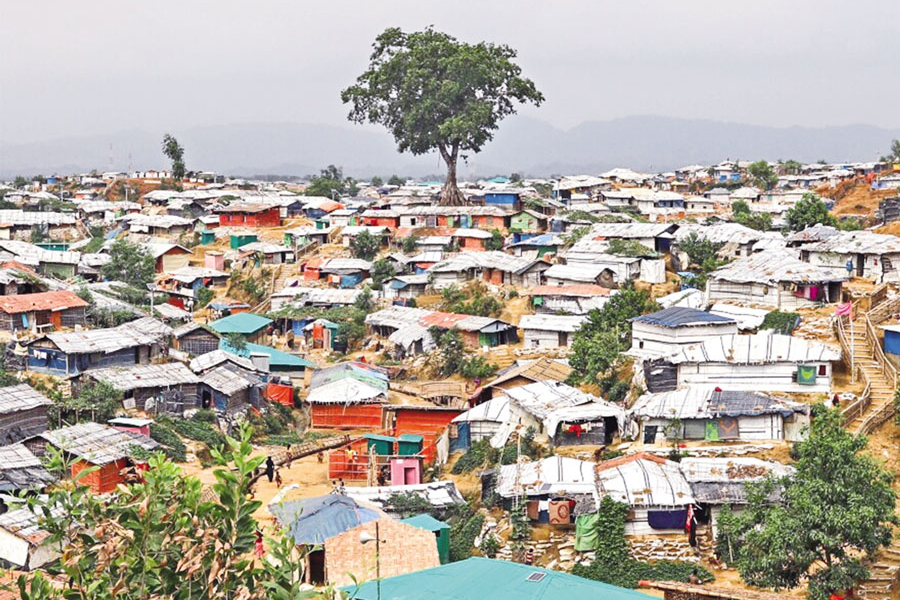
He said Bangladesh had been hosting more than 1.2 million Rohingyas for over nine years and that the prolonged displacement had placed considerable social, economic, environmental and security pressures on the country and host communities in Cox's Bazar. ‘The crisis originated in Myanmar. Its solution lies in Myanmar,’ the prime minister said, according to his statement.

Tarique proposed action in five areas: establishing a credible roadmap for repatriation; ending violence against civilians and guaranteeing Rohingya rights and security; ensuring adequate and predictable humanitarian assistance; strengthening justice and accountability; and enhancing regional and international cooperation against transboundary crimes.

He said conditions inside Myanmar, particularly in Rakhine State, remained concerning, with Rohingyas facing reported violations including forced recruitment, arbitrary detention, restrictions on movement and forced labour. He also said violations had been reported involving both the Myanmar military and the Arakan Army, leaving conditions for safe and dignified return challenged.

The prime minister also stressed that humanitarian assistance must continue until a durable solution is found. Bangladesh's humanitarian appeal for the Rohingya response has faced a funding shortfall. Tarique said the Joint Response Plan sought more than $934 million in 2025, while the 2026 appeal had been reduced to about $710 million to cover minimum lifesaving needs.

‘Humanitarian generosity cannot become an excuse for political inaction. Nor can Bangladesh be expected to shoulder this responsibility indefinitely,’ he said.

He also linked the prolonged displacement to emerging regional security concerns, including human trafficking, migrant smuggling, drug trafficking and other transnational crimes.

The prime minister subsequently reiterated the issue during the general debate of the 81st UN General Assembly on September 24, saying that the only solution to the crisis was the safe return of displaced Rohingyas to Myanmar and calling for firm and effective support from the UN and the international community. ‘We want them to return to their homes in Myanmar safely, voluntarily, with dignity and with their rights protected,’ Tarique said.​
 

How can Rohingya people return home?


1790380206747.webp


Bangladesh has spent close to a decade being applauded for sheltering the Rohingya, and almost as long without saying what the sheltering is supposed to achieve. This lack of direction was evident from the start of the 2017 influx when the country absorbed hundreds of thousands of terrified people without a comprehensive long-term plan. Given the campaign of murder, rape and destruction by the Myanmar military, offering them shelter back then was the right thing to do. However, that initial crisis has long passed. The few repatriation attempts made so far have predictably failed to send the refugees home. International aid, meanwhile, is dwindling. Against this backdrop, the UN has begun pressing Dhaka to allocate more land for constructing permanent shelters, even as any serious initiative to create the conditions for return remains out of sight. If this continues, it may not be long before the demand to keep them in Bangladesh for good is floated as the natural next step. Time is running out to establish a concrete roadmap that guarantees the right to return. The longer that roadmap remains absent, outside pressures are more likely to grow for determining what comes next.

The movement of people from Arakan into Bengal has a long history. In the 1400s and 1700s, when violence tore through Arakan, survivors crossed into Bengal, regrouped and went back to reclaim their land. Bengal functioned as a staging ground where the displaced could recover and organise until a safe homecoming became possible. That link between shelter and return has largely disappeared from Bangladesh's approach to the Rohingya. They are now treated primarily as a burden to be managed, with very little thought given to preparing them for return.

A clear parallel can be drawn with the approach taken by Turkey towards millions of Syrians who crossed its border from 2011. Turkey did not leave the refugees confined to camps while waiting indefinitely for conditions in Syria to change. Instead the country allowed them to maintain their cultural and religious institutions and gradually incorporated them into its education system and labour market. This strategy prevented the camps from becoming breeding grounds for crime and despair, as educated individuals with clear aspirations are far less likely to resort to illegal activities. Despite initial public backlash from Turkish citizens who feared the newcomers were stealing jobs and draining resources, the government pushed forward with deliberate initiatives. Erdogan referred to them as guests rather than refugees and this distinction helped alter public perception. Turkey also used the refugees to revive economically deprived areas in Istanbul and other cities. This calculated investment ended up giving Ankara undeniable leverage in Syrian negotiations and ensured that Turkey could not be ignored in any talks. More importantly the process cultivated a generation of educated Syrian leaders who could eventually form a cohesive political and military force.

The Turkish experience challenges the assumption that giving refugees room to live, study and organise necessarily means accepting their permanent settlement. In Bangladesh, the approach has been almost the opposite. The authorities have remained highly cautious about allowing Rohingya people any political, organisational or educational space. In 2019, for example, one Rohingya girl named Rahima Akter managed to enrol at a private university in Cox's Bazar by concealing her identity, only to be expelled amid public furore once her background became known. This is just one instance of the authorities' reluctance to let them build lives that extend beyond the confines of the camps. Such restrictions have yielded no tangible results and the refugees are no closer to returning home today than they did at the outset. Meanwhile, the situation in Rakhine has changed considerably during their years of exile. The Arakan Army has seized most of the territory while the Myanmar military struggles to hold its ground, making negotiations between these two forces increasingly inevitable. However, both reject Rohingya identity and any right to return, which means a deal struck without Bangladesh or Rohingya representatives at the table could leave the return out entirely. Bangladesh would then face the formidable task of demanding the repatriation of 1.5 million people without possessing the leverage to enforce its position. The problem is made worse by the absence of any Rohingya leadership with sufficient standing to negotiate on their behalf and by Bangladesh's failure to convene or cultivate Rohingya leaders within any serious political forum.

Waiting is not the only course open to Bangladesh to resolve the problem, though the alternatives demand a much greater leap in political imagination than the country has so far shown. Bangladesh has several options at its disposal that it has yet to exercise. One possibility is to build a coalition with countries such as Malaysia and Turkey, both of which have remained engaged with the Rohingya issue, while using Bangladesh's strong relationship with China to give the effort greater diplomatic weight. Such a coalition could propose a limited security presence in northern Rakhine aimed solely at creating the minimum conditions for the safe and voluntary return of the Rohingya. It need not be directed against either the Arakan Army or the Myanmar military which could make it easier for both sides to view this as temporary security measure. China's influence over Myanmar would make its involvement particularly important, while Turkey and Malaysia could provide diplomatic backing as well. China is also being courted by several Muslim-majority countries seeking alternatives to the American security architecture, giving Bangladesh and its partners an opening to seek Beijing's support for such a proposal. Beijing may also prefer to avoid a larger American role in resolving the crisis. Bangladesh, as the country with the greatest immediate stake in a durable solution, should place itself at the centre of such a coalition. It has already spent nearly a decade managing the consequences of a crisis it had no hand in creating. The question now is whether it will continue managing those consequences or try to influence the conditions that created them.​
 

Rohingyas need the world’s support

PM’s proposed roadmap can guide the international community


1790382901192.webp

VISUAL: STAR

We welcome Prime Minister Tarique Rahman’s proposal of five distinct measures to resolve the Rohingya crisis at a high-level side event of the United Nations General Assembly at the UN Headquarters in New York on September 23. Last month marked the ninth year of the 2017 mass exodus of Rohingya people to Bangladesh, when some 7,00,000 refugees fled targeted military violence in Rakhine State. Currently, more than 1.2 million refugees reside in camps across Cox’s Bazar and Bhasan Char. Their prolonged displacement is felt more keenly as the years have gone by without sufficient cooperation from Myanmar to facilitate the Rohingyas’ dignified and sustainable repatriation. As such, the PM’s proposed steps should be considered and implemented by the international community.


The proposals include establishing a clear and credible roadmap for the early, safe, voluntary, dignified, and sustainable repatriation of the Rohingya to Myanmar; ending violence against civilians in Myanmar (including the Rohingya) and guaranteeing their fundamental rights and security; ensuring adequate and predictable humanitarian support for refugees and host communities in Bangladesh; strengthening justice and accountability; and stepping up regional and international cooperation to combat the narco-economy, human trafficking, digital scams, illegal arms, and other transboundary crimes.

Disappointingly little progress has been made over the years in ensuring voluntary and safe Rohingya repatriation. Meanwhile, the ethnic community’s situation in Myanmar has worsened, as they are caught up between the ruling military forces and the Arakan Army, being subjected to extrajudicial executions, torture, forced labour and recruitment, and large-scale arson. This has made the possibility of safe Rohingya refugee repatriation seem even dimmer. Additionally, “competing conflicts” elsewhere in the world and a historic decline in development aid since 2025 have worsened the Rohingya crisis, an emergency now being viewed as a case of prolonged displacement. The US alone drove three-quarters of the recent aid decline, with its official development assistance falling by 56.9 percent compared to 2024. In 2025, donors met only 46 percent of the $934.5 million appeal for aid under the 2025-26 Joint Response Plan. As a result, in 2026, the appeal was reduced to $710.5 million to cover only the minimum required to sustain lifesaving assistance.

Meanwhile, Bangladesh continues to accommodate a growing refugee population. But the suffering of the Rohingya has only worsened since 2017. Children born nine years ago are unfamiliar with their homeland and are being raised in uncertainty, with little access to the most basic necessities. Most young people remain excluded from education and skills training, and their future is shadowed by increasing uncertainty.

We therefore urge the international community to stand by the Rohingya population and support Bangladesh in pushing for their dignified repatriation and appropriate rehabilitation. No one can make up for the years Rohingya refugees have lost to forced displacement. But the world must realise that the crisis is still there, and worsening each day, and that the multifaceted plight of the Rohingya is no less urgent than any other ongoing humanitarian crisis.​