Home Watch Videos Wars Movies Login

[🇧🇩] Insurgencies in Myanmar. Implications for Bangladesh

[🇧🇩] Insurgencies in Myanmar. Implications for Bangladesh
464
21K
More threads by Saif

G Bangladesh Defense

Bangladesh bets on China diplomacy to end decade-long Rohingya impasse

Nearly a decade after the mass displacement of Rohingya from Myanmar, Bangladesh is turning to China in search of a breakthrough.

Dhaka announced this month it plans to hold trilateral talks with China and Myanmar, with State Minister for Foreign Affairs Humaiun Kobir stressing that only a political settlement can resolve the crisis, reports Arab News.

Bangladesh insists any return must be safe, voluntary, dignified and sustainable.

China is central to the effort. Beijing maintains working relationships with both Dhaka and Naypyidaw, holds significant economic interests in the region and has been involved in Rohingya diplomacy before—helping establish a trilateral mechanism in 2019 that ultimately yielded little progress.

The renewed push carries fresh economic urgency.

Rakhine sits along critical infrastructure under China’s regional connectivity plans, including the Kyaukphyu Deep Sea Port and pipelines linking Myanmar’s coast to China. A Bangladesh-China-Myanmar economic corridor is also under discussion—a project whose viability depends on stability in Rakhine.

China’s position is also diplomatically unique. Unlike Western governments constrained by sanctions, Beijing has maintained access to Naypyidaw while deepening ties with Dhaka—a combination few other actors can offer.

The obstacles remain serious. Myanmar’s civil war has reshaped the political landscape, and any return will have to address citizenship, security and political inclusion in areas where territorial control has shifted considerably.

For China, however, the incentives are real. A stable Rakhine secures infrastructure investments, deepens regional connectivity and reduces instability on its doorstep.

After nine years, the question is whether Beijing has the will to use its leverage.​
 
Analyze

Analyze Post

Add your ideas here:
Highlight Cite Respond

PM seeks international support for dignified return of Rohingyas


1790132600916.webp

UN Secretary-General’s Special Envoy on Myanmar Julie Bishop (left) holds a courtesy meeting with Prime Minister Tarique Rahman in New York on Tuesday on the sidelines of the UNGA session. Photo: PMO

Prime Minister Tarique Rahman has sought continued support from the international community for a sustainable solution to the Rohingya crisis and the dignified return of the displaced people to their homeland in Myanmar.

He made the call during a meeting with Julie Bishop, Special Envoy of the UN Secretary-General on Myanmar, at the Hyatt Grand Central New York hotel on Tuesday, said PM’s Additional Press Secretary Atikur Rahman Rumon.

The meeting focused on the Rohingya crisis and the need for an effective role by the international community in resolving the long-standing problem

“The Prime Minister sought international cooperation to ensure the safe and dignified return of the Rohingyas to their homeland,” Rumon said.

The meeting took place as the Prime Minister is in New York to attend the 81st session of the United Nations General Assembly, where the Rohingya crisis is among the issues receiving particular attention during his visit.

State Minister for Foreign Affairs Humaiun Kobir, Bangladesh’s Permanent Representative to the UN Irene Khan, Prime Minister’s Adviser Mahdi Amin and Foreign Secretary Asad Alam Siam were present at the meeting.

On Wednesday, Tarique Rahman is scheduled to join a high-level side event on the Rohingya crisis titled “The Rohingya Crisis: A Renewed Call for a Durable Solution from Protracted Displacement, with Justice and Accountability.”

Bangladesh and The Gambia are co-hosting the event, with the European Union as a co-sponsor.

The event is intended to renew international political and humanitarian support for resolving the crisis, strengthen accountability efforts and support conditions for the safe, voluntary and dignified return of Rohingyas to Myanmar.

UN Secretary-General António Guterres has also called for sustained international support for Bangladesh and other refugee-hosting countries and for efforts to address the root causes of the Rohingya crisis and create conditions for voluntary, safe, dignified and sustainable returns.

Julie Bishop, who serves as the UN Secretary-General’s Special Envoy on Myanmar, has been engaging stakeholders on the Myanmar crisis and the Rohingya issue.

During his New York visit, Prime Minister Tarique Rahman is holding a series of bilateral and high-level meetings on the sidelines of the UN General Assembly. He is scheduled to deliver his maiden address at the General Assembly on September 24.​
 
Analyze

Analyze Post

Add your ideas here:
Highlight Cite Respond

PM, UN refugee chief discuss sustainable solution to Rohingya crisis


1790133270289.webp

Prime Minister Tarique Rahman (Third from the right) and UN High Commissioner for Refugees Barham Salih (Second from the left) hold a high-level meeting on the Rohingya crisis at the Hyatt Grand Central New York hotel in New York on Tuesday. — Photo: PMO

Prime Minister Tarique Rahman and UN High Commissioner for Refugees Barham Salih held a high-level meeting on Tuesday to discuss a sustainable solution to the protracted Rohingya crisis and the safe, voluntary and dignified return of the displaced people to Myanmar.

The meeting was held at the Prime Minister’s place of residence at the Hyatt Grand Central New York hotel, according to a release issued by the PM’s Press Wing.

They discussed creating a conducive environment for the safe, voluntary and dignified repatriation of Rohingyas to Myanmar and the need for an effective and coordinated role by the international community to help resolve the crisis.

The Prime Minister said Bangladesh had been hosting a large number of Rohingyas on humanitarian grounds for years and that there is no alternative to their safe and dignified return to their homeland for a lasting solution to the crisis.

He stressed the need for stronger and more coordinated international efforts to facilitate their repatriation.

The two sides also stressed the importance of continuing humanitarian assistance for the Rohingyas and strengthening international cooperation to expedite the repatriation process.

Barham Salih appreciated Bangladesh’s humanitarian role in hosting the Rohingyas and underscored the importance of continued international cooperation to find a sustainable solution to the crisis.

The meeting took place as the Prime Minister is in New York to attend the 81st session of the United Nations General Assembly.

The Rohingya crisis is among the key issues on Bangladesh’s agenda during the Prime Minister’s visit.

Tarique Rahman is scheduled to attend a high-level side event on the Rohingya crisis on Wednesday, where Bangladesh will call for renewed international efforts for a durable solution to the prolonged displacement.​
 
Analyze

Analyze Post

Add your ideas here:
Highlight Cite Respond

PM puts forward five urgent measures to address Rohingya crisis


1790221060443.webp

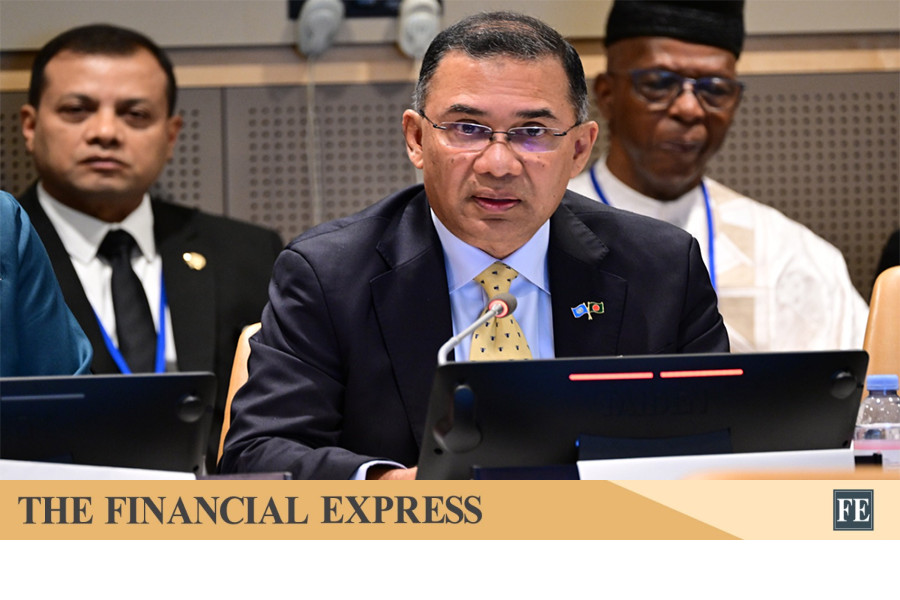
Prime Minister Tarique Rahman addresses a high-level side event at the UN headquarters on Wednesday. Photo: PMO

Prime Minister Tarique Rahman on Wednesday proposed five urgent measures to resolve Rohingya crisis, with a call to the global stakeholders for establishing a clear and credible roadmap for the early, safe, dignified and sustainable repatriation of Rohingyas, saying the time has come to move from managing displacement to ending it.

"The time has come to move from empathy to a search for root causes and their solutions, from promises to action and from managing displacement to ending it," he said while addressing a high-level side event on 'The Rohingya Crisis: A Renewed Call for a Durable Solution from Protracted Displacement, with Justice and Accountability' at the UN headquarters.

The five proposals include establishing a clear and credible roadmap for the early, safe, voluntary, dignified and sustainable repatriation of the Rohingyas to Myanmar; ending violence against civilians, including the Rohingyas and guaranteeing their fundamental rights and security; ensuring adequate and predictable humanitarian support for the Rohingyas and host communities; strengthening justice and accountability and stepping up regional and international cooperation to combat the narco-economy, human trafficking, digital scams, illegal arms and other transboundary crimes.

The Prime Minister made the proposal as he highlighted the plight of over 1.2 million Rohingyas sheltered in Bangladesh and called upon the international community to shoulder its responsibility with conviction to create conditions for their safe and dignified return.

"Bangladesh does not want the Rohingya to remain displaced forever. We want them to return their homes in Myanmar safely, voluntarily, with dignity and with their rights protected," he said.

He added, "Bangladesh has carried its responsibility with humanity. Now the international community must carry its responsibility with conviction. If the necessary conditions are created, Bangladesh will be ready to facilitate their return."

The event was co-convened by Bangladesh and The Gambia, with participation from representatives of different countries and international organizations.

Urging for a roadmap in his first proposal, the Prime Minister said, "The international and regional stakeholders must establish a clear and credible roadmap for the early, safe, voluntary, dignified and sustainable repatriation of the Rohingya to Myanmar.

"The international community and other States must support the stabilization efforts and use their leverage to create conditions within Myanmar that are conducive for return," he added.

In the second point, he called for an end to violence against civilians, including Rohingyas, in Myanmar, stressing that their fundamental rights and security in their homeland must be guaranteed to regain confidence for return.

In the third point, the Prime Minister called for ensuring adequate and predictable humanitarian support for the Rohingyas and host communities, saying the development aspirations of host communities should not be retarded by their generous act of hospitality.

In the fourth point, the Prime Minister said justice and accountability are indispensable for ensuring sustainable repatriation of the Rohingyas, while appreciating The Gambia's leadership in pursuing accountability before the International Court of Justice.

He also acknowledged the important role of the International Criminal Court and other international justice and investigative mechanisms in pursuing individual criminal accountability, stressing the need for continued international support for these efforts and ensuring that those responsible for grave crimes must be held accountable.

In his fifth proposal, Tarique Rahman stressed the need for strengthening regional and international cooperation to combat narco-economy, human trafficking, digital scams, illegal arms and other transboundary crimes that are fuelling instability in the region.

Describing the Rohingya crisis as one originating in Myanmar, the Prime Minister said, "The crisis originated in Myanmar. Its solution lies in Myanmar."

He said the situation in Rakhine State remains deeply concerning, with Rohingyas continuing to face serious violations and abuses, including forced recruitment, arbitrary detention, restrictions on movement, forced labour and other forms of insecurity.

"Serious violations have been reported by both the Myanmar military and the Arakan Army. As such, the conditions for safe and dignified return remain challenged," he added.

1790221091769.webp

Photo: PMO

The Prime Minister noted that Bangladesh has been hosting Rohingyas for over nine years, providing food, healthcare and education based on the Myanmar curriculum through around 6,000 learning centres, besides providing capacity-building and skills development training for Rohingya youth.

"However, humanitarian generosity cannot become an excuse for political inaction. Nor can Bangladesh be expected to shoulder this responsibility indefinitely," he said.

The Prime Minister warned that prolonged displacement was creating new security challenges, including human trafficking, migrant smuggling, drug trafficking and other transnational crimes.

"A crisis left unresolved in one country can become a security challenge for an entire region," he said.

He also expressed concern over declining humanitarian assistance, saying the Rohingya crisis requires sustained international support.

Concluding his remarks, Tarique Rahman urged the global community to ensure that the Rohingyas' future is not defined by persecution, expulsion and displacement.

"Let it be a story of justice, dignity and hope. And above all, let it begin now," he said.

1790221120975.webp

Photo: PMO

President of the 81st UN General Assembly Dr Khalilur Rahman, Vice President of The Gambia Muhammad BS Jallow, UN Secretary-General's Special Envoy on Myanmar Julie Bishop and UN High Commissioner for Refugees Barham Salih addressed the event, moderated by Bangladesh Permanent representative to the United Nations Irene Zubaida Khan.

Statements were also delivered by EU Commissioner for Equality, Preparedness and Crisis Management Hadja Lahbib, Advisor at the Royal Court and Supervisor General of the King Salman Humanitarian Aid and Relief Center of the Kingdom of Saudi Arabia Dr. Abdullah Abdulaziz Al Rabeeah, Minister for the Americas, Multilateral and Human Rights of the United Kingdom Chris Elmore MP, Deputy Minister of Foreign Affairs of Turkiye A. Berris Ekinci, OIC Secretary-General Ismail Ould Cheikh Ahmed, Under Secretary of State for Political Affairs of the United States Department of State Allison Hooker, Permanent Secretary for Foreign Affairs of Thailand Eksiri Pintaruchi, First Assistant Secretary of the Pacific Strategy Division of Australia Craig Chittick and High Commissioner of Malaysia to Bangladesh Ambassador Mohd Shuhada Othman.

Acting Executive Director of the World Food Programme (WFP) Carl Skau, UNFPA Assistant Secretary-General Dr. Catharina Boehme, Assistant Secretary-General of the Office of the United Nations High Commissioner for Human Rights (OHCHR) Claudia Fuentes Julio and Deputy Director General of the International Organization for Migration (IOM) Ugochi Daniel also addressed the event.​
 
Analyze

Analyze Post

Add your ideas here:
Highlight Cite Respond

What Malaysia’s Rohingya repatriation plan means for Bangladesh
Mohammed Siraj


1790223358354.webp

Rohingya refugees cross a stream near the Naf River along the Bangladesh–Myanmar border in Palong Khali, Cox’s Bazar, on 1 November 2017. Photo: Adnan Abidi/Reuters
 
Analyze

Analyze Post

Add your ideas here:
Highlight Cite Respond

PM meets UN chief António Guterres, discusses Rohingya crisis


1790315348334.webp


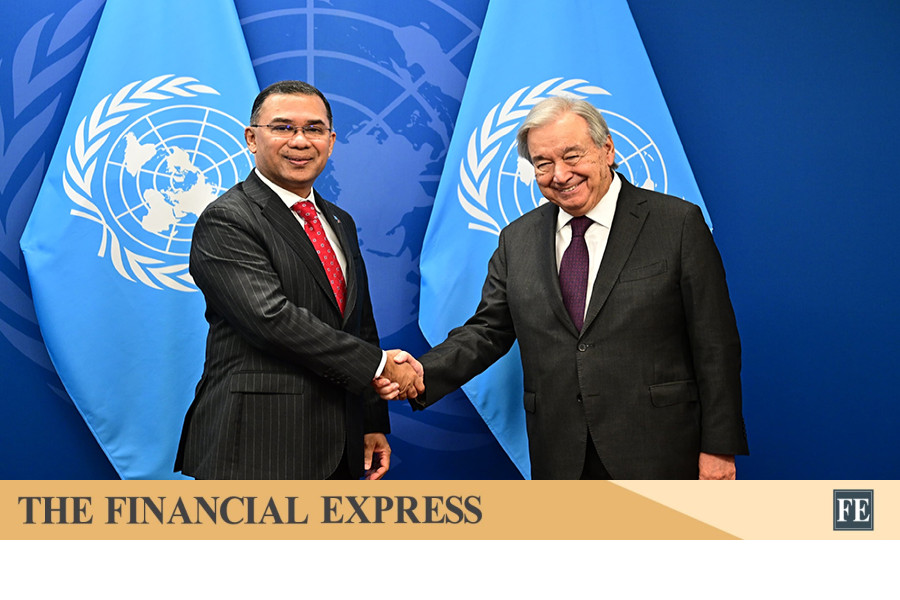
Prime Minister Tarique Rahman has met United Nations Secretary-General António Guterres to discuss bilateral cooperation, a sustainable solution to the Rohingya crisis, climate change and key global and regional issues.

The meeting was held on Thursday on the 27th floor of the Secretariat Building at the UN headquarters in New York.

During the meeting, Mr Rahman highlighted the importance of UN cooperation and support for Bangladesh’s development, efforts to address the impacts of climate change and a lasting solution to the Rohingya crisis.

The two sides also discussed Bangladesh’s continued contributions to the UN’s peace, security and development activities, along with other issues of mutual interest.

The prime minister reaffirmed Bangladesh’s commitment to multilateralism, international cooperation, global peace and sustainable development.

Mr Guterres, meanwhile, stressed the importance of further strengthening the longstanding partnership between Bangladesh and the United Nations.

Both sides expressed their commitment to continuing mutual cooperation and working closely to address shared global challenges.​
 
Analyze

Analyze Post

Add your ideas here:
Highlight Cite Respond

Rohingya groups thank Tarique for raising their issues at UN
Staff Correspondent 25 September, 2026, 09:41

1790318801964.webp

Bangladesh prime minister addresses UN General Assembly in new York on Thursday | PMO Photo

Rohingya rights groups have thanked Bangladesh prime minister Tarique Rahman for raising the community's concerns at the United Nations and calling for a safe, voluntary and dignified return of the refugees to their homeland in Myanmar.

The Arakan Rohingya Society for Peace and Human Rights, in a statement posted on X, expressed its ‘deepest gratitude’ to the prime minister for raising the Rohingyas' call for justice at the UN General Assembly.

The organisation welcomed the five proposals put forward by Tarique, particularly those concerning the safe, voluntary and dignified return of Rohingya refugees and international accountability.

‘The five proposals he presented—especially those advocating for the safe, voluntary, and dignified return of Rohingya refugees and for international accountability—represent hope and a lifeline for our people,’ the organisation said. ‘The world must listen. We simply want to return home and live in peace,’ it added.

In a separate press statement issued on September 24, the United Council of Rohingya, described as an elected representative body of the Rohingya community, also welcomed the renewed international attention to the crisis and the five-point proposal Tarique presented at the September 23 high-level UN side event.

The UCR said the proposal addressed critical priorities - a credible roadmap for safe, voluntary, dignified and sustainable repatriation; an end to violence and restoration of Rohingya rights and security in Myanmar; sustained humanitarian assistance; justice and accountability, including through the International Court of Justice and the International Criminal Court; and stronger international cooperation against transnational crime.

‘The Rohingya crisis originated in Myanmar, and its durable solution requires addressing its root causes there,’ the UCR said, adding that Rohingyas must be able to return to their homeland ‘with citizenship, fundamental rights, freedom, security and dignity,’ and with credible guarantees that the persecution that forced them to flee will not be repeated.

The council said that for nearly a decade the international community had expressed solidarity with the Rohingya, and ‘the time has come to translate that solidarity into concrete action.’

It called upon the United Nations, regional actors and member states to work urgently toward a credible and time-bound pathway for repatriation, while sustaining humanitarian assistance and advancing justice and accountability.

‘The Rohingya do not seek permanent refuge. We seek the right to return to our homeland in safety, freedom and dignity,’ the statement said, underlining that nine years of displacement ‘is already too long.’

The appreciation from both groups came after Tarique, addressing the high-level UN event on the Rohingya crisis in New York on September 23, called for international and regional stakeholders to establish a clear and credible roadmap for the early, safe, voluntary, dignified and sustainable repatriation of Rohingyas to Myanmar.

He said Bangladesh had been hosting more than 1.2 million Rohingyas for over nine years and that the prolonged displacement had placed considerable social, economic, environmental and security pressures on the country and host communities in Cox's Bazar. ‘The crisis originated in Myanmar. Its solution lies in Myanmar,’ the prime minister said, according to his statement.

Tarique proposed action in five areas: establishing a credible roadmap for repatriation; ending violence against civilians and guaranteeing Rohingya rights and security; ensuring adequate and predictable humanitarian assistance; strengthening justice and accountability; and enhancing regional and international cooperation against transboundary crimes.

He said conditions inside Myanmar, particularly in Rakhine State, remained concerning, with Rohingyas facing reported violations including forced recruitment, arbitrary detention, restrictions on movement and forced labour. He also said violations had been reported involving both the Myanmar military and the Arakan Army, leaving conditions for safe and dignified return challenged.

The prime minister also stressed that humanitarian assistance must continue until a durable solution is found. Bangladesh's humanitarian appeal for the Rohingya response has faced a funding shortfall. Tarique said the Joint Response Plan sought more than $934 million in 2025, while the 2026 appeal had been reduced to about $710 million to cover minimum lifesaving needs.

‘Humanitarian generosity cannot become an excuse for political inaction. Nor can Bangladesh be expected to shoulder this responsibility indefinitely,’ he said.

He also linked the prolonged displacement to emerging regional security concerns, including human trafficking, migrant smuggling, drug trafficking and other transnational crimes.

The prime minister subsequently reiterated the issue during the general debate of the 81st UN General Assembly on September 24, saying that the only solution to the crisis was the safe return of displaced Rohingyas to Myanmar and calling for firm and effective support from the UN and the international community. ‘We want them to return to their homes in Myanmar safely, voluntarily, with dignity and with their rights protected,’ Tarique said.​
 
Analyze

Analyze Post

Add your ideas here:
Highlight Cite Respond

How can Rohingya people return home?


1790380206747.webp


Bangladesh has spent close to a decade being applauded for sheltering the Rohingya, and almost as long without saying what the sheltering is supposed to achieve. This lack of direction was evident from the start of the 2017 influx when the country absorbed hundreds of thousands of terrified people without a comprehensive long-term plan. Given the campaign of murder, rape and destruction by the Myanmar military, offering them shelter back then was the right thing to do. However, that initial crisis has long passed. The few repatriation attempts made so far have predictably failed to send the refugees home. International aid, meanwhile, is dwindling. Against this backdrop, the UN has begun pressing Dhaka to allocate more land for constructing permanent shelters, even as any serious initiative to create the conditions for return remains out of sight. If this continues, it may not be long before the demand to keep them in Bangladesh for good is floated as the natural next step. Time is running out to establish a concrete roadmap that guarantees the right to return. The longer that roadmap remains absent, outside pressures are more likely to grow for determining what comes next.

The movement of people from Arakan into Bengal has a long history. In the 1400s and 1700s, when violence tore through Arakan, survivors crossed into Bengal, regrouped and went back to reclaim their land. Bengal functioned as a staging ground where the displaced could recover and organise until a safe homecoming became possible. That link between shelter and return has largely disappeared from Bangladesh's approach to the Rohingya. They are now treated primarily as a burden to be managed, with very little thought given to preparing them for return.

A clear parallel can be drawn with the approach taken by Turkey towards millions of Syrians who crossed its border from 2011. Turkey did not leave the refugees confined to camps while waiting indefinitely for conditions in Syria to change. Instead the country allowed them to maintain their cultural and religious institutions and gradually incorporated them into its education system and labour market. This strategy prevented the camps from becoming breeding grounds for crime and despair, as educated individuals with clear aspirations are far less likely to resort to illegal activities. Despite initial public backlash from Turkish citizens who feared the newcomers were stealing jobs and draining resources, the government pushed forward with deliberate initiatives. Erdogan referred to them as guests rather than refugees and this distinction helped alter public perception. Turkey also used the refugees to revive economically deprived areas in Istanbul and other cities. This calculated investment ended up giving Ankara undeniable leverage in Syrian negotiations and ensured that Turkey could not be ignored in any talks. More importantly the process cultivated a generation of educated Syrian leaders who could eventually form a cohesive political and military force.

The Turkish experience challenges the assumption that giving refugees room to live, study and organise necessarily means accepting their permanent settlement. In Bangladesh, the approach has been almost the opposite. The authorities have remained highly cautious about allowing Rohingya people any political, organisational or educational space. In 2019, for example, one Rohingya girl named Rahima Akter managed to enrol at a private university in Cox's Bazar by concealing her identity, only to be expelled amid public furore once her background became known. This is just one instance of the authorities' reluctance to let them build lives that extend beyond the confines of the camps. Such restrictions have yielded no tangible results and the refugees are no closer to returning home today than they did at the outset. Meanwhile, the situation in Rakhine has changed considerably during their years of exile. The Arakan Army has seized most of the territory while the Myanmar military struggles to hold its ground, making negotiations between these two forces increasingly inevitable. However, both reject Rohingya identity and any right to return, which means a deal struck without Bangladesh or Rohingya representatives at the table could leave the return out entirely. Bangladesh would then face the formidable task of demanding the repatriation of 1.5 million people without possessing the leverage to enforce its position. The problem is made worse by the absence of any Rohingya leadership with sufficient standing to negotiate on their behalf and by Bangladesh's failure to convene or cultivate Rohingya leaders within any serious political forum.

Waiting is not the only course open to Bangladesh to resolve the problem, though the alternatives demand a much greater leap in political imagination than the country has so far shown. Bangladesh has several options at its disposal that it has yet to exercise. One possibility is to build a coalition with countries such as Malaysia and Turkey, both of which have remained engaged with the Rohingya issue, while using Bangladesh's strong relationship with China to give the effort greater diplomatic weight. Such a coalition could propose a limited security presence in northern Rakhine aimed solely at creating the minimum conditions for the safe and voluntary return of the Rohingya. It need not be directed against either the Arakan Army or the Myanmar military which could make it easier for both sides to view this as temporary security measure. China's influence over Myanmar would make its involvement particularly important, while Turkey and Malaysia could provide diplomatic backing as well. China is also being courted by several Muslim-majority countries seeking alternatives to the American security architecture, giving Bangladesh and its partners an opening to seek Beijing's support for such a proposal. Beijing may also prefer to avoid a larger American role in resolving the crisis. Bangladesh, as the country with the greatest immediate stake in a durable solution, should place itself at the centre of such a coalition. It has already spent nearly a decade managing the consequences of a crisis it had no hand in creating. The question now is whether it will continue managing those consequences or try to influence the conditions that created them.​
 
Analyze

Analyze Post

Add your ideas here:
Highlight Cite Respond

Latest Posts

Back
 
G
O
 
H
O
M
E