| Global Defense, OSINT & Geopolitics Wire

[🇧🇩] Insurgencies in Myanmar. Implications for Bangladesh

[🇧🇩] Insurgencies in Myanmar. Implications for Bangladesh
490
24K
More threads by Saif

G Bangladesh Defense

ICJ verdict a moral victory for Bangladesh

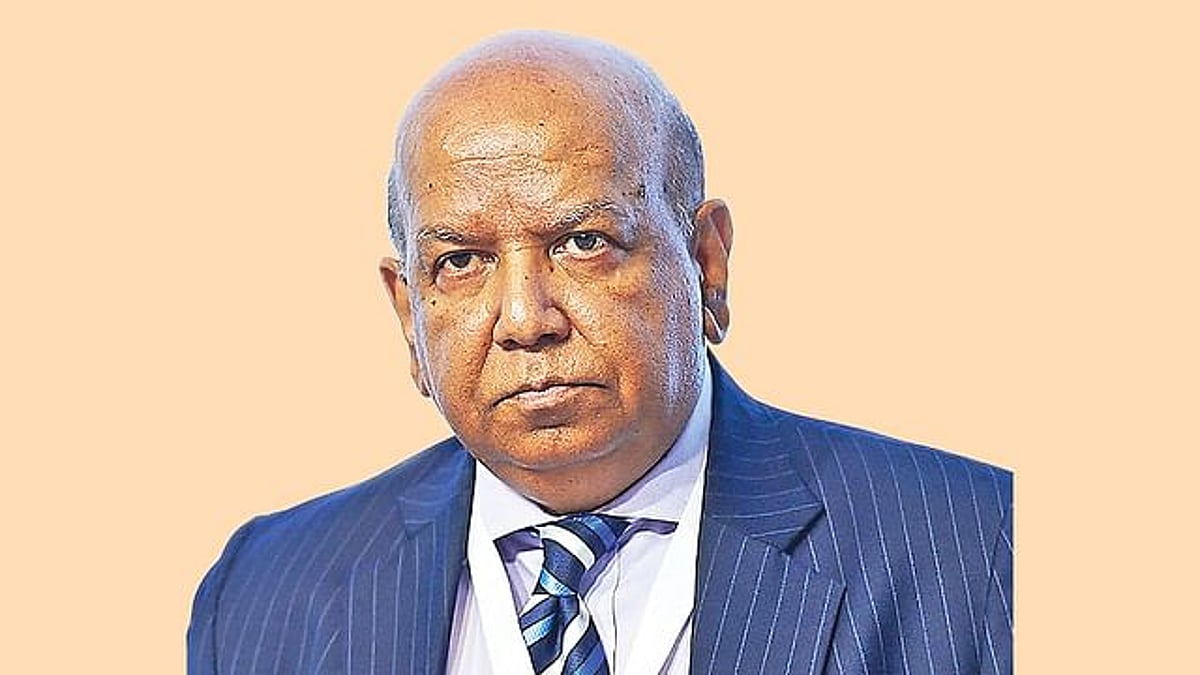
ANM Muniruzzaman

1795222660511.webp


This verdict is a moral victory for Bangladesh. For a long time, Bangladesh and the international community have accused Myanmar of committing genocide against the Rohingya people. This verdict has now established the truth of those allegations.

Although the full verdict may contain other directives or decisions, I have some reservations about how far the Myanmar authorities will go in implementing them. However, even if implementation proves difficult, there is no doubt that this can be regarded as a moral victory.

The most important development is that the plight of the Rohingya has once again come to the world’s attention. The Rohingya crisis sometimes fades into the background and slips out of international discussions as new crises emerge around the world. This verdict has created an opportunity to bring the issue back into the international spotlight.

All things considered, I would say this verdict is welcome news for Bangladesh. However, I do not realistically expect the repatriation of the Rohingya to make rapid progress as a result of this verdict.

The most important factor in the repatriation process is obtaining consent or assurances from those currently in authority in Myanmar that will be acceptable to all concerned.

There is another important consideration. The authorities currently running the government in Myanmar were a party to this case. However, those who now exercise actual control or authority in Rakhine were not parties to the case. They are not a state.

Since they are not a state, it is difficult to impose on them the kind of direct accountability or obligations under international law that apply to states. Our communication with them is also very limited. Therefore, questions remain over how acceptable the International Court’s verdict will be to those currently exercising authority in Rakhine, and to what extent they will be obliged to comply with it.

Nevertheless, the significance of this verdict lies in the fact that it has internationally established the truth of what we, the Rohingya community and the international community have been saying for a long time.

I believe this verdict will also play an important role in ensuring that the Rohingya crisis does not get lost amid the world’s many other crises. At the same time, the international community may take a more proactive approach in fulfilling its responsibilities on this issue. However, that will depend on how effectively we can present the issue at the international level and how strategically we can use this verdict.

*ANM Muniruzzaman is president of the Bangladesh Institute of Peace and Security Studies.​
 

Myanmar guilty of genocide against Rohingya, says top UN court
AFP

The Hague

1795223950739.webp

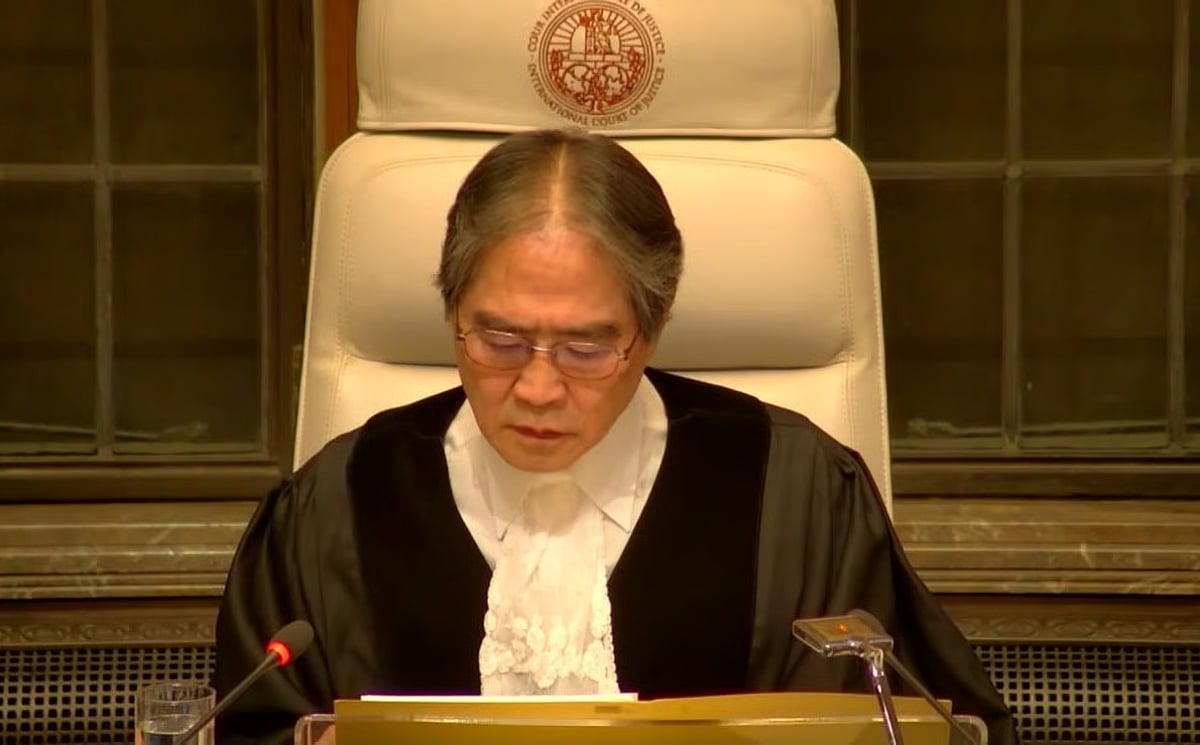
ICJ President Yuji Iwasawa delivering verdict in the court's Great Hall of Justice in The Hague Taken from ICJ website

Myanmar committed genocide against its Rohingya minority, the International Court of Justice said on Thursday in an historic ruling, ordering refugees be given safe passage home and awarded compensation.

The ruling by the top UN court was the first time in its 80-year history that ICJ judges have determined that a state committed genocide, and is likely to be seen as justice for Rohingya victims of Myanmar's brutal 2017 crackdown.

"The Republic of the Union of Myanmar has committed genocide against the Rohingya group in northern Rakhine State," said ICJ President Yuji Iwasawa, delivering the verdict in the court's Great Hall of Justice in The Hague.

For nearly three hours, Iwasawa laid out searing evidence of Myanmar's atrocities against its mostly Muslim Rohingya minority during the campaign, which forced hundreds of thousands to flee into neighbouring Bangladesh.

Myanmar's security forces killed thousands of Rohingya civilians, committed "widespread sexual violence" against women and "extreme violence" against children, Iwasawa said.

Rohingya villages were "systemically destroyed" and replaced with non-Rohingya inhabitants, said the ICJ, ruling that the "only reasonable inference" was that Myanmar intended to destroy the population -- a key test for genocide.

“Safe” return

The court ordered Myanmar to "allow and facilitate the safe, voluntary, and dignified return to their place of residence" for those who fled the violence.

Judges also told Myanmar it must investigate and punish anyone suspected of committing genocide, providing for compensation to be determined at a later date.

While the decisions of the ICJ are binding and cannot be appealed, the court has no way of enforcing its verdicts, and it remains to be seen whether Myanmar's rulers will adhere to the orders.

But the ruling will likely heap more international pressure on its leader Min Aung Hlaing.

He commanded the military during the Rohingya crackdown before ousting the elected government of Aung San Suu Kyi in a 2021 coup.

This year, he was installed as civilian president following deeply restricted elections and is waging a diplomatic campaign for legitimacy -- which may be complicated by the ruling.

The landmark ICJ verdict was also being closely watched by legal experts for clues into how the court will rule in another high-profile case before it -- whether Israel has committed genocide in Gaza.

“I want justice”

For the more than one million Rohingya now living in the world's largest refugee camp over the border in Bangladesh, the ruling offered a glimmer of hope for accountability.

"I want justice," a 23-year-old Rohingya rape survivor said before the verdict in the cramped shelter where she lives with her family.

"There should be stringent punishment for those who raped women. The ICJ should say something separately about this," she said, requesting anonymity.

Survivors of the violence brought with them harrowing tales of gang rapes, mass executions, and cruelty towards families and children.

Far from the squalor of the refugee camps, the panel of 15 judges has been weighing for seven years whether Myanmar's actions constitute genocide.

The case was brought by The Gambia under the 1948 UN Genocide Convention, which allows any state to bring a case against another it suspects of breaching the international agreement set up after World War II.

Myanmar had always denied genocide, arguing that its actions targeted a military uprising from insurgents after a series of attacks left a dozen security personnel dead.

"Myanmar was not obliged to remain idle and allow terrorists to have free rein," its representative Ko Ko Hlaing told judges during hearings on the case in January.

The Gambia's justice minister said the country filed the case "after reviewing credible reports of the most brutal and vicious violence imaginable inflicted upon a vulnerable group that had been dehumanised and persecuted for many years."

The Gambia has the "full backing and support" of the 57-member Organisation of Islamic Cooperation for its efforts at the ICJ, said the minister, Dawda Jallow.

"It is not about esoteric issues of international law, it is about real people, real stories and a real group of human beings," added Jallow.

Speaking before the verdict, survivor Mohammed Osman said he was hoping the ruling would allow him to go back home and perform last rites for his parents and younger brother killed by the Myanmar military.

"They shot my father dead, forced my mother into a house with a few other women, raped them and burnt down our homestead," Osman, 20, told AFP.​
 

International court’s genocide ruling ‘not fair’: Myanmar spokeswoman

AFP

Naypyidaw, Myanmar

1795224165030.webp


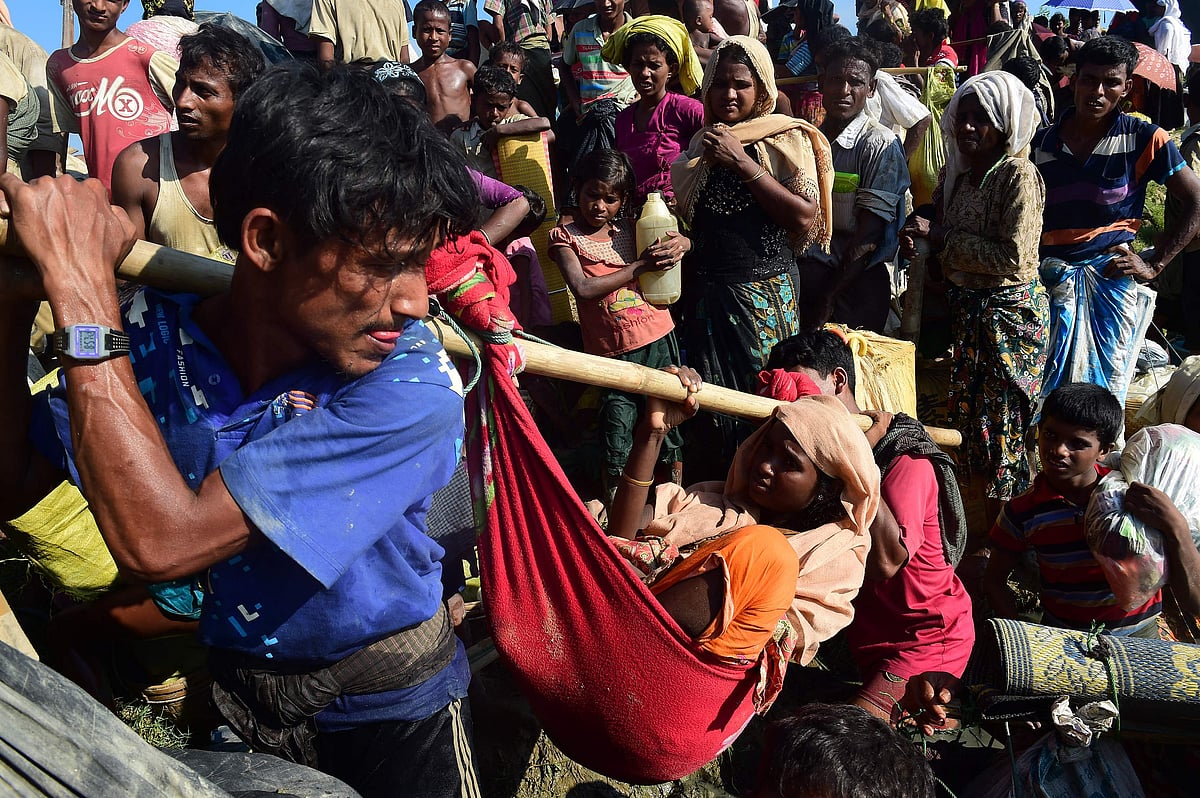
Rohingya refugees carry a woman after crossing the Naf River as they flee violence in Myanmar to reach Bangladesh in Palongkhali near Ukhia on October 16, 2017. The head of the United Nations General Assembly urged Myanmar on November 20, 2026 to bring home hundreds of thousands of Rohingya refugees, a day after a landmark genocide ruling.

More than a million Rohingya live in Bangladesh, most having fled a brutal 2017 military crackdown in Myanmar.

The ruling marked the first time in the ICJ's 80-year history that it had found a state responsible for genocide, a victory for the mostly Muslim minority's long campaign for justice.

Rohingya refugees carry a woman after crossing the Naf River as they flee violence in Myanmar to reach Bangladesh in Palongkhali near Ukhia on October 16, 2017. The head of the United Nations General Assembly urged Myanmar on November 20, 2026 to bring home hundreds of thousands of Rohingya refugees, a day after a landmark genocide ruling. More than a million Rohingya live in Bangladesh, most having fled a brutal 2017 military crackdown in Myanmar. The ruling marked the first time in the ICJ's 80-year history that it had found a state responsible for genocide, a victory for the mostly Muslim minority's long campaign for justice. AFP

A historic ruling by the top UN court that Myanmar committed genocide against its Rohingya minority was “not fair”, the country’s presidential spokeswoman said Friday.

The International Court of Justice (ICJ) on Thursday laid out searing evidence of Myanmar’s atrocities against the mostly Muslim Rohingya during a 2017 crackdown in western Rakhine state.

Myanmar’s security forces killed thousands of Rohingya civilians, committed “widespread sexual violence” against women and “extreme violence” against children, the court’s president said.

1795224202526.webp

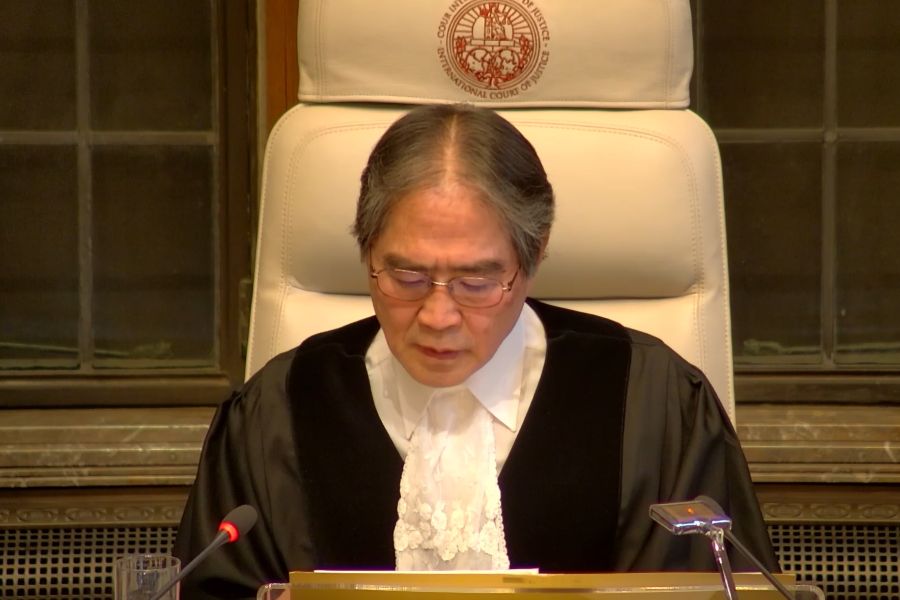
ICJ President Yuji Iwasawa delivering verdict in the court's Great Hall of Justice in The HagueTaken from ICJ website

Asked about the ICJ decision at a press conference in the capital Naypyidaw, spokeswoman Khaing Khaing Soe called it unfair.

“Despite efforts from our side, when we look at the result, not all 15 judges agreed with the decision,” she said, noting the 9-6 vote.

“So this was not a unanimous decision,” she added. “I would say it is not fair.”

Myanmar had always denied genocide, arguing that its actions targeted a military uprising from insurgents after a series of attacks left a dozen security personnel dead.

But the ICJ ruling dismissed Myanmar’s argument that it was carrying out counter-insurgency operations.

“There is no evidence before the Court that, in the conduct of the clearance operations, Myanmar distinguished between civilians and alleged (Rohingya) fighters,” the judgment said.​
 

How best Bangladesh can capitalise the ICJ verdict

Helal Mohiuddin

1795225153455.webp

Judges at the International Court of Justice in The Hague deliver their historic verdict on November 19 holding Myanmar responsible for genocide against the Rohingya. | UN Photo/Frank van Beek

FOR nearly 80 years, never before has a country been directly found guilty of genocide by an international court. The recent verdict by the International Court of Justice against Myanmar is historic — not just as the conclusion of one chapter, but as the opening of another, even more consequential one. The next phase will determine the nature and amount of reparations. But right now, the world is transfixed by the significance of this moment.

From Bangladesh, the anticipation was palpable — not only because the Rohingya crisis remains a heavy, deeply consequential burden for the country, but because this verdict could set a vital precedent for oppressed people everywhere, from Gaza to beyond.

The hardest part of proving genocide is demonstrating intent. Many mass killings have escaped official recognition as genocide simply because intent could not be established. In fact, Serbia was acquitted in the 2007 Bosnia case for this very reason. Even Bangladesh’s own 1971 Liberation War faces debate among scholars about whether it qualifies as genocide.

November 19, 2026, will be a day to remember. In The Hague’s Peace Palace, ICJ president Yuji Iwasawa read the verdict over three tense hours. For nine long years, the Rohingya — and many of us watching — had waited for this final sentence.


Here’s what the court found — the genocide against the Rohingya is real. The evidence is clear — killing, serious physical and mental harm, and imposing measures to prevent births. Myanmar’s forces killed nearly 10,000 Rohingya with proven intent to destroy a significant part of their community. Myanmar’s other failures — not preventing genocide, not punishing perpetrators, failing to pass necessary laws and ignoring previous court orders.

The bench was split 9-6 on the main verdict. The dissenting judges didn’t deny the brutality; they simply argued that recognising genocide would do little to ease the Rohingya’ suffering. But on the need for justice and punishment, the court was nearly unanimous.

So, what must Myanmar do now? The court has ordered investigations, prosecutions and safe, voluntary, dignified return for displaced Rohingya. Families must be reunited, lost property returned or compensated, the missing located and buried properly and survivors given physical and mental rehabilitation. Above all, Myanmar must guarantee no further persecution.

This verdict also declares the 1982 citizenship law — long used to strip the Rohingya of their rights — essentially inhuman. For decades, repatriation was at the mercy of Myanmar’s goodwill and complicated bilateral negotiations. Now it’s a matter of legal obligation, with the court insisting that returns must be safe, voluntary and dignified.

Yet, citizenship issue isn’t fully resolved. The ICJ cannot directly restore citizenship; its jurisdiction is limited to the genocide convention. Still, the directive to prevent recurrence and protect the community is a tacit call for basic rights.

Is Myanmar bound to comply? Legally, yes. Under the UN Charter, every member state is obligated to follow ICJ rulings. The verdict is final. But the court has no police force; it can show the red card, but can’t remove players from the field.

Myanmar ignored most of the 2020 provisional orders. The difference now is that the government, led by the same general who orchestrated the crackdown, is desperate to regain international legitimacy. The stigma of being a ‘genocidal state’ is a heavy burden and most democratic countries have clear policies against aiding or engaging with sanctioned regimes.

If Myanmar refuses to comply, the Gambia can take the issue to the UN Security Council. The Council can recommend sanctions or other measures, though China and Russia hold veto power. Yet, after this verdict, the foundation for action is stronger than ever. Any country can now justify arms embargoes, asset freezes or visa bans against Myanmar without hesitation.

For Asia, this is a landmark. There is no regional human rights court here and ASEAN has long hidden behind its ‘non-interference’ policy. This verdict cracks that wall. It also opens the door for personal accountability — ICC prosecutors are seeking arrest warrants for top Myanmar officials and Argentina’s courts are pursuing universal jurisdiction cases. Forced repatriation of the Rohingya from neighbouring countries will likely stop as a result of this judgment.

What does this mean for Bangladesh? Relief and a few headaches. The verdict shatters Myanmar’s narrative that the Rohingya are ‘illegal migrants’ or ‘economic refugees’ from Bangladesh. Repatriation is now a legal duty for Myanmar, not a matter for endless bilateral negotiation. Bangladesh can now argue for more international aid to support the refugees in its care.

But there are complications. Myanmar controls only three of Rakhine’s 17 townships; the rest, including the entire border with Bangladesh, is under the Arakan Army, which is not a party to the case and itself faces accusations of abuses against the Rohingya. And the influx of new refugees continues.

So, what should Bangladesh do?

First, form a legal-diplomatic taskforce — experts, officials, Rohingya representatives and researchers — to analyse every line of the 191-page verdict and identify how Bangladesh can benefit. Since Bangladesh is not a party to the case, it must work closely with the Gambia and the OIC in the reparations phase, supplying evidence and cost data as a host country.

Second, use the verdict as a fundraising tool. Bangladesh should launch a campaign with the UN, EU, Japan and Gulf states, emphasising that humanity’s responsibility to genocide victims is global, not Bangladesh’s alone.

Third, as a member of the Rome Statute, Bangladesh should actively cooperate with the ICC, Argentina’s courts and the UN’s evidence-gathering bodies.

Fourth, even without recognising the Arakan Army, Bangladesh should devise a pragmatic policy for essential communications. The verdict can serve as powerful leverage, potentially drawing the Arakan Army towards supporting safe return and rights for the Rohingya.

To overcome the challenges of vetoes and geopolitics, Bangladesh must maintain steady international pressure. History shows that consistent advocacy eventually yields results — Britain, after years of resistance, finally agreed to return the Chagos Islands to Mauritius after relentless diplomatic pressure.

Bangladesh’s bureaucracy must act quickly. The opportunities created by the verdict could slip away if not seized now. Bangladesh’s policymakers must recognise the urgency of this moment. In the end, this is a once-in-a-generation chance — not just for the Rohingya, but for Bangladesh and the world to show that justice, even if delayed, can still triumph.

Dr Helal Mohiuddin is a sociologist and cultural anthropologist teaching at Mayville State University, North Dakota, USA.​
 

A landmark verdict on Rohingya genocide


1795303898494.webp


The International Court of Justice (ICJ), the UN's principal judicial organ, has delivered a landmark verdict that Myanmar committed genocide against its ethnic Rohingya population during the 2017 military crackdown in northern Rakhine State. The significance of the ruling cannot be overstated, as Myanmar has long tried to mislead the international community by terming the military operation as a legitimate crackdown on terrorists and separatists in the interest of national security. But the court has made it unequivocally clear that national security measures cannot serve as a pretext for genocide, nor can a state escape accountability for such grave crimes. The judgment establishes that Myanmar's security forces and other state organs deliberately targeted the Rohingya with the intent to drive them out of their ancestral homeland through a campaign of ethnic cleansing - committing acts that fall squarely within the definition of genocide under the Genocide Convention. These included killing members of the group, inflicting serious bodily or mental harm and imposing measures intended to prevent births within the community. According to the court, an estimated 10,000 Rohingya were killed during the military operations.

Advertisement
The scale of destruction was equally staggering. Nearly 400 villages were partially or completely destroyed during and after the 2017's ethnic cleansing operations. As a consequence, about one million Rohingya were forced to flee their ancestral homes and seek refuge in Bangladesh, creating one of the world's most protracted humanitarian and refugee crises. After driving out the Rohingya from their homeland, the Burmese authorities quickly built security installations, new settlements and other infrastructure on the vacated sites. The objective was evidently not merely to drive the Rohingya out but make their return impossible. Welcoming the verdict, UN Secretary-General António Guterres described it as a "powerful recognition of the Rohingya victims of genocide" and a reaffirmation that impunity for such horrific acts must not stand.

The pressing questions now are what impact the verdict will have on the more than one million Rohingya languishing in Bangladeshi camps? Will they be able to return to their homeland? Will the perpetrators of the genocide be brought to justice? The Court has directed Myanmar to take immediate steps to investigate, prosecute and punish those responsible for committing acts of genocide. It has also ordered the country to prevent any recurrence of such crimes, ensure safe, voluntary and dignified return of displaced Rohingya, facilitate family reunification and provide compensation for the harm caused. Myanmar has been given two years to report on the restitution measures it has taken. However, although the ICJ's verdict is final and legally binding, the Court has no police or military force to enforce its rulings. Should Myanmar refuse to comply, The Gambia, which initiated the case in 2019, can seek the intervention of the UN Security Council. The Council may take measures, including imposing economic sanctions, but any such action could be blocked if one of its permanent members exercises its veto power. Therefore, much will depend on international diplomatic pressure and the willingness of major powers to ensure that Myanmar is held accountable.

It is now imperative for Bangladesh to step up its diplomatic efforts for the repatriation of the Rohingya. The verdict offers a significant legal and diplomatic opportunity that must not be squandered. Dhaka should coordinate with The Gambia, the OIC, the UN and countries that participated in the proceedings before the Court to mount concerted international pressure on Myanmar for a lasting solution to this protracted crisis. The historic ICJ verdict will be truly meaningful only when the Rohingya receive justice, are able to return to their homeland and can live there in safety, security and dignity.​