[🇧🇩] Insurgency in India's North-East---Why does India blame Bangladesh?

Afghanistan Albania Algeria Andorra Angola Antigua Austria Azerbaijan Bahamas Bahrain Bangladesh Barbados Canada China Egypt Finland Germany India Iran Israel Japan Lebanon North Macedonia Pakistan Palestine Qatar Russia Syria Turkey Ukraine United Kingdom United States Yemen
[🇧🇩] Insurgency in India's North-East---Why does India blame Bangladesh?
55
4K
More threads by Saif

G Bangladesh Defense

Indian soldier killed in Manipur attack
New Age Desk 14 July, 2024, 21:58

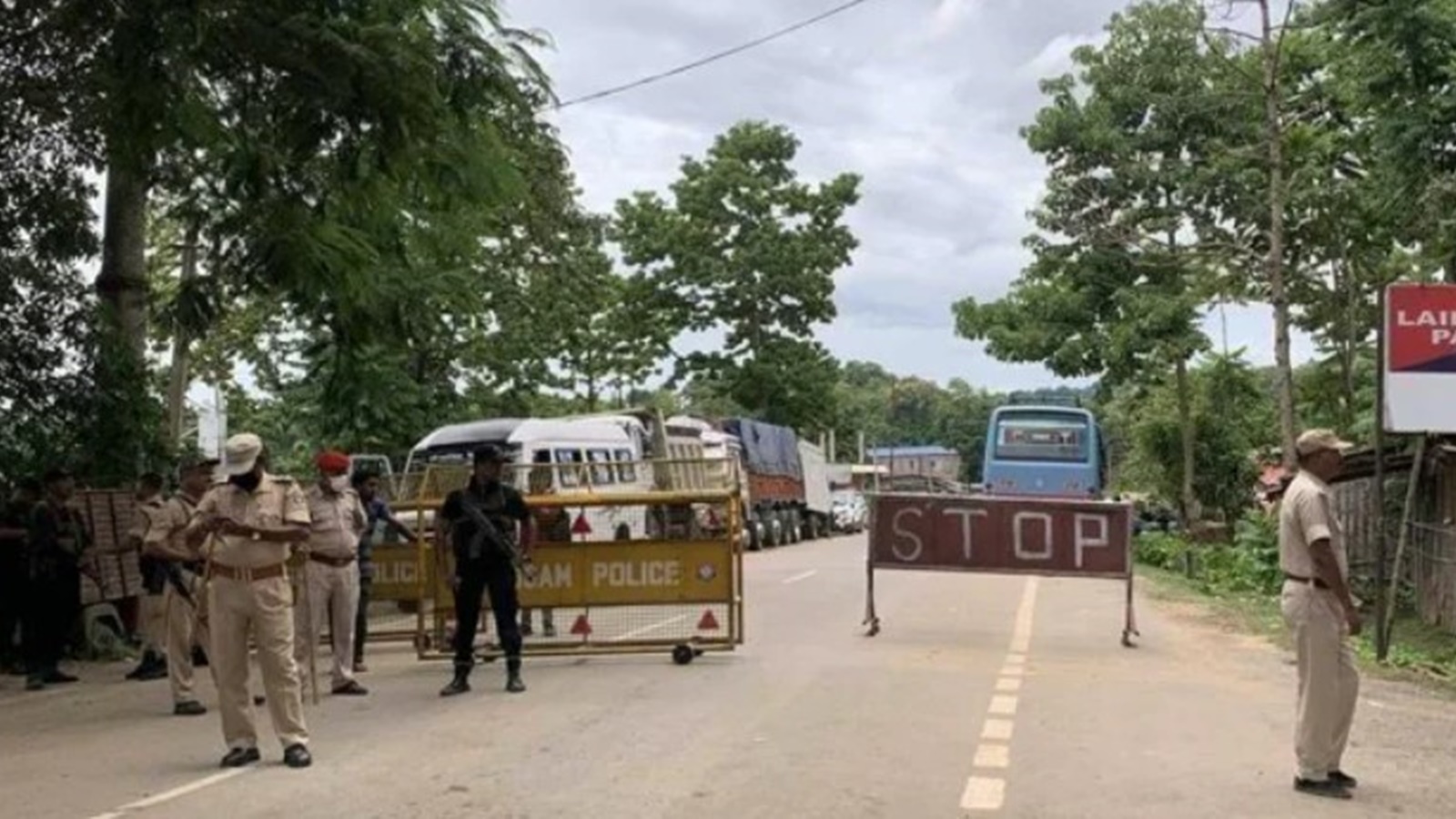
A Central Reserve Police Force jawan was killed in a gun attack by suspected militants at Mongbung village in Manipur's Jiribam district on Sunday morning, police said.

A policeman also suffered injuries he has been admitted to a hospital, they said.

The deceased has been identified as Ajay Kumar Jha, 43, a resident of Bihar, reports PTI.

'He suffered bullet injuries in the head and was declared brought-dead in hospital. The injured policeman is undergoing treatment, but he is out of danger,' a police officer said.

In a post on X, Chief Minister N Biren Singh condemned the attack and prayed for the speedy recovery of the injured.

'I strongly condemn the killing of a CRPF personnel in an attack carried out by an armed group, suspected to be Kuki militants, in Jiribam district today.

'His supreme sacrifice in the line of duty shall not go in vain. I further extend my sincere condolences to the bereaved family of the deceased soldier, while praying for the speedy recovery of the ones injured during the attack,' Singh said.

Gunshots were reportedly heard in the village on Saturday night, too, the officer said.

Additional security forces have been deployed at Mongbung from adjacent hill areas following Sunday's attack, another official said.

A vehicle belonging to security personnel has been damaged in the gun attack, he added.

Manipur has been rocked by ethnic violence between Meitei and Kuki communities since May last year, which has claimed more than 200 lives.​
 

Massive deployment of troops sparks fresh fears in Manipur
Pradip Phanjoubam

1722240110707.png


For almost 15 months, violence and conflict have continued in India's northeastern state of Manipur. Senior journalist and founder editor of Imphal Review of Arts and Politics, Pradip Phanjoubam, in an interview with Prothom Alo's Suvojit Bagchi, speaks about the elections in Northeast India, unrest in Manipur, China's growing strength in South Asia and other contemporary and complex issues.
Updated: 29 Jul 2024, 13: 54

Prothom Alo : Out of seven Northeast Indian states, BJP or its allies won no seats in four where they won five of six seats in 2019. Do you think Manipur violence played a role?

Pradip Phanjoubam: That is one of the major factors but there are other factors. Each state is different in its own way. One thought was that BJP is against Christians and it was a major factor in Mizoram and Meghalaya. In Nagaland, the ruling party has been facing anti-incumbency.

Prothom Alo : In that case, do you think what Assam's chief minister Himanta Biswa Sarma said about Christians voted en-bloc against the BJP has an element of truth in it?

Pradip Phanjoubam: They have been making all this rhetoric against the Christians (and) the Christians felt they have been targeted and they voted against the BJP.

Prothom Alo : And churches have been demolished, places of worship targeted…

Pradip Phanjoubam: In Manipur, it is a little different. What we are getting from the media has been little different from the actual happenings. All the Naga churches are standing but the Kuki churches have gone. So, it is more ethnic than being religion-driven. Voting pattern in Manipur has also been a lot different. In Manipur valley the factor was anti-incumbency, government's inability to address the crisis.

Manipur has two constituencies. One in the valley– the Inner Manipur– and the other in the hills– the Outer Manipur. In Outer Manipur there was anger and it was not an individual decision to vote (against BJP); in some of the constituencies over 90% of the votes went to one candidate. In Churachandpur (south Manipur) district – which was in the eye of the storm – apparently there was a community decision to not vote and in some of the polling booths almost 100% of votes were polled for one candidate. It is en-bloc voting as Biswa Sarma has said. Yet in Churachandpur, religion is not always the factor. Majority of the MLAs are from the BJP. They were promised a separate administration in the last election and BJP did not respond. They were upset.

We have Kuki concentration in two districts– Churachandpur and Kangpokpi. In Kangpokpi (north-central district), Kukis boycotted the election, only the Naga's voted and so you can see an equitable sharing of votes.

Prothom Alo : What should the new central government do in Manipur and what are the issues to address immediately?

Pradip Phanjoubam: The government will have to make a beginning and that beginning has to be the end of hostility. The centre should have made clear after the first week of violence that law has to be in the hands of the state. Now law has disappeared or everybody has hands on the law. All are arming themselves in the name of self-defence as they are also feeling insecure. If the state could provide protection to all, things would have been different.

Now, there are so many troops here that people are suspecting that there is possibly another agenda. The state (government) is totally incapable and has no clue. The centre has flown in so many troops and together with the state constabulary they must have stationed between 60,000 to 70,000 boots on ground, maybe more. I think there is some plan afoot and there is a bit of uncertainty in the government as well.

Prothom Alo : What kind of plan do you apprehend?

Pradip Phanjoubam: The state government was virtually in a state of animated suspension. The chief minister was removed from the head of the fight command.

He could call meetings but not part of the decision-making regarding law and order, Centre was doing it. Amit Shah said, the valley should be managed by the police and the hills by the central forces. That caused another kind of division as the valley started suspecting central forces of siding with the Kukis and Kukis suspected that the police were with the Meiteis. There should be no such division in the forces. There were mistakes– either deliberate or inadvertent.

Prothom Alo : In this context, do you think BJP's over-dependence on two chief ministers of the Northeast– Biswa Sarma in Assam and Manipur's N Biren Singh will reduce?

I think so. Himanta is supposed to head NEDA (North East Democratic Alliance). But all the states governed by alliance partners have voted against the BJP…there is a backlash against the BJP. If they are not careful, they could be wiped off as was the case with the Congress. It seems that the shadow of the past has been returning.

Prothom Alo : Voice of the People Party or Zoram People's Movement are independent local parties not aligned to the BJP or India alliance and they did well in the election. But in the Northeast we have seen parties often align themselves with the ruling parties in the centre. Like in Tripura recently. Is there any such possibility?

Pradip Phanjoubam: They may try to align with the party in the centre. In the Northeast, parties feel a little insecure to be left on their own and tend to think that they are better off if allied with the ruling party, though there are also rebels here. Three decades back the centre never trusted the regional parties, argued about foreign hand destabilising states and imposed President's rule or engineered defections. It had a psychological impact, especially in weak states.

Prothom Alo : The situation in Myanmar is worsening by the month. What is the expected impact of this on both Myanmar and the North East?

Pradip Phanjoubam: Indeed, Myanmar's situation is influencing the politics in the North East. In Manipur, arms and the population has been entering and allegedly it is fomenting trouble here. Besides there is this drug business. They are coming because of compulsion or it could be because of economic reasons as that side too is also impoverished.

The question is, whether Myanmar chaos will continue and the junta will be overthrown or not. The impression that I get from experts– like Richard Horsey (Crisis Group's Myanmar adviser) or Emma Leslie (international Myanmar observer) who are working there– is that the rebellion will continue and the military will suffer setbacks in different pockets but it would not be a comprehensive defeat for the military. The opposition is not united. Kachins don't see eye to eye with Chins or Chins to Arakans etc. and there is resistance within the Bamar community (the largest ethnic community) in the Irrawaddy plains.

Even in the hills, so many of the communities are divided in the sense that some are Christians– like the Kachins or the Chins– and then there are so many states with ethnic populations which are Buddhists like the Arakan or the Shan. Even within the states there are so many communities, it is so much like the Northeast that you can't say that this is one block and that is another block. So, if the rebels win, they will win in different pockets and it can't be comprehensive in nature, unless the military decides to give up which is unlikely. Besides, China is very interested in Myanmar.

If China can make friends with India, they will be happy as it will let them access these routes. Besides, both countries would not engage in the arms race which I think is good for both. But since India is off the radar for now, China will be increasingly looking at Bangladesh, Nepal or Bhutan, etc

Prothom Alo : How?

Pradip Phanjoubam: They do not have a sea route to the Indian Ocean. Since all their resources are coming from Africa or the Arabian Peninsula, it is important for them to have access to the Indian Ocean which they don't have. Right now, they use the Malacca Strait, which is a roundabout and the Strait is controlled by the United States. So, they are desperate to have a land route to the Indian Ocean, which is why they would invest any amount to be on the right side of the power in Myanmar. Right now, they are wooing the junta. If they find that the junta is losing, then they will use the rebel groups to ensure that the junta does not go away from China. If Aung Sun Suu Kyi comes to power, she will be given a red-carpet treatment too. The reasons for these are manifold. China has a pipeline running from Sittwe to Kunming, they have a Belt-and-Road initiative which is running straight through Myanmar and now a high-speed rail connectivity.

They also have another route via Pakistan reaching Gwadar port. That route apparently is topographically difficult. There is Karakoram range and it passes through Balochistan in places where the Pakistan government is weak. So, China would prefer an easier land route through Myanmar. If China is interested in one sector these days, then West– especially US– will take a keen interest in that sector. So, Myanmar is emerging as another nodal point for the new Cold War.

Prothom Alo : Access through Bangladesh also becomes important…

Pradip Phanjoubam: Yes. If China can make friends with India, they will be happy as it will let them access these routes. Besides, both countries would not engage in the arms race which I think is good for both. But since India is off the radar for now, China will be increasingly looking at Bangladesh, Nepal or Bhutan, etc.​
 

BJP govt has pitted communities against each other in Manipur, which led to riots: Mamata Banerjee
ANIKolkata, West Bengal
Published: 04 Jul 2023, 10: 40

1722240529707.webp

West Bengal Chief Minister Mamata Banerjee addresses an election rally in support of TMC candidates ahead of the State Panchayat elections, in Jalpaiguri on 28 June, 2023ANI

West Bengal Chief Minister Mamata Banerjee on Monday claimed that the BJP government in Manipur has pitted the indigenous communities against each other in the violence-hit state, which has led to the riots.

"We are witnessing violence in Manipur, where people are not being able to come out of their homes. The BJP government has pitted the communities in Manipur against each other, which has led to these riots," she said.

She said this while virtually addressing party workers in Birbhum on Monday.

She further said that the BJP is also trying to wedge a divide between Kamatapuri and Rajbangshi tribes in West Bengal.

She further alleged, "Here (Bengal) too, they are trying to wedge a divide between Kamatapuri and Rajbangshis. Meanwhile, the Bengal government has set up Kamatapuri Academy, Rajbangshi Academy, and Panchanan Barma University. We recognise all great men from their respective communities and give holidays on their anniversaries."

Ethnic clashes broke out in Manipur nearly two months ago on 3 May after clashes erupted during a rally organised by the All Tribal Students Union (ATSU) to protest against the demand for the inclusion of Meiteis in the list of Scheduled Tribes (STs).

Manipur Chief Minister N Biren Singh on Monday chaired a meeting of the Combined Headquarters (CHQ) to discuss important security matters related to the prevailing situation in the state."

Chaired a meeting of the Combined Headquarters (CHQ) in my office today to discuss important security matters related to the prevailing situation in Manipur. Certain key decisions have been taken to ensure that the violence is stopped immediately in the state, especially at the foothills along the valley," Manipur CM tweeted.

The meeting was attended by senior officers of the state government, the Indian Army and the Para Military forces.​
 

Indefinite shutdown of businesses begins in Nagaland in protest against extortion
The CNCI said harassment of the business community over extortion cannot be tolerated any further.
By: PTI
Kohima | April 27, 2024 13:19 IST
1722825465287.png

The shutdown was first observed in the state's commercial capital Dimapur on Friday. (Representative Photo/File)

Markets were shut and private offices were closed as an indefinite shutdown of business establishments began in Nagaland on Saturday to protest against extortion by underground groups.

The shutdown was first observed in the state's commercial capital Dimapur on Friday, following which the other districts joined on a call given by the Confederation of Nagaland Chamber of Commerce & Industries (CNCCI).

The CNCI said harassment of the business community over extortion cannot be tolerated any further.

It urged the government to take immediate steps to stop the "unabated" extortions, intimidations and summons by the underground groups.

The CNCI said that banks, educational institutions, government offices and hospitals have been kept outside the purview of the shutdown.

State Home Commissioner Vikeyie Kenya said that it has "come to the notice" of the government that "rampant collection of taxes" from businesses, particularly in Dimapur, by various groups, most of which have signed ceasefire agreements with the government, has created an unbearable situation.

"Such activities reflect adversely on the law enforcing agency as well as on the state government," he said, directing the police to take stringent measures.

He instructed the district administrations and the police to report any violation of the ceasefire ground rules to the Ceasefire Monitoring Group for appropriate action.

Police should continue arresting "underground cadres" found extorting under the National Security Act (NSA), Kenya said.

The Dimapur police commissioner was asked to increase patrolling in market areas, and also deploy IRBn personnel to instill confidence among the people, he said.

The government also directed that a special cell be formed by the police commissioner to exclusively deal with incidents of extortion, he added.

The Dimapur Chamber of Commerce and Industries (DCCI) said directions of such nature were issued by the state government in the past as well.

"However, considering the government's continued insincerity, it does not seem to hold any water," it said.

The shutdown will continue as long as the government does not take any satisfactory steps, it added.​
 

Hundreds protest in India's Nagaland against controversial law

AFSPA gives the military sweeping powers to search, seize and even shoot suspects on sight without fear of prosecution.

1722825736422.png

Human rights groups have called the act draconian and pleaded for its repeal for decades. [Yirmiyan Arthur/AP Photo]

Hundreds of people have walked 70km (43 miles) in India's northeast to demand the repeal of a controversial act that grants special powers to Indian troops, following a deadly incident last month when soldiers killed over a dozen civilians.

They began their protest in Dimapur, a city in Nagaland state, and walked to Kohima, the state's capital, raising slogans against the Armed Forces Special Powers Act (AFSPA).

The act gives the military sweeping powers to search, arrest and even shoot suspects with little fear of prosecution. Human rights groups have long accused security forces of abusing the law.

Many joined for stretches along the route, wearing traditional attire and holding placards.

The road from Dimapur to Kohima is winding and strenuous, and often dusty in stretches.

"It has been a tiring walk but I participated because we want AFSPA removed," said 55-year-old Khamba Konyak on Tuesday. Khamba is Konyak, a Naga tribe whose 14 young men were killed in December by the Indian Army.

Since the deaths, candlelight vigils and solidarity marches have called for the revocation of AFSPA, which has loomed over the region since 1958 and gives many areas the feel of occupied territory.

"We are members of a helpless public and we have no other way to raise our voice against AFSPA. We can only contribute with our toil and sweat," said 35-year-old Mopa Konyak.

Under the act, local authorities need federal approval to prosecute army or paramilitary soldiers in civilian courts.

Scrutiny of the act has grown in the wake of last month's deadly attack, with the state's Chief Minister Neiphiu Rio announcing that his government wanted to do away with it.

On December 20, Nagaland's assembly unanimously passed a resolution demanding the repeal of AFSPA, but the federal government 10 days later extended the act for six months.

Even as people in Nagaland marched, AFSPA was extended for one more year on Tuesday in neighbouring Manipur state.

"I walked this entire stretch because I am concerned about the future of our children. AFSPA must be removed," said 53-year-old Dauyan Lakban.

Kevitho Kera, one of the organisers, added: "We are Nagas, a warrior race. But today we leave our machetes on the ground and walk peacefully to fight our oppressors with non-violence. How will India respond to our non-violence? Isn't the world's largest democracy ashamed of this draconian law?"

1722825816163.png

Nagas hold placards and participate in a 70km (43 miles) walk demanding the repeal of the Armed Forces Special Powers Act (AFSPA) in Kohima, in northeastern Nagaland state in India. [Yirmiyan Arthur/AP Photo]


1722825888169.png

"We want peace. We do not want violence. AFSPA must be repealed because we are a peace-loving people," said Manpong Konyak, 23. [Yirmiyan Arthur/AP Photo]

Two Naga Woman at the protest demanding the repeal of AFSPA in Nagaland state, India

1722825953341.png

Shongmeth Lily Konyak, 25, (left), and Mennyu Konyak, 26, wearing traditional necklaces, stand for a photograph during a protest demanding the repeal of the AFSPA in Kohima. "We want justice for our brothers and we want AFSPA removed from our region," Shongmeth said. [Yirmiyan Arthur/AP Photo]

A Naga Woman at the protest with a mask

1722826028591.png

"I am here because I want to fight for my brothers who lost their lives and also to repeal AFSPA so we can live peacefully," said Minnyu Konyak, 16. [Yirmiyan Arthur/AP Photo]

Colourful bag of a Naga at the protest demanding the repeal of AFSPA in Nagaland state, India

1722826090097.png

On December 20, Nagaland's assembly unanimously passed a resolution demanding the repeal of AFSPA, but the federal government 10 days later extended the act for six months. [Yirmiyan Arthur/AP Photo]

Nagas at the protest - one man holds a placard with word: "Human!"

1722826136888.png


Nagas listen to a speaker after participating in a 70-km (43-mile) walk demanding the repeal of the Armed Forces Special Powers Act in Kohima. [Yirmiyan Arthur/AP Photo]

demanding the repeal of AFSPA in Nagaland state, India

1722826196869.png

Langam Konyak, 20, wearing a traditional necklace, says: "Innocent people were killed. We are marching for the good of the Nagas. We want AFSPA removed." [Yirmiyan Arthur/AP Photo]​
 

Why has a state in India's northeast exploded in ethnic unrest?
Rhea Mogul
By Rhea Mogul, CNN


1722826660656.png

In this picture taken on May 4, 2023, smoke billows from a vehicle during clashes between two ethnic communities, in Imphal the capital of India's Manipur state. Stringer/AFP/Getty Images

Violence has gripped the northeast Indian state of Manipur, as unrest between ethnic groups saw buildings set ablaze and charred vehicles strewn across roads, leaving at least 58 dead and tens of thousands more homeless.

Officials' repeated pleas for calm have appeared futile, prompting the Indian army to deploy troops in a bid to restore law and order, and authorities blocking internet access for the state's approximately 3 million population.

Residents of Manipur say there has been a breakdown of law and order. The state's government, led by India's Hindu-nationalist ruling Bharatiya Janata Party (BJP), last week issued "shoot-at-sight" orders for "extreme" cases, while the army said Sunday it has "significantly enhanced" its surveillance in the state.

Authorities say they are bringing the situation under control, but as the unrest enters its second week, the situation remains hostile in a complex, ethnically diverse and disparate region, that has for decades grappled with insurgencies, violence and marginalization.

Here's what you need to know.

1722826725547.png

People are evacuated by the Indian army to a temporary shelter as they flee ethnic violence that has hit the northeastern Indian state of Manipur, near Imphal on May 7, 2023. Arun Sankar/AFP/Getty Images

Where is Manipur?

Manipur, a lush, hilly state which borders Myanmar, has long history of civil conflict since modern India's creation. The state is home to an ethnically diverse group of Sino-Tibetan communities, each with their own unique language, culture and religion.

Like Kashmir in the north, it was once a princely state under British rule, and only incorporated into India in 1949 – two years after the country gained independence from its former colonizers.

Many within the state disagreed with that move, feeling it was hurried and completed without a proper consensus. The region has grappled with violent insurgencies as well as ethnic conflict ever since, resulting in hundreds of deaths and injuries over the decades.

The current outbreak of violence is some of the worst in recent decades.

What prompted the clashes?

Skirmishes broke out in the state capital Imphal on May 3 after thousands of people from the Naga and Kuki tribes took part in a rally against the majority Meitei ethnic group being afforded special status under India's "Scheduled Tribe" grouping.

The Meitei community, a largely Hindu ethnic group who account for about 50% of the state's population, have for years campaigned to be recognized as a scheduled tribe, which would give them access to wider benefits including health, education and government jobs.

1722826790024.png

A scooterist rides past a damaged water tanker that was set afire during a protest by tribal and non-tribal groups in the northeastern state of Manipur, India, May 4, 2023. Stringer/Reuters

Scheduled tribes have been among the most socio-economically disadvantaged groups in India and have historically been denied access to education and job opportunities, prompting the government to officially recognize certain groups in a bid correct years of injustice.

If the Meitei community are given scheduled tribe status, other ethnic groups – many of whom are Christian – say they fear they will not have a fair chance for jobs and other benefits.

The clashes turned violent, with video and photos showing angry mobs setting properties on fire. Eyewitnesses told CNN that homes and churches have been burnt, as frightened families desperately try to flee affected areas.

One youth tribal leader in Imphal who spoke to CNN on the condition of anonymity said his house was ransacked and vandalized, forcing him to stay in an army camp.

1722826830814.png

In this picture taken on May 4, 2023, security personnel fire tear gas whilst the Meitei community tribals protest to demand inclusion under the Scheduled Tribe category, in Imphal the capital of India's Manipur state. Stringer/AFP/Getty Images

"What we are witnessing here unfortunately is there seems to be a very systematic, well-planned series of attacks. The execution is almost clinical and they know exactly the houses where people from tribal communities reside," said the leader.

"I barely escaped… the mob was already in the house. I climbed the fence over to the neighbors' house. I just came with my laptop bag to this camp. I don't have anything."

What is at the center of the clashes?

The divide between the Meiteis and the other ethnic groups is cut sharply across political and geographic lines.

While last week's protests appear to have sparked the recent violence, tensions between the two groups have been simmering for years over a complex range of issues, including land rights and a crackdown on minority groups.

The Meteis dominate positions within the state government, and have been privy to more economic and infrastructural advancement than the other ethnic groups.

They mostly live in the more developed but geographically smaller Imphal Valley, while the Naga and Kuki groups live predominantly in agriculturally rich and geographically larger protected hill districts.

1722826894634.png

People wait at a temporary shelter in a military camp, after being evacuated by the Indian army, as they flee ethnic violence that has hit the northeastern Indian state of Manipur on May 7, 2023. Arun Sankar/AFP/Getty Images

The Naga and Kuki groups fear the change in status could result in their steady removal from a protected area they have occupied for decades and leave them vulnerable to exploitation.

Moreover, tensions in Manipur have increased since the bloody 2021 coup in neighboring Myanmar, after thousands of ethnically Chin people fled the violent crackdown by the Burmese military.

The Kukis, who are from the same ethnic group as the Chins, say the government has unfairly cracked down the group since their arrival, leading to feelings of persecution and abandonment.

What have the authorities said?

Manipur's chief minister N.Biren Singh has said he is "constantly in touch" with India's Home Minister Amit Shah to monitor the situation, adding the situation "continues to improve and normalcy returns."

Shah on Monday told Indian news outlet India Today that the situation was under control. "There is no need for any person or group to be fearful," he said.

Modi, who is in the southern Indian state of Karnataka to campaign for state elections, is yet to speak publicly about the unrest, sparking widespread anger among Manipur's residents.

Authorities in northeast India give 'shoot-at-sight' orders after violent skirmishes over tribal rights

Opposition politicians have accused Modi and his BJP of poor governance.

"As the Manipur violence persists, all right-thinking Indians must ask themselves what happened to the much-vaunted good governance we had been promised," Shashi Tharoor, a lawmaker from the opposition Congress party, wrote on Twitter.

CNN has reached out to the state and federal governments but is yet to receive a response.

What's the situation now?

Many people have fled into neighboring states, including Mizoram, Meghalaya and Nagaland. Governments from other Indian states have been arranging special flights for their residents to be airlifted to safety.

The Indian military said that about 23,000 civilians have fled the fighting, with displaced people being housed on military bases and garrisons in the state. In a statement on May 7, it said that there was a "ray of hope" and a lull in the fighting due to the rescue work carried out by the 120-125 Army and Assam Rifles, which had been "working tirelessly… to rescue civilians across all communities, curb violence and restore normalcy."

While levels of violence are not as widespread as last week, pockets of skirmishes continue to break out in some parts of the state.

In this picture taken on May 4, 2023, smoke billows from a vehicle allegedly burned by the Meitei community tribals protesting to demand inclusion under the Scheduled Tribe category, in Imphal the capital of India's Manipur state.

Over 50 dead, hundreds hospitalized and 23,000 displaced by ethnic violence in India's Manipur

Photos and video shared with CNN show some Kuki settlements barricading themselves from attacks, using wooden poles as a makeshift gate. Malls are up in flames, while reports of looting and arson have emerged.

And thousands of people remain in makeshift camps, not knowing when they will be able to return home.

Fears are swirling over their wellbeing. Video posted to social media shows many packed inside a building, with women, men and children sleeping huddled next to one another. CNN had not independently verified the video.

Tensions remain high and the situation remains volatile. It is unclear when or how the unrest will end, but residents of the state and their loved ones outside or overseas have urged for calm and a restoration of law and order.

CNN's Vedika Sud, Sania Farooqui and Kunal Sehgal contributed reporting.​
 
সেভেন সিস্টার্স নিয়ে দুশ্চিতায় ভারত!


Latest Posts

Back