โ˜• Support Us โ˜•
[๐Ÿ‡ง๐Ÿ‡ฉ] - Is it a Transit or Corridor? Will it be used for economic or Military purpose? | Page 3 | PKDefense

[๐Ÿ‡ง๐Ÿ‡ฉ] Is it a Transit or Corridor? Will it be used for economic or Military purpose?

Reply (Scroll)
Press space to scroll through posts
G Bangladesh Defense
[๐Ÿ‡ง๐Ÿ‡ฉ] Is it a Transit or Corridor? Will it be used for economic or Military purpose?
27
1K
More threads by Saif


After 55 years, India will inaugurate a new railway line with Bangladesh to save its 'Chicken's Neck' from China
Prabhjote Gill
Dec 16 2020 09:00 IST

1721285033125.png

  • India and Bangladesh are set to inaugurate a new railway line that will resume trans-border railway connectivity between the two countries after 55 years.​
  • It will also serve as a way for India to bolster its connectivity to Chicken's Neck, also called the Siliguri Corridor, that connects the rest of the country to the eight northeastern states.​
  • The slender transit zone is flanked by China, Nepal, Bangladesh and Bhutan.​
India and Bangladesh are set to inaugurate a new railway line that will connect West Bengal to Chilahati across the border on December 16. On paper, the route will serve to improve trade and trans-border railway connectivity will resume between the two countries after a gap of five decades.

But, on the ground, the 75-kilometre long railway line will bring the rest of India a little closer to the 'Chicken's Neck', also called the Siliguri Corridor, to counter China's growing aggressiveness in the North East.

According to the Lowly Institute, it's integral that India saves its Chicken's Neck from China โ€” especially considering that it's already locked in a face-off against the dragon in Eastern Ladakh.

1721285116838.png


The thin stretch of land gets its name from being only 22-kilometres wide. And, it will be less than 100 kilometres from the new railway line.
The narrow bridge of land is the only connection between the rest of India and its eight north-eastern states. At the same time, the slender transit zone is flanked by China, Nepal, Bangladesh and Bhutan.

'Chicken's Neck' is a point of strategic anxiety for India

In the past, Nath-La Pass and Doklam, have served as the stage for the two Asian giants to battle their claims. And, for China to take over Chicken's Neck, it would only have to move its army inland by 130 kilometres.

The strategic anxiety around the region is only heightened by China's continued road and airstrip construction activities on its side of the border, which could allow it to mobilise rapidly in the region.

Cognizant of the threat, the area is constantly patrolled by a number of entities including the Indian Army, the Assam Rifles, the Border Security Force, and the West Bengal Police. India's Research and Analysis Wing (RAW) is also known to closely monitor activity in the region as well.

India is also looking at fast-tracking the Bangladesh-Bhutan-India Nepal (BBIN) initiative which will boost connectivity among the South Asian neighbours through rail and road.​
 
เฆฌเฆพเฆ‚เฆฒเฆพเฆฆเง‡เฆถเง‡เฆฐ เฆญเง‡เฆคเฆฐ เฆฆเฆฟเงŸเง‡ เฆšเฆฒเฆฌเง‡ เฆญเฆพเฆฐเฆคเง‡เฆฐ เฆฐเง‡เฆฒ - เฆธเฆฎเฆธเงเฆฏเฆพเฆ—เงเฆฒเง‹ เฆนเฆฌเง‡ เฆฏเง‡เฆ–เฆพเฆจเง‡


Whatever benefit we Bangladeshis are supposed to get by connectivity to Nepal or Bhutan is nothing compared to India's huge benefit to connect with Agartala via Bangladesh or even bypass Chicken's Neck via rail to Cooch Behar from WB.

India gains strategic geopolitical benefit (which they desperately want) with the looming cloud of conflict with China in Arunachal and in the border near Sikkim - but all we gain is angering China, to the complete detriment of investments and economic uplift help in our country from China. Our need for economic development CANNOT BE SACRIFICED TO HELP INDIAN GEOPOLITICAL ADVANTAGE.

Like the esteemed lawyer said, Bangladeshis will not tolerate these unfair, arbitrary and one-sided agreements with the incumbent Indian govt. Agreements must be mutually beneficial and equally so, based on mutual respect for sovereignty.

But current Indian foreign policy with almost all neighbors is highly immature, not farsighted and nothing to write home about, so I'm not holding my breath...
 
Last edited:
Since Hasina has granted road and rail transit to India to bypass Chicken Neck, it will reduce Bangladesh's strategic advantage vis a vis India. We need a strong nationalistic government backed by peoples mandate to revoke the transit treaty with India.
 
Since Hasina has granted road and rail transit to India to bypass Chicken Neck, it will reduce Bangladesh's strategic advantage vis a vis India. We need a strong nationalistic government backed by peoples mandate to revoke the transit treaty with India.

Bhai Saif, this is not a sustainable scenario, running Indian infra through Bangladesh, as much of a wish it is from the current Indian administration.

No one (least of all Bangladeshi authorities) can assure the security of the goods carried through this infra, much less the infra itself. One mis-step and things will quickly escalate, witness the current minor fracas about quotas in Dhaka which has now turned into a regime-change scenario in Bangladesh.

Indians have not thought this through....Bangladesh is not India.

India cannot handle another Vietnam in its Eastern flanks. Especially with the current unemployment, debt-to-GDP ratio and inflation scenario at home.

Even with highly trained RAB and shoot-at-sight orders in Bangladesh, the govt. cannot control the situation, and Indian govt. thinks it can handle things by deploying the Indian Army, the Assam Rifles, the Border Security Force, and the West Bengal Police.

I am amazed at the rank immaturity.
 
Last edited:
Bhai Saif, this is not a sustainable scenario, running Indian infra through Bangladesh, as much of a wish it is from the current Indian administration.

No one (least of all Bangladeshi authorities) can assure the security of the goods carried through this infra, much less the infra itself. One mis-step and things will quickly escalate, witness the current minor fracas about quotas in Dhaka which has now turned into a regime-change scenario in Bangladesh.

Indians have not thought this through....Bangladesh is not India.

India cannot handle another Vietnam in its Eastern flanks. Especially with the current unemployment, debt-to-GDP ratio and inflation scenario at home.

Even with highly trained RAB and shoot-at-sight orders in Bangladesh, the govt. cannot control the situation, and Indian govt. thinks it can handle things by deploying the Indian Army, the Assam Rifles, the Border Security Force, and the West Bengal Police.

I am amazed at the rank immaturity.

Bilal bhai, the Govt. has successfully granted India road transit (corridor) through Bangladesh which is operational already and built a bridge over Feni river, which is our chicken neck, for them. But the mass people and the army remained quiet about this and did not voice their concern. So, we should not bank too much on our people (a sizeable portion of them is pro-India) and the army.
 

India seeks BD nod for Thega bridge project
FE REPORT
Published :
Aug 03, 2024 00:26
Updated :
Aug 03, 2024 00:26
1722645677012.png


New Delhi has asked Dhaka to obtain the concurrence of relevant authorities on the road connectivity for a proposed bridge over the Thega river, linking Bangladesh and Mizoram.

The bridge will connect Chittagong seaport with Lunglei city in the Indian state of Mizoram.


To this end, the Indian Embassy in Dhaka has sent a note verbale to the foreign affairs ministry, requesting guidance on the next steps.

The foreign ministry has forwarded the note to the relevant ministries.

For the project, the note referred to previous joint statements and meetings, including the Joint Statement signed by Tipu Munshi, former commerce minister of Bangladesh, and Dr R Lalthangliana, commerce & industries minister, Government of Mizoram, and to the agreed minutes of the 15th JWG meeting held in Dhaka on 26-27 September 2023 and the sub-group and agreed minutes of the 5th Meeting of the Bangladesh-India Sub-group on Infrastructure of ICPS/LCSs held on 4-5 November 2023 in Dhaka.

In 2021, Bangladesh and India planned to build a bridge over the Thega River to facilitate the smooth movement of goods and services between Mizoram and other Indian states.

Earlier, Bangladesh planned a 660-metre-long bridge to India through the Rangamati border area, which would bring significant benefits to the country by boosting regional trade.​
 

Rethinking Bangladeshโ€“India transit relations: The question of reciprocity
By S M Abir Hossain, Jahid Hossain
Thu Nov 27, 2025 02:17 PM
Last update on: Thu Nov 27, 2025 04:09 PM

Day had started before dawn for Ayesha. She was standing in the shadow of the light of her warehouses in Narayanganj, looking at the packed cartons of jute-diversified productsโ€”namely table mats, eco-friendly bags, and bamboo basketsโ€”waiting to be shipped to a boutique retail chain in Europe. To small exporters like her, the Indian transshipment corridor was never just a policy arrangement; it was the delicate bridge that kept their businesses running. However, when India unexpectedly withdrew the transshipment facility last April, the support system on which many small exporters relied was abruptly disrupted. Shipment cost for Ayesha is now approximately 40 percent higher, and she is in danger of missing the seasonal sales window. Her buyer has already reacted sharply, signalling that she may lose the subsequent orders altogether.

In April 2025, India halted the transshipment arrangement used by Bangladesh to export cargo to third countries via its land borders. Bangladesh's garment industry, the backbone of its export sector, has been hit particularly hard by India's unilateral decision. The move left exporters scrambling for alternatives, forcing them to reroute shipments through Colombo, rely more heavily on Dubai for time-sensitive consignments, and push domestic airports beyond capacity. Although emergency upgradesโ€”such as new explosive detection systems in Sylhet and repairs at HSIA in Dhakaโ€”offered some relief, costs have surged and delivery timelines have tightened. Chartered flights are already being used by major brands simply to keep operations going in Sylhet. In an industry that exported US $36 billion in the last financial year, even minor logistical disruptions ripple through thousands of factories and millions of workers. India's decision lays bare just how vulnerable Bangladesh's export remain to external factors.

1764380124918.webp

File Photo: Star

Policymakers initially portrayed the formalisation of the transit arrangement as a turning point in regional integration, highlighting a range of expected benefits for Bangladesh, including improved access to third-country markets. The arrangement was also expected to generate infrastructural gains for both sides: India would use Mongla and Chattogram ports to transport goods to its Northeastern states, while Bangladesh would accrue indirect benefits from the infrastructure development such transit would require. Increased connectivity was further projected to strengthen bilateral trade. The framing was decidedly optimisticโ€”transit was not presented as a one-sided favour but as a shared platform of mutual advantage for both countries.

So what was the result? Did anything change? In the short term, the answer is yesโ€”but only for India. For Bangladesh, the gains have been far more limited. The trade deficit between Bangladesh and India has not significantly reduced. Bilateral trade in FY 2023โ€“24 amounted to USD 14.01 billion; Bangladesh managed to export only USD 1.97 billion, while its imports from India totalled USD 12.00 billion.

In April 2025, India halted the transshipment arrangement used by Bangladesh to export cargo to third countries via its land borders. Bangladesh's garment industry, the backbone of its export sector, has been hit particularly hard by India's unilateral decision.

This naturally raises the question: why has Bangladesh not been able to sell more to India? Although Bangladesh enjoys duty-free, quota-free access on various goods under SAFTAโ€”excluding alcohol and tobaccoโ€”Bangladeshi exporters continue to face barriers in the Indian market. These barriers now extend beyond sanitary requirements, encompassing port delays, state-level taxation, and administrative red tape.

Recent restrictions have barred several Bangladeshi products from entering through any land portโ€”including bleached woven cloth made from synthetic fibres, jute twine and ropes, and jute sacksโ€”which are now allowed entry solely through Mumbai's distant Nhava Sheva Seaport. This comes after a series of restrictions over the past six months on clothing and apparel items, with India currently prohibiting seven categories of Bangladeshi goods at 13 land ports, forcing exporters to rely on more expensive sea routes.

Jute and RMG exporters risk losing competitiveness, as shipping to Mumbai increases costs more than sixfold. Although India justifies these restrictions as measures to protect its domestic industries, they also show how readily its trade policies can shift when internal pressures rise. Bangladesh, meanwhile, continues to uphold its transit commitments without interruption, underscoring a deliberate and long-standing imbalance in the way the two countries conduct their bilateral trade. Considering all this, one must ask: why maintain an agreement that appears so unfavourable?

Bangladeshโ€“India relations have long operated within an unequal institutional framework, a pattern that became even more pronounced during the previous regime. Issues such as transit, security cooperation, power imports, and water diplomacy were rarely managed through balanced, formal mechanisms; instead, they were shaped by political signalling, uneven expectations, and a sense of obligation rather than reciprocity.

Going back to Ayesha โ€” And what her story means for policy

Ayesha is only one among many small exporters working out of modest warehouses, trying to hold together a fragile supply chain that supports her family, her employees, her craftspeople, and the suppliers who depend on her orders. Now, however, she finds herself struggling to keep her business alive as India moves to shield its domestic industries and export market. The question before Bangladesh is how it intends to safeguard its own exporters in this changing landscape.

Issues such as transit, security cooperation, power imports, and water diplomacy were rarely managed through balanced, formal mechanisms; instead, they were shaped by political signalling, uneven expectations, and a sense of obligation rather than reciprocity.

If India's new transit regime prioritises its internal market over regional commitments, Bangladesh must adopt a similarly clear-eyed approachโ€”not by rejecting cooperation, but by refusing to accept arrangements that entrench structural imbalance. This means treating transit as a commercial service rather than a diplomatic concession, and ensuring that Indian cargo moving across Bangladeshi territory pays according to the real economic, environmental, and security costs involved. It also demands genuine operational reciprocity; for example, if Indian trucks can move freely through Bangladesh, Bangladeshi trucks must be granted the same access in India.

In addition, Bangladesh will need to address the question of non-tariff barriers in a constructive manner by ensuring that future trade and transit agreements include clear, mutually agreed mechanisms for reducing non-tariff barriers over time. Enhancing negotiation capacity is also essential, which calls for the establishment of a dedicated Transit and Trade Commission comprising economists, legal experts, environmental planners, and geopolitical analysts. Finally, Bangladesh may use this juncture as an opportunity to engage India in renewed dialogue that reflects the interests of both countries, while remaining aligned with Bangladesh's own national priorities.

S M Abir Hossain is a research assistant and Jahid Hossain is a research intern at the Dacca Institute of Research and Analytics (daira)​
 

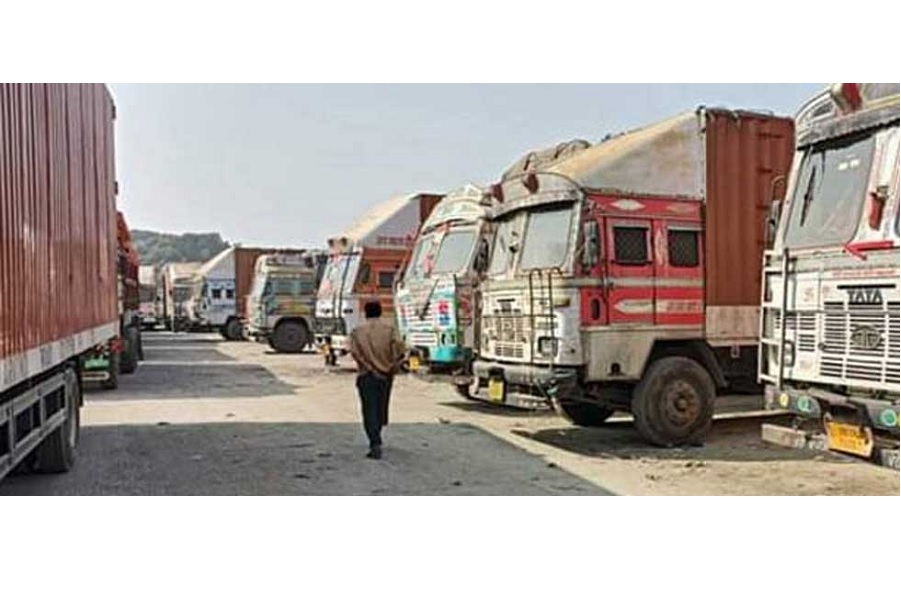
Bangladesh tightens monitoring of Indian cargo trucks through automated system

Published :
Dec 18, 2025 17:47
Updated :
Dec 18, 2025 17:47

1766104565190.webp


The National Board of Revenue (NBR) has begun round-the-clock monitoring of the movement of all Indian cargo trucks entering and exiting Bangladesh through the Benapole land port, marking a shift from manual oversight to an automated tracking system.

To facilitate this, the NBR has introduced a sub-module titled โ€œTruck Movementโ€ within ASYCUDA World, the software platform used for managing import-export data and customs duties, according to a media statement issued on Thursday.

The new system has now been rolled out in an automated form at Benapole Customs House as an initial step.

The NBR said the sub-module was developed to electronically record data on the entry of Indian import-laden trucks into Bangladesh and the return of empty trucks to India.

โ€œAs a result, accurate data on the arrival and departure of each Indian truck will be preserved, enabling effective monitoring of every vehicle,โ€ the revenue authority said.

According to the NBR, the system will allow authorities to determine how long Indian trucks remain within the country, improve data management, help prevent revenue leakage, ensure transparency and accountability, strengthen border security, and generate real-time reports.

The monitoring system was launched as a pilot at Benapole on Monday, and NBR said preparations are under way to begin live operations of the module at all land ports across the country in the near future.

The move comes against the backdrop of growing strains in Bangladeshโ€“India relations following the political upheaval of 2024, with tit-for-tat restrictions disrupting bilateral trade.

On May 18 this year, India imposed a ban on the import of around seven categories of goods from Bangladesh through land ports, including processed food and garments.

The restriction followed Bangladeshโ€™s earlier ban on the import of Indian yarn through land ports, imposed about a month earlier. Indiaโ€™s commerce ministry said the counter-restrictions took immediate effect.

By late October, the government also decided to limit import and export activities through Benapole port. Without prior notice or preparation, all trade operations through the port were suspended after 6pm each day.​
 

Members Online

Latest Posts

Latest Posts