Bangladesh Defense
Saif
Senior Member
- Jan 24, 2024
- 21,419
- 9,743
- Nation

- Residence
- Axis Group

Israeli strikes in Gaza kill 2
Agence France-Presse . Gaza City, Palestinian Territories 13 August, 2026, 22:33
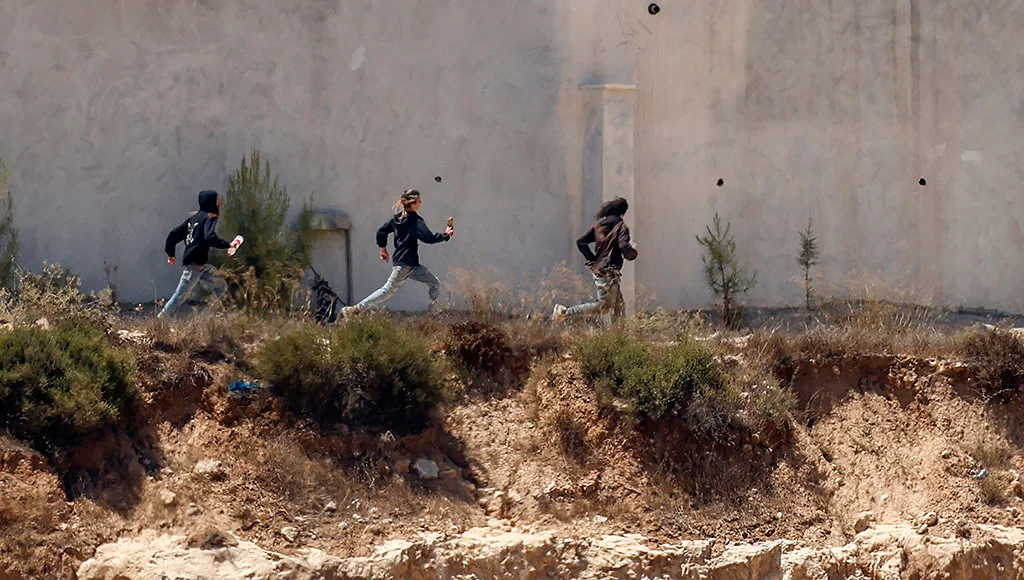
Israeli settlers run as being chased by an Israeli military vehicle around Palestinian houses in the village of Qusra, south of Nablus, in the occupied West Bank, on August 13, 2026. | AFP photo.
Israeli strikes in Gaza killed two people including a senior police officer on Thursday, health officials said, the second straight day of bombardment after a lull due to a US peace push.
The Israeli military said it struck a Hamas commander in the Khan Yunis area who it said had been planning attacks against troops, in the second such targeting in as many days.
‘The terrorist was struck in an aerial strike in order to remove the threat to IDF troops,’ the military said, adding that ‘steps were taken to mitigate harm to civilians.’
Gaza’s civil defence agency, which operates as a rescue service under Hamas, said an airstrike west of Khan Yunis killed one person, with the city’s Nasser Hospital confirming the arrival of a body following the attack.
In a separate incident in Gaza City, the civil defence said one person was killed and several others injured in an Israeli strike on a vehicle in the Sheikh Ajlin neighbourhood.
Al-Shifa Hospital said it had received the body of Gaza City’s police governor Jamal Abu Kamil.
Gaza’s interior ministry confirmed Abu Kamil ‘was assassinated in an Israeli airstrike targeting his vehicle on Al-Rashid Street, southwest of Gaza City’.
When contacted by AFP, the Israeli military said it was checking the reports.
Israel on Wednesday carried out its first airstrike in Gaza since August 3.
The hiatus in airstrikes came after US president Donald Trump’s announcement of a ‘major milestone’ in his plan to end the war.
Hamas had announced that it would disarm by giving its weapons to a nascent Palestinian governing committee.
Trump’s ‘Board of Peace’, in charge of implementing the ceasefire deal, had initially announced that Israel in turn would start a phased withdrawal from much of the Gaza Strip.
But prime minister Benjamin Netanyahu on Sunday publicly rejected the deal and vowed no Israeli pullout, even after the Board of Peace reassured him that Israel would not have to withdraw until complete Hamas disarmament.
Israeli operations in Gaza have killed 1,260 Palestinians since the ceasefire, according to the territory’s health ministry, which operates under Hamas authority and whose figures are considered reliable by the United Nations.
The Israeli army has reported five deaths in its ranks during the same period.
Agence France-Presse . Gaza City, Palestinian Territories 13 August, 2026, 22:33
Israeli settlers run as being chased by an Israeli military vehicle around Palestinian houses in the village of Qusra, south of Nablus, in the occupied West Bank, on August 13, 2026. | AFP photo.
Israeli strikes in Gaza killed two people including a senior police officer on Thursday, health officials said, the second straight day of bombardment after a lull due to a US peace push.
The Israeli military said it struck a Hamas commander in the Khan Yunis area who it said had been planning attacks against troops, in the second such targeting in as many days.
‘The terrorist was struck in an aerial strike in order to remove the threat to IDF troops,’ the military said, adding that ‘steps were taken to mitigate harm to civilians.’
Gaza’s civil defence agency, which operates as a rescue service under Hamas, said an airstrike west of Khan Yunis killed one person, with the city’s Nasser Hospital confirming the arrival of a body following the attack.
In a separate incident in Gaza City, the civil defence said one person was killed and several others injured in an Israeli strike on a vehicle in the Sheikh Ajlin neighbourhood.
Al-Shifa Hospital said it had received the body of Gaza City’s police governor Jamal Abu Kamil.
Gaza’s interior ministry confirmed Abu Kamil ‘was assassinated in an Israeli airstrike targeting his vehicle on Al-Rashid Street, southwest of Gaza City’.
When contacted by AFP, the Israeli military said it was checking the reports.
Israel on Wednesday carried out its first airstrike in Gaza since August 3.
The hiatus in airstrikes came after US president Donald Trump’s announcement of a ‘major milestone’ in his plan to end the war.
Hamas had announced that it would disarm by giving its weapons to a nascent Palestinian governing committee.
Trump’s ‘Board of Peace’, in charge of implementing the ceasefire deal, had initially announced that Israel in turn would start a phased withdrawal from much of the Gaza Strip.
But prime minister Benjamin Netanyahu on Sunday publicly rejected the deal and vowed no Israeli pullout, even after the Board of Peace reassured him that Israel would not have to withdraw until complete Hamas disarmament.
Israeli operations in Gaza have killed 1,260 Palestinians since the ceasefire, according to the territory’s health ministry, which operates under Hamas authority and whose figures are considered reliable by the United Nations.
The Israeli army has reported five deaths in its ranks during the same period.