
[🇧🇩] Judiciary of Bangladesh.

[🇧🇩] Judiciary of Bangladesh.
78
4K
More threads by Saif

G Bangladesh Defense

Why is the judiciary failing to check arbitrary detention?

Nafiul Alam Shupto
1778285738608.webp

VISUAL: ANWAR SOHEL

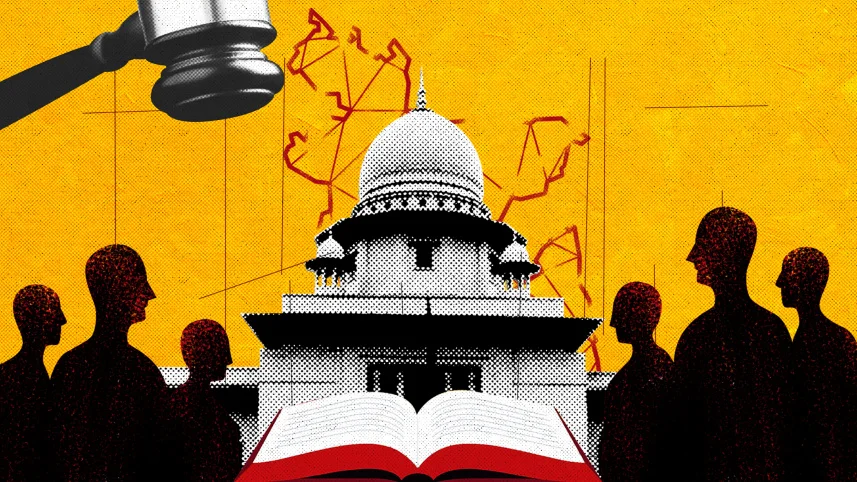
When we speak about arbitrary arrest and detention, the discussion usually focuses on holding law enforcement agencies, especially the police, accountable. Unlawful arrests, politically motivated cases, misuse of remand, custodial torture, forced confessions, and the culture of impunity in law enforcement are seen as the main problems. In every political crisis, every mass arrest, and every claim of custodial abuse, the conversation almost always finds one issue: the need to reform the police.

However, we must acknowledge that the police do not act alone in sustaining the culture of arbitrary arrests and detention. They may arrest a person, produce an accused before court, seek remand, and prepare the narrative. But in a constitutional system, police action is not supposed to become lawful merely because the police say so. There is in fact a judicial body placed between the citizen and the coercive power of the state. That body is supposed to ask questions: was the arrest lawful? Was the accused produced before a court within the required time? Are there reasonable grounds for detention? Is remand truly necessary? Has the accused been subjected to torture, threats, coercion, or intimidation? Is detention being used to aid investigation, or has it already become punishment before trial?

In Bangladesh, public conversation rarely asks whether the judiciary performs its constitutional role with adequate seriousness. We criticise the police, often rightly so. We criticise the executive, also rightly. But we rarely examine the judicial conduct that allows unlawful or excessive police action to continue. And this silence has consequences. In many cases, the first appearance of the accused before a magistrate becomes a procedural ritual rather than a meaningful exercise of judicial scrutiny. Remand prayers are allowed with limited scrutiny. Bail is refused without sufficient reasoning. Police narratives are accepted as facts. Allegations of torture or coercion are not always dealt with urgently. Vague accusations, particularly in politically sensitive cases, are allowed to be used to justify detention. Often the accused stands before the court, but the court does not always insulate the accused from the state.

That is where the real problem lies: the police may initiate arbitrary detention, but the judiciary often gives it legal life. This is neither to suggest that every judge or magistrate acts improperly, nor to deny the structural pressures within which the lower judiciary operates.

Courts are overburdened and overcrowded. Magistrates work under enormous pressure. The criminal justice system is under-resourced and, in politically sensitive cases, judicial officers may also have to negotiate with invisible pressures, institutional caution, or fear of consequences. But none of these changes the core principle: when the state seeks to take away a person’s liberty, the court’s responsibility is at its highest.

A court is not meant to be an administrative extension of the investigation. The judiciary exists to test or resist state power, especially when that power is exercised against individuals who are vulnerable, unpopular, accused, poor, or inconvenient for any political party.

In the political sphere, arrests are often made during periods of protest, opposition mobilisation, labour unrest, student movements, or wider political crises. In these times, the criminal justice system is often used not only to investigate or prosecute for crime but also to control dissent, intimidate communities, and create fear. The police may be the visible arm of that process, but the courts are where it is either checked or validated.

When bail is denied without meaningful reasoning, the process is itself a punishment. Where charges of custodial abuse are not challenged, impunity for police intensifies. When the judiciary bypasses tough questions in politically sensitive cases, constitutional protection becomes selective. And selective liberty is not liberty at all.

That is why judicial accountability must enter the conversation. This, of course, does not mean undermining judicial independence, which itself needs to be protected from institutional privilege through judicial accountability. But we must seek independence from the executive, police narratives, political pressure, and from fear of the public. A judiciary that is accountable to the law is stronger, not weaker.

But what does judicial accountability look like when it comes to arrests and detention? First, remand orders must be reasoned. A person should not be sent to police custody through a few routine lines. The court must explain why remand is necessary, why alternatives are insufficient, and how the rights of the accused will be protected. Second, bail decisions, particularly in politically sensitive or mass arrest cases, must reflect individualised judicial assessment. The accused should not be treated as part of a crowd merely because the police case is drafted that way. Third, any allegation of torture, coercion, unlawful arrest, or procedural violation must trigger judicial inquiry. Courts should not wait for the accused to prove abuse from a position of custody and fear. Fourth, data on remand, bail, and pre-trial detention should be made more transparent. If particular categories of cases consistently result in remand or bail refusal, that should be visible and open to scrutiny.

Additionally, the higher judiciary must set clearer standards for magistrates on arrest, remand, bail, and custodial protection, including by activating the Monitoring Committee for Subordinate Courts under Chapter IA of the Supreme Court Rules. This is especially urgent after the Appellate Division’s guidelines in BLAST v Bangladesh on sections 54 and 167 of the Code of Criminal Procedure (CrPC), and the 2025 CrPC amendment giving statutory force to several safeguards. But these reforms will mean little if magistrate courts continue to approve police action mechanically rather than treating these safeguards as binding constitutional duties.

Finally, the legal community must also reflect on its own silence. Lawyers, civil society actors, academics, and rights organisations often criticise police abuse, but hesitate to speak about judicial failure. Part of that hesitation comes from respect for the institution, but part of it comes from fear of contempt proceedings. There is also the reality that lawyers must continue to appear before the same courts.

Bangladesh does need police accountability urgently, but after more than five decades of repeating the same demand, we must admit that police reform alone cannot end arbitrary detention. The police station is only the first site of abuse. The courtroom can either stop that abuse or formalise it. Too often, the latter transpires. Every remand order, every bail rejection, every silent acceptance of a questionable arrest reveals whether that constitutional promise is alive or merely decorative. We have spent decades asking why the police abuse power. It is time to ask why the courts so often allow that abuse to continue.

Nafiul Alam Shupto is a lawyer and activist.​
 

Govt backtracks on Supreme Court secretariat

15 judicial officers attached to law ministry, finance ministry nod sought to transfer budget to SC registry

M Moneruzzaman 19 May, 2026, 22:37

1779237285774.webp

The BNP government on Tuesday backtracked on its election pledge to establish Supreme Court secretariat. | Collected photo.

The BNP government on Tuesday backtracked on its election pledge to establish a separate secretariat for the judiciary under the Supreme Court.

In a move linked to the abolition of the Supreme Court Secretariat, the law justice and parliamentary affairs ministry on Tuesday attached the former secretary of the secretariat and 14 judicial officers to the ministry, closing the office of the secretariat.

The attachments were made through a notification issued under the Supreme Court Secretariat (Abolition) Bill, 2026, passed on April 9.

Earlier, 19 employees of the High Court division were sent back to the High Court Registry after the secretariat was abolished.

Bangladesh Nationalist Party in its election pledge, however, promised to establish a separate secretariat for the judiciary under Supreme Court and take measures to appoint judges as per the constitution.Bangladeshi Culture Course

The July National Charter 2025 also mandated the enactment of necessary laws for establishing a separate secretariat to ensure administrative and financial independence of the judiciary.

‘The secretariat has been abolished since the passage of the Supreme Court Secretariat (Abolition) Act, 2026 on April 9. We had been waiting for our attachment to the law ministry, which was approved on Tuesday,’ said former Supreme Court Secretariat secretary Sk Ashfaqur Rahman, also a senior district judge, while talking to New Age.

The law ministry, meanwhile, in an order initiated the process of transferring the remaining budget, office assets, and official records of the abolished Supreme Court Secretariat to the Supreme Court Registry following the enactment of the Supreme Court Secretariat (Abolition) Act, 2026.

The order said that a process was also under way to transfer Tk 7 crore to the relevant code of the Supreme Court Registry of the remaining allocation of Tk 13.43047 crore for the 2025–26 financial year under the abolished secretariat.

According to an official gazette issued by the Law and Justice Division, the Supreme Court Secretariat formally ceased to exist under Section 2(2)(a) of the Supreme Court Secretariat (Abolition) Act, 2026.Health & Wellness

Under Section 2(2)(b) of the law, all budgets, projects, and programmes previously vested in the secretariat now stand transferred to the government’s Law and Justice Division.

The order, signed by senior assistant secretary Muhammad Ashekur Rahman on May 10, 2026, said that the Law and Justice Division had taken several decisions regarding the management of the dissolved body’s resources and documents.

As part of the decisions, all office equipment, stationery, computers, laptops and ICT-related materials of the abolished secretariat have been placed under the custody of the Supreme Court Registry for use in different offices and branches.

The government also requested the Supreme Court Registry to permanently preserve all official records and documents of the dissolved secretariat.

Law minister Md Asaduzzaman at a discussion on Sunday said that the ministry had sent a proposal to the finance ministry to permit the ministry to spend the amount for judicial development, the state-run National Legal Aid Services Organisation fund, and the Bangladesh Bar Council for distribution among distress lawyers.

The transfer will be completed upon receiving advice from the Finance Division of the ministry of finance, the order said.

The Supreme Court Secretariat Ordinance was issued on November 30, 2025, aiming to establish an independent secretariat for the judiciary with administrative and financial autonomy.

An amendment ordinance, issued on January 25, 2026, further strengthened the secretariat’s authority, including control over the budgeting and administration of the subordinate courts under the chief justice.

The secretariat had become functioning since its inauguration on December 11, 2025, with 19 judicial officers and 19 support personnel.

The law ministry, however, raised concerns in the special committee meeting over the concentration of judicial power.

It warned that providing extensive control to the chief justice under the secretariat could weaken ‘checks and balances’.

Currently, decisions on transfer, promotion, leave, and discipline of the subordinate court judges involve both the executive and the Supreme Court, resulting in dual administrative control over subordinate court judges.

This shared system helps prevent absolute control, the ministry said.

According to the ministry, the current system -- in which the Supreme Court decides on government proposals regarding the transfer, promotion, and discipline of the subordinate court judges -- reduces the chance of absolute control by a single individual and ensures checks and balances between the executive and the judiciary.

The interim government on November 30, 2025 issued a gazette promulgating the Supreme Court Secretariat Ordinance, fulfilling one of the core commitments in the chief justice’s judicial reform road map announced on September 21, 2024.​
 

Why dissolve the SC secretariat?

Govt must clearly state its plan on the secretariat and judicial autonomy

1779332570985.webp

VISUAL: STAR

The government’s recent order to dissolve the Supreme Court secretariat and to remove and transfer the 15 judges assigned to it raises serious questions about the BNP’s commitment to judicial autonomy. The move follows the BNP government’s repeal in April of the Supreme Court Judges Appointment Ordinance, 2025; the Supreme Court Secretariat Ordinance, 2025; and the Supreme Court Secretariat (Amendment) Ordinance, 2026. Although the law minister said bills on these matters would later be presented in parliament, the unnecessary closure of the secretariat does not inspire confidence in the party’s commitment to its electoral pledge on judicial independence.

The secretariat was established by the interim government last December following the issuance of the Supreme Court Secretariat Ordinance, 2025 on November 11, paving the way for the judiciary’s administrative and financial independence. An organogram was later created, 15 lower court judges and several staff members were assigned, and a budget for the remainder of the fiscal year was allocated. Now, all of that has been dismantled. If the BNP government truly intends to establish a secretariat, as it has repeatedly promised, why was it necessary to abolish the existing structure first? These optics do not favour the BNP and appear more like a rollback of reform than its implementation.

Yet, it was the BNP that repeatedly argued that an independent and impartial judiciary could have prevented the legal harassment and persecution of its leaders and activists during the last Awami League regime. Its 31-point outline for structural reform also pledged the establishment of a “separate secretariat for the judiciary…to function under the Supreme Court.” Moreover, despite dissenting on several issues in the July National Charter, the party did not oppose vesting control of subordinate courts with the Supreme Court, establishing a separate judicial secretariat, or enacting a law for appointing Supreme Court judges. And yet, despite coming to power with a huge majority and widespread hopes that it would continue the reforms initiated by the interim government, one of the BNP’s first acts was to repeal the ordinances concerning secretariat and judicial appointments.

The rationale offered by the law minister also appeared weak. In an interview with this daily, he said stakeholder discussions would be held before a new bill on the Supreme Court secretariat is enacted. But why are such discussions again necessary when the ordinance was drafted following extensive consultations during the interim government's tenure? Have the stakeholders drastically changed since then?

Unfortunately, citizens pay the price for the time and money wasted when incumbent governments discard and restart initiatives undertaken by their predecessors. Given what happened to the draft National Human Rights Commission law, it is difficult to trust that the BNP’s proposed secretariat would be any better than the one it dismantled. We can only hope the party will not use its majority to delay judicial autonomy.​
 

Opposition parties say SC secretariat abolition attack on judiciary
Moloy Saha 22 May, 2026, 00:31

1779421923106.webp

File photo

Different political parties on Thursday kept opposing the abolition of the Supreme Court secretariat by the Bangladesh National Party-led government, saying that it would hamper judicial independence. Politics

The Bangladesh Jamaat-e-Islami and the Jatiya Samajtantrik Dal-JSD opposed the abolition, calling on the government to reinstate the secretariat in the Supreme Court.

Jamaat leaders said that the abolition of the Supreme Court secretariat by the government was an attack on judicial independence.

The Jamaat organised a press conference at its Maghbazar central office where party central leader and lawyer Mohammad Shishir Manir said that the abolition of the secretariat was a blow to judicial independence.Bangladeshi Culture Course

The abolition would ruin the trust and confidence established in the judiciary and the day would be remembered as a black day for the independence of the judiciary, Shishir Manir said.

He said that they believed in the freedom of the judiciary and wanted that the transfers, vacations, and promotions of the lawyers should remain in the hand of the Supreme Court, not under the law ministry.

The government abolished the Supreme Court secretariat on May 19 and attached its senior secretary and 14 other officials to the Law and Justice Division under the Ministry of Law, Justice and Parliamentary Affairs.

Jamaat leaders called on the government to reinstate the SC secretariat immediately.

Jamaat assistant secretary generals Ahsanul Mahboob Zubair, AHM Hamidur Rahman Azad, central leaders Mobarak Hossain, Muhammad Ataur Rahman attended the event.

Meanwhile, JSD president and veteran freedom fighter ASM Abdur Rob in a press statement said that the abolition of the SC secretariat would hamper independence of the judiciary.

Establishing democratic rule in the country would be hampered if the judicial independence was curtailed, Rob said.Media Consulting Services

The judiciary must not be kept under influences of the executive for establishing democratic rule, ASM Abdur Rob said.

He called on the government to reinstate the secretariat immediately.​
 

Response to sensational cases and public confidence in the judiciary

Child rape remains alarmingly prevalent in Bangladesh, and many incidents never even reach the authorities. Instead of selectively responding to only those cases that become media sensations, the state must adopt a consistent and collective approach to combating sexual violence against children.

Shakhawat Hossain

1779494195077.webp

Child Rape Representational image

The recent tragic rape and murder of a young girl is not the first incident involving a child victim to attract national attention and go viral on social media. Only last year, the country was shaken by a similar case. Sadly, such incidents are not uncommon. What differs is not the gravity of the crime, the pain endured by the victim, or the devastation suffered by the family, but rather the level of public attention and social media outrage they receive.

Not every child rape or murder receives equal coverage or generates nationwide protests. Yet for every victim, the suffering is equally horrific. The selective public response to such crimes reveals a troubling pattern in our society and, more importantly, within our justice system. In previous high-profile cases, we have witnessed law enforcement agencies and even the judiciary taking unusually prompt action in response to public pressure and viral social media campaigns.

Over the past week alone, there were reportedly several similar incidents across the country. This particular case became a social media sensation and the prime minister personally visited her family, expressed condolences, and promised speedy justice.

Such gestures are compassionate and reassuring, but there is the danger of selective response damaging public confidence in the judiciary. Justice should not depend on whether a case trends online or captures public emotion. Courts are meant to deliver justice impartially, regardless of media attention.

The growing mistrust in the judicial system is already visible. In this particular case, angry crowds gathered outside the police station demanding that the accused be handed over to them because they believed the courts would fail to deliver justice. Her father himself stated that he is no longer demanding justice because he does not believe the state is capable of ensuring it. This mentality reflects a deep erosion of faith in state institutions.

No country can completely eliminate crime. However, many Western jurisdictions have successfully reduced certain categories of offences through strong judicial precedents and effective enforcement.

Although courts often respond to sensational crimes with speedy trials and death sentences, these measures rarely create lasting deterrence. Bangladesh’s lengthy judicial process means that even when trial courts deliver swift verdicts, it can take years for death references to be confirmed by higher courts. As a result, the public rarely witnesses the actual execution of justice. Most sensational Biswajit murder, BUET Abrar or Feni’s Nusrat murder case judgments all are yet to be executed, despite huge outrage at that time.

Landmark judgments serve as meaningful precedents and deterrents for future offenders. The purpose of punishment is not only to penalise the offender but also to send a clear message to society that such crimes will not be tolerated. Populist responses to viral incidents may temporarily satisfy public anger, but they do little to reduce the recurrence of similar crimes.

No country can completely eliminate crime. However, many Western jurisdictions have successfully reduced certain categories of offences through strong judicial precedents and effective enforcement.

One well-known Australian example illustrates this point. An Australian woman, Mrs Melchoir, underwent sterilisation surgery performed by a gynaecologist, Dr Cattanach, after deciding she did not want more children. Despite the operation, she later became pregnant again due to medical negligence. Mrs Melchoir sued the doctor, arguing that she was neither mentally nor financially prepared to raise another child at the age of 43.

In a landmark judgment, the High Court of Australia ruled that the doctor was responsible for the costs of raising the child until the age of 18. The decision sent a powerful message regarding medical negligence. Since the ruling became an important legal precedent, medical professionals across Australia have become significantly more cautious in performing similar procedures. The judgment was widely discussed in the media, academia, and professional circles, helping to create awareness and prevent similar negligence.

Another famous example comes from the United States. Anyone who has visited Western countries may have noticed that coffee is usually served at a relatively mild temperature compared to South Asia. This practice originated from a landmark lawsuit in 1994.

Stella Liebeck, a 79-year-old woman, accidentally spilled a cup of McDonald’s coffee on herself and suffered severe third-degree burns. She sued McDonald’s, arguing that the coffee had been served at an unreasonably high temperature. The jury awarded her 2.8 million in compensation.

The impact of that judgment extended far beyond one individual case. McDonald’s, followed by many other businesses worldwide, reduced the temperature at which coffee was served. Today, customers who want extremely hot coffee are often specifically warned about the risks. A single judgment reshaped corporate practices and public safety standards.

Bangladesh’s judiciary must also strive to produce landmark judgments that create genuine social impact and deterrence. Delivering verdicts alone is not enough; effective enforcement and public awareness are equally important. The government, media, and civil society should actively circulate important judicial decisions so that people understand the legal consequences of such crimes.

Child rape remains alarmingly prevalent in Bangladesh, and many incidents never even reach the authorities. Instead of selectively responding to only those cases that become media sensations, the state must adopt a consistent and collective approach to combating sexual violence against children.

Alongside judicial action, the legislature must also take stronger action. Laws relating to child rape should be made stricter, with severe and certain punishment for offenders. Equally important is widespread public awareness through media campaigns, education, and community engagement.

The harsh reality is that within a week, society may forget the recent case discussed here, just as it forgot many victims before her, until another tragic incident once again dominates social media. This cycle of temporary outrage and selective attention cannot continue. Justice should not depend on virality. Every victim deserves equal protection, equal attention, and equal justice.

* The author is an adjunct law faculty at University of New South Wales, Sydney.​
 

Structural weaknesses in judiciary must be addressed


1784419644540.webp


THE subordinate judiciary continues to suffer from deep structural weaknesses that go far beyond the shortage of judges. The country lacks 241 courtrooms, forcing 482 judges to share hearing rooms, significantly reducing court hours and slowing down the disposal of cases. The infrastructure deficit is accompanied by the shortage of chambers for judges, support staff, office facilities and equipment, undermining the efficiency of court operations. Although the government has set up 378 courts and special tribunals afresh, the necessary physical infrastructure has not kept pace, leaving many newly appointed judges without adequate workplace or support staff. The delayed project to construct chief judicial magistrate’s court buildings also illustrates the institutional failure while buildings have been completed in 41 out of the 64 districts. The construction has yet to begin or be completed in the remaining 23 districts despite the project began in 2009. Meanwhile, with more than 4.04 million cases pending with the subordinate courts and more than half a million with the High Court Division, the judiciary remains under immense, persistent strain. The infrastructure and staff crisis is likely to further deepen the overwhelming case backlog.

The law, justice and parliamentary affairs ministry has taken several steps to mend the judiciary’s infrastructure crisis, including creating 378 courts and special tribunals, directing the rapid expansion and modification of court buildings to add courtrooms and judges’ chambers and advancing the second phase of the long-delayed chief judicial magistrate’s court building project. However, the measures have yet to make any meaningful effect as the shortage of courtrooms, support staff and administrative autonomy continue to undermine the judiciary’s capacity to deliver timely justice. Legal experts argue that the deficiencies reflect not merely an infrastructure gap but a broader institutional weakness as the judiciary remains financially and administratively dependent on the executive. Established through the Supreme Court Secretariat Ordinance 2025, the Supreme Court Secretariat was intended to complete the separation of the judiciary from the executive by granting the Supreme Court administrative and financial autonomy over judicial administration, staffing and disciplinary matters. The government’s abolishing the Supreme Court Secretariat is widely seen as a worrying retreat from one of its most significant commitments to strengthening judicial independence.

The government must urgently address the judiciary’s structural failures by expediting infrastructure projects and allocating adequate financial and human resources. It should also end executive control over the judicial administration and finance as continued dependence undermines judicial independence and delays citizens’ constitutional right to timely and effective justice. The government should also consider promoting mandatory mediation, strengthen legal aid services and introduce digital platforms such as electronic bail systems and family courts, which could reduce case inflows and expedite access to justice, particularly for marginalised groups, if effectively implemented.​
 

Judicial independence: Now is the time to choose the right path

After more than 50 years of independence and two years after a mass uprising, despite repeated promises to ensure the independence of the judiciary, Bangladesh finds itself at a crossroads today. Sharif Bhuiyan writes about this critical juncture regarding judicial independence in Bangladesh.

Sharif Bhuiyan
Updated: 31 Aug 2026, 12: 09

1788218948858.webp

High Court File photo

The aspiration for an independent judiciary among the people of Bangladesh has long been standing. This desire began even before the country's independence. During the Pakistan era, in the process of drafting a new constitution for Pakistan and as part of the larger political movement for the autonomy of East Pakistan, establishing an independent judiciary was one of the main demands. Naturally, the 1972 constitution of Bangladesh strongly guaranteed judicial independence. Control over the entire judiciary was vested in the hands of the Supreme Court, instead of the executive branch. However, when a one-party rule was established through the fourth amendment to the constitution in 1975, this constitutional commitment was broken, and control of the judiciary was transferred to the President.

Like many of the nation's other desires, the demand for an independent judiciary gained renewed importance following the July 2024 uprising. This uprising sparked widespread and deep discussions on reforms. Judicial independence was considered a main subject within the larger debate regarding legal and constitutional reform. Given the importance of this issue, one of the early measures taken by the interim government following the July uprising was the establishment of six reform commissions, which included the Judicial Reform Commission and the Constitutional Reform Commission.

Later, both reform commissions uniformly recommended freeing the judiciary from the control of the executive branch. This was included in the July Charter, drafted based on consensus among political parties. Nevertheless, due to political opportunism, Bangladesh is once again on the verge of missing a historic opportunity to ensure judicial independence.

The constitutional framework that determines the interrelations between the executive and judiciary is as important as personal independence and integrity of judges for an independent judiciary. This institutional question is at the center of Article 116 of the constitution. The original 1972 constitution vested the control (determining workplace, promotions, and granting leave) and disciplinary jurisdiction of subordinate courts to the Supreme Court. The fourth amendment abolished that system, transferring these powers to the President. The fifth and fifteenth amendments upheld the President's authority over subordinate courts, but also mandated consultation with the Supreme Court.

Debate over this constitutional arrangement has persisted for decades. Although the verdict in the high-profile Masdar Hossain case advanced the independence of the judiciary significantly, it remains constrained within the restrictions imposed by the amended Article 116. In that case, the Appellate Division of the Supreme Court attempted to establish a framework for judicial independence through judicial interpretation.

However, the Appellate Division was also aware of the limitations of such interpretation due to the wording of Article 116. Later, the Appellate Division itself acknowledged this structural problem. In the verdict of the Sixteenth Amendment case, the court noted that as long as the powers regarding the control and discipline of subordinate courts remain in the hands of the executive branch, true judicial independence will remain elusive.

After the uprising, in order to advance necessary reforms through the judicial process, the successive amendments to Article 116 were presented for the first time for consideration by the Supreme Court. On 18 August 2024, a public interest lawsuit Mohammed Saddam Hossain vs. Bangladesh (Article 116 Case) was filed, challenging the legality of those amendments. The significance of the Article 116 case outweighs that of the Masdar Hossain case because, while the Masdar Hossain case attempted to establish judicial independence within the bounds of the amended Article 116, the Article 116 case directly highlights the underlying constitutional cause of this problem.

The verdict in the Article 116 case was delivered by the High Court on 2 September 2025, with the full written verdict published on 7 April 2026. The verdict annulled the amendments to Article 116, directing its restoration to the original 1972 state. Consequently, control over subordinate courts was once again vested in the Supreme Court. In the same verdict, the court also directed the Ministry of Law to take necessary steps within three months to establish a Judicial Secretariat aimed at ensuring effective judicial independence.

The ordinance to establish a separate Judicial Secretariat was issued on 30 November 2025. Through various formal and practical steps, the then-interim government established the secretariat. It functioned for several months before being dissolved by the current government on 10 April 2026.

In the verdict of the Article 116 Case, the court did not introduce any new constitutional concept. Rather, the court delivered its decision against the backdrop of an existing broad political commitment to judicial independence. The ruling party, the Bangladesh Nationalist Party (BNP), had previously articulated this commitment explicitly on multiple occasions.

While in opposition, the BNP repeatedly alleged that the judiciary was used as an instrument of political persecution. Incidents such as the sentencing and imprisonment of Begum Khaleda Zia, restrictions imposed on her medical treatment, and numerous cases filed against many of her party's leaders and activists were presented by the BNP as consequences of the lack of judicial independence. The current Prime Minister was also accused in politically motivated cases, which led her to spend a prolonged period outside the country.

Therefore, it was natural that the reform of the judiciary would occupy a significant place in BNP's proposal for constitutional reform. In the party's 31-point reform programme announced in July 2023, commitments were made to ensure judicial independence, vest control over subordinate courts to the Supreme Court, and establish a separate judicial secretariat.

These commitments were reiterated before the National Consensus Commission and were incorporated into the July Charter without any dissent from the BNP. None of BNP's objections concerning the July Charter were related to judicial independence, the transfer of control over subordinate courts to the Supreme Court, or the establishment of a judicial secretariat.

The party's electoral manifesto for the general elections in February 2026 also reaffirmed these commitments. The manifesto specifically stated that control over subordinate courts would be vested in the Supreme Court and that the judicial secretariat established in 2025 would be further strengthened.

In this context, the repeal of the ordinance establishing the judicial secretariat and its dissolution by the parliament on 10 April 2026, was disappointing. It was not only a serious deviation from the repeatedly made commitments by the ruling party but also a violation of the Article 116 case verdict. Until the High Court's verdict was stayed or annulled, the obligation to establish a separate judicial secretariat remained in effect as part of the law.

The government undertook these steps without initiating any appeal against the High Court's verdict. However, on 20 April 2026, Badiul Alam Majumder from SHUJAN (Citizens for Good Governance) filed an appeal. Simultaneously, he applied for an interim order to suspend the efficacy of the provisions dissolving the secretariat and to maintain the status quo regarding the operations of the judicial secretariat. Subsequently, the government filed an appeal on 21 May 2026, along with an application to stay the effectiveness of the High Court's verdict.

The appeals, along with the petitions filed, were heard in the Appellate Division on 9 June 2026. On that day, the Appellate Division stayed the effectiveness of the High Court's verdict. However, up to the point of this stay order by the Appellate Division, from 10 April to 9 June 2026, the government operated in violation of the High Court's verdict.

The most important question that arises here is whether the government's stance against the High Court's verdict aligns with the longstanding political commitments and repeated promises made to the people of the country. As mentioned above, these commitments were included in the 31-point programme, reiterated before the National Consensus Commission, recorded in the July Charter, re-mentioned in the electoral manifesto, and strongly emphasised in both the referendum and general election campaigns.

Regrettably, the reform that the BNP once robustly supported as essential for establishing the rule of law now seems politically inconvenient for the party. People had expected that the party would not break its promises upon coming to power from being in the opposition.

After more than 50 years of independence and two years after a mass uprising, despite repeated promises to ensure the independence of the judiciary, Bangladesh finds itself at a crossroads today. If the BNP decides to uphold its commitments and supports the High Court's verdict in the appeals pending in the Appellate Division, the country could progress on the right path. Conversely, if the BNP continues to retract from its own promises, the responsibility of deciding whether the High Court's verdict will be upheld or annulled will rest upon the Appellate Division.

The High Court's verdict was delivered based on well-established legal principles and a proper and accurate interpretation of the law. Following necessary reviews, the Appellate Division might consider it appropriate to uphold this verdict.

The entire nation will watch the outcomes of the appeals with deep interest and hope, so that more than half a century after independence, the country can finally realise the aspiration for an independent judiciary—a desire that, by being long denied, has caused unbearable suffering for the people. A ruling by the Appellate Division upholding the High Court's decision would mark a momentous milestone not only for the judiciary but for the entire nation.

#Sharif Bhuiyan is a former visiting fellow at Cambridge University and a senior lawyer at the Supreme Court. He served as Amicus Curiae in the Article 116 case.​
 

Posts you haven't read yet..

Latest Posts

Back