Home Watch Videos Wars Movies Login

[🇧🇩] BRICS---Can Developing Countries Including Bangladesh Benefit From It?

[🇧🇩] BRICS---Can Developing Countries Including Bangladesh Benefit From It?
44
3K
More threads by Saif

G Bangladesh Defense

BRICS nations urge smooth global trade, energy security
Agence France-Presse . New Delhi, India 13 September, 2026, 00:00
1789257421017.webp

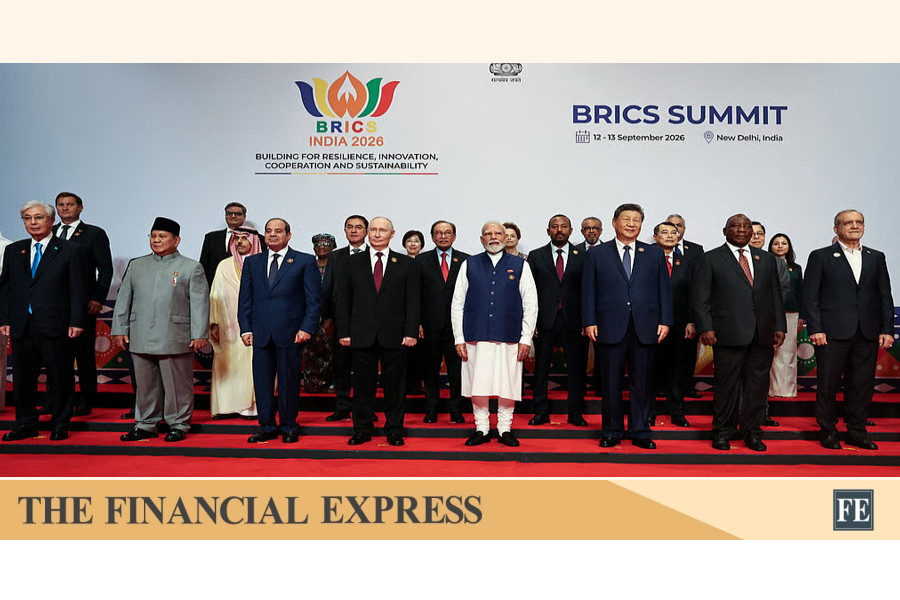
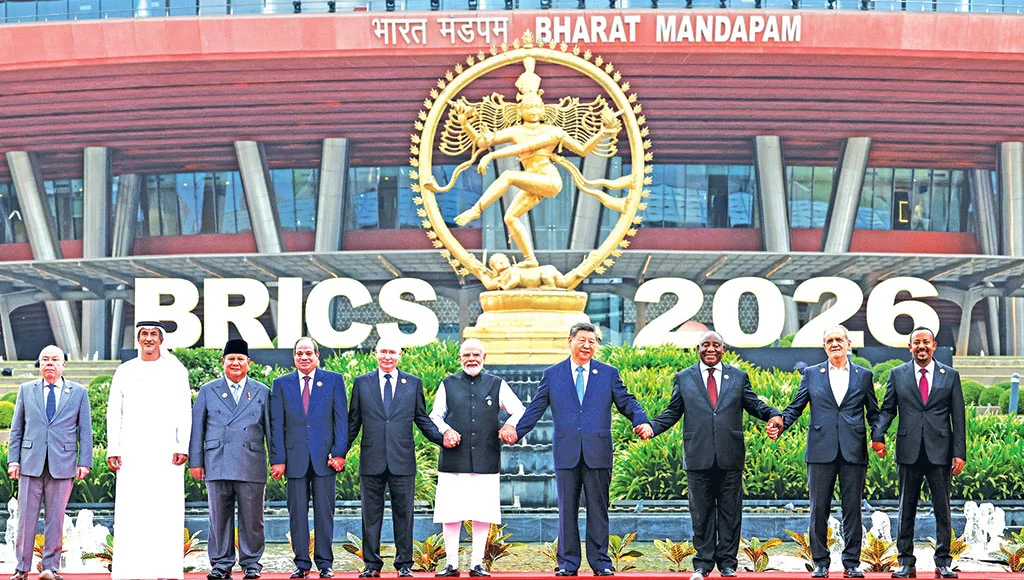
Left to Right, Brazil’s foreign minister Mauro Vieira, UAE’s Supreme Council for National Security secretary-general Ali Mohamed Hammad Al Shamsi, Indonesia’s president Prabowo Subianto, Egypt’s president Abdel Fattah al-Sisi, Russia’s president Vladimir Putin, India’s prime minister Narendra Modi, China’s president Xi Jinping, South Africa’s president Cyril Ramaphosa, Iran’s president Masoud Pezeshkian and Ethiopia’s prime minister Abiy Ahmed pose for a group photo during the 18th BRICS Summit in New Delhi. | AFP photo

Members of the 11-nation BRICS group including China, Russia, Iran and India called for calm in the Middle East, smooth global trade and energy security at a summit in New Delhi on Saturday, overcoming earlier divisions to issue a joint statement.

Chinese president Xi Jinping, who joined Russian, Iranian, Indian and other leaders in India’s capital, told the summit that the Middle East war ‘does not serve the common interests of the international community’.

Foreign ministers of the BRICS grouping had failed to agree on a joint statement when they met in New Delhi in May, with Iran, Saudi Arabia and the United Arab Emirates divided over the war that began with US-Israeli strikes on February 28.

But leaders issued a statement on Saturday after intense diplomatic efforts by host India, as the bloc seeks to bolster its global influence and address conflict, trade turbulence and energy security.

‘We express deep concern over the continued escalation of tensions in Middle East/West Asia,’ the joint statement said, adding the countries ‘call for exercising maximum restraint, as well as avoiding actions that could further aggravate the situation’.

BRICS was created in 2009 as a forum for major emerging economies seeking greater influence in institutions dominated by Western powers.

‘We have to transform this pyramid of privilege into a platform of partnership,’ Indian Prime Minister Narendra Modi told Xi, Russian President Vladimir Putin, Iranian President Masoud Pezeshkian and other leaders as he opened the two-day summit.

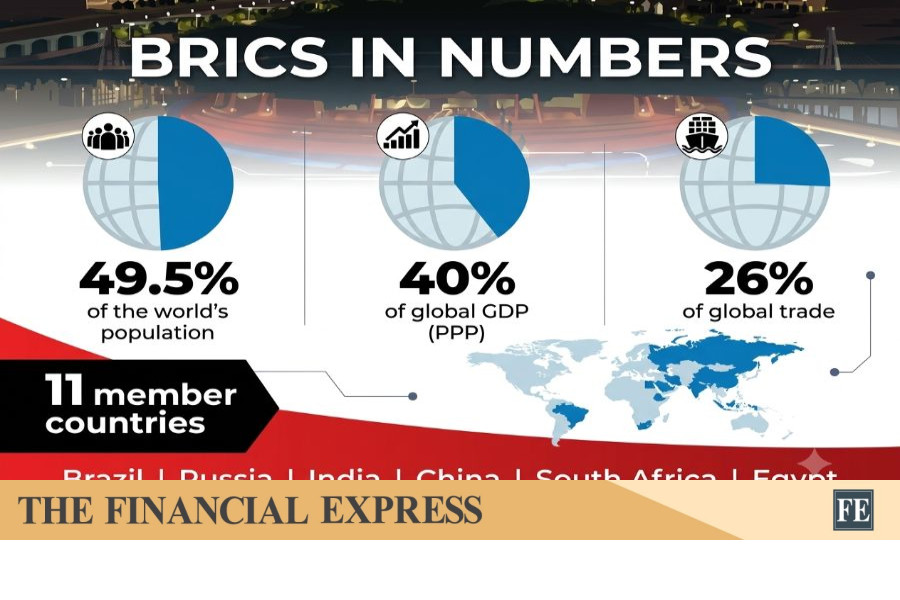
Modi said BRICS nations ‘represent 50 percent of the world’s population, 40 percent of global GDP and more than 25 percent of global trade’.

But finding balance in the bloc is a tough diplomatic task.

India maintains cordial relations with both Iran and US ally Israel, but is also careful to strike a delicate balance in its ties with Washington.

Iran’s Pezeshkian attended the summit shortly after warning that the Middle East does not need the United States to be a ‘regional policeman’, with the two countries at war and tensions threatening the vital Strait of Hormuz.

Pezeshkian met with Abu Dhabi Crown Prince Khaled bin Mohamed bin Zayed Al Nahyan on the summit sidelines.

India has navigated the energy crisis caused by the US-Iran war in part by turning to Russia, despite Moscow’s war in Ukraine and pressure from Washington and other Western capitals.

Modi embraced Putin before talks on Friday. The Russian president, who last visited India in December 2025, is one of New Delhi’s most important strategic partners.

‘Handling differences’ -

Xi’s participation is also being closely watched because it is his first visit to neighbouring India since 2019, and the biggest step yet in a cautious thaw between the nuclear-armed rivals.

Xi was given a red-carpet welcome, with an honour guard of soldiers and traditional dancers in colourful dresses.

‘Although our two countries are different in many respects, they are fully capable of complementing each other’s strengths, supporting one another, achieving mutual success and advancing together,’ Xi said as he met Modi, in a video released from New Delhi.

His visit comes six years after a deadly military clash along the disputed Tibetan border between China and India, with ties gradually improving through restored flights, visas and high-level contacts.

The underlying territorial dispute remains unresolved, and both sides retain heavy military deployments along their roughly 3,500-kilometre (2,175-mile) high-altitude border.

India’s foreign ministry said in a statement after the meeting that ‘the two leaders expressed commitment to a fair, reasonable, and mutually acceptable resolution of the boundary question’.

Modi ‘underlined the need for both sides to observe existing agreements and understandings on border related issues,’ the foreign ministry added.

Deep mistrust remains, with their contested Himalayan frontier, a widening trade deficit and strategic rivalry continuing to complicate ties.

‘Both sides should... work hand-in-hand to promote high-quality major financial cooperation, advocate an equal and sustainable global order, and foster an economic globalisation that is open and inclusive,’ Xi said.

Dozens of Tibetans protested in New Delhi on Friday—exiles, like their Buddhist leader the Dalai Lama, who has lived in India since fleeing a Chinese crackdown in 1959 -- waving placards against Xi’s visit.​
 
Analyze

Analyze Post

Add your ideas here:
Highlight Cite Respond

BRICS Delhi Declaration signals grudge over global trade rules


1789426469930.webp


The most consequential message from the Delhi Declaration of the BRICS summit may not be found in any single paragraph. It lies in the sheer breadth of the document. Across 140 paragraphs, the grouping of Global South moves from war and terrorism to currencies, sanctions, tariffs, energy security, artificial intelligence and the future of multilateral institutions. Taken together, the declaration amounts to something more than a diplomatic communiqué: it is a statement of dissatisfaction with the way the global economy is governed.

That dissatisfaction matters because BRICS is no longer a marginal club. Its members collectively account for roughly half of the world's population, about 40 per cent of global GDP and 26 per cent of global trade. What they say about the future of trade therefore cannot easily be dismissed as rhetoric from the periphery. The question is whether BRICS can turn its growing economic weight into a coherent alternative to the existing system.

The Delhi declaration suggests that it wants to try.

Perhaps the clearest challenge is the dominance of the US dollar. The declaration stops short of endorsing a single BRICS currency - a proposal that has often attracted headlines but remains politically and economically unrealistic in the near term. Instead, it calls for continued work on cross-border payment interoperability and trade settlements and investment using BRICS members' local currencies.

That distinction is important. De-dollarisation, if it happens, is more likely to emerge through thousands of commercial transactions than through the launch of a spectacular new currency. If companies in Brazil, India, China, Russia or other BRICS economies can increasingly settle trade directly in their own currencies, demand for dollars could gradually decline.

But the declaration itself acknowledges that there is no "one-size-fits-all approach". That phrase exposes the fundamental limitation of BRICS. Its members have different economic structures, monetary policies, strategic interests and relationships with the dollar. China and Russia may have stronger incentives to reduce dependence on the US financial system, while other members may see considerable advantages in continuing to use it.

The practical impact, therefore, is likely to be evolutionary rather than revolutionary.

The same tension appears in the declaration's treatment of sanctions and trade barriers. BRICS condemns unilateral sanctions and criticises carbon border adjustment mechanisms. Although no particular country is named, the target is clear enough: the growing use of economic power and regulatory standards as instruments of geopolitical policy.

This is becoming one of the central disputes in global trade. Tariffs are no longer simply about protecting domestic industries. Sanctions, export controls, investment restrictions, carbon standards and technology restrictions increasingly form part of a broader geopolitical contest.

For developing countries, the concern is that rules designed in the name of security, climate or strategic autonomy can become new barriers to market access.

The BRICS position is therefore likely to resonate beyond its own membership. Many developing economies have long argued that the international trading system is formally multilateral but substantively unequal. A carbon border levy imposed by a rich economy, for example, may be presented as an environmental measure while imposing substantial adjustment costs on exporters in poorer countries.

Yet BRICS will have to answer an uncomfortable question: can it criticise protectionism while ensuring that its own members keep their markets open?

The declaration's strongest institutional message is directed at the IMF and World Bank. BRICS again calls for reform of quota and voting arrangements so that emerging and developing economies receive greater representation. It also demands that the 16th General Review of Quotas enter into force without further delay and that work begin on the 17th review.

This is not merely about prestige. Voting power in global financial institutions influences whose economic interests shape crisis lending, development finance and the rules governing the international monetary system.

The WTO presents an even more immediate problem. BRICS strongly advocates the restoration of a fully functioning, two-tier binding dispute settlement system and the appointment of new members to the Appellate Body.

Here the declaration touches the heart of the crisis in global trade. A rules-based trading system cannot function properly if countries cannot rely on an effective mechanism to settle disputes. The paralysis of the WTO's appellate system has weakened confidence in multilateral trade governance and encouraged countries to pursue bilateral and regional arrangements.

For BRICS, restoring the WTO is therefore not necessarily an attempt to preserve the old order. It may be an attempt to make multilateralism more representative.

There is an irony here. The same grouping that is pushing de-dollarisation and criticising western economic dominance is also demanding stronger global institutions. This suggests that BRICS is not necessarily seeking to destroy the existing system. It wants to renegotiate the balance of power within it.

That may be the most realistic interpretation of the Delhi Declaration.

Its language on energy security reinforces this point. BRICS calls for stable energy markets, uninterrupted flows from diverse sources and greater resilience in critical infrastructure. It also stresses diversified and sustainable critical-mineral supply chains while defending the sovereign rights of resource-rich countries.

This could become increasingly important to global trade. The energy transition has transformed oil, gas and minerals into strategic commodities. Lithium, nickel, cobalt, copper and rare earths are becoming as politically sensitive as petroleum once was.

The declaration's treatment of artificial intelligence also points to another emerging battleground. AI is being brought into the BRICS agenda alongside trade, finance and cybersecurity. This is significant because future trade competitiveness will increasingly depend not only on access to physical markets but also on access to computing power, data, chips and AI technologies.

Who writes the rules governing AI could therefore become a major question of global economic power.

But the declaration also exposes the limits of BRICS consensus. Its careful language on the wars and conflicts dividing its members is a reminder that economic integration cannot easily overcome geopolitical rivalry. Ukraine is notably absent by name. The declaration discusses Sudan, Syria, Lebanon and wider West Asian tensions, while avoiding a direct position on the Russia-Ukraine war.

That ambiguity is politically useful, but economically revealing. A trading bloc cannot become a fully integrated economic power if its members remain divided over major strategic questions.

The future of BRICS will therefore depend less on the grand declarations it produces than on the institutions it builds between summits.

China's chairship in 2027 will provide an important test.

The Delhi Declaration has established the ambition. It portrays BRICS as a platform for a more multipolar economic order, one in which emerging economies have greater influence over money, trade, technology, energy and development finance.

But ambition is not integration.

The declaration's real impact on global trade may therefore be psychological before it becomes institutional. It signals to western powers that the rules of globalisation are no longer being debated only in Washington, Brussels or other traditional centres of economic power. Beijing, New Delhi, Moscow, Brasília and the wider BRICS world increasingly want a seat at the table - and, eventually, a hand in deciding what is on the menu.

The old assumption that global trade will continue to operate indefinitely according to rules designed largely by the dominant powers of the 20th century is becoming harder to sustain.

The Delhi Declaration is another sign of that change. It does not yet offer a new world economic order. What it does offer is something perhaps more consequential: a growing coalition of countries determined to make the existing one answer to them.​
 
Analyze

Analyze Post

Add your ideas here:
Highlight Cite Respond

Can BRICS reshape the prevailing world order?


1789701450303.webp


The US Airforce Secretary Troy Meink's public admission that America has deployed 'space control weapons' in Earth's orbit has drawn sharp reactions from both Russia and China. Russian spokesman Dmitry Peskov stated that space "must be free of any kind of weapons" and appealed to the international community to work for demilitarisation of the outer space. China also expressed its deep concern about turning space a battlefield and escalating arms race.

The 1967 Outer Space Treaty, to which the US, Russia and China are signatories prohibits in no uncertain terms the deployment of nuclear weapons and other weapons of mass destruction in orbit. But Troy Meink claimed that the on-orbit weapons were deployed to defend US forces against hostile threats without revealing the kind of weapons and their number.

Troy Meink's disclosure comes at a time when the 18th BRICS (an acronym of founding nations Brazil, Russia, India, China and South Africa) Summit has just concluded with a consensus stand on a multipolar world rather than a unipolar one. Although the landmark 20th anniversary of the BRICS chose a modest theme of 'building for resilience, innovation, cooperation and sustainability', the deliberations opposed prevalence of unipolar hegemony by any nation. Obviously, the reference was to Donald Trump's America without mentioning the name of the country.

The purpose organisations like the BRICS are likely to serve is consolidation of economic might of the global South. Now the question is, can the BRICS reshape the international order? Well, if the existing 11 countries ---with more to join it---can get their option right, they can more than challenge the West's economic might. The combined population in these 11 countries are almost half the number of the global total. Again, their combined nominal GDP is likely to exceed $35 trillion, accounting for 40 per cent of the world's total.

Indeed, the momentum is in favour of the global South. If the bloc can avoid wars between and among them and against other non-member countries, there is every likelihood of reshaping the world order. It is because of this, dragging the rivals, some of which are key members of the BRICS, into an arms race in outer space can be potentially dangerous not only from the strategic military point of view but also from a global economic point of view.

The trade war, now given a nasty and hostile form, has already shown that nations have to create their own blocs in order to survive the clashes of economic interests. In this respect, closer cooperation between and among members of the BRICS can provide the cushion they need to overcome the consequences of unilateral aggressive trade policies followed by the US under president Trump. The option is clear. Nations must do everything possible to avoid a fresh arms race to pursue their economic interests through closer cooperation and collaboration in scientific and technological inventions. This includes, in particular, food security and healthcare for all their citizens.

Only four nations---America, Russia, China and India---have proved their capability of space war. But it is highly costly. If resources have to be diverted to weapons of mass destruction in the space from development budget, it would indeed be a sad day for the planet Earth. The new world order in the making will be a distant dream. This is exactly why the voices raised by Russia and China should resonate in the hearts of all well-meaning people in the world.

A new world order has changed its contexts time and again. First used in connection with former US president Woodrow Wilson's vision of the League of Nations after the World War I, it gained currency with the creation of the United Nations at the end of the World War II. The process was completed with the formation of the North Atlantic Treaty Organisation and a West-led rules-based international order. But of late that order has proved outdated.

It is exactly why the BRICS Summit has argued in favour of reforming multilateral institutions and the UN. Accommodation of greater developing-country representation in the UN Security Council (UNSC) has been recommended so that the reformed UN has reflection of the multipolar realities. The New Delhi BRICS declaration also recognised the aspirations of African nations as reflected in the Ezulwini Consensus and Sirte Declaration. Chinese and Russian support for the aspirations of Brazil and India to play a greater role in the UN, particularly the UNSC, is highly remarkable.

Indeed, such points among others in the New Delhi declaration are directly opposed to pushing the UN sideway and into insignificance by the Trump administration. The BRICS' stature is likely to grow taller if its members can consolidate its position in the UN forums and advance agendas closer to the hearts of the wider world. That will give the forum more credibility to the loss of the US's. US hawkish agenda of outer-space warfare will receive disapproval from the rest of the world paving the way for a pragmatic world order. Nations now writhing under the combined effects of fuel shortage and imposition of reciprocal tariffs too will look for a way out of this unbearable quagmire. Let the BRICS take the initiative to implement the agendas it has agreed upon to pursue.​
 
Analyze

Analyze Post

Add your ideas here:
Highlight Cite Respond

Is BRICS underperforming?


1790056030205.webp


The 18th summit of BRICS held in Delhi on September 12-13 had the theme 'Building for Resilience, Innovation, Co-operation and Sustainability'. At the end of the summit the leaders of BRICS countries issued a 140 points, 45 page document that represent consensus on issues pertaining to global trade, tariff, trade dispute, global finance including reform of International Monetary Fund (IMF), energy security, economic sanctions, cross-border payment system, war and conflicts, artificial intelligence (AI) among others. Impressive as it may appear at first sight, the resolutions have to be analysed against the original goals and objectives behind the formation of the collective group that came into effect on 2009. In addition, the much hyped 'consensus' on issues in the final declaration has been in such general and broad terms that one has to take this with a grain of salt.

The overriding aspiration of the original architects of BRICS (Brazil, Russia, India, China and South Africa) was to build an alternative global economic order as the prevailing one had been made to work more in the interests of the industrially developed West than for the emerging and developing countries. As the global economic order operated through so-called 'multilateral' institutions but was actually dominated by America and its allies, alongside reforms of their workings, parallel institutions were envisaged to be set up to meet the interests of the emerging and developing countries. After sixteen years of establishment of the new collective (BRICS) its achievements have to be examined on the basis of these two main objectives viz reform of existing multilateral institutions (IMF, World Bank, WTO) and new economic institutions to supplement or replace the former. Before undertaking that exercise a quick look at the original intentions may be in order.

THE BACKDROP: The global financial crisis of 2008 strengthened the argument of emerging countries like Russia, China, India and Brazil that the existing international financial system did not adequately reflect the changing distribution of economic power in 21st century. The first BRIC (Brazil-Russia-India-China) summit held in 2009, therefore, emphasised reform of the international architecture, greater representation of emerging and developing countries in its institutions and support for a more multipolar international economic order. South Africa joined the group in 2011, changing the acronym from BRIC to BRICS. A major expansion in membership followed the Johannesburg summit of 2023. Egypt, Ethiopia, Iran, Saudi Arabia and the United Arab Emirate (UAE) were invited to join, with Indonesia joining subsequently in 2025. This expansion has changed the group fundamentally. It is no longer simply a group of four or five large emerging economies. It has become a much broader platform involving Africa, Asia, the Middle-East, Eastern Europe and Latin America. New membership has also meant diverse background and diverse geo-political and economic interests.

OBJECTIVES: The objectives of BRICS can be broadly divided into five categories which are discussed below:

The most important political objective is the reform of multilateral institutions based on the argument that institutions created after the second world war do not adequately reflect the distribution of political and economic power in the present day world. Particular attention has been given to reforms in (a) IMF (b) The World Bank and (c) the United Nations (UN). The reform proposals have included greater representation of emerging and developing countries as members and their greater participation in decision-making. While the 2009 summit called for a more representative international financial architecture, the 2011 BRICS summit reiterated the demand for reform of international financial institutions and added the UN (Security Council) to the list.

THE REALITY: BRICS has succeeded in putting the issue of restructuring multilateral institutions firmly onto the international agenda. But its ability to actually change the structure and functioning of bodies like IMF, the World Bank and the UN has been limited. The reason is simple: BRICS does not control these institutions. Institutional reform requires agreements from countries outside BRICS, particularly the major western powers. For obvious reasons they are not very enthusiastic about changing the status quo. All that has taken place in this area is that BRICS has become a pressure group for reform but has not succeeded in fundamentally changing the institutions. Only in case of IMF some changes are afoot but at a very slow pace. As a result of persistent demand, IMF has initiated measures to change the asymmetric Quota system initiating what is technically called the 16th General Review of Quotas. BRICS has demanded that the process be speeded up and work begins on the 17th General Review to make Quota of votes in IMF more representative and realistic. The demand for reforms in UN Security Council, the World Bank and the trade body, WTO has gone almost unheeded. The working of WTO has been brought to a standstill as the United States continues to refuse to make its appellate body operational for dispute settlement.

The second major objective of BRICS has been to increase economic relations among member countries. Towards this end BRICS has promoted: (1) intra-member country trade, (2) investment, (3) infrastructure co-operation, (4) agricultural and industrial co-operation and (6) financial cooperation.

There has been a very substantial expansion of trade in BRICS countries in recent years. According to a 2026 UN Trade and Development (UNCTAD) study, merchandise exports among ten member countries increased from about $84 billion in 2003 to $1.3 trillion in 2024. This is an important achievement. But the increase in trade has not necessarily been as a result of deep integration among member countries' economies. Much of it reflects the growth of China and India's rapidly expanding economy, Russia's commodity exports, and the natural complementarity between resource exporters and manufacturing countries. The UN body on trade, UNCTAD notes that intra-BRICS trade remains below its potential and that policy cooperation remains weak. It identifies regulatory differences, institutional gaps and geopolitical factors as barriers to deeper economic integration. Thus it cannot be said as of now that BRICS has created a common market or free trade area.

Among BRICS' most tangible institutional achievement is the establishment of New Development Bank (NDB) in 2014. Its authorised capital is $100 billion and it became operational in 2015. Its purpose is to finance infrastructures and sustainable development projects in member countries. The importance of the NDB goes beyond the amount of money it lends. It represents an attempt by emerging countries to create a development-financing institution of their own, parallel to the World Bank. The membership of NDB includes non- BRICS countries like Bangladesh, Algeria, and Uzbekistan. Bangladesh joined NDB in 2021 though it has not become a BRICS member yet. Other countries may become members of NDB in similar fashion, making it really multilateral. The NDB's 2025 annual report records 19 projects for which finance has been granted, bringing the total number of projects to 115. A total of $35 billion has been allocated till 2025 to finance approved projects. The NDB represents a genuine institutional achievement of BRICS.

The second major financial institution created by BRICS has been the Contingent Reserve Arrangement (CRA). Established alongside NDB in 2014, the CRA is designed to provide financial support to participating countries facing balance of payments difficulties. Its committed resources total $100 billion with contributions coming from the original five countries. This was meant to give an additional financial protection to member countries outside the IMF. But no participating country has yet availed of this so far. Therefore, its achievement is primarily institutional and preventive rather than demonstrated through actual crisis intervention.

De-dollarisation has been the most politically prominent objective of BRICS to reduce dependence on American dollar. Towards this end BRICS countries have promoted: (a) settlement in own currencies; (b) greater use of local currency; (c) alternative payment mechanisms; (d) cross-border payment system; (e) reducing transaction costs; and (f) strengthening financial autonomy. The subject became important after western countries slapped sanctions on Russia because of Ukraine war. Here BRICS has toyed with two possibilities: (1) reducing dependence on dollar; and (2) creating a BRICS currency.

The reality is that BRICS has not created a common currency as yet nor has it established a monetary union comparable to euro area. BRICS discussions on the subject in the just concluded Delhi Summit have instead reiterated emphasis on local-currency settlements and payments-systems interoperability. The 2026 summit continued this approach rather than go for establishing a common currency. The dollar, therefore, remains deeply embedded in international trade and finance. BRICS' achievement so far in this respect has been diversification, increasing experimentation with local currencies and alternative payment arrangements. De-dollarisation has been put on the backburner.

BRICS has become increasingly important and active on questions of global governance going beyond economics. Its agenda now includes climate change, energy, health, food security, artificial intelligence, digital technology, terrorism, sustainable development, international peace and security, all of which were in the agenda in the last summit in Delhi. This shows BRICS has evolved considerably over time, becoming a platform to reckon with in discussing global issues.

PROBLEM: The greatest problem faced by BRICS is not external but in-house conflict of interests. In crucial areas unity of interests among member countries has failed to overcome divisions arising from their diverse interests. For instance, direct reference to Ukraine war has remained taboo, with summits being contented with pious declarations about maintaining peace and national sovereignty. The inclusion of new members in the Johannesburg Summit has made this institutional policy paralysis even more acute. Because Iran is now a member and no direct demand could be made about opening of Hormuz Strait. A close ally of America, UAE will not agree to a condemnation of America and Israel for the war in Iran. Granting membership to countries allied to the west has been the most serious mistake of BRICS' founding leaders. The collective having been established on an agenda to redress the imbalance in the running of international institutions can ill afford to have pro- western countries which are tuned to work at cross purposes on issues where their benefactor, the west has vested interests. Take the case of UAE, a country beholden to America, which is bound to ensure that no decision is taken by BRICs against America's interests. The same can be said about Egypt that receives more than $2 billion annually in arms supply from America. Any move to, say, float a BRICS currency will be opposed by these two American allies. How serious is the issue of de-dollarisation has already been articulated by no less a person than president Trump who recently warned that countries joining a new reserve currency in lieu of US dollar will face 100 per cent tariff slapped on their exports. Since the rationale behind establishing BRICs is to remove or weaken the American dominance in the management of multilateral institutions, it does not augur well to have Trojan horses as members and it is in this elementary respect that BRICS has committed the gravest mistake. In every summit the leaders will be pre-occupied with the issue of 'consensus' among members for every item in the agenda. Apart from sapping the energy of the leaders and their staff attending the summits, this compromising attitude will restrict the extent to which BRICS can think and act independent of the 'American' factor in restructuring the global economic order.

As of now, the outstanding achievement of BRICS has been the establishment of New Development Bank (NDB) which has opened a new window of development loans for its members and other developing countries. The fact that NDB has already granted $35 billion to finance 115 projects to members and non-members indicates that the new bank has got off with flying colours. It has, therefore, made an alternative source of development finance to the World Bank available putting pressure on the Bank to undertake some reforms.

The setting up of 'Contingent Reserve Arrangement' ( CRA), yet to become operational, has supplemented the role of IMF in providing funds to meet balance of payments requirements of member countries in need. Along with NDB, the creation of CRA has given BRICS teeth to help members and other developing countries to gain access to financial resources at less than market rate.

The success of BRICS in respect of trade and payment mechanism outside American dollar has not gone beyond discussions and limited use of payment in local currencies in bilateral trade. Two members of the group, Russia and Iran, weighed down by heavy doses of economic sanctions by America and its allies, have resorted to various types of payment systems but the same has not taken any institutional shape to be in use by other members. In fact, economic sanctions affecting Russia, one of the major economic powers in the new bloc, has impeded the bloc's progress since 2022, the beginning of Russia-Ukraine war. It can be said that because of Ukraine war, BRICS has become handicapped both politically and economically. The war in Iran unleashed by America and Israel, has exacerbated the quandary.

On the negative side, the failure of BRICS to form some kind of common market by reducing or abolishing tariff on intra- member trade has become palpable. The free trade agreements that are in operation between two member countries or under discussions are not in pursuance of the bloc's policy decisions but bilateral arrangements. By now BRICS should have made some tangible progress in respect of free trade among member countries starting with a few common tradable goods, just as the European Union did with coal and steel in its first phase.

END NOTE: Given the balance sheet of achievements and failures one cannot but conclude that though BRICS is alive and kicking, it is, on the whole, underperforming. Giving the abstract slogans 'Resilience, Innovation ,Co-operation and Sustainability' as the motto of the Delhi Summit is like wearing the fig leaf to hide the failures in areas where the bloc was supposed to show tangible results. Even as PR gestures, the rhetorical slogans have to bear some relevance to the reality on the ground. Let us take 'resilience' among the slogans and ask ourselves: is it referring to the resilience of the bloc or of member countries? The answer is not obvious as it can mean both the resilience of the bloc or of member countries. If by 'resilience' is meant 'survival' then the bloc can boast of being resilient. But BRICS was not established only to survive but also to show tangible progress in areas earmarked as priority for development of member countries. Here the bloc's record is anything but remarkable. The only tangible progress has been setting up the new bank for development financing. With resource rich countries like Brazil, India and Russia and emerging industrial giants like China and India contributing funds, setting up a bank was not a great challenge. So, there has been very little to show by the bloc as being 'resilient'. Yes, some of the member countries have shown resilience in the face of adverse conditions. But they have proved this on their own and the bloc cannot claim any credit for that. In similar fashion, the hollowness and irrelevance of the other slogans can be explained to establish the fact that at best these are aspirational and the bloc has had very little to contribute in those regards so far.

The sudden increase in the number of members in Johannesburg Summit is not a sign of BRICS' strength. Rather, it shows the crisis of confidence among the founding members of BRICS. The bloc can be said to have come of age when it begins to resemble the European Union in its early years when it started with coal and steel for free trade and then panned out as a common market through customs union. BRICS has a long way to go to that kind of milestone and the going will not be easy not the least because of strange bedfellows chosen as members.​
 
Analyze

Analyze Post

Add your ideas here:
Highlight Cite Respond

BRICS is bigger, but can it deliver?

Sreeradha Datta

India hosted the 18th BRICS Summit on 12–13 September 2026, and while questions have been raised about the efficacy of an expanded organisation, not to mention varied comments about the Indian culinary choices offered to the invited guests, the 140-point New Delhi Declaration that was adopted was certainly a substantive document. That such a document could be adopted by a grouping comprising traditional regional rivals was particularly laudable.

Building on the declarations of previous summits, the document was, in particular, an endorsement by all members of the Indian perspective on terrorism. BRICS’ unambiguous condemnation of “any acts of terrorism as criminal and unjustifiable, regardless of their motivation, whenever, wherever and by whomsoever committed” was particularly significant in the context of the terrorist attack in Jammu and Kashmir, India, on 22 April 2025, in which 26 people were killed and many others injured. The declaration further emphasised that terrorism cannot be associated with any religion, nationality, civilisation or ethnic group. For India, this position represented an important validation of its longstanding efforts to draw international attention to the challenge of cross-border terrorism and its decades-long struggle against such violence.

This year’s BRICS theme, “Building for Resilience, Innovation, Cooperation and Sustainability,” placed particular emphasis on strengthening multilateralism, preventing conflicts and promoting more equitable global governance. At the same time, the agenda focused on deepening economic and financial cooperation and advancing initiatives in technology and innovation. The expanded and diverse BRICS grouping found several points of convergence.

Expanded grouping

As it is well known, BRIC was coined by British economist Jim O’Neill in 2001 as an acronym for four rapidly growing emerging-market economies: Brazil, Russia, India and China. The foreign ministers of these four countries held their first formal meeting on the sidelines of the United Nations General Assembly in New York, and the grouping would then hold its first summit in 2009 in Russia. With South Africa joining the following year, the acronym changed to BRICS. The financial crisis of 2008 gave an impetus to these nations to push together for institutional reforms, leading to the International Monetary Fund quota reform in 2010. The founding members of BRICS shared, from its inception in 2009, a common interest in reforming global institutions and providing emerging economies with a greater voice in international affairs, which had been largely shaped by the United States and its allies.

Since its formation, BRICS has continued to reiterate its commitment to reforming multilateral institutions and improving global governance, with the objective of promoting a more just and equitable international order. The grouping has met periodically and gradually built upon areas of economic and political convergence, expanding cooperation beyond its initial economic focus.

1790724359960.webp

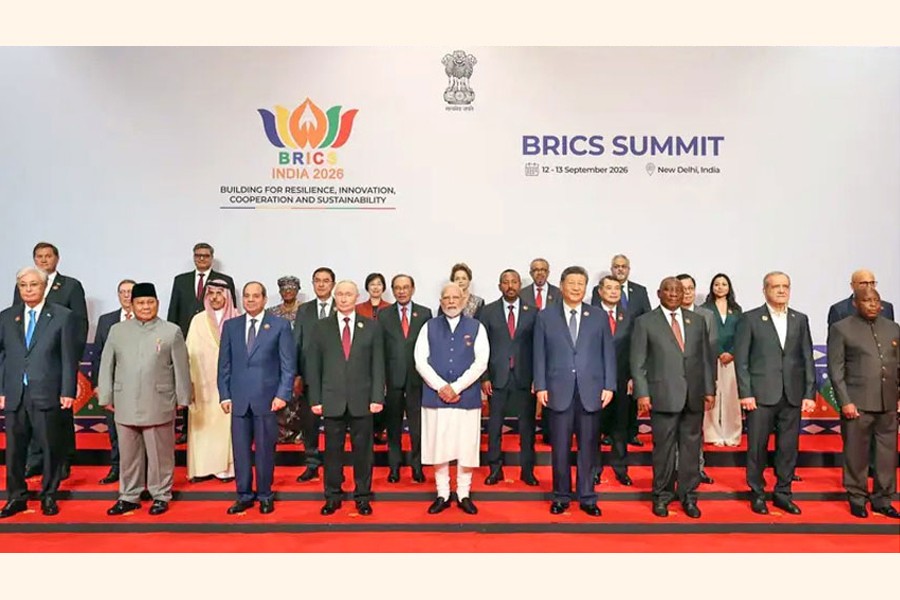
Russian President Vladimir Putin (3L), Indian Prime Minister Narendra Modi (3R) and Chinese President Xi Jinping (2R) pose with other leaders for a group photograph during the 18th BRICS Summit in New Delhi on September 13, 2026. Photo: Indian Press Information Bureau/AFP


In 2023, BRICS expanded with invitations to Egypt, Ethiopia, Iran, Saudi Arabia and the United Arab Emirates (UAE). Argentina refused to join, seeing it as an anti-Western grouping. Indonesia joined the following year, making it a 10-member grouping, alongside the addition of “partner countries” that also participate in summits, including Belarus, Bolivia, Cuba, Kazakhstan, Malaysia, Nigeria, Thailand, Uganda and Uzbekistan, from 2024. The growing membership has extended the group’s footprint across wider and different geographies, but has also brought regional differences, varying priorities, different security concerns and fundamentally different bilateral relationships with the G2, the USA and China.

Internal contradictions

Even as nearly 400 consultative meetings were held across 30 Indian cities in the run-up to the summit, the members continued to hold divergent, and at times openly hostile, political positions. This was particularly evident as the US–Iran conflict intensified, with Iran retaliating by targeting US military bases in the region, including those in the UAE and Saudi Arabia. The continuing Russia–Ukraine war, not surprisingly, found no mention in the declaration.

The contradictions within the grouping are difficult to miss. While the original members shared certain similarities, the expanded membership does not necessarily have much in common, limiting the scope for substantive engagement within the grouping. Thailand, for instance, could potentially benefit from bilateral cooperation with some BRICS members, but developing a meaningful trade partnership with South Africa would appear far-fetched. Similarly, the Philippines, which has adversarial relations with China, may be restrained in seeking areas of convergence within the BRICS framework.

The diversity of the membership consequently cast a cloud over the prospects for a common economic agenda and significant political convergence. Yet the outcome was not entirely unexpected. Despite these internal tensions, the principles of multilateralism and a multipolar distribution of power provided a degree of common ground. Significantly, the group chose engagement over confrontation, demonstrating that cooperation within a diverse grouping need not depend on complete political alignment among its members.

The diversity of the membership consequently cast a cloud over the prospects for a common economic agenda and significant political convergence. Yet the outcome was not entirely unexpected. Despite these internal tensions, the principles of multilateralism and a multipolar distribution of power provided a degree of common ground. Significantly, the group chose engagement over confrontation, demonstrating that cooperation within a diverse grouping need not depend on complete political alignment among its members.

There has certainly been a significant shift in the distribution of global power since BRICS first came into being in 2006. Yet, despite the many moving parts in the international political landscape, BRICS, through its increasingly diverse membership, has demonstrated an ability to hold the grouping together without being overwhelmed by the various geopolitical conflicts across different regions.

This is particularly noteworthy given the divergent perspectives of its members on the critical issue of energy. Russia and Brazil, as major energy exporters, have an interest in sustaining higher energy prices, whereas China and India, as major importers, face growing pressures from energy insecurity in the aftermath of prolonged and intensifying conflicts. The fact that these competing interests could nevertheless be accommodated within a common framework underscores the grouping's capacity to pursue areas of convergence despite substantial differences among its members. However, given that one economy stands taller than the others, its predisposition to exert influence cannot be ruled out.

Can BRICS offer a stable multilateral platform?

China has emerged as a much larger power over the past two decades, which possibly explains the hesitancy to usher in the issue of de-dollarisation, a theme that had in the past seized the attention of the members. Not only would it seem that India was keen to ensure that no anti-Western messaging emerged from the BRICS platform, but it would also not wish to create any enabling economic advantage for China. It has also been argued that, despite Indian interests in BRICS, its inherent territorial disputes with China will never be resolved and that, in the longer term, India would benefit from closer engagement with the United States and the West. Thus, while BRICS did not openly frame its agenda as “replacing the US dollar”, the members did find ways to work towards a common financial path through more technical language.

India, China, Russia, Brazil, the Gulf members and others have different monetary and geopolitical interests, so seeking a common currency or an explicit anti-dollar policy would require much greater agreement. BRICS found ways to move towards local-currency trade settlements, advance the mandate of the BRICS Payment Task Force, and promote Global South artificial intelligence (AI) governance, ensuring that the GCC states and Iran had strong financial and technological incentives to remain unified despite their political differences. In continuation of the 2025 Rio Declaration, BRICS continued to work on cross-border payments and interoperability while encouraging local-currency settlements. India and Russia trading in rupees and roubles, while also enabling Russia to invest in India given the trade surplus it holds, is one example for now, but more countries may seek similar trading practices.


1790724421748.webp

BRICS leaders on the sidelines of the 18th BRICS Summit at Bharat Mandapam in New Delhi on September 12, 2026. Photo: Indian Press Information Bureau


Non-Western but not anti-Western

Many of the members have faced tariff penalties from the USA, and many are questioning the American role and its unpredictability over trade agreements, which have inflicted extraordinary damage. Thus, while it was not unfounded to see BRICS as an anti-US grouping, the Indian Prime Minister clarified that BRICS is a non-Western grouping with a forward-looking outlook. The expanded membership has changed the nature of the grouping, with the presence of the UAE, Saudi Arabia and Indonesia, which are commonly seen as pro-Western.

Some of these members, however, were not going to burn bridges with the USA, but most agreed to stand against unilateralism and exceptionalism and resist the bullying tendencies of the developed world. Indeed, the latest summit has given the issues of the Global South greater salience. Members are seeking greater representation in a more inclusive manner, something that appears to be missing in several of the multilateral organisations dominated by developed nations.

While it would seem that India ensured that the document did not explicitly mention the United States, it appears to have made a few concessions in the larger scheme of things. On Israel, India also seems to have moved somewhat away from the position it had articulated during PM Modi’s visit to Israel. The Declaration takes a notably sharper joint position on Gaza, including an explicit reference to the International Court of Justice proceedings initiated by South Africa against Israel and calls for adherence to ceasefires. Several paragraphs reflected a strong position against Israel’s conduct in Gaza. The Declaration reaffirms the Palestinian people’s right to self-determination, opposes forced displacement and any geographic or demographic changes to Gaza, and supports a Palestinian state within the internationally recognised 1967 borders, including Gaza and the West Bank. Taken together, these provisions suggest that, while the document avoids explicitly naming the United States in certain contentious sections, India accepted language on Gaza that is considerably more pointed than its traditionally cautious diplomatic formulation on Israel.

Economic limitations

BRICS has always been referred to as a grouping with considerable economic heft. According to the latest data, BRICS countries, which account for nearly 49.5% of the global population, account for 26% of global trade. Although intra-BRICS trade has experienced a massive 13-fold increase over the past two decades, climbing from a modest $84 billion in 2003 to over $1.17 trillion in 2024 and crossing the $1.2 trillion mark, it still accounts for only about 4% to 5% of total global trade. While BRICS members conduct much greater volumes of trade and commerce with non-BRICS nations, China dominates intra-BRICS trade, exporting $550.8 billion to other members and importing $464.9 billion from them. India conducts substantial trade within BRICS but has a deficit of $226.1 billion (2025–26), mostly centred on trade with China and Russia. Similarly, Iran, Ethiopia and Russia also have significant import dependence within BRICS nations.

Russian President Vladimir Putin’s interest in the proposed digital investment platform, built on the framework of the New Development Bank, holds promise for the economic health of the NDB if the proposal moves forward. The bank has funded around 140 projects globally, totalling around US$42.9 billion, in sectors such as clean energy, transport infrastructure, water and sanitation, environmental protection and social infrastructure. India has benefited in several of these sectors and, since 2016, has had 21 projects costing US$7.2 billion. While the NDB remains rather limited in comparison with other multilateral financial institutions, its portfolio of projects has grown over time.

Coordination within a large and increasingly disparate grouping such as BRICS is inherently challenging. Without a degree of political consensus and a broader strategic outlook, its ability to demonstrate meaningful heft vis-à-vis the dominant powers will remain limited. The past two decades have nevertheless seen considerable progress. The more consequential question now is whether, in the next few years and amid an increasingly fractured international order, BRICS can translate its growing weight into tangible outcomes for its members.
The members discussed good practices and sought ways to pursue reforms in global governance. Education, one of the least controversial sectors, has also seen progress. The BRICS 2026 education track has five core areas, including connecting school education, skill development and research innovation. Exploratory work towards a BRICS University Global Ranking and Evaluation System may also be able to garner greater convergence and facilitate more rapid progress.

Coordination within a large and increasingly disparate grouping such as BRICS is inherently challenging. Without a degree of political consensus and a broader strategic outlook, its ability to demonstrate meaningful heft vis-à-vis the dominant powers will remain limited. The past two decades have nevertheless seen considerable progress. The more consequential question now is whether, in the next few years and amid an increasingly fractured international order, BRICS can translate its growing weight into tangible outcomes for its members.

The meeting on the sidelines between Iranian President Masoud Pezeshkian and Abu Dhabi Crown Prince Sheikh Khaled bin Mohamed bin Zayed Al Nahyan, the eldest son of the President of the UAE, understandably attracted media attention. Yet such encounters also point to the wider potential of the grouping. BRICS needs to develop a stronger strategic underpinning, one capable of accommodating differing national interests while providing a framework for members seeking greater multilateralism, multipolarity and, where necessary, multi-alignment.

Its future relevance will ultimately depend not simply on the size of its membership, but on its ability to convert that diversity into sustained cooperation and collective influence.

Dr. Sreeradha Datta is Professor at the Jindal School of International Affairs, O.P. Jindal Global University, and a Non-Resident Senior Fellow at ISAS-NUS, Singapore.​
 
Analyze

Analyze Post

Add your ideas here:
Highlight Cite Respond

Latest Posts

Back
 
G
O
 
H
O
M
E