| Global Defense, OSINT & Geopolitics Wire

[🇧🇩] July uprising

[🇧🇩] July uprising
108
4K
More threads by Saif

G Bangladesh Defense

‘July Uprising Book Fair 2025’ begins at Bangla Academy

UNB
Published :
Jul 31, 2025 23:08
Updated :
Jul 31, 2025 23:08

1754008975481.webp


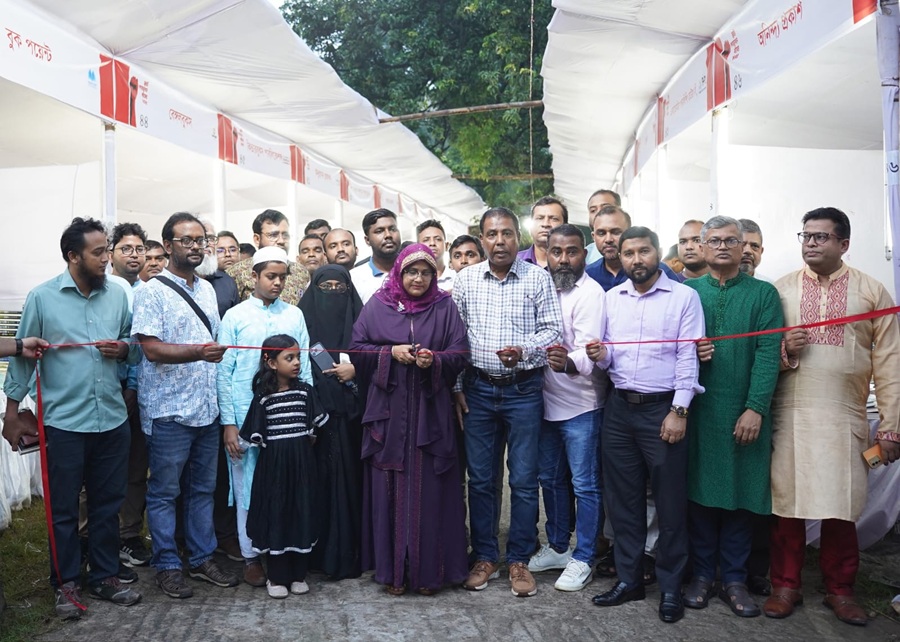
The 'July Uprising Book Fair 2025' was inaugurated on Wednesday at the premises of Bangla Academy, marking the anniversary of the historic July Uprising.

The fair has been organized by the Bangladesh Publishers and Booksellers Association, with support from Bangla Academy and under the patronage of the Ministry of Cultural Affairs.

The inauguration ceremony, held at 5pm, was graced by Kazi Lulul Makh Min, mother of martyred activist Fahmin Jafar, who officially opened the fair.

In a brief yet emotional address, she said, "The blood of my child is entwined with the July Uprising. Through this book fair, we are remembering that historic event and honoring those, like my son Fahmin Jafar, who stood fearlessly in the face of authoritarian bullets. This fair is not just a tribute to the uprising and its martyrs but also to a fearless generation that stood with unyielding resistance."

Prof Mohammad Azam, Director General of Bangla Academy, attended the event as a special guest. "In the past year, an impressive number of publications have emerged on the July Uprising. These works will serve as invaluable primary sources for future research."

"The July Uprising Book Fair is unique in its essence-books produced around the uprising carry historical significance as a counter-narrative to fascist propaganda," he said.

President of the Publishers and Booksellers Association, Rezaul Karim Badsha, remarked, "This is not just a commercial festival-it is a celebration of free thought. If any regime ever attempts to suppress freedom of expression again, the uprising stands as a stark reminder of the consequences, and that reminder is now preserved in these books."

The book fair will continue till August 5, open daily from 11am to 8pm, free for all visitors. Each day from 4:30pm to 7:30pm, memory-sharing lectures and discussions will be held on various aspects of the July Uprising under the title "Bloody July: In Our Memory, In Our Courage."

The schedule includes sessions such as: "Role of Intellectuals in Post-Uprising Bangladesh" with Hasan Robayet and Pulin Bokshi, and "Youth in the Uprising - '90 and '24" with Ruhul Kabir Rizvi on August 1; "Censorship and the Intellectual Space in Bangladesh" featuring Imrul Hasan and Mahbub Morshed, and "Role of Publishing in Rebuilding Post-Uprising Bangladesh" by Mohammad Nazim Uddin on August 2; "The Role and Nature of Media in Post-Uprising Bangladesh" with Kajal Rashid Shaheen and Sahul Ahmed, and "Language, Literature, and Culture of the Uprising" with Altaf Shahnewaz on August 3; "Justice and Injustice in Revolutions" featuring Arif Khan and Faridul Haque, "Uprising and Women" by Moshaheeda Sultana, and "Reporting the Revolution" by Amirul Islam Kagzi on August 4; and finally, "The Revolutionary Generation and the Future of Bangladesh" featuring Rezaul Karim Roni and Tuhin Khan on August 5.

Over 60 leading publishing houses from across the country are participating in the fair.

Notably, visitors can also access reports from seven reform commissions of the Government of the People's Republic of Bangladesh at the Publishers and Booksellers Association's designated stall.​
 

Unfinished tasks of July uprising

Tanim Asjad
Published :
Aug 02, 2025 00:14
Updated :
Aug 02, 2025 00:14

1754092122535.webp


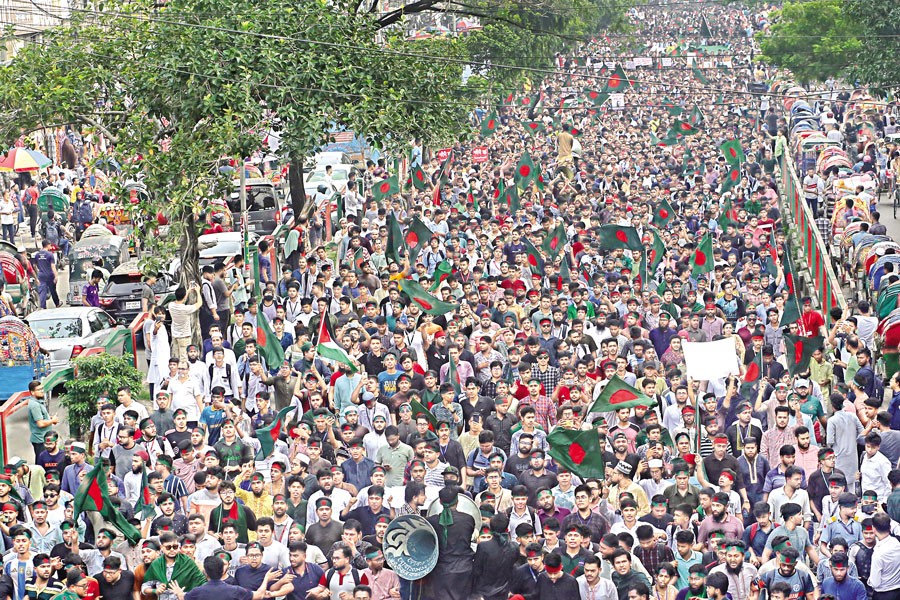
As the anniversary of the July mass uprising continues, it is also time to examine the achievements and disappointment of this historical event critically. The task is challenging and also problematic due to the complex nature of the mass uprising and subsequent developments in the country over the past year. There is no doubt that the most visible and successful achievement of the student-led movement is the downfall of the authoritarian regime of Sheikh Hasina on August 5 last year. It was the day when Bangladesh re-emerged as a country boldly asserting its sovereignty and independence. The sovereign status of the country was systematically undermined during the authoritarian regime.

Nevertheless, the fall of the brutal regime is not the end of the story, as the mass uprising has widened the expectations of the people. The downfall of Hasina is also a point of a new beginning to rebuild the country in a balanced and sustainable way, thereby curbing socio-economic disparity. It opens the door to restoring the freedom of speech and reversing the course of hate and intolerance. The bloody and forceful departure of the tyrant also presents an opportunity to reshape democratic institutions for the greater interests of the nation. All these are big tasks and not possible to complete within a short period. Instead the same will require persistent efforts.

Immediately after Hasian's ouster and escape to seek refuge in India, the nation dipped into a chaotic disorder for the time being. With the killing of at least 1,400 people and injury to several thousand others by the tyrant's forces and goons in 36 days of the mass uprising, some amount of disorder was not unexpected. It is also true that some undesirable things happened at that time, undermining the spirit of the mass uprising.

It is also well known that a large number of people were intimidated over the 15 years of the tyrant by law-enforcing agencies, along with leaders and activists of the ruling party, Bangladesh Awami League (BAL), to be exact, for differences in their political positions. Many of the tortured did not waste the opportunity to take revenge. Therefore, several BAL leaders and activities came under attack. Top leaders of the party, however, escaped, and many fled to India. They are now staying there thanks to the generosity of the Modi-led Indian government in return for serving the Indian interests for more than a decade.

Some expected that things would be normalised automatically or that there would be little chaos. It was a misconceived notion, as the country's political transition did not occur through normal democratic means. More than a month-long movement, that witnessed venting of a decade-long legitimate anger and disappointment, led to the bloody mass uprising and compelled the tyrannical regime to fall.

Then the Yunus-led interim government took charge shouldering two immediate tasks: restoring law and order and fixing economic mismanagement. Despite several efforts, law and order are still a matter of grave concern in the country. Economic management has, however, improved modestly, and more progress is expected. It is, however, disappointing that some critical areas like education, health and transport are still carrying the legacy of the tyrant regime due to lack of effective intervention from the interim government. Instead of taking proper measures do some urgent rectifications, the over-ambitious move of comprehensive reforms will take time. The country is yet to regain normalcy by adjusting with the changeover.

So, the ultimate success of the July uprising will depend on addressing the socio-economic disparity in an effective and sustainable manner and also on the smooth transition to a democratic process. The road is long with a number of barriers and there is no easy or short-cut to move ahead. It is thus necessary to continue the fight.​
 

After July: A fragile transition, a nation in waiting

1754183400556.webp

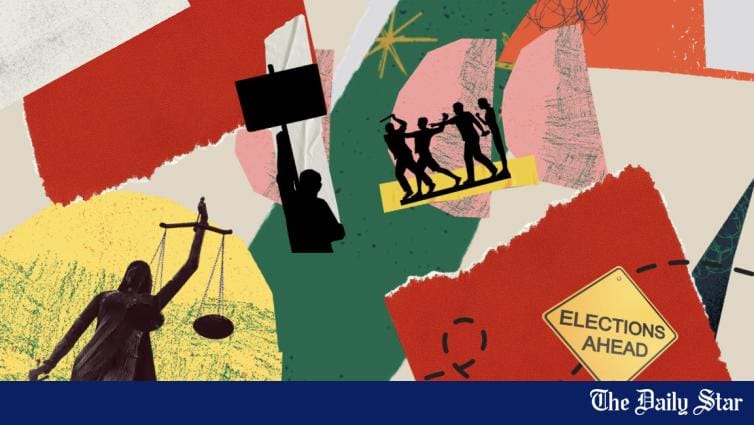
VISUAL: ALIZA RAHMAN

One of the most significant political upheavals in Bangladesh's recent history occurred during the July uprising, which took place only a year ago. After years of political persecution, suffocation, and the deliberate deterioration of democratic principles, it was a moment of communal liberation for many. Former Prime Minister Sheikh Hasina's prolonged and increasingly autocratic administration came to an abrupt end due to a confluence of student protests, widespread public discontent, elite disenchantment, and institutional retreat. Hope for change, rebirth, and the restoration of the republic followed. That hope remains a year later, albeit weakened.

The subsequent transition following the uprising brought with it an interim government, headed by Prof Muhammad Yunus, which was never going to be easy. The government began cautiously optimistic, charged with re-establishing public trust, consolidating a shattered state, and laying the groundwork for a fair electoral process. It pledged a restoration of the rule of law, reform, and inclusivity. However, the administration is increasingly vulnerable to both internal conflicts and public scepticism due to its delayed delivery, increasing political inconsistencies, and growing doubts about its authority.

The breakdown of the political unity that initially enabled the revolt has been the most depressing development since it began. After briefly uniting behind a common goal—the overthrow of the previous government—the alliance of student activists, opposition parties, and civil society leaders has returned to distrust, competitiveness, and conflicting agendas. Long seen as the main opposition party, the BNP has struggled to articulate a consistent post-Hasina policy, wavering between calls for more extensive structural reform and demands for early elections. The National Citizen Party (NCP), which formerly presented itself with a young, reformist image, has become increasingly entangled in internal conflicts and characterised by exaggerated rhetoric. Even some student organisations, which were previously praised as the movement's moral core, have been drawn into disputes and controversies.

The Awami League's political future is still a significant concern in the interim. Whether it should be officially banned or marginalised remains a topic of debate. Although many people believe that a party long associated with authoritarianism and impunity must be held accountable, others caution that exclusion—particularly by decree—risks eroding the same democratic norms that the movement aimed to restore. Here, there are no simple solutions. There is a fine line between justice and retaliation, and in a culture still dealing with the effects of political violence, moving forward requires a level of self-control that is hard to muster.

The position is made more difficult by the strategic hesitations of the interim government. It has hinted at election dates, with February 2026 being the latest, but has yet to release a definitive schedule or legal framework. (On July 31, the law adviser said the election date would be announced in a few days.) Both supporters and opponents have criticised the interim for its incapacity or refusal to take decisive action on issues such as judicial independence, bureaucratic accountability, and law enforcement reform. Merely symbolising is no longer sufficient in an environment where public vigilantism, mob violence, and administrative indifference are becoming more apparent.

International players have also been keeping a careful eye on things. Once a major backer of the former Awami League-led government, India has been, at best, ambivalent towards the new administration due to its unclear stance and cautious diplomatic approach. Border disputes have escalated, especially in light of recent push-ins of Rohingya refugees and Muslims who speak Bangla. China and Pakistan, however, have taken a more realistic stance and are offering cautious engagement. While applauding the end of autocratic leadership, Western nations have begun to voice concerns about the absence of human rights protections and the lack of election certainty. The interim government continues to face a challenging balancing act between local consolidation and international credibility.

Nevertheless, something has changed amid all this uncertainty. The prevailing power's myth of invincibility has been dispelled. The fear-based culture that stifled dissent has been broken. A new generation has taken the stage, one that is politicised by engagement rather than inheritance. This is no small accomplishment in and of itself. However, this is not enough to sustain a movement. They need organisation, creativity, and most importantly a forward-looking vision.

The next few months will be pivotal. The gap will either be filled by opportunism, resentment, and a return to authoritarianism, or the interim government will be able to steer the country towards elections and reform in a legitimate manner. For a country that has repeatedly paid the price of freedom, it is reasonable to expect its leaders to step up when the time comes.

Zillur Rahman is a journalist and the host of the current affairs talk show 'Tritiyo Matra.' He also serves as the president of the Centre for Governance Studies (CGS).​
 

Constable in Kushtia suspended for making ‘derogatory remarks’ about July Uprising

bdnews24.com
Published :
Jul 05, 2025 20:43
Updated :
Jul 05, 2025 20:43

View attachment 19627

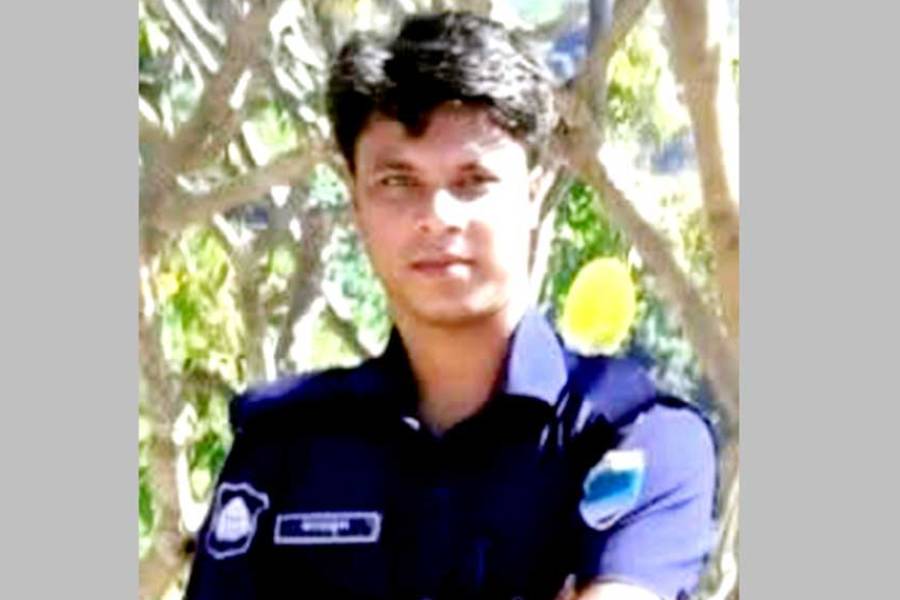
A police constable in Kushtia has been suspended for making “derogatory remarks” about the July Uprising on social media.

District Police Superintendent Mizanur Rahman said on Saturday, “As the investigation has found primary evidence, it has been recommended to suspend and dismiss Constable Farzul Islam Rony.”

On Jul 1, Rony made a Facebook post about the student-led mass uprising that toppled the Awami League government, but deleted it shortly afterwards.

He later claimed his account had been hacked. The post, however, had already drawn widespread criticism.

That night, leaders and activists of the Anti-discrimination Student Movement protested in front of the district superintendent of police’s office on the Kushtia-Ishurdi Highway, demanding Rony’s arrest and dismissal.

On Jul 2, a committee was formed to investigate the incident, comprising Additional Superintendent of Police Sikder Mohammad Hasan Imam, Additional Superintendent of Police (Sadar Circle) Pranab Kumar, and Inspector Debashish Roy.

Anti-discrimination Student Movement’s (Kushtia) Member Secretary Mostafizur Rahman said, “There is no opportunity to belittle the July achieved through the sacrifices of the students and the public against the fascist regime. This step taken against Rony will set an example.”

Rony hails from Shailkupa Upazila of Jhenaidah. He had been working in the Kushtia Traffic Department since Jul 13, 2023. A police official said he is currently in hiding.​
These Awami bast*rds are getting bold back again, issuing Facebook posts on behalf of AL.

But little do these fascist scum know that people's memory in Bangladesh has a long life.

Meanwhile - Thanks for sacrificing your own career in law enforcement for good. Good luck getting another job.

Scoot back to where people can't find you.
Ditto:)