| Global Defense, OSINT & Geopolitics Wire

[🇧🇩] July uprising

[🇧🇩] July uprising
107
4K
More threads by Saif

G Bangladesh Defense

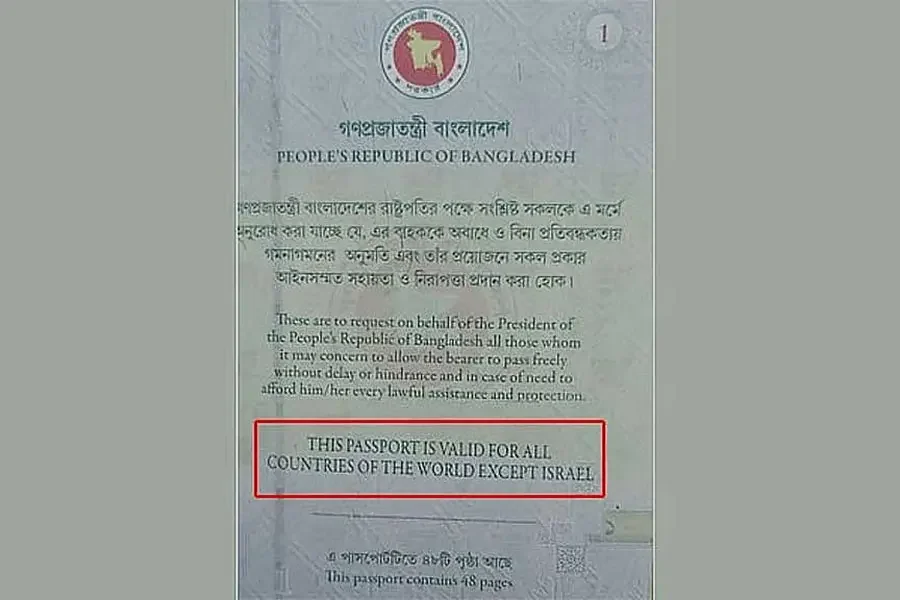
Bangladesh nods July Uprising watermark for passports, restores ‘except Israel' clause

1784502105785.webp


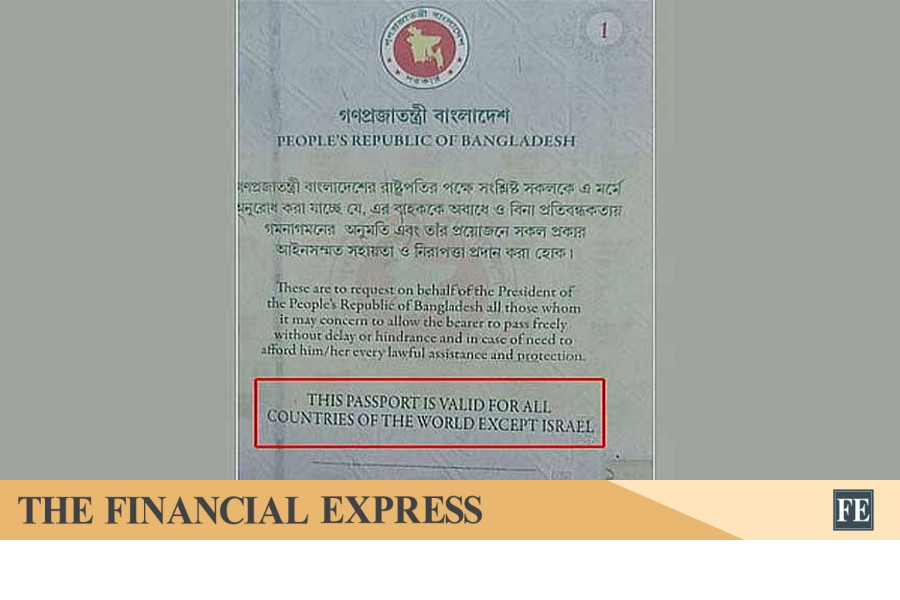
The government has ordered the restoration of the phrase "Valid for all countries of the world except Israel" on Bangladeshi passports while introducing a watermark commemorating the July Uprising.

The directive, issued by the home ministry on Sunday, comes nearly two months after Home Minister Salahuddin Ahmed announced plans for the changes.

The order grants final approval for redesigning and rearranging images in the e-passport booklet.

Speaking at the Secretariat on May 24, Salahuddin had indicated that the passport watermark would be changed, saying: "The previous ‘fascist’ government used these for personal purposes. They will be changed. National landmarks and Bir Sreshtha heroes will be featured."

The ministry's order lists 38 design changes. Under item 20, pages 30 and 31 will carry a watermark depicting the 2024 student-led mass uprising.

The passport's data page will also again bear the phrase, "This passport is valid for all countries of the world except Israel."

Bangladeshi passports once carried the wording: "This passport is valid for all countries of the world except Israel, Taiwan and the Republic of South Africa."

Taiwan and South Africa were later removed from the restriction, while Israel remained.

In May 2021, under the Awami League government, the reference to Israel was also dropped, leaving the passport valid for all countries.

Then home minister Asaduzzaman Khan Kamal said the change was made to maintain the passport's "international standard".

Under the latest directive, the passport's front cover will remain unchanged, while the inside of the first cover will continue to feature the Martyrs' Memorial.

A Department of Immigration and Passports official said implementing the changes would take time because existing passport stock must first be used.

Around 24,000 to 25,000 passports are delivered daily, with booklet printing done abroad and binding completed in Bangladesh, the official said.

"We usually maintain stock for one to one-and-a-half years. The next printing order will incorporate the new design," the official added.​
 

Where are these faces of July now?

1784503156064.webp
 

Keeping the July uprising’s promise alive needs a vigilant public

Anu Muhammad

1784505924118.webp

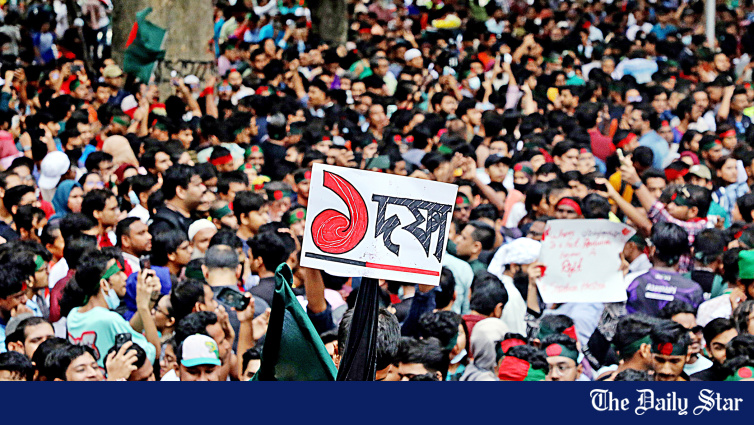
The positions adopted by both the government and the opposition do not suggest any serious commitment to addressing the inequalities highlighted by the July 2024 movement. FILE PHOTO: PALASH KHAN

There is no doubt that the July Mass Uprising marked the beginning of a new chapter in Bangladesh, representing a powerful expression of the people’s enduring capacity for resistance.

Before it came the 1969 mass uprising, followed by the 1990 mass uprising. In the years leading up to each of these moments, we repeatedly heard claims of development from the ruling regimes. Yet, just as Ayub Khan’s “Decade of Development” ended with the 1969 uprising, and Ershad’s development decade ended with the 1990 one, Sheikh Hasina’s extended era of economic and infrastructural achievements also came to an end through another uprising. Why, one may wonder, did such progress fail to secure lasting public support for any of these regimes?

The answer is simple. In all three cases, the so-called progress was accompanied by the erosion of democratic rights and increasingly authoritarian rule. Over time, this produced anger, resentment, and a growing determination to resist deprivation and oppression. As a result, the development narrative gradually lost its credibility. It was this disconnect between material development and political repression that ultimately gave rise to popular resistance.

We have previously discussed the background to the 2024 uprising. Prolonged rule without fair elections, combined with the plundering of public wealth, corruption, capital flight, and widespread repression across society, created a reservoir of collective anger, resentment, and despair. That ultimately exploded in the form of a mass uprising, especially when the government responded to peaceful protests with mass killings. Once again, it became an expression of the people’s collective strength.

At the same time, the uprising created a new public consciousness and raised expectations. People started to believe that the injustice, oppression, corruption, looting of public wealth, and marginalisation of citizens, as witnessed during the Hasina era, would not be repeated. They hoped that a democratic system would emerge and that the country would move towards a more inclusive society, free from injustice and discrimination. These aspirations defined the aftermath of the uprising. An interim government remained in office for a relatively long period, and we now have an elected government.

However, two years after the July uprising, we can see that much of the enthusiasm, emotion, and hope associated with it has faded. We also hear of growing disappointment and frustration from many who participated in the movement. The reasons behind this are identifiable.

First, after the July 2024 uprising, we came to see the alarming rise of a new form of fascistic dominance. Both online and offline, there has been increasing intolerance and violence, including public death threats, abuse of children, threats and attacks against religious minorities and dissenting voices, violence against women, and attacks on people of diverse gender identities. We have also continued to see false cases, arbitrary arrests, detention without trial, torture by state agencies in different places, and deaths in police custody.

Second, during the interim government’s tenure and even afterwards, we witnessed mob attacks on shrines, temples, bauls, and Liberation War murals and sculptures, the cancellation of musical performances, the banning of plays, and even the killing of people in the name of religion. There were also attacks on Prothom Alo, The Daily Star, Udichi, and Chhayanaut. Yet, there has been no comprehensive investigation into these incidents, nor any meaningful effort to bring the perpetrators and those who incited them to justice.

Third, another issue that has raised serious public concern—continuing an earlier pattern—is the signing of international agreements which are contrary to the public’s best interest. During the interim government’s tenure, several agreements were concluded in a largely non-transparent and unjustifiable manner, allegedly compromising national security and interests. Among them, the port agreement is particularly significant. Other examples include agreements with Starlink, LNG import agreements, and the trade agreement with Japan. All of these were concluded with very little transparency, keeping the public in the dark. Perhaps the most concerning was the reciprocal trade agreement with the United States, signed just three days before the February 12 national election.

The manner in which these deals were concluded also raised questions about the role of major political stakeholders. Since the elected government took office in February, we have seen that every party represented in parliament has remained conspicuously silent on these issues. This is one area where the government and the opposition seem to be in complete agreement, despite their disagreements on almost every other issue. Such consensus over agreements perceived to be contrary to the national interest has further deepened public disappointment and reinforced the sense that the aspirations of the uprising have been betrayed.

Fourth, we are witnessing decisions on megaprojects being taken without public consent, meaningful public participation, or adequate review of past experiences. We have heard of the government making clear commitments regarding the Teesta Master Plan and the Padma Barrage. But what we have not seen is any serious effort to examine the concerns previously raised about such megaprojects or to conduct the necessary evaluations that should precede them. Before proceeding with the Padma Barrage, for example, the experience of the Farakka Barrage should be carefully reviewed. The experiences of the Teesta Barrage and the Ganges-Kobadak Irrigation Project should likewise be taken into consideration. Additionally, the concerns raised so far by experts deserve careful attention and substantive responses.

Under previous governments, we repeatedly saw authorities ignore the opinions of responsible experts and dismiss public concerns while continuing to undertake one disastrous megaproject after another, including Rampal and Rooppur. We do not want to see that pattern repeated again.

Fifth, during the 2024 mass uprising, we saw graffiti highlighting many forms of discrimination, including class, religious, ethnic, and gender discrimination. However, the positions adopted by both the government and the opposition do not suggest any serious commitment to addressing these inequalities.

These, in short, are the developments that concern us and make us apprehensive about the eventual legacy of the uprising. The primary responsibility for finding a way out of this situation rests with the party in power and, by extension, with all major political stakeholders. At the same time, citizens must continue to play an active and vocal role. Without sustained civic engagement, it will not be possible to build the political strength necessary to realise the aspirations of a Bangladesh totally free from discrimination and authoritarianism.

Anu Muhammad is former professor of economics at Jahangirnagar University.​
 

‘Covert force’ now claims credit for anti-autocracy movement: PM Tarique

Govt will work with allies to implement the 31-point reform agenda and July National Charter, he says

UNB, Dhaka

1784593134658.webp

Photo: PMO Bangladesh

Prime Minister and BNP Chairman Tarique Rahman on Monday pledged to maintain unity among the political parties that joined the anti-fascist movement, saying his government would always put the interests of the people ahead of political considerations.

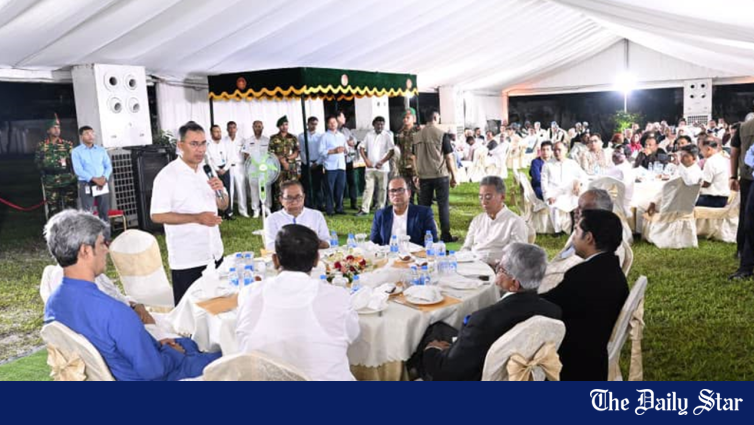
“We have been together all these years. There is no reason that we will part ways now. We have stood together for so long, and we will continue to stand together in the days ahead,” he said at a courtesy meeting and dinner with leaders of allied parties at the State Guest House Jamuna.

Acknowledging concerns expressed by alliance leaders, Tarique said he understood their frustrations. “I do not disagree with what our senior colleagues have said. I respect their views. I sincerely express my regret if there have been any shortcomings,” he added.

He urged partners to remain patient, stressing that the government must first meet the expectations of the people. Differences of opinion, he said, were natural in politics but should not be mistaken for divisions.

“There may be different views on how to implement certain points of the 31-point reform agenda, but there is no misunderstanding or division among us. We are united by a common goal and a common purpose,” he said.

Tarique said the alliance would continue working to implement both the 31-point state reform agenda and the July National Charter, adding, “Since our destination is the same, there is no reason for us to be divided.”

He noted that the government inherited a battered economy and damaged institutions but had already begun implementing key commitments, including waiving agricultural loans of up to Tk 10,000, at its first cabinet meeting. Programmes such as the Farmers’ Card and Family Card have since been launched, alongside reforms in health, education and expatriate welfare.

Without naming any party, Tarique criticised a “covert force” that now claims credit for the anti-autocracy movement despite being absent during the struggle.

“We searched for them during the movement but never found them. Only after the fall of the autocratic regime on August 5 did this hidden force begin to reveal itself,” he said.

He expressed confidence that public support remains firmly behind the government and its allies. “Our greatest strength is the people of Bangladesh. The people are with the BNP and with all the parties that took part in the simultaneous movement.”

The programme began with a recitation from the Holy Quran. BNP Secretary General Mirza Fakhrul Islam Alamgir delivered the welcome address. Leaders who spoke included Mahmudur Rahman Manna, Mustafa Jamal Haider, Andaleeve Rahman Partho, Saiful Haque, Subrata Chowdhury, Maulana Dr Golam Mohiuddin Ikram and ATM Golam Maula Chowdhury.

Members of the BNP Standing Committee, vice-chairmen and liaison committee members were present. Tarique exchanged greetings with alliance leaders and later joined them at the buffet dinner. Leaders of 41 political parties, including Ganatantra Mancha, the 12-Party Alliance, Jatiyatabadi Samomona Jote, Gonotantrik Bam Oikya and Islami Oikya Jote, attended the event.​
 

How should we view the July generation's politics?

Khan Md Rabiul Alam
Updated: 25 Jul 2026, 16: 42

1785021021204.webp

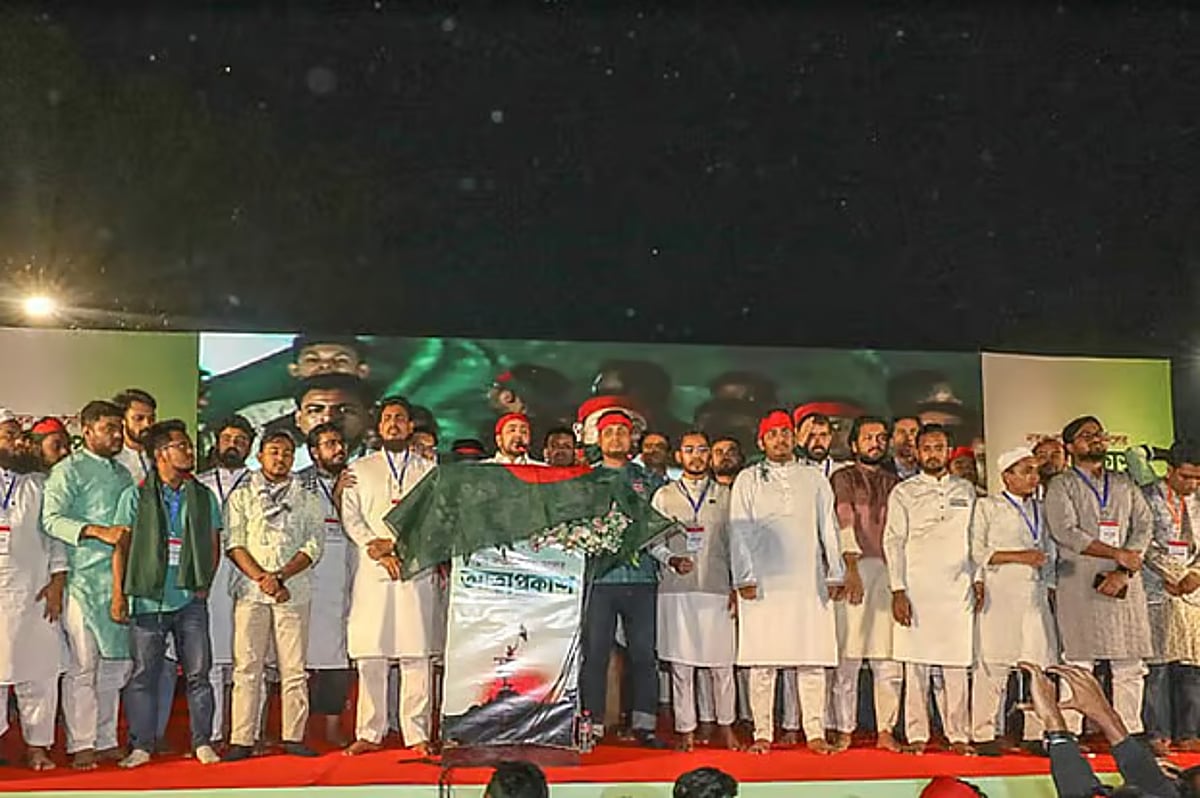
Young leaders of the mass uprising formed a new political party called the National Citizen Party (NCP) Prothom Alo

The second anniversary of the July Mass Uprising has given rise to extensive discussion about its successes and failures. It is true that the uprising brought an end to authoritarian rule. However, tangible clean governance is yet to emerge. Our painful collective past has come to an end, but it has not yet been replaced by a promising present. Even the hope for the future that the July Mass Movement had inspired now seems to be faltering as it confronts the realities of the present.

Renowned historian Dipesh Chakrabarty describes this tendency as "presentism." Politically, we remain trapped in the immediacy of the moment. As a result, we have failed to build a shared national memory.

This raises an important question: to what extent has the prospect of a cleansed political identity, one that was expected to emerge from the spirit of July, actually come into being?

1785021063780.webp

On 3 August 2024, at the Central Shaheed Minar, Nahid Islam and the student leaders of the time announced the one-point demand. They went on to establish several political parties and platforms. Screenshot from video

Looking back over the past two years, one might conclude that the people placed the July leadership on a broad highway, but the leaders themselves chose to enter a narrow alley. They have continually made their own path more difficult while blaming others for the obstacles. The fluid and incoherent form that July's political consciousness has assumed is rooted in the leadership's political inexperience and errors of purpose.

Over 30 years of experience working in the development sector has taught me that partnerships are formed with those who share a common strategic alignment. In other words, if the destination is not the same, there can be no partnership or alliance. The National Citizen Party''s (NCP) partnership with Islamist parties, including Jamaat-e-Islami, reveals what I see as an ideological trap.

Many people wonder whether the NCP intends to function as Jamaat-e-Islami's B-team. This perception arises because contemporary Bangladeshi politics has increasingly featured smaller parties operating as followers or junior partners of larger ones. Secondly, it appears that the NCP's position is driven by a particular anxiety or sense of insecurity, primarily a concern for security. Its closeness to Jamaat may provide the NCP with a degree of protection and security that it believes it cannot obtain from other political actors.

By aligning itself so closely with Jamaat at this early stage, NCP has made it unlikely that it will be able to stand firmly on its own. As a religion-based political party operating within a capitalist framework, Jamaat-e-Islami, by forming an alliance with the NCP, has effectively constrained the latter's potential to develop as an independent political force representing the younger generation.

NCP was effectively taken under the wing of Jamaat-e-Islami before it had even emerged from its political infancy. This has made the rise of the political forces centered on July more precarious. Instead of forming an alliance with NCP, other political parties should have allowed it to develop independently and supported its efforts to find its own path. Unless NCP can break away from the alliance it has built and stand on its own feet, I do not believe it has a viable political future.

NCP's political objectives are not easy to discern. Within a short period, the leaders of the movement have established different political parties and platforms. These include the NCP, the Network for People's Action (NPA), and Alternatives. Their ideological differences have presumably led to the creation of these separate platforms. In effect, this represents a fragmentation of the political forces that emerged from July.

1785021108831.webp

The Network for People's Action (NPA), a new political platform formed in the aftermath of the July Mass Uprising Prothom Alo

This fragmentation has jeopardised the prospects for developing a unified political identity rooted in the spirit of July. It would be insufficient to describe it merely as an ideological split. NCP''s decision-making process appears to be highly centralised. Democratic practice and the space for dissent within the party do not seem to be well established. The resignation of several progressive leaders over the party''s alliance with Jamaat points in that direction.

In an interview with Prothom Alo on 16 July, Abdul Kader, one of the leading figures of the Anti-Discrimination Student Movement, said: "The problem with NCP is that you are expected to take responsibility, but you have very little opportunity to actually do the work."

A major element of NCP's power-centered political bargaining has been its closeness to right-wing political forces, a relationship that is narrowing the scope of its public acceptability. Moreover, it remains unclear what kind of Bangladesh the NCP ultimately envisions for the future.

The July movement could have opened a straightforward path toward building a people-centered Bangladesh. But that opportunity was not realised. Another important reason is the emergence of numerous self-interested and so-called ideological groups around July. These groups were not always united in opposing the exiled Awami League (whose activities have been banned) or India. Instead, they often became embroiled in visible and, it is alleged, invisible conflicts among themselves. At times, they also failed to distinguish correctly between allies and adversaries.

A new generation has emerged through the July movement. Whether July ultimately fulfills its promise depends on this generation's ability to develop into an authentic political force.

This generation mobilised together, marched along a common path, and, through collective action, brought an end to misrule. According to a Facebook post by former Information Adviser Mahfuj Alam, this coalition included four distinct circles: the Jatiyatabadi Chhatra Dal circle, the Islami Chhatra Shibir circle, the left-wing circle, and the free-thought circle. Together, these four circles formed a common nucleus, but that nucleus could not be sustained. In the aftermath of the movement, each of these forces began pursuing its own separate path.

What drove this fragmentation was, above all, the politics of claiming ownership over the success of the mass uprising and the desire for recognition of individual contributions. Among those most assertive in claiming that ownership were Islami Chhatra Shibir, Jamaat-e-Islami, and other like-minded groups. They were undoubtedly important stakeholders in the movement, but they were not its sole proprietors.

Nor was the movement exclusively a student movement. People from all walks of life took part in it. The post-July quest for political preeminence has made unity far more difficult. At the same time, there has been a noticeable lack of political wisdom in effectively translating the spirit of July into practical politics.

At its core, this mass movement was a struggle to build a tolerant, humane, and accountable state for all. More fundamentally, it was an aspiration to construct a modern, inclusive state. If the political forces that emerged from July are able to establish themselves as a genuine political entity, this vision can be preserved. The existing political parties are unlikely to uphold that vision, because they remain bound by conventional politics.

The time has come for the July forces to critically assess the overall situation and determine their future course of action. A new generation has emerged through the July movement. Whether July ultimately fulfills its promise depends on this generation's ability to develop into an authentic political force.

* Khan Md Robiul Alam is a communications professional and educator​