 Bangladesh Defense

Saif
Senior Member
- Joined
- Jan 24, 2024
- Messages
- 22,387
- Likes
- 9,875
- Nation

- Axis Group


What is the way to fulfilling July's unfinished agenda?
In the history of Bangladesh, certain moments are not just the names of political events; they turn the trajectory of the nation's future course. July 2024 was such a turning point. The students' movement demanding reform of the quota system in government jobs quickly escalated into a nationwide...
 en.prothomalo.com
What is the way to fulfilling July's unfinished agenda?
Fahmida Khatun
In the history of Bangladesh, certain moments are not just the names of political events; they turn the trajectory of the nation's future course. July 2024 was such a turning point. The students' movement demanding reform of the quota system in government jobs quickly escalated into a nationwide uprising and ultimately culminated in the fall of the government. However, the most important question in historical terms lies elsewhere—why did a movement that began over the recruitment system in government jobs eventually turn into a demand for fundamental changes in the state apparatus?
To find the answer, one must look beyond just the quota reform issue; the quota was an immediate stimulus, while the real cause was the long-standing political, economic, and institutional dissatisfaction that had accumulated over time.
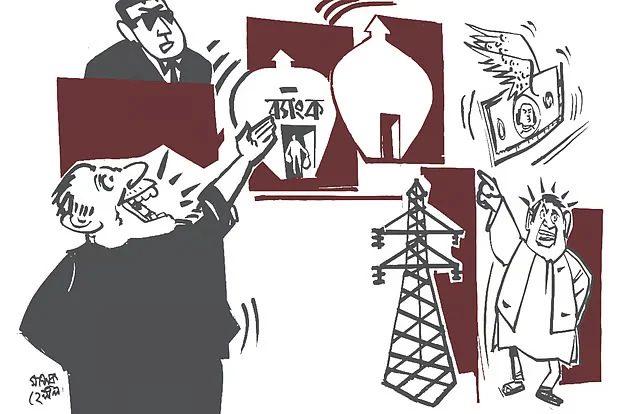
By mid-2024, both the country's economy and politics were under pressure. Inflation had been in double digits for a long time. Stagnant investment, slow job creation, dwindling foreign exchange reserves, weaknesses in the banking sector, and the deterioration of public services were increasing public concern. Particularly, a large section of the youth felt increasingly disconnected from both employment opportunities and the state decision-making process. As a result, the movement that began over quotas gradually turned into a broader question about justice, accountability, and legitimacy in state governance.
Energy security must be seen as one of the cornerstones of economic strategy. The recent power and gas crisis has shown that energy is not just about power generation; it is also intricately linked with industrial competitiveness, exports, employment, and investment. Thus, in the short term, it is urgent to ensure uninterrupted energy supply to productive sectors, diversify sources of imports, and settle dues with suppliers. In the long term, domestic gas exploration, expansion of renewable energy, regional power trade, and adoption of an integrated energy security plan are necessary.
This is why the July movement was not just a protest against one government; it was also against a development model where the benefits of development did not reach everyone equally, and the accountability of state institutions had weakened over time. Therefore, the expectations of July were not limited to just a change in government; its inherent aspiration was to reconstruct the relationship between the state and its citizens on a new foundation—to establish a new social contract.
Two years later, it is natural to ask—how many of those expectations have been fulfilled? The answer depends on how we define success. If a change in power is the sole criterion, then July was undoubtedly a historic success. But if judged on the basis of the reform of state institutions, economic recovery, job creation, inflation control, investment growth, or improvement of public service, it must be said—a significant part of July's agenda remains unfinished.
The real evaluation of the July movement will not be based on how many commissions were formed or how many new policies were announced. The actual assessment will be—has Bangladesh been able to create a state where political competition is peaceful, the economy is productive, institutions are independent and accountable, and citizens' rights are effectively protected. Achieving this goal requires more than short-term stability; it demands continuous and profound institutional and economic reforms.
First, there is a need to rebuild people's trust in democratic competition. July taught us that when legitimate paths for political competition are narrowed, public discontent eventually explodes on the streets. Therefore, free, fair, and participatory elections are not only prerequisites for democracy; they are also one of the foundations of economic stability. Investors want a country where there is policy continuity and changes in power occur constitutionally and peacefully. For this, it is essential to enhance the capacity of the Election Commission, build mutual trust among political parties, and improve the system for impartial dispute resolution.
Simultaneously, there must be a transition from a person-centered governance system to an institution-centered governance system. In a mature state, even if there is a change in government, institutions work with professionalism, neutrality, and continuity. Strengthening the independence, efficiency, and accountability of public administration, the judiciary, Bangladesh Bank, the Election Commission, the Anti-Corruption Commission, and other regulatory institutions is now a demand of the times. Sustainable development is not possible without strong institutions.
Employment must be at the centre of economic policy. Bangladesh's growth over the past few decades has primarily relied on the ready-made garment industry, remittances, and women's participation in the labour market. The development strategy of the future must be more multifaceted. Not just achieving high growth; establishing new industries, technology-based production, diversification of exports, the growth of small and medium entrepreneurs, and creating skilled employment should be the main goals of the development strategy to connect the aspirations of educated youth with the reality of the economy.
Reducing inequality must also be one of the central goals of the development strategy. The July movement reminded us that growth alone is not enough; the equitable distribution of growth benefits is equally important. Solving issues like regional disparity, unequal access to quality education, discrimination in women's employment, the digital divide, and limited opportunities for the youth is essential for sustainable development.
Sustainable economic development is not possible without a strong financial system. Bangladesh's banking sector has now reached a stage where piecemeal reforms are not enough. Solving problems like non-performing loans, weak governance, inadequate capital, and prolonged judicial processes requires an integrated reform programme. Without ensuring loan recovery, adequate provisioning, corporate governance, and the effective independence of Bangladesh Bank, the banking sector will not be able to support economic growth as desired.
Similarly, fundamental reform of the revenue system is needed. Bangladesh's tax-to-GDP ratio is still low compared to international standards. As a result, necessary investments in education, health, infrastructure, and social protection remain limited. Increasing revenue does not mean just raising tax rates; rather, it involves modernising tax administration, preventing tax evasion, expanding the digital tax system, and creating a simple, fair, and credible tax regime. People will spontaneously pay taxes when they are assured that the money is being spent with transparency and accountability.
Energy security must be seen as one of the cornerstones of economic strategy. The recent power and gas crisis has shown that energy is not just about power generation; it is also intricately linked with industrial competitiveness, exports, employment, and investment. Thus, in the short term, it is urgent to ensure uninterrupted energy supply to productive sectors, diversify sources of imports, and settle dues with suppliers. In the long term, domestic gas exploration, expansion of renewable energy, regional power trade, and adoption of an integrated energy security plan are necessary.
To make Bangladesh's development more inclusive, genuine decentralisation is crucial. An overly centralised administrative structure delays solving local problems and limits citizen participation. Empowering local governments with more authority and resources will improve the quality of education, health, urban management, infrastructure, and social services, making development more accountable.
Reducing inequality must also be one of the central goals of the development strategy. The July movement reminded us that growth alone is not enough; the equitable distribution of growth benefits is equally important. Solving issues like regional disparity, unequal access to quality education, discrimination in women's employment, the digital divide, and limited opportunities for the youth is essential for sustainable development.
Lastly, these reforms must be evidence-based. Effective public policy cannot solely be based on political considerations; it must be grounded in accurate data, research, and regular evaluation. Close cooperation between the government, universities, research institutions, and the private sector will not only improve policymaking but also increase public trust in the state. The real message of July was to redefine the relationship between the state and its citizens. Citizens are not just voters; they are partners in development. The duty of the state is not just to govern but to be the protector of citizens' rights, security, and potential.
#Fahmida Khatun is an economist and the Executive Director of the Centre for Policy Dialogue (CPD).
Fahmida Khatun
In the history of Bangladesh, certain moments are not just the names of political events; they turn the trajectory of the nation's future course. July 2024 was such a turning point. The students' movement demanding reform of the quota system in government jobs quickly escalated into a nationwide uprising and ultimately culminated in the fall of the government. However, the most important question in historical terms lies elsewhere—why did a movement that began over the recruitment system in government jobs eventually turn into a demand for fundamental changes in the state apparatus?
To find the answer, one must look beyond just the quota reform issue; the quota was an immediate stimulus, while the real cause was the long-standing political, economic, and institutional dissatisfaction that had accumulated over time.
By mid-2024, both the country's economy and politics were under pressure. Inflation had been in double digits for a long time. Stagnant investment, slow job creation, dwindling foreign exchange reserves, weaknesses in the banking sector, and the deterioration of public services were increasing public concern. Particularly, a large section of the youth felt increasingly disconnected from both employment opportunities and the state decision-making process. As a result, the movement that began over quotas gradually turned into a broader question about justice, accountability, and legitimacy in state governance.
Energy security must be seen as one of the cornerstones of economic strategy. The recent power and gas crisis has shown that energy is not just about power generation; it is also intricately linked with industrial competitiveness, exports, employment, and investment. Thus, in the short term, it is urgent to ensure uninterrupted energy supply to productive sectors, diversify sources of imports, and settle dues with suppliers. In the long term, domestic gas exploration, expansion of renewable energy, regional power trade, and adoption of an integrated energy security plan are necessary.
This is why the July movement was not just a protest against one government; it was also against a development model where the benefits of development did not reach everyone equally, and the accountability of state institutions had weakened over time. Therefore, the expectations of July were not limited to just a change in government; its inherent aspiration was to reconstruct the relationship between the state and its citizens on a new foundation—to establish a new social contract.
Two years later, it is natural to ask—how many of those expectations have been fulfilled? The answer depends on how we define success. If a change in power is the sole criterion, then July was undoubtedly a historic success. But if judged on the basis of the reform of state institutions, economic recovery, job creation, inflation control, investment growth, or improvement of public service, it must be said—a significant part of July's agenda remains unfinished.
The real evaluation of the July movement will not be based on how many commissions were formed or how many new policies were announced. The actual assessment will be—has Bangladesh been able to create a state where political competition is peaceful, the economy is productive, institutions are independent and accountable, and citizens' rights are effectively protected. Achieving this goal requires more than short-term stability; it demands continuous and profound institutional and economic reforms.
First, there is a need to rebuild people's trust in democratic competition. July taught us that when legitimate paths for political competition are narrowed, public discontent eventually explodes on the streets. Therefore, free, fair, and participatory elections are not only prerequisites for democracy; they are also one of the foundations of economic stability. Investors want a country where there is policy continuity and changes in power occur constitutionally and peacefully. For this, it is essential to enhance the capacity of the Election Commission, build mutual trust among political parties, and improve the system for impartial dispute resolution.
Simultaneously, there must be a transition from a person-centered governance system to an institution-centered governance system. In a mature state, even if there is a change in government, institutions work with professionalism, neutrality, and continuity. Strengthening the independence, efficiency, and accountability of public administration, the judiciary, Bangladesh Bank, the Election Commission, the Anti-Corruption Commission, and other regulatory institutions is now a demand of the times. Sustainable development is not possible without strong institutions.
Employment must be at the centre of economic policy. Bangladesh's growth over the past few decades has primarily relied on the ready-made garment industry, remittances, and women's participation in the labour market. The development strategy of the future must be more multifaceted. Not just achieving high growth; establishing new industries, technology-based production, diversification of exports, the growth of small and medium entrepreneurs, and creating skilled employment should be the main goals of the development strategy to connect the aspirations of educated youth with the reality of the economy.
Reducing inequality must also be one of the central goals of the development strategy. The July movement reminded us that growth alone is not enough; the equitable distribution of growth benefits is equally important. Solving issues like regional disparity, unequal access to quality education, discrimination in women's employment, the digital divide, and limited opportunities for the youth is essential for sustainable development.
Sustainable economic development is not possible without a strong financial system. Bangladesh's banking sector has now reached a stage where piecemeal reforms are not enough. Solving problems like non-performing loans, weak governance, inadequate capital, and prolonged judicial processes requires an integrated reform programme. Without ensuring loan recovery, adequate provisioning, corporate governance, and the effective independence of Bangladesh Bank, the banking sector will not be able to support economic growth as desired.
Similarly, fundamental reform of the revenue system is needed. Bangladesh's tax-to-GDP ratio is still low compared to international standards. As a result, necessary investments in education, health, infrastructure, and social protection remain limited. Increasing revenue does not mean just raising tax rates; rather, it involves modernising tax administration, preventing tax evasion, expanding the digital tax system, and creating a simple, fair, and credible tax regime. People will spontaneously pay taxes when they are assured that the money is being spent with transparency and accountability.
Energy security must be seen as one of the cornerstones of economic strategy. The recent power and gas crisis has shown that energy is not just about power generation; it is also intricately linked with industrial competitiveness, exports, employment, and investment. Thus, in the short term, it is urgent to ensure uninterrupted energy supply to productive sectors, diversify sources of imports, and settle dues with suppliers. In the long term, domestic gas exploration, expansion of renewable energy, regional power trade, and adoption of an integrated energy security plan are necessary.
To make Bangladesh's development more inclusive, genuine decentralisation is crucial. An overly centralised administrative structure delays solving local problems and limits citizen participation. Empowering local governments with more authority and resources will improve the quality of education, health, urban management, infrastructure, and social services, making development more accountable.
Reducing inequality must also be one of the central goals of the development strategy. The July movement reminded us that growth alone is not enough; the equitable distribution of growth benefits is equally important. Solving issues like regional disparity, unequal access to quality education, discrimination in women's employment, the digital divide, and limited opportunities for the youth is essential for sustainable development.
Lastly, these reforms must be evidence-based. Effective public policy cannot solely be based on political considerations; it must be grounded in accurate data, research, and regular evaluation. Close cooperation between the government, universities, research institutions, and the private sector will not only improve policymaking but also increase public trust in the state. The real message of July was to redefine the relationship between the state and its citizens. Citizens are not just voters; they are partners in development. The duty of the state is not just to govern but to be the protector of citizens' rights, security, and potential.
#Fahmida Khatun is an economist and the Executive Director of the Centre for Policy Dialogue (CPD).

