 Bangladesh Defense

Saif
Senior Member
- Joined
- Jan 24, 2024
- Messages
- 22,059
- Likes
- 9,868
- Nation

- Residence
- Axis Group


Three more years to prepare for graduation from LDC: Is Bangladesh making them count?
Following graduation from the LDC category, Bangladesh will face the risk of losing various duty-free and preferential trade benefits currently available in international markets
Three more years to prepare for graduation from LDC: Is Bangladesh making them count?
Selim Raihan
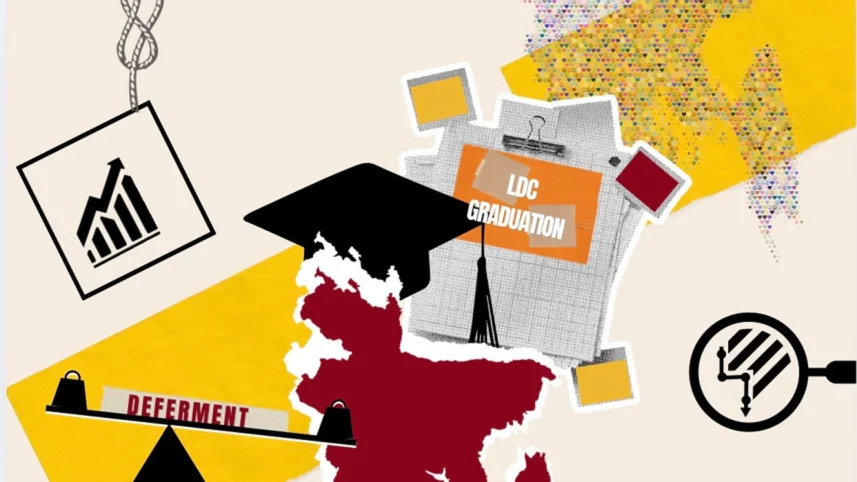
On October 29, 2026, the 81st session of the United Nations General Assembly approved a proposal to extend Bangladesh’s preparatory period for graduation from the Least Developed Country (LDC) category by another three years. Consequently, the graduation deadline has been rescheduled from November 24, 2026 to November 24, 2029.
While this decision provides Bangladesh with additional time to prepare its economy for the challenges of graduation, it also exposes the country's economic vulnerabilities and the shortcomings of its structural reforms.
The COVID-19 pandemic, the repercussions of the Russia-Ukraine war, global economic instability, high inflation, pressure on foreign exchange reserves, and domestic political and financial challenges have undoubtedly hindered Bangladesh's graduation preparations.
However, a critical question remains: how effectively has the country addressed these challenges over the past few years?
Economic development cannot be measured solely through per capita income or improvements in a few macroeconomic indicators. Economic stability, institutional capacity, employment generation, productivity, and the ability to remain competitive in international markets are equally important indicators of sustainable development.
Following graduation from the LDC category, Bangladesh will face the risk of losing various duty-free and preferential trade benefits currently available in international markets. The ready-made garments (RMG) industry, which accounts for the largest share of the country's export earnings, may face increased competition and potential tariff pressures in global markets.
Similarly, changes may occur in access to concessional external financing, development assistance, and certain preferential trade arrangements.
However, Bangladesh's export structure remains heavily concentrated in a limited number of products. Moreover, irregularities in the banking sector, a high volume of non-performing loans, sluggish investment, weak revenue mobilisation, and shortages of skilled human resources continue to undermine the economy's long-term competitiveness.
Under these circumstances, merely fulfilling the formal criteria for graduation is not enough. The real priority should be to build a strong and resilient economic foundation capable of competing in international markets in the post-graduation period.
Therefore, the decision to defer LDC graduation should not be celebrated as a national achievement; rather, it should be viewed as an important opportunity to address the country's existing economic weaknesses.
Over the next three years, Bangladesh must make tangible progress in ensuring good governance in the banking sector, curbing corruption and irregularities, increasing the tax-to-GDP ratio, improving the investment climate, diversifying export products, promoting technology-driven industrialisation, and developing a skilled workforce.
Greater emphasis should also be placed on the development of small and medium-sized enterprises (SMEs) and the creation of new employment opportunities. Most importantly, these reforms must not remain confined to policy statements or official documents; they must translate into measurable improvements in the real economy.
The year 2029 is not a magical solution. Without meaningful reforms and adequate preparation, Bangladesh may find itself confronting the same economic challenges even then. Ultimately, the country's economic future will depend not on how much additional time it has secured, but on how effectively it utilises this extended preparation period.
The writer is a professor of economics at Dhaka University and executive director at SANEM.
Selim Raihan
On October 29, 2026, the 81st session of the United Nations General Assembly approved a proposal to extend Bangladesh’s preparatory period for graduation from the Least Developed Country (LDC) category by another three years. Consequently, the graduation deadline has been rescheduled from November 24, 2026 to November 24, 2029.
While this decision provides Bangladesh with additional time to prepare its economy for the challenges of graduation, it also exposes the country's economic vulnerabilities and the shortcomings of its structural reforms.
The COVID-19 pandemic, the repercussions of the Russia-Ukraine war, global economic instability, high inflation, pressure on foreign exchange reserves, and domestic political and financial challenges have undoubtedly hindered Bangladesh's graduation preparations.
However, a critical question remains: how effectively has the country addressed these challenges over the past few years?
Economic development cannot be measured solely through per capita income or improvements in a few macroeconomic indicators. Economic stability, institutional capacity, employment generation, productivity, and the ability to remain competitive in international markets are equally important indicators of sustainable development.
Following graduation from the LDC category, Bangladesh will face the risk of losing various duty-free and preferential trade benefits currently available in international markets. The ready-made garments (RMG) industry, which accounts for the largest share of the country's export earnings, may face increased competition and potential tariff pressures in global markets.
Similarly, changes may occur in access to concessional external financing, development assistance, and certain preferential trade arrangements.
However, Bangladesh's export structure remains heavily concentrated in a limited number of products. Moreover, irregularities in the banking sector, a high volume of non-performing loans, sluggish investment, weak revenue mobilisation, and shortages of skilled human resources continue to undermine the economy's long-term competitiveness.
Under these circumstances, merely fulfilling the formal criteria for graduation is not enough. The real priority should be to build a strong and resilient economic foundation capable of competing in international markets in the post-graduation period.
Therefore, the decision to defer LDC graduation should not be celebrated as a national achievement; rather, it should be viewed as an important opportunity to address the country's existing economic weaknesses.
Over the next three years, Bangladesh must make tangible progress in ensuring good governance in the banking sector, curbing corruption and irregularities, increasing the tax-to-GDP ratio, improving the investment climate, diversifying export products, promoting technology-driven industrialisation, and developing a skilled workforce.
Greater emphasis should also be placed on the development of small and medium-sized enterprises (SMEs) and the creation of new employment opportunities. Most importantly, these reforms must not remain confined to policy statements or official documents; they must translate into measurable improvements in the real economy.
The year 2029 is not a magical solution. Without meaningful reforms and adequate preparation, Bangladesh may find itself confronting the same economic challenges even then. Ultimately, the country's economic future will depend not on how much additional time it has secured, but on how effectively it utilises this extended preparation period.
The writer is a professor of economics at Dhaka University and executive director at SANEM.
