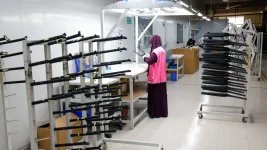
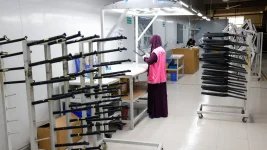
Prime Machineries is an example of medium sized companies who make bespoke machinery targeted toward shoe Industries and other sectors like Melamine cookware. They have effectively substituted imports of machineries for non-automated sectors like these.
Bangladesh Cable Industry was founded sixty plus years ago and has continued to forge ahead beyond various types of Home wiring and ACSR power cable products, they now produce advanced telecom cable products in copper as well as glass fiber (fiber optics cable). It was originally a govt. sector undertaking and remains so today.
Bangladesh Cable Industry was founded sixty plus years ago and has continued to forge ahead beyond various types of Home wiring and ACSR power cable products, they now produce advanced telecom cable products in copper as well as glass fiber (fiber optics cable). It was originally a govt. sector undertaking and remains so today.
We should invite private investment in this sector massively. Only one public industry is not enough to meet the local demand let alone exporting to other countries. Can't we produce raw materials for this industry locally? If we can, it will save us huge foreign currency.
In the bustling heart of Gazipur's Sreepur Upazilla, Alpha Carbon Technology Limited hums with activity. Here, a 20-year-old woman, Suraiya, meticulously assembles carbon fiber pieces for $2000 Bicycles by hand in an intricate process that requires her to arrange 268 individual pieces with precision and focus without the aid of machinery. Once again, Bangladesh is the pioneering entrant in this Bike export light engineering sector, as seen two decades earlier with Chromoly aluminum alloy bike exports.
Suraiya is among the 365 workers, predominantly women, who make carbon fiber components for bicycle frames, forks, and seat posts.
Working under the guidance of around two dozen technicians from China and Taiwan, they assemble pre-cut carbon sheets with precision in every step of the process.
These efforts represent a notable milestone for Bangladesh as it becomes the pioneering South Asian nation to produce high-value carbon components for bicycles.
A single carbon fibre bicycle frame commands a price of around $200, equivalent to the export value of 166 T-shirts priced at $1.2 each. In contrast, a steel frame costs only $20, while aluminum frames range from $30 to $40.
The factory, established through a collaboration between Meghna Group, the largest bicycle manufacturer and exporter in Bangladesh, and partners from Germany and Taiwan, currently operates with a production capacity of 50,000 frames, 100,000 forks, and 240,000 seat posts annually.
Demand rising for carbon frames
With export demands on the rise, Alpha Carbon Technology Ltd has decided to expand the factory's capabilities to meet the growing orders since the start of its commercial production early last year.
"We will double our frame production capacity to 100,000 units by July next year, driven by an increase of new orders," said Javed Hossain Khan, general manager of the company.
Photo: Syed Zakir Hossain
Javed expressed confidence in the company's future export prospects, citing successful product testing in key markets such as Germany, Sweden, and the UK.
Meghna, in a joint venture, is pioneering the manufacture of carbon fiber bicycle components for export — a strategic move poised to help Bangladesh diversify its export base reducing its heavy dependence on ready-made garments.
The global carbon fiber bike market, which remains relatively modest at around $3 billion in 2023 in stark contrast to the traditional bicycle market of over $80 billion, is expanding rapidly due to its remarkable attributes, including durability, lightweight construction, superior strength and corrosion resistance.
One of the two dozen highly skilled Chinese and Taiwanese technicians, experts in crafting carbon fiber bicycle components, is mentoring a local worker at Alpha Carbon Technology Limited factory in Sreepur upazila of Gazipur. The photo was taken recently.
One of the two dozen highly skilled Chinese and Taiwanese technicians, experts in crafting carbon fiber bicycle components, is mentoring a local worker at Alpha Carbon Technology Limited factory in Sreepur upazila of Gazipur. The photo was taken recently.
Moreover, consumers in the Western markets are increasingly favoring eco-friendly carbon fiber bicycles over aluminum or steel alternatives.
Will diversify country's export basket
Mizanur Rahman, chairman of Meghna Group, emphasized the strategic significance of introducing this technology to Bangladesh. "The goal is to diversify the country's export opportunities, especially amidst a decline in traditional bicycle sales, notably in crucial markets like the European Union and the UK throughout 2023," he said.
According to data from the Export Promotion Bureau, Bangladesh's bicycle exports totaled only $53.87 million during July-February of the current fiscal year, marking a steep decline of nearly 45% from the $97.50 million recorded for the same period a year earlier.
"We will not be able to boost our exports solely on low-end products after graduating from the LDC status in 2026. We must pivot towards producing high-end goods for global markets," Mizanur told TBS.
A row of carbon fiber frames for high-end bicycles can be seen at Alpha Carbon Technology Limited in Boromi, Sreepur upazila of Gazipur.
As an example, he cited Japan's evolution from garment manufacturing, a position akin to Bangladesh's current status, toward high-end manufacturing sectors over time. He anticipated that the apparel production currently dominated by Bangladesh might eventually shift to African nations.
"As part of this strategy, we have made investments in the production of carbon fiber components for bicycles. We are currently manufacturing three key components, but our next step is to introduce carbon fiber handles. Following that, we have plans to export bicycles entirely crafted from carbon fiber," Mizanur said.
"The export value of a carbon fiber bicycle starts at no less than $1,000, with retail prices often exceeding $2,000 per unit. With government support, Alpha Carbon could potentially export at least $100 million worth of carbon fibre bicycle products per year," he said.
Photo: Syed Zakir Hossain
"However, achieving this goal will not be without challenges. The company requires government assistance, primarily due to the substantial 60% import duty on the essential raw material, carbon fibre, imported from Japan," Mizanur said.
"Additionally, the lack of a consistent power supply presents a significant hurdle. Finally, acquiring a bond licence is essential for Alpha to sustain competitiveness in the global export market," said the Meghna Group chairman, calling for a 10-15% government incentive over the next three years to enhance competitiveness with manufacturers from other countries.
"We do not want incentives for years or decades. We will achieve competitiveness as a carbon fibre component manufacturer within a few years," he said.
Bond facility will help
About the bond license, Md Luthful Bari, chief operating officer of Alpha Carbon, said they need the licence as it will enable them to import duty-free raw materials and machinery. Also, as per the Customs Act 1969, 100% of export-oriented businesses are eligible to get bond facilities.
Bond licenses, particularly for industries like garments and textiles, have been instrumental in fostering industrial development and significantly contributing to the economic growth of the country.
Bari also emphasized the importance of uninterrupted power supply, saying that the lack of quality power could potentially damage their machinery and products.
Photo: Syed Zakir Hossain
Photo: Syed Zakir Hossain
What are carbon fibre bikes and who buys them?
A carbon fibre bike is a bicycle constructed primarily using carbon fibre sheets, also referred to as prepreg material, which is precisely cut into specific shapes and sizes according to the design of the frame, fork, seat post or wheelset.
These bikes are predominantly utilized in high-end racing applications. Common types of carbon fiber bicycles include road bikes, mountain bikes, city bikes, and more.
The demand for carbon fiber bikes is particularly high among athletes, with road bikes being especially favored in Europe and North America — the main markets for this type of bicycle. The cost of manufacturing such bikes is anticipated to decrease, potentially leading to a shift in major markets towards countries like China and other developing nations.
Which countries make components for carbon fiber bikes
Several countries specialize in manufacturing components for carbon fiber bikes. Taiwan stands out as a leading producer, renowned for its advanced manufacturing capabilities and expertise in carbon fiber technology.
China also plays a significant role, with numerous factories catering to both domestic and international bicycle brands.
Among the EU countries, Italy boasts a long tradition of bicycle manufacturing and is esteemed for its craftsmanship and innovation in carbon fibre technology. Also, Germany manufactures this kind of bicycle as it is known for its engineering prowess.
Bangladesh is now one of the half-a-dozen countries globally to specialize in producing these ultra high tech products.
Photo: Syed Zakir Hossain
In the United States, particularly in states like California and Colorado, companies focus on high-performance carbon components for various types of bikes.
While Japan, though not as prominent, excels in precision engineering and high-quality standards. These countries collectively contribute to the global supply chain for carbon fiber bike components, meeting the demands of cyclists worldwide.
Carbon fiber parts of bicycles are now being manufactured in Bangladesh. Bicycle frames, forks and seat posts are being manufactured at the Alpha Carbon Technology factory established at Barmi in Sreepur Upazila of Gazipur. Which is being exported to various European countries including Germany.
Bangladesh is poised to significantly increase its footprint in the global engineering and light engineering products market, currently valued at a staggering US $7 trillion - of which the country’s contribution amounts to less than 1% at present. Industry leaders rather bullishly believe th
thefinancialexpress.com.bd
Light engineering expo, Bangladesh aims to export $100b in $7t global market
UNB
Published :
May 27, 2025 20:35
Updated :
May 27, 2025 20:35
Bangladesh is poised to significantly increase its footprint in the global engineering and light engineering products market, currently valued at a staggering US $7 trillion - of which the country’s contribution amounts to less than 1% at present.
Industry leaders rather bullishly believe that with adequate policy support, investment, and infrastructure development, Bangladesh could export up to $100 billion worth of engineering products.
This optimistic outlook was shared by Md. Abdur Razzaque, President of the Bangladesh Engineering Industry Owners’ Association (BEIOA), during a press conference held on Tuesday at the Economic Reporters Forum Auditorium in Dhaka.
The press conference announced the upcoming Bangladesh Light Engineering Expo 2025, organized by BEIOA in collaboration with the Export Competitiveness for Jobs (EC4J) project under the Ministry of Commerce.
The domestic market for engineering products in Bangladesh is approximately Tk40,000 crore, with local industries fulfilling up to 50 percent of the demand, leaving the remainder to imports.
BEIOA president Razzaque highlighted the light engineering sector’s substantial contribution to the national economy, employing over 3 lakh people and contributing nearly 3 percent to the country’s GDP. The sector’s annual exports exceed $795 million, playing a crucial role in economic diversification and job creation.
The Bangladesh Light Engineering Expo 2025 is scheduled for May 29 and May 30 at the Shahid Abu Sayed International Convention Center, Shahbagh, Dhaka. The two-day event will feature leading domestic light engineering companies showcasing their latest technologies, components, and innovative products. Participating firms will have the opportunity to present their goods and services, connecting with new buyers and potential investors.
Selected companies will exhibit products such as dye and mould, industrial parts, agricultural equipment, metal casting, and electric equipment.
Razzaque emphasized that the expo serves as a platform for BEIOA to seek government support for modernizing domestic industries, facilitating technology transfer, improving product quality, and expanding exports. He urged the government to provide incentives comparable to those offered by competing nations like Vietnam, China, and India to enhance the light engineering sector’s global competitiveness and sustainability.
Key requests to the government include establishing compliance-enabled industrial zones for light engineering products, reducing customs duties on raw materials, and providing cash incentives and priority access to bank loans.
He also stressed the need for technology transfer, modern design development, and necessary training for technical excellence. Furthermore, Razzaque called for a simple and effective patent registration system to protect locally manufactured components and designs, and appealed for training and incentives to increase employment opportunities for women and youth.
Responding to journalists’ questions, Razzaque confirmed that the expo will feature 44 stalls from 27 domestic companies.
Md. Abdur Rahman Khan, EC4J Project Director, stated that the light engineering sector is one of four sectors that can closely compete with the readymade garment industry.
He assured that the government is working to meet the demands of the sector to facilitate further improvement.
Khan highlighted the expo as a crucial platform to connect manufacturers, importers, and buyers, emphasizing that showcasing Bangladesh’s potential will help reduce import dependency and accelerate exports.

 Bangladesh Defense