Bangladesh Defense
Saif
Senior Member
- Jan 24, 2024
- 21,704
- 9,794
- Nation

- Residence
- Axis Group


There is estimation of remittances, but where is the account of migrants' hardships?
Approximately ten million Bangladeshi citizens reside and work in various countries around the world, making Bangladesh the sixth largest source country for international migrants globally (IOM, 2025). According to the Bangladesh Bank, expatriates sent USD 35. 56 billion in remittances through...
 en.prothomalo.com
There is estimation of remittances, but where is the account of migrants' hardships?
Selim Reza
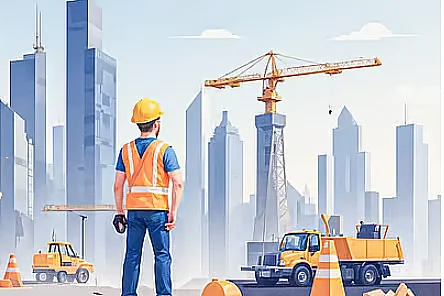
Approximately ten million Bangladeshi citizens reside and work in various countries around the world, making Bangladesh the sixth largest source country for international migrants globally (IOM, 2025).
According to the Bangladesh Bank, expatriates sent USD 35. 56 billion in remittances through legal channels for the fiscal year 2025-26, the highest in the country's history and 17. 3 per cent more than the previous fiscal year. According to the World Bank, Bangladesh is currently the eighth largest remittance-receiving country in the world.
Expatriate income is one of the main pillars of Bangladesh's economy. In areas such as foreign exchange reserves, import expenditures, rural economy, and the livelihoods of millions of families, the contributions of expatriate workers are undeniable. Hence, they are referred to as ''remittance warriors. '' The state honours their contributions and reflects on the money sent by them in its development statistics.
But how much of the story of the person behind these numbers is told? Every dollar earned under harsh conditions like a scorching desert, dusty construction sites, or long shifts in factories is tied to isolation, loneliness, mental stress, and numerous personal sacrifices.
We count the amount of remittance, but we rarely account for the human cost behind it. Migration's true story is not just about the economy; it's also about people's lives, relationships, and sacrifices.
The human cost beneath remittance
In international migration research, a significant concept is the ''Social Cost of Migration." Migration doesn't just increase income; it deeply affects family, social relationships, gender roles, child-rearing, and mental health. Migration researcher Hein De Haas has shown that migration cannot be seen solely as a development success or crisis; it is a reality of both opportunities and sacrifices.
Similarly, Stephen Castles opines that migration is never just about a person moving from one country to another; it changes relationships with family, society, culture, and the state.
In Bangladesh, this social cost is still limited in discussions. We keep track of remittances but very seldom consider the degradation, isolation, and mental stress experienced by the people behind that money.
The most brutal aspect of this reality is reflected in the statistics of migrant deaths. According to the Wage Earners' Welfare Board, the bodies of 4,813 Bangladeshi migrant workers were returned from abroad in 2024, the highest on record.
Between 2015 and 2024, the bodies of nearly 38,000 migrant workers were repatriated, most of whom were young workers under the age of 40. These statistics remind us that the true cost of migration is not only in remittances but also in lives, health, relationships, and dignity.
Behind the striking figures of remittances lie countless silent cries, numerous unfulfilled dreams, and countless stories of broken relationships. As part of recent social research, through conversations with expatriate Bangladeshis, I have learned about some challenging aspects of their personal, family, and social lives, which I present below.
When distance changes relationships
The most challenging reality of expatriate life is prolonged family separation. Many expatriate workers stay away from their families for 5, 7, or even 10 years; for many, returning home on holiday once a year is not possible. This extended absence gradually changes the family's emotional bonds.
Children grow up without their father's presence, wives carry most household responsibilities alone, and during the illness of elderly parents, the son's presence is only on the phone. Important moments in life are seen on video calls but cannot be felt in touch.
Many families handle this reality with extraordinary resilience. However, in some cases, prolonged separation, lack of communication, mental solitude, and social pressure weaken relationships. Distrust builds in marriages, third-party interference occurs, and sometimes new relationships emerge.
Viewing these incidents only as personal or moral failures can obscure the reality. They are often the cumulative results of the prolonged absence of the migrant worker, mental stress, poor communication, and lack of social support, which sometimes make the family vulnerable.
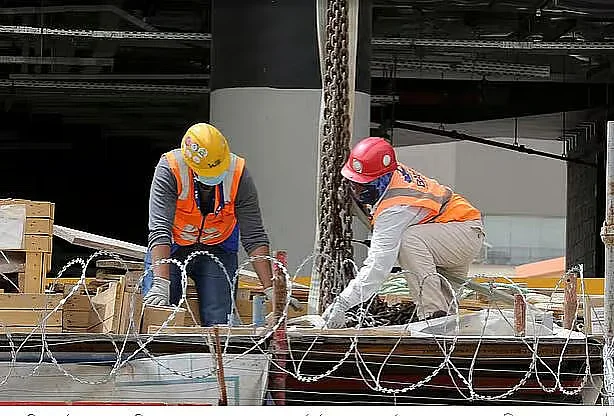
We have counted remittances for years; now it's time to account for the person behind the remittances.Photo: Reuters
When a father becomes just a source of money
Sociologists have long been saying that a father's presence is as essential as money for a child's healthy development. But many expatriate fathers have children who grow up without their father's proximity. They know their father sends money, but there is no daily relationship, memory, or emotional bond formed with him.
As a result, for many, the father gradually becomes more of a source of money than a guardian. Children know little about their father's hardships, sacrifices, and struggles. If any demand is not met, they become angry, yet they don't understand the hard work their father endures every day to earn that money.
Even if regular remittance is possible, being by the child's side during the first day of school, sleepless nights due to illness, adolescent crises, or critical life moments isn't feasible. This absence gradually changes the language of relationship—many children love their father but don't genuinely know him.
This emotional distance also affects the family. Father's direct role in the child's education, moral education, friendships, and social behaviour becomes limited. Consequently, in many cases, the practice of discipline, guidance, and values weakens. Therefore, it's not just a family issue; it's a social reality that can have long-term effects on the mental and moral development of future generations.
Burdened by the weight of endless expectations
In Bangladesh, many still perceive abroad as a place of endless wealth. Therefore, a family's expectations from an expatriate worker's income are endless—building a house, buying land, investing in a business, children's education, relative's treatment, or marriage expenses—all seem to be his sole responsibility. But reality is different.
Most expatriate workers live a hard life with limited income. Many live crammed together in small rooms, work long hours in harsh weather, and minimize their needs to send more money to their families. Sometimes their own treatment, nutritious food, or even adequate rest remains beyond reach. Losing a job abroad, delayed salaries, or falling ill is also part of their reality.
The problem starts when love and responsibility turn into a sense of entitlement. The expatriate sends money with dreams of building the family's future, but in many cases, that money is seen not as an expression of love but as an obligatory duty. As a result, any delay leads to complaints, resentment, or pressure, but very few think—perhaps work was less that month, salary was delayed, or he himself was ill. Excessive expectations, therefore, create not only economic but also deep mental stress on an expatriate.
we must ask ourselves a question—how much are we taking from expatriates, and how much are we giving back to them? An expatriate is not just a source of remittance; they are a human being. Just as their labour has value, so do their feelings, relationships, and lives. We have counted remittances for years; now, it's time to account for the person behind the remittances. Because a country's true wealth is not foreign currency—it's its people.
Disputes over wealth increase along with property
A large portion of remittances are invested in purchasing land or building houses. But the biggest weakness of that property is that its owner is often not in the country. In the absence of the owner, many issues arise—land grabbing, forgery of documents, boundary disputes, inheritance conflicts, and lawsuits with relatives. The most painful fact is that often, the opponent isn't a stranger but a close relative. Sometimes it's a brother, sometimes an uncle or a cousin, sometimes a distant relative—those most trusted become the ones engaged in legal battles.
An expatriate then fights two wars simultaneously—one in the workplace abroad, the other in the court of their birthplace. Managing court cases from abroad, maintaining contact with lawyers, or seeking assistance from local administration is incredibly difficult. As a result, uncertainty builds around property purchased with years of hard-earned money. Many expatriates return home to find that the land for which they spent the most beautiful time of their life abroad now becomes a source of family hostility.
Invisible mental stress
We rarely talk about the mental health of expatriate workers. Many expatriates can't express their hardships to anyone. They don't want to worry their families, and there's no scope to express personal crises at work. Long solitude, family problems, worries about children's future, property disputes, and social isolation push many toward deep depression. Some can't express their sufferings to anyone for years because there's a belief—they are abroad, so they must be well. Gradually, anxiety, depression, insomnia, lack of self-esteem, or feelings of isolation become their constant companions.
In reality, many expatriates work daily with mental distress. Behind their smiles, deep depression is hidden. Studies by international labour and migration organisations have shown that anxiety, chronic mental stress, and social isolation rates among migrant workers are significantly higher than the general population. But in South Asian countries, it hasn't yet become central to policymaking.
Where is the solution?
Sending a person abroad is not the end of the state's responsibility; it is rather the beginning. The contributions of expatriates to Bangladesh's development will be truly meaningful when, along with remittances, their family bonds, social status, and mental well-being are also secured. The crisis of expatriates is not only personal or familial; it is a national policy question. Ensuring the family and social security of those whose contributions are so important to the country's economy is also the state's responsibility.
Therefore, it is crucial to include financial planning, family communication, and mental well-being in pre-departure training for outgoing workers, alongside language and professional skills. Similarly, community-based awareness campaigns on financial awareness, marital relationships, child-rearing, and shared responsibilities should be initiated for families back home. Additionally, swift resolution of property-related disputes, accessible legal assistance, digital services, and mental health services need to be strengthened.
Finally, we must ask ourselves a question—how much are we taking from expatriates, and how much are we giving back to them? An expatriate is not just a source of remittance; they are a human being. Just as their labour has value, so do their feelings, relationships, and lives. We have counted remittances for years; now, it's time to account for the person behind the remittances. Because a country's true wealth is not foreign currency—it's its people.
#Dr. Selim Reza is an associate professor and coordinator, Center for Migration Studies, North South University
Selim Reza
Approximately ten million Bangladeshi citizens reside and work in various countries around the world, making Bangladesh the sixth largest source country for international migrants globally (IOM, 2025).
According to the Bangladesh Bank, expatriates sent USD 35. 56 billion in remittances through legal channels for the fiscal year 2025-26, the highest in the country's history and 17. 3 per cent more than the previous fiscal year. According to the World Bank, Bangladesh is currently the eighth largest remittance-receiving country in the world.
Expatriate income is one of the main pillars of Bangladesh's economy. In areas such as foreign exchange reserves, import expenditures, rural economy, and the livelihoods of millions of families, the contributions of expatriate workers are undeniable. Hence, they are referred to as ''remittance warriors. '' The state honours their contributions and reflects on the money sent by them in its development statistics.
But how much of the story of the person behind these numbers is told? Every dollar earned under harsh conditions like a scorching desert, dusty construction sites, or long shifts in factories is tied to isolation, loneliness, mental stress, and numerous personal sacrifices.
We count the amount of remittance, but we rarely account for the human cost behind it. Migration's true story is not just about the economy; it's also about people's lives, relationships, and sacrifices.
The human cost beneath remittance
In international migration research, a significant concept is the ''Social Cost of Migration." Migration doesn't just increase income; it deeply affects family, social relationships, gender roles, child-rearing, and mental health. Migration researcher Hein De Haas has shown that migration cannot be seen solely as a development success or crisis; it is a reality of both opportunities and sacrifices.
Similarly, Stephen Castles opines that migration is never just about a person moving from one country to another; it changes relationships with family, society, culture, and the state.
In Bangladesh, this social cost is still limited in discussions. We keep track of remittances but very seldom consider the degradation, isolation, and mental stress experienced by the people behind that money.
The most brutal aspect of this reality is reflected in the statistics of migrant deaths. According to the Wage Earners' Welfare Board, the bodies of 4,813 Bangladeshi migrant workers were returned from abroad in 2024, the highest on record.
Between 2015 and 2024, the bodies of nearly 38,000 migrant workers were repatriated, most of whom were young workers under the age of 40. These statistics remind us that the true cost of migration is not only in remittances but also in lives, health, relationships, and dignity.
Behind the striking figures of remittances lie countless silent cries, numerous unfulfilled dreams, and countless stories of broken relationships. As part of recent social research, through conversations with expatriate Bangladeshis, I have learned about some challenging aspects of their personal, family, and social lives, which I present below.
When distance changes relationships
The most challenging reality of expatriate life is prolonged family separation. Many expatriate workers stay away from their families for 5, 7, or even 10 years; for many, returning home on holiday once a year is not possible. This extended absence gradually changes the family's emotional bonds.
Children grow up without their father's presence, wives carry most household responsibilities alone, and during the illness of elderly parents, the son's presence is only on the phone. Important moments in life are seen on video calls but cannot be felt in touch.
Many families handle this reality with extraordinary resilience. However, in some cases, prolonged separation, lack of communication, mental solitude, and social pressure weaken relationships. Distrust builds in marriages, third-party interference occurs, and sometimes new relationships emerge.
Viewing these incidents only as personal or moral failures can obscure the reality. They are often the cumulative results of the prolonged absence of the migrant worker, mental stress, poor communication, and lack of social support, which sometimes make the family vulnerable.
We have counted remittances for years; now it's time to account for the person behind the remittances.Photo: Reuters
When a father becomes just a source of money
Sociologists have long been saying that a father's presence is as essential as money for a child's healthy development. But many expatriate fathers have children who grow up without their father's proximity. They know their father sends money, but there is no daily relationship, memory, or emotional bond formed with him.
As a result, for many, the father gradually becomes more of a source of money than a guardian. Children know little about their father's hardships, sacrifices, and struggles. If any demand is not met, they become angry, yet they don't understand the hard work their father endures every day to earn that money.
Even if regular remittance is possible, being by the child's side during the first day of school, sleepless nights due to illness, adolescent crises, or critical life moments isn't feasible. This absence gradually changes the language of relationship—many children love their father but don't genuinely know him.
This emotional distance also affects the family. Father's direct role in the child's education, moral education, friendships, and social behaviour becomes limited. Consequently, in many cases, the practice of discipline, guidance, and values weakens. Therefore, it's not just a family issue; it's a social reality that can have long-term effects on the mental and moral development of future generations.
Burdened by the weight of endless expectations
In Bangladesh, many still perceive abroad as a place of endless wealth. Therefore, a family's expectations from an expatriate worker's income are endless—building a house, buying land, investing in a business, children's education, relative's treatment, or marriage expenses—all seem to be his sole responsibility. But reality is different.
Most expatriate workers live a hard life with limited income. Many live crammed together in small rooms, work long hours in harsh weather, and minimize their needs to send more money to their families. Sometimes their own treatment, nutritious food, or even adequate rest remains beyond reach. Losing a job abroad, delayed salaries, or falling ill is also part of their reality.
The problem starts when love and responsibility turn into a sense of entitlement. The expatriate sends money with dreams of building the family's future, but in many cases, that money is seen not as an expression of love but as an obligatory duty. As a result, any delay leads to complaints, resentment, or pressure, but very few think—perhaps work was less that month, salary was delayed, or he himself was ill. Excessive expectations, therefore, create not only economic but also deep mental stress on an expatriate.
we must ask ourselves a question—how much are we taking from expatriates, and how much are we giving back to them? An expatriate is not just a source of remittance; they are a human being. Just as their labour has value, so do their feelings, relationships, and lives. We have counted remittances for years; now, it's time to account for the person behind the remittances. Because a country's true wealth is not foreign currency—it's its people.
Disputes over wealth increase along with property
A large portion of remittances are invested in purchasing land or building houses. But the biggest weakness of that property is that its owner is often not in the country. In the absence of the owner, many issues arise—land grabbing, forgery of documents, boundary disputes, inheritance conflicts, and lawsuits with relatives. The most painful fact is that often, the opponent isn't a stranger but a close relative. Sometimes it's a brother, sometimes an uncle or a cousin, sometimes a distant relative—those most trusted become the ones engaged in legal battles.
An expatriate then fights two wars simultaneously—one in the workplace abroad, the other in the court of their birthplace. Managing court cases from abroad, maintaining contact with lawyers, or seeking assistance from local administration is incredibly difficult. As a result, uncertainty builds around property purchased with years of hard-earned money. Many expatriates return home to find that the land for which they spent the most beautiful time of their life abroad now becomes a source of family hostility.
Invisible mental stress
We rarely talk about the mental health of expatriate workers. Many expatriates can't express their hardships to anyone. They don't want to worry their families, and there's no scope to express personal crises at work. Long solitude, family problems, worries about children's future, property disputes, and social isolation push many toward deep depression. Some can't express their sufferings to anyone for years because there's a belief—they are abroad, so they must be well. Gradually, anxiety, depression, insomnia, lack of self-esteem, or feelings of isolation become their constant companions.
In reality, many expatriates work daily with mental distress. Behind their smiles, deep depression is hidden. Studies by international labour and migration organisations have shown that anxiety, chronic mental stress, and social isolation rates among migrant workers are significantly higher than the general population. But in South Asian countries, it hasn't yet become central to policymaking.
Where is the solution?
Sending a person abroad is not the end of the state's responsibility; it is rather the beginning. The contributions of expatriates to Bangladesh's development will be truly meaningful when, along with remittances, their family bonds, social status, and mental well-being are also secured. The crisis of expatriates is not only personal or familial; it is a national policy question. Ensuring the family and social security of those whose contributions are so important to the country's economy is also the state's responsibility.
Therefore, it is crucial to include financial planning, family communication, and mental well-being in pre-departure training for outgoing workers, alongside language and professional skills. Similarly, community-based awareness campaigns on financial awareness, marital relationships, child-rearing, and shared responsibilities should be initiated for families back home. Additionally, swift resolution of property-related disputes, accessible legal assistance, digital services, and mental health services need to be strengthened.
Finally, we must ask ourselves a question—how much are we taking from expatriates, and how much are we giving back to them? An expatriate is not just a source of remittance; they are a human being. Just as their labour has value, so do their feelings, relationships, and lives. We have counted remittances for years; now, it's time to account for the person behind the remittances. Because a country's true wealth is not foreign currency—it's its people.
#Dr. Selim Reza is an associate professor and coordinator, Center for Migration Studies, North South University