[🇧🇩] Manpower Export: Prospects and Challenges.

[🇧🇩] Manpower Export: Prospects and Challenges.
85
3K
More threads by Saif

G Bangladesh Defense

Bangladesh wants to send 1 crore workers abroad in 5 years. Is its skills system ready?

Nearly half of vocational graduates struggle to find suitable jobs, while an official says Bangladesh has only 55-60% of the capacity needed to meet its migration target

Star Online Report

1790639556786.webp

File Photo: Rashed Sumon

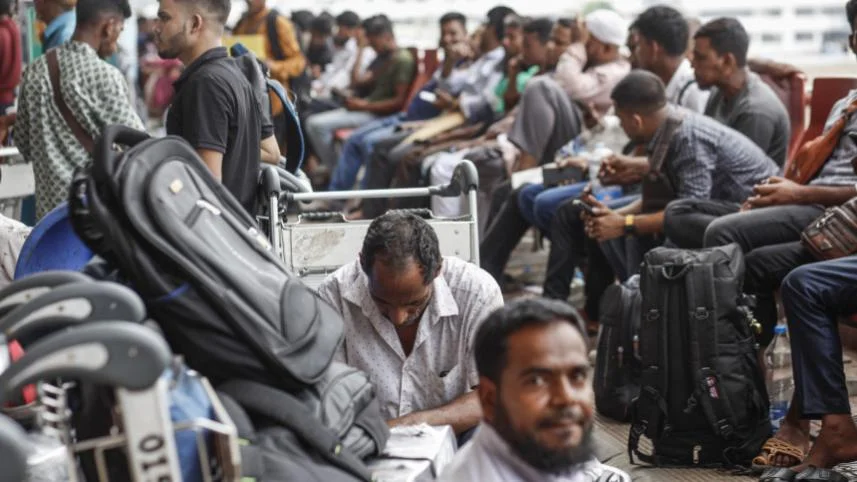
Bangladesh wants to send one crore workers abroad in five years, but nearly half of technical and vocational training graduates still struggle to find suitable jobs, while even government-issued skills certificates lack satisfactory recognition at home.

The gap between ambition and reality came under sharp focus at a national consultation, where officials and experts said Bangladesh is still training workers without sufficiently matching them to actual employer demand, recognised qualifications or safe recruitment pathways.

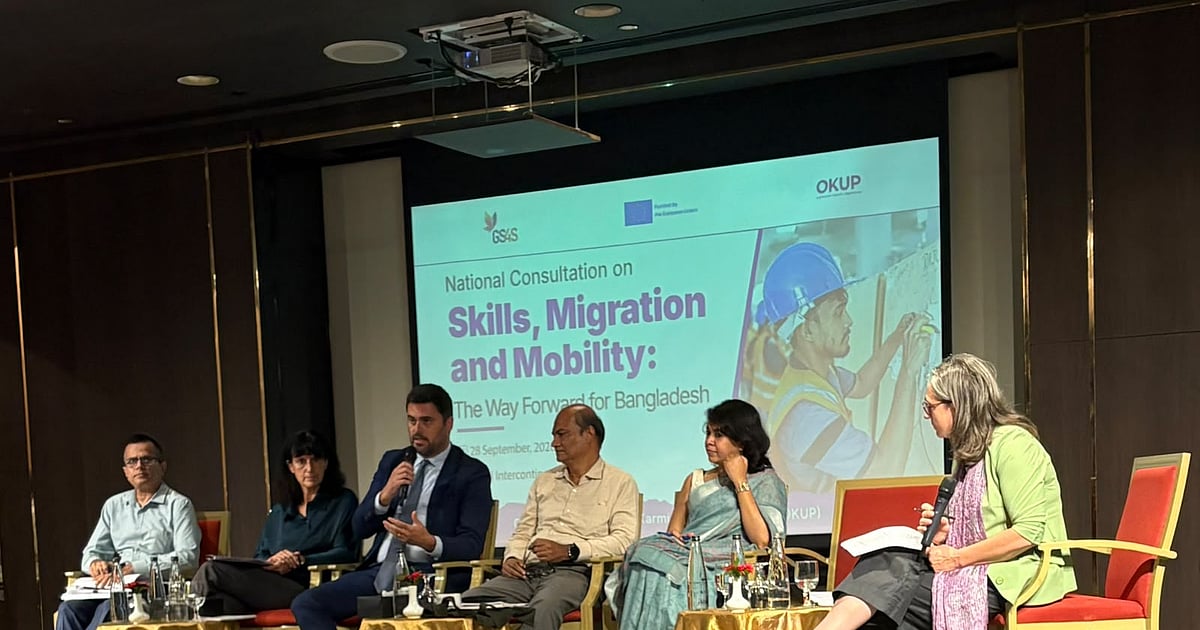
The event, “The National Consultation on Skills, Migration and Mobility: The Way Forward for Bangladesh” was held at a Dhaka hotel and organised by Ovibashi Karmi Unnayan Program (OKUP) under the EU-funded Global Strategy for Skills Migration and Development project, led by Radboud University in the Netherlands.

Government has set a target of sending one crore, or 10 million, people abroad over five years but Bangladesh currently has only 55-60 percent of the capacity needed to meet that target if it continues with business as usual, Ministry of Expatriates’ Welfare and Overseas Employment Additional Secretary Md Saiful Haque Chowdhury said while speaking at the event.

“We need to double our effort,” he added.

Md Rabiul Islam, member (Registration and Certification) and additional secretary at the National Skills Development Authority (NSDA), said while nearly seven lakh trainees have received NSDA certificates, recognition remains unsatisfactory even within Bangladesh.

“If it is not satisfactory domestically, then why will it be satisfactory abroad?” he said.

Rabiul said around 70 percent of NSDA certificate holders had found jobs either at home or abroad, while around 700 were working overseas.NSDA has around 2,300 registered skills training providers covering 369 occupations but only 18 officers to coordinate with 22 ministries and 36 agencies, he said.

Research presented by Urmi Jahan, research manager at OKUP, showed a wider gap between training and employment.

In 2023, Bangladesh had around 689,745 vocational graduates, while approximately 1.8 million young people received training. Yet around 45-47 percent of technical and vocational training graduates struggle to find suitable employment.

Around 13.8 million workers are affected by underemployment, while about 85 percent of jobs are in the informal sector, she said.

“The issue is not only how many people we train, but also what skills we provide, who needs those skills, and where the jobs are.”

The research identified weak links between training institutes and industries, limited practical and industry-relevant training, outdated curricula and equipment, weak data on what happens to graduates, and insufficient integration of digital and green technologies.

Rahnuma Salam Khan, national programme manager at the ILO, said skills mismatch should not be treated as a standalone problem.

“It is part of the overall labour migration governance problem,” she said.

She said more than 70 percent of Bangladesh’s overseas employment has historically remained in low-skilled categories despite years of investment in training.

Rahnuma also linked high migration costs to weaknesses in governance and said workers with less education and awareness were easier to exploit.

Md Nurul Islam, former director of Bureau of Manpower Employment and Training (BMET), said enrolment in technical and vocational education had risen from below one percent in 2008 to more than 20 percent in 2025, but training was still not sufficiently aligned with industry or destination-country demand.

BMET has 110 training centres, he said, but their programmes remain poorly connected to actual market needs.

Md Sakawat Ali, principal of Dhaka Technical Teachers Training Institute, said Bangladesh also needed better labour-market information, stronger language training and agreements with destination countries so that Bangladeshi qualifications are recognised abroad.

“If a market needs an automobile technician, we are delivering skills in construction or tiles… there is a mismatch,” he said.

Giuseppe Di Giovanni, migration expert at the Embassy of Italy, highlighted another contradiction.

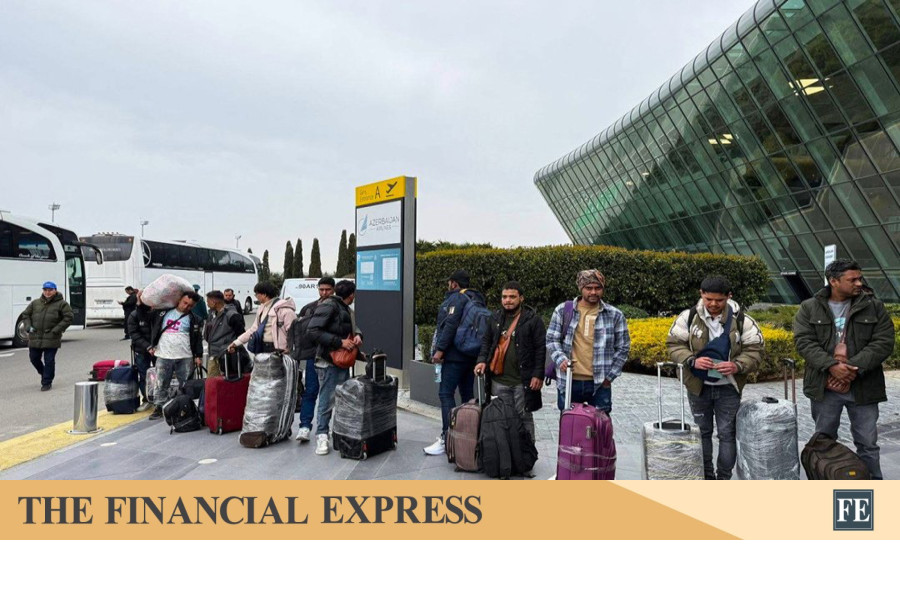
Italy issued more than 20,000 work visas to Bangladeshis in 2025 and 2026, but almost 20,000 Bangladeshis also arrived irregularly through the Libya route over roughly the same period, he said.

He said an Italian work visa costs only €65, while Bangladeshi migrants may pay intermediaries $5,000, $6,000, $8,000, $10,000 or even $20,000.

Laura Cartanya Llach, first secretary at the EU Delegation to Bangladesh, acknowledged that training under the EU-Bangladesh Talent Partnership has not yet translated into placement.

She said the EU has invested almost €80 million in budget support for technical and vocational education reforms.

The consultation focused on precisely these gaps -- training that does not always match labour-market demand, qualifications that are not sufficiently recognised, weak recruitment links and shortcomings in migration governance.​
 

Best environment prevailing to go to Italy through the legal process: Expert

Prothom Alo English Desk

1790811272939.webp


Best environment prevailing to go to Italy through the legal process Collected

Giuseppe Di Giovanni, Migration Expert, Embassy of Italy, explicitly expressed his opinion and said that presently the best environment is prevailing to go to Italy on an employment visa through the legal process.

He made the disclosure at a national consultation on 'Skills, Migration and Mobility: The Way Forward for Bangladesh,' organised by the Ovibashi Karmi Unnayan Programme (OKUP) was held on 28 September 2026 at Hotel InterContinental, Dhaka, says a press release.

The consultation was part of OKUP’s engagement in the Global Strategy for Skills Migration and Development (GS4S), a Horizon Europe project led by Radboud University and funded by the European Union.

Very high-profile migration experts presented their thoughtful deliberations on the occasion.


Giuseppe Di Giovanni, therefore, pointed out why are the potential youth from Bangladesh highly exploited by traffickers to go to Italy in such risky and vulnerable illegal ways, spending Tk 2-3 million.

He disclosed with delight that Italy is going to recruit 1,50,000 skilled workers by next year, and Bangladesh is on the list of countries of origin.

He reiterated that the visa fee for Italy is only 65 Euro, but the migration cost is exorbitantly high in Bangladesh.

1790811314862.webp

Best environment prevailing to go to Italy through the legal process. Collected

Giuseppe Di Giovanni expressed his concerns about the undocumented migrants in Italy and mentioned that asylum seekers are abusing our legal process of migration.

He urged all the concerned ministries, departments, and aspirant potential migrants to avail the opportunity of the Talent Partnership Programme, which has been launched through a contract with Bangladesh in 2023. Through this programme, more skilled professionals can get employment in European Countries.

Among others, Prof. Tesseltje de Lange, Professor of Migration Law and Director of the Centre for Migration Law at Radboud University, Netherlands, and Elisa Fornalé, Principal Investigator at the University of Bern, joined the consultation as distinguished panelists and delivered lectures.

The consultations suggested adopting policies to promote legal migration in Europe through strengthening Bangladesh’s approach to skills, migration, and mobility.

Laira Cartanya Llach, First Secretary, EU Delegation to Bangladesh, also called for action on the prospect of the Talent Partnership Programme.

Another panelist in the consultations, Md Nurul Islam, former director of the Bureau of Manpower, Employment and Training (BMET) emphasised strengthening the skills training ecosystem of Bangladesh to overcome the challenges to synchronise that with the demand of Europe.​
 
Отдых на природе у воды — отличный вариант для тех, кто хочет сменить городскую суету на свежий воздух, тишину и красивые пейзажи. Отдых на озере в палатке подойдёт для поездки с друзьями, семьёй или небольшой компанией. Можно расположиться рядом с берегом, готовить еду на костре, рыбачить, гулять и встречать рассветы. Спокойная атмосфера помогает отвлечься от повседневных дел и провести несколько дней на природе.
 

KSA labour market crisis: What are alternatives ahead?

Selim Reza

1792107134261.webp


The Middle East security crisis has exposed the deep vulnerabilities in Bangladesh's migration economy. The question now is not just how many workers can be sent abroad, but how secure their lives, investments, and futures are.

The attack on the Saudi Arabian airport, flight cancellations, stranded workers, and visa uncertainties are not just temporary travel disruptions, but warning signals for Bangladesh's migration economy. Saudi Arabia is the workplace for millions of Bangladeshis and a significant source of foreign exchange earnings. The instability there impacts Bangladesh's employment, rural economy, and national income.

According to a report from Prothom Alo, as of 12 October, job approvals for overseas employment have decreased by nearly 32 per cent compared to the same period last year, with a decrease of almost 46 per cent in Saudi Arabia. During the same period, a large number of Bangladeshi passengers faced disruptions at various Saudi airports due to security reasons.

This crisis cannot be solely blamed on the current security situation in Saudi Arabia. Rather, this situation reveals some long-standing policy failures that remain hidden during normal times through numbers. The migration economy of Bangladesh has grown, but has its risk management matured in the same way?

Bangladesh's success in foreign employment is usually judged by how many workers went abroad and how much remittance was received. But a fundamental question is ignored behind these calculations: if such a large portion of employment depends on just a few countries and one region, how sustainable is that success?

According to Prothom Alo's data, about 62 per cent of total remittances came from Saudi Arabia, the United Kingdom, the United Arab Emirates, Malaysia, and the United States in the first 11 months of the fiscal year 2025-26. Saudi Arabia holds special importance in this list. Changes in security, recruitment policies, or the labour market there will have repercussions on Bangladesh's employment and foreign exchange earnings.

This dependency was not created overnight. Sending workers to the Middle East has been easier for a long time; on the other hand, efforts to enter promising markets in Europe, East Asia, and others, like language education, skill development, certificate recognition, and establishing institutional relationships with employers, have progressed comparatively slowly. As a result, when opportunities for recruitment in Saudi Arabia increased, we felt relief, and when a crisis arose there, we became busy searching for alternatives.

This is not just a market failure; it's also a weakness in state planning.

Access to any country's labour market is never a permanent right. Saudi Arabia will also change its recruitment pattern following its economic transformation, labour policies, national employment programmes, and private sector demands.

For Bangladesh, it's important to anticipate those changes and adapt. However, one thing needs to be clear: the current security crisis does not mean that Saudi Arabia's labor market will permanently close. There might be a demand for foreign labour in the country's economic transformation and development projects. But just because there's demand doesn't guarantee that Bangladeshi workers will get jobs as before.

That's why Bangladesh's strategy should be to maintain opportunities in the Saudi market while reducing dependency on a single market.

The success of Bangladesh's migration is measured by the number of workers who went abroad and the remittances received. But where is the account of wages, contracts, security, and legal protection? When flights are canceled, workers unable to return to work face risks to their jobs and visas; when the journey of new workers is stalled, the burden of debt increases. Even if employment is disrupted due to conflict, the losses fall on the workers and their families. The redress for fraud, excessive recruitment costs, and wage deprivation is also complex.

Therefore, in bilateral discussions with Saudi Arabia, it's not just about increasing recruitment but ensuring the collection of arrears, contract implementation, safe working environments, legal assistance, and ensured return in times of crisis. Bangladesh should aim to not only export workers but also establish effective state representation in protecting their rights. The success of migration is not in the number of workers but in their protection and dignity.

The idea that the Saudi labour market will close for Bangladesh is not correct. However, the ''Saudi Vision 2030'' policy may change the type of opportunities in economic transformation. Even though demand may increase in construction, tourism, healthcare, and logistics, the importance of skills, experience, language proficiency, and technical qualifications in recruitment will increase.

At the same time, policies on Saudisation, recruitment costs, wages, and working conditions will affect the potential of foreign workers. Thus, the old strategy of sending a large number of general workers is not enough. The future will be determined by which professions will employ how many workers, with what qualifications, and at what wages. Bangladesh's preparation will be the key condition for surviving in competition.

Bangladesh has two paths ahead. Reliance on old recruitment and skill-based transformation. In the first path, the number of workers sent may increase, but the crisis and uncertainty will remain. In the second path, Bangladesh must develop skilled workers according to Saudi Arabia's demand in healthcare, technical work, tourism, maintenance, and technology-driven professions. For this, quality training, language education, recognised certification, and direct communication with employers are necessary.

Simultaneously, the real obstacles to entering alternative labour markets like Japan, South Korea, and Europe need to be removed. Diversity in labour markets and skill development should form the foundation of Bangladesh's long-term migration strategy.

What should the government do now to handle the crisis? The current crisis in Saudi Arabia must be viewed as both an urgent humanitarian situation and a long-term economic warning signal.

First, an urgent initiative should be taken to resolve visa, employment, arrears, and financial losses by listing workers stranded in Saudi Arabia, unable to return to work, and waiting to travel.

Secondly, the discussions with Saudi Arabia should not only include flights and recruitment but also ensure job legality, wages, compensation, legal assistance, and safe return.

Thirdly, investments in alternative labour markets, skill training, and language education need to be increased. Handling the crisis isn't just about bringing workers back but establishing a system so that in the next crisis, their fate isn't left to uncertainty.

Finally, the government needs to accept an uncomfortable truth: sending workers abroad is important for Bangladesh, but relying solely on sending workers will not provide a permanent solution to the employment problem. It's crucial to increase productive employment in the country, strengthen technical education, and equip the youth with skills that will be valuable both at home and abroad.

The current crisis in Saudi Arabia cannot be predicted when it will fully recover. The country's labour market may recover and new opportunities may arise. But the real question for Bangladesh is, will we take temporary measures when a crisis arises, or will we prepare ourselves before the crisis hits?

Therefore, the government faces two responsibilities—protecting those who are currently in jeopardy and establishing measures so that future workers do not face the same uncertainty and vulnerability.

# Dr Selim Reza is an associate professor and coordinator of the Centre for Migration Studies (CMS) at North South University.​
 

Migration for work abroad vs entrepreneurship at home

In recent public forums and news outlets, some prominent personalities have asked: why do young Bangladeshis spend family savings, borrow heavily, or sell inherited assets to secure employment abroad rather than invest those resources in domestic enterprises that could generate income and create jobs? The question deserves serious economic examination. The answer lies less in the availability of capital than in the institutional environment that determines its expected returns and risks. Households are not misjudging their options; they are reading the incentives correctly. The failure lies in the institutions that shape those incentives.Buy Maps

PRIVATE RATIONALITY, SOCIAL COST: Economics distinguishes between private and social returns. A household choosing between financing overseas employment and starting a business considers its own income, costs, and risks. Society has a further interest in the jobs, local purchases, and demand that a successful enterprise generates. Those wider benefits may exceed the owner's profit, yet the owner cannot capture them. Migration, too, yields benefits beyond the household: remittances, foreign exchange, and skills. The question, then, is not whether enterprise is always socially superior, but whether institutional distortions discourage enterprises whose social benefits exceed their private rewards.

This gap explains an apparent paradox: what is rational for the household may fall short of what is best for the nation. The remedy is not to condemn household decisions but to change the conditions under which they are made, so that private incentives and social benefits point in the same direction.

RISK-ADJUSTED RETURNS & OPPORTUNITY COST: Both paths involve uncertainty, but of different kinds. A migrant's earnings can be estimated from wages, living expenses, recruitment costs, and the length of employment, though recruitment may fail, contracts may go unfulfilled and months may be lost. An entrepreneur must estimate uncertain sales, operating costs, financing charges, and the chance of failure. Even when expected business profits are higher, the risk of losing the family's accumulated savings can make migration the better choice.

Opportunity cost sharpens the comparison. Money committed to one option cannot finance the other, and months spent building a customer base are months without alternative earnings, while rent, utilities, and loan installments fall due immediately. The relevant comparison is therefore between expected risk-adjusted net returns, including the cost of failure, and not between the sums spent on each path.

SIX TRAPS, ONE ENTREPRENEURIAL PENALTY: Six interlocking economic traps tilt that comparison toward migration for work. Although they operate through different channels, their cumulative effects create a self-reinforcing Poverty Loop that penalises domestic entrepreneurship.Read Economics

The Political Confrontation Trap creates uncertainty over policy, transport, and commercial activity. The Corruption Trap distorts access to licenses, credit, and public services, rewarding connections over merit. The Extortion Trap raises production, transportation, and distribution costs through payments businesses cannot avoid. These operate as an unofficial tax on enterprise, but unlike a statutory tax, its size and timing cannot be budgeted. The traps also feed one another: political uncertainty weakens enforcement, which lets corruption and extortion flourish, and extortion in turn erodes profitability and reinvestment. The result is an entrepreneurial penalty: a productive investment must earn enough to cover not only legitimate costs but also institutional risks that should not exist.

The fourth, the Capital Flight Trap, works through the exchange rate. Illicit transfers abroad drain domestic capital accumulation and add to demand for foreign currency, which, unless offset by other inflows, pushes the taka down. Depreciation raises the taka cost of imported machinery, energy, and raw materials, making domestic enterprise more expensive, while raising the taka value of foreign earnings and strengthening the pull to migrate. However, higher nominal earnings in taka do not necessarily translate into greater real purchasing power, since depreciation can fuel domestic inflation. The incentive to migrate may nevertheless strengthen when the expected real returns from overseas employment exceed the increasingly uncertain returns from domestic entrepreneurship.

The fifth is the High Inflation-High Interest Rate Trap. Political disruption, corruption, extortion, and depreciation raise costs that firms pass on to consumers. Persistent inflation invites tight monetary policy, and banks facing higher funding costs and default risk raise lending rates or ration credit. Entrepreneurs then face dear inputs, dear finance, and customers whose purchasing power is shrinking.

Banking distress deepens the problem. The World Bank reported in October 2026 that non-performing loans reached 33.2 percent of total loans in June, a sign of deep weakness in credit allocation. A capable entrepreneur without collateral or connections may be denied finance even when the business is sound.

The sixth is the Poverty Trap. Costly credit and uncertainty suppress investment; weak investment limits jobs and incomes; stagnant incomes weaken demand; and weak demand discourages new enterprise. Poverty feeds back into the cycle, because poor households cannot absorb business losses, pay for training, or seek legal remedy against extortion. Their children inherit not only limited savings but narrower opportunities. Poverty is thus both an outcome of weak entrepreneurship and a cause of its persistence.

Together these form a self-reinforcing Six-Trap Poverty Loop. Within it, migration becomes a strategy for escaping domestic risk, not necessarily a preference for living abroad, and it can look more attractive than enterprise even when enterprise might serve the nation better.

MIGRATION IS NOT CAPITAL LOST: Not all migration spending represents a loss to Bangladesh. Some circulates domestically, while remittances finance consumption, education, health care, housing, and investment, besides supplying foreign exchange for imports and external obligations. Returning migrants may establish businesses using their savings, acquired skills, and international experience. Thus, migration generates economic benefits that flow back home, although often with a delay and through indirect channels. These benefits, however, do not necessarily substitute for the employment, production, and local supply chains that a viable domestic enterprise can generate. Neither option is universally superior; their relative social returns depend on productivity, employment creation, remittances, risks, and the opportunity costs of alternative uses of resources.Bangladesh Investment Guide

Nor can every prospective migrant be presumed capable of becoming an entrepreneur. Entrepreneurship requires managerial ability, market knowledge, technical skills, risk tolerance, and sufficient demand for the products or services offered. Redirecting family savings toward enterprises without these prerequisites could expose vulnerable households to greater financial losses. The objective, therefore, is not to discourage migration but to remove the institutional and economic disadvantages that prevent domestic entrepreneurship from becoming a genuinely competitive alternative.

MAKING THE INCENTIVES CONVERGE: Breaking the Poverty Loop requires more than identifying the traps that discourage domestic entrepreneurship. It requires policies that systematically reduce the entrepreneurial penalty and make investment at home economically attractive. Affordable registration, transparent licensing, simplified taxes, enforceable contracts, protection from extortion, and prompt resolution of commercial disputes would lower the costs and risks of starting a business. Bank lending should follow commercial viability and repayment capacity rather than political influence, while accessible working-capital loans, reliable infrastructure, technical training, and market access would improve the prospects of first-time entrepreneurs.

However, the effectiveness of these reforms ultimately depends on institutional credibility and consistent enforcement. One-stop registration accomplishes little if unofficial payments remain unavoidable, while subsidised loans cannot sustain businesses squeezed by extortion and weak demand. Similarly, credible monetary management can help contain inflation, but it cannot independently repair institutional dysfunction. Efforts to curb illicit capital flight, strengthen banking governance, and stabilise foreign-exchange conditions must therefore complement broader institutional reforms.

Ultimately, the objective should not be to favour migration over entrepreneurship, or entrepreneurship over migration, but to create an economic environment in which individuals can make choices based on genuine opportunities rather than institutional distortions. Overseas employment, salaried work at home, and self-employment should all remain viable and dignified options for Bangladeshis. Appeals to patriotism cannot substitute for economic incentives, and families should not be asked to sacrifice their security for benefits that accrue to others. The challenge is to make investing family capital at home profitable, predictable, and safe. Until the Poverty Loop is broken, urging prospective migrants to redirect their savings will not change their economic calculations. Capital follows opportunity, and opportunity depends on institutions. Rebuilding those institutions is the bridge between household rationality and national prosperity.Read Economics

The writer is professor emeritus of economics at Eastern Michigan University, USA, and a former physicist and nuclear engineer at BAEC.​
 
Back
Top