Bangladesh Defense
Saif
Senior Member
- Jan 24, 2024
- 21,724
- 9,794
- Nation

- Residence
- Axis Group


Bangladesh wants to send 1 crore workers abroad in 5 years. Is its skills system ready?
Nearly half of vocational graduates struggle to find suitable jobs, while an official says Bangladesh has only 55-60% of the capacity needed to meet its migration target
Bangladesh wants to send 1 crore workers abroad in 5 years. Is its skills system ready?
Nearly half of vocational graduates struggle to find suitable jobs, while an official says Bangladesh has only 55-60% of the capacity needed to meet its migration target
Star Online Report
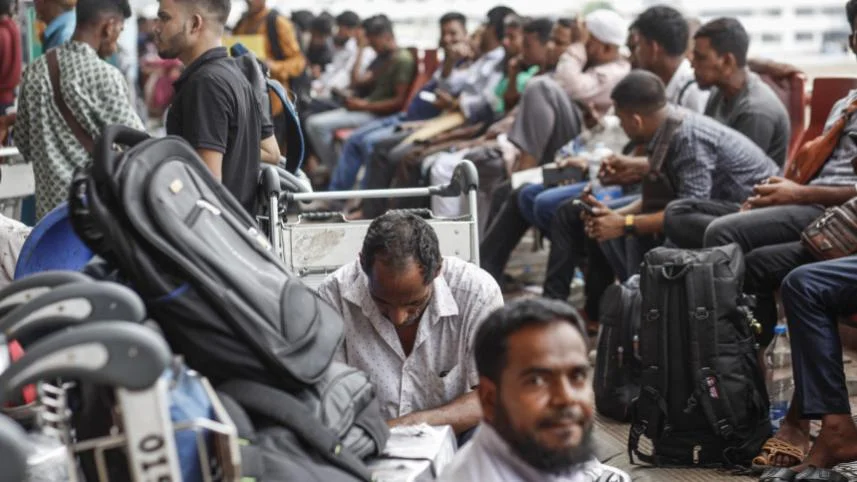
File Photo: Rashed Sumon
Bangladesh wants to send one crore workers abroad in five years, but nearly half of technical and vocational training graduates still struggle to find suitable jobs, while even government-issued skills certificates lack satisfactory recognition at home.
The gap between ambition and reality came under sharp focus at a national consultation, where officials and experts said Bangladesh is still training workers without sufficiently matching them to actual employer demand, recognised qualifications or safe recruitment pathways.
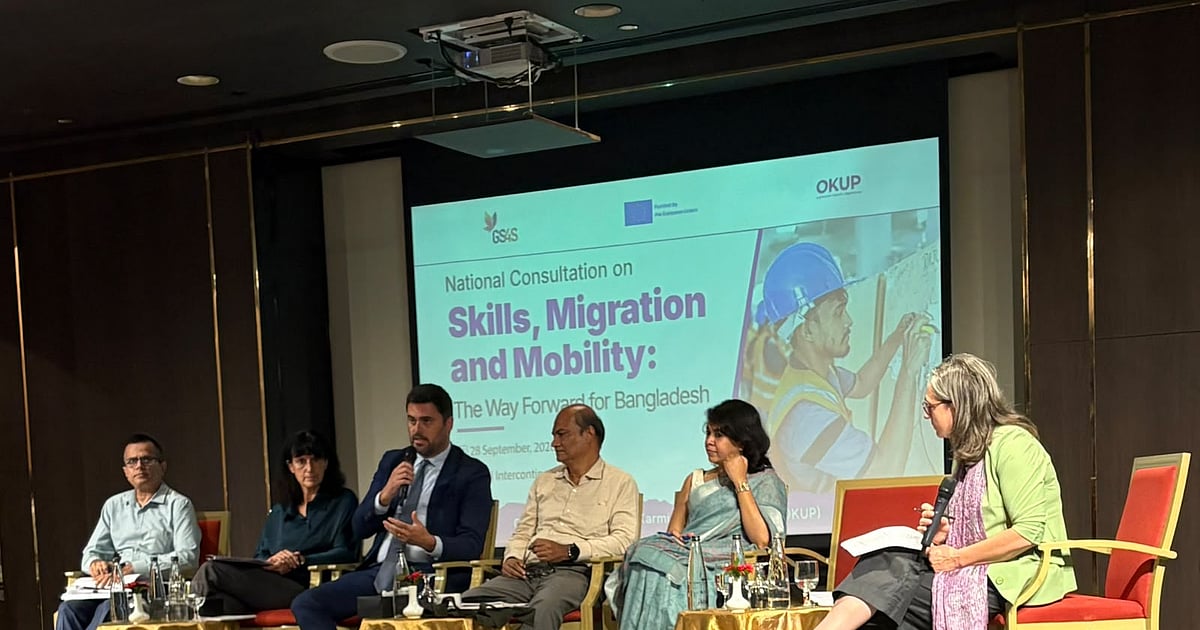
The event, “The National Consultation on Skills, Migration and Mobility: The Way Forward for Bangladesh” was held at a Dhaka hotel and organised by Ovibashi Karmi Unnayan Program (OKUP) under the EU-funded Global Strategy for Skills Migration and Development project, led by Radboud University in the Netherlands.
Government has set a target of sending one crore, or 10 million, people abroad over five years but Bangladesh currently has only 55-60 percent of the capacity needed to meet that target if it continues with business as usual, Ministry of Expatriates’ Welfare and Overseas Employment Additional Secretary Md Saiful Haque Chowdhury said while speaking at the event.
“We need to double our effort,” he added.
Md Rabiul Islam, member (Registration and Certification) and additional secretary at the National Skills Development Authority (NSDA), said while nearly seven lakh trainees have received NSDA certificates, recognition remains unsatisfactory even within Bangladesh.
“If it is not satisfactory domestically, then why will it be satisfactory abroad?” he said.
Rabiul said around 70 percent of NSDA certificate holders had found jobs either at home or abroad, while around 700 were working overseas.NSDA has around 2,300 registered skills training providers covering 369 occupations but only 18 officers to coordinate with 22 ministries and 36 agencies, he said.
Research presented by Urmi Jahan, research manager at OKUP, showed a wider gap between training and employment.
In 2023, Bangladesh had around 689,745 vocational graduates, while approximately 1.8 million young people received training. Yet around 45-47 percent of technical and vocational training graduates struggle to find suitable employment.
Around 13.8 million workers are affected by underemployment, while about 85 percent of jobs are in the informal sector, she said.
“The issue is not only how many people we train, but also what skills we provide, who needs those skills, and where the jobs are.”
The research identified weak links between training institutes and industries, limited practical and industry-relevant training, outdated curricula and equipment, weak data on what happens to graduates, and insufficient integration of digital and green technologies.
Rahnuma Salam Khan, national programme manager at the ILO, said skills mismatch should not be treated as a standalone problem.
“It is part of the overall labour migration governance problem,” she said.
She said more than 70 percent of Bangladesh’s overseas employment has historically remained in low-skilled categories despite years of investment in training.
Rahnuma also linked high migration costs to weaknesses in governance and said workers with less education and awareness were easier to exploit.
Md Nurul Islam, former director of Bureau of Manpower Employment and Training (BMET), said enrolment in technical and vocational education had risen from below one percent in 2008 to more than 20 percent in 2025, but training was still not sufficiently aligned with industry or destination-country demand.
BMET has 110 training centres, he said, but their programmes remain poorly connected to actual market needs.
Md Sakawat Ali, principal of Dhaka Technical Teachers Training Institute, said Bangladesh also needed better labour-market information, stronger language training and agreements with destination countries so that Bangladeshi qualifications are recognised abroad.
“If a market needs an automobile technician, we are delivering skills in construction or tiles… there is a mismatch,” he said.
Giuseppe Di Giovanni, migration expert at the Embassy of Italy, highlighted another contradiction.
Italy issued more than 20,000 work visas to Bangladeshis in 2025 and 2026, but almost 20,000 Bangladeshis also arrived irregularly through the Libya route over roughly the same period, he said.
He said an Italian work visa costs only €65, while Bangladeshi migrants may pay intermediaries $5,000, $6,000, $8,000, $10,000 or even $20,000.
Laura Cartanya Llach, first secretary at the EU Delegation to Bangladesh, acknowledged that training under the EU-Bangladesh Talent Partnership has not yet translated into placement.
She said the EU has invested almost €80 million in budget support for technical and vocational education reforms.
The consultation focused on precisely these gaps -- training that does not always match labour-market demand, qualifications that are not sufficiently recognised, weak recruitment links and shortcomings in migration governance.
Nearly half of vocational graduates struggle to find suitable jobs, while an official says Bangladesh has only 55-60% of the capacity needed to meet its migration target
Star Online Report
File Photo: Rashed Sumon
Bangladesh wants to send one crore workers abroad in five years, but nearly half of technical and vocational training graduates still struggle to find suitable jobs, while even government-issued skills certificates lack satisfactory recognition at home.
The gap between ambition and reality came under sharp focus at a national consultation, where officials and experts said Bangladesh is still training workers without sufficiently matching them to actual employer demand, recognised qualifications or safe recruitment pathways.
The event, “The National Consultation on Skills, Migration and Mobility: The Way Forward for Bangladesh” was held at a Dhaka hotel and organised by Ovibashi Karmi Unnayan Program (OKUP) under the EU-funded Global Strategy for Skills Migration and Development project, led by Radboud University in the Netherlands.
Government has set a target of sending one crore, or 10 million, people abroad over five years but Bangladesh currently has only 55-60 percent of the capacity needed to meet that target if it continues with business as usual, Ministry of Expatriates’ Welfare and Overseas Employment Additional Secretary Md Saiful Haque Chowdhury said while speaking at the event.
“We need to double our effort,” he added.
Md Rabiul Islam, member (Registration and Certification) and additional secretary at the National Skills Development Authority (NSDA), said while nearly seven lakh trainees have received NSDA certificates, recognition remains unsatisfactory even within Bangladesh.
“If it is not satisfactory domestically, then why will it be satisfactory abroad?” he said.
Rabiul said around 70 percent of NSDA certificate holders had found jobs either at home or abroad, while around 700 were working overseas.NSDA has around 2,300 registered skills training providers covering 369 occupations but only 18 officers to coordinate with 22 ministries and 36 agencies, he said.
Research presented by Urmi Jahan, research manager at OKUP, showed a wider gap between training and employment.
In 2023, Bangladesh had around 689,745 vocational graduates, while approximately 1.8 million young people received training. Yet around 45-47 percent of technical and vocational training graduates struggle to find suitable employment.
Around 13.8 million workers are affected by underemployment, while about 85 percent of jobs are in the informal sector, she said.
“The issue is not only how many people we train, but also what skills we provide, who needs those skills, and where the jobs are.”
The research identified weak links between training institutes and industries, limited practical and industry-relevant training, outdated curricula and equipment, weak data on what happens to graduates, and insufficient integration of digital and green technologies.
Rahnuma Salam Khan, national programme manager at the ILO, said skills mismatch should not be treated as a standalone problem.
“It is part of the overall labour migration governance problem,” she said.
She said more than 70 percent of Bangladesh’s overseas employment has historically remained in low-skilled categories despite years of investment in training.
Rahnuma also linked high migration costs to weaknesses in governance and said workers with less education and awareness were easier to exploit.
Md Nurul Islam, former director of Bureau of Manpower Employment and Training (BMET), said enrolment in technical and vocational education had risen from below one percent in 2008 to more than 20 percent in 2025, but training was still not sufficiently aligned with industry or destination-country demand.
BMET has 110 training centres, he said, but their programmes remain poorly connected to actual market needs.
Md Sakawat Ali, principal of Dhaka Technical Teachers Training Institute, said Bangladesh also needed better labour-market information, stronger language training and agreements with destination countries so that Bangladeshi qualifications are recognised abroad.
“If a market needs an automobile technician, we are delivering skills in construction or tiles… there is a mismatch,” he said.
Giuseppe Di Giovanni, migration expert at the Embassy of Italy, highlighted another contradiction.
Italy issued more than 20,000 work visas to Bangladeshis in 2025 and 2026, but almost 20,000 Bangladeshis also arrived irregularly through the Libya route over roughly the same period, he said.
He said an Italian work visa costs only €65, while Bangladeshi migrants may pay intermediaries $5,000, $6,000, $8,000, $10,000 or even $20,000.
Laura Cartanya Llach, first secretary at the EU Delegation to Bangladesh, acknowledged that training under the EU-Bangladesh Talent Partnership has not yet translated into placement.
She said the EU has invested almost €80 million in budget support for technical and vocational education reforms.
The consultation focused on precisely these gaps -- training that does not always match labour-market demand, qualifications that are not sufficiently recognised, weak recruitment links and shortcomings in migration governance.