| Global Defense, OSINT & Geopolitics Wire

[🇧🇩] Monitoring Bangladesh's Economy

[🇧🇩] Monitoring Bangladesh's Economy
1K
56K
More threads by Saif

G Bangladesh Defense

NBR considering raising tax for high earners
Staff Correspondent 01 April, 2026, 02:32

1775007528216.webp


National Board of Revenue chairman Abdur Rahman Khan holds a pre-budget discussion with the Economic Reporters Forum members at NBR headquarters in Dhaka on Tuesday. | Press release

The National Board of Revenue is considering increasing the top income tax rate to 35 per cent for individuals earning over Tk 1 crore annually, as part of efforts to reduce income inequality from the 2027-28 financial year.

Under the existing structure, the tax-free income threshold has been set at Tk 375,000. Income beyond is taxed progressively, with the highest current rate at 30 per cent on income of Tk 20,00,000 and above.

NBR chairman Abdur Rahman Khan revealed this on Tuesday at a pre-budget discussion regarding the upcoming budget of the financial year 2026-27 with the Economic Reporters Forum, the apex platform of the country’s economic, financial, and business journalists.

However, he clarified that in the current fiscal budget, income tax rates for the following fiscal year have also been pre-announced.

‘So, there is no scope to revise tax rates for the 2025–26 or 2026–27 fiscal years, as these have already been fixed in advance to ensure predictability for taxpayers,’ he added.

Any potential changes might come in the 2027–28 fiscal year, where the government might consider an adjustment to signal that those with higher incomes should contribute more,’ he added.

Abdur Rahman Khan also said that the authority was considering introducing a ‘wealth tax’ and an ‘inheritance tax’ as alternatives to the existing surcharge system.

‘If we can bring back a wealth tax act, we would be able to collect taxes from very wealthy people outside the existing income tax framework,’ he added.

On inheritance tax, he said that many individuals inherit substantial assets from their predecessors and that such taxation is in place in many countries.

‘We are considering imposing inheritance tax, particularly on high-value properties before ownership is transferred to the next generation through mutation,’ he added.

He said that boosting income tax collection remains the most effective tool to address disparity.

‘Many countries impose significantly higher marginal tax rates, ranging from 45 to 55 per cent, on high-income individuals, while Bangladesh had rates as high as 60 per cent during the 1980s,’ he added.Bangladesh travel guide

He also said that the country has gradually reduced rates.

ERF president Doulot Akter Mala proposed increasing the tax-free income limit for an individual to Tk 5 lakh, in line with inflation, in the upcoming FY27 budget.​
 

Khosru flags 3-pronged economic challenges, urges resource harnessing

Doulot Akter Mala
Published :
Apr 02, 2026 08:31
Updated :
Apr 02, 2026 08:31

1775101181161.webp


Finance Minister Amir Khosru Mahmud Chowdhury has said the new government is facing a “three-way challenge” in managing the economy—fragile fiscal conditions, rising expenditure pressures, and external shocks.

Speaking to reporters after an internal meeting at the National Board of Revenue (NBR) on Wednesday, he said the administration inherited a “very weak” economy and that stabilising it without printing money is the immediate priority.

Officials at the meeting said the minister approved a waiver of the 7.5-percent Advance Tax (AT) on newsprint imports for the newspaper industry in the next budget. Leaders of the Newspaper Owners Association of Bangladesh (NOAB) had long demanded the withdrawal of the tax.

Currently, newspaper imports face multiple charges, including 3.0-percent import duty, 15-percent VAT, 5.0-percent advance income tax, and 7.5-percent advance tax. With additional costs such as transportation, the total landed cost rises to around 130–132 percent.

The minister also directed tax authorities not to impose taxes on sensitive sectors in the FY 2026–27 budget that could affect the general public.

On the upcoming budget, he said discussions are ongoing to design a framework addressing revenue mobilisation, employment, support for women and small businesses, and investment promotion.

“We want to prepare a budget that accommodates all these priorities,” he said, adding that the process is still under review.

He stressed that resource mobilisation remains a key challenge and that strengthening revenue collection is essential to both stabilising the economy and fulfilling electoral commitments.

The minister also cited rising energy-import costs due to tensions in the Middle East as an added pressure.

“This is a three-way challenge—stabilising the economy, meeting public commitments, and managing external shocks,” he said.

Regarding Bangladesh’s LDC graduation, he noted that the process is ongoing through the UN Economic and Social Council (ECOSOC) and later the UN General Assembly, adding that nothing is final until completed.

Addressing the low tax-GDP ratio, he said it is linked to the overall size and strength of the economy. “If we cannot energise the economy, increasing the tax-GDP ratio will be difficult,” he added.

He reaffirmed the government’s shift from a debt-driven to an investment-led growth model, stressing the need to attract both domestic and foreign investment. He acknowledged that frequent policy changes in the past discouraged investors and emphasised the need for policy stability.

On allegations of tax evasion by large corporations, he said the issue is under review along with other fiscal matters.

The minister confirmed upcoming meetings with Japanese and German ambassadors to discuss bilateral cooperation amid current economic challenges.

Defending social-protection measures, he said the government will prioritise marginalised groups. He also stressed the need to diversify exports beyond garments and extend incentives such as bonded-warehouse facilities and back-to-back LCs to emerging sectors.

He announced plans for “serious deregulation” to improve the investment climate and expressed optimism that investment will increase if confidence in the economy is restored.

“We are getting strong responses. If we can ensure discipline in the financial sector and capital market and build trust, investment will grow,” he said.​
 

Remittances all-time high of $3.75b

Expats sent more before Eid in March, offering relief amid concerns over war fallout on economy

Star Business Report

1775103123254.webp


Remittance hit $3.75 billion in March, the highest on record, giving a respite amid deepening worries over the ripple effect on Bangladesh’s struggling economy due to the US-Israel war on Iran.

The inflow in March was 14 percent higher than $3.29 billion in March 2025 as Bangladeshis working abroad sent increased amounts to their loved ones ahead of the Eid-ul-Fitr festival on March 21.

Overall remittance, which acts as a major source for Bangladesh to clear its external payments, rose 20 percent to $26.20 billion in the July-March period compared to a year ago, according to Bangladesh Bank (BB) data released yesterday.

The surge comes against the backdrop of heightening concern over the possible impact of the war on remittances in the coming months as the conflict spreads across the Gulf -- key employment destinations for Bangladeshi migrant workers.

Nearly 800 Middle East-bound flights from Bangladesh have been cancelled since the war with Iran on February 28, mostly affecting migrant workers.

Last week, the Asian Development Bank (ADB), in a report, said Bangladesh and other South Asian countries could face lower remittances from the Middle East as the ongoing conflict in the region weakens labour demand and squeezes migrant worker incomes.

Nearly half of Bangladesh’s more than $30 billion in annual remittances comes from the Middle East. Saudi Arabia, Oman, Qatar, the UAE, and Kuwait together accounted for 86 percent of Bangladeshi migrant workers who secured jobs abroad in FY25, according to the Bangladesh Economic Review 2025.

Bankers and analysts said the spike in the inflow was largely because of the Eid festival, political stability and an increased rate of the US dollar following a slight depreciation of the taka.

Md Shaheen Iqbal, additional managing director & head of wholesale banking at BRAC Bank, said another factor is that migrants try to send home more during any crisis period. “We have seen this trend during the initial days of the Russia-Ukraine war. A similar thing may happen this time.”

He said the inflow may fall this month but recover in the next month ahead of Eid-ul-Azha. However, the remittance inflows in the later months will depend on the war, he said.

Deen Islam, professor of economics at Dhaka University, said the recent surge in remittance inflows provides meaningful short-term relief to Bangladesh’s external sector, but its sustainability remains uncertain in the current global context.

“Much of Bangladesh’s remittance originates from migrant workers in Gulf Cooperation Council (GCC) economies, making flows sensitive to oil price cycles, fiscal conditions in host countries, and evolving labour nationalisation policies,” he said.

“Additionally, tighter immigration regimes in advanced economies and global economic slowdown risks could constrain future migration and earnings growth.”

During the July-February period of the fiscal year 2025-26, over 10 lakh migrant workers left for jobs abroad, up 15 percent YoY, according to official data.

Birupaksha Paul, a professor of economics at the State University of New York, USA, said imports may increase following the return of political stability in the country after the election.

“There is a concern that pressure is likely to build on Bangladesh’s foreign exchange reserves to pay higher import bills,” he said. “Foreign exchange reserves will not increase in that case.”

In this context, he said, the foreign exchange rate should be re-evaluated. “Some people doubt that it is not yet fully market-based and not reflecting the market price,” he said, adding that any depreciation will fuel import-induced inflation.

“But reserve management is a crucial thing,” said Paul, former chief economist at the BB.

Prof Islam said while the increase in remittance strengthens the balance of payments, supports exchange rate stability, and boosts domestic consumption, it also reinforces a structural dependence on external labour income rather than productivity-driven export growth.

“Therefore, although remittances will likely remain a vital pillar of macroeconomic stability in the near term, their long-run sustainability and developmental impact depend on diversification of migration destinations, skill upgrading of workers, and complementary policies to channel inflows into productive investment rather than predominantly consumption.”​
 

Boosting govt’s tax revenue earnings

FE
Published :
Apr 04, 2026 00:06
Updated :
Apr 04, 2026 00:06

1775261633885.webp


The economy that the incumbent BNP government has inherited from the past bears the legacy of rampant corruption and politicization that distorted all vital state institutions. The tax authority, the National Board of Revenue (NBR), was no exception. Small wonder that the past regime was marked by high tax evasion, political patronage and unrealistic budgetary process causing the NBR to miss its revenue collection targets over the years. Against this backdrop, the incumbent government is planning to introduce a series of tax measures so higher revenue earnings targets could be achieved. It is worthwhile to note at this point that the country's tax-to-GDP ratio now at approximately 7 per cent is among the lowest in the world. So, the country's very low domestic revenue collection profile poses a significant challenge before the economy.

To get around the predicament, the NBR is reportedly considering introducing a slew of measures to strengthen revenue collection for the upcoming fiscal year (FY 2026-27). Those include reintroduction of wealth tax, a new inheritance tax, higher rates for the ultra-rich, and rationalizing the prevailing tax exemption regime. Such measures to boost revenue earning are now the imperative seeing that the country is faced with mounting pressure on public finances, with the government struggling to meet revenue targets amid a widening fiscal deficit and rising debt servicing costs. In this connection, the issue of wealth tax is being reconsidered as it is not quite new in this part of the world. In fact, it was in place since 1963 until it was abolished in 1999. The reasons behind abolishing the provision at that time include high administrative costs, low revenue generation and a shift towards taxing incomes and capital gains rather than accumulated assets. At that time, the factors leading to low tax generation (from wealth tax) included broad exemptions resulting in taxpayers often shifting their assets into exempt categories which reduced effective tax base. In that case, acknowledging that challenges remain regarding asset valuation and availability of the necessary data, a committee was learnt to have been formed to examine the issues in more detail.

Apart from establishing a standard procedure of asset evaluation and ensuring availability of adequate data, exercising of necessary caution would also be advisable on the part of the tax authority (while levying inheritance tax) to avoid triggering capital flight. In a similar vein, gradual phasing out of the existing system of tax exemption regime needs to be given serious consideration. That is for the simple reason that the prevailing tax system is characterized by a complex and distortionary multiple tax rates and large and regressive exemptions on VAT and income taxes. True, tax exemptions are necessary, to attract investment and generate employment. But the arrangement cannot be continued indefinitely.

It is time the beneficiaries of tax exemptions were brought under the tax net. To this end, the tax regulator, as reported, plans to raise the top marginal income tax from 30 to 35 per cent tentatively by FY2028. Notably, marginal taxation is the percentage of tax paid on each additional taka earned within a specific tax bracket rather than on total income. However, for the next fiscal year (FY2026-27), the tax regulator's focus is on raising the tax rate on individuals who earn more than Tk10 million annually by five percentage points. This is undoubtedly a welcome move. In fine, successful implementation of the steps to boost the government's revenue income through measures as envisaged by NBR would depend on expeditious automation of the tax administration. Hopefully, the tax authority would give the necessary go-ahead to the issue.​
 

BD eyes an Islamic capital market
Integrate first, then elevate

Mohammad Kabir Hassan and Zobayer Ahmed

Published :
Apr 04, 2026 00:00
Updated :
Apr 04, 2026 00:00

1775262502789.webp


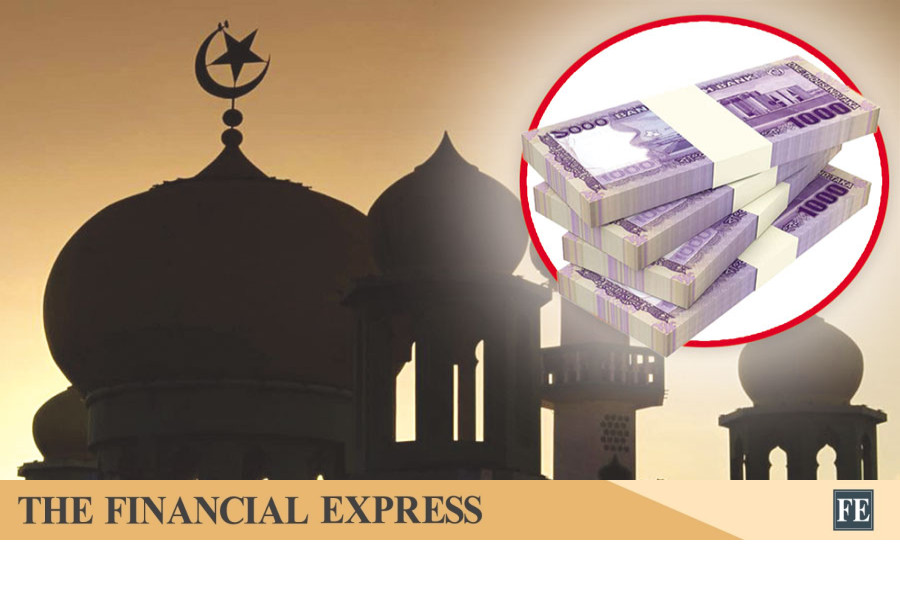
The economic future of any developing nation depends on broadening its financial base beyond bank-dominated, debt-driven growth. In a welcome signal of strategic intent, Professor Dr Rashed Al Mahmud Titumir, Adviser to the Prime Minister on Economic Affairs and Planning, recently called for the establishment of an Islamic stock exchange in Bangladesh — designed to attract capital from Malaysia, Indonesia, and the Gulf, and to create an investment gateway for non-resident Bangladeshis (NRBs). The proposal is timely and ambitious, and it deserves a rigorous answer to a question that policymakers have not yet fully confronted: should Bangladesh integrate Islamic financial instruments into its existing exchanges, or build a separate Islamic capital market from the ground up?

Our answer, grounded in Bangladesh’s own data, international precedent, and academic research, is clear: integrate first and, over a five-to-ten-year horizon, and evaluate the case for a dedicated Islamic exchange. Attempting to build a standalone institution before the necessary instruments, regulations, and investor base are in place would risk repeating the fragmentation and governance failures that have already hurt the country’s banking sector.

A Shallow Market in Need of Depth: Bangladesh’s capital market remains conspicuously underdeveloped relative to its economic size and ambition. As of 2024, the market capitalisation of the Dhaka Stock Exchange (DSE) stood at approximately Tk 6.62 trillion — down from Tk 7.70 trillion in 2023 — equivalent to roughly 19.5 per cent of gross domestic product (GDP), compared with a global average exceeding 69 per cent. No new companies were approved for IPOs on the DSE in 2024, an indicator of regulatory paralysis and weak listing incentives. The Chittagong Stock Exchange (CSE) remains marginal in terms of volume. The two exchanges together host around 625 listed companies, a figure modest for an economy of Bangladesh’s scale.

The market’s structural problems are well-documented. Well-performing family-owned enterprises resist listing, fearing governance scrutiny. Retail investor behaviour is often speculative rather than fundamental, a pattern captured in research by Hassan, Basher and Islam (2007), which found persistent serial correlation and negative risk-return dynamics in DSE equity returns — consistent with market inefficiency and thin trading. Circuit breakers, introduced to manage volatility, were found to increase realized volatility rather than reduce it. Decades later, many of these structural weaknesses persist.

Against this backdrop, the Islamic capital market segment is essentially absent. There is no dedicated Shariah-compliant equity index on exchange, no regular corporate sukuk market, and only a nascent government sukuk program through the Bangladesh Government Islamic Investment Bond (BGIIB). The country’s BGIIB sukuk issuance, launched in 2020 to raise Tk 80 billion for water infrastructure, demonstrated proof of concept — but the pipeline of subsequent issuances remains thin.

A Strong Banking Base, a Missing Capital Market: The irony is that Bangladesh has quietly built one of the world’s most significant Islamic banking sectors, yet its capital market has not followed suit. As of early 2024, ten full-fledged Islamic banks, alongside 23 Islamic banking branches and over 500 Islamic banking windows of conventional banks, collectively held approximately 23.65 per cent of total banking assets, 26.23 percent of deposits, and 28.24 per cent of investments in the national banking system — figures that place Bangladesh among the leading Islamic banking jurisdictions in South and Southeast Asia.

This is a crucial foundation. A large Islamic banking sector means there is domestic institutional demand for Shariah-compliant capital market instruments — sukuk for liquidity management, Islamic equities for portfolio diversification, and Islamic mutual funds for retail investors. Bangladesh Bank has itself acknowledged the urgent need to deepen the Islamic capital market and scale up sukuk issuance to reduce Islamic banks’ reliance on debt-like instruments. The capital market gap is not a demand problem. It is a supply-and-regulatory problem.

What Malaysia, Indonesia, and the Gulf Did Right: Malaysia is the global benchmark. The Kuala Lumpur Stock Exchange did not build a parallel Islamic bourse — it integrated Shariah-compliant indices and instruments into the existing exchange, supported by a dedicated Securities Commission Shariah Advisory Council, robust disclosure standards, and a pipeline of corporate and sovereign sukuk. Today, Malaysia accounts for a disproportionate share of global sukuk issuance and consistently tops the Islamic Finance Country Index.

Indonesia followed a similar path. The Jakarta Islamic Index (JII), launched in 2000, operates as a Shariah-compliant sub-index of the Indonesia Stock Exchange — not a separate institution. Supported by a national Shariah board and progressive regulation, it has grown into a credible benchmark for domestic and foreign Islamic investors.

The Gulf states, where Islamic finance is embedded in the financial culture, offer a different lesson: even in their most mature markets — Dubai Financial Market, Saudi Arabia’s Tadawul — Islamic and conventional instruments coexist on the same exchange infrastructure. A bifurcated architecture did not require two separate exchange buildings; it required dual-window compliance frameworks within a unified market structure.

Academic research reinforces these lessons. Hassan and Yu (2007), examining stock exchange alliances across OIC countries, found that despite a shared Islamic culture, local capital market conditions were too heterogeneous in terms of legal frameworks, income levels, and market maturity to support a single unified Islamic exchange. Their recommendation was a bifurcated, or two-tier, system: small, locally operating firms listed on domestic exchanges, while larger, more established companies access regional Islamic financial centres in Asia, Europe, or MENA — eventually linking into a pan-OIC exchange architecture. Bangladesh’s current market development places it firmly in the first tier of that framework: it needs to build domestic Islamic capital market capacity before aspiring to regional integration.

The Policy Prescription: The policy case for integrating Islamic instruments into the DSE and CSE first — rather than creating a standalone exchange — rests on five arguments.

Cost and institutional capacity. Building a separate exchange from scratch requires regulatory infrastructure, a Shariah board, trading technology, clearing systems, investor education, and a critical mass of listings. Bangladesh’s capital market regulator, the Bangladesh Securities and Exchange Commission (BSEC), already struggles to govern two existing exchanges. A premature third institution risks becoming a shell — credential in name but thin in activity, as has occurred in several OIC countries that established Islamic markets before their investor bases were ready.

Market liquidity. Liquidity is the lifeblood of any exchange. Splitting an already thin market between a conventional exchange and a new Islamic exchange would reduce liquidity on both, widening bid-ask spreads and increasing price volatility — the very conditions that have historically undermined DSE efficiency. Shariah-compliant indices embedded within the DSE, by contrast, share the existing order book and liquidity pool.

Derivative and hedging gap. While a group of Shariah scholars supports instruments such as Islamic Forex forwards under the concept of wa’d, the majority remain cautious, reflecting heterogeneous jurisprudential positions. Without an agreed-upon framework for Islamic hedging instruments, a standalone Islamic exchange would lack the risk-management tools that institutional investors — particularly those from the Gulf and Malaysia — require before committing capital. Developing these instruments requires gradual Shariah consensus-building, which is more feasible in an integrated regulatory environment than in a parallel institution operating under separate oversight.

Investor confidence and governance. Bangladesh’s Islamic banking sector is currently navigating a governance and non-performing-loan crisis so severe that Bangladesh Bank has proposed merging five Islamic banks into a single entity to prevent systemic failure. Launching a standalone Islamic stock exchange in this environment, before trust in Islamic financial institutions has been restored, risks contaminating the new institution with reputational spillover. Integration into the existing exchange — which has its own credibility and Nasdaq technology partnership — offers a lower-risk launch pad.

The NRB opportunity is reachable through integration. Non-resident Bangladeshis remit billions of dollars annually. Making Shariah-compliant equities, sukuk, and Islamic mutual funds accessible on the DSE — with digital platforms and clear foreign investment rules — can capture NRB capital without requiring a new exchange. Malaysia and Indonesia attracted faith-based foreign investment through their existing exchanges’ Islamic windows, not through separate institutions.

A Five-Point Action Plan: An integration-first strategy requires the following concrete steps, which BSEC, Bangladesh Bank, and the Ministry of Finance should pursue in parallel.

Launch a DSE Shariah Index. BSEC should establish a formal Shariah Supervisory Board for the capital market, distinct from the banking sector’s boards, to screen listed equities and publish a DSE Islamic Index. This would provide the benchmark that Islamic mutual funds, pension funds, and foreign investors need. [Currently, investors and stakeholders have no free access to the DSE Shariah index (DSES) as the Dhaka bourse has been managing it for the purpose of business.]

Scale up sukuk issuance. The government should deepen and regularize sovereign sukuk through the BGIIB program and actively encourage corporate sukuk for infrastructure financing. Sukuk can reduce reliance on budgetary allocations and bank loans — directly addressing Adviser Titumir’s vision of a bond-based economy.

Build Shariah-compliant mutual fund regulation. Islamic mutual funds are the most accessible on-ramp for retail investors. BSEC should fast-track a regulatory framework for Islamic unit trusts, modelled on the Securities Commission of Malaysia’s guidelines.

Develop Islamic derivatives prudently. Bangladesh Bank and BSEC should convene a joint working group with Shariah scholars to develop a national standard for Islamic hedging instruments. The wa’d-based FX forward structure, as identified in the academic literature on Bangladesh, offers a viable starting point.

Plan for a dedicated Islamic exchange. A separate Islamic capital market — whether as a dedicated board within DSE/CSE or eventually as a standalone exchange — should be the five-to-ten-year horizon goal, contingent on achieving sufficient market depth, Shariah product diversity, and regulatory maturity. The two-tier OIC framework offers a useful architectural template: domestic Islamic listings on a Shariah board of DSE, with larger Bangladeshi companies eventually accessing regional Islamic financial centers in Kuala Lumpur, Dubai, or Riyadh.

Conclusion: Bangladesh has the foundational conditions for a genuinely transformative Islamic capital market: a Muslim-majority population of 170 million, a proven Islamic banking sector holding nearly a quarter of national banking assets, a large diaspora eager for faith-based investment options, and growing government recognition of the opportunity. What it currently lacks is the sequenced institutional architecture to make it real.

The establishment of an Islamic stock exchange should not be dismissed — it should be pursued on the right timeline. That means integrating Shariah-compliant instruments into the DSE and CSE first, building liquidity, regulatory credibility, and investor trust over the next five years, and then evaluating the conditions for a dedicated Islamic exchange or board. Moving from a debt-dependent society to an ownership-based society requires foundations built carefully — not institutions launched prematurely and subsequently hollowed out.

The global experience is unambiguous: the countries that lead in Islamic capital markets today built depth before they built separation. Bangladesh should do the same.

Dr Mohammad Kabir Hassan, Professor of Finance, University of New Orleans; mhassan@uno.edu; and Dr Zobayer Ahmed, Associate Professor, Bangladesh Institute of Governance and Management (BIGM)​