New Tweets

[🇧🇩] Monitoring Bangladesh's Economy

G Bangladesh Defense
[🇧🇩] Monitoring Bangladesh's Economy
1K
28K
More threads by Saif


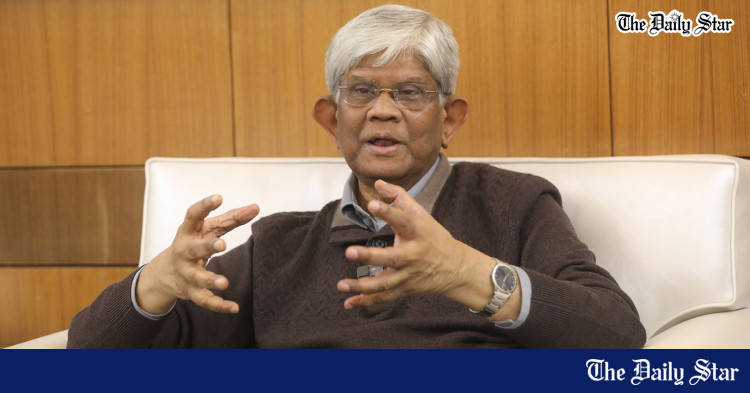
‘Economy was more dire than people thought’
Finance adviser talks about govt’s 3 strategies to ease economic strain

1738193548664.webp

Photo: Prabir Das/Star

The interim government has an uphill task of fixing the economy it inherited from the Awami League government of 15 years, said Finance Adviser Salehuddin Ahmed.

"When the interim government assumed power, it inherited a problem-driven economy -- the situation was more dire than people thought," he told The Daily Star in an interview on Monday.

There were external problems, but the underlying domestic issues were even more acute: the foreign exchange reserves were depleting rapidly, inflation was stubbornly high and the balance of payments was negative.

"Even though we are not in the situation where we want to be, things are improving."

The new government inherited another big problem: outstanding letters of credit dues of upwards of $4.5 billion.

"Without touching the foreign exchange reserves, the new government repaid it, and the outstanding amount dropped to $400–500 million."

The foreign reserves are stable now, said Ahmed, also a former governor of Bangladesh Bank.

The interim government has adopted a three-pronged approach to steadying the ship: raising the buffer stock of food, ensuring steady stream of liquidity for businesses and creating jobs through realignment of the annual development programme (ADP).

He said the government has been able to steady the wobbly banking sector and ward off a complete collapse of the system.

"The situation was so dire that there was widespread fear that banks could run out of money anytime. It is rare for a bank to be emptied by a few individuals -- no country in the world has experienced such a phenomenon."

Some banks are rebounding, including Islami Bank and Social Islami Bank. The two banks were controlled by the Awami League-affiliated S Alam Group.

The strong remittance inflow has provided some relief to the Shariah-based banks, helping them to revive their health.

"We have implemented targeted measures for the banking sector so that savers do not lose confidence. The central bank provided over Tk 20,000 crore to the banks and now people are no longer struggling to get their money back."

The new governor is trying but the mismanagement and poor decisions of the previous regime have created a deep-rooted problem that is hard to fix, Ahmed said.

For instance, a huge volume of defaulted loans has been stuck in the courts for a long time.

"The backlog in the courts is enormous. If this continues, the situation will only get worse."

Immediate actions such as a special judicial bench are needed to resolve the pending cases quickly.

"But this requires focused attention and significant effort. I will sit with the law adviser and the chief justice soon and urge them to launch a special bench for clearing these backlogs."

The government has stopped the provision of giving amnesty to black money though the system still contains ways to legalise undeclared wealth.

For instance, people are selling properties for prices far higher than their registered value.

This creates massive amounts of unaccounted money, which are funnelled into buying cars, appliances or other assets.

"This creates a system where black money thrives -- we will try to address this."

Regarding corruption in government projects, he acknowledged that the menace still remains.

"We are trying to tackle this, but it's not easy. The same old players remain in the system under new names, making real changes difficult."

Asked about the grievances of the White Paper Committee about the government's failure to implement the recommendations, he said: "We will review their suggestions within the next two to three months, but some of them have been addressed."

For example, the government has established task forces to bring back billions of dollars siphoned out of Bangladesh and has sought international support where necessary.

The interim government is also trying to fix the tax system, which is responsible for one of the lowest tax-to-GDP ratios in the world.

The previous government has issued several statutory regulatory orders to benefit certain firms and individuals, Ahmed said.

"After coming to power, we cancelled the SROs. We are separating the tax policy from the tax administration. In 2008, the government tried to do this but failed. I know some officials are standing in the way -- who wants to give up power? But I will implement it before I leave."

Ahmed blames the persistently high inflation on supply-side issues.

"It's not that essentials are unavailable -- they get stuck in one place without being distributed."

He pointed out that even officials like consumer rights officers or magistrates can't bring about meaningful changes alone. Extortion during transportation of goods is also raising costs, which is fuelling inflation.

Regarding the recent increase in value-added tax and supplementary duties, he said the tax rate has already been brought down for several goods and services that are widely consumed by the general public.

"The rest do not affect the general population. For instance, the VAT on biscuits priced above Tk 200 per kg is logical. Whoever buys biscuits that cost Tk 200 per kg has the ability to pay VAT."

Asked about the ADP, he said the interim government will focus on local roads and culverts to boost rural job creation.

It will not take on any sophisticated project but continue with existing mega projects such as the deep-sea port, he said, adding that the ADP budget may be pruned by about Tk 50,000 crore.

"Some people criticise us for not revising the budget introduced by the previous government. Actually, it is difficult to revise the budget in such a short period. Though the budget was not revised, we have cut government costs except for the necessary expenditures."

One such necessary expenditure was vehicle purchase for the Bangladesh Police as 300 of their vehicles were burnt down during the July uprising.

"The next budget will be pragmatic -- it won't be an unpopular budget."

Yet, the much-maligned power sector subsidy will continue. "Otherwise, people and businesses will suffer."

The main targets of the budget will be macroeconomic stability, containing inflation, ensuring energy supply and taking steps for the agricultural sector so that farmers do not suffer, Ahmed added.​
 
Analyze

Analyze Post

Add your ideas here:
Highlight Cite Respond
  • Like (+1)
Reactions: Bilal9

Service sector unit growth higher than manufacturing
Staff Correspondent 29 January, 2025, 23:32

1738193939676.webp


The country’s service sector-based units grew more than manufacturing units over the past one decade that was also marked by a decrease in female employment.

The past decade also shows dominance of rural area in overall units.

The information was revealed by the Bangladesh Bureau of Statistics at its release of the preliminary findings of the Economic Census 2024 at its office at the city’s Agargaon.

The previous census was done in 2013.

The overall economic units—permanent, temporary and economic households—increased by 40.48 lakh nationwide to 118.77 lakh in between the two censuses.

The service sector-based units grew by a whopping 56 per cent to 108.35 lakh in 2024 from 69.15 lakh in 2013, compared with only 15 per cent growth in manufacturing units to 10.41 lakh in 2024 from 9.02 lakh in 2023.

The share of manufacturing and service units in the 2024 census stood at 8.77 per cent and 91.23 per cent respectively against 11.54 per cent 88.46 per cent respectively in 2013, according to the BBS preliminary findings.

Former World Bank Dhaka office chief economist Zahid Hussain called the trend as ‘not good’ for a country like Bangladesh where formal sector employment is low.

Referring to other countries, he said that the service sector flourished on the back of successful industrialisation.

But the preliminary findings showed that the country was at a crossroad, he said, adding that the findings also proved the emptiness of the development narrative harped by the Awami League regime ousted amid a mass uprising six months back on August 5.

Planning adviser Wahiduddin Mahmud who addressed the ceremony as chief guest said that clearer pictures of the country’s economic status would be available with the release of the final census report.

Referring to the finding that economic units in rural areas are dominating with 70.27 per cent share against 29.73 per cent in urban areas, he said that it was not clear whether the growing business activities in rural areas were linked to poverty or whether employment opportunities were diversified to areas other than agriculture.

He lamented at the findings that 75.812 lakh economic units faced challenges of capital shortage, lack of access to easy loan facilities, want of infrastructure, growing production cost, lack of skilled workers, energy shortage and lack of access to the market.

Respondents identified capital shortage, lack of access to easy loan facilities, want of infrastructure as top challenges with 48 per cent identifying lack of capital as the main problem, while 19 per cent identified lack of access to easy loan facilities and 10 per cent mentioned lack of infrastructure as their main challenges.

The planning adviser remarked that it was an irony that while many entrepreneurs suffered from severe capital shortage, the immediate past regime led the plunder of the country’s banking sector.

The statistical bureau’s preliminary findings also showed that the share of female participation in economic units decreased to 6.4 per cent in 2024 from 7.21 per cent in 2013.

Some 1.1 lakh economic units out of total 1.5 lakh respondent units in the census said that they were involved in e-commerce.

Of those, 37.11 per cent units used e-commerce facilities for customer service, 29 per cent for sales of products and 12 per cent for online transaction.​
 
Analyze

Analyze Post

Add your ideas here:
Highlight Cite Respond
  • Like (+1)
Reactions: Bilal9

Govt should review policies to up manufacturing sector growth
31 January, 2025, 00:00

THE growth of the number of economic units in the services sector by 56 per cent, to 10.83 million units in 2024 from about 6.91 million units in 2013, as the preliminary findings of the Economic Census 2024 that the Bureau of Statistics made public on January 29 show, is encouraging. But what remains worrisome is that the growth in the number of economic units in the manufacturing sector by 15 per cent, to about 1.04 million units in 2024 from about 900,000 units in 2013, when the census was last held, is not commensurate with the growth of the services sector. The figures stand the share of the manufacturing and services in economic units at 8.77:91.23 per cent in 2024 against the ratio of 11.54:88.46 per cent in 2013. The number of overall economic units — permanent, temporary and economic households — has increased by about 4.05 million across the country to about 11.88 million units between the two censuses. Experts believe that the growth of economic units in the manufacturing sector is ‘not good’ for a country such as Bangladesh, where employment in the formal sector is low. They believe that this is so because the services sector in other countries flourished riding on the wings of a successful industrialisation.

The proposition also points out the hollowness of the development rhetoric that the previous Awami League government, toppled in a mass uprising on August 5, 2024 after having been in office since 2009, had repeatedly harped on. The government needs to bolster the growth of economic units in the manufacturing sector. Another finding that has worryingly come up is the share of women’s participation in economic units, which declined to 6.5 per cent in 2024 from 7.21 per cent in 2013. This is antithetical to women’s empowerment. A poor participation of women in the economy could also have serious implications for society, leading to a growing economic abuse of women. This calls for early government attention. The finding of the national statistical office that economic units in rural areas dominate, with 70.27 per cent against 29.73 per cent in urban areas. The planning adviser to the interim government, who attended the Bureau of Statistics programme as chief guest, seeks to say that whether the growing business activities in rural areas are linked to poverty or employment opportunities have diversified to areas other than agriculture remains unclear. The proposition leaves the government with the task of looking deep into the situation and act accordingly. What yet remains worrying is the finding that more than 7.58 million economic units face the challenge of capital shortage, lack of access to easy loans, an absence of infrastructure, growing production cost, the dearth of skilled workers, energy shortage and an absence of access to market.

The challenges that have come up in the findings of the survey clearly tell the government what to do, where and to what extent to bolster the growth of the manufacturing sector, based on which the services sector would grow further. It is time that the government buckled down to work.​
 
Analyze

Analyze Post

Add your ideas here:
Highlight Cite Respond

Balancing manufacturing and service sectors
Published :
Jan 31, 2025 00:07
Updated :
Jan 31, 2025 00:07

1738283595939.webp


The findings of the latest economic census present a disconcerting picture of the country's industrial landscape---a significant decline in manufacturing over the recent years. While non-agricultural business establishments have expanded substantially, the overall economic trajectory appears to be deviating from a sustainable growth pattern. Ideally, economic development follows a structured transition from agriculture to industry and then to the service sector. However, the current trend suggests a leap from agriculture to services, bypassing industrialisation. Data from the census highlight the stark imbalance between manufacturing and service sectors. Of the 4.06 million new businesses established over the past decade, only 3.42 per cent belong to manufacturing, while a staggering 96.58 per cent fall under the service category. This significant skew indicates a structural anomaly that could hinder long-term economic resilience. A well-balanced economy requires a strong manufacturing base to ensure job creation, enhanced productivity, and sustainable export growth.

The projected economic growth figures from the Bangladesh Bureau of Statistics (BBS) over the last decade were based on an anticipated expansion of manufacturing industries. However, the actual decline in manufacturing, coupled with the rapid rise of the service sector, reveals structural weaknesses, policy inconsistencies, inadequate investment in industrialisation and an increasing reliance on imports. Experts caution that insufficient emphasis on industrialisation could undermine economic stability, as manufacturing has traditionally played a crucial role in employment generation and GDP expansion. The census report indicates an overall rise in economic units, but employment growth has notably slowed over the past 11 years. The share of the manufacturing sector among economic units has dropped to 8.77 per cent, down from 11.54 per cent in 2013 and 12.14 per cent in 2003. In contrast, the service sector's share has surged to 91.23 per cent, up from 87.89 per cent in 2003. This shift underscores a troubling decline in industrial engagement, reflecting a structural imbalance in the economy.

A report by the Financial Express, citing the project director of the economic census, states that no large industrial factories have been established in the past decade. Instead, the growth has been confined to small industries, signalling sluggish economic progress. A major challenge for manufacturing investment is the unpredictability of tax and revenue policies, which creates uncertainty for businesses. Industry stakeholders argue that frequent policy shifts deter investors, making it difficult to forecast profitability and long-term viability in the manufacturing sector. As a result, many investors prefer the lower-risk options available in trading and services over the higher risks associated with manufacturing. Consequently, most new manufacturing ventures are small, informal units rather than large, structured industrial enterprises. Notably, 70.27 per cent of these units operate in rural areas, with only 29.73 per cent located in urban centres.

Given these circumstances, urgent policy interventions are needed to reverse the declining trend in manufacturing. The government must implement targeted measures such as stable policy frameworks, financial incentives, and robust infrastructure development to reinvigorate the sector. Strengthening this sector should be a top priority to ensure a balanced and resilient economic future.​
 
Analyze

Analyze Post

Add your ideas here:
Highlight Cite Respond
  • Like (+1)
Reactions: Bilal9

Govt should redouble efforts to dispel economic disparities
01 February, 2025, 00:00

THE Poverty Map of Bangladesh 2022 that the national statistical office made public in Dhaka on January 30 shows a tell-tale sign of the government’s lopsided efforts that have resulted in uneven development and economic disparities across the regions. The map shows that the district of Dhaka has an overall poverty rate of 19.6 per cent — part of the area’s population living below the poverty line of $2.25 per day or Tk 262 a day — whilst the national poverty rate remains 19.2 per cent, which is slightly higher than 18.7 per cent that the Bureau of Statistics earlier estimated based on the Household Income and Expenditure Survey 2022. The district of Madaripur has the highest poverty rate of 54.4 per cent, almost three times the national average, and the district of Noakhali has the lowest poverty rate of 6.1 per cent, almost a third of the national average. In small area estimation, Paltan thana in the capital city has the lowest poverty rate of 1 per cent whilst the upazila of Dasar in Madaripur has the highest poverty rate of 63.2 per cent. On a regional scale, the division of Barishal has recorded the highest poverty rate of 26.6 per cent whilst the division of Chattogram has reported the lowest poverty rate of 15.2 per cent.

The updated poverty map highlights significant gaps between the affluent and impoverished regions at all levels of the division, district and upazila, shedding light on development effort inadequacy and challenges in the government’s fight against poverty. Besides, the map further shows a poverty rate of 20.3 per cent in rural areas whilst the poverty rate in urban areas remains at 16.5 per cent. The map — which is the fourth update since it was launched in 2000 and subsequently updated in 2005, 2010 and 2016 — also shows a shift in the division level poverty as Barishal has become the division with 26.6 per cent of its population, the highest among the divisions, living in poverty, replacing the division of Rangpur, which topped the list with 47.23 per cent in the 2016 update to the poverty maps. Although the poverty rate of Barishal, which was ranked in the fifth position with 26.49 per cent in the 2016 update, has remained almost unchanged, the rate of poverty in the division of Rangpur declined significantly to 25 per cent in six years. The poverty map — covering the poverty situation in eight divisions, 64 districts and 590 upazilas and metropolitan thanas developed with the help of the World Bank and the World Food Programme — aims at giving a clear picture of the socioeconomic condition and it appears to have rightly so done.

But the initiative does not only highlight the progress and the decline not stemmed but also points to challenges that lie ahead for the government to re-orient its development policies and efforts in an impactful and inclusive manner on a journey towards prosperity that could be shared equally by all.​
 
Analyze

Analyze Post

Add your ideas here:
Highlight Cite Respond
  • Like (+1)
Reactions: Bilal9

Competitiveness key to avoiding future challenges: Commerce Adviser
UNB
Published :
Jan 31, 2025 23:53
Updated :
Jan 31, 2025 23:53

1738366891078.webp


Commerce Adviser Sheikh Bashir Uddin has urged for efforts to enhance the capacity of traders, alongside diversifying products and reducing production costs, to meet future challenges.

"If we cannot create competitiveness through the participation of the private sector and reduce the production costs of products, many challenges will arise in the future of LDCs. The unemployment rate will also increase in the country," he said at the closing ceremony of the Dhaka International Trade Fair 2025, held at the Bangladesh China Friendship Exhibition Centre in Purbachal, Dhaka, on Friday.

The adviser also highlighted the government's efforts to improve the investment environment under the leadership of Chief Adviser Muhammad Yunus, noting that these steps align with the aspirations of the people.

On the low participation of foreign companies in the international trade fair, he explained that it is difficult for foreign firms to commit to a month-long event, as they typically participate in shorter exhibitions lasting five to six days.

Despite this, he expressed a desire to boost international connectivity at future trade fairs.

The commerce adviser further remarked that Bangladesh will lose many of its previous advantages as it faces the challenges of LDC status.

"To meet these challenges, local imports will need to be liberalised, and it will no longer be possible for the government to provide export incentives," he said. "If businesses fail to compete, they will suffer."

He also mentioned that the government has taken important steps, such as launching the National Single Window, which provides 18 services through a single channel.

The ceremony was presided over by Commerce Secretary Abdur Rahim Khan, with speeches from Md Hafizur Rahman, administrator of the Federation of Bangladesh Chambers of Commerce and Industry (FBCCI) and Md Anwar Hossain, vice chairman of the Export Promotion Bureau (EPB).

The trade fair, which began on January 1, saw participation from 343 domestic and international organisations.

A total of 361 stalls and pavilions were set up, including 11 foreign organisations from India, Pakistan, Hong Kong, Turkey, Indonesia, Malaysia, and Singapore.​
 
Analyze

Analyze Post

Add your ideas here:
Highlight Cite Respond
  • Like (+1)
Reactions: Bilal9

Huge crowds flock to Dhaka International Trade Fair on final day
Published :
Jan 31, 2025 17:52
Updated :
Jan 31, 2025 17:52

1738367101237.webp


Staff Attendees have flocked to the Bangladesh-China Friendship Exhibition Center in Purbachal on the final day of the month-long Dhaka International Trade Fair 2025, according to bdnews24.com.

As the final day fell on the weekly holiday on Friday is a weekend, shoppers and visitors from all walks of life from the capital and its surrounding areas poured into the fair in droves from the morning. By the afternoon, the grounds were packed.

Everyone seemed to be returning home with something after taking advantage of the attractive offers on several products, especially household goods, food, electronics, and crockery. Buyers also showed great interest in 'Buy One Get One' offers.

Some stalls are offering 20 per cent to 30 per cent discounts on various products on the final day, leading to booming business.

Shoppers and visitors from many walks of life from the capital and surrounding areas started coming to the fair. They are taking advantage of the discounts on the prices of various stalls.

The Export Promotion Bureau, or EPB, and the Ministry of Commerce are jointly hosting the fair, with furniture chosen as the product of the year.

As per tradition, the trade fair began on the first day of the New Year. Chief Advisor Muhammad Yunus inaugurated the event.

This year, the largest product exhibition in the country features a total of 362 stalls and pavilions. Among these, 351 belong to domestic companies, while the remaining 11 stalls represent businesses from seven different countries.

The seven participating countries are India, Pakistan, Turkey, Singapore, Indonesia, Hong Kong, and Malaysia.

The fair showcases and offers for sale a wide range of products, including domestic textiles, machinery, carpets, cosmetics and beauty aids, electrical and electronics goods, furniture, jute and jute-based products, household items, leather, artificial leather and leather goods, sports equipment, sanitary ware, toys, stationery, crockery, plastic, melamine polymers, herbal products, toiletries, imitation jewellery, processed foods, fast food, handicrafts, and home decor items.

Vendors say that although sales have increased towards the end of the fair, they are still not seeing much profit. They pushed for an extension of the fair's hours, but the authorities did not agree.

Russell Mahmud, head of Vision Pavilion in the main building of the fair, said: "As today is the last day, we are seeing a good response from buyers and visitors. We are offering a 20 percent discount on all our products. Sales are good, but it could have been better."

Salesman Akhter Hossain is working at a stall that sells Tangail-woven sarees and three-pieces. He said, "Today is the final day, sales are good. Sarees and three-pieces are available at affordable prices."

A customer who came to the shop said, "It was different when the fair was held in Agargaon. But it isn’t bad here either. However, I think more people will come if the number of foreign stalls is increased."

Trade Advisor Sheikh Bashiruddin will officially conclude the fair’s proceedings in the afternoon but the fair will continue until 10pm.

Bangladesh has been holding the Dhaka International Trade Fair since 1995 to promote, expand, market and attract the attention of the international market for domestic products. In 2022, the venue of the fair was moved from Agargaon to Purbachal. This year marks the end of the 29th edition of the fair.

The ticket price for entry to the fair is Tk 50 per person for adults and Tk 25 for children below 12 years of age.

For the convenience of visitors, more than 200 dedicated shuttle buses from BRTC will run daily from 8am from Kuril Bishwa Road, Farmgate (Khejurbagan/Khamarbari), Narayanganj, and Narsingdi towards the trade fair.

The last bus will depart from the fair premises at 11pm.

The fare from Farmgate (Khejurbagan/Khamarbari) to the fair premises is set at Tk 70; from Kuril Bishwa Road to the fair premises, Tk 35; Narayanganj to the fair premises, Tk 120; Narsingdi to the fair premises, Tk 90; from the fair premises to Gulistan, Tk 80; and from Gulistan to Narayanganj, the fare is set at Tk 45.

Continuing from last year, alongside the dedicated BRTC bus service for commuting to and from the fair, Uber services have also been launched this year with special discounts. A special Uber pick-up spot has also been designated.

In addition, an online ticketing system has been introduced for the first time at the fair. Tickets for the fair could be purchased online and visitors could enter the fairgrounds after scanning their phones. This reduced the rush of wait times at ticket counters.​
 
Analyze

Analyze Post

Add your ideas here:
Highlight Cite Respond
  • Like (+1)
Reactions: Bilal9

State of the Bangladesh Economy in H1 of FY2024-25
Persistent headwinds and concerns in external sector

Fahmida Khatun, Mustafizur Rahman, Khondaker Golam Moazzem, Muntaseer Kamal and Syed Yusuf Saadat
Published :
Jan 31, 2025 21:33
Updated :
Jan 31, 2025 21:33

1738367826532.webp


Amid the prevailing bleak macroeconomic scenario and the pressure on several fronts, the external sector performance during the first half of FY25 offers some much needed and welcome relief to the Bangladesh economy. The positive changes are underpinned by the robust performance of most of the attendant correlates that inform the country’s external sector outcomes. Exports posted robust growth during the first half (July-Dec) of FY25 as did the earnings from remittance inflows. The slide experienced by the foreign exchange reserves was halted, and the exchange rate of Bangladeshi Taka (BDT) against major currencies stabilised, although some volatility in the reserve position continues to persist. Improved trade and current account balance, as also the overall balance of payments situation, allowed going for some de-restriction of import activities. To what extent the positive trends will continue over the second half of FY25 is, however, uncertain, particularly because some of the headwinds are becoming gradually discernible. The following sections elaborate on some of the pertinent issues in view of the above.

Robust Export Performance, But Mostly Volume-Driven: Against the backdrop of muted performance of the corresponding period of the previous year, Bangladesh’s export sector experienced an impressive growth rate of 12.8 per cent during the first half of FY25. However, the double-digit growth needs to be taken with a grain of salt since it was achieved on the relatively lower base of (-) 9.5 per cent over the first half of FY24.

One distinctive feature of the export performance in the first half of FY2025 was that both RMG (13.3 per cent) and non-RMG (11.0 per cent) sectors recorded impressive growth. Within the RMG, while knitwear continued to exhibit robust performance (13.0 per cent growth), the wovenwear was also able to catch up with similarly high growth (13.6 per cent). As noted, the non-RMG sector also performed well, overall, with some of the non-RMG traditional export sectors registering impressive growth.

What is encouraging to note is that, in spite of the significant disruptions in production in the first quarter (July-September) of the FY25, consequent to the student-citizens uprising and workers’ unrest, export sector was able to demonstrate remarkable resilience and to pick up quickly, and major brands and buyers continued to stay with, and procure from, Bangladesh.


1738367855814.webp


Estimating value addition is important from the perspective of arriving at an understanding about net domestic forex retention from export activities and capturing the possible implications for the country’s forex reserves situation. Our estimates indicate that domestic value addition from export was about US$15.0 billion during the first half of FY25 as against US$13.2 billion for the corresponding period of FY24, posting a high growth of 12.6 per cent. This robust performance owed to the high growth of knitwear exports (for which the value addition is considered to be about 60 per cent of corresponding global exports, as against the wovenwear where this is taken to be about 50 per cent), and also of non-RMG exports (for which the average value addition is estimated to be about 85 per cent). The fall in the cotton price was to the advantage of exporters (this was US$ 1.79/ kg in July-December of FY25, compared to US$ 2.07/kg in FY24 and US$2.48/kg in FY23 for corresponding periods). However, as would be seen below, exporters did not benefit in the form of higher apparels prices.

With regard to the drivers of the export growth in the key markets of the European Union (EU) and the United States of America (USA), as Table 4.1 indicates, this was primarily on account of the high growth in volume (10.6 per cent in the EU and 16.2 per cent in the USA), rather than that of price which witnessed negative growth rate (-.05 per cent and -4.0 per cent respectively). This, however, depicts the overall trend as regards the imports by both the EU and the USA since the performance pattern was the same for all major sourcing countries such as Vietnam, and, to some extent, China as well. The significant fall in cotton price, by 13.3 per cent between July-December period of FY24 and FY25, noted above, could be one reason for the above. On the other hand, this also underscores the stranglehold the brands and buyers have on the buy-driven global value chain of apparels whereby they are strongly positioned to pass on the lower price of inputs and intermediates in the form of lower prices to producers and exporters of apparels in Bangladesh and other countries.

While exports of jute and jute goods, and leather continued to struggle (-8.1 per cent and -11.6 per cent growth respectively), exports of leather and sports footwear posted very high growth of 30-45 per cent.

An analysis of export composition evinces that intra-RMG diversification continues to remain limited. Structural changes favouring the growing segment of the global RMG market- man-made and synthetic fibre-based apparels items- are yet not visible. To note, three-fourths of Bangladesh’s RMG exports are cotton-based, while more than three-fourths (and growing) of the global apparel market is non-cotton-based. There is a need to restructure export incentives in place to encourage investment in, and export of, man-made fibre-based apparel items. This would also help to raise the share of domestic value retention in total exports of Bangladesh which at present hovers around 60.0 per cent.

Indeed, both export concentration and market concentration persist. For example, the country’s export share in the growing markets of South Asia, East Asia, and ASEAN came down in the first half of FY2025 compared to the matched figure for FY24 (the share came down to 11.8 per cent from 12.7 per cent). Addressing the attendant challenges is particularly important also in anticipation of Bangladesh’s upcoming graduation from the Least Developed Country (LDC) status. Taking a cue from Vietnam, Bangladesh should aggressively pursue Free Trade Agreements (FTAs) and Comprehensive Economic Partnership Agreements (CEPAs) with countries of the region. A dedicated Trade Negotiating Cell needs to be set up, and the country’s offensive and defensive interests identified. Forward-looking trade strategies will need to be formulated and proactively pursued. Domestic tariff rates and regulatory policies will have to be adjusted in view of this in anticipation of Bangladesh’s future as a non-LDC developing country. Initiatives targeting the various trade-related measures, at the border and behind the border, must be put into action, and adequate preparation must be taken in anticipation of changing market access regime beyond the border.

Recent initiatives of the Bangladesh Investment Development Authority (BIDA) to attract export-oriented Foreign Direct Investment (FDI) to targeted sectors are timely, and need to be vigorously pursued. The proposed measures by BIDA include prioritising the setting up of selected Special Economic Zones (initially five SEZs and in ten years an additional ten) and identification of sectors that will be prioritised (19 sectors) in policies. The policies will need to be implemented by making available all the investment-related services as stipulated in the One Stop Service Act of 2018.

Proactive implementation of the Smooth Transition Strategy in view of LDC graduation is critically important if the current robust export performance is to be sustained in future, and the challenges of LDC graduation are to be adequately addressed. The discourse and proposal as regards deferment of LDC graduation (beyond 2026) and the possibility of availing of the Generalised System of Preferences (GSP) plus facility should not dissuade Bangladesh from doing the needful towards sustainable graduation. This is for a number of reasons. Firstly, as the CDP report (2021) indicates that Bangladesh is comfortably situated in view of all the three graduation thresholds and, as such, it will be a hard sell to argue for any deferment. Secondly, accessing the GSP plus preferential market access will be difficult (Bangladesh’s export share of RMG to the EU at present is above the ceiling proposed in the GSP Plus Scheme). Thirdly, the rules of origin for RMG in the GSP Plus proposed are onerous: two-stage conversion instead of one stage under the existing Everything But Arms (EBA) scheme. Fourthly, compliance requirements as regards labour, environment, CO2 emission and other standards are expected to become much more stringent once the new EU-GSP Scheme comes into effect in 2027. The task before Bangladesh will be to take all necessary initiatives and measures in view of the country’s graduation timeline of November 26, 2026.

Better and more efficient trade facilitation measures will be critically important in raising the export and trade competitiveness of Bangladesh. These included implementation of the recently formulated National Logistics Policy (2024), Paperless Trade Policy, Single Window System and cross-border Digital Commerce Policy (2024), and introduction of green trade facilitation measures. Putting in place the above will raise Bangladesh’s trade competitiveness and bring down trade-related costs and improve the business environment significantly.

Imports Gain from Price Effect: The encouraging growth of exports, together with the robust inflow of remittances helped to stall the fall in the forex reserves experienced since June 2024, and stabilise it at about US$26.0 billion in more recent months. This facilitated the withdrawal of some of the restrictions on imports put in place earlier. This led to a rise of 2.0 per cent in imports during the July-October of FY25 period compared to the corresponding period of FY24 (when imports were -20.6 per cent lower when compared to the matched period of FY2023). However, the import structure indicates that the growth was mainly because of the growth of imports of raw cotton (15.4 per cent) and textiles and articles thereof (26.8 per cent), while import of key production-related intermediaries (e.g., crude petroleum; -46.7 per cent) and capital goods (e.g., capital machinery: -25.1 per cent) remained in the negative. L/C opening (-0.5 per cent) and L/C settlement (-1.0 per cent) were in negative terrain for the period between July-November, FY25. However, to note, the two indicators were deep in the negative during the previous two corresponding periods (-12.3 per cent and -26.8 per cent for the same period of FY24 against FY23). The slide downward, thus, has been arrested. In view of the fall in prices of major commodities in the global market (e.g., fuel cotton, etc.), imports in terms of volume were able to post a positive trend. Accordingly, the data on import L/C opening, and L/C settlement should be treated with some caution, and leave room for interpretation.

Encouraging Remittance Inflow but Composition Merits Closer Look: As was noted, the high growth of remittance inflow has contributed to restraining the slide in the availability of foreign exchange in Bangladesh. The year 2024 saw the highest amount of remittance flow to the country US$26.89 billion, which was 22.7 per cent higher than 2023. If the period under review (July-December of FY25) is considered, the growth in remittance flow was 27.6 per cent against the matched period of FY2024.

Over the past four years (between 2021 and 2024), about 4 million people have left Bangladesh for overseas jobs, mostly in the Middle-East countries. It was pointed out in the previous IRBDs that this was not reflected in the amount and origins of remittance inflows to Bangladesh. Remittance inflow figures for 2021, 2022, and 2023 were US$22.0 billion, US$21.3 billion, and US$21.9 billion respectively despite the fact that about three million people had left the country for overseas jobs over the corresponding period. The other disquieting development was the structure of the inflow- there was a significant shift from Saudi Arabia to the UAE, for example. This is clearly discernible from Figure 4.2.

The fall in remittances from Saudi Arabia (more than 50 per cent of migrant workers left for the country), and the parallel rise in the remittances from the UAE, allude to the suspicion about a shift towards informal channels in recent past years. This calls for more in-depth investigation. In this connection, one may recall the report of the White Paper Committee 2024 which was set up by the Interim Government. The report noted that Dubai has emerged as a major hub of the money laundered from Bangladesh in the recent past. A number of underlying factors were identified in this connection: Dubai real-estate regulations (dedicated areas earmarked for foreign buyers and not asking about the source of money); investment policies (attracting foreign investors without undertaking due diligence); easy ways for people to set up shell companies and aggregators purchasing foreign currency from remitters by paying a premium; distribution of ill-gotten money among remittance-receiving households in Bangladesh by using various mobile financial platforms; employing firms and agents specialised in handling laundered money; hiding the sources through multilayered transactions and setting up shell companies in tax havens.

It is hoped that the Task Force set up by the Bangladesh Bank for Recovery of Stolen Assets, with support from the re-energised Bangladesh Financial Intelligence Unit (BFIU) and a rejuvenated Anti-Corruption Commission (ACC), will go deeper into the attendant issues, undertake forensic investigation and identify the key players involved in the laundering of money and will lodge criminal cases to bring the perpetrators to justice. Efforts must be pursued in all earnest to bring back the stolen money to where it truly belongs (filing cases in Bangladesh; establishing paper trail to the ultimate beneficiary abroad; filing cases in overseas jurisdiction; getting court verdicts to sequester, freeze and seize assets and return the recovered money to Bangladesh). To facilitate this process, Bangladesh should become a full member of the Financial Action Task Force (FATF), and Global Forum (GF) on Transparency and Exchange of Information for Tax Purposes.

Balance of Payment Scenario: The robust performance of exports and remittances contributed to an overall improvement in the balance of payments situation towards the end of December 2024. While this is still not comfortable, the trend is, however, encouraging when compared with the corresponding period of FY24. As was noted, large inflow of export and remittance earnings have helped to stall the slide downwards in the forex reserves situation, and contributed to stabilisation of, to a certain degree, the exchange rate of BDT. The improvement is primarily on account of the significant reduction in the trade account deficit, and to a larger extent, to the declining current account deficit. The improvement in Bop is not primarily because of the debt-creating financial account balance (to note, in the July-November period of FY2022, this was US$4,599 million; underpinned by medium- and long-term loans worth US$3,013 million). This compositional shift is a positive trend. However, the dismal performance in terms of FDI and portfolio flows remains a nagging concern.

There are a number of issues which, however, will need to be kept in the perspective in view of the likely BoP scenario over the near-term future: (a) with increasing de-restriction of imports, import payments are expected to go up; consequently, the trade balance could come under further pressure. Sustaining current robust export performance will be critically important in view of this; (b) maintaining the ongoing high growth of remittances will not be easy. It could be that the rise in remittance flow is because of the evident disruption of hundi/hawala and other informal channels of illicit financial flows in the aftermath of the August uprising. This could as well be a one-time phenomenon; (c) while the fall in reserves has been halted, the demands of higher imports and growing debt servicing liabilities could accentuate the pressure on forex reserves (the grace periods- when only interests have to be made- as regards a number of megaprojects are coming to an end; when the repayment period will commence, both interest and principal amount will need to be paid). Fourthly, true, the BDT, in view of the higher availability of the foreign currency in the country, has somewhat stabilised (for example, at about BDT 120-121 vis-a-vis USD). However, if forex demand on account of import and debt servicing payments goes up, BDT could slide further under an open market regime. This would then likely have implications in the form of imported inflation.

Exchange Rate Movement and Stabilisation of BDT: After the sharp decline of almost 40 per cent over the last three years, the value of the BDT appears to be stabilising in recent months. The BDT exchange rate against USD appears to be at the equilibrium level, as of now. As is known, at present the Bangladesh Bank is pursuing a crawling peg policy (within a limited range). However, a move towards a fully market-based exchange rate regime is anticipated over the near-term future. The exchange rate movement will need to be closely monitored. At the same time, the Bangladesh Bank may consider gradually phasing out (or withdrawing) the additional money being given to remitters to incentivise remittance flow and discourage sending money through informal channels (at 2.5 per cent). In 2024, against the remittance flow of US$26.88 billion, about US$0.67 billion was paid to remitters as incentives (equivalent to more than 80 billion taka at the current exchange rate of US$1=BDT 120). Given the revenue situation, the prevailing policy in this regard ought to be carefully weighed, and if justified, changed. Maintaining the exchange rate stability and holding comfortable forex reserves are the twin challenges that the central bank will have to deal with in the near-term future.

Concluding Remarks: The performance of the external sector during the July-December 2024 period transmits some hopeful messages. However, headwinds in the form of the global trading environment (likely US trade policy changes under the Trump administration), demand-side pressure on forex against the backdrop of import and investment pick-up, the growing pressure of Public and Publicly Guaranteed (PPG) debt servicing, and the challenges of implementing the smooth and sustainable LDC graduation strategy should keep policymakers alert and on their toes. The external sector situation and BoP scenario in June 2025 will hinge on how policymakers are able to deal with these emergent challenges, and take advantage of the drivers and accelerators of external sector performance. How the key external sector correlates evolve in the coming months of FY25 will hinge critically on this. In the context of LDC graduation, the smart way to go forward would be to implement the Smooth Transition Strategy in all earnest and take the needed initiatives to transform the economy from one of preference-driven competitiveness to skills and productivity-driven competitiveness.

The discourse about deferment of graduation should not dissuade Bangladesh from taking the needed measures. It is also to be noted that, in the end, the issue of requesting a deferment of Bangladesh’s LDC graduation is a political call. Whether Bangladesh will be comfortable to remain an LDC beyond 2026, with the war-torn Afghanistan, being the only other LDC in the region, demands careful strategic and political consideration.

Efforts to bring back the laundered money from abroad must be pursued in all earnest. Measures need to be geared to undertaking energetic initiatives concerning prosecution, investigation, collaboration with relevant global initiatives and platforms, and filing of criminal/ civil cases in foreign jurisdictions to recover the stolen assets and the evaded taxes.

Dr Fahmida Khatun, Executive Director, Centre for Policy Dialogue (CPD); Professor Mustafizur Rahman, Distinguished Fellow, CPD; Dr Khondaker Golam Moazzem, Research Director, CPD; Mr Muntaseer Kamal and Mr Syed Yusuf Saadat, Research Fellows, CPD. moazzem@cpd.org.bd; avra@cpd.org.bd

[Abu Saleh Md Shamim Alam Shibly, Tamim Ahmed and Helen Mashiyat Preoty, Senior Research Associates; M Tanjim Hasan Khan, Resource Mobilisation Associate; Afrin Mahbub, Preetilata Khondaker Huq, Anika Tasnim Arpita, Jannath Sharmin Chowdhury, Anindita Islam, Abrar Ahammed Bhuiyan, Nuzaira Zareen, Ayesha Suhaima Rab, and Safrina Kamal, Programme Associates of CPD provide research assistance.]​
 
Analyze

Analyze Post

Add your ideas here:
Highlight Cite Respond
  • Like (+1)
Reactions: Bilal9

Posts you haven't read yet..

Members Online

Latest Posts

Back
PKDefense - Recommended Toggle