Bangladesh Defense
Saif
Senior Member
- Messages
- 21,737
- Likes
- 9,794
- Nation

- Residence
- Axis Group

New govt exposed to big economic shocks
Within a week of taking the oath, the newly elected government of Bangladesh has come under heavy geopolitical and economic pressure. The United States (US) and Israel's joint invasion of Iran, which began on February 28, has already turned the Middle East into a war zone, as Iran is fighting an un
New govt exposed to big economic shocks
Asjadul Kibria
Published :
Mar 07, 2026 23:21
Updated :
Mar 07, 2026 23:21

Within a week of taking the oath, the newly elected government of Bangladesh has come under heavy geopolitical and economic pressure. The United States (US) and Israel's joint invasion of Iran, which began on February 28, has already turned the Middle East into a war zone, as Iran is fighting an uneven war against a superpower. The full-scale war has put the global energy supply at serious risk, reflected in rising oil prices. So far, there is no hope for resolving the conflict soon, let alone a ceasefire.
In this turbulent situation, Bangladesh's significant integration with the Gulf region's energy supply and remittance inflows shows that the country is bearing a heavy burden of the geopolitical conflict's. Coupled with an internal economic mess inherited from previous governments, external pressures have driven the Tariqe Rahman-led Bangladesh Nationalist Party (BNP) to navigate uncharted waters.
For Bangladesh, the fallout of the Iran war is immediate and multi-dimensional, as several risk channels are now open. A rise in crude oil prices will quickly increase import bills, leading to an inflation spike and fiscal strain in the medium term. Depreciation of the taka against the dollar will also raise import costs and external debt stress. Higher freight and insurance charges will increase logistics costs. Rerouting aviation will raise ticket prices, making overseas travel costlier. A slowdown in remittance inflows will soon put millions of households under financial strain and dampen aggregate demand in the medium term.
Six Gulf countries accounted for 45 per cent of total remittances in the last fiscal year (FY25). Of these, NRBs in KSA alone account for 14 per cent of the total annual remittance, followed by 13.75 per cent from the UAE, 5.40 per cent from Oman, 5.35 per cent from Kuwait, 4.0 per cent from Qatar, and 2.50 per cent from Bahrain. Thus, any disruption of economic activities in these countries will negatively affect the NRBs, as most of them serve at the lower end of the job market. Many may lose their jobs or face a pay cut as part of cost-cutting measures in these nations which will be a serious blow to the Bangladesh economy.
Over the decades, remittances sent by the NRBs through official channels have emerged as a key source of foreign income, significantly easing pressure on the country's external current account. For instance, the annual inflow of remittance jumped by 26.80 per cent to $30.32 billion in FY25 from $23.92 billion in FY24. Coupled with a decline in overall trade deficit by $1 billion, the current account deficit came down to only $139 million in the last fiscal year from $6602 million (or $6.60 billion) in FY24, according to Bangladesh Bank. The robust inflow of remittances also modestly enhanced the foreign exchange reserves to $26.74 billion at the end of FY25, from $21.70 billion at the end of FY24.
A higher inflow of remittances boosts domestic consumption, which plays an important role in economic growth. Private consumption grew by 13.52 per cent in the last fiscal year, reaching around Tk 4 trillion, according to the Bangladesh Bureau of Statistics.
If the war continues for a few more days, remittance inflows may start to decline after a brief surge, as most NRBs in the Gulf countries will try to send as much income as possible to their families, especially ahead of Eid-ul-Fitr in the third week of this month. After that, inflows may decline. If the war continues for a few months, the situation will worsen, and many NRBs may have to return home.
Another critical area for Bangladesh is the supply of energy from the Gulf regions. The country is heavily dependent on fossil fuel imports. In FY25, imports accounted for about 65 per cent of total power supply, including imported electricity and fuels used in electricity generation, according to the Institute for Energy Economics & Financial Analysis. Bangladesh relies on imports for nearly all refined petroleum products, while crude oil makes up about 20 per cent of the total supply and is processed at local refineries.
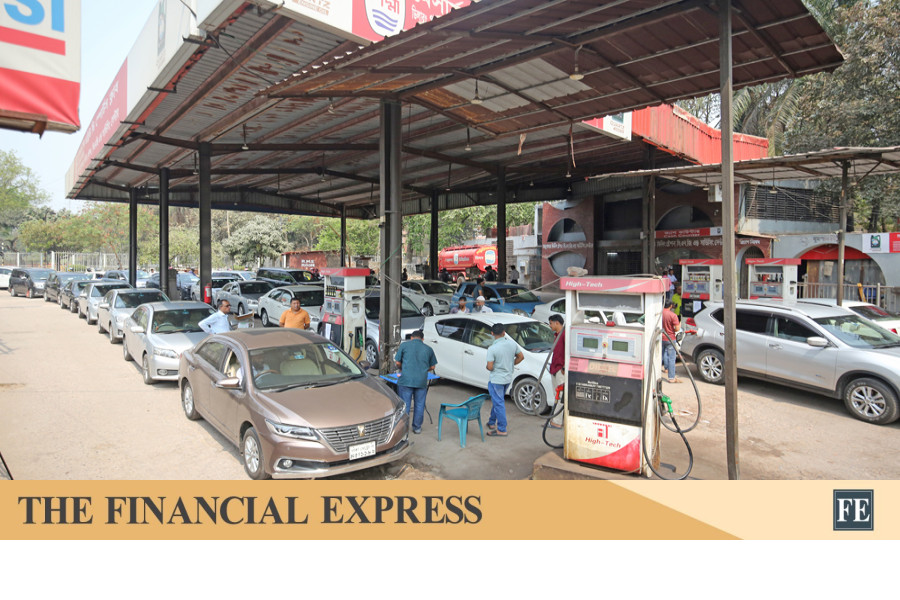
About 65 per cent of the country's liquefied natural gas imports come from Qatar under a government-to-government deal. LNG cargos must use the Strait of Hormuz, which is now risky due to the Iran war. Since about 35 per cent of the country's gas demand is met by imported LNG, any supply disruption will trigger an energy crisis soon. As summer approaches, electricity demand will rise, and a steady supply depends on gas-fired generation. Without enough LNG, power generation will be disrupted, taking a heavy toll on households and industry. The government has already decided to reduce power consumption.
Exports of goods may also face some difficulties if there is a surge of production cost due to costly power supply coupled with rise in freight insurance charge. The depreciation of taka against the greenback will, however, offset it partially.
The real strength of an economy is tested during a crisis. The Iran war once again exposes the vulnerability of Bangladesh's growth story, widely promoted by the ousted Hasina regime. By concealing facts and distorting statistics, the regime painted a rosy picture of economic growth, masking fault lines and weaknesses. The regime's energy policy was self-destructive, making the country heavily reliant on imported fossil fuels and non-renewable hydrocarbon resources, while ignoring offshore exploration in the Bay of Bengal. The policy's vulnerability was exposed earlier when the Russia-Ukraine war began in 2022. At that time and later, the regime tried to blame the war for the economic slowdown, though it never acknowledged its flawed energy policy.
Policymakers of the ousted regime claimed that higher growth would create significant opportunities in the domestic job market and that there was no need to go abroad. However, during the regime's 16 years, the number of people leaving for employment abroad grew by an average of 20.61 per cent annually. This indicates that the domestic market cannot absorb all the unemployed.
Short-sighted and irresponsible economic policymaking by previous governments does not absolve the current government of responsibility, as it now faces the reality. The government needs to act carefully, making necessary compromises in key areas. It must focus on fiscal austerity for the next few months. The suggestion of a 'hard budget constraint' made by the Citizen Platform for SDGs two weeks ago is relevant. The government should not allow its agencies to spend beyond their income limits and must not subsidise losses theough overspending. The ongoing war in the Middle East makes this even more relevant for the country.
Asjadul Kibria
Published :
Mar 07, 2026 23:21
Updated :
Mar 07, 2026 23:21
Within a week of taking the oath, the newly elected government of Bangladesh has come under heavy geopolitical and economic pressure. The United States (US) and Israel's joint invasion of Iran, which began on February 28, has already turned the Middle East into a war zone, as Iran is fighting an uneven war against a superpower. The full-scale war has put the global energy supply at serious risk, reflected in rising oil prices. So far, there is no hope for resolving the conflict soon, let alone a ceasefire.
In this turbulent situation, Bangladesh's significant integration with the Gulf region's energy supply and remittance inflows shows that the country is bearing a heavy burden of the geopolitical conflict's. Coupled with an internal economic mess inherited from previous governments, external pressures have driven the Tariqe Rahman-led Bangladesh Nationalist Party (BNP) to navigate uncharted waters.
For Bangladesh, the fallout of the Iran war is immediate and multi-dimensional, as several risk channels are now open. A rise in crude oil prices will quickly increase import bills, leading to an inflation spike and fiscal strain in the medium term. Depreciation of the taka against the dollar will also raise import costs and external debt stress. Higher freight and insurance charges will increase logistics costs. Rerouting aviation will raise ticket prices, making overseas travel costlier. A slowdown in remittance inflows will soon put millions of households under financial strain and dampen aggregate demand in the medium term.
Six Gulf countries accounted for 45 per cent of total remittances in the last fiscal year (FY25). Of these, NRBs in KSA alone account for 14 per cent of the total annual remittance, followed by 13.75 per cent from the UAE, 5.40 per cent from Oman, 5.35 per cent from Kuwait, 4.0 per cent from Qatar, and 2.50 per cent from Bahrain. Thus, any disruption of economic activities in these countries will negatively affect the NRBs, as most of them serve at the lower end of the job market. Many may lose their jobs or face a pay cut as part of cost-cutting measures in these nations which will be a serious blow to the Bangladesh economy.
Over the decades, remittances sent by the NRBs through official channels have emerged as a key source of foreign income, significantly easing pressure on the country's external current account. For instance, the annual inflow of remittance jumped by 26.80 per cent to $30.32 billion in FY25 from $23.92 billion in FY24. Coupled with a decline in overall trade deficit by $1 billion, the current account deficit came down to only $139 million in the last fiscal year from $6602 million (or $6.60 billion) in FY24, according to Bangladesh Bank. The robust inflow of remittances also modestly enhanced the foreign exchange reserves to $26.74 billion at the end of FY25, from $21.70 billion at the end of FY24.
A higher inflow of remittances boosts domestic consumption, which plays an important role in economic growth. Private consumption grew by 13.52 per cent in the last fiscal year, reaching around Tk 4 trillion, according to the Bangladesh Bureau of Statistics.
If the war continues for a few more days, remittance inflows may start to decline after a brief surge, as most NRBs in the Gulf countries will try to send as much income as possible to their families, especially ahead of Eid-ul-Fitr in the third week of this month. After that, inflows may decline. If the war continues for a few months, the situation will worsen, and many NRBs may have to return home.
Another critical area for Bangladesh is the supply of energy from the Gulf regions. The country is heavily dependent on fossil fuel imports. In FY25, imports accounted for about 65 per cent of total power supply, including imported electricity and fuels used in electricity generation, according to the Institute for Energy Economics & Financial Analysis. Bangladesh relies on imports for nearly all refined petroleum products, while crude oil makes up about 20 per cent of the total supply and is processed at local refineries.
About 65 per cent of the country's liquefied natural gas imports come from Qatar under a government-to-government deal. LNG cargos must use the Strait of Hormuz, which is now risky due to the Iran war. Since about 35 per cent of the country's gas demand is met by imported LNG, any supply disruption will trigger an energy crisis soon. As summer approaches, electricity demand will rise, and a steady supply depends on gas-fired generation. Without enough LNG, power generation will be disrupted, taking a heavy toll on households and industry. The government has already decided to reduce power consumption.
Exports of goods may also face some difficulties if there is a surge of production cost due to costly power supply coupled with rise in freight insurance charge. The depreciation of taka against the greenback will, however, offset it partially.
The real strength of an economy is tested during a crisis. The Iran war once again exposes the vulnerability of Bangladesh's growth story, widely promoted by the ousted Hasina regime. By concealing facts and distorting statistics, the regime painted a rosy picture of economic growth, masking fault lines and weaknesses. The regime's energy policy was self-destructive, making the country heavily reliant on imported fossil fuels and non-renewable hydrocarbon resources, while ignoring offshore exploration in the Bay of Bengal. The policy's vulnerability was exposed earlier when the Russia-Ukraine war began in 2022. At that time and later, the regime tried to blame the war for the economic slowdown, though it never acknowledged its flawed energy policy.
Policymakers of the ousted regime claimed that higher growth would create significant opportunities in the domestic job market and that there was no need to go abroad. However, during the regime's 16 years, the number of people leaving for employment abroad grew by an average of 20.61 per cent annually. This indicates that the domestic market cannot absorb all the unemployed.
Short-sighted and irresponsible economic policymaking by previous governments does not absolve the current government of responsibility, as it now faces the reality. The government needs to act carefully, making necessary compromises in key areas. It must focus on fiscal austerity for the next few months. The suggestion of a 'hard budget constraint' made by the Citizen Platform for SDGs two weeks ago is relevant. The government should not allow its agencies to spend beyond their income limits and must not subsidise losses theough overspending. The ongoing war in the Middle East makes this even more relevant for the country.