[🇧🇩] Monitoring Bangladesh's Economy

[🇧🇩] Monitoring Bangladesh's Economy
1K
39K
More threads by Saif

G Bangladesh Defense

Remittances grow 17.6pc to record $35.34b in FY26

Published :
Jun 29, 2026 18:26
Updated :
Jun 29, 2026 18:26

1782789780234.webp


Bangladesh's remittance inflows crossed the US $35.34 billion mark in the concluding fiscal year (FY26), registering a robust double-digit annual growth, according to the latest data from Bangladesh Bank.

The data, released by the central bank's Foreign Exchange Policy Department, showed that expatriate Bangladeshis sent $35.34 billion between July 2025 and June 28, 2026.

This represents a significant 17.6 per cent increase compared to the $30.04 billion recorded during the same period in the previous fiscal year, FY25.

In the first 28 days of June 2026 alone, the country received $2.58 billion in remittances, marking a 1.8 per cent monthly growth compared to $2.54 billion during the corresponding period in June 2025.

On June 28, 2026, a single-day inflow of $133 million was registered, as per a UNB report.

Central bank officials attributed this sustained growth to the streamlined banking channels, stable exchange rates, and increased compliance measures that incentivised non-resident Bangladeshis (NRBs) to channel their earnings through formal networks.

Besides, Bangladesh's foreign exchange reserve position has shown a resilient outlook.

As of June 28, 2026, the gross foreign forex reserves stood at $36.31 billion.

Meanwhile, calculated under the International Monetary Fund's (IMF) Balance of Payments Manual 6th Edition (BPM6) guideline, the country's net international reserves stood at $31.73 billion.​
 

Govt shifting from debt-driven to investment-led economy: Finance Minister

FE ONLINE REPORT

Published :
Jun 29, 2026 18:36
Updated :
Jun 29, 2026 18:36

1782789933074.webp

File Photo

Finance Minister Amir Khosru Mahmud Chowdhury has said Bangladesh is transitioning from a debt-driven economy to an investment-led one, with private enterprise, innovation and employment set to drive future growth.

The minister made the remarks on Monday while winding up the discussion on the proposed FY2026-27 budget in the Jatiya Sangsad.

He said the current government inherited a fragile economy and weakened institutions but remains confident of restoring macroeconomic stability and achieving sustainable growth.

“No matter how great the challenges are, they can be overcome through proper leadership, effective institutions, an efficient public administration and the spontaneous participation of the people,” he said.

The government aims to build an economy where the benefits of growth are widely shared and investment, production and employment become the key engines of development, he added.

Khosru said the government is pursuing a three-pronged strategy—Recovery and Stabilisation, Restoration, and Reconstruction for Acceleration (3R)—to revive the economy.

To reduce reliance on debt, the government plans to cut bank borrowing by Tk 60 billion in the next fiscal year, list state-owned enterprises on the stock market and expand alternative financing through bonds and equity instruments.

The minister said the government has intensified its crackdown on financial crimes. As of May 2026, assets worth around Tk 723.43 billion had been seized or frozen at home and abroad, while 23 Mutual Legal Assistance requests had been sent to 13 countries to recover laundered assets.

Referring to the proposed budget targets of 7.5 per cent inflation and 6.5 per cent GDP growth, he said policy reforms, stronger performances in agriculture, industry and services, and continued growth in exports and remittance inflows would support the recovery.

On revenue mobilisation, he said the government would broaden the tax base rather than raise tax rates, alongside automating tax administration and strengthening measures against tax evasion. Traditional markets and small grocery shops will remain outside the proposed flat-rate VAT regime.

Reassuring depositors of the five merged Shariah-based banks, Khosru said protecting public deposits remains the government’s top priority. Individual depositors will be allowed to withdraw up to Tk 200,000 immediately, with the remaining balances to be repaid in phases.

To deepen the capital market, the proposed budget includes tax incentives such as exemptions on income from zero-coupon bonds, lower tax rates for listed companies and enhanced tax benefits for mutual funds.

On the IMF, the minister said Bangladesh had exited the previous programme because some of its conditions were not aligned with national interests, but remained open to negotiating a new arrangement that better serves the country’s priorities.

He also outlined plans to strengthen energy security by expanding LNG import capacity, accelerating domestic gas exploration, establishing the Second Eastern Refinery and increasing the share of renewable energy to 20 per cent of electricity generation by 2030.

“The success of this budget will depend not on its announcement, but on its effective implementation,” the finance minister said.​
 

Ambitious ADP, old bottlenecks
Why implementation matters more than allocation

S M Abdullah and Muhammed Shahadat Hossain Siddiquee

Published :
Jul 01, 2026 00:02
Updated :
Jul 01, 2026 00:02

1782862073609.webp


The national budget for FY2026-27 (FY27) places renewed emphasis on public investment. With an Annual Development Programme (ADP) of Tk 3.0 trillion, equivalent to 4.4 per cent of gross domestic product (GDP), the government has signalled its intention to use development spending as a key driver of economic recovery. This expansion comes at a time when private investment remains subdued, growth has slowed, and employment generation has yet to regain momentum.

At first glance, the increase in ADP appears encouraging. Yet Bangladesh's experience over the past decade suggests that the challenge has rarely been a shortage of ambitious allocations. Rather, the recurring problem has been weak implementation. Unless long-standing structural bottlenecks are addressed, a larger ADP may merely translate into a larger backlog of unfinished projects and rising fiscal pressures.

The budget assumes that development expenditure will increase by over 47 per cent compared to the revised FY2025-26 budget. A sizeable portion of this spending is expected to be financed through foreign loans and project aid. Such optimism, however, stands in contrast to recent implementation performance. During the first ten months of FY2025-26, only around one-third of the original ADP allocation had been utilised, raising questions about the capacity to absorb a much larger programme.

Historically, Bangladesh has struggled to translate allocations into timely outcomes. Time overruns, cost escalations and repeated project revisions have become almost institutionalised. According to recent estimates, nearly half of the investment projects included in the FY2026-27 ADP have already undergone one or more revisions. More than 400 projects have experienced time extensions, and dozens have been running for over a decade. Such delays not only increase costs but also postpone the economic and social returns expected from public investment.

The growing number of carryover projects is particularly concerning. Hundreds of projects that were supposed to have been completed in previous years continue to require additional allocations. Carryover projects are often symptomatic of deeper weaknesses in project preparation, procurement, land acquisition and coordination among implementing agencies. As projects linger, inflation and exchange rate fluctuations further inflate costs, placing additional pressure on public finances.

Equally troubling is the persistence of symbolic allocations. Scores of projects continue to receive token allocations of Tk 0.1 million or less simply to keep them on the books. Meanwhile, more than a thousand projects remain listed without any allocation. These practices dilute priorities, fragment resources and undermine the credibility of development planning.

Another area warranting attention is ADP financing. The FY2026-27 programme envisages that more than one-third of development spending will be financed through project aid. Yet Bangladesh has historically faced difficulties in utilising external assistance efficiently. Delays in procurement, weak project readiness and cumbersome approval processes have frequently resulted in low disbursement rates and accumulation of undisbursed commitments. Consequently, reliance on foreign financing without improving implementation capacity risks creating unrealistic expectations.

The issue therefore is not merely how much money is allocated, but how effectively that money is spent. International evidence shows that the quality of public investment matters as much as, if not more than, its quantity. Countries with stronger public investment management systems are able to achieve higher growth returns from similar levels of spending.

Bangladesh may thus need to shift its focus from expansion to execution. First, project selection should become more rigorous, with greater emphasis on economic viability and readiness before inclusion in the ADP. Second, priority should be given to completing ongoing projects rather than continuously adding new ones. Third, implementing agencies need stronger technical and managerial capacity, accompanied by greater accountability for delays and cost overruns. Fourth, digital monitoring systems and public disclosure of project performance should be strengthened to improve transparency and citizen oversight.

Finally, development spending should move away from a culture of "allocation success" towards a culture of "implementation success". In budget discussions, attention often centres on the size of the ADP, as though bigger allocations automatically imply greater development. Experience suggests otherwise. Roads, hospitals, schools and energy infrastructure contribute to growth not when money is allocated, but when projects are completed on time, within budget and with quality.

As Bangladesh navigates a difficult economic environment, improving the effectiveness of public investment may yield far greater dividends than merely increasing its scale. The true test of the FY2026-27 budget will therefore lie not in the ambition of its ADP, but in the state's ability to deliver what it promises.

Dr S M Abdullah and Dr Muhammed Shahadat Hossain Siddiquee are associate professor and professor respectively, Department of Economics, University of Dhaka.​
 

Need for reversing GNS trend

Published :
Jul 01, 2026 00:05
Updated :
Jul 01, 2026 00:13

1782862198016.webp


It is common knowledge that any household's general tendency is to spend less than what it earns. But when the expenditures to meet basic necessities like housing, food, transports, healthcare, taxes, etc., exceed earnings, the household in question cannot save. If the pattern of less income than expenditure persists nationwide for long, then that is bad news for the economy concerned. For household savings remains an important element of Gross National Savings (GNS) which, according to a report published in this paper a couple of days back, fell by 0.74 percentage point during the just-concluded financial year (FY). The decline in GNS, however, has been a constant phenomenon since the FY23 when it peaked to 29.95 per cent of GDP. The fall in household savings was not solely responsible for the decline in GNS during all these years. Other two major components--- corporate savings and government savings were equally responsible.

Economists have expressed concern about this pattern of persistent drop in GNS rate as it points to something that is not incidental, but structural in nature so far as the overall economy is concerned. In this connection, the macroeconomic indicators including the inflation rate have remained high despite the successive government's strict monetary policy. The consumer price index, for instance, has, of late, been stubbornly soaring at around 9.4 per cent. The net outcome of it all is that the common household's expenditures, that is, its cost of living, has been rising. Increased food and utility prices have eroded the households' purchasing power. Lower- and middle-income families are being forced to eat into their savings or become indebted to meet daily expenses. The common households have been left with virtually no disposable income to save. The state of business activities does not need any elaboration. When households do not have enough to spend, banks become shy to offer funds due to liquidity shortage and businesses obviously suffer heavily. This again hurts government's revenue earnings, leading to shortage of investable funds.

Since domestic investments come from national savings, a declining savings rate has been stifling economic expansion, which is severely impacting key sectors like infrastructure and manufacturing. Thus private sector investment remains stagnant, Economists have also pointed out that savings and investments are inextricably linked. All these developments including an uncertain business environment, high cost of fund (due to high rate of bank interest), etc., have militated against fresh private investment and reduced incentives for households as well as businesses to save.

The present elected government that has inherited a problem-ridden economy is trying to make a turnaround. But it is aware how difficult the job is. That is why the incumbent finance minister has sought a couple of years' time to put the economy on track. With the government's revenue earnings remaining at a deplorable level, financial institutions limping and bureaucracy performing well below the desired level, it is hard to expect any meaningful change in major macroeconomic indicators, including GNS. A reverse trend in GNS, however, is all the more necessary to support economic growth. The government will have to work hard to tame inflation, boost its revenue earning and infuse dynamism in corporate activities in order to make that happen.​
 

Can Bangladesh build a democratic, humane & inclusive economy?

Golam Rasul

Published :
Jul 01, 2026 00:00
Updated :
Jul 01, 2026 00:00

1782862610199.webp

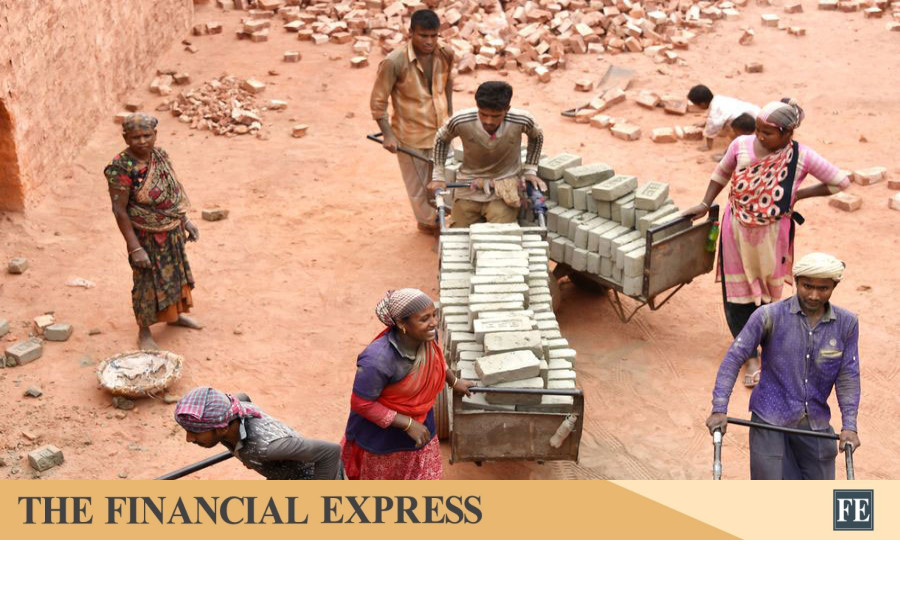
People work at a brickfield in Savar on the outskirts of Dhaka, Bangladesh, March 7, 2020. An inclusive economy requires policies that actively support labour-intensive sectors —Xinhua Photo

The theme of Bangladesh’s national budget for fiscal year 2026–27—”Towards a Democratic, Humane and Inclusive Economy”—is among the most ambitious framings attached to an annual fiscal document in recent years. It reflects a growing recognition that the country’s development challenge is no longer simply how to generate economic growth, but how to ensure that the benefits of growth are distributed more broadly and equitably. Concerns about inequality, youth unemployment, unequal access to opportunities and the concentration of economic power have, therefore, moved closer to the centre of policy debate.

But how should such an aspiration be evaluated? Ultimately, the budget must be judged not by its rhetoric but by its fiscal priorities and policy choices. Three questions are particularly important. First, who pays and who benefits from the state’s fiscal system? This is the test of a democratic economy. Second, does the state merely protect people from economic hardship, or does it also expand their capabilities and opportunities? This is the test of a humane economy. Third, who gains access to economic opportunities, productive employment and the benefits of growth? This is the test of an inclusive economy.

The answers to these questions offer an important window into the kind of development state Bangladesh is seeking to build.

THE DEMOCRATIC ECONOMY: FISCAL STRUCTURE AND DISTRIBUTIONAL POWER: A democratic economy means more than competitive elections or parliamentary representation. It concerns the fairness of economic institutions, the distribution of opportunities, and the ability of citizens to influence how public resources are allocated. At its foundation is a fiscal system that distributes both burdens and benefits equitably.

Bangladesh’s revenue structure, however, remains structurally regressive. Approximately 70 per cent of tax revenue continues to derive from indirect sources—VAT, customs duties and excises. Indirect taxes, whatever their administrative convenience, impose a proportionally heavier burden on lower- and middle-income households: a garment worker purchasing essential goods and a wealthy industrialist purchasing the same goods pay identical VAT rates, but that tax consumes a far greater share of the worker’s income. The result is a tax system that struggles to reduce inequality.

Direct taxation has expanded at the margins, but not sufficiently to alter this structural reality. As income and wealth inequality widens—a trend visible in urban land markets, banking sector credit concentration and the expanding fortunes of a narrow commercial elite—the failure to build a genuinely progressive tax regime becomes not merely a fiscal problem but a democratic one. It signals that those with the greatest capacity to contribute to public goods bear a proportionally lighter burden than those with the least.

Fiscal decentralisation presents a parallel concern. Despite longstanding commitments to local governance strengthening, most public expenditure decisions remain centralised. Local government institutions operate with limited fiscal autonomy and constrained revenue-raising authority, leaving citizens with little meaningful influence over resources that directly shape their communities. A democratic economy requires not only representative institutions at the centre but devolved fiscal authority at the periphery.

Yet fairness in taxation and resource allocation is only one dimension of a democratic economy. Equally important is whether public spending expands people’s capabilities and opportunities. This brings us to the budget’s second aspiration: building a humane economy.

THE HUMANE ECONOMY: PROTECTION VERSUS TRANSFORMATION: Viewed through a humanitarian lens, the 2026–27 budget contains genuine strengths. Social protection allocations exceed Tk 144,000 crore, and in the context of persistent inflation, labour market uncertainty and worsening climate-related vulnerabilities, this expenditure provides an essential safety buffer for millions of low-income households. The expansion of social transfers is not trivial; it reflects a policy recognition that growth alone does not protect the vulnerable.

Yet a humane economy requires more than protection—it requires transformation. There is an important analytical distinction between a state’s protective capacity and its transformative capacity. Protective policies reduce immediate suffering; transformative policies expand human capabilities and long-run opportunities. Sustainable development depends on the latter.

This distinction becomes stark in education and healthcare sectors. Despite absolute increases in allocations, public spending on education remains around 2 per cent of GDP—well below the UNESCO-recommended benchmark of 4–6 per cent—and public health expenditure hovers near 1 per cent of GDP, the lowest in South Asia. The consequence is that more than 70 per cent of healthcare costs continue to be financed directly by households through out-of-pocket payments. Such chronic underinvestment does not merely constrain access to services; it entrenches intergenerational inequality by limiting the social mobility of families unable to absorb private health or education costs.

The same logic applies to skills and workforce development. Bangladesh’s demographic dividend—a large, young, working-age population—is an asset with a limited window of productive utilisation. Automation, digitalisation and restructuring global value chains are transforming labour markets at pace. Yet investments in technical and vocational education, innovation infrastructure and digital capability remain modest relative to the scale and urgency of that transition. A humane economy cannot afford to leave its youth underprepared for a rapidly changing economic environment.

Capability formation ultimately matters because it determines whether people can participate meaningfully in economic life. In practice, that participation is most clearly reflected in access to productive employment.

THE INCLUSIVE ECONOMY: EMPLOYMENT AS THE CENTRAL TEST: If one indicator best captures whether an economy is truly inclusive, it is productive employment. Employment is not merely a source of income; it is the primary vehicle of dignity, social mobility and economic participation. For most households, the most effective form of social protection is not a transfer payment but a decent and secure job.

Yet employment receives insufficient prominence in the budget’s narrative. Bangladesh continues to face significant and growing challenges: youth unemployment, graduate underemployment and structural skills mismatches that neither the education system nor the labour market has adequately addressed.

The data are concerning. According to the Bangladesh Bureau of Statistics Labour Force Survey, nearly 1.94 million young people aged 15–29 were unemployed, representing approximately 7.2 per cent of the youth labour force, and youth account for nearly four-fifths of total unemployment. More strikingly, the Labour Force Survey 2024 recorded an unemployment rate of 13.5 per cent among university graduates—the highest of any educational group—with around one-third of graduates remaining unemployed for up to two years after completing their studies. Of the country’s 2.62 million unemployed individuals, approximately 885,000 held university degrees.

These figures point to a structural disconnect between educational expansion and productive employment generation. Bangladesh has successfully broadened access to tertiary education; it has not yet built the economic structures capable of absorbing a more educated workforce into productive, well-remunerated employment. When higher education no longer reliably delivers economic mobility, public confidence in both institutions and development can begin to erode—a cost that extends well beyond labour market statistics.

An inclusive economy requires policies that actively support labour-intensive sectors, reduce barriers to entrepreneurship, and forge stronger institutional linkages between education and labour market demand. Employment creation must be treated not as a secondary outcome of growth but as a primary development objective in its own right.

At its core, the challenge is one of capability formation. Countries that successfully moved into upper-middle-income status invested heavily in education, health, technical skills and innovation systems. The long-term success of Bangladesh’s development strategy will depend on whether public expenditure increasingly shifts from consumption support towards investments that enhance productivity and human potential.

INCLUSION AND THE CONCENTRATION OF ECONOMIC POWER: A deeper structural concern underlies these sectoral challenges. Bangladesh’s development model has, over time, produced significant concentrations of economic power. In banking, large-scale industry, import trade, energy and real estate, economic resources and market influence are increasingly concentrated among a relatively narrow set of actors. Bangladesh Bank data show a high concentration of credit among a relatively small number of large borrowers, while SMEs continue to receive a disproportionately small share of formal financing. Over 70 per cent of loans concentrated among a small number of business groups. The banking sector’s non-performing loan crisis is, in part, a symptom of this concentration: large enterprises have historically absorbed a disproportionate share of institutional credit, while small and medium enterprises—the primary engines of employment and local economic dynamism—face persistent financing constraints.

This is a paradox of inclusive development. Those who generate the greatest share of jobs often face the greatest barriers to capital and opportunity. Inclusive growth cannot be achieved through social transfers alone; it requires competitive markets, accessible finance, lower barriers to entrepreneurship, and institutional safeguards against the capture of economic rents by politically connected elites.

The budget emphasises redistribution through social protection mechanisms and places comparatively less weight on the structural and institutional reforms necessary to democratise access to economic opportunities.

WHAT KIND OF DEVELOPMENTAL STATE IS EMERGING?: Bangladesh has already demonstrated that it can generate growth. The challenge of the next decade is whether it can broaden access to the opportunities created by that growth. A democratic, humane and inclusive economy will not emerge from social transfers alone. It will require stronger investment in human capabilities, productive employment, competitive markets and a more progressive fiscal system. The success of Budget 2026–27 should therefore be judged not by the size of its allocations, but by whether it expands the economic agency of ordinary citizens and makes growth more broadly shared.

Golam Rasul, Ph.D is a Professor of Economics at the International University of Business Agriculture and Technology (IUBAT), Dhaka.​
 

Latest Posts

Back