Home Watch Videos Wars Movies Login

[🇧🇩] Monitoring the political activities of BNP

Latest Posts Countries Wars Q&A

[🇧🇩] Monitoring the political activities of BNP
413
11K
More threads by Saif

G Bangladesh Defense
Efforts on against level playing field: BNP
Staff Correspondent 14 January, 2026, 00:35

1768354285174.webp


The Bangladesh Nationalist Party on Tuesday alleged that a particular party was deliberately attempting to undermine the level-playing field in the run-up to the Jatiya Sangsad elections, raising the issue during a meeting with the Election Commission.

A BNP delegation led by the party’s election steering committee chair Nazrul Islam Khan met the chief election commissioner AMM Nasir Uddin at the EC headquarters in the capital.


Speaking to reporters after the meeting, Nazrul said that while the BNP was complying with the commission directives, other political forces were allegedly acting in a coordinated manner to tilt the contest in their favour.

The BNP, Nazrul said, is making deliberate efforts to uphold a fair electoral environment by strictly following instructions from the Election Commission.

As an example, he noted, party chair Tarique Rahman has postponed a planned personal visit to the northern districts after the commission requested restraint.

‘Despite our compliance, we are seeing leaders of other political parties continuing open campaigns, holding rallies and seeking votes for their symbols without any apparent restrictions,’ he said, alleging selective enforcement of electoral rules.

Another key issue discussed during the meeting was the disqualification of candidates on grounds of dual citizenship.

Nazrul alleged ‘strategic bias’ in the layout of postal ballots sent to expatriate voters, claiming that the arrangement of party names and symbols unfairly favoured a particular political party ahead of the upcoming parliamentary election.

He said that the postal ballot paper had been designed with five columns and 14 rows, resulting in the names and symbols of three specific political parties appearing on the first line.

By contrast, Nazrul Islam claimed, the BNP’s electoral symbol had been placed in the middle in such a way that it became less visible once the paper was folded.

The BNP requested that the postal ballots yet to be dispatched within the country be corrected to prevent a repetition of the ‘tactical approach’.

The party also raised allegations of irregularities in the distribution of postal ballots in Bahrain.

Nazrul Islam said that the commission had acknowledged its awareness of the incident and confirmed that it had contacted Bangladesh’s ambassador to Bahrain.

The commission said that an investigation was under way and action would be taken if wrongdoing was proven.

Replying to a question, Nazrul Islam said that the BNP was the first to demand reforms and would support the ‘yes’ side in the referendum on the issue.

On broader electoral issues, the BNP reiterated its demand for equal application of the law, particularly regarding the disqualification of candidates over dual citizenship.

Nazrul Islam Khan said that candidates who had renounced foreign citizenship should be eligible to contest, warning that selective disqualification undermined fairness.

He cited the cancellation of candidacy, including of two from the Jamaat-e-Islami, saying that all affected candidates should be given the opportunity for review.​
 
Analyze

Analyze Post

Add your ideas here:
Highlight Cite Respond
Tarique Rahman’s ‘London experience’ and Bangladesh reality

Nuzrate Aziz
Published: 14 Jan 2026, 08: 18

1768438411474.webp


BNP Chairperson Tarique Rahman at a goodwill exchange meeting with newspaper editors, held last Saturday at a hotel in Banani, Dhaka. Tanvir Ahammed

At a discussion meeting with media editors, BNP Chairperson Tarique Rahman appeared as a mature and attentive political leader. He outlined his plans for development in areas such as water management, health, agriculture, women’s rights, vocational education, skilled overseas employment export, and the IT sector.

However, his proposed Agriculture Card and Family Card schemes remain unclear. Questions have been raised about the purpose of these cards, sources of funding, safeguards against political misuse, the absence of expert consultation, and the lack of pilot projects. In particular, there are serious doubts about the rationale for a universal Family Card and the feasibility of financing such a large-scale programme.

Having spent more than a decade and a half in the United Kingdom, Tarique Rahman has closely observed the planning processes and governance mechanisms of the Westminster system. He has directly witnessed the policy formulation and implementation approaches of the two main political parties—the Labour Party and the Conservatives. He has also seen firsthand the workings of a developed economy, where advanced transport infrastructure, health and medical services, quality education, robust social protection programmes, and institutional social values function in a complementary manner.


But it took more than four hundred years for the British state system to reach this stage. Over this long period, a solid foundation was built in its politics and economy. The plans adopted at Westminster today are effective precisely because they rest on that historical and institutional foundation.

Bangladesh’s reality is different. Therefore, planning here must be tailored to Bangladesh’s specific context. Before adopting any project, the first step should be to assess its likely outcomes. This should be followed by consultations with experienced individuals, researchers, and relevant professionals, as well as academic debate.

If state governance in the Westminster style is to be discussed, it must be remembered that no major plan there is adopted without such deliberation. My long experience of living in England, studying there, teaching, and being involved in research projects clearly demonstrates this. Testing effectiveness through pilot projects before implementing any major programme is a widely accepted practice. It remains unclear whether such initiatives have been undertaken for the proposals in question.

Another important question is tied to political reality. After 5 August 2024, the character, competence, and judgment of the people of Bangladesh—or of political party leaders and activists—did not change overnight. In that case, where is the guarantee that any new card or benefit will not be distributed along party lines?

Already, this card has become a tool of confusion in election-oriented politics. In some places, it is being said that the card will not be given if people do not vote; elsewhere, dummy copies of the card are being handed out to voters. If a state social protection initiative turns into a political instrument in this way, its credibility inevitably comes into question.

In this context, clarity is also needed about the future of the VGF card. If the BNP comes to power, it could choose to expand the scope of this card. It could also decide to hand the card to the mother of the household instead of the male family member. If, in the past, cards were distributed on political considerations, then the correct approach would be to rectify that practice, ensure neutrality in distribution, and deliver the cards to the genuinely eligible families.

We must remember that once a party is elected to form the government, it is no longer just the party’s government; it becomes the government of the country and its people. Therefore, the benefits of social protection programmes should reach the right people in the interest of the nation.

Tarique Rahman has spoken about restructuring vocational institutes with modern courses and content. This is undoubtedly a positive plan, as it can help a portion of the youth acquire the skills needed for employment. His proposal to provide training before sending workers abroad is also highly important, as it can enhance both the skills and income of expatriate workers. He has also emphasised making better use of existing IT infrastructure, which could create opportunities for progress in online and technology-based sectors.

However, the people of the country primarily want clear plans from major political parties on three key issues: how unemployment will be reduced, how corruption will be controlled, and how commodity prices will be kept within the purchasing power of ordinary citizens.

Bangladesh’s position on the issue of corruption is particularly worrying. Out of 180 countries, Bangladesh ranks 151st. According to the 2024 Corruption Perceptions Index, nearly 77 percent of government activities in the country involve some form of corruption. There is still no clear outline of how this corruption would be addressed if a new government comes to power.

Due to time constraints, this topic may not have been discussed in detail, but the nation expects that Tarique Rahman, alongside his other plans, will present a clear and realistic strategy for tackling corruption, reducing unemployment, and controlling commodity prices.

The strength of any political program ultimately depends on its feasibility and ethical acceptability. In that regard, clarity and credibility will be its greatest assets.

*Nusrate Aziz is a researcher and academic​
 
Analyze

Analyze Post

Add your ideas here:
Highlight Cite Respond

Tarique turns emotional as children of disappeared BNP activists recount years of waiting

UNB
Published :
Jan 17, 2026 23:32
Updated :
Jan 17, 2026 23:32

1768696463965.webp


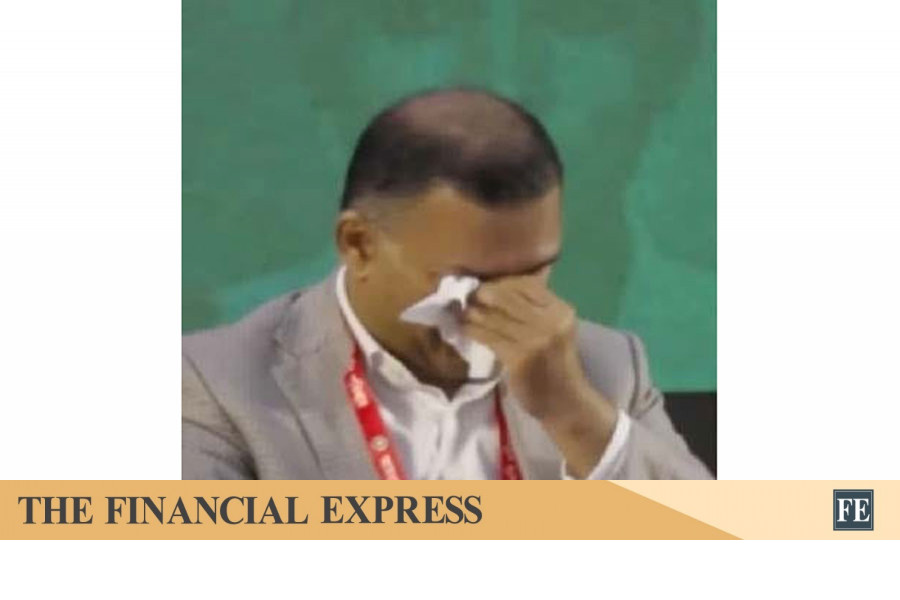
BNP Chairman Tarique Rahman struggled to hold back his emotions on Saturday as children of several BNP leaders and activists, who became victims of enforced disappearance, broke down in tears while recalling years of waiting for their missing fathers.

The scene unfolded at the Bangladesh-China Friendship Conference Centre in Dhaka during a views-exchange meeting with family members of victims of enforced disappearances, killings and torture during the anti-fascist movement.

Amra BNP Paribar and Mayer Daak jointly organised the programme at the Bangladesh-China Friendship Conference Centre.

The event honoured victims of enforced disappearances, killings and torture during the Awami League government, and paid tribute to the late BNP Chairperson Begum Khaleda Zia.

During the discussion, Tarique briefly wiped his eyes with a tissue as children shared their experiences, drawing silence across the hall.

One of them was Adiba Islam Hridhi, daughter of Parvez Hossain, a leader of the Banani unit of Jatiyatabadi Chhatra Dal who disappeared on 2 December 2013.

Family members have long claimed he was picked up by men identifying themselves as detectives, and they have repeatedly demanded information and justice. A decade later, his daughter said she still waits for him.

“Years pass and new years arrive, but our father never comes home,” Hridhi said, her voice shaking. “My dream has always been to go to school holding my father’s hand, but that dream remains unfulfilled. How long do I have to wait? Will I not get my father back?” she asked before breaking down in tears.

Safa, another child, spoke about her father Md Sohel, a vice-president of the Chhatra Dal’s Bangshal unit, who also went missing in 2013.

She said she was only two months old at the time and has never seen her father since.

“For more than a decade we have searched for him, but found nothing. When others my age learn to walk holding their fathers’ hands, I search for mine. How long must I keep looking?” Safa said.

Relatives of many others shared similar accounts, saying they lost fathers, sons, brothers or husbands during the Awami League’s tenure.

The hall remained heavy with grief as attendees, organisers and even some security staff appeared visibly moved by the testimonies.

BNP Standing Committee member Salahuddin Ahmed, who was subjected to enforced disappearance in 2015 for 62 days, was also seen becoming emotional and wiping his tears with tissues.​
 
Analyze

Analyze Post

Add your ideas here:
Highlight Cite Respond

Rumeen Farhana warns of ‘August 5 like’ situation if election neutrality is compromised

Authorities sought legal action against Brahmanbaria-2 independent candidate

By Our Correspondent, Brahmanbaria

1768785207144.webp

Photo: Star

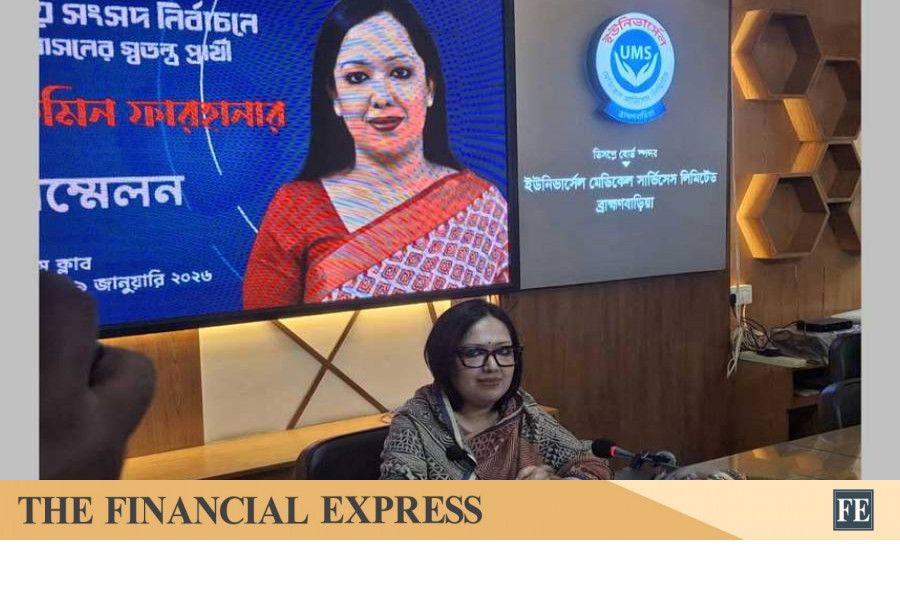
Barrister Rumeen Farhana, an independent candidate for the Brahmanbaria-2 constituency, has cautioned that anything resembling the July Uprising could erupt in any constituency if neutrality of the administration, the Election Commission, or the government comes into question during the upcoming national election.

Speaking at a yard meeting at Chanpur Bazar in Kalikachchh union of Sarail upazila, she said, “It is the responsibility of the administration and the Election Commission to ensure that each of the nearly half a million voters in my constituency can go to polling centres safely and cast their votes freely and without fear.”

“If there is any lapse in neutrality, everyone should remember August 5. What happened across Bangladesh on August 5 can happen in any constituency,” Rumeen said.

Her remarks came a day after a mobile court shut down her gathering at Islamabad in Noagaon union of Sarail upazila over alleged violations of the electoral code of conduct. During the operation, one of her supporters was fined Tk 40,000. A video of her heated exchange with the executive magistrate later went viral on social media.

Authorities have since sought legal action against Rumeen. Sarail Upazila Nirbahi Officer (UNO) and Assistant Returning Officer Md Abubakar Sarkar submitted an application to the Election Investigation and Judicial Committee of Brahmanbaria‑2 constituency.

The application alleges that Rumeen organised the January 17 gathering without prior permission, violating Section 18 of the Electoral Code of Conduct 2025.

It further claims she behaved aggressively towards the executive magistrate, making threatening gestures and verbal warnings in English, while her supporters provoked the crowd, creating a “mob‑like” situation.​
 
Analyze

Analyze Post

Add your ideas here:
Highlight Cite Respond

Rumeen Farhana says administration ‘punished’ her thrice over single offence

bdnews24.com
Published :
Jan 19, 2026 22:09
Updated :
Jan 19, 2026 22:09

1768868855278.webp

Rumeen Farhana, the independent candidate for Brahmanbaria-2, has said the administration has “punished” her three times over an offence.

She accused the election authorities of showing “bias” during a meeting with journalists at the Brahmanbaria Press Club on Monday.

She was served a show-cause notice for allegedly breaching the electoral code of conduct after Assistant Returning Officer and Sarail Upazila administrator Md Abubakor Sarkar accused her of “creating a mob”.

He alleged that she behaved in an arrogant and discourteous manner when an executive magistrate asked for her rally to be stopped.

She also allegedly issued threats.

In a video that went viral on social media, Rumeen was seen showing her thumb to the administrator.

“I did not show my thumb to anyone. I was copying Ashuganj Upazila BNP’s General Secretary when I made this gesture,” said Rumeen.

“Even if I did commit an offence, I am being punished three times for it,” she said.​
 
Analyze

Analyze Post

Add your ideas here:
Highlight Cite Respond

6 European ambassadors including Michael Miller meet Tarique Rahman

Staff Correspondent Dhaka
Published: 19 Jan 2026, 20: 44

1768869945496.webp


European Union (EU) Ambassador to Dhaka Michael Miller in a meeting with BNP Chairman Tarique Rahman on Monday evening. Courtesy: BNP media cell

European Union ambassadors from six countries, led by the EU ambassador to Dhaka, Michael Miller, paid a courtesy call on BNP chairman Tarique Rahman.

The meeting took place today, Monday, at 5:40 pm at the BNP chairman’s office in Gulshan, Dhaka. The ambassadors of Germany, France, Sweden, Denmark, Spain and Italy attended. The BNP media cell informed the media about the meeting.


BNP secretary general Mirza Fakhrul Islam Alamgir, standing committee member Amir Khosru Mahmud Chowdhury, BNP chairman’s foreign affairs advisory committee member Humayun Kabir, adviser Mahdi Amin and the chairman’s press secretary Saleh Shibli were present.

Earlier today, after 11 am, the Canadian ambassador to Dhaka, Ajit Singh, paid a courtesy call on Tarique Rahman.

Later, around 5 pm, the US ambassador to Dhaka, Brent Christensen, met him. Today, three separate meetings were held between the BNP chairman and foreign diplomats.​
 
Analyze

Analyze Post

Add your ideas here:
Highlight Cite Respond

BNP promises jobs, social security, and reform in election push

FE ONLINE REPORT
Published :
Jan 20, 2026 21:29
Updated :
Jan 20, 2026 21:29

1768955331504.webp


Bangladesh Nationalist Party (BNP) has conveyed its eight-point priority social policies, including a sweeping reform agenda, pledging to rebuild the country’s economy and social fabric after what they describe as years of mismanagement under the previous authoritarian regime of the Awami League.

Speaking at a policy dissemination event in a city hotel on Tuesday, the BNP leaders outlined a vision of inclusive growth, democratic accountability, and citizen-centred development before the diplomatic and development partner communities ahead of the national polls scheduled for February 2026.

BNP secretary general Mirza Fakhrul Islam Alamgir was the chief guest at the event, where adviser to the BNP chairman Dr Ziauddin Hyder presented a keynote paper on “BNP’s eight priority social policies.

BNP’s joint secretary general on International Affairs Humaiun Kabir delivered the welcome speech at the programme moderated by Barrister Gias Uddin Rimon.

In his keynote paper, Mr Haider unveiled BNP’s eight‑point development plan pledging sweeping reforms across agriculture, employment, education, healthcare, environment, sports, and welfare.

The plan’s centrepiece is the ‘Krishok Card’ (Farmer Card), a digital instrument designed to provide subsidised fertiliser, seeds, pesticides, machinery, crop insurance, and fair‑price procurement mechanisms and markets of their agro-output, he said.

Farmers would also gain mobile access to weather information and training, extending support to fish and livestock producers to ensure sustainable food security.

BNP’s ‘Family Card’ will resemble a social protection to put women at the centre of household resilience, said the adviser to the BNP chairman.

This card would deliver either a monthly allowance of Tk 2,000 to 2,500 or basic food commodities.

Distributed via adult women in households, the scheme aims to reduce poverty, hunger, and empower women as decision makers, he said.

BNP’s healthcare plan will put an end to the out-of-pocket suffering as it plans to recruit some 100,000 healthcare workers, 80 per cent of them women, and establish primary care units in every city and village.

Preventive care, maternal and newborn services, affordable treatment for critical diseases, and domestic vaccine production are central to the plan.

Free primary medicines, low‑cost cancer drugs, and year‑round mosquito eradication campaigns are also promised.

The BNP’s education reforms include the ‘One Teacher, One Tab’ initiative, compulsory technical education at the secondary level, mid‑day meals, multimedia classrooms, and a third language instruction.

Moral and social education would begin from Class VI, while sports and cultural activities would be integrated into curricula.

Technical and vocational education would be modernised with hands‑on training and international certification.

The BNP will create jobs in the IT sector, expand cottage industries and SMEs, and provide low-interest loans.

Skill development and career centres would be established in educational institutions, while overseas workers would receive training and financial support.

Nationwide employment opportunities will be created to ensure that marginalised groups are not left behind, said Mr Hyder.

Under its plan on developing sports, the BNP will ensure mandatory physical education from Class IV, supported by subject-specific sports teachers, provide scholarships to talented youths, construct sports villages in all 64 districts, and expand playgrounds.

Branches of Bangladesh Kria Shikkha Protishthan (BKSP) will be expanded nationwide to identify and nurture local talents, he said.

BNP will plant some 250 million fruit and medical trees over five years to ensure a better ecosystem and empower rural women. The party will excavate some 20,000 kilometres of rivers and canals to restore natural water flow.

It will upgrade the Teesta Barrage, establish a Padma Barrage project, and a nationwide waste management system will be there to convert waste into fuel and fertiliser.

BNP will provide monthly honorariums, festival allowances, skill development training to religious leaders like khatibs, imams, muazzins, and leaders of other faiths under its plan of welfare for religious leaders, said the BNP leader.

Speaking as the chief guest, Mirza Fakhrul accused the Awami League of transforming the nation into a “Mafia Economy” since 2009.

He alleged that banks had been systematically looted, billions siphoned abroad, and ordinary citizens left behind in a system designed to enrich a small elite.

“The last 15 years of so‑called development were characterised by corruption, lack of accountability, and election rigging,” he said, adding, “The country was pushed into despair, with no meaningful employment or investment.”

He argued that the July uprising of students and citizens reflected a growing demand for change.

BNP’s role since independence has been to champion reforms that place people at the centre of governance, he said.

The BNP secretary general emphasised that the BNP’s framework would democratise the economy, empower lower-income groups, and ensure that development is participatory.

BNP Standing Committee Member Dr. Abdul Moyeen Khan, Advisor to the BNP Chairman and spokesperson for the BNP’s election steering committee Dr. Mahdi Amin and BNP’s international affairs secretary, Rashedul Haque, were among others who participated in the event.​
 
Analyze

Analyze Post

Add your ideas here:
Highlight Cite Respond

Election will decide whether the country remains liberal or falls to extremists: Fakhrul

Staff Correspondent Dhaka
Published: 20 Jan 2026, 16: 45

1768956964824.webp


BNP secretary general Mirza Fakhrul Islam Alamgir addresses an event marking the 90th birth anniversary of former president and BNP founder Ziaur Rahman held at the Institution of Diploma Engineers Bangladesh auditorium in Kakrail, Dhaka on 20 January 2026. Prothom Alo

Bangladesh Nationalist Party (BNP) secretary general Mirza Fakhrul Islam Alamgir has described the upcoming national election as a ‘tough test’ for the country’s future.

He said that the election will determine whether the country remains in the hands of liberal democracy or falls under extremists and anti-state groups.

Mirza Fakhrul made these remarks today Tuesday at a discussion held at the Institution of Diploma Engineers Bangladesh auditorium in Kakrail, Dhaka. The discussion was organised to mark the 90th birth anniversary of BNP founder and former president Ziaur Rahman.

At the discussion, BNP secretary general Mirza Fakhrul Islam Alamgir said, “This election will determine whether this country remains in the hands of liberal democracy or falls entirely under extremists and anti-state elements.”

Mirza Fakhrul commented that a campaign of misinformation is underway in the country ahead of the election. He added that it is entirely planned.

He claimed that if the election is held, the BNP will achieve a “landslide victory.”

The BNP secretary general said, “We hope that through the election we will reach a democratic position where we can resolve our problems and build a new Bangladesh. Much work has already been done. We have also worked. While we were carrying out movements, we had already outlined the framework for state reform. First, Madam (Khaleda Zia) presented Vision 2030 in 2016. Later, our leader (BNP’s current chairman Tarique Rahman) consulted with other parties and presented 32 points.”

Mirza Fakhrul said that the reforms being questioned by many on the government side were first proposed by the BNP in 2022. In his words, “Everything we talked about is now here. So when many again question us about these reforms, asking whether we support them or oppose them, I say this is my own creation. I am ready to give my life for it.”

The BNP secretary general commented that some political forces are deliberately spreading confusion. Without naming any party, he said, “You have acted somewhat dishonestly, and I have no hesitation in saying this—you included things we did not agree with. Even so, we accepted them in the greater interest of the country.”

Mirza Fakhrul also spoke about the Liberation War, religion, and political confusion. He said that those who in the past did not recognise Bangladesh and did not believe in its independence are now misleading people by using religion, claiming that voting for certain candidates will lead them to paradise.

The BNP secretary general said, “Our stance is very clear. We believe in religion. Our leader, President Ziaur Rahman, included ‘Bismillahir Rahmanir Rahim’ in the first constitution and emphasised unwavering trust in Allah.”

Mirza Fakhrul commented that the people of the country must choose the path of liberalism and democracy. He said, “This is a very tough test for us today. This election will determine whether the country remains in the hands of liberal democracy or falls under extremists and anti-state elements. We must choose the path of liberalism, the path of democracy, and the path that serves the welfare of the people.”

Other speakers at the discussion included BNP standing committee members Mirza Abbas, Abdul Moin Khan, Nazrul Islam Khan, and Selima Rahman.​
 
Analyze

Analyze Post

Add your ideas here:
Highlight Cite Respond

Members Online

No members online now.

Latest Posts

Back
 
G
O
 
H
O
M
E