| Global Defense, OSINT & Geopolitics Wire

[🇧🇩] Monitoring the political activities of BNP

[🇧🇩] Monitoring the political activities of BNP
467
23K
More threads by Saif

G Bangladesh Defense

BNP to finalise Thakurgaon-1 by-election candidate on Sept 18

1789253335899.webp


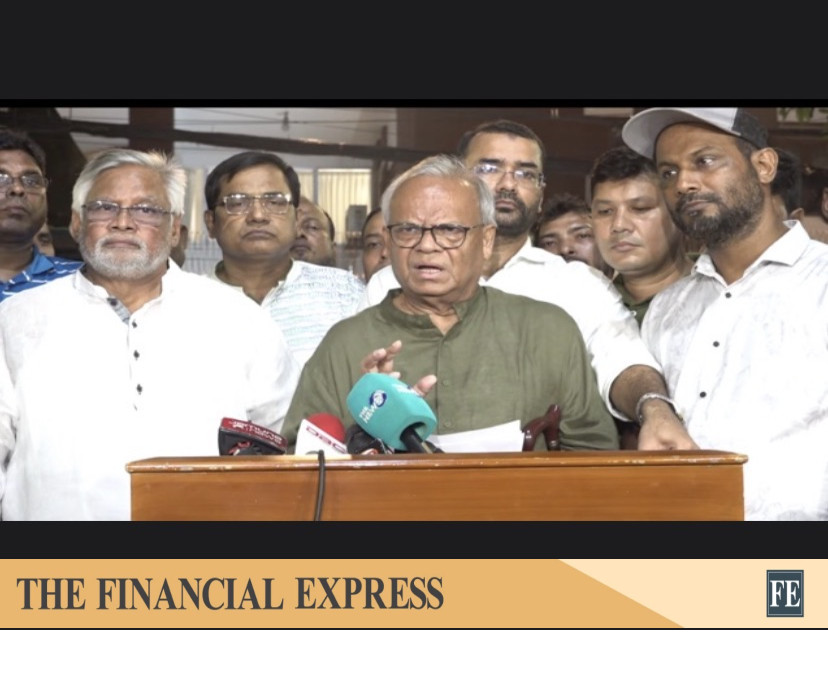
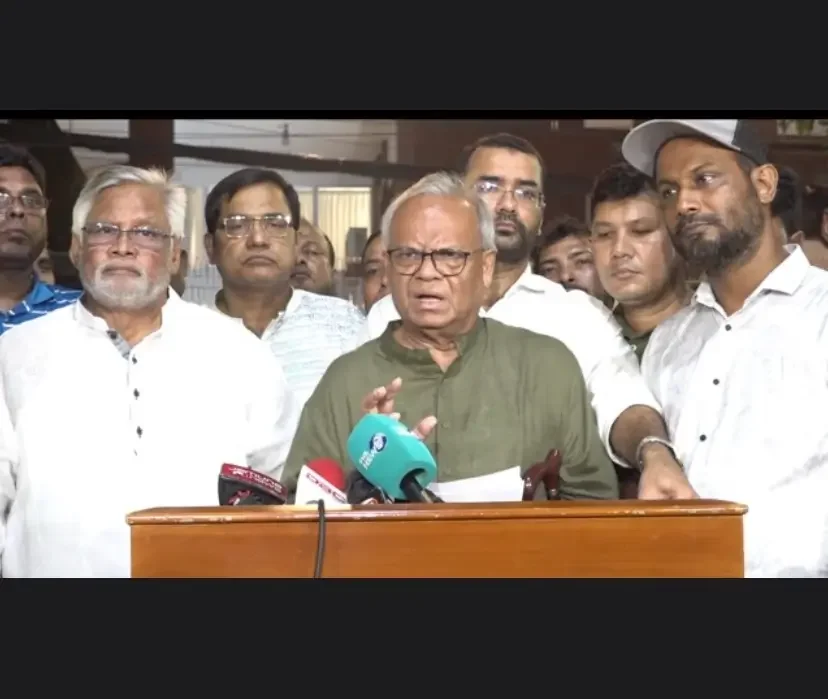
BNP will finalise its candidate for the Thakurgaon-1 by-election on September 18 following a decision by the party’s nomination board, BNP Acting Secretary General Advocate Ruhul Kabir Rizvi said Saturday night.

The by-election to the Thakurgaon-1 constituency will be held on October 29, UNB reports.

Rizvi disclosed the decision after a meeting of the BNP Standing Committee at the party chairman’s Gulshan office in the capital.

The meeting was chaired by BNP Chairman and Prime Minister Tarique Rahman. This is the committee’s third meeting since the party formed the government on February 12 this year.

Rizvi said the by-election will be held in the Thakurgaon-1 seat of BNP former Secretary General and incumbent President Mirza Fakhrul Islam Alamgir on October 29.

“Those who want to contest the election will collect nomination forms from the BNP central office in Nayapaltan on September 15, as per the party’s decision. The collected nomination forms will be submitted the following day, September 16. The candidate will be finalised on September 18 based on the decision of the nomination board, which is the party’s National Standing Committee,” he said.

Rizvi, however, said no discussion was held at the meeting about the party council.

Rizvi also said the BNP Standing Committee took several decisions to prevent dengue.

He said BNP will conduct extensive publicity campaigns across the country to raise awareness about dengue.

“Mosquito nets will be supplied to district- and upazila-level hospitals. Besides, a leaflet prepared with the help of renowned doctors and experts on dengue prevention will be distributed across the country, including Dhaka,” he said.

Rizvi said, according to the meeting’s decision, awareness-raising measures on dengue prevention will be disseminated through social media, mass media, radio and television.

“The meeting also discussed arranging bins for disposing of garbage at schools, madrasas and marketplaces,” he said.

He said BNP will take all necessary initiatives to raise awareness and prevent dengue.

Rizvi said the meeting also discussed several organisational issues.

“One of the organisational issues discussed was that in many of our party committees, some members have died, while others are no longer with the party for various reasons, including expulsion. There are vacant posts in those committees,” he said.

He said the party would consider promoting those immediately below the vacant posts in accordance with the provisions of the BNP constitution.

“Whether those who are immediately below them can be promoted to those vacant posts will be considered, and necessary measures will be taken in accordance with the provisions of the party constitution. This was also discussed at the meeting,” Rizvi said.

BNP Standing Committee members Home Minister Salahuddin Ahmed, Local Government Minister Dr Abdul Moyeen Khan, BNP Chairman’s Political Adviser Mirza Abbas MP, Dhaka-3 MP Gayeshwar Chandra Roy, BNP Chairman’s Political Adviser Nazrul Islam Khan, and Finance Minister Amir Khosru Mahmud Chowdhury were present at the meeting.

Also present were Begum Selima Rahman, Amanullah Aman, Dr Farhad Halim Doner, Ismail Zabihullah.

The BNP Standing Committee last met on August 1 at night.

On August 15, BNP included four new members in its National Standing Committee. This is the first meeting of the committee with the new members.

The new members are Ruhul Kabir Rizvi, Amanullah Aman, Dr Farhad Halim Doner and Ismail Zabihullah.​
 

Zaima appointed legal officer in UNGA President Khalilur’s office


1790316055451.webp


Prime Minister Tarique Rahman’s daughter Zaima Rahman has been appointed as a legal officer in the office of Khalilur Rahman, president of the 81st session of the UN General Assembly.

Khalilur’s office has 40 personnel, including six Bangladeshis.

Bangladeshi diplomat Md Abdul Alim will serve as deputy chief of the office. Moazzem Hossain will serve as an advisor and administrative assistant, while Mafizul Islam will be senior advisor on Information, Artificial Intelligence and Strategic Foresight.

Zakir Ahmed will serve as senior advisor on Sustainable Development and Climate Change, and Md Rafiqul Alam Molla will be senior advisor on Countries with Special Needs.

According to UN officials, Zaima will oversee legal matters in her capacity as a legal officer in the office.

Bangladesh’s Foreign Minister Khalilur assumed the presidency of the 81st UN General Assembly on Sept 8. During his presidency, Tarique is scheduled to deliver his first address as Bangladesh’s prime minister at the General Assembly session on Thursday.

UN officials said the president of the General Assembly is not a direct UN employee and does not receive a regular salary from the organisation.

Expenses such as the president’s salary, allowances, and housing or rent are typically borne by their home country or government. In some cases, certain expenses are also covered by the UN’s regular budget and trust funds.​
 

Zaima Rahman serves as legal officer at UNGA president’s office

BSS
New York
Published: 25 Sep 2026, 13: 56

1790381721441.webp

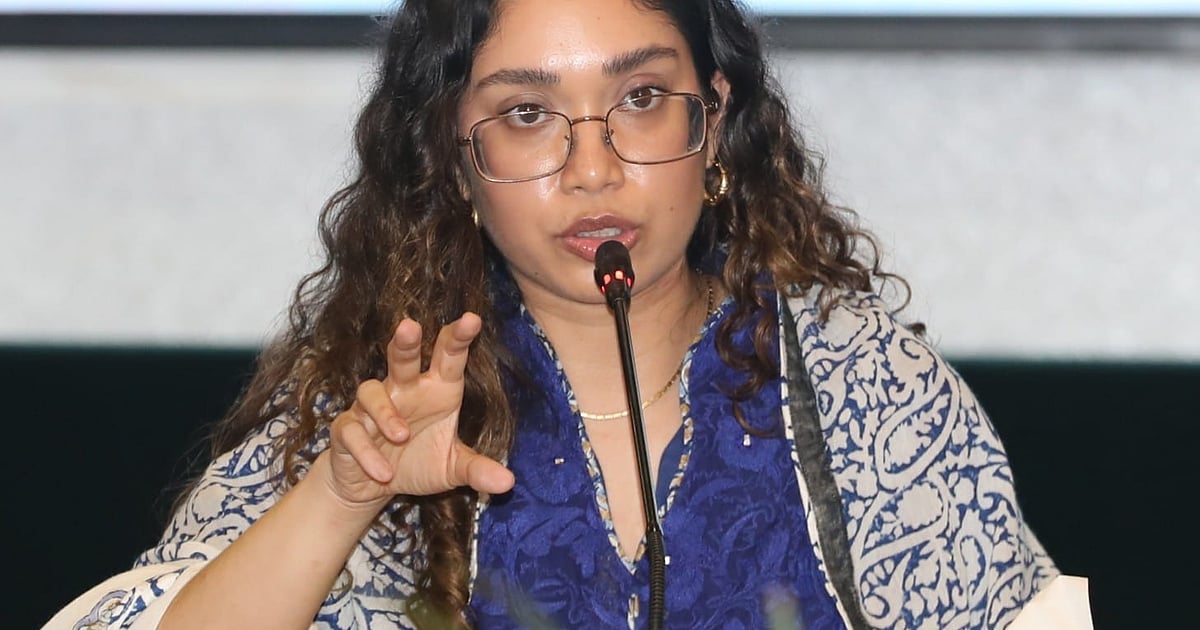
Zaima Rahman, daughter of BNP chairman Tarique Rahman, speaks at a roundtable, titled “Women in the Struggle for Democracy: Contributions and the Bangladesh of Tomorrow”, organised by Women in Democracy (WIND), held at the Bangladesh Institute of International and Strategic Studies auditorium, Dhaka on 8 February 2026 Prothom Alo

Barrister Zaima Rahman, daughter of Bangladesh Prime Minister Tarique Rahman, has been serving as a legal officer in the Office of the President of the 81st session of the United Nations General Assembly(UNGA).

“Ms. Zaima Rahman is serving as a Legal Officer in the Office of the President of the General assembly. The existing rules and process of appointment of the UN was strictly followed in her case,” KM Nazmul Haque, Assistant Press Secretary to Prime Minister, told BSS today.

Zaima Rahman’s name and position appear on the staff list published on the website of the Office of the President of the General Assembly (OPGA).

The UN website lists Zaima Rahman as “Legal Officer - Bangladesh”. She will work under the OPGA Executive Office.

Zaima Rahman is a barrister and legal and policy professional with experience across the United Kingdom and Bangladesh.

She holds an LLB in law and politics from Queen Mary University of London. She is a qualified barrister in England and Wales through the Honourable Society of the Inner Temple and is completing her qualifications for practice in Bangladesh.

Her professional experience covers housing, welfare and employment law in the United Kingdom, legal advisory and public relations work in the healthcare sector, and pro bono work in social welfare and education law; in Bangladesh.

She has worked with Syed Ishtiaq Ahmed & Associates on constitutional, corporate and commercial law, public-private partnerships and taxation.

She serves on the board of Surovi, a Bangladeshi social development organization working to expand educational opportunities for disadvantaged and out-of-school children.

Her areas of interest include governance, inclusive public policy, access to justice, education, gender equality, digital safety and social inclusion.

Bangladesh Foreign Minister Dr Khalilur Rahman is serving as president of the General Assembly’s 81st session. His office has 40 staff members, including six Bangladeshis.

The other Bangladeshis serving in UNGA president’s office are diplomats Md Abdul Alim, Moazzem Hossain, Mofizul Islam, Zakir Ahmed and Md Rafiqul Alam Molla.

Abdul Alim is deputy chef de cabinet, while Moazzem Hossain serves as adviser and administrative assistant.​
 

Three BNP-affiliated committees dissolved, 14 expelled


1790810449011.webp


The BNP’s Dhaka North city unit, Dhaka North Jubo Dal and Dhaka West Chhatra Dal committees have been dissolved, while 14 leaders and activists of the BNP and its affiliated organisations have been expelled.

The decisions were announced in separate press releases issued by the organisations on Wednesday.

The moves came amid allegations that some local BNP activists were involved in an attack and vandalism at Radda MCH-FP Centre, a mother and child healthcare facility in Mirpur.

However, the party’s statements did not mention the incident.

The BNP said three leaders -- Shah Ali thana joint convener Khalil Chowdhury, C-Block unit general secretary Anwar Hossain and Dhaka North city unit member Hafizur Rahman Shukku -- were expelled over allegations of “immoral and anti-organisational activities”.

The 51-member Dhaka North city BNP convening committee, led by Aminul Islam as convener and Mostafa Zaman as member secretary, was dissolved.

No reason was given for the decision, with the party saying a new committee would be announced soon.

The Dhaka North Jubo Dal and Dhaka West Chhatra Dal committees were also dissolved as their terms had expired.

Five Chhatra Dal leaders, two Jubo Dal-linked activists and six leaders of the Swechchhasebak Dal and Sramik Dal were also expelled for alleged disciplinary violations and anti-organisational activities.​
 

BNP in power, BNP in crisis
Ahammad Foyez 01 October, 2026, 00:00


1790813374764.webp

New Age/Mehedi Haque

IT IS not a typical political outcome for a party that swept to power with a massive majority to face such intense criticism within just seven months. Yet, this is the reality for the ruling Bangladesh Nationalist Party. Although the party’s government is still in its infancy, questions are already being raised across almost every sphere — governance, party discipline, the conduct of leaders and activists, allegations of extortion and land grabbing, partisan influence within the administration and the relationship with the youth.

The question arises: what would the situation have been had the BNP lost the election and an opposition alliance formed the government? There is no definitive answer to this. While one can speculate based on Bangladesh’s recent political history, there is no tangible evidence of an alternative history; consequently, one cannot interpret the current reality through the lens of that hypothetical scenario.

The reality is that the BNP is currently in power. Therefore, the political responsibility for the country’s present situation rests primarily with the incumbent government.

Perhaps the BNP’s greatest challenge lies in its political preparedness. It is not unusual for a party that has spent a long time in opposition to make mistakes during its first few months in power. However, if — even after seven months — the boundaries of responsibility between the government and the party remain blurred, the conduct of grassroots activists remains unchecked and the gap between public expectations and government performance continues to widen, then the issue can no longer be dismissed simply by saying ‘time is needed.’

A major asset for the BNP was the broad political opposition that had emerged during the Awami League’s long tenure. Many individuals — intellectuals, professionals and ordinary citizens — who opposed the Awami League were sympathetic to the BNP. While not all of them were staunch BNP supporters, many were mentally prepared to accept the BNP as an alternative to the Awami League.

Retaining that base of public goodwill was crucial for the BNP after assuming power. Yet, a shift is now evident. Many who were once sympathetic to the BNP are now criticising the party’s actions. Some are openly opposing it, others are expressing disappointment and some argue that the current reality falls far short of the expectations they held for the BNP as an alternative to the Awami League.

In this context, the most vital step for the BNP should have been to view criticism as a political asset. When even supporters of the government raise questions, viewing those questions merely as ‘opposition’ causes the government to shrink its own social base.

One of the most uncomfortable issues for the BNP is the allegations of extortion and land grabbing levelled against its leaders and activists.

A report published in New Age on September 28 revealed data from a list compiled by the Dhaka Metropolitan Police. The report stated that the list contained the names of 1,530 individuals involved in extortion and the seizure of land and property in the capital. Among them, 278 were identified as patrons of crime; the list showed that 230 of these individuals were current or former leaders and activists of the BNP and its affiliated organisations. The report further indicated that at least 350 of the 1,252 individuals active on the ground were linked to the BNP or its affiliates.

This information certainly carries political significance. The BNP has not accepted collective responsibility for such allegations. On September 28, Nazrul Islam Khan, the prime minister’s political adviser, asserted that genuine BNP leaders and activists are not involved in extortion, land grabbing or violence.

Yet, this is where the crucial question arises. If similar allegations are repeatedly raised against a segment of the party’s leaders and activists, is merely expelling a few individuals sufficient? Or is it necessary to establish mechanisms within the party’s organisational structure to ensure that political power cannot be used as a tool for personal financial gain at the local level?

A practical challenge facing the BNP must also be considered here. During the Awami League’s long tenure in power, many BNP leaders and activists faced lawsuits, arrests, imprisonment, persecution and political harassment or were forced to go into hiding. Many of them remained cut off from normal economic activities.

How to integrate this vast workforce into legitimate economic activities after assuming power should have been a crucial policy question for the party.

This certainly does not mean directly paying leaders and activists from party funds. Instead, encouragement could be given to initiatives such as supporting micro-entrepreneurship, cooperatives, local production, transport, agriculture, services, technology or small businesses

However, no such major or visible programme has yet been put forward by the BNP.

On the contrary, allegations of converting political influence into economic benefits at the grassroots level are becoming increasingly apparent. This is not merely a law-and-order issue; it is also a matter of a political party’s organisational failure.

There are several leaders within the BNP’s national executive committee responsible for employment-related matters. It is only natural that their duties would include formulating employment programmes for both party activists and the general public.

The question remains: what programmes have they undertaken in the last two years that have yielded tangible results for people at the grassroots level? The answer to this question is not particularly clear to the public.

If a major political party utilises hundreds of thousands of leaders and activists solely for political rallies, meetings or election activities — without planning to enhance their social and economic capabilities — it is unsurprising that a segment of those activists would attempt to exploit informal avenues of power once the party takes office.

Another major issue is the relationship between the party and the government.

After the BNP assumed power, many key party leaders simultaneously took on government responsibilities. This raised a fundamental question: who would run the party?

Running a government and running a political party are not the same thing. A minister must implement state policies, whereas a party leader must manage the organisation, maintain contact with activists, resolve local disputes, cultivate new leadership and disseminate the party’s political philosophy within society.

When both responsibilities are concentrated in a single individual, the party risks becoming weakened.

Reports of internal disputes, factionalism and leadership conflicts in various districts and metropolitan areas are already surfacing. The BNP should view these disputes not merely as local issues, but as central organisational problems. A long-standing issue in Bangladeshi politics is the tendency for political parties to gradually become centred on members of parliament and local power brokers.

If a party becomes overly dependent on elected representatives, the roles of ordinary activists, professionals, researchers, youth and grassroots organisers diminish.

The BNP now has the opportunity to avoid this risk.

If the party and the government are not kept distinct, the BNP’s organisational character could also become centred on individuals in the future. This is not merely an issue concerning a specific person; it is a problem for the political institution itself.

Perhaps the greatest political test lies in engaging the youth.

A significant portion of the young generation that was active in the July 2024 mass uprising carved out its own space in politics outside the realm of established political parties. They expect a new kind of political culture, accountability and participation.

The BNP had a major opportunity to forge a new political relationship with this generation. However, so far, no clear, long-term political programme to establish such a relationship has been evident.

While it is possible to navigate a new reality with old leadership, it is difficult to engage the new generation for long using outdated political thinking.

What the BNP needs most right now is introspection.

There may well be allegations of conspiracy against the government. It is also natural for the opposition to conduct political campaigns against the government; BNP leaders, too, have made such allegations.

However, if every problem faced by a government is attributed to opposition conspiracies, the opportunity to identify one’s own mistakes is lost.

Instead, the BNP should view every major criticism through the lens of three questions: Is the allegation true? If true, what is the cause? And what institutional measures can be taken to prevent this in the future?

If one merely expels the accused individual without seeking answers to these three questions, the likelihood of the problem recurring remains high.

The BNP government has been in power for seven months. This period cannot be considered sufficient for a definitive evaluation of any government. Yet, seven months is not an insignificant amount of time to understand a government’s political character, priorities and approach to handling crises.

The BNP still has the opportunity to make course corrections. If the party so desires, it can separate the government from the organisation, revitalise the grassroots structure, establish preventive — rather than merely punitive — mechanisms against extortion and land grabbing, create political space for the youth and prioritise competence and expertise over party affiliation in government decision-making.

Coming to power was a significant political achievement for the BNP. However, retaining power is not the sole yardstick of success for a ruling political party. A party’s long-term political capability is determined by its ability to build institutions, instil discipline among its cadres, accommodate dissenting views and maintain a clear distinction between the state and the party.

The primary challenge facing the BNP now is not confronting the opposition, but effectively managing its own government and party. The experience of the past seven months has made at least one thing clear: preparing to assume power and preparing to govern are not the same thing.

Ahammad Foyez is managing editor at New Age.​