New Tweets

[🇧🇩] Monitoring the political activities of BNP

G Bangladesh Defense
[🇧🇩] Monitoring the political activities of BNP
419
13K
More threads by Saif


BNP outlines 8 social policies
It pledges family card, farmer card

Bangladesh Sangbad Sangstha . Dhaka 21 January, 2026, 00:35

1768958498529.webp


Bangladesh Nationalist Party secretary general Mirza Fakhrul Islam Alamgir on Tuesday said that the fascist Awami League government had destroyed the country’s economy after 2009 and transformed it into the ‘mafia economy.’

‘The country had been turned into a heaven for a small group, while banks were systematically looted. Huge amounts of money were taken out of the country from the banking sector and transferred abroad, where certain individuals became owners of huge assets and wealth. The economy of the country was turned into a mafia economy,’ he said.

Fakhrul made the remarks as the chief guest in a discussion titled ‘Policy Dissemination on Priority Social Policies.’

BNP organised the event at hotel Sheraton in Banani of Dhaka while diplomats from various countries took part in the discussion.

Fakhrul said that last 15 years of so-called development were characterized by bloodlessness, lack of accountability and corruption. The country was pushed into a state of unprecedented election rigging, where voters were effectively absent from the electoral system. The situation eventually led to the uprising of students and the people in July, which created a new hope and a new opportunity.

The BNP leader further said inside the country there was no significant employment and meaningful investment. He said BNP has been a pro-people and pro-development political party since the declaration of independence and has always moved forward, initiating political as well as economic reforms since its inception.

‘Today, the challenges are enormous, but BNP has already worked hard to prepare policies that will enable the shattered economy to grow in a civil and sustainable way.’

Fakhrul said that these policies would pave the way for sustainable development and empower lower-income people to rise. A new era would begin where a larger section of the population would participate in the economic development process under the concept of economic democratisation.

Member of the BNP chairperson’s advisory council Ziauddin Haider presented the keynote speech. In his speech, he shared BNP’s detailed social policy framework under its broader 31-point state repair agenda. The speech, advocating for a shift from divisive politics to outcome-based governance, outlines eight priority areas designed to address the daily struggles of citizens amid economic strain, high inflation, and rising poverty.

BNP’s eight core social policies include Family Card: A rights-based social protection scheme providing monthly support of Tk 2,000-2,500 to households via an adult woman; Krishok Card: A digital instrument to provide farmers with subsidised inputs, easier credit, insurance, and fair market access.

Besides, BNP announces a fully functional primary healthcare unit in every union and ward, enrolment in education to focus on learning quality, relevance, a youth-centred strategy linking skills training to SME growth, IT, the blue economy, and overseas employment, nation-building policy in sports by making physical education compulsory, a focus on large-scale water governance, mass tree plantation, and waste management and providing financial security and honorariums to religious leaders of all faiths.

BNP standing committee member Abdul Moyeen Khan, joint secretary general-foreign affairs Humayun Kabir, international affairs secretary Rashedul Haque, chairman’s advisory council member Mahdi Amin and Dhaka University pro-vice-chancellor for academic Professor Mamun Ahmed, among others, participated.​
 
Analyze

Analyze Post

Add your ideas here:
Highlight Cite Respond

Tarique now in Sylhet to launch election campaign

UNB
Published :
Jan 21, 2026 20:28
Updated :
Jan 21, 2026 20:28

1769041607937.webp


BNP Chairman Tarique Rahman arrived in Sylhet on Wednesday night to formally kick off his party’s election campaign for the 13th national parliamentary election, with plans to address seven rallies on Thursday.

“BNP Chairman, along with his wife Dr Zubaida Rahman, left Hazrat Shahjalal International Airport for Sylhet by a Biman Bangladesh Airlines flight around 7:20pm and reached Osmani International Airport, Sylhet at around 8:04pm,” said BNP Media Cell member Sayrul Kabir Khan.

Sayrul said Tarique will begin his election campaign from Sylhet, widely known as the land of saints, and address seven public rallies across six districts.

During the rallies, he said the BNP chairman is expected to outline his party’s election pledges, political priorities and plans to restore democracy, ensure good governance and address people’s day-to-day problems.

Party leaders and activists have completed all preparations to ensure the smooth holding of the rallies and electioneering programmes.

According to party sources, Tarique is likely to visit his father-in-law’s residence, popularly known as ‘Minister Bari’, at Biraimpur village under Silam Union of South Surma upazila in Sylhet on Wednesday night.

They said the BNP chief is also expected to offer fateha at the shrines of Hazrat Shahjalal (RA) and Hazrat Shah Paran (RA) after reaching Sylhet.

Following the shrine visits, Tarique will go to the ancestral home of his wife Zubaida Rahman and offer fateha at the graves of her deceased family members. A milad mahfil will also be held there in memory of former Prime Minister Khaleda Zia and the departed members of Zubaida Rahman’s family.

After the milad, special food ‘shirni’ will be served among Tarique, his entourage, party leaders and activists, and local residents.

Earlier in the day, BNP Election Steering Committee spokesperson Dr Mahdi Amin said the election campaign will formally begin on Thursday as per the announced schedule, with Tarique launching it through his Sylhet visit.

After reaching Sylhet, he said, the BNP Chairman will visit the shrine of Hazrat Shahjalal (RA) at night and offer fateha, marking the start of the election campaign in line with the party’s long-standing tradition.

Mahdi, also an adviser to the BNP Chairman, shared the detailed tour programmes at a press briefing at the party’s election office in the Gulshan area.

On Thursday morning, he said, Tarique will address his first election rally at the Sylhet Alia Madrasa ground.

Later in the day, he will attend a rally at Ainpur playground in Sherpur area of Moulvibazar Sadar upazila at noon.

On the way, Mahdi said, Tarique will also join a rally at the proposed new Upazila Parishad ground in Shayestaganj upazila of Habiganj district.

The BNP Chairman will then proceed to Brahmanbaria, where he is scheduled to address a rally at Kuttapara Football Ground in Sarail upazila.

In the afternoon, he will attend another election rally at Bhairab Stadium in Kishoreganj.

On his way back to Dhaka, Mahdi said, Tarique Rahman will join a roadside election rally in the Narsingdi municipal area before attending a similar gathering at the Araihazar–Rupganj Gausia area in Narayanganj district.

He is expected to return to his Gulshan residence at late at night Thursday.

Mahdi said the party has already informed the concerned district administrations and returning officers of Sylhet, Sunamganj, Moulvibazar, Habiganj, Brahmanbaria, Narsingdi, Narayanganj and Dhaka through official letters. The respective police departments and other authorities have also been notified.

Since the formation of BNP, party founder Ziaur Rahman began his presidential election campaign from Sylhet, while Begum Khaleda Zia also launched all her election campaigns from the city starting in 1991. Following that tradition, Tarique Rahman will begin his campaign with shrine visits, party leaders said.

Sylhet BNP leaders said Tarique Rahman last visited the city in 2005, when he attended a BNP union representatives’ conference as the party’s senior joint secretary general.

After spending 17 years in exile in the United Kingdom, Tarique Rahman returned home with his family on December 25. A few days later, on December 30, his mother and BNP Chairperson Khaleda Zia passed away while undergoing treatment at Evercare Hospital.​
 
Analyze

Analyze Post

Add your ideas here:
Highlight Cite Respond

Bangladesh comes first, not Delhi, not Pindi: Tarique Rahman
1769130340861.webp
 
Analyze

Analyze Post

Add your ideas here:
Highlight Cite Respond

Tarique Rahman hears voters’ concerns at first Dhaka rally, promises solutions

bdnews24.com
Published :
Jan 23, 2026 22:39
Updated :
Jan 23, 2026 22:39

1769214838771.webp


BNP Chairperson Tarique Rahman has listened directly to voters’ problems and expectations after calling residents onto the stage at the first election rally in his Dhaka constituency, pledging to address their concerns if elected.

He attended the public meeting on Friday in Bhashantek of Dhaka-17 constituency on his second day of formal campaigning.

During informal interactions with locals, Tarique offered what he described as assurances of a “change in destiny”.

Addressing the rally at the BRB ground in Bhashantek on Friday evening, Tarique said: “If we consider all the work of the past, we will see that every time the people of this country have elected the Paddy Sheaf symbol, there has been development. The fortunes of the people have changed, there has been positive change.”

“That is why, as the Paddy Sheaf candidate, I am seeking your vote.”

Formal campaigning began on Thursday, when Tarique launched his election drive from Sylhet in keeping with party tradition.

He visited the shrines of Hazrat Shahjalal and Shah Paran before setting out on the campaign trail, and later addressed election rallies in Sylhet, Sunamganj, Moulvibazar and Narayanganj.

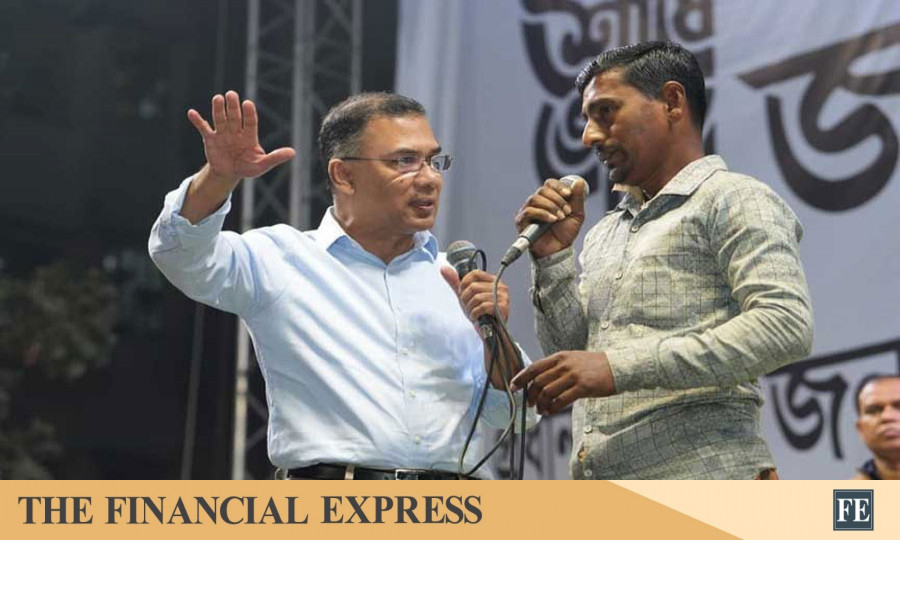
On the second day of campaigning, Tarique invited several Bhashantek residents onto the stage and listened to their accounts of local problems.

Those who spoke raised a range of demands, including the rehabilitation of slum dwellers in Bhashantek, employment opportunities for women, and access to family cards.

Responding, Tarique said: “I have grown up in this area for the past 50 years, although I had to live abroad for a long time in between. Still, I am one of you.”

“Naturally, when I have become a candidate for this area, I can tell you this much: with your prayers and by Allah’s mercy, if I win the next election and if a Paddy Sheaf government is able to form, then the problems that have been raised here today on behalf of thousands of local residents, we will solve those problems.”

THE COUNTRY MUST BE REBUILT

Claiming that many sectors of the country have been damaged over the past 15-16 years, Tarique said: “As a result of this destruction, the country has fallen far behind. We must rebuild these sectors. To do that, democracy must be established.”

“Why must it be established? Because if you can democratically elect your representatives, only then will you be able to take your area’s problems to them.”

Tarique added that addressing local issues requires tackling broader national challenges.

“If we are to resolve the core problems of this area, we must also address the country’s problems: security, employment, education and healthcare. For this, in the days ahead, a democratically elected government chosen by ordinary people is essential.”​
 
Analyze

Analyze Post

Add your ideas here:
Highlight Cite Respond

Those who didn’t commit crimes won’t face punishment: Fakhrul to Awami League workers

Correspondent Thakurgaon
Published: 23 Jan 2026, 22: 10

1769216107702.webp


BNP candidate and party secretary general Mirza Fakhrul Islam Alamgir addresses an election rally in Thakurgaon-1 constituency at Sholtihari Bazar of Debipur Union, Thakurgaon Sadar upazila on 23 January 2026. Prothom Alo

Bangladesh Nationalist Party (BNP) candidate for Thakurgaon-1 constituency and party secretary general Mirza Fakhrul Islam Alamgir said, “Have you been able to vote in the last 15 years? You couldn’t. Votes were cast the night before. Now an opportunity has come.”

He made the remarks on Friday afternoon during electioneering at Sholtihari Bazar in Thakurgaon Sadar upazila.

Mirza Fakhrul said, “Our Hasina apa (sister) has gone to India. It’s fine that she has gone there. But why did she leave local activists and supporters in danger? We want to tell the activists and supporters—you will not face trouble. We are standing by you. Those who committed crimes will be punished. Those who did not commit crimes will not be punished.”


Earlier in the day, Mirza Fakhrul arrived in Thakurgaon from Dhaka to take part in election campaigning and street rallies. In the afternoon, he began his campaign through public outreach at Sholtihari Bazar in Debipur Union of the Sadar Upazila.

He also conducted campaigns in the 11 Mile, Bairagihat, Poysafela, and Munshirhat areas. He exchanged greetings with voters and sought votes for the paddy sheaf symbol.

Addressing the locals at Sholtihari Bazar, Mirza Fakhrul said, “I am your son, your brother. I have contested elections from this area—sometimes I won, sometimes I lost. Even when I lost, I never left you. I am now 78 years old, but in my heart I am still young. I believe I can still do a lot of work. If given the opportunity, I can solve the problems of this area.”

Speaking on religious harmony, Mirza Fakhrul said, “We request our Muslim and Hindu brothers and sisters—let us all work together for the development of the area. Only the paddy sheaf can deliver this development; no one else can. Some people today want to divide us. Do Hindus and Muslims live separately in Bangladesh? In our area, Hindus and Muslims live together, move together. Hindus come to our festivals, and we go to pujas of the Hindus. We want to preserve this situation. Muslims, Hindus, Buddhists, and Christians—we want to build the country together. We want to ensure equal security for everyone.”

The BNP leader added, “Now another party is coming—what’s the name? Jamaat. Have they been in power before? Have they done anything for anyone? We have done the work. BNP is a proven party. We want to do more work—build new schools, roads, hospitals, and create jobs for our children.”​
 
Analyze

Analyze Post

Add your ideas here:
Highlight Cite Respond

Prioritising law and order, ending corruption: BNP chief Tarique’s ‘plan’ to fix Bangladesh

bdnews24.com
Published :
Jan 24, 2026 17:19
Updated :
Jan 24, 2026 17:19

1769299934884.webp


Law and order and the control of corruption are the two priorities BNP Chairman Tarique Rahman wants to put at the centre of his political “plan”.

He outlined this on Saturday afternoon while speaking with the winners of the “Amar Bhabnay Bangladesh”, a national reel-making competition.

Tarique said the first thing that must be ensured is law and order, so that what people say and what leaders say can be done in an environment where everyone feels safe on the streets.

Ensuring public safety, he said, was essential.

He added that corruption had to be tackled in one way or another.

“There are different kinds of corruption at different levels, and we have to try to deal with them all,” he said.

“If we can address these two things properly, many of the other problems will largely get resolved. That is my plan.”

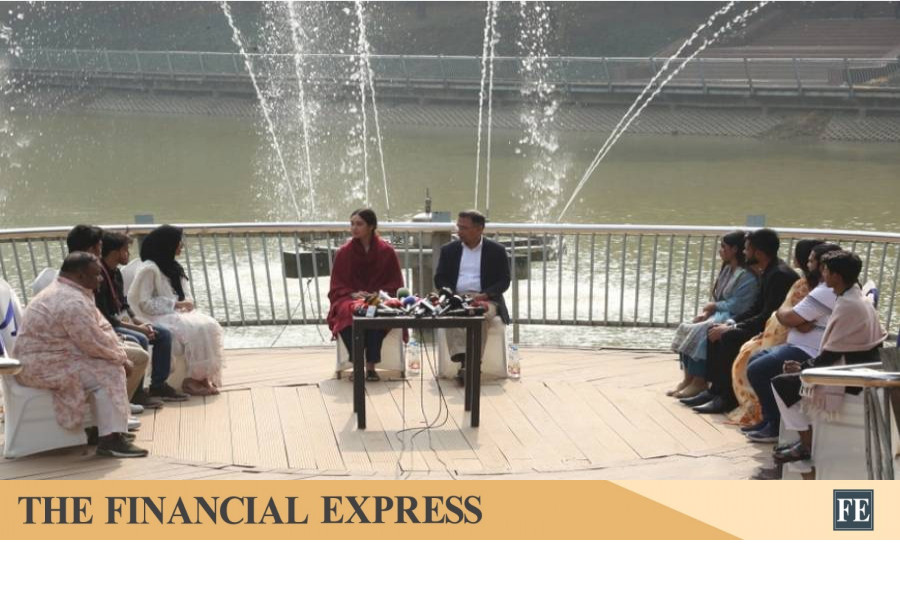
The discussion was held at Justice Shahabuddin Ahmed Park in Gulshan, where Tarique was accompanied by his daughter Zaima Rahman.

The competition winners raised different questions, and he responded to them openly.

They asked who would receive family cards and whether widowed women would be included.

In reply, Tarique said single mothers and women facing hardship, including those abandoned by their husbands, would be covered.

He said Bangladesh currently had 138 social safety projects under the government, but they were not working properly.

“Resources are being wasted. One person gets three forms of support while another gets none,” he said.

“We want to organise this through a family card system and make it universal.”

By way of example, he said the wives of farmers, van pullers and office workers would all be entitled to receive the card.​
 
Analyze

Analyze Post

Add your ideas here:
Highlight Cite Respond

How will Tarique Rahman handle the huge public expectations?

Saleh Uddin Ahmed
Published: 25 Jan 2026, 08: 25

1769391124311.webp

BNP Chairperson Tarique Rahman addresses a public rally at the Government Alia Madrasa ground in Sylhet on 22 January 2026. Anis Mahmud

Tarique Rahman is now the permanent chairman of the BNP. Within a few days of his return to the country, a sense of trust in his politics has been noticed. Some may call it a qualitative change, while others may say it is just a temporary facade.

We have to wait a long time to know the final verdict on this. We have seen a sparkle of generosity and a burst of fireworks in earlier times, but those did not last long. However, sometimes it is possible to gauge the trend of a game from the ongoing commentary.

The country's media bosses or editors, whom the people of the country trust the most to find the news within the news. On 10 January, the editors all got together and talked. They spoke about the change in Tarique Rahman and the expectations from him. If we observe Tarique Rahman through their eyes, I would say, it is a matter of great trust and tremendous expectation.

Matior Rahman Chowdhury, editor of Manabzamin newspaper, said, ''I knew a different Tarique Rahman 23 years ago. I was the first to interview him on electronic media. Now I see, in 23 years Tarique Rahman has changed, has undergone a profound transformation.''

Nurul Kabir, editor of News Age newspaper, said, ''We have assembled at a time when an old autocratic system has fallen in the face of a mass uprising. Based on the sacrifices of the people, we are involved in the process of building the people's desired Bangladesh. But it has not yet been realised.''

Toufique Imrose Khalidi, editor-in-chief of BDNews24.com, said, ''You have come; come with dreams; talked about a plan. You have a plan.''

Mahfuz Anam, editor of The Daily Star, said, ''We want democracy, we want free journalism, and we want good governance.''

It is clear from the combined trust of the country's intellectual journalists that to address the political void that exists in the country, they are currently relying on Tarique Rahman.

Just a couple of months ago, there was a great deal of uncertainty in national politics due to a Facebook post by Tarique Rahman about his return to the country. BNP, the largest party in the country, trusted by moderate people of various streams in the country, was greatly disappointed. There were many questions then; Tarique Rahman's return has answered some, but many remain.

The question then was, if the top leader of the BNP can't come to the country, what will happen to the party? Is there anyone else who can lead the party? Or would the BNP's fate be like a sailorless ship drifting directionlessly in the middle of the sea and eventually crashing into the seabed?

During BNP's uncertainty, it was the moderates and centrists in the country who were most worried. There arose a question, why are the middle-ground people relying solely on the BNP, against whom there are allegations of extortion and land-grabbing?

This question has a long answer, and I've written a column about it before. In short, there's no one left to trust. All around, the roaring of the right-wingers and the massive rise of religion-based politics have become noticeable. Before his death, writer-researcher and political philosopher Badruddin Umar said, ''Given the current situation in Bangladesh, the BNP now seems to be the most progressive.''

In Bangladesh, the alternative to the BNP is the right-wing political parties. Therefore, during the uncertainty of Tarique Rahman’s return to the country, the rival party Jamaat-e-Islami was seen to be greatly invigorated. An environment was created in which even discussions started that Jamaat could win the next election. Jamaat's student wing, Shibir, winning student union elections in several universities strengthened this notion further.

Not only political analysts but numerous foreign ambassadors crowding at Jamaat's office also fueled the speculation of Jamaat's inevitable emergence. From September to November 2025, ambassadors of Russia, Turkey, France, Italy, Germany, Turkey, and several other countries had meetings with Jamaat’s Ameer.

A segment of the centrists in the country had hoped that the youth political party NCP would seize this opportunity. They could have shaken off extremism and become a protest force against religious politics, secure the support of the centrists, and offer them reassurance. They didn’t do this, nor could they.

Jamaat leaders' self-assuredness regarding their victory became evident. In a meeting held at the GEC Convention Hall in Chittagong City last November, Jamaat leader Shahjahan Chowdhury said, ''Election is not just about people; you have to bring everyone from the administration in your election area under our control. They will act on our command, arrest on our command, and file cases on our command.''

Many in the political arena became worried, fearing what might happen once they seized power, given their current boasting before securing power.

Leading up to the December Victory Day celebrations, Jamaat leaders surpassed previous records in distorting the history of independence. They claimed that due to the genocides committed by the Mujib Bahini, the Pakistani army initiated the crackdown on 25 March.

The last few months of the preceding year were extremely uncomfortable for those who were centrists or liberals, or those who did not believe in religion-based politics. Many questioned whether Jamaat was indeed the only alternative to Jamaat in elections.

After the murder of Sharif Osman Bin Hadi, spokesman of Inquilab Moncho, the situation in the country had solidified this notion further. The way blazes were set to The Daily Star and Prothom Alo and the vandalism at Chhayanaut and Udichi suggested that we are moving rapidly towards extreme anarchy.

The government and the political parties of the country could not take effective steps against this anarchism; instead, many went with the crowd. The government surrendered long ago.

A segment of the centrists in the country had hoped that the youth political party NCP would seize this opportunity. They could have shaken off extremism and become a protest force against religious politics, secure the support of the centrists, and offer them reassurance. They didn’t do this, nor could they.

Actually, their internal conflicts are so massive that wherever they went, dissent and infighting were inevitable. Eventually, they chose the easy path and made arrangements with a familiar party.

Tarique Rahman’s return to the country has created an opportunity for a major change in politics. Noticeable positive changes have been observed in BNP's politics as well. BNP leaders' rhetoric and actions have become somewhat less extreme. The people of the country feel somewhat reassured. Many believe that the advancement and triumph of middle-ground politics may now become a reality.

Tarique Rahman has yet to take any major initiatives. He hasn’t made any major mistakes either. By moving steadily, he has generated new expectations. Following Khaleda Zia's death, the Speaker of Pakistan's National Assembly and India's foreign minister have visited to offer condolences and discussed building good relations with Bangladesh with Tarique Rahman. This trust from two opposing countries has increased the confidence of the people in their own country.


In electoral initiatives, Tarique Rahman is moving steadily. By speaking with dissenters in the party, he has somewhat cleared the electoral path. He quickly finalised decisions regarding allies’ seats. Tarique Rahman’s favourable personal behaviour has been noted by many and received praise.

BNP is the only political party that has abstained from extrajudicial vengeance over politics involving the Awami League. This might be their electoral politics or their politics of courtesy. However, the people of this country are clamouring to escape mob culture, and it seems BNP leaders have understood that.

Jamaat is trying to promote right-wing politics by forming a large alliance. Religion-based parties have joined their coalition. They have recruited two well-known freedom fighters in this alliance. However, their biggest success has been involving the student leaders' party of the July Movement, NCP, in their alliance.

However, BNP’s sudden visible influence and progress have not escaped Jamaat’s notice. It is quite evident that it has slightly dented Jamaat's confidence. After Khaleda Zia's death, Jamaat's Ameer Shafiqur Rahman met with Tarique Rahman to discuss the need for forming a national government.

The indispensability of BNP in politics and newfound confidence in Tarique Rahman has provided BNP an opportunity to create a new identity for themselves. How long they can retain this confidence by utilising this opportunity will be tested in various ways in the future. BNP has to prove the value of this confidence through their actions. The patience limit of the people of Bangladesh is diminishing.

Since the July Mass Uprising, Tarique Rahman wanted to keep Jamaat with BNP. But then Jamaat decided to go it alone and positioned itself as an alternative to the BNP. Suddenly, the change in Jamaat Ameer's tone has sparked curiosity in political circles. Whether the reason is Jamaat's weakness in the electoral field or a delayed interest in returning to the old political friendship is a topic of discussion as well.

Jamaat’s coalition partner, Islami Andolan, has raised questions about this and exited the electoral alliance.

The indispensability of BNP in politics and newfound confidence in Tarique Rahman has provided BNP an opportunity to create a new identity for themselves. How long they can retain this confidence by utilising this opportunity will be tested in various ways in the future. BNP has to prove the value of this confidence through their actions. The patience limit of the people of Bangladesh is diminishing.

But there is no shortage of people in BNP seeking the vanity and arrogance of large parties. If Tarique Rahman can’t control them, then people will find peace in religion-based politics, and that will offer Jamaat a big opportunity again.

#Saleh Uddin Ahmed is a teacher, writer, and political analyst​
 
Analyze

Analyze Post

Add your ideas here:
Highlight Cite Respond

Tarique Rahman urges voters to stay vigilant until ballot counting completion

Staff CorrespondentDhaka
Updated: 26 Jan 2026, 22: 03

1769475010625.webp

BNP chairman Tarique Rahman addresses an election rally virtually Screengrab of a video

Bangladesh Nationalist Party (BNP) chairman Tarique Rahman has alleged that a group is conspiring to obstruct the election and urged voters to remain vigilant.

He further said that casting a vote alone is not enough; voters must stay at polling centres after voting and ensure that their votes are properly accounted for.

Tarique Rahman made the remarks while addressing an election rally in Hatia, Noakhali, as the chief guest on Monday afternoon.

He joined the rally virtually. BNP parliamentary candidate for Hatia (Noakhali-6) is Mahabuber Rahman Shamim.

Referring to the past 15–16 years, Tarique Rahman said people had effectively been denied the right to vote.

“The people of this country were stripped of their voting rights. Their freedom of expression was taken away. Those responsible for this have fled the country. But another group is now hatching fresh conspiracies to disrupt the election. You (voters) must remain alert about it,” he said.

The BNP chairman called on Muslim voters to attend Tahajjud prayers in the small hours of the polling day and then offer Fajr prayers in congregation in front of their respective polling centres at dawn.

“Take brothers and sisters from other faiths with you so that everyone can queue up at the polling centres early in the morning and cast your votes properly,” he said.

Emphasising the importance of safeguarding votes, he said, “It is not enough just to vote and leave. After voting, you must stay there. You must ensure that the vote you cast is counted accurately, down to the last detail. Can you do that?”

During his speech, a local resident highlighted several key problems faced by Hatia residents, particularly river erosion, which continues to devastate livelihoods.

The speaker called for block revetments and embankments to prevent erosion and demanded land allocation for landless people on newly emerged chars.

Responding, Tarique Rahman displayed a sheet of paper on which he said long-standing demands of Hatia residents had already been noted, including those raised at the rally.

He said the list included measures to prevent river erosion through block revetments, construction of embankments, allocation of khas land for the landless, and upgrading the upazila health complex to a 150-bed facility.

“If BNP forms the government, these problems will be addressed gradually, one by one,” he said.

Calling for electoral support, Tarique Rahman said, “People here have seen many representatives before, but they failed to solve your problems. If the BNP is elected this time, we will move forward with solutions step by step…. But you have a responsibility. What is that responsibility? To ensure the victory of the sheaf of paddy. When will you do that? On polling day, the 12th.”

Urging voters to elect BNP candidate Mahabuber Rahman, Tarique Rahman said the area faces serious challenges related to safe drinking water, education, healthcare and agriculture.

“A genuinely committed representative is required to solve these problems . If Shamim is elected and BNP forms the government, development will follow and people’s problems will be addressed,” he said.

Outlining BNP’s policy plans, he said a BNP government would introduce a “family card” programme for women, providing monthly assistance to help educated women gradually achieve self-reliance. For farmers, an “agriculture card” would ensure fertiliser, seeds and inputs, guaranteeing full support for at least one farming season each year.

He added that vocational training institutes would be established for youth, alongside access to microcredit and employment opportunities.

BNP also plans to expand hospitals and introduce healthcare assistants to deliver services door to door, he said.​
 
Analyze

Analyze Post

Add your ideas here:
Highlight Cite Respond

Latest Posts

Back
PKDefense - Recommended Toggle