Bangladesh Defense

Saif
Senior Member
- Joined
- Jan 24, 2024
- Messages
- 22,036
- Likes
- 9,840
- Nation

- Residence
- Axis Group

Overstepping boundaries
Syed Mahdi Hasan
New Age/Mehedi Haque
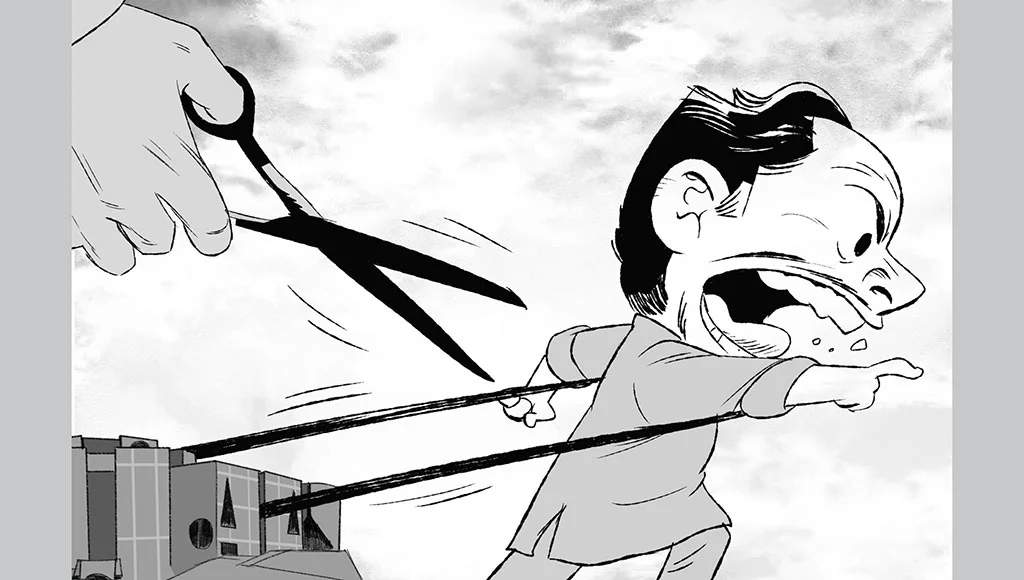
PUNITIVE measures against ruling party law makers, ministers and organisations have increased over the past few months. The prime minister ordered reserved seat lawmaker Ferdousi Ahmed Misty to step down after accounts of her involvement in the demolition of the Radda Mother and Child Health and Family Planning Centre began circulating. The entire 51-member convening committee of Dhaka North BNP was dissolved over the incident. Similarly, Ishraque Hossain, state minister for liberation war affairs, was ordered to resign following a video he uploaded on Facebook, where he was seen brandishing a pistol and carrying out an anti-drug drive in Dhaka’s Gendaria. This trend of overstepping official boundaries is not limited to parliament members only. A few days ago, food minister Afroza Khanom dismissed her assistant private secretary Abdul Awal Bulbul over arranging and executing a government observation of food warehouses without her approval.
Disciplinary action against ruling party members or government officials is not a common sight in Bangladesh, but it is a welcome one. Over the past few months, mob violence has claimed too many lives, there have been too many instances of rape, and businesses have gotten too comfortable in ignoring safety guidelines. Naturally, this implies a weak rule of law. In such a backdrop, stern action against unruly government officials will certainly calm some anxious nerves. But it points to another problem — that of ruling party lawmakers and government officials overstepping boundaries and undermining the rule of law.
A minister’s duties do not include taking part in armed raids against drug dealers. Although Ishraque claimed that repeatedly notifying the police about Gendaria’s drug problem garnered zero results and that he acted in self defence, experts have raised concerns over the legality of the incident. If legal breaches by government officials are immune to consequences, it would undermine the already fragile rule of law. Questions over goodwill aside, Ishraque’s Gendaria raid is an instance of undermining the government and the law by overstepping official boundaries. It is important to remember that every Bangladeshi must be subject to Bangladeshi law, ministers and ordinary citizens alike.
Abdul Awal Bulbul, former assistant private secretary to food minister Afroza Khanom, has also broken official protocol in recent times. Checking to see if food warehouses are fulfilling their duties is certainly commendable, but doing so under an official banner without the food minister’s express permission is a clear violation of his official boundaries. His duties are to aid the food minister in her duties according to her instructions, not to conduct government observances without notifying her. Doing so makes the ministry look defunct and less useful. Such an act creates a negative impression about the government.
Ferdousi Ahmed Misty’s incident is slightly different. Unlike Ishraque or Bulbul, no clear violation of protocol can be attributed to her without further investigation. The home minster Salahuddin Ahmed’s statement that legal action would be taken if evidence of her alleged link with the attack and demolition of the Radda MCH-FP centre is proven gives us some assurance. It is yet to be seen if she was indeed involved in that heinous act or if she is the victim of rumours. However, if she is found guilty, then it is clear that she had exploited her position as a lawmaker and got involved in an instance of land grabbing. Hence, pre-emptive disciplinary action was necessary to protect the government’s credibility.
All of these incidents demonstrate a lack of discipline amongst government officials. The recent order by the prime minister’s office further cements this idea. How a private social and recreational club runs itself should not be a concern for the prime minister’s office. Yet, it has ordered the Registrar of Joint Stock Companies and Firms to appoint an ad hoc committee to run the elections of the Purbachal club. Given the pattern of the previous incidents of acting without the knowledge of higher officials, this has raised questions over if the prime minister is aware of the order or if it serves someone else’s ulterior motives.
The problem, it seems, is not that of negligence in fulfilling one’s duties. Rather, it is in being overly enthusiastic about it to the extent where the consequences are overlooked. Ministers, members of parliament and other government officials represent the government. They are trusted with the power to run the country, which is why they are not free to act as they wish. Their actions have far-reaching consequences and thus require forethought. It is important to remember that official duties must be completed within official protocol. Because if lawmakers or government officials fail to uphold the law, how can they ask citizens to do the same? The best course of action for the government at this point is to let the legal process run its due course to establish that the rule of law is equally for all, regardless of their position or status.
Syed Mahdi Hasan is an editorial assistant at New Age.
Syed Mahdi Hasan
New Age/Mehedi Haque
PUNITIVE measures against ruling party law makers, ministers and organisations have increased over the past few months. The prime minister ordered reserved seat lawmaker Ferdousi Ahmed Misty to step down after accounts of her involvement in the demolition of the Radda Mother and Child Health and Family Planning Centre began circulating. The entire 51-member convening committee of Dhaka North BNP was dissolved over the incident. Similarly, Ishraque Hossain, state minister for liberation war affairs, was ordered to resign following a video he uploaded on Facebook, where he was seen brandishing a pistol and carrying out an anti-drug drive in Dhaka’s Gendaria. This trend of overstepping official boundaries is not limited to parliament members only. A few days ago, food minister Afroza Khanom dismissed her assistant private secretary Abdul Awal Bulbul over arranging and executing a government observation of food warehouses without her approval.
Disciplinary action against ruling party members or government officials is not a common sight in Bangladesh, but it is a welcome one. Over the past few months, mob violence has claimed too many lives, there have been too many instances of rape, and businesses have gotten too comfortable in ignoring safety guidelines. Naturally, this implies a weak rule of law. In such a backdrop, stern action against unruly government officials will certainly calm some anxious nerves. But it points to another problem — that of ruling party lawmakers and government officials overstepping boundaries and undermining the rule of law.
A minister’s duties do not include taking part in armed raids against drug dealers. Although Ishraque claimed that repeatedly notifying the police about Gendaria’s drug problem garnered zero results and that he acted in self defence, experts have raised concerns over the legality of the incident. If legal breaches by government officials are immune to consequences, it would undermine the already fragile rule of law. Questions over goodwill aside, Ishraque’s Gendaria raid is an instance of undermining the government and the law by overstepping official boundaries. It is important to remember that every Bangladeshi must be subject to Bangladeshi law, ministers and ordinary citizens alike.
Abdul Awal Bulbul, former assistant private secretary to food minister Afroza Khanom, has also broken official protocol in recent times. Checking to see if food warehouses are fulfilling their duties is certainly commendable, but doing so under an official banner without the food minister’s express permission is a clear violation of his official boundaries. His duties are to aid the food minister in her duties according to her instructions, not to conduct government observances without notifying her. Doing so makes the ministry look defunct and less useful. Such an act creates a negative impression about the government.
Ferdousi Ahmed Misty’s incident is slightly different. Unlike Ishraque or Bulbul, no clear violation of protocol can be attributed to her without further investigation. The home minster Salahuddin Ahmed’s statement that legal action would be taken if evidence of her alleged link with the attack and demolition of the Radda MCH-FP centre is proven gives us some assurance. It is yet to be seen if she was indeed involved in that heinous act or if she is the victim of rumours. However, if she is found guilty, then it is clear that she had exploited her position as a lawmaker and got involved in an instance of land grabbing. Hence, pre-emptive disciplinary action was necessary to protect the government’s credibility.
All of these incidents demonstrate a lack of discipline amongst government officials. The recent order by the prime minister’s office further cements this idea. How a private social and recreational club runs itself should not be a concern for the prime minister’s office. Yet, it has ordered the Registrar of Joint Stock Companies and Firms to appoint an ad hoc committee to run the elections of the Purbachal club. Given the pattern of the previous incidents of acting without the knowledge of higher officials, this has raised questions over if the prime minister is aware of the order or if it serves someone else’s ulterior motives.
The problem, it seems, is not that of negligence in fulfilling one’s duties. Rather, it is in being overly enthusiastic about it to the extent where the consequences are overlooked. Ministers, members of parliament and other government officials represent the government. They are trusted with the power to run the country, which is why they are not free to act as they wish. Their actions have far-reaching consequences and thus require forethought. It is important to remember that official duties must be completed within official protocol. Because if lawmakers or government officials fail to uphold the law, how can they ask citizens to do the same? The best course of action for the government at this point is to let the legal process run its due course to establish that the rule of law is equally for all, regardless of their position or status.
Syed Mahdi Hasan is an editorial assistant at New Age.