New Tweets

[🇧🇩] Nepal---A bosom Friend of Bangladesh

G Bangladesh Defense
[🇧🇩] Nepal---A bosom Friend of Bangladesh
13
774
More threads by Saif


Dhaka, Kathmandu set 3-month deadline to finalise PTA

FE REPORT

Published :
Jan 16, 2026 10:28
Updated :
Jan 16, 2026 10:28

1768610639396.webp


Bangladesh and Nepal have agreed to finalise the draft text, rules of origin and product lists of the proposed preferential trade agreement (PTA) within the next three months, aiming to inject fresh momentum into bilateral trade, according to a press statement.

The decision was taken at the 8th Commerce Secretary-level Meeting (CSLM) held at InterContinental Dhaka on January 13-14.

The Bangladesh delegation was led by Commerce Secretary Mahbubur Rahman, while the Nepalese side was headed by Commerce Secretary Dr Ram Prasad Ghimire.

Finalising the PTA emerged as a central focus of the two-day talks, with both sides stressing the urgency of completing the "request list" and "offer list" of products.

Bangladesh proposed a phased approach to implementation, suggesting that the PTA be launched initially with a limited number of products and gradually expanded based on outcomes and readiness.

To keep negotiations on track, the two countries agreed to convene a meeting of the Trade Negotiating Committee (TNC) within the next 90 days to complete the remaining technical work, including finalising the draft PTA text, rules of origin and product schedules.

Beyond the PTA, the meeting covered a wide range of trade facilitation and connectivity issues aimed at easing bottlenecks and lowering the cost of doing business.

The two sides held detailed discussions on reducing tariff, para-tariff and non-tariff barriers (NTBs) to facilitate smoother bilateral trade flows.

Both commerce secretaries underscored the need for faster development of port infrastructure, expansion of railway connectivity and simplification of customs procedures to make transit arrangements more efficient and predictable.

Simplifying cross-border payment systems was also highlighted as a priority to ensure secure, reliable and seamless transactions for traders in both countries.

The talks placed significant emphasis on the potential for Bangladesh-Nepal-India trilateral cooperation, particularly in energy cooperation and transit connectivity, to strengthen regional integration and trade.

Recognising the importance of people-to-people links, the two sides agreed to streamline visa procedures, including business visas, professional visas for workers and their families, and tourism visas, to boost trade, investment and tourism.

The meeting also agreed to strengthen cooperation on sanitary and phytosanitary (SPS) measures and technical barriers to trade (TBT) through closer coordination between relevant agencies, harmonisation of standards and simplified testing procedures.

As both countries prepare for graduation from least developed country (LDC) status, they agreed to exchange experiences to ensure sustainable post-graduation development, while enhancing MSME cooperation and B2B engagement through regular trade fairs and exhibitions.

The meeting concluded with an agreement to hold the 9th Commerce Secretary-level Meeting in Nepal at a mutually convenient time.​
 
Analyze

Analyze Post

Add your ideas here:
Highlight Cite Respond

Kathmandu court holds US-Bangla Airlines liable for unlimited compensation: report
Staff Correspondent 30 January, 2026, 00:04

1769738045060.webp


A Nepal court has recently ruled that Bangladeshi carrier US-Bangla Airlines is subject to unlimited liability for passengers killed in the 2018 crash at Kathmandu airport, said a report published by The Kathmandu Post on Wednesday.

The Kathmandu court ordered US-Bangla Airlines to pay full compensation to the victims’ families — a total of $2.74 million, or Rs378.60 million, to 17 affected families.

This marks the first time in Nepal’s aviation history that a court has delivered a ruling in favour of air crash victims by holding an airline liable beyond internationally prescribed limits.

On March 12, 2018, a scheduled US-Bangla flight from Dhaka to Kathmandu went off course while landing at Kathmandu’s Tribhuvan International Airport carrying 71 passengers and crew.

The 76-seat Bombardier Q400 aircraft burst into flames on impact, killing 51 of the 71 people on board, as per the report of the Kathmandu-based newspaper The Kathmandu Post.

Among the dead were 22 Nepalis, 28 Bangladeshis and one Chinese national. The incident remains the deadliest aviation disaster involving a Bangladeshi airline and the most fatal crash involving a Bombardier Dash 8 Q400 aircraft.

The ruling was issued by Judge Diwakar Bhatta on July 20, 2025, in a case filed by the families of 16 deceased passengers and one survivor. The full text of the verdict was made public on January 20.

The Kathmandu District Court ruled that passengers had a primary right to receive compensation under the airline’s limited liability as provided under the Convention for the Unification of Certain Rules Relating to International Carriage by Air (Warsaw Convention) 1929 and the Warsaw Convention as amended at The Hague in 1955. Article 22 of the Convention sets the baseline for limited liability.

However, the court further ruled that the carrier was subject to unlimited liability under Article 25 of the Warsaw Convention, as amended, after confirming that the crash occurred due to negligent and reckless acts of the pilot and the flight officer. The court held that the circumstances of the accident could not be treated as falling solely within the scope of limited liability.

‘Considering the nature and circumstances of the accident, the airline incurs unlimited liability for such negligent or reckless conduct,’ the verdict states.

Nepal has recorded 70 air crashes over the past seven decades, resulting in about 964 deaths, most attributed to gross negligence. Yet until now, no airline had been held financially accountable in court.

After a seven-year legal battle, the court concluded that the airline bore gross negligence for failing to operate an airworthy aircraft in accordance with required standards.

US-Bangla Airlines had argued that the plaintiffs had already received $20,000 on April 4, 2019, under Article 22 of the Warsaw Convention, without admission of liability.

The airline argued that Nepali law limits compensation to $20,000 under the Warsaw Convention and that Nepali courts lacked jurisdiction since the flight’s final destination was Dhaka.

The court rejected these arguments, stating that the plaintiffs, as relatives of the deceased and Nepali citizens, had locus standi [a disputed matter cannot be allowed to interfere in the judicial proceedings].

At the time of the crash, US-Bangla Airlines had insurance coverage of $107 million. This included $7 million for the aircraft and $100 million for passenger liabilities, underwritten by two local Bangladeshi insurers — Sena Kalyan Insurance Company and Sadharan Bima Corporation.​
 
Analyze

Analyze Post

Add your ideas here:
Highlight Cite Respond

Dhaka, Kathmandu reaffirm commitment to work closely to advance shared interests

UNB
Published :
Feb 18, 2026 23:28
Updated :
Feb 18, 2026 23:28

1771461168809.webp


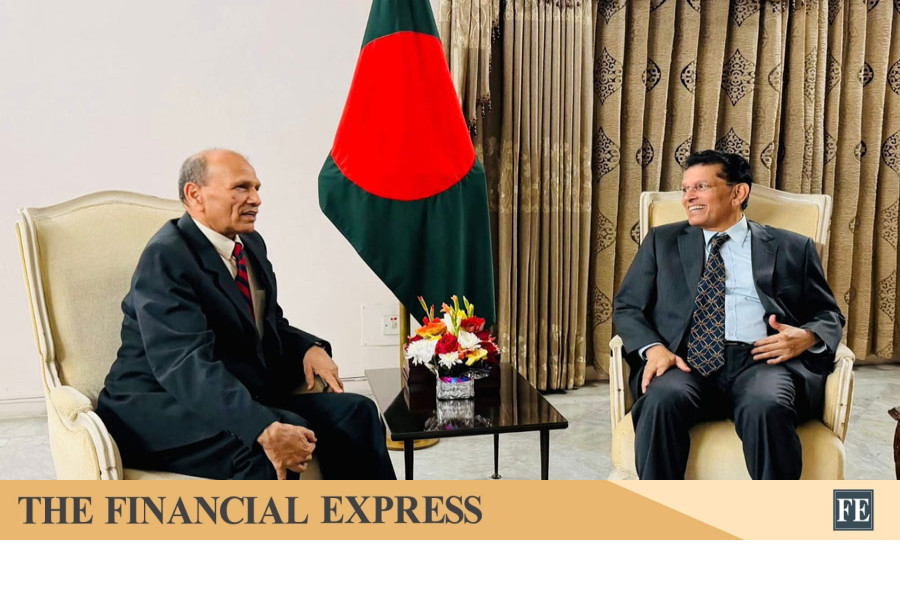
Visiting Nepalese Minister for Foreign Affairs Bala Nanda Sharma on Wednesday met Foreign Minister Dr Khalilur Rahman and both Ministers reaffirmed their commitment to work closely across bilateral, regional, and multilateral platforms, advancing the shared interests of the two countries and peoples.

The Nepalese Foreign Minister congratulated his Bangladesh counterpart on his appointment as the Foreign Minister of the government of Bangladesh.

Minister of State for Foreign Affairs of Bangladesh Shama Obaed Islam, Foreign Secretary Asad Alam Siam, and Director General Israt Jahan were also present in the meeting.

Foreign Minister Sharma was accompanied by Ambassador Ghanshyam Bhandari, Joint Secretary Gahendra Rajbhandari, Deputy Chief of Mission Lalita Silwal, and Under Secretary Madhusudan Bhattarai.

In the meeting held in the evening in Dhaka, the two Foreign Ministers reviewed the longstanding relationship between Nepal and Bangladesh, anchored in good neighbourliness, shared aspirations, and deep cultural connections.

They deliberated on ways to strengthen bilateral ties, with a focus on economic partnership.

In particular, the discussion highlighted the significant untapped potential in areas such as trade, energy, connectivity, and tourism.​
 
Analyze

Analyze Post

Add your ideas here:
Highlight Cite Respond

Nepal polls: voters show red card to corrupt leaders

Mir Mostafizur Rahaman
Published :
Mar 09, 2026 23:47
Updated :
Mar 09, 2026 23:47
Share this news

1773102186331.webp


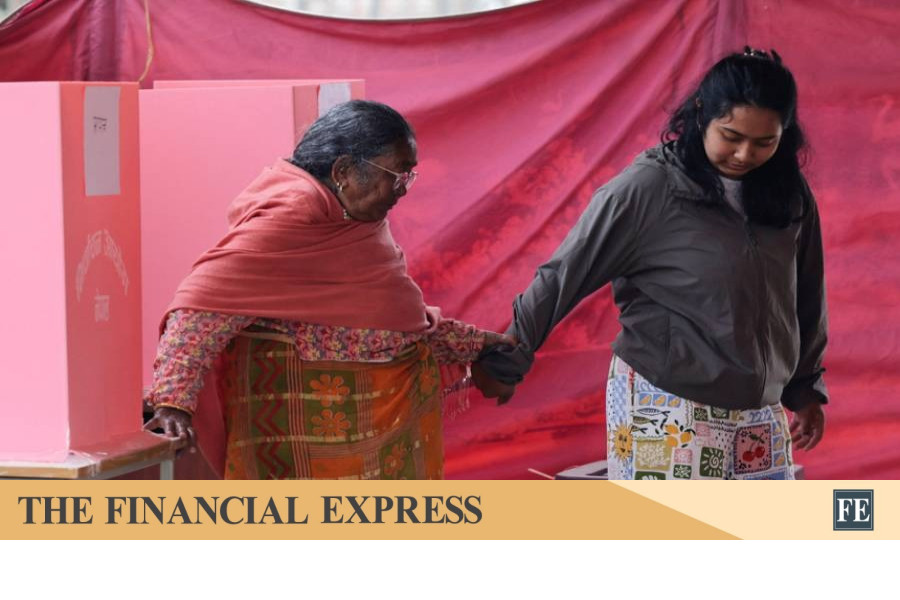
The latest general election in Nepal is shaping up to be far more than a routine democratic exercise. It appears to represent a powerful public rejection of entrenched political elites and the culture of corruption that has long dominated the country's politics. For many voters, particularly the young, the polls have become a moment to deliver a clear message: the era of unaccountable leadership must end.

Last Thursday's election, the first since violent youth-led protests toppled the government in September 2025, effectively pitted the political establishment against a new generation of leaders appealing to angry and frustrated Gen Z voters.

At the centre of this political shift is Balen Shah, the charismatic leader popularly known simply as Balen, whose Rastriya Swatantra Party (RSP) is on course to win the election or emerge as the dominant political force.

For more than two decades, Nepal has experienced a revolving door of coalition governments. Political power has largely remained concentrated among three major parties, including two communist groups that have dominated the country's political landscape.

Despite frequent changes in leadership, many Nepalis have felt that little actually changed in how the country was governed.

Patronage networks, political dynasties and allegations of corruption have repeatedly undermined public trust in the system. Elections often seemed to reshuffle familiar faces rather than introduce meaningful reform.

This time, however, the political mood appears different.

The election became a test of whether Nepal's younger generation could persuade the rest of the electorate that it was time for a new political era -- one led by fresh faces rather than the veteran heavyweights who have dominated the country for decades.

Young voters played a decisive role in shaping the political climate. Around 800,000 first-time voters joined the electorate, forming a powerful voting bloc capable of influencing the outcome.

Their anger did not emerge overnight.

It had been building for years, driven by unemployment, inequality and the perception that the country's political class had grown detached from the realities facing ordinary citizens.

The frustration finally erupted in September 2025 when protests swept across Nepal following a controversial decision by then prime minister K. P. Sharma Oli to ban several social media platforms.

The move triggered what became known as the Gen Z demonstrations.

At first, the protests focused on defending freedom of expression online. But they soon evolved into a broader movement against corruption and political privilege.

Thousands of young Nepalis took to the streets, denouncing what they described as the rule of "nepo babies" -- the children of powerful politicians who appeared to enjoy enormous privilege while ordinary citizens struggled with economic hardship.

The protests quickly escalated.

Clashes between demonstrators and security forces turned deadly, leaving at least 77 people killed. The political crisis eventually forced Oli to resign, paving the way for fresh elections.

During the protests, Balen Shah emerged as one of the most outspoken voices supporting the demonstrators. At one point he described Oli as a "terrorist" who had betrayed his country.

Shah, who first gained prominence in Nepal's hip-hop scene before entering politics, represents a different kind of political figure -- one shaped by youth culture, social media and grassroots activism rather than traditional party structures.

His party has sought to channel the anger of a generation that feels excluded from both political and economic opportunity.

The Rastriya Swatantra Party's manifesto reflects that ambition.

It promises to create 1.2 million jobs and reduce the forced migration that has pushed millions of Nepalis to seek work abroad. The party also pledges to double Nepal's per-capita income from $1,447 to $3,000 within five years and expand the national economy to a GDP of $100bn.

It has also promised to introduce stronger social safety nets, including healthcare insurance for citizens.

Whether these targets can realistically be achieved remains uncertain. Nepal faces major structural economic challenges, including limited industrial capacity and heavy dependence on remittances from migrant workers.

Yet the appeal of Shah's movement lies less in the details of its economic programme and more in what it symbolises -- a break from the political culture that has dominated Nepal for decades.

That culture came under intense scrutiny during last year's protests.

One of the triggers of public anger was the lavish lifestyle displayed by the children of politicians on social media. Images of extravagant weddings, luxury holidays and designer goods circulated widely online.

For many young Nepalis struggling to find jobs, such displays were deeply offensive.

The contrast between privilege and poverty was stark. Youth unemployment stands at more than 20 per cent, while around three million Nepalis work overseas.

Against that backdrop, the social media posts of political elites' families served as a constant reminder of inequality.

When the government attempted to ban the very platforms where citizens were expressing their anger, it ignited the protests that ultimately brought down the administration.

Corruption was at the heart of this public disillusionment.

According to the latest data from Transparency International, about 84 per cent of Nepalis believe corruption in government is a serious problem.

Across South Asia, voters have begun pushing back against political elites associated with corruption. Elections in Sri Lanka and Pakistan have also reflected growing public anger toward entrenched political families.

Yet Nepal's political transformation carries particular significance because it is being driven by a generation that has grown up in the digital age.

Social media has enabled young citizens to scrutinise the lifestyles and behaviour of their leaders more closely than ever before. It has also given them the tools to organise protests and mobilise political pressure rapidly.

The success of Balen Shah's party illustrates how quickly political dynamics can change when public frustration reaches a tipping point.

For Bangladesh, Nepal's experience offers a particularly important lesson.

Recent political developments in Bangladesh show that public attitudes toward corruption are becoming increasingly decisive in shaping electoral outcomes.

The student-led uprising in Bangladesh in July 2024 created enormous expectations for political renewal. Many hoped that the movement would produce a new generation of leaders capable of transforming the country's political culture.

Yet the subsequent emergence of the National Citizens Party (NCP), formed by leaders of the July movement, has not translated into overwhelming electoral success.

One major reason appears to be allegations of corruption involving several of its leaders.

Unlike Nepal's youth leaders, some figures associated with the July uprising became part of the interim government that ruled the country for more than a year following the political upheaval. Their participation in state power inevitably exposed them to political controversies and accusations of misconduct.

In contrast, Nepal's emerging youth leadership remained largely outside the structures of state authority during the transitional period. As a result, they were able to present themselves as relatively untainted by corruption.

That distinction appears to have played a crucial role in shaping voter perceptions.

For Bangladesh's newly elected government led by the Bangladesh Nationalist Party, the message from Nepal is clear.

Public tolerance for corruption is declining rapidly.

The BNP leadership has repeatedly pledged zero tolerance toward corruption. Delivering on that promise will be essential not only for maintaining public trust but also for ensuring long-term political stability.

Nepal's election demonstrates how quickly public frustration can translate into political transformation.

It also serves as a reminder that in the digital era, citizens are watching their leaders more closely than ever before.

Lavish lifestyles, unexplained wealth and abuse of power are no longer hidden from public view.

Ultimately, the Nepalese voters' message is simple but powerful: corruption is no longer acceptable.

Whether politicians across South Asia -- including those in Bangladesh -- are prepared to learn from that message remains to be seen.​
 

Analyze Post

Add your ideas here:
Highlight Cite Respond

Nepal expresses interest in deepening ties with Bangladesh

UNB
Published :
Mar 23, 2026 21:40
Updated :
Mar 23, 2026 21:40

1774311317308.webp


Nepal has expressed interest in working with the new government in Bangladesh to take the bilateral relations between the two countries to a new height.

Bangladesh Ambassador to Nepal Md Shafiqur Rahman on Monday paid a courtesy call on with Ram Sahaya Prasad Yadav, Vice-President of Nepal, in his office to extend the invitation to the celebration of the 55th anniversary of the National Day of Bangladesh.

The Vice-President kindly accepted the invitation to grace the event as the chief guest.

During the call on, they exchanged views on issues of mutual interests pertaining to the long-standing bilateral relations between Bangladesh and Nepal.

The Vice-President congratulated Bangladesh for successfully holding the elections and expressed interests to work with the new government to take the bilateral relations between the two countries to a new height.

In response, Bangladesh Ambassador conveyed the keenness of the new government of Bangladesh to work closely with the new government of Nepal, which is on the process to be formed very soon.​
 
Analyze

Analyze Post

Add your ideas here:
Highlight Cite Respond

Is there any message for Bangladesh in Nepal's election?

Altaf Parvez
Published: 25 Mar 2026, 08: 17

1774486109902.webp


A new government will assume responsibility in Nepal this week, to be formed by RSP or Rastriya Swatantra Party. By now, people in Bangladesh have learned much about this party. In the recently concluded elections, they secured 182 members in the 275-member ''House of Representatives''. The general elections in Nepal initially take place for 165 seats, with the entire country divided into 165 parliamentary constituencies. Voters directly elect 165 MPs. The remaining 110 members of the parliament are elected based on the proportional votes received by parties.

On the day of the election, voters receive two ballots at the same time. With one ballot, they vote for candidates from different parties in their constituencies. With the second ballot, they choose any national party participating in the election. The day before the election, each party submits its list of 110 candidates for the second type of MP election to the election commission. Based on the proportion of the second ballot votes, the remaining 110 MPs are selected from these lists maintained by the election commission.

In Nepal's elections, a voter can choose a candidate from any party in their constituency directly and also vote nationally for their preferred party. Through these two processes combined (125+57), the RSP won 182 seats this time. The RSP received 44 per cent of the direct candidate-centered votes and approximately 48 per cent of the preferred votes as a party.

Meaning, more people voted for them as a national party than their candidates received in various constituencies. Similarly, the opposition Nepali Congress candidates received 19 per cent of the votes from the given votes as individual candidates and 16 per cent as a national party. Meaning, 19 per cent of voters preferred their constituency-based candidates, but fewer voters preferred them as a party.

The diverse preferences of Nepali voters prompt a comparison with Bangladesh. Discussions on electoral system changes, including proportional representation, arose during the mass uprising. Opponents of proportional representation argued it leads to a hung parliament and creates a struggle among parties during the government formation, causing instability in the country. But in Nepal, with a mixed system, RSP achieved not just a simple majority but nearly a two-thirds majority in the parliament, enabling them to form a government on their own and smoothly run the country for the full term if they wish. Thus, there’s no permanent relationship between voting systems and political or government formation instability, as seen here.

On the other hand, the proportional system in Nepal allowed several other parties to maintain a healthy presence in parliament despite the RSP's tide, bringing some opposition voices to the forefront. There have been cases where a party won only one seat in the main vote but secured four additional seats from the second ballot calculation, leading to their five MPs in parliament now.

Nepal kept a mixed system to bring the largest number of voters' representatives to parliament. Yet, of the 64 parties participating in the election this time, only six are present in parliament. According to the rules, parties receiving less than 3 per cent votes do not get any seats. This experience indicates the need for a more liberal proportional system in Nepal's electoral process. Reformists argue that bringing more representatives of diverse opinions into parliament would enhance citizens' interest in the political system.

Reflecting on Nepal's experiences, we can recall the bitter debates during the interim government's time in Bangladesh regarding electoral system reform. We can also consider the recent election results. Analyzing the election results in Bangladesh reveals that the ''winners'' (regardless of the party they belong to) represent a minority of the total constituency-based voters. A large portion of legitimate voters has no representation in parliament. To clarify and elaborate, here’s a discussion about five constituencies in the Mymensingh district chosen randomly. In the results from Mymensingh-1 to Mymensingh-5, there were 2,441,382 voters in total. The winning candidates received only 26 per cent (638,353 votes) of those.

In these five constituencies, there were 1,360,685 valid votes cast. The winners received 47 per cent of those valid votes. Meaning, they did not receive the majority of the valid votes cast. This means the majority of the voters who cast valid votes in these constituencies have no representative in parliament. Yet, it is true that under the current system, the winning Members of Parliament here were legitimately elected.

I can assume that even though chosen randomly, this small image of five constituencies will not be inconsistent with the 300 constituencies overall. Clearly, this points out a flaw in our electoral system. When a majority of the voters, especially most legitimate voters in electoral areas, have no representation in parliament, the electoral system calls for revisions. There can be debates on how to go about these changes or reforms.

In the case of Nepal, we see that everyone who came to vote has a representative in parliament. Those who voted for losing direct candidates can still send a representative to speak for them in parliament through the national party selection on the second ballot. Meaning, there’s a representative for everyone who voted in Nepal's parliament.

Sri Lanka has also reformed its electoral system to make it more representative, and elections are conducted there in a mixed system, making the parliament more representative as well. It is assumed Sri Lanka might move towards a parliamentary system from the presidential system in the future to increase public participation in national policy-making.

In the last four years, all three countries in South Asia where mass uprisings occurred had a major expectation of necessary state reforms for public interest. As the electoral systems in Nepal and Sri Lanka were already reformed to some extent, they are now focusing on economic and administrative reforms. For Bangladesh, the expectations of the uprising have been confined to the controversies of consensus commissions.

Although, if the new government wishes, they could raise discussions for making the electoral system more representative in the new parliament for public interest. The recent electoral outcome in Nepal is an example that there’s no risk of future election loss.

On the other hand, if the electoral system does not become a carrier for change gradually and people lose interest structurally in the current election and parliament pattern, there will truly be a distant risk for the ruling class. Beyond the bubble of stability, the air in South Asia demands foresight from policymakers. New generations here seek change beyond the illusion of stability. Five years ago, South Asia did not know what kind of bloody mass uprisings were coming. Similarly, it might be difficult to predict now what form the mass uprising will take in the next five years without meaningful change.

#Altaf Parvez is a researcher on South Asian history.​
 
Analyze

Analyze Post

Add your ideas here:
Highlight Cite Respond

Latest Posts

Back
PKDefense - Recommended Toggle