Home Watch Videos Wars Movies Login

[🇧🇩] New Government (BNP) in Bangladesh After the Polls

[🇧🇩] New Government (BNP) in Bangladesh After the Polls
9
37
More threads by Saif

G Bangladesh Defense

Saif

Senior Member
Joined
Jan 24, 2024
Messages
17,175
Likes
8,163
Nation

Residence

Axis Group

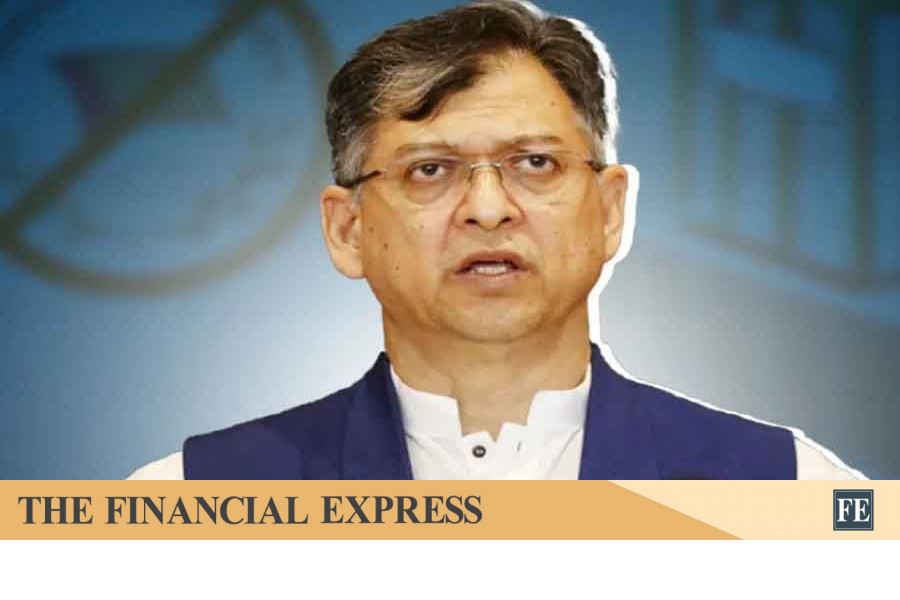
Fakhrul outlines three immediate challenges for next government

bdnews24.com
Published :
Feb 13, 2026 19:45
Updated :
Feb 13, 2026 19:45

1771029141340.webp


BNP secretary general Mirza Fakhrul Islam Alamgir has outlined three immediate challenges for the next government after his party secured an absolute majority in the election.

He made the comment at the Shahjalal International Airport after returning from his Thakurgaon-1 constituency, where he defeated his nearest rival, a Jamaat-e-Islami candidate, by about 90,000 votes.

“The biggest challenges for the next government are reviving the economy, ensuring law and order and controlling corruption,” the secretary general said.

BNP has won 209 of the 299 seats in the parliamentary polls.

“The results bring joy and sorrow at the same time,” said Fakhrul.

The reason for sorrow, he said, is that the joy of the “unprecedented victory” cannot be shared with former prime minister Khaleda Zia, who passed away in December last year.

He believes a democratic prosperity lies ahead given that the progress made through the July Uprising and the Feb 12 election continues.

Asked about the election being held without the participation of the Awami League and his party’s stance on the matter, he said: “The Election Commission has already ruled on the Awami League, prohibiting their activities.”

“Any further decisions will be determined in due course, depending on the political developments that follow.”

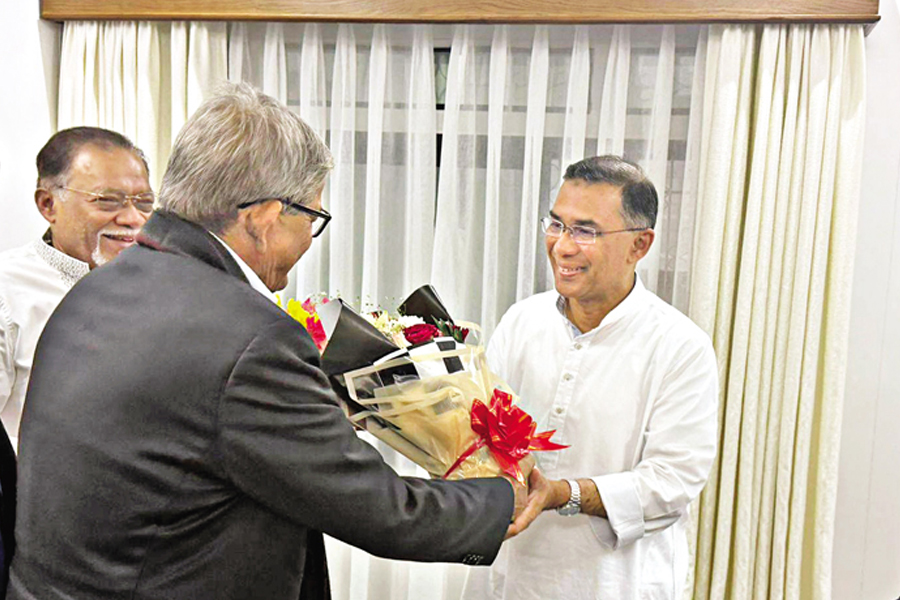
Fakhrul went to the party chairman’s office in Gulshan from the airport. He congratulated Chairman Tarique Rahman with a bouquet.​
 
Last edited:
Analyze

Analyze Post

Add your ideas here:
Highlight Cite Respond

Salahuddin hopes for most productive parliament since independence

Published :
Feb 13, 2026 19:02
Updated :
Feb 13, 2026 19:02

1771029271138.webp


BNP Standing Committee Member Salahuddin Ahmed on Friday hoped that the newly formed Jatiya Sangsad would be the most productive law-making house since the country’s independence and take steps to amend the Constitution.

He also sought cooperation from people from all walks of life to build the country into a talent-based, technology-driven and knowledge-based state in line with the aspirations of the common people, martyrs and the younger generation, UNB reports.

Salahuddin made the remarks while responding to questions from journalists in front of the party chairperson’s office in Gulshan in the afternoon.

The BNP leader said the much-awaited national election was held peacefully and in a fair and impartial manner, meeting the expectations of the international community.

He said the foundation of a strong democracy had been laid and that the process would continue.

Salahuddin said democratic reforms of all state institutions and the desired constitutional reforms would be carried out, as outlined in the party’s 31-point manifesto, on the basis of which the election manifesto was prepared.

He said the July National Charter had already been signed, marking a political agreement. “This is a document of political consensus. It will be followed to the letter."

Salahuddin Ahmed elected in the 13th national election obtaining 222,019 votes, while his nearest Jamaat contestant Abdullah Al Faruk bagged 129,728 votes and Islami Andolan contender Sarwar Alam Kutubi gained 4,528 votes.​
 
Analyze

Analyze Post

Add your ideas here:
Highlight Cite Respond

‘Yes’ wins in referendum
BNP set to form govt with absolute majority in parliament
BNP books 209 seats alone in landslide poll victory, Jamaat stands afar with 68 seats while the rest go to their allies, independents


Mir Mostafizur Rahaman
Published :
Feb 14, 2026 00:46
Updated :
Feb 14, 2026 00:46

1771029984257.webp


BNP Secretary General Mirza Fakhrul Islam Alamgir greets the party's Chairman Tarique Rahman with flowers on Friday to congratulate him on winning the 13th national election. — Focus Bangla

Bangladesh Nationalist Party (BNP) begins spadework to form the government after securing a commanding two-thirds majority in a general election widely seen as a turning point in the country's turbulent political history.


Official results announced on Friday showed the BNP won 209 of the 297 seats declared so far in the 13th Jatiya Sangsad election, comfortably clearing the threshold required to govern alone.

Voting took place in 299 of the 300 constituencies, while polling in Sherpur-3 was postponed after the death of a candidate from Bangladesh Jamaat-e-Islami, while results in two Chattogram seats remain suspended by court order.

Among BNP allies, each of Gonoodhikar Pairhsad, Bangladesh Jatiya party, and Gonosonghati Andolon bagged one seat each. Party rebels also returned in some seats.

The scale of the victory marks the party's return to power for the first time since the 2001 triumph. That year, the BNP won 195 seats and formed a four-party coalition government that included Jamaat-e-Islami.

This time around, Jamaat emerged as BNP's principal rival following the July-August 2024 uprising that routed the former ruling party, Awami League, from government and electoral race. However, Jamaat got decisively outpaced-it finished winning 68 seats.

In addition to Jamaat's attainment, among its allies, the uprising-born National Citizens Party (NCP) of young Turks bagged six seats, Bangladesh Khelafat Majlish 2, and Khelafat Majlish one.


Smaller Islamist and left-leaning parties secured a handful of seats, while independent candidates won seven.

In total, 50 political parties contested the election, fielding 2,028 candidates across 299 constituencies. The Election Commission said turnout was 59.44 per cent. A referendum held simultaneously on Thursday on the implementation of the July Charter drew slightly higher participation, with more than 48 million voters backing the proposal with ayes against 22.5 million opposing with nays.


The BNP was founded by the late president Ziaur Rahman and later led by former prime minister Khaleda Zia, who became Bangladesh's first female prime minister in 1991 after spearheading the anti-Ershad movement. Following her recent death, the party's standing committee approved her son, Tarique Rahman, as chairman on his return from political exile in London.

Rahman, having contested the polls in Dhaka-17 and Bogura-6, won both seats and was now poised to become prime minister. In a brief informal reaction on Friday, he thanked voters for their support. "I am grateful for the love you have shown for me. Please, keep me in your prayers," he said.

Later, Rahman travelled from his residence in Gulshan to the Bangladesh Navy Headquarters Mosque for Friday prayers, briefly stopping to speak with supporters who had gathered outside. Some told him they hoped to stand beside him in building a "new Bangladesh".

Party secretary-general Mirza Fakhrul Islam Alamgir framed the results as a clear popular mandate. In comments that appeared aimed at Jamaat, he said: "The people have rejected them. BNP has secured a two-thirds majority."

Rejecting the idea that the party was driven by a tight cadre structure, he argued that its victory stemmed from broad-based public support. "BNP is not a cadre-based political party--it is a people-based political party," he said, adding that voters endorsed the party's manifesto and its promises of state reform.

With a supermajority secured, the BNP now faces the task of translating electoral momentum into governance in a country still grappling with deep political divisions and expectations of institutional reform.​
 
Analyze

Analyze Post

Add your ideas here:
Highlight Cite Respond

BNP set to form government after two decades securing two-thirds majority

Special CorrespondentDhaka
Published: 13 Feb 2026, 14: 25

1771030571585.webp


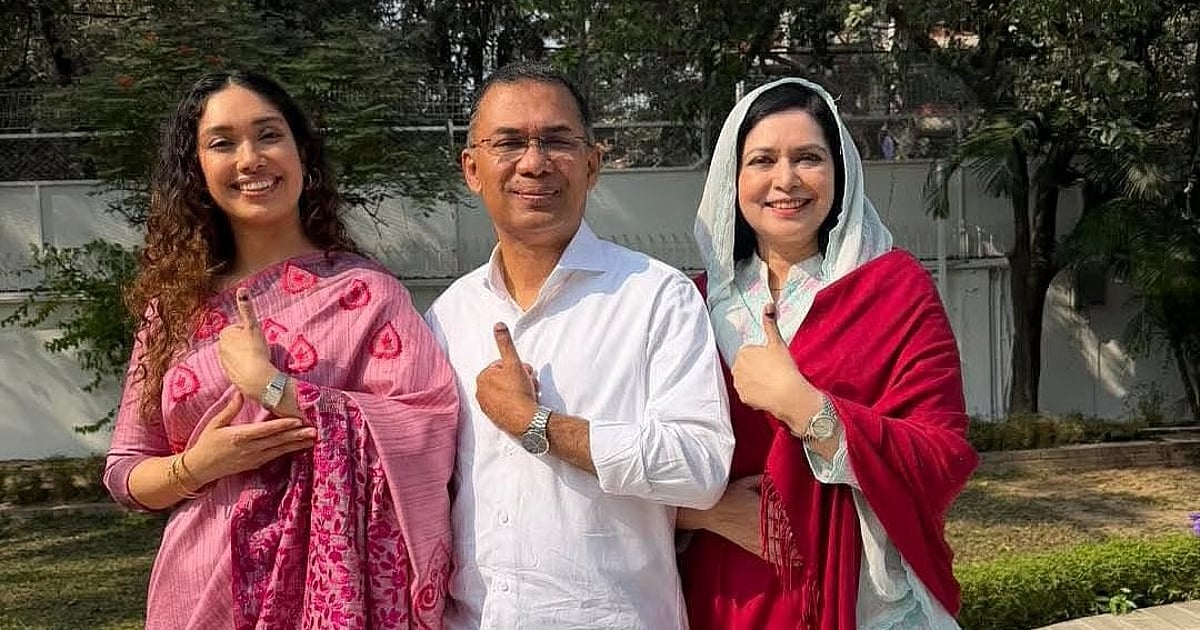
After casting his vote, BNP chairman Tarique Rahman shared a photograph on Facebook featuring himself, his wife Zubaida Rahman, and their daughter Zaima Rahman. Taken from the Facebook page of Tarique Rahman

The Bangladesh Nationalist Party (BNP) is set to form the government after securing a two-thirds majority in the 13th Jatiya Sangsad (national parliament) election. Through this election, the party is returning to power after more than two decades.

According to the latest unofficial results received from the field, the BNP and its alliance candidates have so far won 207 seats in the election held across 299 constituencies.

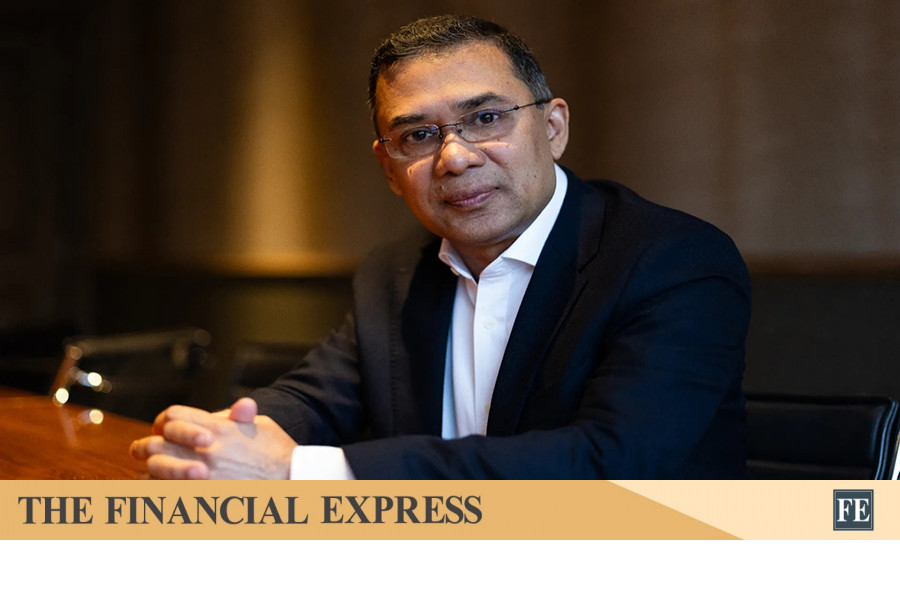
With victory in the majority of seats, BNP Chairperson Tarique Rahman is set to become the country’s next prime minister. The party had already announced this decision earlier. Tarique Rahman contested in Dhaka-17 and Bogura-6 constituencies and has won in both.

Polling was held yesterday, Thursday, in 299 of the 300 parliamentary seats. Voting in Sherpur-3 was suspended following the death of a candidate from Jamaat-e-Islami.

As of 12:45 pm today, unofficial results have been received from 288 seats. Of these, the BNP and its alliance partners have secured 207 seats, while Jamaat-e-Islami and its allies have won 73 seats.

Islami Andolon Bangladesh has won one seat, while independent and other candidates have secured seven seats. The BNP is also on course for victory in several remaining constituencies. Overall, the party is heading towards a two-thirds majority.

Speaking at a press briefing at 11:30 pm last night, Mahdi Amin, spokesperson of the BNP’s election steering committee and adviser to the party chairperson, said that buoyed by public support, the BNP would form the government by winning more than two-thirds of the seats.

“Based on the votes received so far and detailed seat-wise information, we are confident of this victory,” he said.​
 
Analyze

Analyze Post

Add your ideas here:
Highlight Cite Respond

A woman’s message to the government we just elected

We understand compromise, but we do not accept betrayal

13 February 2026, 17:54 PM

Naziba Basher

1771031366751.webp


Beaming with pride, a group of young women voters, who just cast their ballots for the first time, pose for a celebratory photo outside Dhanmondi Girls’ High School polling centre yesterday. Photo: Orchid Chakma

For the first time in my adult life, I stood in a voting line that felt real.

There was no whispered certainty about the result the night before, no hollow theatre dressed up as democracy, no ballot cast only to decorate a predetermined victory speech.

For the first time, my generation did not perform citizenship -- we practised it. And we made a choice that was neither romantic nor naive.

On one side stood a politics that openly imagines a future where women shrink -- where our public lives are conditional, negotiated, permitted in moderation. On the other stood a party whose history carries the smell of muscle, patronage and street power, a past heavy with intimidation and extortion.

We did not vote because we were inspired. We voted because we calculated.

We chose the lesser danger so the greater one would not become law. We chose you.

Understand what that means.

This was not loyalty -- it was conditional trust. We escorted you into parliament knowing exactly who you have been, and hoping -- not assuming -- who you might become. You were not handed a mandate of love. You were handed a probationary contract.

And women were central to that contract.

Many of us voted against fear more than for ideology. We voted to prevent our lives from being negotiated in theological committees. We voted so our ambitions would not require permission slips. We voted because even flawed secular politics still leaves room to argue, organise and resist. We voted because space matters, even imperfect space.

Now that space is your responsibility.

So here is the message: Do not misunderstand our vote as forgiveness for your past. It was an investment in your future behaviour.

You promised governance instead of gangs. Deliver it. You promised rule of law instead of influence. Prove it. You promised safety in streets and workplaces. Enforce it.

Women do not need symbolic respect; we need structural protection.

Make cities where a woman returning home at night is routine, not bravery. Fix public transport so harassment is punished swiftly and visibly. Reform policing so reporting violence does not feel like negotiating humiliation. Train officers who record complaints instead of interrogating character.

In workplaces, safety cannot remain a corporate slogan. Strengthen labour monitoring, ensure complaint mechanisms actually function, and punish retaliation against women who speak. Sexual harassment policies exist on paper across the country; your job is to make them exist in consequence.

Online spaces too are now part of public life. Digital abuse silences women faster than censorship ever could. Treat coordinated harassment, threats and image-based abuse as civic crimes, not personal inconveniences.

And understand something deeper: women’s participation in society is not preserved by protectionist speeches about honour. It is preserved by predictable justice. When systems work, freedom survives. When systems fail, control replaces it.

We did not vote so you could “allow” women to live freely. We voted so you would build a state where freedom does not depend on who is in power.

Also, clean your own house.

Remember this, if extortion continues under new banners, we will notice. If student wings become private militias again, we will notice. If local strongmen become untouchable because they wear your colour, we will notice.

This election gave you legitimacy, but your behaviour will determine whether you deserve it.

Democracy is not the day ballots are counted. It is the days after, when power chooses restraint over habit.

Our generation did not grow up trusting politics. We grew up studying how it failed us. That makes us patient but not forgiving. We understand compromise, but we do not accept betrayal.

We voted for the future, not for nostalgia.

We voted because we want a country where “choosing the lesser evil” is no longer the only rational choice.

So, here is the simplest way to honour that vote -- make it possible for the next election to be decided by hope instead of fear.

You now govern not just a state, but a moment -- the fragile moment when citizens tried believing again.

Do not waste it.​
 
Analyze

Analyze Post

Add your ideas here:
Highlight Cite Respond
newagebd.net/post/Elections/291120/bnp-prepares-to-form-govt

BNP prepares to form govt
Moinul Haque 13 February, 2026, 17:11

1771032299039.webp

Bangladesh Nationalist Party chairman and election candidate Tarique Rahman greets his supporters as he leaves his house in Dhaka for Friday prayers. | AFP photo

The Bangladesh Nationalist Party is preparing to form the next government after securing a two-thirds majority in the 13th Jatiya Sangsad elections.

According to the official results of 297 seats released by the Bangladesh Election Commission on Friday afternoon, the party won 209 seats in the polls.

In the 300-seat Bangladesh Jatiya Sangsad, a party requires at least 151 seats to form a government independently.

The polling in the parliamentary elections and a simultaneous constitutional referendum took place in 299 of the 300 constituencies on Thursday.

The polls were largely peaceful and competitive, marking a sharp contrast to the country’s previous three general elections.

Polling in Sherpur-3 was postponed following the death of a candidate in the constituency. Meanwhile, the results of Chattogram-2 and Chattogram-4 have been kept pending under court directives.

An Election Commission official said that work was under way to issue the gazette notification on the elected Members of Parliament, which may be published on Saturday.

Besides, a government official involved in the process said that the newly elected MPs were likely to take oath on Monday, 16 February.

According to the EC, the BNP won 209 seats on its own while the Jamaat secured 68 itself.

The National Citizen Party, a member in the Jamaat-led 11-party alliance, won six seats.

The Islami Andolan Bangladesh obtained one seat.

Two other 11-party alliance partners, the Bangladesh Khelafat Majlis and the Khelafat Majlis, won two and one seat respectively.

Among the BNP-lead alliance partners, the Gano Odhikar Parishad secured one seat while the Bangladesh Jatiya Party-BJP and the Ganosamhati Andolan bagged one seat each.

Overall, the BNP-led alliance secured 212 seats while the Jamaat-led alliance obtained 77.

Seven candidates were elected as independents.

The seven victorious independents had sought BNP nominations under the party’s sheaf of paddy symbol but were denied tickets.

Defying the party decisions, they contested as independents and won the election.

Among them were AZM Rezaul Haque (Dinajpur-5), Sheikh Mujibur Rahman Iqbal (Kishoreganj-5), Atikul Alam Shawon (Cumilla-7), Md Lutfar Rahman Khan Azad (Tangail-3), Mohammad Salman Omar (Mymensingh-1), Rumeen Farhana (Brahmanbaria-2), and Md Abdul Hannan (Chandpur-4).

The voter turnout in the election was 59.44 per cent.

In the concurrent referendum held during the Jatiya Sangsad elections, voter turnout stood at 60.26 per cent.

A total of 4.8 crore votes were cast in favour of ‘Yes’in the referendum, compared with 2.26 crore ‘No’ votes, resulting in a ‘Yes’ victory, the EC announced.

A total of 2,028 candidates, including 274 independents, from 50 political parties contested the election.

Among the parties, the Bangladesh Nationalist Party fielded the highest 291 candidates. The Islami Andolan Bangladesh put forward 258 candidates while the Jamaat nominated 228. The Jatiya Party fielded 198 candidates.

According to official figures, the country has 12.77 crore registered voters, including around 6.48 crore men and 6.28 crore women.

Senior BNP leaders on Friday held a meeting at the party’s Gulshan office, with party chair Tarique Rahman presiding.

Following the meeting, BNP standing committee member Amir Khasru Mahmud Chowdhury told New Age that the transition of state power had been discussed.Campus bites catering

‘As the BNP has secured a two-thirds majority in the national polls, we are prepared to form the government,’ he said.

Khasru said that steps would be taken regarding the swearing-in of the elected MPs and the formation of the government in accordance with the rules.

Meanwhile, reflecting on the polls results, BNP secretary general Mirza Fakhrul Islam Alamgir termed it both joyful and poignant, commenting that the party’s late chairperson Khaleda Zia did not live to witness the unprecedented BNP victory.

In another comment, Mirza Fakhrul said that restoring the economy, maintaining law and order, curbing corruption, and ensuring justice would be the principal challenges for the next government.

Speaking to reporters outside the domestic terminal of the Hazrat Shahjalal International Airport after returning to Dhaka from his constituency in Thakurgaon, he described the election as festive and transparent following a mass uprising by students and the public.

Fakhrul, he said, was personally overwhelmed and hoped the democratic continuity would be maintained.

From the airport, the BNP stalwart proceeded to the BNP chair’s office at Gulshan, where he greeted party chair Tarique Rahman.

In another development, the Bangladesh Jamaat-e-Islami alleged unusual delays and irregularities in the counting and announcement of results.

Speaking at the Election Commission on Friday morning, the party’s assistant sertary general Ehsanul Mahboob Zubair claimed that in some cases result sheets signed by returning officers were later altered.Bangladesh cultural tours

He alleged that in Dhaka-17, at least eight result sheets had been overwritten, reducing nearly 5,000 votes, purportedly to benefit the head of a particular party.​
 
Analyze

Analyze Post

Add your ideas here:
Highlight Cite Respond

A rocky road awaits next government

Atiqul Kabir Tuhin
Published :
Feb 14, 2026 23:59
Updated :
Feb 14, 2026 23:59

1771116150334.webp


The dust has finally settled on the 13th parliamentary elections, with the Bangladesh Nationalist Party (BNP) securing a landslide two-thirds majority in a 300-seat parliament. The election not only restored democracy but also paved the way for the formation of a government with a genuine popular mandate for the first time since 2008. But what happens now will be far more consequential for the country's future. Formidable challenges await the next government.

The incoming government is taking the helm at a time when the country is under pressure on all fronts. The prolonged absence of an elected government has deeply polarised society, and political tensions have remained high in the run up to the election. It is now time to lower the political temperature. Retaliatory attacks on supporters of opposition candidates, as have already been reported after the polls, will only inflame tensions at a time when stability is crucial to address the pressing challenges ahead.

Most consequential for the country's future will be the government's ability to address an economy in critical condition. The economy has been in the ICU when the interim government took the helm after mass uprising, and it has managed to move it to the general ward, as claimed by the outgoing government's Finance Advisor. The next government's challenge now will be to nurse it back to full health.

The interim government has take some encouraging steps such as restoring discipline in the banking sector, and taking steps to separate tax policy from administration and giving full autonomy to the Bangladesh Bank. However, the non-performing loans ratio remained alarmingly high. Moreover, despite issuing a gazette notification to separate the National Board of Revenue (NBR), the much-anticipated reform could not be effectively implemented due to alleged non-cooperation from the public administration department.

The government also fell short of amending the Bangladesh Bank Order, 1972, to ensure full autonomy of the central bank, ostensibly because of opposition from bureaucrats on the BB board. Furthermore, the initiative to enhance the capacity of Chittagong Port by bringing in a foreign operator also fell flat due to protests from labour unions. A political government is expected to be in a better position to deal with these thorny issues and bring about meaningful institutional reforms.

At the same time, exports are struggling under new global tariff pressures, private investment is shrinking, and economic growth has slowed to its lowest level in over a decade. Without serious and urgent course correction, the country risks sliding into prolonged stagnation.

The government must also implement the reforms outlined in the July Charter. Nearly 70 per cent of voters endorsed sweeping constitutional changes in a referendum, including the introduction of a limit to prime minister's term and the creation of an upper house empowered to check the lower one. These measures are designed to safeguard Bangladesh's restored democracy. Failure to implement the reforms would reinforce the perception that the political transformation has been largely cosmetic.

Perhaps the most important challenge in the years ahead will be meeting the aspirations of Bangladesh's youthful population. With roughly 70 per cent of the population under 30 and about 2.7 million young people entering job market each year, the country needs to create over a million new jobs annually, while equipping the rest with the skills necessary to compete in overseas markets. Beyond jobs, the young generation also wants establishment good governance in the administration.Growing radicalisation and the state's ability to prevent violent extremism also demand urgent attention. If the new government misjudges these pivotal challenges, the country risks sliding back into turbulence.

Te road ahead is bumpy. An astute and courageous leadership will be required to navigate it deftly.​
 
Analyze

Analyze Post

Add your ideas here:
Highlight Cite Respond

Daunting socioeconomic tasks await new govt

Jubair Hasan and Yasir Wardad
Published :
Feb 14, 2026 09:00
Updated :
Feb 14, 2026 09:00

1771116275037.webp


The Bangladesh Nationalist Party (BNP)-led alliance is going to form a new government with heavy socioeconomic burdens after its landslide victory in the 13th national election.

The $462 billion economy has recently been passing through a sluggish state due to the absence of an elected and democratic government, resulting in multipronged macroeconomic stresses.

Reviving the economic wheels of the country by bringing discipline in the fragile financial sector; improving investment climate by improving the law-and-order situation, particularly in industrial belts; containing the high inflation regime; addressing low revenue mobilisation; and creating jobs will remain the major challenges for the elected government to tackle.

On the other hand, critical issues like bringing back trust of depositors in the banking sector amid persisting merger initiatives, addressing higher lending costs, and accelerating private sector credit demand at a time of growing government bank borrowing also need to be handled in the coming days.

BNP-led alliance leaders, who won the polls, also admitted the new government would face too many socioeconomic challenges.

They said the alliance, after forming the government, would chalk out a list of priorities to overcome the challenges and accelerate economic activities across the country.

BNP parliamentarian and business leader Abdul Awal Mintoo, who won the election from Feni-3 constituency, said the first challenge was to restructure the entire administration as part of the alliance's anti-corruption commitment.

The second challenge, he said, would be to improve the investment climate.

He said investment at present was far below what they expected in terms of the gross domestic product (GDP).

To achieve the target, Mintoo, a former president of the Federation of Bangladesh Chambers of Commerce and Industry (FBCCI), said they would need to improve the law and order situation as quickly as possible along with addressing other anti-investment hurdles.

"We need to improve it (investment climate) at any cost. Otherwise, we will not be able to create the required number of jobs as some 2.70 million youths join the job market every year," he said.

The businessman-cum-politician said the private sector-led economy had been under sluggishness for long and they would need to make the private sector vibrate by enhancing its credit demand.

According to the Bangladesh Bank (BB) data, the private sector credit growth stood at 6.10 per cent in December 2025, the lowest in recent history.

BNP standing committee member Salahuddin Ahmed said his party would place a strong emphasis on restoring law and order, which was essential not only for ensuring public safety but also for attracting both foreign and local investments.

He said the party believed that a stable security situation was the foundation of economic growth, business confidence, and job creation.

Without proper law enforcement and protection of citizens' rights, sustainable development was not possible, said Ahmed, who won the election from Cox's Bazar-1 constituency.

Referring to the rise of the mob culture in recent times, he said the country had witnessed a worrying trend of mob violence, public intimidation, and incidents where groups had taken the law into their own hands.

Such practices, he said, undermined the justice system, creating fear among citizens and tarnishing the country's image abroad.

He stressed the BNP would adopt a zero-tolerance policy against mob justice and unlawful activities that disrupted social order.

"No one will be allowed to take the law into their own hands," he said, adding proper legal processes must be followed in all cases.

He said the BNP would reform the law enforcement system in line with its election manifesto and the party's 31-point agenda.

The reforms would focus on ensuring professionalism, accountability, and political neutrality within the police and other security agencies, he said.

Ahmed added the BNP aimed to build a transparent and people-friendly law enforcement system, where no individual or group was above the law.

Another BNP standing committee member Amir Khasru Mahmud Chowdhury said as per the party's manifesto, dismantling oligarchic structures, creating jobs, and building a trillion-dollar economy by 2034 would be the central priorities.

"Policy continuity and a comprehensive investment framework are essential to attract foreign investment," he said, setting a target of raising foreign direct investment (FDI) to 2.5 per cent of the GDP.

He said they had a plan to abolish the banking division under the Ministry of Finance, arguing that it hampered the independence of the banking and financial sector.

"We will appoint competent and professional individuals to regulatory bodies to ensure efficiency and politics-free function," he said.

After forming the government, he said, they would review non-performing loans (NPLs) and those responsible for loan irregularities would be brought to justice.

He also said the BNP would pursue strategic free-trade agreements with key countries and economic blocs across Asia, Europe, Africa, and the Middle East.

Zonayed Saki, chief coordinator of Gana Samhati Andolon, an ally of the BNP, said the growing inflationary pressure had been hurting the common people by squeezing their wallets in recent times.

"We cannot bring down inflation to tolerable levels overnight. It takes time, but the alliance is committed to improving people's lifestyle by bringing down commodity prices to tolerable levels. We will formulate policies accordingly," Saki, who won the election from Brahmanbaria-6 constituency, said.

Inflation in Bangladesh went up for the third month in a row, with the overall rate rising to 8.58 per cent in January, up from 8.49 per cent in December, 8.29 per cent in November, and 8.17 per cent in October.

Saki said the alliance was committed to signing bilateral treaties considering people's interests first.

"If any deal is against the interests of our people, we will discuss that in parliament and take action accordingly," he added.​
 
Analyze

Analyze Post

Add your ideas here:
Highlight Cite Respond

Members Online

Latest Posts

Back
 
G
O
 
H
O
M
E