[🇧🇩] Ousted PM Hasina sentenced to death

[🇧🇩] Ousted PM Hasina sentenced to death
34
1K
More threads by Saif

G Bangladesh Defense

Saif

Senior Member
Joined
Jan 24, 2024
Messages
22,197
Likes
9,869
Nation

Axis Group

TRIBUNAL VERDICT OVER UPRISING-TIME CRIMES AGAINST HUMANITY
Ousted PM Hasina sentenced to death

• Ex-home minister Kamal gets capital punishment • Then IGP Mamun's penalty commuted to 5yrs in jail • Govt ordered to confiscate convicts' property

GULAM RABBANI
Published :
Nov 18, 2025 00:21

1763428795562.webp


Bangladesh's ousted prime minister Sheikh Hasina was Monday sentenced to death for the "crimes against humanity" committed during the July-August mass uprising last year that toppled her government.

In its verdict telecast live, the International Crimes Tribunal-1 (ICT-1) in Dhaka also handed down capital punishment to former home minister Asaduzzaman Khan Kamal but commuted the penalty to then inspector-general of police (IGP) Chowdhury Abdullah Al-Mamun for "full disclosure" of the offences as a penitent approver.

The court also ordered confiscating all the property of Hasina and Kamal in favour of the state, and to give adequate compensation to the martyr families and July survivors in consideration of their losses.

A three-member bench of the tribunal, headed by its Chairman Justice Md Golam Mortuza Mozumder, delivered the verdict in the prime case of committing crimes against humanity during the uprising. The two other members of the bench are Justice Md Shofiul Alam Mahmood and former District and Sessions Judge Md Mohitul Haque Enam Chowdhury.

Hasina and Kamal have been absconding and tried in absentia while Mamun is in custody and pleaded guilty. The then police chief also becomes an approver or state witness in the tribunal, set up in 2010.

According to the judgment, Hasina, 78, who is now in India, was sentenced to death under charge no 2 on three counts of crimes.

The offences involve directing the use of lethal weapons, deploying helicopter and drones, the shooting and killing of six unarmed protesters in Dhaka's Chankharpool on August 5 last year, and the shooting of six student protesters in Ashulia the same day, five of whom were later burned after death, while the sixth was allegedly set on fire while still alive.

Hasina was also sentenced to imprisonment unto natural death on another three counts under Charge No 1. The offence counts include incitement and orders to kill the protesters, as well as failure to prevent the atrocities that occurred during the mass uprising.

Asaduzzaman Khan Kamal also received the death penalty on three counts under Charge No 2, which involved his abetment and failure to prevent the shooting and killing of six unarmed protesters in Dhaka's Chankharpool on August 5 last year, as well as the shooting of six student protesters in Ashulia the same day. Five of the students were later burned after death, while the sixth was allegedly burnt alive.

The tribunal states that the former Home Minister and the former IGP committed the same offences by abetting the crimes carried out during the mass uprising, and that the IGP was also liable to receive the highest punishment for his actions. However, the tribunal decided to impose a more "lenient sentence" on him, noting that he had contributed to the trial proceedings by making a "truthful disclosure" of the facts.

"He was involved in all the crimes committed during the 36-day movement. He should receive the highest punishment for his actions. However, we acknowledge that he made a full disclosure of the crimes to the tribunal and contributed to the trial proceedings," the tribunal says.

In an instant reaction Attorney-General Md Asaduzzaman said the martyrs, the state and the prosecution received justice.

He further told the press: "We believe this verdict is a landmark decision in fulfilling our responsibility to the martyrs, to the country, to the people, to the Constitution, to the rule of law, and to future generations. This verdict will bring peace and it is a message for the future. It will stand as a milestone for justice and the rule of law in Bangladesh."

Chief Prosecutor Muhammad Tajul Islam says the government can take two steps to bring back the two absconding accused from India. It can either request the Indian government to hand them over under the existing extradition treaty, or seek their return through Interpol in order to implement the verdict.

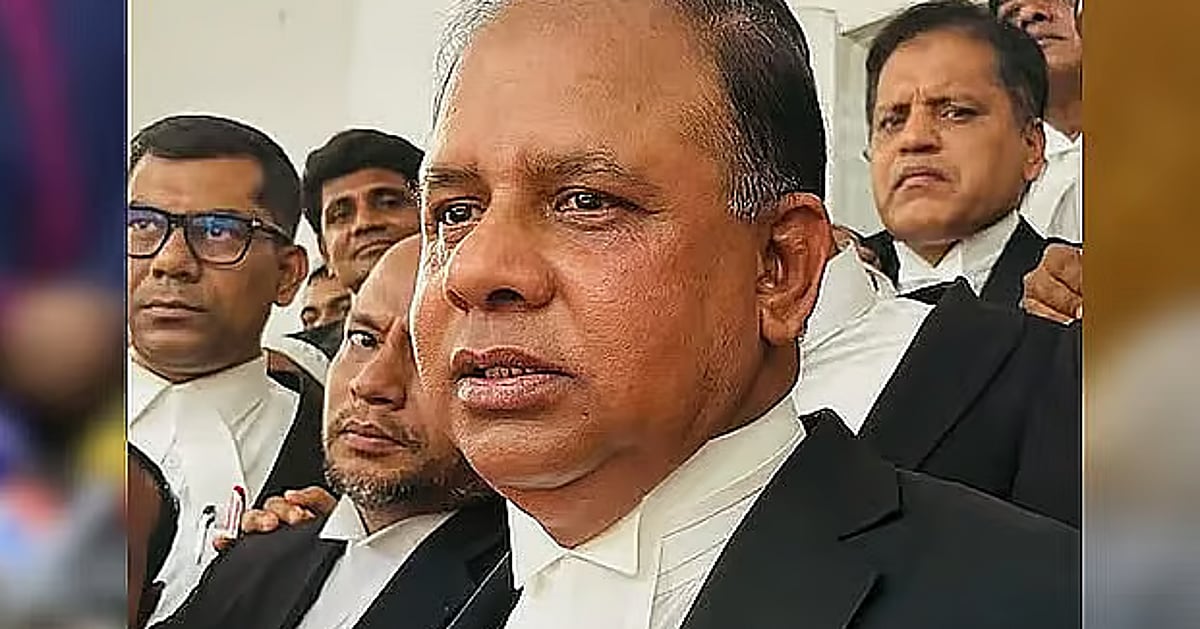
State defence counsel Md Amir Hossain says he was distressed, as his client received the highest punishment in the case. He says he has no locus standi to file an appeal because his clients are fugitives.

Families of those killed and injured during the July uprising welcome the death sentences handed down to the deposed prime minister, Sheikh Hasina, and former home minister Asaduzzaman Khan Kamal, calling the verdict a long-awaited step toward justice. They also urge the government to ensure the verdict is carried out "swiftly".

In his reaction, Mir Mahbubur Rahman Snigdho, the twin brother of July martyr Mir Mahfuzur Rahman Mugdho, says the martyr families agreed with the death sentences for Sheikh Hasina and Asaduzzaman Khan Kamal but rejected Mamun verdict.

"We will appeal to the higher court. He must receive at least life imprisonment," he told the reporters on the high-security ICT premises.

He notes that delivering a verdict is not enough-the government must also clarify how it intends to bring back Hasina and Kamal.

The tribunal, headed by the presiding judge, Justice Md Golam Mortuza Mozumder, began reading out portions of the 453-page judgment around 12:30pm, amid tight security and a packed courtroom.

The tribunal states that the offences committed by the accused constitute crimes against humanity under the Rome Statute. It further says, "Justice must not be denied."

The witnesses and evidences produced in the tribunal were enough to prove the crimes against the accused. The genuineness of the video and audio clips was beyond question and 54 witnesses were enough to prove the charges.

Law-enforcement personnel, including members of the Bangladesh Army, were deployed on the tribunal premises. Prosecutors, defence counsel, visitors, and journalists were allowed entry only after thorough security checks.

Pronouncement of the verdict was broadcast live with the permission of the tribunal.

Before delivering the order portion, the tribunal said, "The prosecution prayed to give decision over Awami League activities in the verdict. However, the tribunal isn't inclined to discuss the issue in the verdict as it is not the matter involved in the case."

The tribunal had declared the end of the trial proceedings on October 23 this year and on November 13 it set November 17 for delivering its verdict in the case.

On June 1 this year, the prosecution submitted the formal charges to the tribunal, detailing five specific crimes against humanity, including "superior command responsibility" committed during the uprising.

On all five charges, the accused are charged with crimes against humanity, including murder, attempted murder, widespread and systematic killings, incitement, provocation, aiding and abetting, conspiracy, other inhumane acts, and failure to prevent the commission of these crimes.

Provocative speech of Sheikh Hasina given at a press conference on July 14 last year at the Gonobhaban, direction to use of helicopters, drones and lethal weapons during the student-led quota movement, and implementation of that direction by the subordinates to former Home Minister Asaduzzaman Khan Kamal and former IGP Chowdhury Abdullah Al Manmun have been included in the charges.​
 

Crimes against humanity
Sheikh Hasina sentenced to death

Staff CorrespondentDhaka
Updated: 17 Nov 2025, 16: 00

1763429272936.webp

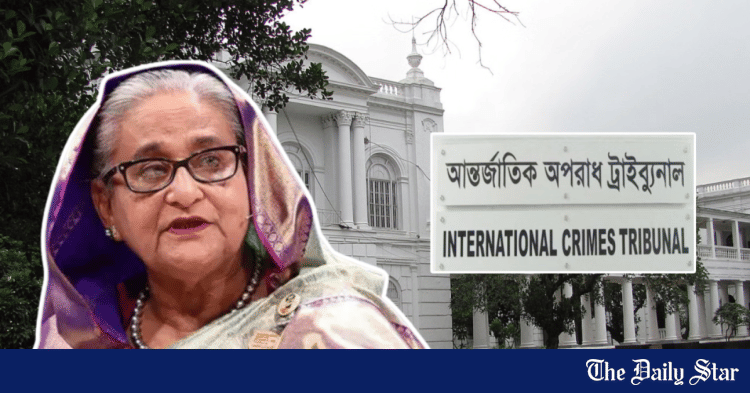
A collage of the ICT logo and Sheikh Hasina File photo

Ousted Prime Minister Sheikh Hasina has been sentenced to death over two charges committed during the July mass uprising.

International Crimes Tribunal-1 delivered the verdict today, Monday. This is the first case related to killings and other crimes against humanity during the July uprising.

In the verdict, the tribunal stated that the crimes of Sheikh Hasina and two other accused have been proven. Sheikh Hasina has been sentenced to death on two charges.

Of the remaining two accused, the then Home Minister Asaduzzaman Khan was also convicted to death, and the then Inspector General of Police (IGP) Chowdhury Abdullah Al-Mamun has been sentenced to five years of imprisonment.

Sheikh Hasina and the then Home Minister Asaduzzaman remain absconding and are currently in India.

Former IGP Chowdhury Abdullah Al-Mamun is the only accused in custody and testified before the tribunal after admitting his role.

The three-member International Crimes Tribunal-1, headed by Justice Golam Mortuza Mojumdar, delivered the verdict in a packed courtroom. The other members of the tribunal are Justice Md Shofiul Alam Mahmood and Judge Md Mohitul Haque Enam Chowdhury.


The proceedings began today, Monday, at around 12:30pm. The 453-page verdict is divided into six sections.

The tribunal presented details of evidence and information of Sheikh Hasina’s crimes against humanity, obtained from various videos recorded during the July uprising.

During the proceedings, descriptions were given of the audio, video, and other evidence submitted to the tribunal, as well as statements from victims and witnesses.

Video evidence was presented showing how protesters were killed with lethal gunfire at various locations, including Dhaka’s Jatrabari, Rampura, Badda, Savar, Ashulia, and Rangpur.

1763429309717.webp


Earlier, excerpts from reports published by various international organisations on human rights violations during the uprising were read out.

Around 1:15pm, telephone conversations between Sheikh Hasina and various people during the uprising were played. A short while ago, a phone conversation between Sheikh Hasina and then Information Minister Hasanul Haq Inu was also presented.

Bangladesh Television broadcasted the verdict announcement live from the courtroom of International Crimes Tribunal-1.

A total of five charges were brought against the accused: Delivering inciting speeches; Ordering the use of lethal weapons to suppress and eliminate protesters; Shooting and killing Abu Sayed, a student of Begum Rokeya University in Rangpur; Shooting and killing six protesters in Dhaka’s Chankharpul area; and Burning six people to death in Ashulia.

Earlier, security was heightened in and around the premises of the International Crimes Tribunal centering the verdict of Sheikh Hasina who was toppled in a mass uprising on 5 August 2024.

On Monday morning, members of the armed forces, police, the Rapid Action Battalion (RAB) and specialised units such as the Armed Police Battalion (APBN) were deployed extensively across the tribunal compound and its surrounding areas. Armoured military vehicles were also present.

In the morning, Mir Mahbubur Rahman Snigdha—brother of Mir Mahfuzur Rahman Mugdha, who was martyred in the July mass uprising—arrived at the International Crimes Tribunal premises, along with Dhaka University Central Students’ Union (DUCSU) Vice President Shadik Kayem, Inqilab Mancha spokesperson Sharif Osman Hadi, and several individuals injured in the July uprising.​
 

Verdict against Sheikh Hasina affirms none is above law: Chief adviser
BSSDhaka
Published: 17 Nov 2025, 22: 44

1763429428781.webp

Chief Adviser Professor Muhammad Yunus File photo

Chief adviser professor Muhammad Yunus on Monday said the conviction and sentence delivered to ousted prime minister Sheikh Hasina and her associates affirm a fundamental principle that no one, regardless of power, is above the law.

“Today, the courts of Bangladesh have spoken with a clarity that resonates across the nation and beyond. The conviction and sentencing affirm a fundamental principle: no one, regardless of power, is above the law,” he said in a statement issued by his press wing tonight.

This verdict offers vital, if insufficient, justice to the thousands harmed in the uprising of July and August 2024, and to the families who still carry their loss, the chief adviser said.

“We stand at a moment of rebuilding democratic foundations wrecked by years of oppression. The crimes at issue-the ordering of lethal force against young people and children whose only weapons were their voices-violated both our laws and the basic bond between government and citizens,” he added.

Professor Yunus said these acts outraged Bangladeshis’ core values: dignity, resilience, and commitment to justice.

“As many as 1,400 lives were lost. They were not statistics but students, parents, and citizens with rights,” he said, adding that months of testimony detailed how lethal force, even from helicopters, was used against unarmed protesters.

“This verdict recognises their suffering and confirms that our justice system will hold perpetrators accountable,” the chief adviser said.

Noting that Bangladesh is now rejoining global currents of accountability, he said “The students and citizens who stood for change understood this, and many paid with their lives-giving their today for our tomorrow”.

The path ahead requires not just legal accountability but rebuilding trust between institutions and citizens, Prof Yunus said, adding, understanding why people risk everything for genuine representation-and creating systems worthy of that trust-is essential.

“Today’s verdict is a step on that journey,” he said.

“I have every confidence that Bangladesh will meet the challenges ahead with courage and humility,” the Chief Adviser added.

With commitment to the rule of law, human rights, and each person’s potential, justice will not merely survive in Bangladesh, Professor Muhammad Yunus said, adding, “It will prevail and sustain.”

Earlier, today, the International Crimes Tribunal-1 sentenced Sheikh Hasina and Asaduzzaman Khan Kamal to death for the crimes against humanity committed during the July-August 2024 mass uprising.

Alongside this, the Tribunal has awarded former IGP Chowdhury Abdullah Al-Mamun a “lenient sentence” of five years’ imprisonment for making a full disclosure of the events and cooperating with investigators as state approver.​
 

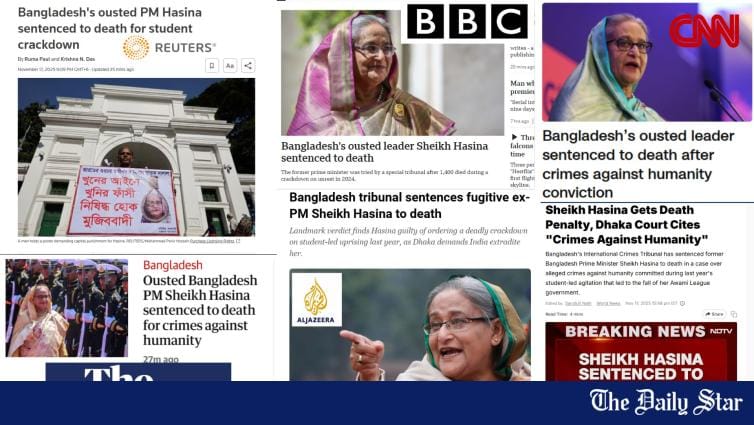
How international media covered Hasina's sentencing at ICT
BBC, Reuters, Al Jazeera live streamed verdict

1763430077731.webp


Major international media outlets today gave significant coverage with some publishing live updates on Sheikh Hasina's verdict in a crimes against humanity case at the International Crimes Tribunal-1.

BBC, Al-Jazeera and Reuters live streamed the event and outlets such as CNN, AFP, and The Guardian also gave it prominent coverage. Indian media outlets provided regular updates throughout the day.

The BBC report titled, "Bangladesh's ousted leader Sheikh Hasina sentenced to death," said she has been sentenced to death for crimes against humanity over the crackdown on student-led protests which led to her ousting last year.

It said the verdict now poses a diplomatic challenge for India and Bangladesh.

"Dhaka has formally requested her extradition but so far India has shown no willingness to comply," it reads.

Reuters said Bangladesh's ousted prime minister Sheikh Hasina was sentenced to death in her absence on Monday at the end of a months-long trial that found her guilty of ordering a deadly crackdown on a student-led uprising last year.

"People in the packed courtroom -- including families of victims -- cheered and clapped, and some in the crowds outside sank to their knees and offered up prayers after the verdict, the harshest against a leader in the country's history," it added.

Al-Jazeera too kept giving live updates for its readers throughout the day. In its highlights, it said, "The 78-year-old fugitive politician was on trial in absentia for being the 'mastermind and principal architect' behind last year's suppression of mass demonstrations, in which some 1,400 people were killed."

CNN said, "Sheikh Hasina, the ousted Prime Minister of Bangladesh, has been sentenced to death after being found guilty of crimes against humanity for the violent suppression of student protests last year that led to the collapse of her government."

A panel of three judges from the International Crimes Tribunal (ICT), Bangladesh's domestic war crimes court, delivered the verdict, ruling that Hasina was responsible for inciting hundreds of extrajudicial killings carried out by law enforcement, added the CNN report.

Indian outlet The Hindu said, a special tribunal in Bangladesh on Monday sentenced former prime minister Sheikh Hasina and former home minister Asaduzzaman Khan Kamal to death after finding them guilty of crimes against humanity over the state crackdown on a student uprising in July-August 2024.

NDTV, meanwhile, wrote: Bangladesh's International Crimes Tribunal has sentenced former Bangladesh prime minister Sheikh Hasina to death in a case over alleged crimes against humanity committed during last year's student-led agitation that led to the fall of her Awami League government.

Pakistan's Dawn reported, Bangladesh's Sheikh Hasina, sentenced to death in absentia on Monday for her deadly crackdown on student protesters last year, has been a dominant figure in the South Asian nation for half a century, a career rooted in bloodshed.

Most of the global news sites also mentioned a statement from Hasina which claimed that the death penalty was the interim government's way of "nullifying Awami League as a political force" and that she was proud of her government's record on human rights.

"I am not afraid to face my accusers in a proper tribunal where the evidence can be weighed and tested fairly," the BBC quoted the statement.​
 

Hasina, Asaduzzaman sentenced to death, ex-IGP Mamun jailed in July uprising case
M Moneruzzaman 17 November, 2025, 14:58

1763431746398.webp

The International Crimes Tribunal-1 on Monday sentenced deposed prime minister and Awami League president Sheikh Hasina and former home minister Asaduzzaman Khan Kamal to death for committing crimes against humanity during the July–August 2024 mass uprising.

Charges for jail until death

- Provoking violence by calling protesters Razakars

Charges for death penalty

  • Ordering use of drones, helicopters, lethal weapons to kill protesters,
  • Killing of six student protesters at Chankharpool,
  • Killing, burning six protesters at Ashulia

Former inspector general of police Chowdhury Abdullah Al Mamun, who turned a state evidence, received a reduced sentence of five years’ imprisonment.

The tribunal said that Mamun made a ‘full and true disclosure’ of the July events and helped the judges reach a just decision.

The tribunal also ordered the confiscation of all properties belonging to Sheikh Hasina and Asaduzzaman.

It directed the government to provide substantial compensation to the victims and ensure adequate support for the wounded, based on the seriousness of their injuries.

Though the prosecution sought a ban on the Awami League, the tribunal observed that it was not the proper case to address the issue.

Hasina and Asaduzzaman, now in hiding in India, were tried in absentia.

Mamun, who is currently in custody, heard the verdict from the dock.

Family members of several victims, present during the verdict, welcomed the death sentences for Hasina and Asaduzzaman.

They urged the government to bring the two from India to execute the verdict.

Many, however, expressed dissatisfaction over Mamun receiving a lighter sentence and said that they would file an appeal seeking enhancement of the sentence against him.

The Bangladesh foreign ministry, later on the day, reiterated its call on the Indian government to extradite Hasina and Asaduzzaman.

The interim government, on the other hand, called the death penalty handed down to Hasina and Asaduzzaman a historic verdict, and urged the people to remain calm, restrained and responsible, said a statement shared by the chief adviser’s press wing.

The tribunal tried the trio for superior command responsibility on five counts of crimes against humanity, including incitement, abetment, issuing orders, and facilitating atrocities during the 36-day movement between July 1, 2024 and August 5, 2024.

They also include abetment, conspiracy, incitement, complicity, and failure to prevent crimes such as murder, attempted murder, torture, and other inhuman acts committed during the uprising.

According to the prosecution, at least 1,500 people were killed and more than 25,000 injured in the crackdown.

The verdict was the tribunal’s first judgment, announced 11 months after investigators received complaints against Hasina on October 29, 2024.

The verdict was broadcast live, excluding the faces of the judges.

Security was tightened in and around the courtroom.

The courtroom became jam-packed with more than one hundred local and foreign journalists, prosecutors, family members of the victims, injured survivors and witnesses.

As the tribunal declared the death sentence against Hasina, a section of the audience clapped, prompting attorney general Md Asaduzzaman to request them to maintain order and celebrate outside.

The verdict came amid tight security and a tense atmosphere. Arson attacks, crude bomb explosions and flash processions by Awami League supporters have continued nationwide since November 7 following the party’s social media calls for a ‘Dhaka Lockdown’ on November 13 and a ‘complete shutdown’ in November 16–17.

The Hasina-led government was ousted from power on August 5, 2024 amid the mass uprising.

Asked how the verdict would be executed as the two convicts remain absconding, the attorney general said that the sentence would be executed once they are arrested or surrender.

He said that the law does not allow absconding convicts to appeal against the verdict.

On the question of repatriation through Interpol, he said the state would act ‘according to law.’

‘This verdict is a message for future politicians. It is also a milestone for ensuring accountability to the future generation over the July revolution,’ he said.

Chief prosecutor Muhammad Tajul Islam said that any court in the world would have delivered the same punishment if it had examined the evidence presented in the case.

‘This verdict is a reminder that no one — no matter how powerful or influential — is above the law,’ he said.

In his reaction, tribunal-appointed state defence lawyer Amir Hossain said that the verdict caused him ‘pain’ and added that he believed the judgement ‘could have been different’.

He, however, said that he accepted the verdict against his clients, Sheikh Hasina and Asaduzzaman, though it went against them.

Amir Hossain was appointed to defend Hasina and Asaduzzaman after the tribunal had removed lawyer Aminul Gani Titu as state-defence lawyer for them. Titu had faced criticism from Hasina’s son, Sajeeb Wazed Joy, who objected on Facebook, noting that Titu had previously demanded a death sentence for Hasina in an earlier post.

Amir Hossain, known for his Awami League affiliation, served as a special public prosecutor at Dhaka Special Judge Court-8 until the law ministry dismissed all prosecutors appointed under the Awami League regime after the interim administration took office on August 8, 2024.

The three-judge tribunal delivered its 453-page judgement over nearly two and a half hours from 12:30pm.

Justice Md Golam Mortuza Mozumder, who chaired the bench, read out the court’s observations and orders.

Justice Md Shofiul Alam Mahmood read two charges and the arguments of the prosecution and defence for Hasina and Asaduzzaman, while retired district judge Mohammad Mohitul Hoque Anam Chawdhury read out the remaining three charges and the legal aspect of the tribunal and the International Crimes Tribunals Act, 1973 and its connected international laws and statutes.

The tribunal rejected the defence argument that it lacked jurisdiction to try the July atrocities under the International Crimes (Tribunals) Act, 1973. It observed that the law applies to crimes against humanity committed both before and after its enactment.

The tribunal said that the July movement was a targeted, systemic and widespread campaign of violence, noting the large number of deaths and injuries recorded across the country.

Hasina, Asaduzzaman and Mamun were tried on five counts of charges.

The first charge said that Hasina allegedly fuelled violence by calling protesters ‘sons and grandchildren of Razakars’ at a press conference at Ganabhavan on July 14, 2024.

The second charge said that the deposed prime minister allegedly informed the Dhaka University’s former vice-chancellor Maskud Kamal, and her relative Sheikh Fazle Noor Taposh, in separate conversations that the protesters would be ‘hanged or killed’, and authorised the use of live ammunition and drone strikes.

The third charge says that the accused allegedly ordered police and ruling party activists to fire on students at Begum Rokeya University, Rangpur, killing student leader Abu Sayeed on July 16.

According to the fourth charge, six unarmed protesters were allegedly shot dead during the ‘March to Dhaka’ programme at Chankharpool.

The fifth charge said that five protesters were allegedly burnt alive near Ashulia Police Station on August 5, while another injured protester was allegedly thrown into the flames.

The tribunal found Sheikh Hasina guilty on three counts of crimes against humanity under charge number 1.

The tribunal held her responsible for incitement, issuing lethal orders, and failing to prevent or punish the attackers.

The tribunal observed that Hasina fuelled violence by calling protesters ‘sons and grandchildren of Razakars’ on July 14. She was also found guilty of ordering the deployment of drones and helicopters and the use of live weapons to kill students and other protesters.

She was additionally held liable for abetting the killing of six protesters at Chankharpool in the capital and six others at Ashulia, on the outskirts of the capital, where the victims were burnt to death.

The judges said the three counts were combined into a single sentence of death.

Asaduzzaman and Mamun were also found to have committed crimes against humanity by abetting and facilitating the killings at Chankharpool and Ashulia and by failing to prevent or punish the perpetrators.

The tribunal said that both Asaduzzaman and Mamun deserved the death penalty.

It said that Mamun admitted his involvement in the 36-day nationwide atrocities.

Considering his cooperation and the gravity of the offences, the tribunal limited Mamun’s sentence to five years, noting that his crimes were otherwise punishable by death. The tribunal said it took a ‘lenient view’ due to his contribution to the case.

On July 2, the same tribunal sentenced Hasina to six months in jail for contempt of court over a leaked phone call, made while in India, in which she allegedly said, ‘I have had 227 cases filed against me, so I have a licence to kill 227 people.’

Nine more cases are currently pending with the two International Crimes Tribunals.

ICT-1 is handling two disappearance cases involving 28 accused, including Sheikh Hasina and 13 detained serving army officers.

Hasina’s name appeared in hundreds of complaints over enforced disappearances, extrajudicial killings, and other serious violations committed during her 15-year authoritarian rule, now pending with the ICT for investigation, according to the prosecutors.

The Awami League regime established the International Crimes Tribunal in 2010 to try individuals accused of genocide, war crimes, and crimes against humanity during the 1971 Bangladesh Liberation War.

The interim government reconstituted the tribunals after the fall of the Awami League regime and amended the International Crimes (Tribunals) Act 1973 on November 24, 2024 to prosecute those responsible for the July–August atrocities.

On October 17, the ICT-1 issued arrest warrants for Hasina, Obaidul Quader, Asaduzzaman Khan and 43 others for their alleged involvement in committing atrocities during the uprising.

The tribunal also directed the police to seek an INTERPOL red notice and later issued newspaper notices asking them to appear before the tribunal.​
 

Crimes against humanity: Sheikh Hasina’s sentence and her political demise

Given the UN’s and international organisations’ opposition to capital punishment, it will be nearly impossible to mount pressure on India through them to return Sheikh Hasina. Nevertheless, the Bangladesh government should still exert direct diplomatic pressure on India for her extradition.

Updated: 18 Nov 2025, 11: 41

1763515302901.webp


As a nation, it is profoundly tragic and deeply shameful that crimes against humanity have been committed in this state in contemporary times. Yet it is also a matter of immense pride that through a genuine mass uprising, we succeeded in toppling those responsible and compelling them to flee the country. Following their fall, the responsibility of ensuring justice for those crimes has rested upon us as a nation.

Every act of justice serves as a deterrent against the repetition of similar crimes in the future. And because Sheikh Hasina’s crimes and trial have drawn international attention, the verdict is likely to have global implications as a deterrent as well.

The allegations against Sheikh Hasina went far beyond mere killings or acts of torture; they constituted crimes against humanity. Not only during the July mass uprising, but throughout her tenure, enforced disappearances and extrajudicial killings were carried out systematically.

Beyond that, the planned torture of BNP (Bangladesh Nationalist Party) activists, and for a time, custodial torture, filing fabricated cases, and various forms of persecution of Jamaat-e-Islami activists also fall within the ambit of crimes against humanity.

In the verdict of the first case filed against Sheikh Hasina, she received, as widely expected, the maximum penalty, death for three of the five charges. She was sentenced to life imprisonment for the remaining two charges.
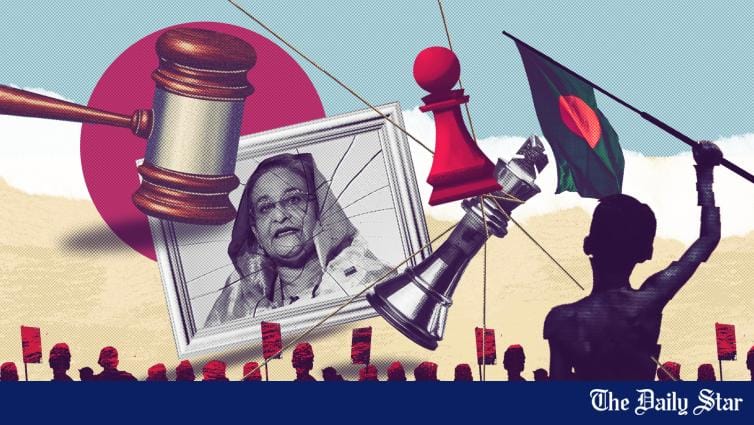
The mass uprising against Sheikh Hasina will remain an extraordinary example in world history. Unarmed civilians, relying on nothing but moral force, confronted state forces and endured unimaginable brutality. There are records of mobile phone conversations that reveal that Sheikh Hasina is coolly instructing the use of lethal force in suppressing the protests. News media such as Al Jazeera and the BBC independently carried out forensic analyses for their documentaries and confirmed that the recordings were authentic and not technologically fabricated.

The possibility that Sheikh Hasina will be brought back to Bangladesh during her lifetime to face execution currently appears remote. The way the Indian government is providing refuge and security to her, makes it almost certain that she will not be handed back.

Those who were involved in resisting Sheikh Hasina’s mafia-like system, especially the bereaved families of the dead, those who were blinded or maimed, and the injured, were naturally keeping a close watch on this trial. But we must also remember that the verdict held significance for countless political activists and apolitical citizens, who suffered repression for opposing the Awami League’s prolonged rule over 15 years (including 10 and a half years in power unlawfully), and, also for the millions whose democratic rights were eroded and who were reduced to mere subjects in their own land.

This verdict has unquestionably delivered justice. Yet one may ask: will the verdict ultimately remain merely symbolic?

The possibility that Sheikh Hasina will be brought back to Bangladesh during her lifetime to face execution currently appears remote. The way the Indian government is providing refuge and security to her, makes it almost certain that she will not be handed back. Evidence of India’s mindset may be found in the fact that despite repeated objections from Bangladesh, including from the chief adviser himself, India has not prevented Sheikh Hasina from persistently making provocative statements against Bangladesh. Even on the day before the verdict, she issued grave threats against the forces behind the uprising.

Given the UN’s and international organisations’ opposition to capital punishment, it will be nearly impossible to mount pressure on India through them to return Sheikh Hasina. Nevertheless, the Bangladesh government should still exert direct diplomatic pressure on India for her extradition. The Indian government must consider that if it seeks to develop a sustainable bilateral relationship not merely with an individual or a single party, as in the Hasina era, but with the people of Bangladesh, then it must reconsider its position on Sheikh Hasina.

Under the Rome Statute, a confirmation-of-charges hearing may in special circumstances be held in absentia, but neither the main trial nor the subsequent hearings can take place without the presence of the accused.

Some questions may arise internationally regarding Sheikh Hasina’s trial. The UN and the Western countries oppose the death penalty. Additionally, the trial of an accused in absentia for crimes such as crimes against humanity is regarded as inconsistent with international standards.

Under the Rome Statute, a confirmation-of-charges hearing may in special circumstances be held in absentia, but neither the main trial nor the subsequent hearings can take place without the presence of the accused.

We can hope that the government, particularly the chief adviser, will be able to use his international stature to manage such pressure. Commissioning a full investigation by the UN High Commissioner for Human Rights will be considered as an extraordinary decision by the interim government. In its report, the OHCHR stated that crimes against humanity were committed on a large scale in Bangladesh during the July uprising, and that Sheikh Hasina was the principal decision-maker in the planning, leadership, direction, and coordination of those crimes.

Time will tell whether Sheikh Hasina can ever be brought back to face the verdict. But even if that proves impossible, the verdict has definitively sealed the end of her political future.

Discussions are ongoing regarding the possibility of trial of the Awami League as an organisation at the international court. Even if, for the sake of argument, such a tribunal were to conclude that the Awami League as an organisation is not guilty of crimes against humanity and thus is not banned, the fact remains that age does not favour Sheikh Hasina.

And even if the political context somehow permitted her return, it is virtually inconceivable that she could regain control of the party or resume leadership. At most, she may continue issuing incitements through occasional audio statements (she may avoid video messages to prevent showing her defeated appearance), which is likely to have only negative consequences for her party.

Given how well-known Sheikh Hasina and those at the centre of her power structure are, it is unsurprising that neither she nor those complicit in crimes against humanity will come close to acknowledging their guilt. But it is disheartening that a large section of the party’s supporters still have not grasped the scale and severity of the crimes committed by her and her associates. We want to hope that this verdict will prompt some of them to rethink.

People founded the state to establish a system within which all would live under a set of rules, and where breaches of those rules would be addressed through justice, thereby setting precedents for state and society. When a state fails to deliver justice, especially in cases involving crimes against humanity, it undermines its own legitimacy to administer justice in any matter. We must remember Martin Luther King’s famous dictum: “Injustice anywhere is a threat to justice everywhere.”

* Zahed Ur Rahman is a teacher and political analyst​
 

A historic verdict that carries weight even in absentia
Sheikh Hasina verdict

1763515834518.webp

PHOTO:STAR

There is a curious weight in witnessing a moment that feels like the culmination of years of waiting, even if the full consequence of that moment may never be realised. The verdict on Sheikh Hasina carries precisely that weight as a symbolic punctuation to a decade of fear, suffering, and quiet endurance. In a country where power so often felt untouchable, where law could be bent to protect those with influence and destroy those without, the decision to hold Hasina accountable is not merely judicial but also personal.

To speak of justice in abstract terms is simple. Scholars debate procedure, diplomats discuss optics, international media deliberate fairness, and foreign governments weigh consequences. But those frameworks rarely capture the intimate, almost physical relief that comes from seeing a powerful figure confronted with accountability. There is a long history of people waiting in court corridors that seemed endless, of families pressing photographs into the hands of reluctant officials, of citizens carrying memories of disappeared friends, neighbours, and colleagues, and of loved ones killed in protests. Justice has often been absent, delayed, or warped to suit politics.

There is a reason why this verdict feels like a personal win. It is because we have had to live under the shadow of her choices and watch the erosion of the everyday sense of safety, the subtle conditioning of our minds, the quiet fear in public spaces, the erosion of civic confidence. Accountability, even if delayed, restores a sense of moral order. It confirms that cruelty leaves traces that the world cannot ignore indefinitely.

This is why the debates framed in diplomatic language feel insufficient. When discussions revolve around whether a death sentence complicates her extradition, whether India will cooperate, or how the United Nations will respond, they obscure the emotional reality for citizens who have spent years negotiating life under fear. For these citizens, this sentence is neither a matter of politics nor of optics; it is a matter of recognition. A recognition that public accountability is possible, even if partially. So, while the world debates the technicalities, the symbolism of the verdict cannot be overstated. For the families of the disappeared, the survivors of forced disappearances and institutionalised cruelty, the families of the around 1,400 people killed in the uprising, and thousands more injured for life, its significance is immeasurable.

There is a certain inevitability in our emotional reaction. Those of us who carried the burden of witnessing injustice or suffered directly at its hands feel a sense of vindication. It is as if, at last, the moral ledger has been balanced, even if the numbers can never fully account for the enormity of our losses. Justice, in this sense, is an echo of recognition; an affirmation that what was endured matters, that those who once felt powerless are not entirely unheard. This is historic precisely because it exists in tension with what came before. For too long, the apparatus of the state allowed selective justice to define the rules. Decisions were guided by proximity to power, by allegiance, and by fear. Ordinary citizens—the witnesses, the silent sufferers—were forced to inhabit a parallel reality: a world in which laws existed, but rarely for them. The sentence against Hasina disrupts that parallel.

Of course, there is no guarantee that this moment will translate into lasting systemic change. The procedural aftermath, the international commentary, and the political manoeuvres that follow will test the depth of this symbolic victory. However, this moment affirms that ordinary citizens, who watched power move like a tidal wave over their lives, have a stake in the moral universe that the law is meant to inhabit. Hasina's sentence does not erase any of their sufferings, but it places them in a moral context where they are no longer invisible. That alone, in a country where invisibility has often been the default condition for those outside power, is transformative.

Perhaps the most profound aspect of this moment is the way it reframes the imagination of possibility. To see accountability reach a figure perceived for so long as untouchable opens a conceptual space. It allows us to imagine a society in which systems, though flawed, are not entirely devoid of redress. It allows a generation to measure possibility not by fear alone, but by the courage and persistence of those who upheld principle until the moment of recognition arrived. The debate over fairness and proportionality is not insignificant. Legal scholars, diplomats, and international observers will continue to dissect, question, and deliberate over the technical merits of the sentence. That discourse matters in its own domain. Yet for citizens who have experienced the consequences of unchecked authority, those considerations are secondary to the emotional and symbolic resonance of accountability.

History will judge the verdict in its own way, but for those who lived under the shadow of Hasina's regime, the personal significance precedes history. In the end, the importance of the sentence rendered on Hasina is not confined to law or politics. It is a moment that will enter collective memory as proof that justice, even when deferred, can arrive—and when it does, it feels like a personal triumph for all who lived under its absence.

Maisha Islam Monamee is a graduate from the Institute of Business Administration (IBA), University of Dhaka.​
 

India responds after Bangladesh's ICT issues verdict on Hasina
New Delhi stays silent on Dhaka’s call for ousted PM's extradition

1763516809674.webp


India today said it has noted the verdict announced by the International Crimes Tribunal of Bangladesh concerning former prime minister Sheikh Hasina and said New Delhi remains committed to "the best interests of the people of Bangladesh".

India's Ministry of External Affairs issued a statement hours after the ICT sentenced Hasina to death for crimes against humanity during the student-led protests during the July uprising last year.

"As a close neighbour, India remains committed to the best interests of the people of Bangladesh, including in peace, democracy, inclusion and stability in that country," read the statement.

"We will always engage constructively with all stakeholders to that end," it added.

India has not made any mention of Hasina's extradition to Bangladesh, which has called upon India to do so last December.​
 

Before Hasina lost in the court of law, she had lost in the court of the people

1763689401327.webp

VISUAL: ANWAR SOHEL

Let legal experts discuss the strengths and weaknesses of the ICT trial and verdict. Our focus will be on the fact that Sheikh Hasina's political demise had already occurred, and the "guilty verdict" was pronounced by the people, especially the younger generation, much earlier, during the tumultuous days of July-August 2024.

The future is always unpredictable, but as of now, her reputation lies in ruins and her political career buried under a mountain of debris of self-righteous arrogance, misgovernance, and impunity. Whatever may be Awami League's narrative about the national or international conspiracy behind Sheikh Hasina's fall, the fact is that the "death sentence" by the ICT was brought on by her own cruel suppression of political dissent, abuse of the law, corruption, partisan administration, bank looting, money laundering, suppression of independent media houses and corruption of the compliant ones, and finally, the killing of 1,400 citizens including children to stay in power during the last few weeks of her rule. Over the years, enforced disappearance and extra-judicial killings became the hallmark of her regime. Yes, there were some vital infrastructural developments, increase in per capita income, and growth in many social indicators, but the credit for them was swept aside by her destruction of democracy and overwhelming dictatorial rule.

Google News LinkFor all latest news, follow The Daily Star's Google News channel.
Eventually, Hasina's public acceptance totally collapsed, and hatred for her skyrocketed and the "death sentence" in the people's court was passed due to the killings on the streets, as mentioned above. What distinguishes her rule from that of many dictators and autocrats is that very few of them killed so many unarmed protesters in so short a time.

It is to Sheikh Hasina's credit that she was able to revive, reorganise, rejuvenate, and re-inspire Awami League (AL) to win elections in 1996 after 21 years out of power. Her first stint in office, especially the signing of the Chittagong Hill Tracts Accord (which she herself did not implement) and the Ganges Water Sharing Treaty, marked a new beginning for AL. But over the years, she effectively demolished her own party as she destroyed the police, the bureaucracy, the judiciary, etc—transforming it from a political powerhouse into an apparatus of extortion, corruption, and violence, and replacing ideology with sycophancy, principles with praise for the leader, and service to the people with service to themselves. Every nomination was for sale, most promotions within the party ranks came for a bribe, and every development project was treated as their plaything. BUET student Abrar Fahad's torture and murder by Chhatra League was testimony to how the AL's student body was turned into a murderous gang.

She did not take well either of her electoral defeats in 1991 and 2001. Her view that AL could never be defeated in a free and fair election, but only through rigged ones, partly made her reject these results, inventing the term "subtle-rigging." This marked the beginning of the arrogance and myopia that led her towards ignoring the truth and making massive blunders. A miraculous escape from a near-fatal attempt on her life in August 2004, in which 24 AL workers and leaders were killed, with no credible attempt by the then BNP government to investigate the grenade attack and punish the perpetrators, probably convinced Hasina that she would always be vulnerable as an opposition politician, and thus she may have decided never to give up power if and when she regained it. This, in our view, killed the prospect of democracy in Bangladesh.

Hasina regained power in a free and fair election in 2008, abolished the caretaker system in 2011, and then manipulated all the following elections held in 2014, 2018 and 2024. As her manipulations succeeded, she grew over-confident and felt that all her political allies were her pawns, all opponents manipulatable, and all dissenting voices easily suppressed. She became entrapped in the mindset of never admitting any mistakes, which resulted in her becoming supremely arrogant. During a meeting with editors in 2013, I heard her say: "In spite of so many attempts on my life, Allah has kept me alive for the purpose of carrying out His will. So, you all may write anything you like. I don't care." She felt she was divinely guided and, as such, had nothing to worry about. Thus, she plunged deeper into isolation on the one hand and became further intolerant on the other, both of which distanced her from the people and her party.

Changing the constitution to do away with the caretaker government system to oversee elections gave the first clear signal of Hasina's intention to take over the process of holding national elections. It was crystal clear that the 2014 election was openly and shamelessly manipulated. We have written before—but it deserves to be repeated—that out of 300 seats in parliament, 153 had only one contestant as others withdrew "voluntarily." The Election Commission, therefore, declared "elected" the only contestant there was, who happened to belong to the AL. Thus, in the 2014 election, before a single vote was cast, AL gained the majority in parliament to form a government. It was the most blatant, undemocratic, and immoral tinkering with elections ever. Could that have happened without the sitting prime minister (PM) and the party chief's direct involvement?

The fact that Sheikh Hasina's government was able to get away with such electoral frauds—marking a failure on the part of the BNP to make an effective protest—gave her and her sycophants a dangerous but ultimately illusory confidence that led them to repeat this manipulation in the 2018 and 2024 elections, thereby digging its own grave, into which it fell in July-August 2024.

The Covid pandemic during 2020-2022 isolated her from her party and the people. The day-to-day functioning of the administration became an unthinking ritual. This was followed by the ostentatious observance of Bangabandhu's birth centenary, which greatly offended the conscientious section of civil society and the public in general. It became clear that people's urgent needs had no place in the PM's mind; instead, creating an infallible personality cult was where her government placed all its attention and resources.

Hasina totally misread the national psyche, which is fundamentally averse to individual cultism. Dubious authors wrote thousands of books that the government bought at exorbitant prices, which, in fact, became a way of siphoning off public money to corrupt bureaucrats, teachers and so-called professionals, all of whom were in an undeclared competition to curry favour with the AL leadership and, of course, make some money in the process. The birth centenary celebration did not produce a single well-researched or intellectually honest account of the leader of our independence movement, but instead flooded schools, colleges, universities and all institutions linked with education with substandard publications not worth even the paper they were written on. The hundreds of statues built—a culture previously almost non-existent in Bangladesh—greatly damaged Bangabandhu's reputation instead of increasing authentic learning about him, eventually becoming targets when the anti-government rebellion started. The first time I saw his statue near the PMO in Dhaka, the image of Saddam Hussein's being demolished and dragged through the street flashed through my mind, and I intuitively felt that our people would reject it at the first opportunity they would get.

This was followed by the 50th anniversary celebration of Bangladesh's liberation in 2021. Hasina celebrated this crucial occasion as a continuation of Bangabandhu's birth centenary. Freedom fighters were horrified to see how little tribute was paid to them and how their stories of sacrifice, bravery, and patriotism remained untold. The members of the armed forces who rebelled against the Pakistani rulers in 1971 and played the most crucial role in galvanising young freedom fighters into an effective fighting force hardly received any focus. The crucial role of declaring independence played by Major Ziaur Rahman was not even remotely mentioned, as was the role of Colonel M.A.G. Osmani (the chief of the Liberation War army) and other sector commanders. The significance and central role of the government-in-exile led by Tajuddin Ahmad did not receive much attention. Once again, everything converged on one man. Freedom fighters still alive, and the family members of those killed during the war, felt insulted.

Just to cite another example of arrogance and lack of foresight, Hasina forced every government office, every semi-government institution, universities both public and private, NGOs, banks, airports, etc, to open what was called a "Mujib corner" to display photos and books—mostly substandard ones—on him. If instead she had set up "Muktijoddha corners"—which would have been most appropriate at that moment—and filled them with books on the Liberation War, our people in general, and the younger generation in particular, would have been far better informed about that glorious moment in our history. The truth is that Hasina's government was in power for 15 consecutive years and did virtually nothing to raise public awareness about our freedom struggle; she turned it into Mujib worship that only served to create a sense of disgust and alienation.

By 2022, Hasina had reached the height of arrogance. "I know everything," "Every critic is an enemy," "Whatever I do is best for Bangladesh," and similar statements dominated the political discourse. The sycophancy reached such absurd levels that her party leaders and workers started to believe that there were no problems their leader could not solve and no challenges she could not tackle. This allowed conniving party henchmen to try to outdo one another with ever cruder assertions of the leader's infallibility, creating a bubble of absurdities in which Hasina and her courtiers lived.

Hasina and her government's handling of the students' stance against the government quota system for jobs clearly showed the dysfunctionality to which her party and her government had descended. At one stage, she suddenly declared all quotas abolished, which went against constitutional guarantees for quotas for the physically and mentally challenged and ethnic minorities. So, the higher court threw it out. Thus, the demand lingered. At this stage, she could have held a dialogue with the demonstrators and resolved it. In July 2024, things turned violent, and since July 16, killings on the streets in large numbers began. The Daily Star's reporters counted bodies in government and private hospitals. By August 1, 2024, they tallied 201 dead bodies and spoke to hundreds of families who lost their loved ones. We headlined death counts every day that we could verify.

Hasina denies that she gave orders to fire lethal weapons on demonstrators—despite a plethora of proof—but then why did she not stop it once it began occurring? Each day's newspapers showed how many were killed the day before. If she is speaking the truth about not giving orders to kill, then why didn't she issue an instant order to stop the carnage? There is no way one can believe that firing on the streets would occur day after day for several weeks, and the PM would not know. She knew, and she had given the order. So, her direct involvement—and the doctrine of "command responsibility"—brings these cruel crimes to the doorstep of the PM, who ran her government with an iron hand.

Legalities aside, those who lived through those crucial days, witnessed the tragic incidents, reported on them, wrote on them, or warned and alerted the government about them, feel convinced that as the head of government, Sheikh Hasina is guilty of crimes against her own people.

Mahfuz Anam is the editor and publisher of The Daily Star.​
 
Proved why BD is a rogue nation. Replication of what Pakistan did with Bhutto. Kangaroo court can deliver capital punishment without listening to the person who happened to be their PM.
 

Hasina's trial and future politics of Awami League

1763776015965.webp


One can imagine a scenario. A once-elected Prime Minister ruled the country with immense authority for years. She is overthrown in an uprising. Accusations of crimes against humanity are leveled against her, and she is sentenced to death. She is being taken to the execution stage. On her way, she wonders—what is her crime? This reflection is echoed in the work of the English poet Robert Browning. His poem The Patriot conveys a message: a patriot who is celebrated one day may face downfall the next.

A simple Bengali translation of a portion of the poem reads:
"Soaked in rain, I run the path to the execution ground, my hands tied tightly behind me, I feel them being cut, I suppose blood is also flowing from my brow, whoever wills it throws stones at me, this is the fruit of my deeds in a year.

Such is my arrival and departure! Such is the result of my year’s work."

The resonance of this is also found in one of Nazrul’s songs: “Today’s king may beg tomorrow, no one stays equal forever.” History is full of examples of majestic rises and tragic falls, yet few seem to learn from it.

The International Crimes Tribunal-1 in Dhaka has sentenced former Prime Minister Sheikh Hasina to death. She is not in the country; she is in New Delhi. The Indian government has given her safe refuge. She will not return to Dhaka to face the sentence. In audio and video messages, she has expressed her determination to return in the guise of a victor. She still considers herself the elected Prime Minister and believes she was ousted through a conspiracy.

She is the leader of a political party named the Awami League, which is over 76 years old. Sheikh Hasina has been the party president for nearly 47 years. As an opposition leader and Prime Minister, she has been at the centre of power for almost 27 years. Even though she has lost executive authority, she remains at the forefront of political discourse. Despite criticism, she is almost god-like within the party, with no equal. Even 15 months after leaving the country, the Awami League is synonymous with her. The question arises: what is the future of the Awami League in this situation?

There are many examples, both domestically and abroad, of individuals or parties regaining ground after setbacks. Can the Awami League once again dominate the political landscape? This question emerges because, when the head of a highly personalised party is absent, there is uncertainty about whether the party can survive without them.

On 25 January 1975, through the Fourth Amendment to the Constitution, one-man rule was established in the country. That person was Sheikh Mujibur Rahman, the architect of the Bangladesh movement, affectionately called Bangabandhu by the people. The roles of leader Mujib and ruler Mujib could not be measured on the same scale. Despite his immense popularity, he could not deliver good governance. After three years, the political landscape had changed. On 15 August, 1975, he was killed in a military coup, yet his party could not respond effectively.

After Sheikh Mujib’s death, the Awami League eventually managed to rise again. This was possible partly because the rulers of that time were somewhat accommodating; they did not ban the party. In 2025, however, the Awami League’s activities were banned. The current rulers are not as lenient toward the party as those who governed after 1975. If the restrictions are not lifted, the Awami League’s prospects of returning are slim. The question is whether the party can, through political and diplomatic processes, create enough pressure to regain the opportunity to operate openly.

It is worth noting that the initial demand was not to ban the Awami League. The demand was the trial of 'crimes against humanity'. Suddenly, the situation changed. When a group of newly formed NCP activists and supporters blocked roads and advanced toward the chief adviser’s residence, Jamuna, the government issued an executive order banning the Awami League’s activities until the next election.

Since the election commission operates under government influence, it promptly suspended the party’s registration and removed the Awami League’s 'boat' symbol from the list of electoral symbols. Now, many other parties are speaking in the same tone. No one is willing to take the risk of publicly defending the Awami League’s right to political activity. However, some still speak in soft tones about the 1972 Constitution, the spirit of the Liberation War, or keeping Sheikh Mujib’s portrait on their office walls.

If a political party believes it follows a doctrine, it is difficult to eradicate it. The biggest example is Jamaat-e-Islami. The party was banned four times—twice in Pakistan and twice in Bangladesh. In 1953, a tribunal even sentenced its leader, Maulana Maududi, to death on charges of inciting anti-Ahmadiyya riots. None of this eliminated the party. Jamaat remains alive and functional.

When a party is denied the chance to operate openly, or considers open activity too risky, it often goes underground and engages in various covert actions—carrying out surprise attacks, planting bombs, committing arson. We have not forgotten the Purba Banglar Sarbahara Party or Jasad’s Biplobi Ganobahini. Following that path, Awami League members are now conducting similar activities in different places, disrupting public life by declaring lockdowns.

A major criticism against the Awami League is that they do not acknowledge any mistakes on their part. They show no remorse or sense of conscience. As a result, a large segment of society’s anger against them is growing. It is also true that no political party in this country has had the courage to admit its mistakes once in government. They all consider themselves infallible.

After August 1975, many members of the Awami League were arrested, some went underground, and some even went to India. After the Liberation War, examples were set by leaders and activists of the BAKSAL, formed by the Awami League, NAP, and CPB, who went to India. These included Kader Siddiqui, Shamim Osman, Sheikh Selim, Mostafa Mohsin Montu, Nurul Islam Nahid, Mujahidul Islam Selim, Monayem Sarkar, SM Yusuf, Obaidul Quader, among others. Once again, we see that many have gone to India, which they consider a safe refuge. The Awami League has maintained a long-standing rapport with India, and this equation does not change even when the Indian government changes.

Will the Awami League always remain a party dependent on India? This does not seem unusual. If there can be pro-China, pro-Russia, or pro-Pakistan parties in this country, why not a pro-India party? It is true that the Awami League has a strong diplomatic position with India. Whether the party will be able to operate openly in politics soon depends largely on international pressure, especially the stance of India and its global allies. In this context, the demand for an ‘inclusive election’ could provide legitimacy for the Awami League.

#Mohiuddin Ahmad is a writer and researcher​
 

Pakistan says Hasina’s death sentence Bangladesh’s ‘internal matter’
Bangladesh ‘fully capable’ of addressing own issues, says Pakistan Foreign Office spokesperson

1763776743457.webp

A combination photo of Foreign Office Spokesperson Tahir Andrabi and former Bangladeshi prime minister Sheikh Hasina. Photo: DawnNewsTV/Reuters

Pakistan on Friday said that the recent death sentence for former Bangladesh prime minister Sheikh Hasina was an "internal matter" for the country and that its people were fully capable of solving their own issues.

A Bangladesh court had sentenced Hasina to death on Monday, concluding a months-long trial that found her guilty of ordering a deadly crackdown on a student-led uprising last year.

Google News LinkFor all latest news, follow The Daily Star's Google News channel.
The verdict came months ahead of parliamentary elections expected to be held in early February.

Addressing his weekly press briefing on Friday, Pakistan's Foreign Office (FO) Spokesperson Tahir Andrabi said several queries were received regarding the development, on which he said: "This is an internal matter of Bangladesh. The people of Bangladesh are fully capable of addressing their issues in accordance with their own democratic and constitutional processes."

The verdict by the International Crimes Tribunal -- a court that Hasina set up to try war crimes from Bangladesh's 1971 war for independence from Pakistan -- marked a dramatic turn for her political career.

After the sentence was handed down, the Bangladesh government had told India that failure to return her would be a highly unfriendly gesture and an affront to justice.

But all previous efforts so far to persuade New Delhi to send her back have faltered.

New Delhi said it was committed to "the best interests of the people of Bangladesh, including in peace, democracy, inclusion and stability in that country. We will always engage constructively with all stakeholders to that end".

The development also came amid a thaw in ties between Islamabad and Dhaka, with trade and bilateral relations seeing a marked improvement.

Copyright: Asia News Network/Dawn​
 

Will Hasina with death sentence be able to return at all?
Mahmudur Rahman Manna
Published: 24 Nov 2025, 08: 37

1764035423934.webp


In the past few days, the media outlets that contacted me or invited me to talk shows all focused on one main issue—the verdict delivered by the International Crimes Tribunal against former Prime Minister Sheikh Hasina. This is understandable. For the first time in Bangladesh’s history, a prime minister has been sentenced to death. Moreover, Sheikh Hasina is the daughter of Sheikh Mujib and, as a political figure, has probably been the most talked-about leader in Bangladesh’s political history. She still remains at the centre of discussion.

The questions the media asked me were mainly three: First, what is my personal reaction to the verdict? Second, what impact will this verdict have on the politics of the future? And third, will India ultimately extradite Sheikh Hasina?

Let me begin by saying—I cannot rejoice at anyone’s death, regardless of the way or the reason. Many developed countries do not impose the death penalty, perhaps because a person sentenced to death does not go through the torment of remorse. At the same time, it is also true that those who commit crimes against humanity cannot be allowed to evade justice.

If people like Hitler, Mussolini, or Genghis Khan were sentenced to death, I would feel nothing. It would seem natural. But when the death sentence is pronounced against Sheikh Hasina, I do have a reaction. What a towering figure she was (not speaking of virtues here—rather of her name, power, plunder, and misdeeds)!

I knew her personally; we spoke many times. It would perhaps have been better not to witness such an end for her. But history is merciless. Sin spares no one—not even one’s own ancestors. It pains me; but I scold myself for feeling that pain.

Why should I feel pain? The people of this country suffered a thousand times more. She and her government inflicted that suffering.

Now to the second question. Even on 4 August of last year, many people called me (when the streets of Dhaka and the rest of the country were witnessing a bloody ‘Holi’, and Sheikh Hasina herself had ordered it). Their question was, “Brother, will anything happen? Will you be able to remove Sheikh Hasina?”

As usual, I answered with a political slogan: Of course we will win! Fascism has never won. But deep inside, doubts rose and faded like bubbles. After 15 years, the people themselves had begun to believe that Hasina was unbeatable. Yet her defeat and subsequent escape once again proved that no dictatorship survives in the end.

Hasina refused to accept defeat. Her party members also refused—especially those who fled to India. In a Prothom Alo report on 19 November, I saw that Hasina expressed no remorse. The next day, on the 20th, I saw the same attitude among her party members who had fled to India.

For the past 15 months, even while staying in India, Hasina has been spewing venom about the July–August uprising and, in a way, attempting to call for the overthrow of this government. Yet things did not have to turn out this way. A different course was possible. I am speaking of a change in perspective. Many people have discussed this, and various opinions have appeared in the media. They argued that the Awami League should express remorse for the misrule it exercised during its time in power. For all the injustices and oppression it carried out, they should seek forgiveness and cleanse themselves.

There was talk that the Awami League should reappear before the people as a refined or purified party. Even after everything, there are still individuals within the Awami League whom the public likes. But the party does not seem to be moving in that direction. Individualism and family dominance have taken such deep root in the party that no one dares suggest that excluding Sheikh Hasina or her family from leadership might actually be good for the party.

As I said earlier, Hasina’s verdict once again shows that no one is invincible. Even Awami League leaders and workers are beginning to think this. From personal sources, I know that this sense of despair is spreading even in Gopalganj and Faridpur—areas considered strongholds of the Awami League. Many are wondering whether Sheikh Hasina will ever be able to return to the country, and whether the Awami League will be able to rise again.

Now to the third question raised by the media: Will Sheikh Hasina’s death sentence be carried out? Will India extradite her to Bangladesh? I don’t think so. When Hasina was in India endlessly criticising the 2024 uprising and the government of Bangladesh, the Bangladeshi government had already requested her return once. India did not comply.

I heard at the time that even if an extradition treaty exists, if the host country believes that returning the individual in its custody may endanger that person’s life, it is not obliged to send them back. And now that the person has been given a death sentence, India can very well use that argument for refusing extradition.

So let India not send her back. What will that mean for the future of Sheikh Hasina and the Awami League? Readers may have noticed that the Indian Ministry of External Affairs’ statement regarding Hasina’s death sentence did not express any position. They merely said they were aware of the verdict—an extremely neutral response. After the Bangladeshi election is over, what will India’s position be within this neutrality? India has already expressed its view that it will be interested in strengthening relations with Bangladesh’s elected government. That too is a form of neutrality. From a diplomatic standpoint, there isn’t much else India can do.

Readers have surely also noticed that Bangladesh’s National Security Adviser, Khalilur Rahman, met India’s National Security Adviser, Ajit Doval, in Delhi on Wednesday. Their meeting was originally scheduled for the following day, but Khalilur Rahman adjusted his itinerary to accommodate the meeting with Doval.

Meanwhile, after the verdict against Sheikh Hasina, the statement issued by India’s Ministry of External Affairs said that, as a close neighbour, India remains committed to peace, democracy, inclusion, stability, and the best interests of the people of Bangladesh. A very diplomatic statement. I believe Bangladesh’s election will take place on time—barring any invisible factors beyond my knowledge. I also do not think India would declare war on Bangladesh to stop the election.

In that case, what does the future hold for Sheikh Hasina? And what might the future be for the Awami League as an organisation? India has spoken of “inclusion” (Bangladesh also speaks of inclusion). What is the significance of that? How deep does it go? How far might it take us?

There will be no resolution to these questions while this current government remains in power. The government has made it clear that the Awami League will not be allowed to contest the election during this term. What happens next will depend entirely on the government that comes afterwards—our future course and the structure of our politics will be shaped by that.

#Mahmudur Rahman Manna is president, Nagorik Oikya​
 

Will Hasina with death sentence be able to return at all?
Mahmudur Rahman Manna
Published: 24 Nov 2025, 08: 37

View attachment 22598

In the past few days, the media outlets that contacted me or invited me to talk shows all focused on one main issue—the verdict delivered by the International Crimes Tribunal against former Prime Minister Sheikh Hasina. This is understandable. For the first time in Bangladesh’s history, a prime minister has been sentenced to death. Moreover, Sheikh Hasina is the daughter of Sheikh Mujib and, as a political figure, has probably been the most talked-about leader in Bangladesh’s political history. She still remains at the centre of discussion.

The questions the media asked me were mainly three: First, what is my personal reaction to the verdict? Second, what impact will this verdict have on the politics of the future? And third, will India ultimately extradite Sheikh Hasina?

Let me begin by saying—I cannot rejoice at anyone’s death, regardless of the way or the reason. Many developed countries do not impose the death penalty, perhaps because a person sentenced to death does not go through the torment of remorse. At the same time, it is also true that those who commit crimes against humanity cannot be allowed to evade justice.

If people like Hitler, Mussolini, or Genghis Khan were sentenced to death, I would feel nothing. It would seem natural. But when the death sentence is pronounced against Sheikh Hasina, I do have a reaction. What a towering figure she was (not speaking of virtues here—rather of her name, power, plunder, and misdeeds)!

I knew her personally; we spoke many times. It would perhaps have been better not to witness such an end for her. But history is merciless. Sin spares no one—not even one’s own ancestors. It pains me; but I scold myself for feeling that pain.

Why should I feel pain? The people of this country suffered a thousand times more. She and her government inflicted that suffering.

Now to the second question. Even on 4 August of last year, many people called me (when the streets of Dhaka and the rest of the country were witnessing a bloody ‘Holi’, and Sheikh Hasina herself had ordered it). Their question was, “Brother, will anything happen? Will you be able to remove Sheikh Hasina?”

As usual, I answered with a political slogan: Of course we will win! Fascism has never won. But deep inside, doubts rose and faded like bubbles. After 15 years, the people themselves had begun to believe that Hasina was unbeatable. Yet her defeat and subsequent escape once again proved that no dictatorship survives in the end.

Hasina refused to accept defeat. Her party members also refused—especially those who fled to India. In a Prothom Alo report on 19 November, I saw that Hasina expressed no remorse. The next day, on the 20th, I saw the same attitude among her party members who had fled to India.

For the past 15 months, even while staying in India, Hasina has been spewing venom about the July–August uprising and, in a way, attempting to call for the overthrow of this government. Yet things did not have to turn out this way. A different course was possible. I am speaking of a change in perspective. Many people have discussed this, and various opinions have appeared in the media. They argued that the Awami League should express remorse for the misrule it exercised during its time in power. For all the injustices and oppression it carried out, they should seek forgiveness and cleanse themselves.

There was talk that the Awami League should reappear before the people as a refined or purified party. Even after everything, there are still individuals within the Awami League whom the public likes. But the party does not seem to be moving in that direction. Individualism and family dominance have taken such deep root in the party that no one dares suggest that excluding Sheikh Hasina or her family from leadership might actually be good for the party.

As I said earlier, Hasina’s verdict once again shows that no one is invincible. Even Awami League leaders and workers are beginning to think this. From personal sources, I know that this sense of despair is spreading even in Gopalganj and Faridpur—areas considered strongholds of the Awami League. Many are wondering whether Sheikh Hasina will ever be able to return to the country, and whether the Awami League will be able to rise again.

Now to the third question raised by the media: Will Sheikh Hasina’s death sentence be carried out? Will India extradite her to Bangladesh? I don’t think so. When Hasina was in India endlessly criticising the 2024 uprising and the government of Bangladesh, the Bangladeshi government had already requested her return once. India did not comply.

I heard at the time that even if an extradition treaty exists, if the host country believes that returning the individual in its custody may endanger that person’s life, it is not obliged to send them back. And now that the person has been given a death sentence, India can very well use that argument for refusing extradition.

So let India not send her back. What will that mean for the future of Sheikh Hasina and the Awami League? Readers may have noticed that the Indian Ministry of External Affairs’ statement regarding Hasina’s death sentence did not express any position. They merely said they were aware of the verdict—an extremely neutral response. After the Bangladeshi election is over, what will India’s position be within this neutrality? India has already expressed its view that it will be interested in strengthening relations with Bangladesh’s elected government. That too is a form of neutrality. From a diplomatic standpoint, there isn’t much else India can do.

Readers have surely also noticed that Bangladesh’s National Security Adviser, Khalilur Rahman, met India’s National Security Adviser, Ajit Doval, in Delhi on Wednesday. Their meeting was originally scheduled for the following day, but Khalilur Rahman adjusted his itinerary to accommodate the meeting with Doval.

Meanwhile, after the verdict against Sheikh Hasina, the statement issued by India’s Ministry of External Affairs said that, as a close neighbour, India remains committed to peace, democracy, inclusion, stability, and the best interests of the people of Bangladesh. A very diplomatic statement. I believe Bangladesh’s election will take place on time—barring any invisible factors beyond my knowledge. I also do not think India would declare war on Bangladesh to stop the election.

In that case, what does the future hold for Sheikh Hasina? And what might the future be for the Awami League as an organisation? India has spoken of “inclusion” (Bangladesh also speaks of inclusion). What is the significance of that? How deep does it go? How far might it take us?

There will be no resolution to these questions while this current government remains in power. The government has made it clear that the Awami League will not be allowed to contest the election during this term. What happens next will depend entirely on the government that comes afterwards—our future course and the structure of our politics will be shaped by that.

#Mahmudur Rahman Manna is president, Nagorik Oikya​

A Rogue nation called BD is trying to copy an another rogue nation who has a history of inflicting last couple of centuries' biggest geocode on them. Desi Dalit converts try very hard to be like Arabs.
 
A Rogue nation called BD is trying to copy an another rogue nation who has a history of inflicting last couple of centuries' biggest geocode on them. Desi Dalit converts try very hard to be like Arabs.
Nobody in Bangladesh try to be like Arabs. Our religion is the same but the culture is different.
 
Nobody in Bangladesh try to be like Arabs. Our religion is the same but the culture is different.

What we have witnessed in last some time has a clear Arabic Islam Footprint, Lies, deception, false victimhood card, rapes, burning of temple, kangaroo court sentencing ex PM to death without even hearing her. In some of the things I quoted has clear Political Islam footprint of Arabic Islam influenced by Wahabi Islam.
 
What we have witnessed in last some time has a clear Arabic Islam Footprint, Lies, deception, false victimhood card, rapes, burning of temple, kangaroo court sentencing ex PM to death without even hearing her. In some of the things I quoted has clear Political Islam footprint of Arabic Islam influenced by Wahabi Islam.
You know more than me about Bangladesh. So I am not going to say anything about your reply above. Do you have anything to defend RSS's policy toward Muslims? Muslims are beaten by police for saying prayers in the mosque. Muslims are burned for crimes they have not committed. Muslims in India are branded as Bangladeshi/Pakistani dalals. First rectify your faults before lecturing us.
 

Lawyer ZI Khan Panna withdraws from Hasina’s defence over lack of confidence in ICT

bdnews24.com
Published :
Nov 27, 2025 22:54
Updated :
Nov 27, 2025 22:54

1764292304813.webp


Senior lawyer ZI Khan Panna has said he will not act as state-appointed lawyer for Sheikh Hasina in two cases involving enforced disappearances and torture at the TFI and JIC during the Awami League government.

Freedom fighter Panna, a Supreme Court lawyer, was initially appointed on Nov 23 by a two-member bench of International Crimes Tribunal-1, led by Justice Md Golam Mortuza Mozumder, to represent Hasina.

On Thursday afternoon, Panna announced his decision in a Facebook Live.

He said he would instead defend freedom fighter Fazlur Rahman, a senior lawyer and advisor to the BNP chairperson.

In the video, he said: “What I have observed is that Hasina herself has no confidence in this court. Moreover, this tribunal has filed a contempt case against my friend, colleague, and political associate Fazlur. I have decided to defend him.”

“For this reason, I cannot, in good conscience, represent Bangabandhu’s daughter in a court she does not trust. It would be wrong and unethical,” he added.

Panna also clarified that although he was announced as the state-appointed lawyer for the former prime minister, he never received a formal appointment letter.

“If I receive it later, I will respond formally. For now, I am saying here that I won’t stand in court to defend the daughter of Bangabandhu. What happens next will unfold in due course,” he said.

He added that assessing confidence in the tribunal is the responsibility of the public. “International organisations that have opposed the Awami League government and Hasina over the last 16 years, including Human Rights Watch and Amnesty International, have expressed their views.

“If I can’t properly defend my client in this court, then my appointment as counsel serves no purpose.”

On Nov 23, 10 of the 17 suspects in the TFI torture case and three of the 13 suspects in the JIC case were brought to the tribunal.

Several others, including Hasina, her advisor Tarique Ahmed Siddique, former home minister Asaduzzaman Khan Kamal remain absconding in both cases.​
 
You know more than me about Bangladesh. So I am not going to say anything about your reply above. Do you have anything to defend RSS's policy toward Muslims? Muslims are beaten by police for saying prayers in the mosque. Muslims are burned for crimes they have not committed. Muslims in India are branded as Bangladeshi/Pakistani dalals. First rectify your faults before lecturing us.

Let us talk on point.

What RSS has done to Muslims? How many Muslims killed by RSS? Which Genocide of Muslims was orchestrated by RSS? How many Indian Muslims sought asylum in BD like Hindus seeking asylum in India? Which area of India is religiously cleansed by RSS/BJP/Hindus from India? How many Muslim leaders were killed by RSS/BJP in India? How many Muslim women were mass raped by RSS in India like you guys do in BD. Recently, there was a report that 350 Hindu girls were rapped in almost one month.

I can give you many counter examples of what Muslims have done in India, Pakistan and BD.
RSS has a policy of driving Muslims out of India. According their policy Muslims have no place in India. Genocides in Gujarat, Kashmir and Amritsar are examples of minority persecution at the hands of Hindus.
 
RSS has a policy of driving Muslims out of India. According their policy Muslims have no place in India. Genocides in Gujarat, Kashmir and Amritsar are examples of minority persecution at the hands of Hindus.

Genocide in Gujarat? Are you referring to burning down 58 Hindus in train and 270 Killed there after? Genocide and religious cleansing of Hindus from Kashmir? The genocide that started 3 and half decade back has not yet stopped even after all Hindus are cleansed. In Punjab violence, 1800 Hindus were killed by Shikhs. Were you referring to all those incidents? Muslims in India should get only those rights which Hindus get in BD and Pakistan. We have created separate nation for them. They should go there. India is for Hindus only. We owe a lot subcontinent Muslims for all their atrocities with Hindus. We shall return it with compound interest. These converted Dalits will have no place to escape that day. Day of Islam and Muslims are over.
 
Last edited:

Pakistan says Hasina’s death sentence Bangladesh’s ‘internal matter’
Bangladesh ‘fully capable’ of addressing own issues, says Pakistan Foreign Office spokesperson

View attachment 22561
A combination photo of Foreign Office Spokesperson Tahir Andrabi and former Bangladeshi prime minister Sheikh Hasina. Photo: DawnNewsTV/Reuters

Pakistan on Friday said that the recent death sentence for former Bangladesh prime minister Sheikh Hasina was an "internal matter" for the country and that its people were fully capable of solving their own issues.

A Bangladesh court had sentenced Hasina to death on Monday, concluding a months-long trial that found her guilty of ordering a deadly crackdown on a student-led uprising last year.

Google News LinkFor all latest news, follow The Daily Star's Google News channel.
The verdict came months ahead of parliamentary elections expected to be held in early February.

Addressing his weekly press briefing on Friday, Pakistan's Foreign Office (FO) Spokesperson Tahir Andrabi said several queries were received regarding the development, on which he said: "This is an internal matter of Bangladesh. The people of Bangladesh are fully capable of addressing their issues in accordance with their own democratic and constitutional processes."

The verdict by the International Crimes Tribunal -- a court that Hasina set up to try war crimes from Bangladesh's 1971 war for independence from Pakistan -- marked a dramatic turn for her political career.

After the sentence was handed down, the Bangladesh government had told India that failure to return her would be a highly unfriendly gesture and an affront to justice.

But all previous efforts so far to persuade New Delhi to send her back have faltered.

New Delhi said it was committed to "the best interests of the people of Bangladesh, including in peace, democracy, inclusion and stability in that country. We will always engage constructively with all stakeholders to that end".

The development also came amid a thaw in ties between Islamabad and Dhaka, with trade and bilateral relations seeing a marked improvement.

Copyright: Asia News Network/Dawn​

Ohhhh, this great. Now BD got Pakistan recognition.
 
Genocide in Gujarat? Are you referring to burning down 58 Hindus in train and 270 Killed there after? Genocide and religious cleansing of Hindus from Kashmir? The genocide that started 3 and half decade back has not yet stopped even after all Hindus are cleansed. In Punjab violence, 1800 Hindus were killed by Shikhs. Were you referring to all those incidents? Muslims in India should get only those rights which Hindus get in BD and Pakistan. We have created separate nation for them. They should go there. India is for Hindus only. We owe a lot subcontinent Muslims for all their atrocities with Hindus. We shall return it with compound interest. These converted Dalits will have no place to escape that day. Day of Islam and Muslims are over.
You lie a lot. No point in arguing with you.
 
Proved why BD is a rogue nation. Replication of what Pakistan did with Bhutto. Kangaroo court can deliver capital punishment without listening to the person who happened to be their PM.
Our country - our rules, buddy.

She was assigned a defense counsel and was offered representation to defend herself and present her case by appearing in person, which she chose not to pursue...
 
Last edited:
Islamist are biggest liar but holy book recognizes Al Taqiyya so Zayas.

As a nation, Indians have the least credibility of any nation now, through their media. This is proven globally. A nation that has a severe trust deficit in its media and chooses to live vicariously through its bold-faced lies. I am sorry - but even my closest Indian friends now admit this is the case.

And don't go around willy-nilly calling people Islamists. I am surrounded personally by very progressive women, whom I respect a lot. But how will semi-educated Ghatiya Indians know?


@Jiangnan your thoughts.
 
Last edited:
As a nation, Indians have the least credibility of any nation now, through their media. This is proven globally. A nation that has a severe trust deficit in its media and chooses to live vicariously through its bold-faced lies. I am sorry - but even my closest Indian friends now admit this is the case.

And don't go around willy-nilly calling people Islamists. I am surrounded personally by very progressive women, whom I respect a lot. But how will semi-educated Ghatiya Indians know?


@Jiangnan your thoughts.

A guy from a nation where elected government can be toppled by a group of goons pretending to be students asks a question to a guy which is ruled by a dictator who has declared himself as life time time present about the credibility. Great combination. A donkey praises a crow for its beauty and in return crow praises the voice of the donkey. Made for each other.
 
A guy from a nation where elected government can be toppled by a group of goons pretending to be students asks a question to a guy which is ruled by a dictator who has declared himself as life time time present about the credibility. Great combination. A donkey praises a crow for its beauty and in return crow praises the voice of the donkey. Made for each other.

LOL!

Smart comebacks don't help buddy....

The whole world knows by now - who runs India and where it is going. A bunch of fascist nincompoops running India to the ground.

I feel sad for the crores of Indian innocent folks who have to suffer because of bad governance at the center. Foreign reserves and trade deficit figures are in the toilet.


Yeah - keep lying and keep spreading propaganda that everything is hunky-dory.

In any case, the point of the thread was that Hasina is now a liability for India and how long can you keep a cow which does not provide milk - figuratively speaking? Her utility to India is ZERO now.

Already there has been too much "shor" in Indian Parliament about her. I predict she will be driven away to some third destination soon. KalaPani should suit her great.
 
Last edited:
As a nation, Indians have the least credibility of any nation now, through their media. This is proven globally. A nation that has a severe trust deficit in its media and chooses to live vicariously through its bold-faced lies. I am sorry - but even my closest Indian friends now admit this is the case.

And don't go around willy-nilly calling people Islamists. I am surrounded personally by very progressive women, whom I respect a lot. But how will semi-educated Ghatiya Indians know?


@Jiangnan your thoughts.
Indians are ignorant but arrogant.
 
LOL!

Smart comebacks don't help buddy....

The whole world knows by now - who runs India and where it is going. A bunch of fascist nincompoops running India to the ground.

I feel sad for the crores of Indian innocent folks who have to suffer because of bad governance at the center. Foreign reserves and trade deficit figures are in the toilet.


Yeah - keep lying and keep spreading propaganda that everything is hunky-dory.

In any case, the point of the thread was that Hasina is now a liability for India and how long can you keep a cow which does not provide milk - figuratively speaking? Her utility to India is ZERO now.

Already there has been too much "shor" in Indian Parliament about her. I predict she will be driven away to some third destination soon. KalaPani should suit her great.

And BD is run by a liberal where we have seen a long queue of BD citizens awaiting to cross the border to India. Another rogue nation where a self appointed dictator has appointed himself as life time president from where people are in queue to flee. India is ruled by such a dictator where people from across the border crosses illegally to reside even in Indian slum than their own country ruled by a liberal. None of Indian Muslim want to migrate to the country specially made for them based on religion.
 
Indians are ignorant but arrogant.

Well a large number of them, unfortunately. These are Whatsapp University graduates.

However - I know quite a few educated Indians who realize what fool's paradise Indians live in right now. They are truly ashamed of what India has become.

And - their govt. in India is in conflict with all their smaller less powerful neighbors, as befits their administration's petty mentality.

Which is demonstrated in how they are sheltering their former agent in Bangladesh - Hasina. In the hopes that Hasina will once again - rule Bangladesh. :)

The good thing for India is that it has got rogue neighbors all around. No genuine democracy, all are ruled by either dictator or by Proxies. They celebrate even smallest of bad news about India, derive all their fun from the negative news about India. They celebrate India's defeat in WC final and mourn India's Victory in T20 final, Champion Trophy, Asia cup etc. Their population is brainwashed with either failed Islamic ideology or communism which are time tested failed ideologies. They are envious of India and always try to float stories of India's failure or try to undermine India's achievements. Meanwhile, in the process, India became 4th Largest economy and 4th powerful Military nation of the world and marching ahead for 3rd position in next to 3 years, Second position in decade and a half and top position in next 3 decade. All of them complement the idiocy of one other and continue to give proof of why they are considered Jahil and treated like what they deserve across the world. They are majorly into the jobs like driver, cooks, pizza delivery boys and into the providing sex services. While they have choose the path of regression, India is marching ahead with being the Developed nation and World's largest economy.
 
Last edited:

No alternative to carrying out Sheikh Hasina’s death sentence: Chief Prosecutor

Staff Correspondent


1794356786588.webp

International Crimes Tribunal Chief Prosecutor Md Aminul Islam File photo

Chief Prosecutor of the International Crimes Tribunal, Md Aminul Islam, said that there is no alternative to enforcing the death sentences once Sheikh Hasina returns to the country.

He made this statement the day after the news broke about the ousted former Prime Minister Sheikh Hasina applying for a passport to return to the country.

During a briefing at the premises of the International Crimes Tribunal on Tuesday, Chief Prosecutor Aminul Islam stated that the tribunal law specifies that appeals will not be accepted 30 days after the verdict is announced.

Currently, there is no alternative but to enforce the verdict concerning Sheikh Hasina.

On 17 November of the previous year, International Crimes Tribunal-1 sentenced Sheikh Hasina and her government's Home Minister Asaduzzaman Khan to death in a case related to crimes against humanity during a mass uprising.

Another accused in the case, former Inspector General of Police (IGP) Chowdhury Abdullah Al-Mamun, was sentenced to five years as a state witness.

Fifty-seven days after the verdict announcement, the full judgment of the case was made public on 13 January. The law provides for appeals to be filed within 30 days of publishing the full verdict. It is stated in the judgment that appeals will not be accepted after 30 days.

Sheikh Hasina, who fled to India after being ousted in the 2024 coup, has been at large since the trial began. She expressed in an international media interview her intent to return to the country at any cost in December. Renewed discussions on the issue have arisen following the recent news about her passport and national identity card applications.

In today's briefing, journalists inquired whether Sheikh Hasina would have the chance for a legal fight upon returning to Bangladesh. In response, Aminul Islam stated, "Whether she gets a legal opportunity or not; what process she will follow to avail herself of a legal opportunity or not; . . . if she is found in Bangladesh, this will be settled then."

The Chief Prosecutor noted that according to the International Crimes Tribunal law, Sheikh Hasina has no opportunity to appeal.

However, some raise questions about whether the death sentence can be executed without a hearing for the sentenced individuals, which Aminul Islam explained.

He stated that the tribunal comprises three judges. These judges are qualified to be High Court justices or are or have been High Court justices.

In the country, if a murder case is tried, a Sessions Judge or an Additional Sessions Judge may deliver a death sentence. The legal provision is that such a verdict is implemented subject to the approval of the High Court, meaning a bench of two High Court justices is formed for confirmation. But in the case of the International Crimes Tribunal, such conditions do not apply for implementing the sentence.

The Chief Prosecutor explained that the absence of this condition is because the tribunal is equivalent to the High Court in status. It is not only of equivalent status; in the tribunal, a bench is formed with three justices, as opposed to two in the High Court, thus making the tribunal's bench larger.

When trials occur in this tribunal, appeals cannot be made in the High Court. Such appeals are directly filed in the Appellate Division of the Supreme Court. Only direct appeals against any tribunal verdict are filed in the Supreme Court's Appellate Division.

1794356832805.webp

Sheikh Hasina Prothom Alo file photo

Aminul Islam further commented on those who spread misleading statements on social media that a hearing is necessary for executing a death sentence, emphasising that tribunal law is special law, and ''The Limitation Act'' does not apply to it. According to the tribunal law, it is clearly stated that appeals will not be admitted after 30 days. Hence, Chief Prosecutor Aminul Islam concluded that currently, there is no alternative to enforcing the verdict concerning Sheikh Hasina.

When a journalist asked how Jamaat-e-Islami leader Abul Kalam Azad appealed against the death sentence verdict in a case related to crimes against humanity during the Liberation War, the Chief Prosecutor Aminul Islam responded that Abul Kalam Azad appealed out of time. Since it is currently sub judice, he refrained from commenting further on the issue.​
 
Back
Top