
[🇵🇰] Pakistan & Mid-East War

[🇵🇰] Pakistan & Mid-East War
27
343
More threads by Saif

G Pakistan Defense

Pakistani minister arrives in Tehran to 'facilitate' US-Iran peace talks: media

AFP
Tehran
1779062551321.webp

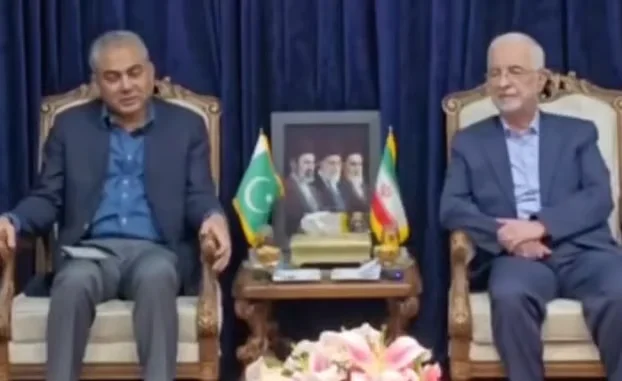
Pakistani Interior Minister Mohsin Naqvi (left) meets with Iranian Interior Minister Eskandar Momeni. Tehran, Iran. On 16 May, 2026 in Tehran, Iran.Screenshot of a video posted on X

Pakistan's interior minister arrived in Tehran on Saturday "to facilitate" the peace talks between Iran and the United States that have stalled despite a fragile ceasefire, Iranian media reported.

"Mohsin Naqvi arrived today (Saturday) in the Islamic Republic of Iran on an official two-day visit as part of Pakistan's ongoing efforts to facilitate talks and promote regional peace," the Tasnim news agency reported.

Iranian Interior Minister Eskandar Momeni received Naqvi, whose visit to Tehran comes days after that of Pakistan's influential army chief, Field Marshal Asim Munir.

Islamabad has been actively mediating in the peace talks between Iran and the US and last month hosted a high stakes meeting between delegations from both sides.

A ceasefire that began on 8 April has largely halted the fighting that erupted when US and Israeli forces attacked Iran on 28 February.

Iranian Foreign Minister Abbas Araghchi said on Friday that Tehran had received messages from Washington indicating that President Donald Trump's administration was willing to continue negotiations.

Iran's chief negotiator and speaker of parliament, Mohammad Bagher Ghalibaf said on Tuesday that Washington should accept Tehran's proposal for peace or face "failure" after Trump rejected an Iranian counteroffer and warned the ceasefire was on "life support".

"There is no alternative but to accept the rights of the Iranian people as laid out in the 14-point proposal. Any other approach will be completely inconclusive; nothing but one failure after another," Ghalibaf said, in a social media post.​
 

US pins hopes on mediator Pakistan in push to end Iran war

AFP
Tehran, Iran
Published: 22 May 2026, 09: 32

1779421043463.webp

Secretary of State Marco Rubio speaks to the press before boarding his plane at Homestead Air Reserve Base, Thursday, 21 May, 2026. Rubio is traveling to a NATO foreign ministers meeting in Sweden.via REUTERS

US Secretary of State Marco Rubio voiced hope of progress on ending the war with Iran, as he looked to Pakistani mediators to help advance efforts to strike an agreement.

Previous comments by President Donald Trump had suggested weeks of stop-start negotiations to strike a permanent end to the war were teetering on the "borderline" between a deal and renewed attacks.

"I believe the Pakistanis will be travelling to Tehran today. So hopefully that'll advance this further," Rubio told reporters on Thursday.

A ceasefire on 8 April halted the war launched weeks earlier by the United States and Israel, but negotiation efforts, including historic face to face talks hosted in Islamabad have so far failed to yield a lasting agreement.

Pakistan's interior minister Mohsin Naqvi, who is widely considered close to Pakistan's powerful army chief Asim Munir, visited Iran for the second time in a week on Wednesday.

Iranian media, including the ISNA news agency, had reported based on unnamed sources that Munir could himself visit Tehran as early as Thursday, but there was no comment from Pakistan authorities about any travel plan for the army chief.

Beijing did however, announce that Pakistan Prime Minister Shehbaz Sharif will travel on Saturday to China, which has also been involved in mediation efforts to end the war.

'Borderline'

Though open warfare and strikes across the Gulf have reduced, the impasse continues to weigh on the world economy.

In April, Pakistan hosted the only direct negotiations, which Munir helped mediate, between US and Iranian officials to take place since 28 February, when the war began.

But the talks ultimately failed, with Tehran accusing Washington of making "excessive demands".

Since then, the two sides have exchanged multiple proposals, with the threat of renewed conflict looming all along.

"It's right on the borderline, believe me," Trump told reporters Wednesday. "If we don't get the right answers, it goes very quickly. We're all ready to go."

He said a deal could come "very quickly" or "in a few days", but warned Tehran would have to provide "100 per cent good answers".

Rubio also criticised NATO allies for their refusal to help in the war against Iran.

"He's not asking them to commit troops. He's not asking them to send their fighter jets in. But they refuse to do anything," he said.

"We were very upset about that."

'Forceful response'

Tehran was on alert for the possibility of renewed armed conflict with chief negotiator Mohammad Bagher Ghalibaf warning Washington on Wednesday of a "forceful response" if Iran were to be attacked.

"The enemy's movements, both overt and clandestine, show that despite economic and political pressure, it has not abandoned its military objectives and is seeking to start a new war," Ghalibaf said.

Iran's foreign ministry spokesman Esmaeil Baqaei said the Islamic republic was examining points received from Washington, while repeating Tehran's demands for the release of its assets frozen abroad and an end to a US naval blockade.

Despite fiery rhetoric against Iran, Trump is under political pressure at home to find a resolution as energy costs rise.

The ceasefire halted the fighting but has not reopened the Strait of Hormuz, the vital waterway that normally carries about a fifth of the world's oil and liquefied natural gas.

The future of Hormuz remains a key sticking point in negotiations, with fears growing that the global economy will feel more pain as pre-war oil stockpiles deplete.

Iran imposed a Hormuz blockade as part of its retaliation in the war, allowing only a trickle of vessels through in recent weeks while introducing a toll system.

Iran's new body overseeing Hormuz said its claimed area of control extends to Emirati waters, drawing a sharp rebuke from Abu Dhabi.

Relations between Iran and the United Arab Emirates have been severely strained since the war, after Tehran launched missile and drone strikes against Gulf countries in response to US-Israeli attacks.

Hormuz carries around a third of global fertiliser shipments, raising concerns of higher food prices and shortages if the closure drags on.

Lebanon strikes

On another front in the war, Lebanese state media reported that an Israeli strike on Thursday damaged a hospital in Lebanon's south.

Since a truce began on 17 April, Israel has continued to launch strikes, carry out demolitions and issue evacuation orders in south Lebanon, saying it is targeting Hezbollah, which has also kept up attacks.

Lebanon's health ministry said Israeli attacks have killed at least 3,089 people in Lebanon since 2 March.

Hezbollah drew Lebanon into the Middle East war with rocket fire at Israel in retaliation for the killing of Iran's supreme leader in US-Israeli strikes.

The United States on Thursday sanctioned nine Hezbollah-linked individuals it accused of "obstructing the peace process in Lebanon".​
 

Pakistan seeks breakthrough in US-Iran peace talks

REUTERS

Published :
May 22, 2026 13:40
Updated :
May 22, 2026 13:40

Iran's foreign minister met his Pakistani counterpart on Friday to discuss proposals to end the US-Israeli war, Iranian media reported, with Tehran and Washington still at odds over Tehran's uranium stockpile and controls on the Strait of Hormuz.

Two days after presenting the Iranians with the latest US message in the negotiations, Pakistani Interior Minister Syed Mohsin Naqvi held another round of talks with Iranian Foreign Minister Abbas Araghchi in Tehran, the semi-official Tasnim News Agency reported.

US Secretary of State Marco Rubio told reporters on Thursday there had been "some good signs" in the talks, but there could be no solution if Tehran enforced a tolling system in the Strait of Hormuz, which it effectively closed to most shipping after the war began on Feb 28.

"There's some good signs," Rubio said. "I don't want to be overly optimistic ... So, let's see what happens over the next few days."

A senior Iranian source told Reuters on Thursday that gaps had been narrowed, although uranium enrichment and the Strait of Hormuz remained among the sticking points.

The war has wreaked havoc on the global economy, with the surge in oil prices stoking fears of rampant inflation. About a fifth of the world's oil and liquefied natural gas shipments travelled through the Strait of Hormuz before the war.

The US dollar was near its highest level in six weeks on Friday amid the uncertainty over the peace talks, while oil prices climbed as investors doubted the prospects of a breakthrough.

"We're coming to the end of week 12, we're six weeks in the ceasefire, and I'm just not really that convinced we're any closer to a resolution between the US and Iran," Tony Sycamore, a market analyst at IG, said of the West Asia war.

‘We Will Get It’

US President Donald Trump said the US would eventually recover Iran's stockpile of highly enriched uranium - which Washington believes is destined for a nuclear weapon though Tehran says it is intended purely for peaceful purposes.

"We will get it. We don't need it, we don't want it. We'll probably destroy it after we get it, but we're not going to let them have it," Trump told reporters at the White House on Thursday.

Two senior Iranian sources told Reuters before Trump's comments that Iranian Supreme Leader Ayatollah Mojtaba Khamenei had issued a directive that the uranium should not be sent abroad.

The US president also railed against Tehran's intentions to charge fees on ships using the strait.

"We want it open, we want it free. We don't want tolls," Trump said. "It's an international waterway."

Trump faces domestic pressure ahead of November midterm elections, with Americans angry over the surge in fuel prices and his approval rating near its lowest level since he returned to the White House last year.

Tehran submitted its latest offer to the US earlier this week.

Tehran's descriptions suggest it largely repeats terms Trump previously rejected, including demands for control of the Strait of Hormuz, compensation for war damage, lifting of sanctions, release of frozen assets and the withdrawal of US troops.

Global Energy Shock

The International Energy Agency says the conflict has produced the world's worst energy shock.

It warned on Thursday that the peak of summer fuel demand coupled with a lack of new supply from the West Asia meant the market could enter the "red zone" in July and August.

Traffic through the strait has fallen to a trickle compared with 125 to 140 daily passages before the war.

Iran has said it aims to reopen the strait to friendly countries that abide by its terms that could potentially include fees.

"It would make a diplomatic deal unfeasible if they were to continue to pursue that. So it's a threat to the world if they were trying to do that, and it's completely illegal," Rubio said.

Trump and Israeli Prime Minister Benjamin Netanyahu said their war aims were to curb Iran's support for regional militias, dismantle its nuclear program, destroy its missile capabilities and make it easier for Iranians to topple their rulers.

But Iran has so far retained its stockpile of near-weapons-grade enriched uranium, and its ability to threaten neighbours with missiles, drones and proxy militias.​
 

Pakistan military chief arrives in Tehran in push to end Iran war

AFP

1779495452099.webp

Women hold Iran's national flags during an anti-US and Israel protest at the Hafte Tir Square in Tehran on May 17, 2026. Photo: AFP

Pakistan's powerful army chief arrived in Tehran on Friday, with Islamabad mediating as the Islamic republic examines a new US proposal to end the Middle East war.

Iran's foreign ministry spokesman Esmaeil Baqaei, however, said the visit did not necessarily mean "we have reached a turning point or a decisive situation".

The disagreements between Iran and the United States were "deep and extensive", he added in quotes carried by Iran's ISNA news agency.

US Secretary of State Marco Rubio had earlier voiced hope of progress on ending the war, which broke out on February 28 when the US and Israel launched attacks against Iran.

A ceasefire on April 8 halted the conflict, but negotiation efforts, including historic face to face talks hosted in Islamabad have so far failed to yield a lasting agreement.

Previous comments by President Donald Trump had suggested weeks of stop-start negotiations to strike a permanent end to the war were teetering on the "borderline" between a deal and renewed attacks.

Pakistan's military said in a statement that Munir had "arrived in Tehran as part of ongoing mediation efforts".

It said he had been welcomed by Iran's Interior Minister Eskandar Momeni and Pakistani counterpart Mohsin Naqvi.

Naqvi visited Iran for the second time in a week on Wednesday and met President Masoud Pezeshkian and Foreign Minister Abbas Araghchi.

Baqaei said a delegation from Qatar had also held talks with the Iranian foreign minister on Friday.

"In recent days, many countries -- both regional and non-regional -- have been trying to help bring the war to an end... However, Pakistan remains the official mediator."

Pakistan, Iran's eastern neighbour, hosted in April the only direct negotiations between US and Iranian officials to take place since the war began.

Munir was at the centre of the action during that round of talks, greeting both delegations on their arrival and displaying bonhomie with US Vice President JD Vance.

But the talks ultimately failed, with Iran accusing the US of making "excessive demands".

Since then, the two sides have exchanged multiple proposals, with the threat of renewed war looming all along.

Hormuz

Iranian media had reported on Thursday that Munir had been due in Tehran that day in order to continue "talks and consultations" with Iranian authorities.

Rubio later said to reporters of the Pakistani visit: "Hopefully that'll advance this further."

On Friday, he said that Trump's "disappointment" with America's NATO allies over a lack of support in the Iran war would need to be "addressed".

Rubio added that he told European countries they may have to come up with a "Plan B" to help force open the Strait of Hormuz if the war with Iran drags on.

Tehran effectively closed the key shipping lane, through which large amounts of oil and gas usually travel, in retaliation for the US-Israeli strikes launched in February.

The future of the Strait of Hormuz remains a key sticking point in negotiations, with fears growing that the global economy will be hit hard as pre-war oil stockpiles are depleted.

European Union nations moved on Friday towards imposing sanctions on Iranian officials and others responsible for blocking the strait.

Baqaei also listed the situation in the strait and a US blockade of Iranian ports as issues to be examined.

"The issue of ending the war on all fronts, including Lebanon, is very important," he added.

Lebanon front

Hezbollah drew Lebanon into the Middle East war with rocket fire at Israel in retaliation for the killing of Iran's supreme leader in US-Israeli strikes.

Since a truce began on April 17, Israel has continued to launch strikes, carry out demolitions and issue evacuation orders in south Lebanon, saying it is targeting Hezbollah, which has also kept up attacks.

Lebanon's health ministry said Israeli attacks have killed at least 3,111 people in Lebanon since March 2.

The ministry said Israeli strikes on the south killed 10 people on Friday, including six rescuers and a child.

The Israeli military also announced a separate airstrike that killed two people in an area in southern Lebanon where it is fighting Hezbollah.

The United States on Thursday sanctioned nine Hezbollah-linked individuals it accused of "obstructing the peace process in Lebanon", including two officers.

It marked the first time Lebanese officers have been sanctioned by the United States.​
 

Latest Posts

Back