[🇧🇩] Pharmaceutical and Chemical Industry in Bangladesh

Quick Reply ✓ Posted!
[🇧🇩] Pharmaceutical and Chemical Industry in Bangladesh
79
6K
More threads by Saif

G Bangladesh Defense

Square Pharma posts over 15pc profit growth on higher sales


1793144125079.webp


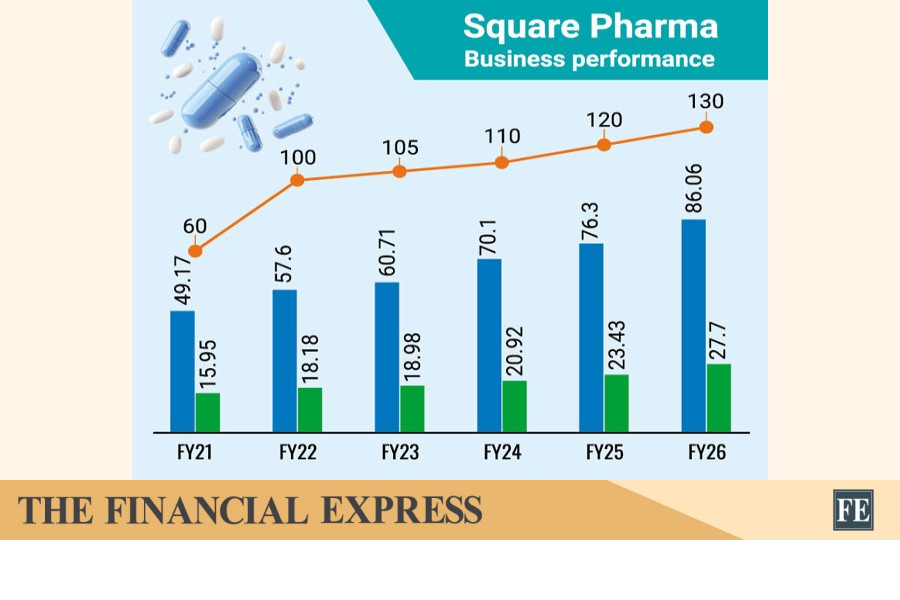
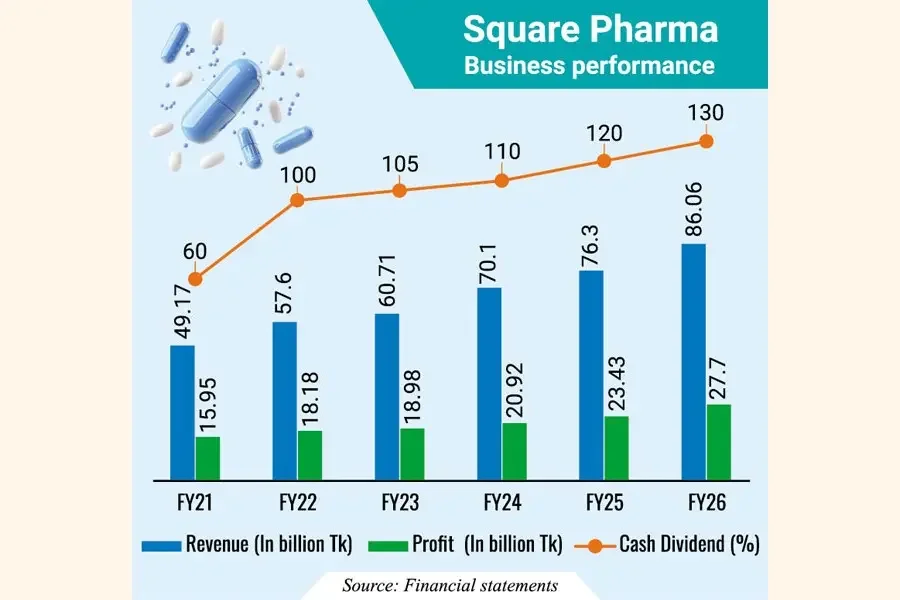
The country's leading drug maker Square Pharmaceuticals has reported a 15.54 per cent year-on-year growth in profit to Tk 27.70 billion in FY26, driven by a significant rise in revenue.

Company officials said their efforts to keep manufacturing unaffected even during the power shortage played a significant role in ensuring higher revenue. The achievement was possible through a combination of energy sources: the national grid and power generated from diesel and solar.

"We faced no power outage and continued production uninterrupted," said Muhammad Zahangir Alam, chief financial officer (CFO) of Square Pharmaceuticals.

Square Pharma's supply chain is also broad, delivering products to people across the country, which supported a 12.81 per cent year-on-year growth in revenue to Tk 86.06 billion in FY26.

The CFO said their products could be delivered to the remotest corners of the country on orders placed through a mobile application. The app, named SHC100, is used by owners of drug stores and chemist shops to place orders. Previously, products were supplied to remote areas on a rationing basis because it was not possible to receive orders regularly.

In the near future, Square products will also be available for home delivery. For the trial run, the company has rolled out home delivery to its employees through the same app. As the next step, the app will be made accessible to general customers.

Such innovative schemes are helping the drug maker secure revenue growth above the industry's growth rate, which currently stands at 9 per cent.

Meanwhile, the company's selling and distribution expenses rose 12.89 per cent, while administrative expenses advanced 11.27 per cent in FY26. Higher revenue helped offset the increase in expenses.

The CFO said a 13 per cent growth in revenue is a huge success for a large company like Square Pharmaceuticals, but it could be even higher if some factors, such as power supply from the national grid, were favourable.

"We are satisfied as our supply of products remained unaffected even during the crisis periods when people suffered from unexpected diseases, including dengue fever," said Mr Alam.

Of the annual revenue in FY26, $27 million came from exports, up from $18 million earned in FY25.

Among other factors, a 17.36 per cent rise in income from investments and a 55.29 per cent decline in finance cost supported the profit growth.

Meanwhile, the company's board of directors has recommended a record 130 per cent cash dividend for FY26. Previously, Square Pharmaceuticals distributed a 120 per cent cash dividend for FY25, 110 per cent for FY24 and 105 per cent for FY23.

The company's net asset value (NAV) per share rose to Tk 178.99 in FY26 from Tk 157.88 in the previous year.

Further expansion

Apart from recommending the cash dividend and approving financial statements for FY26, the company's board has approved a new investment plan worth Tk 7.25 billion to establish dedicated facilities for oncology, biologics, hormones and steroids.

Currently, the company offers a limited range of oncology and biologic products, some of which are available only on a small scale in the absence of dedicated manufacturing facilities.

Oncology products, including monoclonal antibodies, are important for cancer treatment, while biologics, such as blood- and serum-based products, are used to treat complex diseases.

To address these gaps, Square Pharmaceuticals seeks to build dedicated oncology and biologics facilities to introduce specialised products and strengthen its presence in these therapeutic segments.

The initiatives are expected to secure long-term growth by enabling the company to enter more complex therapeutic areas and meet evolving healthcare needs, the CFO said.​
 

Beximco Pharma appoints Rabbur Reza as new MD


1794525284112.webp


The Board of Directors of Beximco Pharmaceuticals PLC (Beximco Pharma), one of Bangladesh’s leading pharmaceutical companies, has appointed S M Rabbur Reza, Chief Operating Officer, as Managing Director of the company for a period of five years with immediate effect.

The decision was taken at a Board meeting held on Thursday, 12 November 2026.

He replaces Mr Iqbal Ahmed, who stepped down from his position as Managing Director but will continue to serve on the Board of Directors of the Company.

The appointment will be subject to the approval of the Shareholders at the next Annual General Meeting of the Company.

As Managing Director, Rabbur Reza will lead the company’s overall operations and strategic priorities, with particular emphasis on enhancing organisational efficiency, strengthening stakeholder confidence, accelerating innovation and expanding opportunities in domestic and international pharmaceutical markets.

A S F Rahman, Chairman of the board, commented, “We are delighted to announce Rabbur Reza’s appointment as Managing Director. Throughout his time at the Company, he has demonstrated his exceptional leadership skills and industry expertise, which have been central to the Company’s continued growth and success as a globally recognised pharmaceutical business. Rabbur’s efforts have consistently delivered for both patients and shareholders, and we look forward to seeing continued progress of Beximco Pharma under his leadership.”

Rabbur Reza, Managing Director of Beximco Pharma, added, “I am honoured to be appointed Managing Director and want to thank the Board for trusting me with this opportunity. I have spent more than 25 years at Beximco Pharma, and I am incredibly excited to step into this new role as we continue to expand our work to deliver high-quality, affordable medicines to more people around the world.”

Rabbur Reza has been Chief Operating Officer at Beximco Pharmaceuticals PLC since 2009, with over 30 years of experience in the pharmaceutical industry, spanning international business development, operations, strategy, and leadership. During his tenure at the Company, he has played a key role in expanding the Company’s exports to over 60 countries, including the USA, Australia, and markets across Europe, and in driving the strategic acquisitions of Nuvista Pharma and Sanofi Bangladesh (now Synovia Pharma).

He also pioneered the introduction of first-to-market generic medicines, including breakthrough treatments for hepatitis C and COVID-19, and led the introduction of speciality generics and innovative therapies, including the 2026 launch of Triko, the first generic version of Vertex Pharmaceuticals’ breakthrough cystic fibrosis therapy Trikafta.

He holds a Bachelor of Pharmacy degree from Panjab University, India, and an MBA from Queensland University of Technology, Australia. He has also completed executive education programmes at Harvard Business School, London Business School, and MIT Sloan School of Management.

Rabbur Reza is an Executive Committee Member of the Bangladesh Association of Pharmaceutical Industries (BAPI) and a member of the Medical Technical Options Committee under the Montreal Protocol.​
 

Renata extends earnings momentum with 37pc profit rise in Q1


1794613610515.webp


After posting strong profit growth in FY26, Renata continued its earnings momentum in the first quarter of FY27, reporting a 37 per cent year-on-year increase in profit to Tk 1.02 billion, driven by higher sales, improved operating efficiency and lower finance costs.

The drug maker's profit rose by Tk 276 million during the July-September quarter, while net finance costs were reduced by Tk 150 million through strategic capital restructuring and foreign-exchange risk management.

The company attributed the earnings growth to improved gross margins, efficient procurement and tighter expense management.

Net finance costs fell 35.2 per cent year-on-year, mainly due to lower borrowing costs and reduced foreign-exchange losses. The decline was largely supported by a shift from short-term borrowing to lower-cost long-term funding.

The pharmaceuticals company reported an 11.4 per cent year-on-year increase in consolidated revenue to Tk 12.60 billion during the quarter.

Strong local and export demand for pharmaceutical products, particularly lifesaving drugs, largely driven by recurring outbreaks of diseases such as measles and dengue across the country, contributed to revenue growth, while effective cost management supported the bottom line.

Renata's pharmaceutical revenue, which accounted for 78.7 per cent of total revenue, rose 8.6 per cent, while revenue from the animal health segment surged 10.4 per cent. Contract manufacturing revenue more than doubled to Tk 650 million during the quarter compared with the same quarter a year earlier.

Export revenue, including that of subsidiaries, surged 58.8 per cent to Tk 1.09 billion, reflecting the company's efforts to diversify its overseas markets.

Renata said its portfolio of 100 bioequivalent products, particularly those addressing chronic and non-communicable diseases, had helped secure product registrations and regulatory approvals across international markets.

The company has so far expanded its presence to 77 international markets across multiple continents.

Renata is also focusing on redeveloping existing products for regulated markets, including the USA, Canada, Europe and Australia, while expanding its pipeline of differentiated products, particularly injectables, anticancer formulations and other specialised medicines.

However, the operating environment remains challenging amid geopolitical conflicts, trade realignments, volatile energy prices, supply chain disruptions and persistent domestic cost pressures, the company said.

Rising fuel and electricity costs, coupled with limited scope for corresponding price adjustments, continue to squeeze profit margins, reinforcing the need for greater operational efficiency, cost discipline and prudent financial management.

Energy costs increased 27 per cent following multiple price adjustments, including a 32.4 per cent rise in diesel prices and an 18.6 per cent increase in industrial electricity tariffs.

The cost of sales rose 10.5 per cent, slightly below the revenue growth rate, while the cost of materials increased 13 per cent year-on-year during the quarter.

"The higher materials cost was primarily attributed to a change in sales mix, with a greater contribution from products requiring higher-value raw materials," the company said.

Despite adverse macroeconomic conditions and pricing constraints, Renata maintained its earnings momentum through effective cost management, operational efficiency and a strategic focus on differentiated products, said Akramul Alam, head of research at Royal Capital.

People now prioritise healthcare spending more than before, which is contributing to higher sales and profitability of drug makers, he said.

Renata's annual profit also surged 64 per cent year-on-year to Tk 3.64 billion in FY26 despite modest revenue growth, supported by stronger operating performance and lower financing costs following its capital restructuring initiative.​
 

BD seeks to enhance ties with Lanka, Nepal in pharma trade


1794613755813.webp


Bangladesh sought to enhance cooperation with Sri Lanka and Nepal in the health sector, particularly in pharmaceutical trade and medical education, in separate meetings held on the sidelines of the first BIMSTEC Health Ministers' Conference in Colombo on Wednesday.

During the bilateral meeting with Sri Lanka Bangladesh has agreed to strengthen cooperation in the health sector, specially to collaborate on expanding pharmaceutical trade, increasing opportunities for Sri Lankan students to enroll in Bangladeshi medical colleges, and resolving issues related to the recognition of medical educational institutions. The meeting was attended by Bangladesh's Minister of Health and Family Welfare, Sardar Md. Sakhawat Hossain, and Sri Lanka's Minister of Health, Nalinda Jayatissa.

The Bangladesh Health Minister appreciated Sri Lanka for hosting the inaugural BIMSTEC Health Ministers' Conference. He also extended an invitation for a Sri Lankan delegation to visit Bangladesh to explore new avenues for cooperation in the health sector.

Both ministers reaffirmed their commitment to enhancing health-sector collaboration -- both within BIMSTEC and other regional forums -- and working together to address shared health challenges.

The Bangladeshi Health Minister held the other bilateral meeting with Nepal's Minister of Health and Food Security, Nisha Mehta.

Their discussion focused on various ways to bolster health-sector cooperation between the two countries, with particular emphasis on expanding pharmaceutical trade and creating more opportunities for Nepali students to enroll in medical colleges in Bangladesh.

The two ministers underscored the importance of strengthening mutual relations and communication in the health sector, as well as identifying new, mutually beneficial areas for cooperation.

Furthermore, the meeting addressed the enhancement of collaboration between the two nations within various international and regional forums, including BIMSTEC.

Both ministers reiterated their commitment to working together to tackle common health challenges and to foster regional health development.​
 

Beximco Pharma eyes herbal medicine market with new subsidiary


1794871774805.webp


Beximco Pharmaceuticals is expanding its footprint into the herbal medicine market to capitalise on growing demand by setting up a wholly owned subsidiary.

The move aligns with the drug maker's aim to diversify its product portfolio and tap new growth opportunities in the healthcare sector.

The proposed subsidiary, Beximco Pharma Nutraceuticals, will have an initial paid-up capital of Tk 100 million, fully subscribed by Beximco Pharmaceuticals, against an authorised capital of Tk 1 billion.

The board approved the incorporation of the subsidiary at a meeting on November 12, according to a disclosure posted on the Dhaka Stock Exchange (DSE) on Sunday.

Demand for herbal medicine is growing, as many people are turning to natural healthcare products in the belief that they have no side effects, according to industry insiders. Besides, some herbal medicines are clinically tested and proven effective.

The incorporation of the subsidiary and the commencement of its operations will be subject to obtaining the necessary statutory and regulatory approvals, the company said.

Beximco Pharmaceuticals does not anticipate any material impact on its financial performance in the immediate or medium term from the investment, according to the disclosure, suggesting that the proposed venture is aimed at generating long-term business benefits.

The drug maker will finance the investment from its own sources.

It did not give any tentative timeline for the start of the subsidiary's operations.

A company official, requesting anonymity, said consumer acceptance of herbal medicines was gradually increasing, encouraging the board to explore opportunities in the segment.

The company is currently working on setting up the subsidiary. "Once we obtain regulatory approval, we will announce the date to launch its commercial operations," he said.

Herbal medicines require regulatory clearance from the Directorate General of Drug Administration (DGDA) before being marketed in the country, although the applicable approval requirements vary according to product classification.

The investment plan is particularly significant against the backdrop of mounting financial and operational difficulties facing the wider Beximco Group. The conglomerate has been struggling with a massive debt burden, liquidity shortages, factory closures and operational disruptions.

While several industrial units of the conglomerate have faced setbacks, its pharmaceutical business has continued to operate and generate profits, demonstrating a contrasting business trajectory within the group.

Industry insiders say the group's pharmaceutical business has performed better largely because of its relatively resilient demand, established market position and stronger cash-generation capacity.

Unlike textile, garment and other industrial businesses, which depend heavily on export orders, working-capital financing and uninterrupted factory operations, pharmaceutical companies benefit from recurring demand for essential medicines.

Salim Afzal Shawon, head of research at BRAC EPL Stock Brokerage, said Beximco Pharma's extensive portfolio of branded generic medicines, established distribution network and access to export markets had helped the company sustain its business momentum.

The proposed subsidiary signals that Beximco Pharmaceuticals seeks to build new growth avenues rather than rely entirely on its existing portfolio.

"Diversification into herbal medicines and other healthcare products could help established pharmaceutical manufacturers broaden their product portfolios, strengthen market presence and create additional revenue streams," added Mr Shawon.

Beximco Pharmaceuticals has continued to demonstrate business resilience, maintaining revenue and profit growth despite a challenging operating environment. It is the country's second-largest listed drug maker in terms of both revenue and profit, behind Square Pharmaceuticals.

The drug maker posted a 31 per cent year-on-year increase in profit to Tk 9.14 billion in FY26, while its revenue grew 15 per cent to Tk 56.26 billion, crossing the Tk 50-billion milestone for the first time.

Its growth momentum continued in the first quarter of FY27, when profit rose 10 per cent year-on-year to Tk 2.60 billion.

The company's relatively stronger balance sheet and cash-generation capacity also distinguish it from heavily indebted industrial entities within the group.

Beximco Pharmaceuticals has potential advantages in manufacturing capabilities, research and development, quality control, distribution networks and brand recognition.

"These strengths could help the company develop standardised herbal products and gain consumer confidence," said Mr Shawon.

Meanwhile, following the disclosure, Beximco Pharma's share price rose 3.83 per cent to Tk 149 on Sunday on the DSE.

Market insiders estimate that Bangladesh's herbal medicine market generates annual revenues of around Tk 25 billion, accounting for roughly one-tenth of the overall pharmaceutical market.

Leading pharmaceutical companies, including Square Pharmaceuticals, Incepta Pharmaceuticals and ACME Laboratories, currently cater to about 30 per cent of the herbal medicine market.​
 

PKDefense Forums: Country-by-Country Military Discussions

Log In Register Forums
Latest
Back