[🇧🇩] Save the Rivers/Forests/Hills-----Save the Environment

Quick Reply ✓ Posted!
[🇧🇩] Save the Rivers/Forests/Hills-----Save the Environment
658
27K
More threads by Saif

G Bangladesh Defense

Sustainable restoration of Dhaka canals must

THE terrible state of canals in Dhaka exposes the chronic failure of the authorities to protect the ecological lifelines despite repeated promises and costly restoration projects. The canals that once sustained local ecosystems, carried rainwater and supported community life have now turned into foul-smelling drains clogged with plastic, sewage and municipal wastes. Residents in various parts of the city recount how once-living waterways where people swam and caught fish have become dumping grounds overwhelmed by encroachment and pollution. The situation shows not only environmental neglect but also the collapse of urban governance and waste management in the capital. The state of Jirani Khal, Kajla Khal, Kutubkhali Khal, Hazaribagh Khal and Ramchandrapur Khal shows, as New Age reported on May 22, a disturbing pattern. Canals are cleaned sporadically, only to become clogged again within days because of indiscriminate waste dumping, illegal sewage connections and the continued occupation of canal land by influential quarters. In some places, portions of canals have become so filled that people can cross them on foot. Illegal structures, bamboo platforms and even high-rise projects continue to narrow waterways and obstruct water flow with apparent impunity. Such encroachment, often backed by politically influential individuals, persists despite eviction drives.Maps

According to the office of Dhaka’s deputy commissioner, the city has 54 canals. Responsibility for the maintenance and preservation of most of these canals lies primarily with the two city authorities. The city corporations acknowledge that canals become polluted again soon after cleaning because residents and businesses continue to dump waste into them. The admission only highlights the inability of the authorities at enforcing waste disposal regulations and preventing illegal occupation. Moreover, the city corporations often delay or halt their cleaning and eviction drives in the name of forthcoming or ongoing restoration project. A south city official, for example, argues that carrying out cleaning operations before the completion of an ongoing restoration project involving four canals would amount to a ‘waste of labour.’ Such reasoning reflects a dangerous complacency in an escalating environmental and public health crisis. Delaying regular maintenance while waiting for long-term infrastructure projects to finish only allows the condition of the canals to deteriorate. What should be also noted is that the degradation of Dhaka’s canals is closely linked to the broad failures of urban planning and waste management. The city, which generates enormous quantities of waste every day, still lacks an effective system for waste collection, recycling and disposal.Daily newspaper subscription

The government, which has taken a nationwide initiative to excavate and restore canals, must put a special emphasis on canals in and around Dhaka. In so doing, the authorities must move beyond cosmetic clean-up drives and undertake coordinated action involving regular maintenance, public awareness campaigns and strict enforcement against polluters and encroachers regardless of political influence.​
 

From toxic waste to industrial resource
Bangladesh’s waste oil recycling industry is expanding, reducing imports and pollution, but illegal operators, weak enforcement and high taxes limit its full potential.

Jagaran Chakma

1779592976761.webp

Photo: Rajib Raihan

For decades, waste engine oil from vehicles, factories, and shipbreaking yards in Bangladesh was treated as little more than toxic waste.

In Chattogram’s industrial belt and the shipbreaking yards of Sitakunda, this discarded lubricant -- widely known as “pora mobil” (burnt engine oil) -- routinely flowed into rivers, canals and open land with little oversight and almost no organised recovery system.

Today, that waste is feeding a growing recycling industry.

What began in the late 1970s and 1980s as small-scale efforts by a handful of local entrepreneurs to recover and reuse discarded oil has gradually evolved into Bangladesh’s lubricant re-refining industry -- a business now tied to industrial demand, import savings and resource recovery.

1779593015156.webp

Photo: Rajib Raihan

POTENTIAL TO REDUCE IMPORTS

Bangladesh’s lubricant market has grown into a Tk 6,000 crore industry, insiders estimate, as rising numbers of vehicles, factories, farms and transport businesses drive demand for oil and lubricants.

Against this backdrop, recyclers say waste lubricant has become an increasingly valuable resource, as every tonne of recycled base oil helps reduce dependence on imports and eases pressure on foreign currency reserves.

Bangladesh imports around 80,000 to 100,000 tonnes of lubricant and base oil annually to meet domestic demand, estimated at roughly 160,000 tonnes a year.

Meanwhile, local re-refiners have a combined production capacity exceeding 100,000 tonnes.

Industry insiders say re-refiners currently meet around 30 percent to 35 percent of domestic demand, although the share could rise significantly with stronger policy support, improved waste oil collection systems and stricter action against illegal operators.

Sector leaders estimate Bangladesh could save at least Tk 2,000 crore annually in import costs if approved recyclers were allowed to operate at full capacity and more waste oil flowed through formal channels.

Most recycled lubricant produced locally is used in industrial machinery, re-rolling mills, factories and agricultural equipment. However, premium lubricants for modern private vehicles still rely heavily on imported or virgin base oil.

Zakir Hossain, who drives a rented car, said he changes the lubricant in his microbus every 5,000 kilometres at a cost of around Tk 6,000. For his 1.5-litre sedan, lubricant replacement is needed every 3,000 kilometres and costs about Tk 4,200.

“I use branded lubricant for better vehicle performance,” he said, adding that there is no scope for using recycled lubricant in cars.

1779593058720.webp


PIONEERS OF WASTE OIL RECYCLING

Among the early pioneers of Bangladesh’s waste oil recycling industry was Mohammed Yousuf, founder of Lub-rref (Bangladesh) Ltd and managing director of BNO Lubricants. He entered the sector at a time when the country had no organised system for collecting or recycling used oil.

In the years following independence, the petroleum sector remained largely state-controlled, leaving little room for private businesses, he said. Lubricant shortages were common, while knowledge about recycling used oil was minimal.

Unable to secure sufficient imported lubricant, Yousuf began collecting discarded oil from factories and vehicles manually and experimenting with ways to convert it into reusable industrial lubricant.

As industries expanded and lubricant shortages persisted -- particularly in steel mills and re-rolling factories -- demand for recycled products gradually increased.

“With industrial expansion, the volume of waste oil also increased,” Yousuf said.

At the same time, concerns over environmental pollution from untreated waste oil began gaining attention. Used lubricant contains hazardous contaminants and heavy metals that can pollute soil and water if dumped untreated, he said.

A large share of Bangladesh’s waste oil still remains outside formal collection and recycling systems. According to Yousuf, much of the market is controlled by informal collectors and small processors operating without modern refining technology or environmental safeguards.

He said future growth will depend on stronger enforcement, improved collection systems and fairer market conditions for compliant businesses. Without tighter regulation, much of the country’s waste oil -- particularly from the shipbreaking sector -- will continue flowing through informal channels.

1779593086499.webp


RECYCLING SEEN AS ECONOMIC, ENVIRONMENTAL SOLUTION

Ijaz Hossain, former professor of Chemical Engineering at Bangladesh University of Engineering and Technology, said the industry reflects both rising industrial demand and significant economic potential.

“These companies claim they can bring product quality close to international standards,” he said. “With proper investment and technology, that is definitely achievable.”

Drawing comparisons with Bangladesh’s plastic recycling industry, Hossain said lubricant recycling could generate substantial economic value.

“Waste lubricant recycling can deliver million-dollar economic benefits,” he said.

“This is fundamentally a recycling industry with strong economic value. If managed properly, it can reduce waste, lower import dependence, and make a meaningful contribution to the economy.”

According to him, very little waste oil in Bangladesh is ultimately discarded.

“In one way or another, most of it re-enters economic activity,” he said, adding that modernising recycling facilities would improve both product quality and environmental protection.

He noted that larger operators are increasingly investing in advanced refining technologies capable of producing higher-quality recycled lubricants, while many smaller businesses still rely on basic filtration and resale methods.

Bangladesh Poribesh Andolon Joint Secretary Sharif Zamil said compliant refiners are helping protect the environment by recycling waste engine oil while also contributing to the economy.

However, he warned that some unlicensed refiners continue to cause environmental pollution by operating without proper safeguards.

“The government should provide incentives to compliant refiners for their role in protecting the environment from the hazards of waste engine oil,” he said.

INDUSTRY STRUGGLES DESPITE GROWING DEMAND

Bangladesh formally recognised the sector through the Lubricant Re-refine Policy introduced in 2009, although petroleum-related regulations existed earlier.

Selim Hossain, president of the Bangladesh Re-refinery Association, said the industry began in a rudimentary form, with entrepreneurs heating waste oil in crude containers to separate reusable components.

“Over time, the sector gradually became more organised,” he said.

Bangladesh currently has 11 government-approved re-refining companies, nine of which are operational, alongside 13 blending companies, according to the association.

However, Hossain claimed that another 25 to 30 illegal operators remain active without proper regulatory oversight.

He said many approved factories are operating below capacity because they cannot secure enough waste oil as raw material.

According to him, the industry maintains a relatively high recovery rate, with recyclers recovering around 205 litres of reusable base oil from every 240 to 250 litres of used lubricant.

Despite its environmental and economic benefits, operators say the sector remains burdened by high taxes and compliance costs.

Hossain said re-refiners currently pay 15 percent VAT and 10 percent tax when purchasing waste oil from government sources, followed by another 15 percent VAT on final product sales. Corporate taxes further raise operating costs.

He argued that the tax structure discourages investment and weakens compliant businesses against informal operators.

Monoj Roy, director of Oleum Lubricants (BD) Ltd, said legal operators are increasingly struggling as informal businesses evade taxes, licence fees and environmental compliance requirements.

“Those of us who operate legally have to pay VAT, taxes and licence fees regularly, while many informal businesses do not bear any of these costs,” he said.

Roy alleged that some illegal operators sell low-quality lubricants mixed with diesel and other inferior materials at much lower prices.

Oleum Lubricants established its Savar factory more than a decade ago with an investment of around Tk 4 crore. Although the plant has a production capacity of 20,000 to 25,000 litres per day, current output has fallen to around 4,000 to 6,000 litres because of weak market conditions and rising competition from informal operators.

EXPANSION AMID CHALLENGES

Despite challenges, investment in the sector continues.

Arefin Mahmud, managing director of Min Oil Limited, said his family’s involvement in the industry dates back nearly five decades. His father, Mohammad Masudul Haque, entered the business in the late 1970s, initially launching re-refining operations with a partner before establishing Min Oil independently in 1985 on a pilot scale.

The company later secured registration with the Bangladesh Small and Cottage Industries Corporation and obtained a commercial licence from the energy ministry.

Mahmud said Min Oil’s factory in Hemayetpur, Savar, now has a daily production capacity of 100 to 120 barrels and uses internationally recognised re-refining technology.

The recycled base oil is used to produce industrial and automotive lubricants sold under brands such as Mol-X and Velocity.

Weak enforcement remains one of the industry’s biggest challenges, he said.

“Policies exist on paper, but implementation is still weak.”

New companies are also entering the market, driven by both environmental concerns and the sector’s long-term business potential.

Md Mainur Rahman, managing director of Lube Care BD Limited, said the company invested around Tk 17 crore in a recycling plant in Boliarpur, Savar in 2016. The facility has a refining capacity of nearly 10 tonnes per day.

Rahman said the business offers both environmental and economic benefits, as recycled base oil helps reduce pollution and dependence on imports.

“Every tonne of recycled base oil helps reduce import demand and foreign currency outflows,” he said.

He added that the industry still has significant growth potential.

Rahman also said recyclers initially struggled to source waste oil from industries and government institutions. Industry players later worked through their association to encourage government agencies to allocate waste oil directly to approved recyclers through closed tenders instead of open auctions.

According to him, some government institutions, including the army and navy, have already started giving approved recyclers priority access to waste oil supplies.​
 

Chemical pollution in Bangladesh threatens public health and climate resilience

Shahriar Hossain

1779840288555.webp

Women dry cattle hides outside a tannery by the Dhaleshwari river, which feeds into the Buriganga river, in Savar, on the outskirts of Dhaka. The Buriganga is so polluted that its water appears pitch black and emits a foul stench. Reuters.

Bangladesh stands today at a dangerous environmental crossroads. While the nation continues its remarkable economic growth, driven by industrialization, urban expansion, and export-oriented manufacturing, another reality is unfolding quietly beneath the surface — a growing chemical pollution crisis contaminating rivers, soil, food chains, air, and even human bodies. This invisible toxic burden is rapidly becoming one of the gravest environmental health and climate-change vulnerabilities facing the country.

Chemical pollution in Bangladesh is no longer an isolated industrial issue. It is now a national public health emergency intertwined with ecological degradation, climate injustice, and socioeconomic vulnerability. Toxic chemicals from textile dyeing, tanneries, shipbreaking, pesticides, plastics, e-waste, battery recycling, and industrial effluents are entering ecosystems with devastating consequences. The impacts are increasingly evident in rising disease burdens, polluted waterways, declining biodiversity, contaminated agricultural lands, and heightened risks for vulnerable communities already struggling against climate change.

Bangladesh’s rivers, once the arteries of civilization and ecological balance, are among the first victims. Industrial zones surrounding Dhaka, Gazipur, Narayanganj, Savar, Ashulia, Chattogram, and other manufacturing hubs release untreated or poorly treated effluents containing lead, cadmium, mercury, arsenic, chromium, PFAS, and persistent organic pollutants into canals and rivers. Scientific studies continue to document alarming contamination levels in water, soil, fish, vegetables, and sediments.

Particularly concerning is the emergence of PFAS, commonly known as “forever chemicals,” which are linked to cancers, endocrine disruption, immune suppression, reproductive disorders, and developmental damage.

These chemicals persist in the environment for hundreds or even thousands of years. Research conducted jointly by the Environment and Social Development Organization (ESDO) and International Pollutants Networks (IPEN) detected PFAS contamination in surface water and tap water near textile industrial areas around Dhaka, with several samples exceeding international safety limits and containing globally banned substances.

The textile and garment sector, the backbone of Bangladesh’s export economy, is simultaneously becoming one of the country’s largest sources of chemical contamination. Many factories continue to use hazardous dyes, fluorinated compounds, nonylphenols, chlorinated paraffins, and heavy metals without adequate chemical transparency or wastewater management. A recent community-based monitoring study in textile-producing communities documented contamination of water, soil, wastewater, and even human hair samples with hazardous industrial chemicals.

Lead pollution represents another deeply alarming dimension of the crisis. Children are among the most vulnerable victims. Exposure to lead through contaminated food, air, soil, cookware, paints, batteries, and informal recycling operations can permanently damage neurological development, reduce IQ, impair learning ability, and increase cardiovascular disease risks. International assessments indicate that millions of children in South Asia, including Bangladesh, are exposed to unsafe levels of lead contamination.

Chemical pollution is also intensifying Bangladesh’s climate vulnerability. Toxic contamination weakens ecosystem resilience precisely when ecosystems are needed most to buffer climate shocks. Polluted wetlands lose their ecological function. Contaminated rivers become biologically dead. Soil degradation reduces agricultural resilience to droughts and floods. Coastal ecosystems burdened by industrial contamination become less capable of adapting to sea-level rise and salinity intrusion.

Climate disasters are significantly intensifying toxic chemical exposure across Bangladesh, creating a dangerous intersection between environmental pollution and climate vulnerability. During floods, cyclones, river erosion, and tidal surges, hazardous industrial waste, untreated effluents, heavy metals, pesticides, petroleum residues, plastics, and contaminated sediments are dispersed over vast geographic areas, infiltrating drinking water sources, agricultural lands, wetlands, and fisheries. Informal settlements and low-income communities living near industrial clusters face disproportionate exposure risks while lacking access to healthcare, clean water, or environmental justice. Chemical pollution and climate change are therefore not separate crises; they are mutually reinforcing threats.

In low-lying industrial regions surrounding Dhaka, Narayanganj, Gazipur, Chattogram, Khulna, and coastal belts, floodwaters frequently overflow from polluted canals and rivers carrying toxic substances from textile dyeing factories, tanneries, shipbreaking yards, chemical warehouses, and informal recycling operations into nearby communities. Scientific assessments following major flooding events have documented increased contamination of surface water with lead, chromium, cadmium, arsenic, ammonia, and pathogenic pollutants, posing severe risks to public health and food safety.

Salinity intrusion and rising temperatures linked to climate change also alter chemical mobility and toxicity in ecosystems, increasing bioaccumulation in fish and agricultural products consumed by millions.

Vulnerable populations living in informal settlements near industrial zones suffer the most severe consequences because they are often forced to rely on contaminated water sources while lacking access to adequate healthcare, sanitation, safe housing, or environmental protections.

Women, children, waste pickers, tannery workers, and climate-displaced communities face disproportionate exposure to toxic chemicals through water, food, air, and occupational contact. These realities demonstrate that chemical pollution and climate change are deeply interconnected crises that reinforce one another, accelerating ecological degradation, disease burdens, food insecurity, biodiversity loss, and social inequality across Bangladesh.

At the same time, Bangladesh’s existing environmental governance and regulatory framework remains critically inadequate to address the scale and complexity of the chemical pollution crisis. Although the country has several environmental laws, including the Bangladesh Environment Conservation Act and Environment Conservation Rules, enforcement capacity remains weak due to institutional limitations, political influence, insufficient technical expertise, corruption, inadequate laboratory facilities, and poor inter-agency coordination.

Thousands of industries operate with limited environmental oversight, and many effluent treatment plants (ETPs) either function irregularly, remain non-operational to reduce costs, or are bypassed entirely during nighttime discharge. Investigations around major river systems, including the Buriganga, Turag, Shitalakkhya, Karnaphuli, and Dhaleshwari, have repeatedly revealed alarming levels of untreated industrial effluents entering waterways despite legal requirements for treatment.

Hazardous chemicals used in textile manufacturing, leather processing, plastics production, agriculture, and electronic waste recycling are still poorly monitored across supply chains, while comprehensive national inventories for toxic substances such as PFAS, persistent organic pollutants (POPs), endocrine-disrupting chemicals, and heavy metals remain largely absent. Environmental monitoring systems are fragmented and under-resourced, with limited real-time pollution tracking and inadequate public disclosure of industrial emissions data.

As a result, affected communities often remain unaware of the toxic substances contaminating their water, food, and environment until severe health impacts emerge. Weak accountability mechanisms and limited access to environmental justice further undermine public trust and allow chronic pollution to continue with relative impunity. Without major institutional reforms, stronger enforcement, transparent monitoring systems, independent scientific oversight, and investment in modern environmental laboratories and chemical management infrastructure, Bangladesh risks facing an escalating toxic pollution emergency that threatens both public health and long-term sustainable development.

The current regulatory and governance framework remains insufficient. Bangladesh possesses environmental laws and regulations, but enforcement is often weak due to limited institutional capacity, political influence, corruption, inadequate monitoring, and a lack of laboratory infrastructure. Many industries continue operating effluent treatment plants irregularly or bypassing them entirely. Hazardous chemicals remain poorly tracked across supply chains. Public access to pollution data is extremely limited. Bangladesh must now move urgently from fragmented responses toward a comprehensive national chemical safety and pollution prevention strategy.

Climate adaptation planning should incorporate toxic pollution risk management. Flood-prone industrial areas, hazardous waste dumps, and chemical storage facilities must be mapped and climate-proofed to prevent future contamination disasters.

First, the government should establish a national chemical pollution inventory and monitoring system covering industrial chemicals, PFAS, pesticides, heavy metals, and hazardous waste. Real-time public disclosure of industrial emissions and effluent data should become mandatory.

Second, Bangladesh must strengthen enforcement of environmental laws through independent inspections, strict penalties for illegal discharges, and closure of highly polluting facilities that repeatedly violate standards. Effluent treatment plants must operate continuously under digital monitoring systems.

Third, the country should adopt a legally binding national framework on hazardous chemicals aligned with the Stockholm Convention and global chemicals governance mechanisms. PFAS and other persistent organic pollutants require urgent regulatory restrictions and phase-out plans.

Fourth, safer industrial production must become a national priority. Textile, leather, plastics, electronics, and agricultural sectors should transition toward non-toxic chemistry, green manufacturing, cleaner production technologies, and circular economy approaches. International brands sourcing from Bangladesh also carry responsibility and must ensure toxic-free supply chains rather than exporting pollution to vulnerable countries.

Fifth, environmental health surveillance systems need urgent strengthening. Bangladesh should establish nationwide biomonitoring programs for toxic exposure among children, pregnant women, industrial workers, and frontline communities. Public hospitals and health institutions must integrate chemical exposure assessment into healthcare systems.

Sixth, climate adaptation planning should incorporate toxic pollution risk management. Flood-prone industrial areas, hazardous waste dumps, and chemical storage facilities must be mapped and climate-proofed to prevent future contamination disasters.

Finally, public awareness and community participation are essential. Citizens have the right to know what chemicals are entering their air, water, food, and bodies. Community-based environmental monitoring, citizen science, youth engagement, and environmental education should become central components of pollution governance.

Bangladesh once led the world with bold action against plastic bags. The country can again demonstrate global environmental leadership by confronting chemical pollution before the crisis becomes irreversible. The cost of inaction will be measured not only in degraded ecosystems and polluted rivers, but in damaged childhoods, lost public health, weakened climate resilience, and diminished futures.

1779840372803.webp

Plastic bottles, polythene bags, torn fishing nets, and plastic baskets floating in the Karnaphuli River. The photo was taken at New Fishery Ghat in Chattogram city.Jewel Shil

Chemical pollution is not merely an environmental issue. It is a human rights issue, a public health issue, a climate justice issue, and ultimately a question of national survival. The time for incremental responses has passed. Bangladesh now needs urgent, science-based, accountable, and transformative action to protect both people and planet.

* Dr. Shahriar Hossain is an environmental scientist, journalist, and Social Justice advocate, involved in the UNFCC, BRS Conventions, Global Framework on Chemicals and Plastic Treaty negotiations.​
 

Buriganga is no longer a lifeline but a source of suffering

Shahiduzzaman

1779934019285.webp

Buriganga River UNB file photo

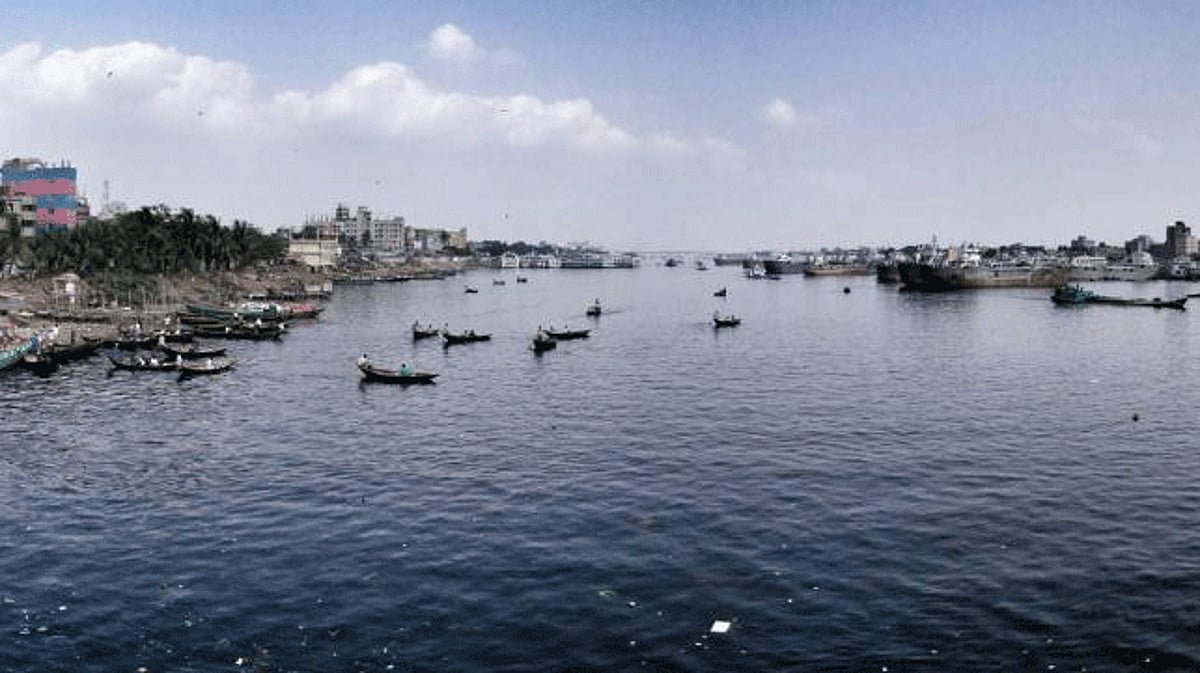
The Buriganga River was once the lifeline of Dhaka, supporting trade, transportation, livelihoods, and culture for centuries. It played a central role in the growth of the city and sustained thousands of families living along its banks. Today, however, the river presents a painful picture of environmental destruction.

What was once a vibrant and life-giving river has become heavily polluted, reflecting the consequences of unplanned urbanization, industrial expansion, poor waste management, and weak environmental governance. The Buriganga is no longer a source of life; it has turned into a source of disease, suffering, and economic loss.

Over the years, successive governments have repeatedly promised to free the Buriganga from pollution and restore it as a healthy river for the people of Dhaka. Various studies, master plans, and cleanup initiatives have been undertaken with support from national and international organizations. Despite these efforts, meaningful progress has remained limited. Weak implementation, lack of coordination among government agencies, corruption, and poor monitoring systems have prevented lasting solutions. As a result, millions of people continue to suffer.

The main causes of pollution are rapid industrialisation and uncontrolled urban growth along the riverbanks. Tanneries, textile dyeing factories, chemical industries, and other industrial units have long discharged untreated waste directly into the river. According to environmental experts, toxic substances such as chromium, lead, and other heavy metals enter the Buriganga every day. Untreated sewage, plastic waste and household garbage from millions of city residents flow into the river, turning it into a dark and toxic waterway.

The environmental consequences are severe. Aquatic biodiversity has declined drastically, and many fish species have disappeared from large parts of the river. In some areas, oxygen levels are so low that aquatic life cannot survive. The Buriganga has effectively become an ecological dead zone. The destruction of the river ecosystem is not only damaging biodiversity but also threatening the environmental balance of Dhaka and surrounding regions.

The human cost is equally alarming. Communities living along the riverbanks are exposed daily to polluted water and toxic air. Many poor families still depend on the river for washing, bathing, and household activities. As a result, the Buriganga has become a breeding ground for diseases. Waterborne illnesses such as diarrhea, cholera, and dysentery are widespread, along with skin diseases and respiratory problems caused by pollution and foul odours.

Children are among the worst victims. Continuous exposure to polluted water threatens their physical growth, weakens their immune systems, and increases their vulnerability to disease. Many children living near the river suffer from recurring infections, malnutrition, and poor health conditions that affect their education and future development. Women also carry a heavy burden because they are mainly responsible for household water management and caregiving. Their regular contact with polluted water during cooking, cleaning, and caregiving increases health risks and limits their ability to contribute economically to their families.

Through strict environmental laws, investment in advanced wastewater treatment systems, and long-term monitoring, the Thames has been transformed into a cleaner river where aquatic life has returned.

The economic impacts of the Buriganga’s degradation are deep and far-reaching. Thousands of fishermen have lost their traditional livelihoods due to the sharp decline in fish populations. River-based transportation, once an important part of Dhaka’s economy, has also suffered greatly. Boat operators, traders, and small businesses dependent on the river have experienced reduced income and growing uncertainty.

1779934059843.webp

Toxic industrial waste pollutes the River Buriganga File Photo

Environmental experts estimate that polluted rivers like the Buriganga cause enormous economic losses every year through increased healthcare costs, lower labor productivity, and the destruction of natural ecosystem services. Property values along the riverbanks have declined significantly, while the potential for tourism, recreation, and urban development has almost disappeared. A river that once contributed to economic growth has become a major environmental and financial burden.

Despite several interventions, including the relocation of tanneries and the establishment of treatment facilities, progress has been slow. Many industries still release untreated waste into the river, while waste management systems remain inadequate. Poor maintenance of infrastructure and weak enforcement of environmental laws continue to undermine restoration efforts.

Global experiences show that polluted rivers can be revived with strong political commitment, proper planning, and public participation. The River Thames in the United Kingdom was once declared biologically dead because of industrial pollution and untreated sewage. Through strict environmental laws, investment in advanced wastewater treatment systems, and long-term monitoring, the Thames has been transformed into a cleaner river where aquatic life has returned.

Similarly, the Cheonggyecheon Stream in South Korea was once buried beneath concrete and heavily polluted by urban waste. The government launched a large-scale restoration project that removed the elevated highway above the stream, restored water flow, and created green public spaces around it. Today, the restored stream has improved urban life, reduced pollution, and boosted tourism and local businesses.

Germany’s restoration of the Rhine River is another successful example. Once badly polluted by industrial waste, the Rhine has been revived through regional cooperation, strong environmental regulations, and modern wastewater treatment systems. Today, the river once again supports biodiversity, transportation, and economic activities.

These international examples raise an important question: Can the Buriganga also be revived? Environmental experts believe the answer is yes, but only through long-term commitment, strict law enforcement, and collective action.

Several important measures could help bring life back to the Buriganga. First, industries must be forced to install and properly operate effluent treatment plants so that untreated toxic waste no longer enters the river. Environmental laws must be strictly enforced without political interference. Second, Dhaka urgently needs modern sewage and waste management systems to prevent household waste and plastic pollution from flowing into the river.

Third, river encroachment must stop. Illegal structures built along the riverbanks should be removed, and green buffer zones should be established to protect the river environment. Fourth, continuous dredging and cleanup programs are necessary to improve water flow and remove accumulated waste and toxic sediments.

Public awareness and civic engagement are also essential. Citizens, civil society organizations, journalists, students, researchers, and environmental activists all have important roles to play. Public pressure can encourage industries and authorities to take environmental responsibilities seriously. Schools, universities, and media organizations can help educate people about the importance of protecting rivers and reducing pollution.

Strong political will is perhaps the most important requirement. River restoration cannot succeed through short-term projects or promises alone. It requires long-term national commitment, transparency, accountability, and cooperation among government agencies, industries, and communities.

The condition of the Buriganga is not only an environmental issue but also a matter of public health, human dignity, and social justice. Access to clean water and a healthy environment is a basic human right. When a river becomes a source of disease and suffering, it reflects a failure to protect these rights.

The story of the Buriganga is both a warning and a call to action. Decades of neglect and pollution have pushed the river toward ecological collapse, and millions of people are paying the price. Yet international examples prove that recovery is possible. Saving the Buriganga means restoring a river and also restoring the health, dignity and economic future of Dhaka. With effective action, strong governance, and public participation, the Buriganga can once again become a source of life rather than a symbol of environmental loss.

* The author is a freelance writer.​
 

Unilever initiative converts polluting plastic wastes to baselines of circular economy
Reported benefits include increased income opportunities, better savings and financial planning practices among participants
FE REPORT

Published :
Jun 05, 2026 01:37
Updated :
Jun 05, 2026 01:48

1780626126048.webp


Plastic waste has emerged as one of Bangladesh's most pressing environmental challenges, particularly in rapidly urbanising cities such as Chattogram and Dhaka. The growing use of single-use plastics, inadequate source segregation and limited recycling infrastructure have increased pressure on urban waste-management systems, contributing to drainage blockages, waterlogging, environmental pollution and public health risks, especially skin diseases on foots.

Unilever Bangladesh Limited (UBL), the country’s leading Fast Moving Consumer Goods (FMCG) Company, in partnership with Chittagong City Corporation (CCC) and Young Power in Social Action (YPSA) launched a citywide plastic-waste-management initiative in 2022. The programme is currently being implemented across all 41 wards in the port city.

Nearly one-fourth of the port city's waste remains uncollected, creating significant environmental and civic challenges, according to CCC estimate.

The initiative aims to strengthen plastic -waste-collection and recycling systems, promote source segregation, improve the livelihoods of waste workers and support Bangladesh's transition towards a “circular economy”.

1780626192810.webp


The initiative has established an extensive plastic -collection and-recovery network covering households, markets and informal waste-collection channels throughout the city.

Key achievements: (1) More than 32,000 tonnes of plastic waste were collected between June 2022 and April 2026. (2) Around 70 per cent of the collected materials consisted of single-use plastics, while the remaining 30 per cent comprised hard plastics (3) Plastic waste is supplied every month to approximately 180 recycling enterprises and recyclers (4) The programme has set a target of collecting 8,000 tonnes of plastic waste during 2026 (5) Financial incentives are being provided for the collection of single-use plastic (6) Storage materials provided to support the collection and preservation of single -use plastics.

The initiative seeks to ensure that a larger share of plastic waste is processed and returned to productive use instead of ending up in landfills, water bodies or urban drainage systems as multi-pronged hazards.

Livelihood development and worker Inclusion are among the boons derived from the bane of plastic piles.

The programme places special emphasis on improving the working conditions and income opportunities of informal waste workers, who play a critical role in the country's recycling value chain.

Capacity building, livelihood improvement and social protection: More than 3,000 waste workers have received training on waste -management practices and occupational health and safety.

1780626233912.webp


Around 220 scrap buyers have been trained on business development, financial management and improved waste -management practices.

More than 2,000 waste collectors have received personal protective equipment (PPE) and safety gear to reduce occupational hazards.

Programme assessments indicate that around 70 per cent of participating workers reported improvements in their livelihoods.

Reported benefits include increased income opportunities, reduced occupational health risks, improved nutritional conditions and better savings and financial planning practices.

Recognising the limited access of waste workers to formal social-protection mechanisms, the initiative introduced group health and insurance coverage in 2025.

A total of 1,827 waste collectors and scrap buyers have been brought under insurance protection.

Benefits: The insurance scheme provides financial support in the event of: Injury: Tk10,000; Disability or loss of limb: Tk150,000, and Death: Tk150,000.

The initiative aims to strengthen the financial resilience of waste workers and their families while recognising the occupational risks associated with waste -collection activities.

Formalisation of the scrap buyer ecosystem: The initiative is also working to strengthen and formalise Chattogram's scrap-buyer network, which serves as a critical link between waste collectors and recycling industries.

Progress achieved shows around 50 per cent of participating scrap buyers now possess valid trade licences.

All participating scrap buyers maintain active bank accounts.

In improved business practices, most participating businesses now maintain registration books, bill vouchers, money receipts, master rolls, and formal business accounts and documentation systems.

1780626283972.webp


These measures are expected to enhance transparency, financial inclusion and long-term sustainability within the recycling value chain.

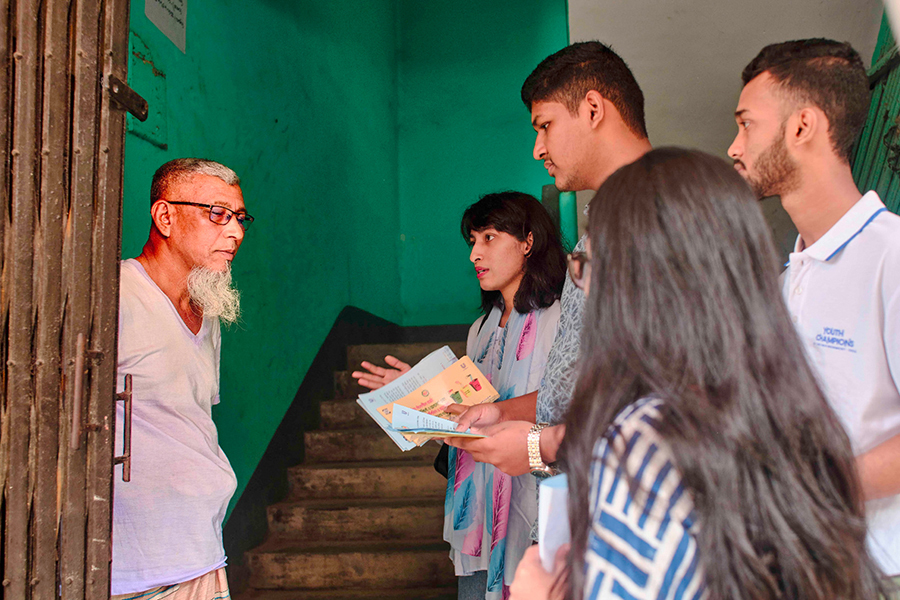
Community awareness and source segregation: Large-scale awareness campaigns have been undertaken to encourage households and institutions to separate waste at source.

Household outreach: Awareness activities have reached more than 25,000 households.

Around 40 percent of participating households currently practise waste segregation.

Outreach activities are planned for an additional 10,000 households during the current year.

Youth and educational engagement: Recognising the importance of behavioural change among younger generations, the initiative has invested significantly in youth engagement and environmental education.

School-based activities: Environmental-awareness programmes have reached more than 10,000 students. Activities have been conducted in around 80 educational institutions.

The programme is scheduled to expand to 41 additional educational institutions during the current year.

The initiative also provides recognition and incentive mechanisms for youth volunteers to encourage long-term participation in environmental activities.

And last, but not the least, is environmental significance of such an undertaking. According to CCC, uncollected waste remains a major contributor to drainage blockages, monsoon waterlogging, environmental pollution and deteriorating urban cleanliness across Chattogram.

By strengthening plastic-recovery systems, promoting source segregation, improving recycling value chains and enhancing collaboration among waste workers, scrap buyers, recyclers and local communities, the initiative seeks to address these challenges and contribute to a cleaner, healthier and more sustainable port city.​
 

PKDefense Forums: Country-by-Country Military Discussions

Log In Register Forums
Latest
Back