 Bangladesh Defense

Saif
Senior Member
- Joined
- Jan 24, 2024
- Messages
- 22,283
- Likes
- 9,869
- Nation

- Axis Group

Awami League’s future rests on past reckoning
Seven major obstacles to comeback
Ahammad Foyez
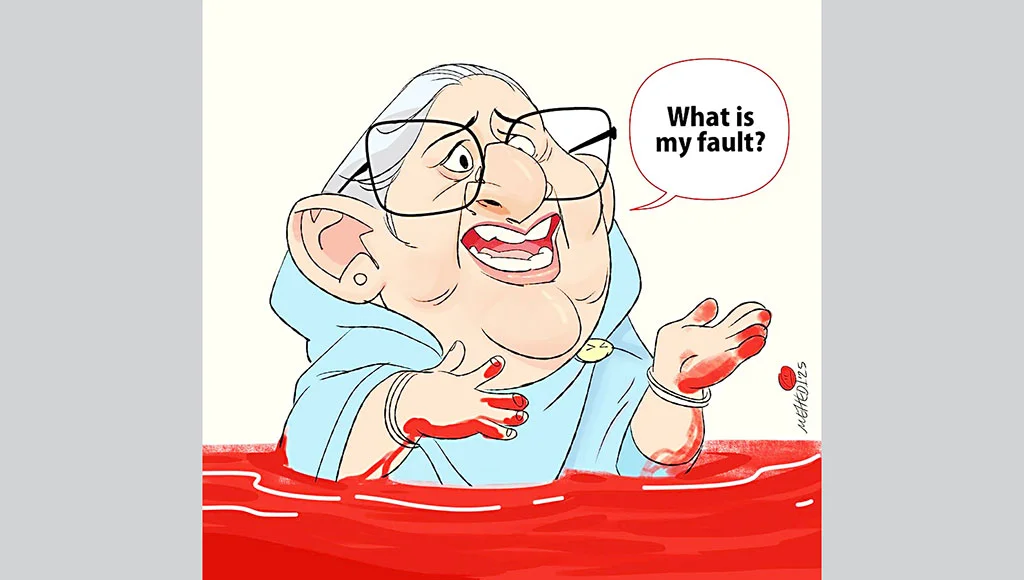
BURDENED by the legacy of the July mass uprising, a lack of introspection regarding past governance, a leadership crisis, ousted former prime minister Sheikh Hasina’s presence on Indian soil, and a government ban on its activities — the Awami League’s political future currently faces a multidimensional crisis.
To discuss the AL’s potential return to Bangladeshi politics, one point must be clarified at the outset: it is impossible to make definitive predictions about any political party’s future. However, by analysing the party’s current state, the legacy of its past rule, its organisational capacity, and the prevailing political and legal realities, one can identify the obstacles lying ahead.
Following the fall of the Sheikh Hasina government during the mass uprising of July–August 2024, the Awami League did not merely lose power; serious questions arose regarding its long-standing political authority, leadership structure and public acceptability. Compounding these issues are the ban on the party’s activities and impending legal proceedings concerning allegations of crimes against humanity.
An investigative report by the Office of the United Nation High Commissioner for Human Rights, published on February 12, 2025, estimated that up to 1,400 people may have been killed between July 1 and August 15, 2024. The report detailed grave human rights violations involving the then-government, security and intelligence agencies, and violent elements affiliated with the AL.
Against this backdrop, there are at least seven major obstacles to the AL’s political comeback.
Loss of power and the departure of top leadership
THE circumstances under which the AL lost power mark a significant turning point in the party’s political history. Hasina’s departure from the country and the pressure exerted on the central leadership have forced the party to confront a new reality regarding its organisational structure and political strategy.
For a party that has long operated with state power at its core, reorganising itself within a new political landscape while out of power is no easy task. This is particularly challenging when nearly the entire central leadership has fled abroad, making it difficult to keep grassroots activists active, rebuild public engagement, and establish the credibility of new leadership. However, a political leader leaving the country or residing abroad does not permanently sideline their party from politics. History offers precedents of exiled or ousted leadership making a political comeback. Yet, the AL lacks the positive political agenda required for such a return, nor does it appear inclined to pursue that path. The question now arises: can the party adapt to the changing political reality without relying on its old organisational structure and leadership?
Limits of AL’s conspiracy narrative on the July uprising
INTERPRETING the July mass uprising is crucial to any discussion regarding the AL’s political future. If the party characterises the movement merely as a conspiracy or the result of foreign instigation, it risks overlooking the underlying political grievances, the lived experience of repression, and the demands for accountability that fuelled the protests.
Explaining the July movement solely through conspiracy theories is also inconsistent with the findings of the UN’s report. The report presents evidence of systematic and widespread violence used to suppress the protests and raises serious questions regarding the policy stance of the then-government.
Of course, allegations of political conspiracy or foreign influence within a movement can be examined based on concrete evidence. However, such allegations cannot be used to deny the domestic causes of the movement, the reality of public discontent, or the state’s use of force.
The deposed prime minister, Sheikh Hasina, was the one who directly ordered the indiscriminate killings. The fact that she authorised the use of lethal weapons against protesters has been proven by both domestic and international forensic analysis. Seeking a conspiracy theory instead of expressing remorse for these actions serves only one purpose: to mislead the public.
This is precisely where the AL faces a major challenge. If the party fails to view the events of July as a reflection of its own political failures, its opportunity to rectify past mistakes will be severely limited. A political comeback requires more than just attempting to discredit the movement; it necessitates addressing the fundamental question of why so many people rose up against the government.
Accountability for past repression and rights violations
OPPOSITION parties, human rights organisations, journalists and civil society have raised numerous allegations regarding the AL’s long tenure in power. These include enforced disappearances, extrajudicial killings, the harassment of political opponents, the curtailment of freedom of expression, and the dismantling of the electoral system.
The events of July and August have added a new dimension to these allegations. The UN’s 2025 report presents serious investigative findings regarding the repressive policies of the then-government and the role of security forces. It also highlights the involvement of violent elements associated with the Awami League.
As a political party, the AL faces questions it cannot evade: Will it engage in self-criticism regarding its past tenure? Will it cooperate with impartial investigations into the allegations? Will it take a stand on ensuring justice for victims? Or will it dismiss all accusations as mere political vendettas?
If the party fails to undertake credible self-criticism and accountability measures concerning its past rule, rebuilding public trust will become even more difficult. Restoring confidence through mere political rhetoric is challenging without tangible evidence of a shift away from the political conduct that sparked these allegations.
A tendency for retribution in political rhetoric
THREATS of retribution or violence against those who participated in the July movement remain evident in the political statements made by AL leaders and activists. This poses a significant obstacle to the party’s efforts to regain political acceptability.
Rhetoric aimed at annihilating political opponents narrows the scope for compromise and democratic coexistence. A crucial lesson from the events of July is that attempting to suppress a movement through state-sanctioned force cannot ensure long-term political legitimacy.
Despite the extensive use of force by security forces prior to the fall of the Hasina administration, the government could not remain in power. The lesson here for the Awami League is that a crisis of public support cannot be resolved through the exercise of political might, threats, or the language of revenge. At the same time, the party’s opponents must also bear in mind that political crimes should be addressed through the legal process, not through retaliatory violence or unlawful persecution.
Leadership centred on Hasina, the succession crisis
HASINA’S long-standing leadership has had a profound impact on the AL’s political structure. Her position is inextricably linked to the party’s leadership, organisational decisions, and political identity. Consequently, how the party’s leadership will function in her absence is a fundamental question.
Who will succeed the 79-year-old party leader, how acceptable that new leadership will be, and how the relationship between the central leadership and the grassroots organisation will be maintained — the answers to these questions could shape the party’s future organisational viability.
In this context, analysing the institutional framework of leadership is more important than speculating about age or personal futures. If a political party becomes overly dependent on a single individual, internal competition and differences of opinion tend to escalate during leadership transitions. The AL faces a significant risk in this regard.
Hasina’s presence in Delhi and Bangladesh-India relations
HASINA’S presence in India has become a crucial factor concerning both the AL’s political future and the broader relationship between Bangladesh and India. In a report published on October 3, 2026, Indian High Commissioner to Bangladesh Dinesh Trivedi stated that legal processes regarding Hasina’s return to Bangladesh were underway, though he did not specify a timeframe for her return.
This statement indicates that the question of Hasina’s return is part of ongoing diplomatic and legal discussions. However, one cannot rule out the possibility that India might be using her as a bargaining chip in its relations with Bangladesh or detaining her for specific political objectives.
Relations between India and Bangladesh should not revolve around a single political leader. Yet, during the AL’s long tenure, India demonstrated a profound lack of diplomatic maturity. They failed to grasp that, in the future, they might need to engage with entities other than the Awami League. India is now paying the price for having ‘put all its eggs in one basket’ regarding Bangladesh. Given the multitude of shared issues — such as trade, energy, border management, water sharing, and regional security — it is only natural that Sheikh Hasina’s status will influence the bilateral relationship.
However, this presents a political challenge for the AL. If the party’s future becomes overly dependent on leadership based abroad — rather than on rebuilding public support and political acceptability within the country — questions could arise regarding its political autonomy.
Ultimately, the primary factors determining the AL’s position in Bangladeshi politics will be the people of Bangladesh, the country’s political institutions, and the prevailing legal realities.
Ban on the AL’s activities and the judicial process
ONE of the most significant realities currently shaping the analysis of the AL’s future is the government-imposed ban on the party’s activities.
On May 12, 2025, the activities of the Awami League — along with its associate, fraternal, and affiliated organisations — were banned by the government. According to the notification, the ban is to remain in effect until the conclusion of the judicial proceedings against the party’s leaders and activists at the International Crimes Tribunal. This ban encompasses a prohibition on holding meetings, rallies, and processions, as well as conducting party activities through various channels, including online platforms.
On June 24, 2026 prime minister’s information and broadcasting adviser Zahed Ur Rahman stated that the AL’s political future would depend on the outcome of the trials concerning crimes against humanity and that the question of banning the party permanently would be determined by the courts.
Two distinct aspects need to be considered here. First, the current ban on the party’s activities directly limits the scope of its political operations. Second, the question of permanently banning the party and determining the criminal liability of specific individuals or leaders is tied to the judicial process.
Consequently, the AL’s political future hinges not merely on public support or leadership; it is also bound by legal hurdles, the progress of judicial proceedings, and future legal rulings. How these obstacles are overcome will depend not only on the party’s own political stance but also on decisions made by the courts and state institutions.
It is impossible to make a definitive prediction regarding the AL’s political comeback. However, the obstacles facing the party cannot be underestimated. Acknowledging the causes and significance of the July mass uprising, addressing serious allegations regarding past governance, cooperating with impartial investigations and judicial processes concerning human rights violations, determining future leadership, and rebuilding public trust within the country — these issues are directly linked to the party’s political future.
The question of the AL’s political comeback is not limited merely to how well-organised the party remains; it is also a test of its past liabilities, its current legal standing, and the nature of the politics it intends to pursue in the future.
For now, the most critical challenge facing the party is not simply returning to active politics but rather gaining the capacity to re-establish a lawful and credible political role within Bangladesh’s transformed political landscape.
Ahammad Foyez is managing editor at New Age.
Seven major obstacles to comeback
Ahammad Foyez
BURDENED by the legacy of the July mass uprising, a lack of introspection regarding past governance, a leadership crisis, ousted former prime minister Sheikh Hasina’s presence on Indian soil, and a government ban on its activities — the Awami League’s political future currently faces a multidimensional crisis.
To discuss the AL’s potential return to Bangladeshi politics, one point must be clarified at the outset: it is impossible to make definitive predictions about any political party’s future. However, by analysing the party’s current state, the legacy of its past rule, its organisational capacity, and the prevailing political and legal realities, one can identify the obstacles lying ahead.
Following the fall of the Sheikh Hasina government during the mass uprising of July–August 2024, the Awami League did not merely lose power; serious questions arose regarding its long-standing political authority, leadership structure and public acceptability. Compounding these issues are the ban on the party’s activities and impending legal proceedings concerning allegations of crimes against humanity.
An investigative report by the Office of the United Nation High Commissioner for Human Rights, published on February 12, 2025, estimated that up to 1,400 people may have been killed between July 1 and August 15, 2024. The report detailed grave human rights violations involving the then-government, security and intelligence agencies, and violent elements affiliated with the AL.
Against this backdrop, there are at least seven major obstacles to the AL’s political comeback.
Loss of power and the departure of top leadership
THE circumstances under which the AL lost power mark a significant turning point in the party’s political history. Hasina’s departure from the country and the pressure exerted on the central leadership have forced the party to confront a new reality regarding its organisational structure and political strategy.
For a party that has long operated with state power at its core, reorganising itself within a new political landscape while out of power is no easy task. This is particularly challenging when nearly the entire central leadership has fled abroad, making it difficult to keep grassroots activists active, rebuild public engagement, and establish the credibility of new leadership. However, a political leader leaving the country or residing abroad does not permanently sideline their party from politics. History offers precedents of exiled or ousted leadership making a political comeback. Yet, the AL lacks the positive political agenda required for such a return, nor does it appear inclined to pursue that path. The question now arises: can the party adapt to the changing political reality without relying on its old organisational structure and leadership?
Limits of AL’s conspiracy narrative on the July uprising
INTERPRETING the July mass uprising is crucial to any discussion regarding the AL’s political future. If the party characterises the movement merely as a conspiracy or the result of foreign instigation, it risks overlooking the underlying political grievances, the lived experience of repression, and the demands for accountability that fuelled the protests.
Explaining the July movement solely through conspiracy theories is also inconsistent with the findings of the UN’s report. The report presents evidence of systematic and widespread violence used to suppress the protests and raises serious questions regarding the policy stance of the then-government.
Of course, allegations of political conspiracy or foreign influence within a movement can be examined based on concrete evidence. However, such allegations cannot be used to deny the domestic causes of the movement, the reality of public discontent, or the state’s use of force.
The deposed prime minister, Sheikh Hasina, was the one who directly ordered the indiscriminate killings. The fact that she authorised the use of lethal weapons against protesters has been proven by both domestic and international forensic analysis. Seeking a conspiracy theory instead of expressing remorse for these actions serves only one purpose: to mislead the public.
This is precisely where the AL faces a major challenge. If the party fails to view the events of July as a reflection of its own political failures, its opportunity to rectify past mistakes will be severely limited. A political comeback requires more than just attempting to discredit the movement; it necessitates addressing the fundamental question of why so many people rose up against the government.
Accountability for past repression and rights violations
OPPOSITION parties, human rights organisations, journalists and civil society have raised numerous allegations regarding the AL’s long tenure in power. These include enforced disappearances, extrajudicial killings, the harassment of political opponents, the curtailment of freedom of expression, and the dismantling of the electoral system.
The events of July and August have added a new dimension to these allegations. The UN’s 2025 report presents serious investigative findings regarding the repressive policies of the then-government and the role of security forces. It also highlights the involvement of violent elements associated with the Awami League.
As a political party, the AL faces questions it cannot evade: Will it engage in self-criticism regarding its past tenure? Will it cooperate with impartial investigations into the allegations? Will it take a stand on ensuring justice for victims? Or will it dismiss all accusations as mere political vendettas?
If the party fails to undertake credible self-criticism and accountability measures concerning its past rule, rebuilding public trust will become even more difficult. Restoring confidence through mere political rhetoric is challenging without tangible evidence of a shift away from the political conduct that sparked these allegations.
A tendency for retribution in political rhetoric
THREATS of retribution or violence against those who participated in the July movement remain evident in the political statements made by AL leaders and activists. This poses a significant obstacle to the party’s efforts to regain political acceptability.
Rhetoric aimed at annihilating political opponents narrows the scope for compromise and democratic coexistence. A crucial lesson from the events of July is that attempting to suppress a movement through state-sanctioned force cannot ensure long-term political legitimacy.
Despite the extensive use of force by security forces prior to the fall of the Hasina administration, the government could not remain in power. The lesson here for the Awami League is that a crisis of public support cannot be resolved through the exercise of political might, threats, or the language of revenge. At the same time, the party’s opponents must also bear in mind that political crimes should be addressed through the legal process, not through retaliatory violence or unlawful persecution.
Leadership centred on Hasina, the succession crisis
HASINA’S long-standing leadership has had a profound impact on the AL’s political structure. Her position is inextricably linked to the party’s leadership, organisational decisions, and political identity. Consequently, how the party’s leadership will function in her absence is a fundamental question.
Who will succeed the 79-year-old party leader, how acceptable that new leadership will be, and how the relationship between the central leadership and the grassroots organisation will be maintained — the answers to these questions could shape the party’s future organisational viability.
In this context, analysing the institutional framework of leadership is more important than speculating about age or personal futures. If a political party becomes overly dependent on a single individual, internal competition and differences of opinion tend to escalate during leadership transitions. The AL faces a significant risk in this regard.
Hasina’s presence in Delhi and Bangladesh-India relations
HASINA’S presence in India has become a crucial factor concerning both the AL’s political future and the broader relationship between Bangladesh and India. In a report published on October 3, 2026, Indian High Commissioner to Bangladesh Dinesh Trivedi stated that legal processes regarding Hasina’s return to Bangladesh were underway, though he did not specify a timeframe for her return.
This statement indicates that the question of Hasina’s return is part of ongoing diplomatic and legal discussions. However, one cannot rule out the possibility that India might be using her as a bargaining chip in its relations with Bangladesh or detaining her for specific political objectives.
Relations between India and Bangladesh should not revolve around a single political leader. Yet, during the AL’s long tenure, India demonstrated a profound lack of diplomatic maturity. They failed to grasp that, in the future, they might need to engage with entities other than the Awami League. India is now paying the price for having ‘put all its eggs in one basket’ regarding Bangladesh. Given the multitude of shared issues — such as trade, energy, border management, water sharing, and regional security — it is only natural that Sheikh Hasina’s status will influence the bilateral relationship.
However, this presents a political challenge for the AL. If the party’s future becomes overly dependent on leadership based abroad — rather than on rebuilding public support and political acceptability within the country — questions could arise regarding its political autonomy.
Ultimately, the primary factors determining the AL’s position in Bangladeshi politics will be the people of Bangladesh, the country’s political institutions, and the prevailing legal realities.
Ban on the AL’s activities and the judicial process
ONE of the most significant realities currently shaping the analysis of the AL’s future is the government-imposed ban on the party’s activities.
On May 12, 2025, the activities of the Awami League — along with its associate, fraternal, and affiliated organisations — were banned by the government. According to the notification, the ban is to remain in effect until the conclusion of the judicial proceedings against the party’s leaders and activists at the International Crimes Tribunal. This ban encompasses a prohibition on holding meetings, rallies, and processions, as well as conducting party activities through various channels, including online platforms.
On June 24, 2026 prime minister’s information and broadcasting adviser Zahed Ur Rahman stated that the AL’s political future would depend on the outcome of the trials concerning crimes against humanity and that the question of banning the party permanently would be determined by the courts.
Two distinct aspects need to be considered here. First, the current ban on the party’s activities directly limits the scope of its political operations. Second, the question of permanently banning the party and determining the criminal liability of specific individuals or leaders is tied to the judicial process.
Consequently, the AL’s political future hinges not merely on public support or leadership; it is also bound by legal hurdles, the progress of judicial proceedings, and future legal rulings. How these obstacles are overcome will depend not only on the party’s own political stance but also on decisions made by the courts and state institutions.
It is impossible to make a definitive prediction regarding the AL’s political comeback. However, the obstacles facing the party cannot be underestimated. Acknowledging the causes and significance of the July mass uprising, addressing serious allegations regarding past governance, cooperating with impartial investigations and judicial processes concerning human rights violations, determining future leadership, and rebuilding public trust within the country — these issues are directly linked to the party’s political future.
The question of the AL’s political comeback is not limited merely to how well-organised the party remains; it is also a test of its past liabilities, its current legal standing, and the nature of the politics it intends to pursue in the future.
For now, the most critical challenge facing the party is not simply returning to active politics but rather gaining the capacity to re-establish a lawful and credible political role within Bangladesh’s transformed political landscape.
Ahammad Foyez is managing editor at New Age.
