☕ Support Us
[🇧🇩] - Save the Rivers/Forests/Hills-----Save the Environment | Page 10 | PKDefense

[🇧🇩] Save the Rivers/Forests/Hills-----Save the Environment

Reply (Scroll)
Press space to scroll through posts
G Bangladesh Defense
[🇧🇩] Save the Rivers/Forests/Hills-----Save the Environment
493
12K
More threads by Saif


Factoring climate change in economic planning
Asjadul Kibria
Published :
Aug 31, 2024 23:18
Updated :
Aug 31, 2024 23:18

1725150827658.png


"Despite some uncertainty around its magnitude, climate change clearly dampens output levels in Asia and the Pacific through channels such as loss of physical capital, people's health conditions and productivity."

The Asia-Pacific Quarterly Economic Update, prepared and published by the United Nations Economic and Social Commission for Asia and the Pacific (ESCAP), made the statement in the highlights of the publication released in the third week of last month. As the report provided a brief note on climate change and economic output, the above-mentioned text summarises the note.

The ESCAP paper mentioned that Asia and the Pacific are facing various manifestations of climate change, such as higher surface temperatures, delayed monsoons, droughts, and intense flooding. The current devastating flood in Bangladesh is an example in this connection. It also added that climate change affects economic outcomes through diverse channels in this region, which is the most disaster-prone region in the world.

The natural disasters have affected millions of people's physical capital or health conditions in the region. For instance, increased water scarcity and heat reduce agricultural productivity and aggravate food insecurity. Heat also reduces labour productivity and increases the spread of diseases such as dengue. The broader effect of climate change is reflected in climate-induced migration and conflict disrupting economic activities in different countries. Various climate mitigation and adaptation policies also have economic implications, it further pointed out. So, what is the economic cost of climate change in the region?

ESCAP paper provided the cost estimate in various scenarios. For example, the average annual losses in gross domestic product (GDP) due to climate hazards could amount to $980 billion per year in a 2°C warming scenario in Asia and the Pacific. Also, under a high carbon emissions scenario, climate change could lead to a GDP loss of 24 per cent in developing Asia by 2100.

Though the estimates do not claim that these will happen ultimately, there is no doubt that there is no way to avoid the negative impact of climate change. "There is broad agreement that the output impact is negative, that there is a high chance of negative surprises (e.g. more extreme weather events than anticipated), and that poorer countries are more vulnerable to the adverse impacts of climate change," said the quarterly report of the ESCAP. It also cautioned that the lack of consensus on the precise output impacts of climate change 'should not deter governments from actively pursuing national climate goals.'

The ESCAP's brief note on climate change and economic output is relevant for Bangladesh when the eastern part of the country is submerged heavily due to flash floods. Many in the country squarely blamed India for releasing water from the Dumbur dam over Gumti River in neighbouring Tripura state with no warning. India, however, denied that the dam release was deliberate and said excessive rain was a factor - although it conceded that a power outage and communications breakdown meant they failed to issue the usual warning to neighbours downstream. Though India can't avoid its responsibility for not providing warnings in time, the weak forecast system in the local Met Offices is also somewhat responsible.

One also needs to remember that three-fourths of Bangladesh is floodplain, and managing the water flow of any transboundary river is challenging. It is true that Bangladesh and India share 54 common transboundary rivers, but Bangladesh is in a more difficult position for being a lower riparian country. India is an upper riparian country that essentially controls the river flows and is not always cooperative in sharing the water. The joint-river commission is also not adequately functional, and India's indifference to Bangladesh's legitimate demand for balanced management of these rivers is well known. It does not mean that India is responsible for the current flood or any other flood, for that matter, in Bangladesh. The misinformation and disinformation on the social media alleging an 'Indian conspiracy' to 'punish Bangladesh' by opening a dam are nothing but irresponsible comments and not helpful in addressing the problem.

In fact, flood management requires both domestic capacity and international cooperation. Bangladesh and India need to work mutually, especially when the negative impact of climate change is widening. Both countries need to continue their efforts in data collection and data sharing on a regular basis. Otherwise, it will be difficult to manage floods and contain losses and damage.

The current flood in Bangladesh is a big blow to the already troubled economy mismanaged by the authoritarian Hasina regime during the last one and a half decades. Preliminary estimation showed that the country's fisheries and livestock sectors incurred an estimated loss of over Tk 20 billion due to current floods. The actual loss will be greater, and the overall economic damage is yet to be estimated. The 2022 floods in Pakistan caused damage equivalent to 4.8 per cent of the country's gross domestic product (GDP) as it was one of the most devastating ones in the world that year. Hopefully, Bangladesh will not suffer to that extent, and the damage will be much less compared to Pakistan.

Economic output is widely linked with climate change today, and there is no way to avoid the impact of natural disasters originating from climate vulnerability on the economy. One way to reduce the negative impact is to shield vulnerable people with climate risk insurance to some extent. Another way is to manage natural disasters like floods and cyclones better. Above all, the current flood reminds us that Bangladesh must redesign its climate policy and realign its economic policy.​
 

UNDP and French delegations meet Environment Advisor Rizwana Hasan
UNB
Published :
Sep 01, 2024 20:42
Updated :
Sep 01, 2024 20:42

1725235909766.png


A high-level delegation from the United Nations Development Programme (UNDP), led by Resident Representative Stefan Liller, met with Syeda Rizwana Hasan, the Environment, Forest, and Climate Change, and Water Resources Advisor, at the secretariat on Sunday.

The discussions covered a range of critical environmental and climate change issues facing Bangladesh.

The topics included enhancing collaboration between the Government of Bangladesh and UNDP on sustainable environmental management, climate resilience, climate change adaptation, ecosystem-based management in Ecologically Critical Areas (ECAs), community-based management in haor regions, sustainable energy, low-carbon urban development, climate-resilient livelihoods, sustainable land management to combat climate change vulnerability, and the reduction of hazardous chemicals.

During the meeting, advisor Syeda Rizwana Hasan highlighted the importance of continued partnership and innovative solutions to address the environmental challenges in Bangladesh.

She stressed the need to explore new opportunities for collaboration and strengthen ongoing initiatives aimed at protecting the environment and promoting sustainable development in the country.

Resident Representative Liller reaffirmed UNDP’s commitment to supporting Bangladesh in achieving its Sustainable Development Goals (SDGs), particularly in combating climate change and preserving natural resources.

Earlier, a French delegation led by the French Ambassador to Bangladesh, Marie Masdupuy, also met with Syeda Rizwana Hasan and discussed various issues including forest protection, transboundary air pollution, river pollution, ecosystem preservation, industrial pollution, and the protection of hill ecosystems, including the Sundarbans, Sal forests, and the Chittagong Hill Tracts (CHT).

The meeting also addressed the urgent enforcement of a polythene shopping bag ban, climate action collaboration, National Adaptation Plan (NAP) implementation, coastal afforestation, and the Adaptation Pact.​
 

‘Won’t tolerate river pollution’

1725688328799.png

Syeda Rizwana Hasan. File photo

Environment, Forest, and Climate Change Adviser Syeda Rizwana Hasan discussed with The Daily Star's Pinaki Roy how the interim government is going to stop businesses from polluting the rivers of Bangladesh.

Environment, Forest, and Climate Change Adviser Syeda Rizwana Hasan has issued a stern warning against the pollution of rivers by businesses.

"This generation who waged the Anti-Discrimination Student Movement never saw any pollution-free rivers in Bangladesh. I want to show it to them," Rizwana said

In an interview with The Daily Star, Rizwana, also in charge of the water resources ministry, said the interim government is preparing a list of rivers that have been heavily polluted by industrial waste.

"We will not tolerate pollution of any river by any business to increase profits," she remarked. The adviser also mentioned that rivers belong to people.

Bangladesh has many rivers, and the government must protect them all. But it is also true that this government would not be able to work for all at the same time, said Rizwana, known for her work as an environmental activist.

"We have to set examples and so, we're thinking if we can free one river in each of the eight divisions from pollution and encroachment.

"Whoever works on the issue in future can follow the model. But it doesn't mean we're neglecting other rivers," she said.

The adviser mentioned that the High Court had earlier ordered the authorities concerned to evict 66,000 grabbers.

"We're asking eight divisional commissioners to submit their plans on freeing all those rivers from encroachment."

Asked how the government is going to clean the Buriganga, one of the most polluted rivers in the world, she said, "It's very challenging to make this river pollution-free. I said it earlier as well. It will take a long time to make the river water free from chromium. But we can start the process."

Apart from the Buriganga, many rivers like the Labandaha in Gazipur, the Sutang in Habiganj, and the Hari-dhoya in Narsingdi, are polluted by industrial waste.

To free these rivers from pollution, Rizwana said, they will identify the factories responsible for it and engage locals to protect the rivers.

"I think this is going to be easier for us because there are young generations in all districts who can engage in the process."

If the government officially authorises the organisations that work voluntarily to save rivers, they will feel empowered and show interest in working on the issue, said the adviser.

So, involving the local community in protecting rivers, like giving responsibility to a group to monitor two kilometres of a certain river, and engaging students in this process will be part of the plan to save rivers, said Rizwana.

She also instructed the Department of Environment to conduct drives against the factories responsible for pollution.

Rizwana said owners of many industries make excuses for not operating effluent treatment plants (ETPs) even if they have ETPs. Sometimes, they run the ETPs the whole day but release polluted water into rivers at night.

"We need some suggestions on how to monitor and stop these ill attempts. I don't think it is impossible to detect and stop them," the adviser said and suggested using separate meters for biological ETPs to detect pollution.

For example, she said it cannot be confirmed without tests whether the Hari-dhoya River in Narsingdi is being polluted as industries are far from the riverbanks.

If the government can provide a meter, it will be possible to find out easily if the ETPs are functional in a particular period.

Rizwana encouraged good businesspersons to lead the next generation by example in refraining from releasing industrial waste into rivers. "We will welcome them in our initiative."

She said her ministry would sit with the industries ministry to discuss the issue of the Central Effluent Treatment Plant (CETP) not functioning properly at Savar Tannery Industrial Estate.

The adviser said she has been vocal from the very beginning that the Bangladesh Small and Cottage Industries Corporation is not the proper authority to monitor the CETP.

"We have to form an expert committee who will work to make the CETP functional," she said, emphasising cooperation between the two ministries.

About blackwater pollution of the rivers, Rizwana said the DoE made a list in 2017 that shows most of the rivers were polluted by sewage. "We cannot stop blackwater pollution within a very short period this government would get. Maybe we'll be able to prepare a plan."

Asked about the priorities and challenges of her work, the environment adviser said this government, unlike an elected administration, would get a short time to address many big environmental issues.

Another big challenge will be to turn the environmental administration to a people-oriented one. "It never took people's views before taking any development project."​
 

Hope for our rivers
Environment adviser’s words must be turned into action

1725839173005.png


We are heartened by the resolute stance of Syeda Rizwana Hasan, the interim government's environment adviser, to take action against businesses that continue to pollute our rivers. The adviser has realistically stated that, given the limited time available, the interim government will begin by clearing one river in each division of the country. She has particularly emphasised holding polluting businesses accountable, especially those that are not operating their effluent treatment plants (ETPs) despite having them.

We think that involving the community, especially the local youth, in this process can make a significant difference. Authorising organisations already working on river conservation will ensure greater stakeholder participation, which is an effective strategy. Installing metres to monitor whether ETPs are operational would encourage businesses to be more diligent in their environmental responsibilities.

In the past, despite the High Court giving clear directives to the government to evict river encroachers, precious little has been done to free them. It is not just rivers but other water bodies such as canals around the cities that have either been grabbed or polluted by indiscriminate household garbage and industrial waste. This daily has published endless reports, editorials and opinion pieces on river grabbing and river pollution, but to no avail.

What is worse is that, despite lists of river grabbers and polluters being complied, the former government has not taken action. In many cases, the culprits have been government bodies that have encroached upon river land and built structures, while others have also exploited their connections to the political elite for the same end. For instance, the Buriganga has been rendered nearly lifeless due to relentless pollution from industrial waste, plastic waste, medical waste and sewage.

Although tanneries of Hazaribagh have been transferred to Savar in a bid to reduce pollution in the Buriganga, many continue to pollute another river, the Dhaleswari, by dumping untreated industrial wastewater. This is because the Central Effluent Treatment Plant (CETP) is not functioning properly, and nothing has been done so far to address this issue. The interim government, therefore, has a challenging task ahead with limited time. Empowering the National River Conservation Commission, which has been weakened due to political interference, could be a first step. Additionally, it must also ensure that ETPs in all polluting industries are properly installed and being operated.

We sincerely hope that the interim government will be committed to freeing as many rivers as possible and establish a model that subsequent governments can follow.​
 

Wider reform key to ending plastic menace
Expand the scope of plastic ban, ensure enforcement

1726017041572.png

VISUAL: STAR

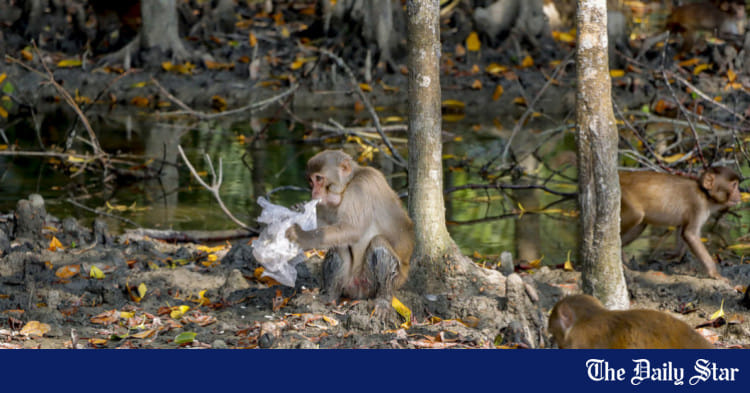
We appreciate the environment adviser's directive to ban the use of polythene and polypropylene bags in all superstores across Bangladesh. This, we hope, will be the first of many long-needed measures to rein in plastic pollution in the country. At present, chain superstores offer free bags, made from polypropylene, for customers to pack their groceries, although thin polythene and plastic bags were banned in 2002. According to the latest directive, instead of these bags, superstores will have to make jute or cloth bags available for purchase starting from October 1.

Although the order targets a small portion of commercial plastic usage in the country, smaller steps taken in phases might actually be more effective than issuing blanket bans that lose steam over time, as previously seen. The key here is enforcement, so the administration must ensure compliance from market managers and customers. It also must ensure that low-cost alternatives are easily accessible to wean customers off their dependence on plastics. Previous attempts to encourage jute bag usage have largely failed for supply shortages and lack of proper marketing. That said, the government should also consider schemes to promote research on and commercial production of eco-friendly alternatives like Sonali bags.

At the same time, campaigns can be launched to create awareness about the health and environmental hazards of plastics, encouraging customers and entrepreneurs to adopt the 3Rs—reduce, reuse and recycle—of waste management. Another area that requires awareness is proper disposal of plastics. Plastic litter is not only impacting our ecosystem, polluting waterbodies, or harming aquatic lives; it is also clogging sewers, drains, and canals and thus contributing to waterlogging in urban areas. While we understand that completely phasing out plastics may not be possible, reducing its usage and ensuring proper disposal are certainly doable.

In the long run, we hope that the environment adviser, having long fought for environmental causes herself, will be able to bring some much-needed reforms in the sector. Once the plastic ban in superstores takes effect, the authorities should gradually expand the scope of the ban by targeting various related industries including restaurants and packaging as well as all governmental and non-governmental institutions. They should also clamp down on polythene production and restrict the import of plastic products.​
 

Preserving our future by saving our forests

1726017180533.png

If forests and wildlife habitats are to exist, necessary legal power needs to be given to stop encroachment and protect them. FILE PHOTO: REUTERS

With the recent fall of an authoritarian regime and an interim government in place, the expectations and demands of people in Bangladesh are skyrocketing, and there is a desire to take full advantage of new opportunities and possibilities. In a similar vein, conservationists and natural resource management professionals expect the management of forests and other resources to be more effective now, protecting the long-term interests of the country and its population.

Previous regimes were more concerned about success stories in all sectors, with fabricated success carefully covering unattended challenges. Political interference was widespread in institutional decision-making, leading to wastage of public resources, ignorance of expert opinions, and forsaking of participation and stakeholder consultation. Against this backdrop, the Forest Department and other related agencies gradually drifted far from their due course.

The interim government may weigh on several issues that I believe are crucial for transforming the public forest management system into a more transparent and accountable one.

One such issue is data tampering and the misrepresentation of facts. It has been customary, over the past decade, to present exaggerated scenarios in terms of achievement. For instance, the data regarding national forest cover, which was shown to be around 12.6 percent, while it is in reality around 8.6 percent. These has immense bearing on our national forest coverage targets, and the targets against the relevant SDGs, policy, plans, and strategies, as the distorted data places us on an impractical trajectory.

Therefore, the scholarly demand is to correct the course through updating Bangladesh's actual forest cover data, and reconsider various national targets accordingly.

Most of the forest and relevant laws in practice are from the British regime, and devoid of any consideration of the people. Moreover, parts of the reserved forests are declared as Protected Areas to fulfil international obligations, which further limits accessibility and the rights of the people. It has never been a practice of the Forest Department to arrange public consultation while declaring public forests as Protected Areas. At present, 52 percent of the Sundarbans forest (including the waterways) has been declared as Protected Areas with harsher usage regulations. This often makes the lives of forest-dependent locals miserable, and ultimately results in exacerbated illegal practices.

The rights of local communities should be ensured by revising the boundaries of declared Protected Areas and subsequent declarations. Alongside the Protected Areas management plan, a mandatory management requirement for each Protected Area should be prepared for real action to fill the missing gaps.

Another area of concern is the Chittagong Hill Tracts (CHT), an underutilised hidden gem for forest restoration and carbon conservation. Despite the widespread deforestation (522,158 ha) and forest degradation (146,210 ha) in the CHT region, efforts are not being taken to restore it at scale because of the conflicting land management responsibilities of the various departments. Some part of the CHT forest land is managed by the Forest Department, termed as reserved forests, while most of it is under the management of the deputy commissioners representing the land ministry, often termed as unclassified state forests. The latter has no mandate to prevent forest degradation or restoration; therefore, the lands are undergoing further degradation due to massive expansion of agriculture and horticultural crops. The Forest Department, on the other hand, has no functional ties or programmes under the administrative structures created in light of the 1997 CHT Accord.

However, appropriate community-based forest conservation programmes could increase forest cover by eliminating conflicting land uses and create further opportunities to foster employment in the hills, generate timber and non-timber products, secure livelihoods and thus reduce landslide, soil erosion and siltation, improve watersheds, regulate local climate, and achieve both national REDD+ and Nationally Determined Contribution (NDC) targets. Furthermore, it is possible to earn a considerable amount of foreign currencies from the voluntary or regulatory carbon markets through emission reduction by carbon conservation in the forests.

Unfortunately in the forestry sector, we see exclusionary, vested interest-led and often politically biased, inefficient and even unnecessarily planned and implemented development programmes. Some salient examples include the installation of non-profitable and useless ropeway in the name of Sheikh Russel Aviary and Ecopark in Rangunia, the establishment of a safari park at Lathitila forest and numerous ecoparks. Some of these initiatives have caused irreparable harm to forests and wildlife and enabled embezzlement and wastage of public money.

To ensure resourceful forest conservation activities, the Forest Department has drafted a forest policy and a forestry master plan using huge debt investment; it has been awaiting approval for eight years. These forest policy and forestry master plan should be discussed, approved and implemented immediately before these become obsolete.

Even more concerningly, the Forest Department does not have the capacity to prevent encroachment. Even though enormous lands—104,000 hectares—have already been encroached, the field-level staff are still putting their life at risk to prevent encroachment and hill-cutting, resulting in physical assaults and even death of forest personnel in the recent past.

Shockingly, the Government and Local Authority Lands and Buildings (Recovery of Possession) Ordinance, 1970 currently in use did not retain the legal power of divisional forest officers for eviction, which was in the earlier ordinance. After sending the list to the deputy commissioners, the Forest Department must wait for the eviction orders and the appointment of magistrates. By the time all approvals are obtained, the forest is already encroached upon and destroyed. Actions for evictions, if ever, are taken from the office of the deputy commissioner. However, these are often purely populist, bowing down to the wishes of political leadership.

If forests and wildlife habitats are to exist, necessary legal power needs to be given to stop encroachment and protect them. The misuse of forests cannot go on any further. People should stand up for forests, for only then will forests survive—and so will people.

Rakibul Hasan Mukul is deputy chief conservator of forests at the Forest Department (lien), executive director at Arannayk Foundation, and organising secretary at the Institution of Foresters Bangladesh (IFB).​
 

Polybag use: Enforcement of ban needed
Published :
Sep 11, 2024 22:20
Updated :
Sep 11, 2024 22:20

1726110108554.png


The news that use of polythene bags are going to be banned at the country's superstores carries no meaning. First, most superstores do not allow the material's use; second, and more importantly, the 2002 ban on polythene imposed under the 1995 Bangladesh Environment Conservation Act, first of its kind in the world, is still in force---it was never scrapped. So, there is no way of banning something that is already banned. It is the enforcement of the law that should be the real issue. Here it is selective enforcement understandably to study it as a test case with the purpose of gradually moving towards complete enforcement all across the country. Superstores avoid using polythene but they also have to use much thicker poly bags for certain items such as fish and meat from which blood oozes out. The law has some concessional provisions for plastic bags. Bags or plastic graded as polyethylene terephthalate (PETE or PET) is safe for use and environment.

Clearly, the debate hinges not on fresh ban on polythene and plastic but on enforcement of the legal provisions. Focusing on superstores which rarely use the poly bags randomly used in groceries and kitchen markets may be convenient but it will hardly make a dent in the colossal problem. Production facilities must be dismantled. After the ban slapped in 2002, polythene bags nearly disappeared from the market and for the first six months people changed their habit in favour of carrying gunny, paper and fabric bags for shopping. Why polythene staged a comeback is the result of lax monitoring and a lack of alternative to the easiest, cheapest and most convenient but highly harmful type now posing a serious threat to the country's environment and by extension its future. It takes as long as 200-400 years for degradation of polythene and plastic materials. In fact, both land and seas of this planet are under severe threat of plastic pollution.

That the adviser in charge of the ministry of environment, forest and climate change has been holding meeting with the stakeholders to know about the preparation for the alternative to poly bags is appreciable. The approach to the problem before enforcement of the law can be replicated when the area gets expanded from superstores to groceries and kitchen markets in the large cities and then all across the country. Reportedly, Dhaka alone uses 4.0 million polythene bags daily. This is mind-boggling and has to be stopped as soon as possible.

The important thing is to go about the task of making polythene bags a thing of the past. No doubt, the first thing ought to be to set a deadline and make effective arrangement for the alternative to such bags. The country's jute mills, mostly incurring losses, can be given a new lease of life if those are assigned to produce the required number of bags of finer quality. But the best alternative would be sonali bag made from jute cellulose invented by scientist Mobarak Ahmed Khan. Currently, the state-owned Latif Bawani Jute Mills produces only 15,000 sonali bags a day. The bag compares better with its polythene counterpart and is biodegradable, environmentally friendly and recyclable. But it is far costlier. Further research and experiment may make cellulose separation cheaper. If mills of higher capacity can be developed, mass production and use of the bag will definitely bring down the cost. Machines of greater capacity can be developed in collaboration with industrial partners abroad.​
 

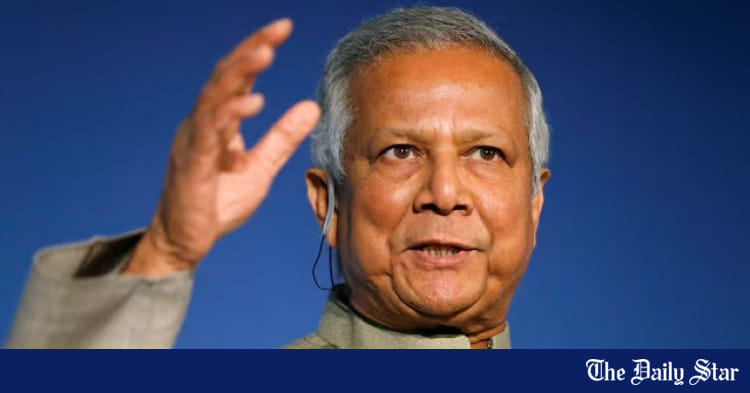
Prof Yunus should take the climate fight to UNGA

1726443603330.png

Prof Yunus has the global credibility to lead on this issue and can share his vision of Bangladesh becoming a climate-conscious country. PHOTO: REUTERS

As world leaders gather at the United Nations General Assembly (UNGA) this September, Bangladesh faces a unique opportunity to push its climate agenda. Prof Muhammad Yunus, the interim government's chief adviser, will head a small delegation of seven members. The responsibility will primarily rest on him to advocate for Bangladesh and other vulnerable nations of the Global South, a role he is well-prepared for given his global stature. Having put Bangladesh on the map through his pioneering work in microfinance, Prof Yunus is now in a position to elevate the country's voice in the climate crisis that affects countries like Bangladesh most acutely, despite being least responsible for it.

In his meetings, Prof Yunus must make the case for greater accountability from wealthier nations, which have historically been the largest contributors to the climate crisis. These nations bear the greatest responsibility for supporting countries like Bangladesh already experiencing the worst impacts. Despite the urgency for adaptation and recovery across the Global South, financial commitments from the Global North remain inadequate and slow to materialise. If this imbalance continues, vulnerable countries will face even greater devastation, further deepening inequalities and exacerbating the climate emergency.

Prof Yunus should highlight the alarming situation we face. Throughout its 4.5 billion-year history, Earth has undergone five mass extinction events, each causing devastating losses. The fourth event, 225 million years ago, wiped out 90 percent of all species, while the most recent, 65 million years ago, eliminated half of Earth's species. Though humans have existed for only 300,000 years, they are now pushing the planet toward a sixth mass extinction event through their activity. Modern civilization, which has flourished for the past 10,000 years under stable and predictable climate conditions, is now facing unprecedented disruption. Rising greenhouse gas levels are dismantling the very systems that have sustained humanity, threatening food security and livelihoods, especially in vulnerable nations like Bangladesh.

Since the Industrial Revolution, atmospheric CO2 levels have surged from a stable 200-300 parts per million (ppm) to over 420 ppm today. Including methane and other gases, the total exceeds 500 ppm, levels humanity has never encountered before. The consequences are already clear.

For Bangladesh, where millions depend on agriculture, the stakes are high. Erratic weather patterns driven by rising global temperatures are causing floods, droughts, and extreme weather events, putting food security at risk. With a large population reliant on subsistence farming, Bangladesh is a compelling example of how climate change directly threatens livelihoods, while global action remains slow.

Reducing carbon emissions to net zero by mid-century, as outlined in the Paris Agreement, is essential, but insufficient. Over a trillion tonnes of excess CO2, already in the atmosphere, will persist for centuries. Even if we fully stopped emissions today, which is unlikely, the damage from accumulated greenhouse gases would continue to worsen. To address this challenge, a two-pronged global approach is necessary: significantly reducing the current annual emissions of 50 billion tonnes and removing the excess one trillion tonnes present in the atmosphere.

For countries like Bangladesh, waiting for long-term solutions is not an option. Immediate action is important, particularly through mechanisms like the Loss and Damage Fund, a landmark achievement of COP27 in Sharm El Sheikh. However, despite this breakthrough, operationalising the fund has been frustratingly slow. Recent board meetings have failed to deliver the financial support vulnerable nations need to recover from climate disasters. This delay is further compounded by the failure of developed countries to meet their commitment to jointly mobilise $100 billion per year by 2020. Wealthy nations and multilateral development banks must urgently step up and fulfil these promises, providing the climate finance necessary to support countries already grappling with extreme weather and rising sea levels.

Prof Yunus has the global credibility to lead on this issue. In his meetings, he can share his vision of Bangladesh becoming a climate-conscious country. He can talk about exploring education reform to integrate climate science and leadership development into the national curriculum to ensure that future generations have an understanding of climate change and the leadership skills to drive meaningful social change. These reforms align with Prof Yunus's broader vision of achieving "Three Zeros," which are zero poverty, zero unemployment, and zero net carbon emissions.

Through my work at the Global Youth Leadership Center, I have seen first hand how empowering young people with climate education and leadership skills can create ripple effects in their communities. In countries across the Global South, where climate impacts are already being felt, young people are stepping up to address local challenges. But while local actions are inspiring, they are not enough to tackle the global scale of the problem. Without substantial financial and technical support from the Global North, the most vulnerable countries will continue to suffer the worst consequences of climate change.

As Prof Yunus heads to UNGA, he must remind the world that Bangladesh, like many other vulnerable countries, is on the frontline of a crisis it did not cause. The larger share of responsibility falls on those who have contributed the most to this problem. To avoid catastrophic consequences, the world must take immediate action. Bangladesh can lead the way, but we cannot fight this battle alone.

Ejaj Ahmad is the founder and CEO of the Global Youth Leadership Center and the founder and executive chairperson of the Bangladesh Youth Leadership Center.​
 

To reform Bangladesh's environment sector, focus on biodiversity conservation
1726617641133.png

The environment sector currently has three major concerns: biodiversity, climate change, and pollution. FILE PHOTO: HABIBUR RAHMAN/STAR

While Bangladesh is currently overwhelmed with reforming different sectors, including public administration, banking, education, law enforcement, and judicial systems, we are not hearing much about reforming the environment sector. This is a bit odd, since we have several environment champions as the advisors of the current interim government. There might be two reasons for that: either environment is not a priority at the moment, or environment sector doesn't need any reforming.

I believe the first point falls short since environment is one of three pillars of sustainable development, while society and economy are the other two. Therefore, failing to prioritise the environment can't be an option. Nevertheless, the environment sector currently has three major concerns: biodiversity, climate change, and pollution. Given the extremely desperate situations we are in now to fight these challenges, reforming our environmental institutions, policies, laws, and practices are crucial.

First, we need to reorient our mindset. A country having 50 percent area as wetlands and 40 percent people living in cities and towns, we must let go of the idea that increasing the percentage of forest is the main measure of biodiversity conservation. When we talk about conservation and ecosystems, we should include our natural and man-made waterbodies, green and planted areas on fallow land, arable land (having agroforestry), roadsides, rural homesteads, roof-tops, and industrial spaces in the biodiversity estimates.

Second, over the last few decades, we have lost many wetlands to urbanisation. From 1990 to 2020, Dhaka alone lost about 70 percent of its waterbodies. It may sound utopian to evict millions of people from young urban areas and re-water the lost wetlands. But it is not practical at all technologically, financially, legally, or ethically. However, we can legally bind city corporations, municipalities, real estate developers, and housing societies to make those settlements "nature hubs" by restoring old or creating new water-ways, and increasing green spaces by waterbodies, on open land, and on concrete structures, for example. Legally, we need to ensure no more urban wetlands are killed. Furthermore, we shouldn't monetise aquatic ecosystems' benefits nor should we put high taxes or transfer costs on these ecosystems to increase public revenue or discourage their conversion. This is because we now have many individuals and groups who can simply purchase ecosystems, despite what the price tags may be. A complete embargo on further switching of wetlands for other use is the only option we have.

Third, the government needs to reclaim its encroached land legally belonging to the forest department (250,000 acres) or the railway authority (4,000 acres) and bring these under restoration and plantation programmes with appropriate plant species. It may seem impossible, but given these departments' recent past successes and an absence of certain ill forces at the moment, it is feasible. Such reforestation and afforestation programmes should not be a crazy festival of planting thousands of saplings over a week, then totally losing their traces over the next few months. We must capitalise on our 30-year experience of community-based natural resource management to make such plantation sustained. To stop government-supported destruction of forest land and planted land, especially on the coast, we need to put legal measures in place which will make it difficult even for the government to allocate forest land/planted land to build cantonments, stadiums, economic zones, or settlement through harmful executive orders.

Fourth, we need to have updated, authentic figures of our forest cover and the total area of wetlands. We can brag about increasing the number of protected areas through gazette notifications, but without knowing exactly what biodiversity, small and big, we are trying to protect, the whole effort is meaningless. Thus, only counting the tiger population every 3-5 years is not enough. Similarly, fisherfolks are prevented from catching fish several times a year, but we don't have any scientific data if such fishing bans are actually increasing aquatic biodiversity. So, to ensure our biodiversity protection is evidence-driven, from now on, no terrestrial or aquatic ecosystem should be declared protected until we know details about the biodiversity itself. Additionally, these protected areas' biodiversity should be periodically checked. Any legal restrictions on harvesting natural resources like fish should be revisited based on up-to-date scientific information, to ensure if such bans are bringing envisaged benefits.

Fifth, in 2017, the Bangladesh Country Investment Plan (CIP) for Environment, Forestry and Climate Change (2016-2021) estimated a need for around $423 million every year to take biodiversity actions. In 2019, Bangladesh reported to the Convention on Biological Diversity (CBD) that, during FY2015-FY2018, the environment ministry and its departments annually spent about $15 million. Despite such poor allocations, to ensure that finance is available for conservation, we don't need to reform our laws. Three legal instruments already have funding provisions: the Ecologically Critical Area Management Rules, 2016 (Article 23), the Protected Area Management Rules, 2017 (Article 29), and the Bangladesh Biodiversity Act, 2017 (Article 36). We now need to operationalise these funds, put real money in them, and establish coherence or jurisdictional boundaries among them to avoid overlapping. By formulating a "Bangladesh Conservation Fiscal Framework," we could start outlining country's conservation finance.

Postscript: The environment ministry is currently updating the National Biodiversity Strategy and Action Plan (NBSAP). I wonder how reforming our environment sector will be reflected in that.

Dr Haseeb Md Irfanullah is an independent consultant working on environment, climate change, and research system; a visiting research fellow at the University of Liberal Arts Bangladesh (ULAB).​
 

Govt must finance and promote Sonali bag
Syed Mansur Hashim
Published :
Sep 17, 2024 21:58
Updated :
Sep 17, 2024 21:58

1726620506732.png


Environment, forest and climate change adviser to the government has instructed the city's super shops not to use polythene bags but arrange for the biodegradable and environmentally friendly alternative. The environment advisor is well known nationally and internationally for her environmental activism and the declaration by the interim government to eliminate the use of plastic bottles in government offices is perhaps the first step in moving towards a more environmental-friendly policy stance.

A laudable initiative, but there are many hurdles on the way! In 2002, the government led by the BNP had actually banned polythene bags without taking any major steps to stop production of polythene and plastic goods in the country. While this threw the supply chain of polythene packaging in disarray for a while, people started adapting to the new status quo by going back to jute bags.

That ban didn't have the desired impact because no real enforcement by the environment officials, no clear-cut directives issued on how to deal with errant traders and buyers of polythene packaging material, including shopping bags were there. All this was compounded by the illegal production and distribution of poly bags, simply because jute bags available back then were considered unsuitable for modern shopping needs. Hence, that initiative failed.

Some developments have taken place since those early days. Dr, Mubarak Ahmed Khan, A Bangladeshi scientist has discovered the secret of unlocking a biodegradable substitute to harmful plastic. Back in 2017, he had developed a polymer made from jute fibre rocking the hugely powerful plastic sector which is closely connected to the world of petrochemicals. While his discovery garnered global public attention as it had opened up the possibility of replacing one of the most environmentally-damaging materials the world uses today to carry and package goods, mass production of the 'Sonali bag' has remained a distant dream.

There should be no confusion as to why nothing has happened. Leaving aside geopolitics and the massive sway the plastic industry holds over government decision-making in any country, there is a question of its viability in the face of well-entrenched business interests. Merely expressing the wish to promote this biodegradable material as the building block of an entirely new industry that will replace an old one that provides thousands of crores of Taka in VAT contribution to the national exchequer isn't going to get much traction. The plastic industry goes beyond simply providing VAT revenue to the government, it employs hundreds of thousands of people at various stages of production and distribution and allows for durable packaging to all sorts of goods across various sectors of the economy.

That said, there is no reason why Sonali bag cannot be made viable. The initial investment of about Tk100 crore, if invested into a project as working capital for the production of this bag, will enable the Bangladesh Jute Mills Corporation to reach government's production targets set for consumption. Dr. Mobarak has stated that given the present machinery and introduction of certain new technology, national goals for replacing plastic poly bags is reachable. What is required is not just political will, but putting into place a regime of practices for effective enforcement of any directive that will involve supplanting either plastic polythene or single use plastics in the economy. That is something the government has to think deeply over prior to taking on the power plastic lobby. Lastly, if Sonali bag can be made viable in Bangladesh, there are huge possibilities for products made of jute fibre in the export market. It is the government that must come up with requisite finance for taking this groundbreaking initiative forward. Only the state has the power to effect change at the policy level.​
 

Members Online

No members online now.

Latest Posts

Latest Posts