Home Watch Videos Wars Movies Login

[🇧🇩] Sea Ports/Air Ports/River Ports/Bridges/Mega Projects

[🇧🇩] Sea Ports/Air Ports/River Ports/Bridges/Mega Projects
197
8K
More threads by Saif

G Bangladesh Defense

Container handling rises in Ctg port

1714693080272.webp

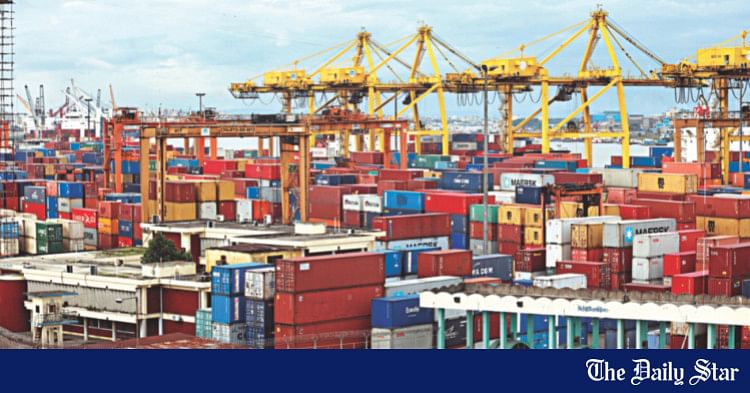
File photo: Star

A higher volume of container and cargo was handled at the Chattogram port in the first nine months of the current fiscal year compared to the same period of the previous year.

Although business leaders termed it a good trend for the country's foreign trade, they added that the country's overall foreign trade was yet to meet the expectations of a rebound.

The port experienced a growth of over 8.27 percent in container handling in the July-March period of fiscal year 2023-24.

According to data provided by the Chittagong Port Authority (CPA), the port handled 23.38 lakh TEUs (twenty-foot equivalent units) of containers, including those laden with imports and exports and empty ones, from July last year to March this year.

It had handled 21.60 lakh TEUs in the first nine months of the prior fiscal year.

The tally was kept at the main jetties of the port, Pangaon Inland Container Terminal (ICT) at Keraniganj and Kamalapur Inland Container Depot (ICD) in Dhaka, said CPA sources.

Different types of items meant for commercial use, commodities, machinery, chemical products, and all sorts of industrial raw materials, except those of the cement and ceramics sector, are imported using containers.

Goods meant for export are also solely transported through containers.

At a briefing on Wednesday, CPA Chairman Rear Admiral Mohammad Sohail expressed hope that container handling would reach 3.2 million TEUs at the end of the fiscal year, on condition that the present trend continues.

Overall cargo handling, meaning both containerised and bulk cargo, increased by 4.38 percent in this period.

The port handled a total of 9.16 crore tonnes of cargo in the first 9 months of fiscal year 2023-24, up from 8.78 crore tonnes in the same period a year ago.

Bangladesh Garment Manufacturers and Exporters Association (BGMEA) First Vice-President Syed Nazrul Islam said garment exports amounted to $37.2 billion in the first nine months of the current fiscal year.

This is 4.6 percent lower than the target of $39 billion, he said.

He added that neither import of raw materials for garment factories nor exports increased as per expectations.

Import of almost all raw materials meant for manufacturing garments alongside export cargo are transported in containers.

Regarding the rise in cargo and container handling at the port, Chittagong Chamber of Commerce and Industry (CCCI) President Omar Hazzaz said it was still too early to say whether the country's foreign trade has started to recover.

Exports are yet to reach expected levels, he said.

However, he stated that the rise in cargo handling at the port was "a good sign" and it showed that country's import trade was rising gradually.​
 
Analyze

Analyze Post

Add your ideas here:
Highlight Cite Respond
  • Love (+3)
Reactions: Bilal9

Evaluating large-scale projects
Abdul Bayes 03 May, 2024, 00:00

1714693680661.webp

| — Bangladesh Sangbad Sangstha

QUITE a number of studies on the various aspects of the Padma Multipurpose Bridge are in circulation. Metaphorically, this bridge has been dubbed a dream bridge that has given a new lease of life to 30 million people in the southern belt of Bangladesh. The completion of this 6.15-kilometre-long bridge, at a cost of Tk 30,000 crores or so, and that also without any aid, went to add further meat to the metaphor. Several research observations tend to show that on account of this large-scale project, the economic benefits it would generate would be substantial, surging the southern region's GDP by 2.5 per cent and the overall national GDP by 1.23 per cent. Of course, the positive impacts of other socio-economic indicators in the offing, including a passage to South and Southeast Asian countries, should be duly factored in while reaching out to an overall assessment.

Historically, evaluation of projects has mostly revolved around economic costs and benefits, thus paying little or no attention to the non-economic aftermaths, say human security or environmental outcomes. However, an exception to the traditional way of measuring the benefits and costs of a project has been developed recently by a group of researchers from the Bangladesh Institute of International and Strategic Studies. They took cognizance of the missing links and decided to put the overall picture on an empirical plane. Based on their research findings, they brought out a book titled Development-Human Security Nexus A Study on Padma Bridge Resettlement Areas (2024).

The attempt has been to fill in the research gap, as mentioned before. The researchers drew on empirics coming out of conducting a survey in and around Padma Bridge resettlement areas. The purpose of the study was to examine the development and human security paradigms, along with other socio-economic issues. The moot question was whether the Padma Multipurpose Bridge, project could usher a horizon of sustainable livelihood journeys for the people resettled (called People after the Project, PAPS). Ipso facto, they used a mixed-method approach, coupled with key information interviews and drawing upon expert opinions, to arrive at conclusions. Field data were generated from 3,012 households in three affected districts, eg, Mawa from Munshigonj, Jajira, and Shariatpur Sadar from Shariatpur district, and Shibchar from Madaripur district. It examined five resettlement camps to bring out diverse perspectives from the local community, their livelihood patterns in pre- and post-Padma Bridge realities, as well as human security and environmental concerns in this region.

However, the feature of the book for which it seemingly stands out as distinct from other investigations of the same kind is the light it attempts to shed on the concept of human security and its impacts on people displaced and resettled. These issues have often been sidelined in evaluation or feasibility studies in the context of large-scale projects. Past studies on such large-scale projects allegedly anchored on socio-economic impacts to the neglect of broader notions of human security such as economic, food, health, environmental, political, personal and community security of the displaced.

A roughly 200-page hard-bound book, it encompasses nine chapters of diverse dimensions. Besides methodological and introductory issues, other chapters comprise Development and Padma Multipurpose Bridge: Local Context (Chapter 5); Development and Environmental Consequences (Chapter 6); Human Security and Padma Multipurpose Bridge: Local Community Perspective (Chapter 7); Linkages between Development and Human Security in the Context of Padma Multipurpose Bridge (Chapter 8); and Padma Multipurpose Bridge: Lessons Learned and Way Forward (Chapter 9). All the deliberations seemingly lead to the conclusion that the construction of the bridge and the subsequent resettlement plan have had positive impacts on people's livelihoods in terms of wages, transportation and connectivity, resettlement design and monetary compensation, health and education. At the same time, it highlights initiatives taken by the authorities by addressing context-specific approaches, prevention-oriented approaches, and a comprehensive approach to human security.

Quite opposite to conventional concerns, researchers observed that displaced people benefitted with due compensation, resettlement in better land, and accessing all basic amenities of life, even better than post- Padma Multipurpose Bridge periods. Using a sustainable livelihood framework, as espoused by DFID, the researchers explored the human security of the resettled population on a wider spectrum, including freedom from pervasive threats to people's rights and safety of life and a life free of fear and want.

By and large, the book argues that the care given to displaced people by the Padma Multipurpose Bridge authorities could serve as an example of how well to deal with displaced people to allow them to live with dignity. The chapters contained in the book establish the linkages between development and security, which hold immense importance not only for Padma Multipurpose Bridge but also for future large-scale projects.

However, much remains to be done to improve livelihoods, avoid environmental damage, and enhance human security through the adoption of various policies and projects. A panoply of policy suggestions, along with a few project proposals, is on board to streamline and strengthen the positive impacts of large-scale projects now and in the future.

The book should be a good read for researchers and policymakers, especially those who are interested in evaluating large-scale projects.

Abdul Bayes, a former professor of economics and vice-chancellor, Jahangirnagar University, is now an adjunct faculty at East West University.​
 
Analyze

Analyze Post

Add your ideas here:
Highlight Cite Respond
  • Like (+1)
Reactions: Bilal9

Bangabandhu Rail Bridge likely to open in December
FE ONLINE DESK
Published :
May 11, 2024 13:57
Updated :
May 11, 2024 13:57

1715420237531.webp


The Bangabandhu Railway Bridge over the Jamuna river is expected to open in December this year.

The bridge, which is 4.8km long, is now fully visible as installation of all 49 spans was completed last month, according to local media.

The bridge would accommodate two separate lines of dual-gauge tracks. It currently has single track opened in 1998.

Japan is bankrolling 72 per cent of the project cost as soft loans. Two Japanese joint-venture firms are carrying out the main project work inaugurated in 2016.​
 
Analyze

Analyze Post

Add your ideas here:
Highlight Cite Respond
  • Like (+1)
Reactions: Bilal9

PM warns against 'unnecessary projects'

1715467972457.webp

Photo: PID

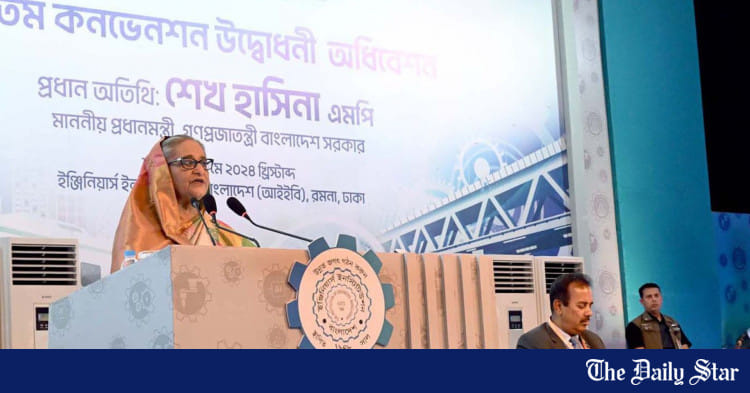
Prime Minister Sheikh Hasina today made it clear that she will not approve any unnecessary projects, which are taken just for the sake of construction without calculating their benefits for the country and its people.

"There must not be any construction just for the construction. This is my request. If I see any unnecessary project, I will not approve that. I have already made it clear in the Ecnec," she said.

The prime minister underscored this while inaugurating the 61st convention of Institution of Engineers, Bangladesh (IEB) at its premises in the city.

She said that while taking up any project the first thing to be considered is how the country and the people will gain from it.

"We have to look into the return from any project. How much the people will be benefited, what will be its return and whether the project will be useful for the country. We have to make these calculations," she said.

"You have to plan that way and I want this from you," she said.

She requested the engineers to take any plan or project considering its impact on environment, the sustainability and cost effectiveness.

"I have a request to you, whatever is the plan, it has to be environmental friendly, sustainable and cost effective," she said.

She said that the country has to be saved from the adverse impact of environment.

"That is our aim and it has to be done, we face drought, flood, tidal surge every moment, we have to prepare our plan keeping that in our mind," she said.

The prime minister once again asked the engineers not to take any plan for development which requires to fill waterbodies such as haor, beel and ponds.

"If necessary, we will build expressway. The vehicles will ply the expressway while vessels under the expressway," she said.

She also put emphasis on the preservation of rain water during the monsoon and use that during dry season.

"For this we must not fill up our water reservoirs, we have to protect those," she said.

The prime minister also handed over awards, including gold medals and certificates to different categories of engineers, centre, sub-centre, engineering division and graduates of AMIE examination.

IEB president Engineer Md Abdus Sabur, General Secretary Engr SM Monjurul Haque Monju, Dhaka Centre Chairman Engr Mohammad Hossain and its Dhaka Centre General Secretary Engr Md Nazrul Islam, also spoke at the function.

An audio-visual presentation on the contribution of the engineers to country's development as well protect its environment alongside theme song marking the IEB's 61st anniversary was played at the function.​
 
Analyze

Analyze Post

Add your ideas here:
Highlight Cite Respond

UAE's AD Ports Group to invest $1 billion to develop Ctg port
The Chittagong Port Authority signs MoU with the Abu Dhabi-based company

1715899832724.webp


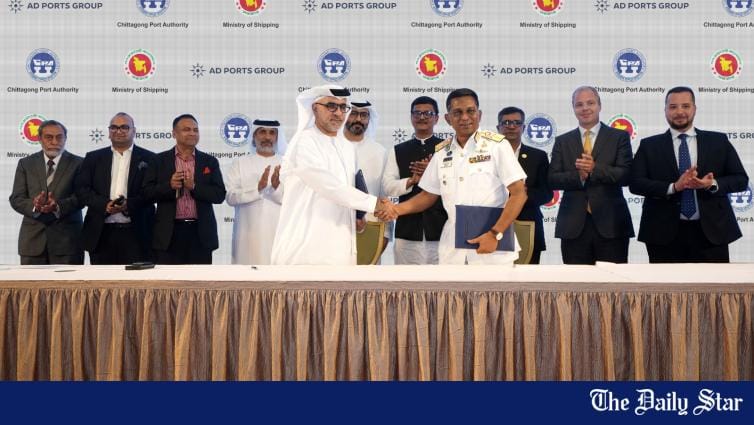
AD Ports Group of the UAE today signed a non-binding memorandum of understanding (MoU) with the Chittagong Port Authority (CPA) for the development of the seaport, including construction of a multi-purpose terminal under the mega Bay Terminal project.

The Abu Dhabi-based enabler of global trade, logistics and industry earlier proposed to invest $1 billion to construct and equip the multi-purpose terminal while the CPA said they have recently accepted the proposal.

Once constructed the multi-purpose terminal will be equipped to handle one million TEUs (twenty-foot equivalent units) of containers and seven million tonnes of bulk cargo annually, the port officials hoped.

State Minister for Shipping Khalid Mahmud Chowdhury attended the signing ceremony as the chief guest held at the Westin Dhaka Hotel, according to a press release issued by the CPA.

AD Ports Group Chief Executive Officer (CEO) Saif Al Mazurouei and CPA Chairman Rear Admiral Mohammad Sohail signed the MoU, it read.

Md Mostafa Kamal, senior shipping secretary; Abdulla Ali Abdulla Khaseif Al Hmoudi, UAE ambassador in Bangladesh, and Tarafder Ruhul Amin, managing director of AD Port's local partner Saif Powertec Ltd, also attended the event.

Saif Powertec has been engaged in container shipping in partnership with AD Port's Safeen Feeders since 2022.

Through the signing of the MoU, AD Ports Group in partnership with the CPA would be engaged in the development of the multi-purpose terminal of Bay Terminal along with other projects in the port, Ruhul Amin said.

CPA Secretary Md Omar Faruk also spoke.​
 
Analyze

Analyze Post

Add your ideas here:
Highlight Cite Respond

Chinese firm asks for additional Tk 10b on river training
Anowar HossainDhaka
Published: 18 May 2024, 12: 38

1716015836128.webp

A night view of the Padma Bridge from Mawa end in Munshiganj on 24 June 2022Dipu Malakar

Chinese contractor firm Sinohydro Corporation, which is carrying out the river training part of the Padma Bridge, sent a letter to the Bridges Division asking for an additional 10 billion taka outside the purview of their contract while the Bridges Division wants to settle the bargain with 6 billion taka.

A raise in a project budget showing extra work outside the contract is called variation. An official of the Bridges Division told Prothom Alo on condition of anonymity that variation means the contractor has done more than the work stipulated in the agreement and there are opportunities to take advantage of it because contractors withdraw extra money many times in collusion with other stakeholders without even doing the actual work.

The Bridges Division appointed the Chinese firm for river training on both sides of the Padma River in 2014 at 87.08 billion taka, but the budget increased by 8.78 billion taka to 95.86 billion taka in September 2023 because of additional work, a rise in dollar prices and changes to the government's VAT-tax structure.

Bridges Division said river training work of the Padma Bridge project has already set a record as no firm was ever appointed in the past for such a hefty amount for river training under a single contract. With an additional 6 billion taka, the revised budget will rise to 101.86 billion taka.

Prime minister Sheikh Hasina opened Padma Bridge for traffic on 25 June 2022. Toll collection crossed 15 billion taka. A part of river training remained left when the bridge opened. However, the timeline of the entire Padma Bridge project including the river is going to end next June.

In the meantime, the Bridges Division started reaching out to the Planning Commission and other government agencies to settle the contractor's bargain. Bridges Division secretary Md Manzur Hossain held a meeting with the officials of the Planning Commission and other agencies concerned on 28 April.

Padma Bridge project director Md Shafiqul Islam told Prothom Alo the additional expenditure on river training, however, will not increase the entire project expenditure because there are funds for variation in the project budget, which rose to 326.05 billion taka after a revision in April last year.

Sources at Bridges Division said an additional 10 billion taka was allocated during the last amendment to the project budget considering the price hike and more possible work despite the project is nearly finished. Now, the contractor's demand would be met with that money, but it needs the approval of the government.

River training has been done on 12.92 km on both sides of Padma River – 1.84 km at Mawa end and 11.8 km at Zazira end.

According to Bridges Division sources, when the project proposal was amended last year, it was found that the cost was reduced on the main work of river training but increased on the work done outside the agreement. This time, the Chinese firm did not do the work, for which additional funds are being sought. They appointed subcontractors without competitive tender.

Sources said Mazid Sons Construction Limited was one of the leading subcontractors and they were at central of the 'pillow scandal' at Rooppur Nuclear Power Plant and the roof collapse of a dormitory at Rajshshi University.

Reasons behind past cost rises

Sources at Bridges Division said the project cost rose by over 5 billion taka in September 2023 due to the depreciation of the taka and the rise in tax rate. Other than this, the timeline of river training work was four years, but it took an additional four and a half years, and costs also increased due to price hikes and consultants' salaries and allowances.

Besides, setting tolls plazas, procuring vessals for surveys, installing optical fibres and various procurements are done under river training. Foreign workers could not come amid the pandemic, and that loss has also been counted as a cost. Contractors also show additional expenditures for floods and river currents at various times.

Chinese Sinohydro Corporation, however, receives 70 per cent of payment set in US dollars and 30 per cent in taka as per the contract.

Total project expenditure

The Padma Bridge was first approved in August 2007 at an estimated cost of 101.62 billion taka and the project deadline was 2015. By June 2011, project cost rose to 205.07 billion taka.

The government revised the project cost to 297.93 billion taka in February 2015, setting 2018 as the deadline. Cost rose by 14 billion taka for additional land procumbent purposes in June 2018 and the total project cost was set at 300.93 billion taka following a special approval. Lastly, the cost was fixed at 326.05 billion taka in 2023.

Regarding the additional cost of river training, Shamsul Haque, a mega project expert and civil engineering professor at Bangladesh University of Engineering and Technology (BUET), told Prothom Alo that it is a complex task to carry out river training in a river like the Padma, but a 17 per cent variation is too much.​

He said there has been a trend recently to show big variations in the mega projects, and the cost was increased by adding unnecessary tasks in many cases; these tasks were completed through subcontractors with political influence. As a result, project cost rises and work quality falls, but the government's Implementation Monitoring and Evaluation Division (IMED) has the opportunity to work with more responsibility to this end, he added.
 
Analyze

Analyze Post

Add your ideas here:
Highlight Cite Respond

JS body for enhancing road, rail connectivity with Payra Sea Port
BSS
Published :
May 19, 2024 20:21
Updated :
May 19, 2024 20:21

1716163651899.webp


The parliamentary standing committee on shipping ministry on Sunday recommended taking appropriate measures to increase road and rail connectivity with the Payra sea port to carry forward activities of the port, located in the southern part of the country.

It also recommended taking the entire responsibility of running the Kamalapur ICD (Inland Container Depot) terminal under shipping ministry describing it as the integral part of the port. It observed that all ports will be the stockholders of ICD.

The third meeting of the JS body was held here with chairman of the committee Mahfuzur Rahman in the chair, according to a statement issued in Sunday.

Committee members State Minister for Shipping Khalid Mahmud Chowdhury, Golam Kibria Tipu, Md. Zakaria, Firoz Ahmed Swapan, Habibun Nahar, Md. Awlad Hossain and Jharna Hasan attended the meeting.

The meeting also had a discussion on the overall activities of Bangladesh Shipping Directorate, Chittagong Seaport and Payra Seaport Authority.

Earlier, the meeting thanked Prime Minister Sheikh Hasina and other relevant people following safe return of all sailors, including the captain of Bangladeshi vessel MV Abdullah, which was abducted by Somali pirates a few months back.

Senior Secretary of the ministry, Chairmen of Chittagong and Payra Sea Ports, among others, joined the meeting.​
 
Analyze

Analyze Post

Add your ideas here:
Highlight Cite Respond
1717079142632.webp


97pc work of HSIA third terminal complete: minister
Photo: Collected

Around 97 percent construction work of the third terminal of the Hazrat Shahjalal International Airport (HSIA) has been completed, Civil Aviation Minister Faruk Khan said yesterday.
"I am satisfied with the progress ... It [the terminal] is likely to be fully operational by the end of this year or early next year," said the minister at a press briefing after visiting the terminal.
Only three percent of work, which includes calibration and testing of various systems is yet to be completed, he said.

"The work of the building has been done very well. It's beautiful. But its success depends on proper maintenance. I conveyed these to the Japanese construction company. I am very hopeful that CAAB is preparing its staff to operate the terminal in a proper manner," the minister said.

Asked about the construction of a second runway at the Dhaka airport as per the requirements of the third terminal, Faruk said, "The Instrument Landing System is being improved on the existing runway. Radars are being improved. However, we have plans for a second runway."

However, due to buildings nearby, it poses a challenge, he added.

Regarding the poor luggage handling service, he said, "Passenger handling is a big challenge for any country. Passengers think that the luggage will be handed over to them as soon as they get off the plane. It's never possible. We are trying to improve."

About the ground handling, Faruk said Biman Bangladesh Airlines, which has been enjoying a monopoly so far, will manage the ground operation under a joint venture with a reputed global service provider chosen by the Japanese consortium.

Prime Minister Sheikh Hasina made the soft launch of the third terminal on October 7 last year.

The project, involving Tk 21,300 crore, commenced on December 28, 2019.
 
Analyze

Analyze Post

Add your ideas here:
Highlight Cite Respond

Members Online

No members online now.

Latest Posts

Back
 
G
O
 
H
O
M
E