Donate ☕
[🇧🇩] - Sea Ports/Air Ports/River Ports/Bridges/Mega Projects | Page 12 | PKDefense

[🇧🇩] Sea Ports/Air Ports/River Ports/Bridges/Mega Projects

⤵︎
Reply (Scroll)
Press space to scroll through posts
G Bangladesh Defense
[🇧🇩] Sea Ports/Air Ports/River Ports/Bridges/Mega Projects
179
7K
More threads by Saif

Patenga Container Terminal boosts capacity with addition of 14 new cranes​


Despite these gains, the terminal is still operating well below its design capacity as utilisation reached only 49% in October compared to its theoretical monthly capacity of 41,700 TEUs.​

The new Rubber-Tyred Gantry cranes are handling containers at the Patenga Container Terminal at Chattogram Port on 15 December 2025. Photo: TBS

The new Rubber-Tyred Gantry cranes are handling containers at the Patenga Container Terminal at Chattogram Port on 15 December 2025. Photo: TBS

Patenga Container Terminal at Chattogram Port has enhanced its container handling capabilities with the addition of 14 new Rubber-Tired Gantry (RTG) cranes to improve container handling speed and overall operational efficiency at the terminal.

The cranes, manufactured by the Chinese company GENMA, arrived in October. Following the completion of their commissioning, they were formally handed over this morning (15 December) to the terminal's Saudi operator, Red Sea Gateway Terminal International (RSGTI).
Once four gantry cranes are added by the end of May next year, we expect to reach full operational capacity

Syed Aref Sarwar, head of Commercial and Public Affairs, RSGTI
The handover ceremony was attended by key officials, including the newly appointed Chattogram Port Authority Member (Engineering) Commodore Mazharul Islam Jewel, Bay Terminal Project Director Commodore Mahfuzur Rahman, RSGTI Chattogram Chief Operating Officer Any Lane, and GENMA Solutions General Manager Susan Zha.

Zha officially presented the cranes by giving a replica key to RSGTI COO Lane.


Chattogram port gets 2 new gantry cranes

The terminal, operated by RSGTI under a 22-year concession agreement since June last year, has recently shown steady growth in container handling after months of underperformance.

A turning point came in May 2025 with RSGTI's $3 million investment to install an import container scanner at its own expense, a piece of equipment the National Board of Revenue had long failed to provide.

Officials of the Chinese company GENMA formally hand over the cranes to officials of Saudi operator RSGTI on 15 December 2025. Photo: TBS

Officials of the Chinese company GENMA formally hand over the cranes to officials of Saudi operator RSGTI on 15 December 2025. Photo: TBS
Between May and October, the terminal handled 108,228 TEUs, accounting for nearly two-thirds of the total cargo handled during its initial 16 months of operation.


15 months on, Saudi operator RSGTI fails to deliver at Patenga Container Terminal

Monthly cargo volume reached a record high of 25,018 TEUs in October, rebounding from a dip in September (17,337 TEUs). The growth is also evident in increased vessel arrivals, with seven vessels berthing in August alone.

Despite these gains, the terminal is still operating well below its design capacity; utilization reached only 49% in October compared to its theoretical monthly capacity of 41,700 TEUs.

Port officials and RSGTI attribute this gradual scale-up to the standard development phase outlined in the concession agreement and the ongoing installation of equipment.

Additionally, Commodore Mahfuzur Rahman praised RSGTI's performance over the last one and a half years, noting, "Despite operating within a limited scope, the structured and automated manner in which they are running the terminal is commendable and instructive for us."


Cargo handling rises after Saudi Red Sea installs scanner at Patenga Terminal

He reiterated the CPA's goal of upgrading Chattogram Port to international standards and expressed confidence that RSGTI would continue to enhance port capacity while maintaining global operational benchmarks.

RSGTI Head of Commercial and Public Affairs Syed Aref Sarwar confirmed that the 14 RTGs will further accelerate terminal operations.

"Once four gantry cranes are added by the end of May next year, we expect to reach full operational capacity," he said.
 
Analyze

Analyze Post

Add your ideas here:
Highlight Cite Fact Check Respond
 
Analyze

Analyze Post

Add your ideas here:
Highlight Cite Fact Check Respond
Bangladesh tightens monitoring of Indian cargo trucks through automated system

Published :

Dec 18, 2025 03:47
Updated :

Dec 18, 2025 03:47

1766464549393.webp

The National Board of Revenue (NBR) has begun round-the-clock monitoring of the movement of all Indian cargo trucks entering and exiting Bangladesh through the Benapole land port, marking a shift from manual oversight to an automated tracking system.

To facilitate this, the NBR has introduced a sub-module titled “Truck Movement” within ASYCUDA World, the software platform used for managing import-export data and customs duties, according to a media statement issued on Thursday.

The new system has now been rolled out in an automated form at Benapole Customs House as an initial step.

The NBR said the sub-module was developed to electronically record data on the entry of Indian import-laden trucks into Bangladesh and the return of empty trucks to India.

“As a result, accurate data on the arrival and departure of each Indian truck will be preserved, enabling effective monitoring of every vehicle,” the revenue authority said.

According to the NBR, the system will allow authorities to determine how long Indian trucks remain within the country, improve data management, help prevent revenue leakage, ensure transparency and accountability, strengthen border security, and generate real-time reports.

The monitoring system was launched as a pilot at Benapole on Monday, and NBR said preparations are under way to begin live operations of the module at all land ports across the country in the near future.

The move comes against the backdrop of growing strains in Bangladesh–India relations following the political upheaval of 2024, with tit-for-tat restrictions disrupting bilateral trade.

On May 18 this year, India imposed a ban on the import of around seven categories of goods from Bangladesh through land ports, including processed food and garments.

The restriction followed Bangladesh’s earlier ban on the import of Indian yarn through land ports, imposed about a month earlier. India’s commerce ministry said the counter-restrictions took immediate effect.

By late October, the government also decided to limit import and export activities through Benapole port. Without prior notice or preparation, all trade operations through the port were suspended after 6pm each day.
 
Analyze

Analyze Post

Add your ideas here:
Highlight Cite Fact Check Respond
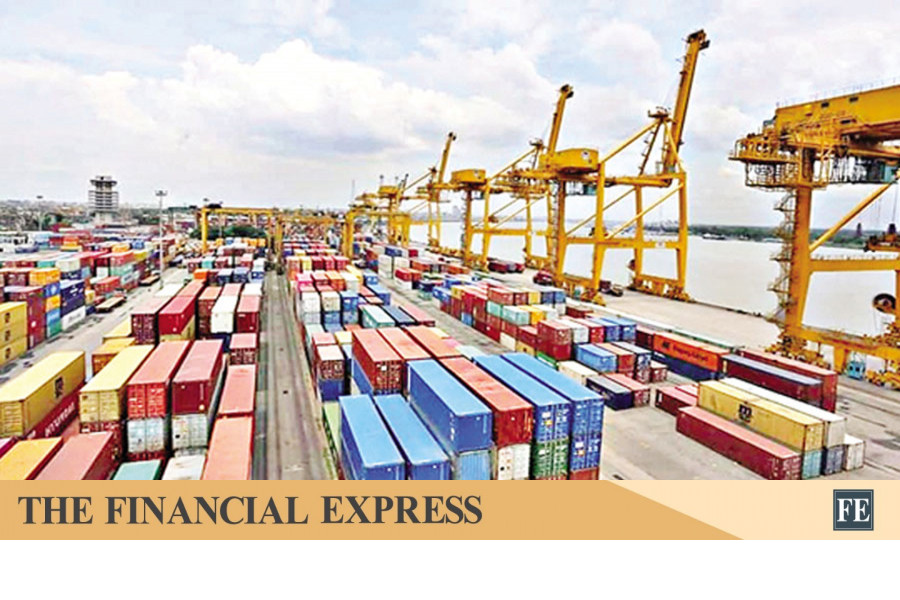
324 foreign ships dock at Mongla Port in 146 days of FY-26
FE ONLINE DESK

Published : Nov 24, 2025 00:13
Updated : Nov 24, 2025 00:13

1766465131709.webp


Mongla Port, the country's second-largest seaport, recorded the arrival of 324 foreign commercial ships in the first 146 days of the current 2025-26 fiscal year (FY), significantly boosting its revenue earnings.

According to the Mongla Port Authority (MPA), of the total ships, 41 carried 13,854 TEUs of containers, while 26 vessels brought in 4,139 imported cars of various brands, reports BSS.

From July 1 to November 23, 2025, the port handled a total of 4.40 million tonnes of goods, said MPA Senior Deputy Director (Public Relations) Muhammad Makruzzaman.

He said several measures taken by the interim government have contributed to the rise in ship arrivals at Mongla Port.

At present, a total of 324 foreign ships carrying fertiliser, clinker, LPG, coal and stone are anchored at the port's jetties and permanent anchorage points, including Harbaria, Base Creek, Sundori Kota and Mooring Buoy.

Makruzzaman said imports handled through the port include food grains, cement raw materials, fertiliser, automobiles, machinery, coal, oil, stone, corn, oilseeds and LPG. Exports include fish, shrimp, jute and jute goods, frozen food, crabs, clay tiles, silk cloth and other general cargo.

He added that the import of reconditioned cars through Mongla Port has increased, as importers are showing growing interest in using the facility.
 
Analyze

Analyze Post

Add your ideas here:
Highlight Cite Fact Check Respond

A fresh shot in the Karnaphuli Tunnel's arm!

Editorial
Published :
Dec 24, 2025 00:17
Updated :
Dec 24, 2025 00:17

1766535735894.webp


The 3.32 km Karnaphuli Tunnel, South Asia's first underwater river tunnel connecting the port city of Chattogram with Anwara upazila, aimed at increasing connectivity and boost trade, has turned out to be a white elephant. The reason is that the forecasts about the project's earning from the toll to be collected from the vehicles passing through the tunnel have proved wrong. According to recent reports, at present close to 3,900 vehicles pass through the tunnel every day, whereas the expectation was that the number would be around 28,300 vehicles per day. In other words, the actual number of vehicles at present passing through the tunnel every day is less than 14 per cent of what was initially projected. One wonders, what drove the government of the time to have conceived of such an expensive project worth about US$1.0 billion? Consider that the project was designed following the 'one city two towns' model similar to Shanghai of China and thus turn Chattogram into a major logistic hub of the country.

Now that the traffic movement is far lower than what was expected, the authorities have made matters worse by charging tolls on the vehicles at a prohibitive rate. In consequence, commercial vehicles are avoiding the tunnel and taking cheaper, alternative route to reach their destinations. Against this backdrop, the Road Transport and Highways Division (RTHD) is learnt to have proposed another project worth Tk4.63 billion that would build a 10.30-metre-wide road linking the Anwara end of the tunnel with Gachhbari in Chandanaish on the Chattogram-Cox's Bazar highway. Planned to be completed in the next three years, the 21.1 km link road is expected to ramp up traffic flow through the Karnaphuli Tunnel. The Planning Division has reportedly placed the project proposal on the agenda of the Executive Committee of the National Economic Council (ECNEC) meeting for its approval. As conceived in the proposed project, it would provide a safer connectivity between the Karnaphuli Tunnel and the Chattogram-Cox's Bazar National Highway. Using this new route, travellers, it is believed, would be able to cut travel distance by 17 km and save half an hour of their travel time.

Now these are but the projected benefits that would be possible to draw from the proposed link road project. The question is, the original Tunnel project, too, was built driven by the idea that it would set up an all-weather road link between the east and west banks of the Karnaphuli river and thereby create a continuous connection in the Dhaka-Chattogram-Cox's Bazar Highway network reducing the pressure of road traffic in the Chattogram city. It was also envisioned that the Karnaphuli Tunnel would function as a catalyst for industrialisation of the underdeveloped east bank of the river by way of attracting local and foreign investment to the planned economic zones such as the envisaged Chinese Economic Zone in Anwara. It was also anticipated that, annually, the Tunnel project would add 0.166 per cent to the country's GDP for several decades. It was further expected that the Tunnel would facilitate efficient movement of goods and services directly connecting the Chattogram Port, the under-construction Matarbari Deep Sea Port and Mirsarai Economic Zone. But things did not turn out the expected way. Similarly, the present authorities are expecting that link road project would provide faster access to major industrial hubs including Chittagong Urea Fertilizer Limited (CUFL), Karnaphuli Fertilizer Company Limited (KAFCO), the Korean EPZ, the Chinese Special Economic Zone as well as the Parki Sea Beach and the Marine Academy.

The basic problem with Karnaphuli Tunnel was a lack of proper feasibility study of the project. Now the expectation is that the planners of the proposed road link project have done the homework to avoid a repeat of the tunnel's underperformance.​
 
Analyze

Analyze Post

Add your ideas here:
Highlight Cite Fact Check Respond
  • Like (+1)
Reactions: Bilal9
A turbulent year for the premier seaport
Strikes, tariff resets and disputes over foreign operator appointments tested governance at Ctg port.

1766884439273.webp


From the start to the end, Chattogram port remained in the national spotlight this year -- for protests, controversy, tariff hikes and other significant policy decisions like handing over operations of major terminals to foreign companies.

Throughout the year, political uncertainty, labour unrest and sensitive reform decisions all collided at the facility that handles more than 90 percent of the country's international trade. It barely got any breathing space for trade to bloom.

Even so, as of December 26, the port handled 33.64 lakh TEUs (twenty-foot equivalent units) containers, a 2.68 percent growth from 32.27 lakh TEUs handled last year, according to Chittagong Port Authority (CPA) data.

Meanwhile, the port handled a total of 13.63 crore tonnes of overall cargo, including the containerised ones, this year till December 27 morning, toppling last year's total volume of 12.40 crore tonnes, which was the highest so far.

The total number of vessels handled so far reached 4,396 compared to 3,867 in 2024.

EARLY-YEAR DISRUPTIONS

The year began with operational strain. In early February, container transport between the port and inland container depots was disrupted after clashes involving prime mover drivers and helpers at DC Park in the port city, temporarily halting cargo movement and exposing the fragility of last-mile logistics for days.

The interruption set an early tone for a year marked by repeated disruptions to port operations. The next month, the CPA sharply increased storage charges for containers remaining beyond the free period, introducing a fourfold hike.

Customs agents and importers warned that the move would inflate logistics costs and compound congestion rather than resolve it. The decision was widely seen as an early signal that port users would face higher charges after decades of relative stability in tariffs.

The true chaos began in the second quarter. Operational pressure intensified during April and May, when a nationwide strike by National Board of Revenue (NBR) officials – protesting an ordinance restructuring the revenue administration – severely affected customs services at the port.

Protests continued on and off for weeks. Cargo clearance slowed, vessels waited longer at anchor, and yard capacity approached critical levels. Even after the strike was formally withdrawn in late May, congestion lingered, with the port struggling to return to normalcy.

THE FOREIGN OPERATOR DEBATE

The NBR protest was surely a key flashpoint for the port in the outgoing year. As this protest went on, the Chattogram port unit of Jatiyatabadi Sramik Dal, the workers' wing of BNP, launched a series of weeklong protest programmes, protesting the government's move to lease out the New Mooring Container Terminal (NCT) to a foreign operator.

By June, labour and political opposition to foreign operators at Chattogram port moved into a more organised protest. On June 15, the Jatiyatabadi Sramik Dal, aligned with the port workers' federation, launched a six-day protest programme opposing plans to lease the NCT to UAE-based DP World. Demonstrators argued that handing over the port's largest operational terminal would undermine national control over a strategic asset and threaten workers' jobs.

The issue became a topic of national debate, making headlines regularly. All the while, port operations continued to struggle.

The opposition was notable not only for its intensity but also for its ideological breadth. Political parties from opposing ends of the spectrum, including left-leaning groups and right-wing nationalists, raised similar objections, framing foreign terminal operations as a question of sovereignty, transparency and long-term national interest.

Government officials and port authorities countered that involving experienced global operators was essential to modernise port operations, reduce vessel turnaround time and handle rising trade volumes.

They repeatedly pointed to competition from ports in India, Sri Lanka and Southeast Asia, warning that without rapid reform, Chattogram risked losing cargo to regional rivals.

Political unease over the matter continued through July, August and September, with BNP and Jamaat leaders publicly questioning whether an interim government had the mandate to sign long-term concession agreements for strategic infrastructure.

HIGH TARIFFS, TERMINAL DEALS, PROTESTS

October proved to be the most disruptive month of the year.

In mid-October, the CPA announced a sweeping revision of port tariffs – the first such adjustment in about four decades – with an average increase of around 41 percent across several charges related to container handling and storage.

Trade bodies reacted sharply, warning that the higher costs would erode export competitiveness, particularly for garment exporters already facing global demand pressures.

As part of the hike, the CPA raised gate pass fees for heavy vehicles more than fourfold, from Tk 57 to Tk 230. The decision prompted the Chattogram Prime Mover Owners Association to suspend container transport from October 15, causing deliveries to plunge by nearly 45 percent and rapidly building backlogs at the port.

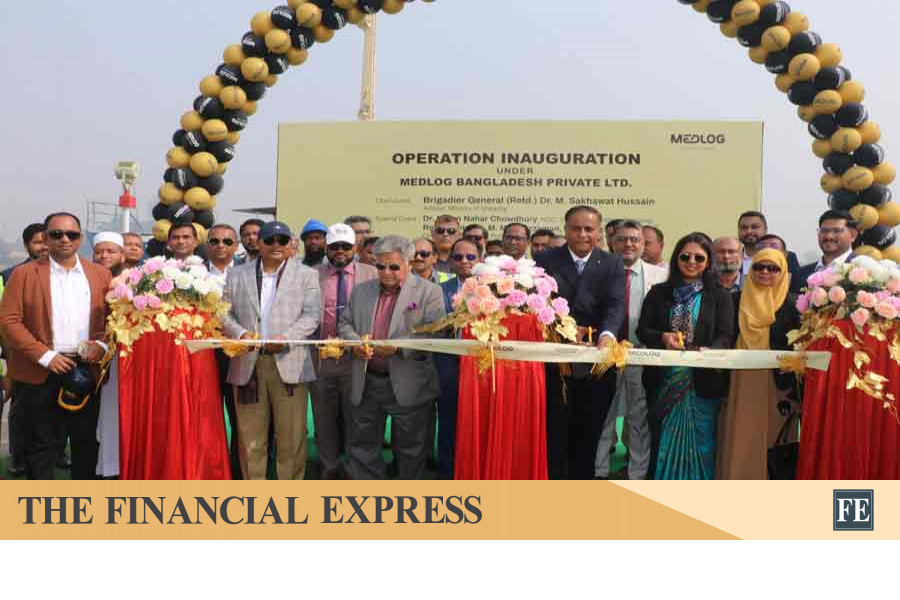
Despite the mounting opposition, the government moved decisively at the year's end. In mid-November, it signed agreements with Denmark's APM Terminals and Switzerland-based Medlog SA for the construction and operation of the Laldia Container Terminal and the operation of the Pangaon Inland Container Terminal.

Street mobilisation followed swiftly. Rallies, torch processions and hunger strikes swept Chattogram, demanding cancellation of foreign operator agreements and reversal of tariff hikes.

Legal challenges soon followed. On November 9, the High Court stayed the tariff hike for one month, offering temporary relief to port users. Later in November, the court ordered a suspension of all activities related to the proposed foreign operator contract for the NCT, following a writ petition challenging its legality.

Meanwhile, the fate of the NCT remained unresolved. On December 4, a High Court bench delivered a dissenting verdict on the writ petition challenging the NCT contract, leaving the matter pending before the chief justice, effectively guaranteeing that the controversy will spill into 2026.​
 
Analyze

Analyze Post

Add your ideas here:
Highlight Cite Fact Check Respond
  • Like (+1)
Reactions: Bilal9
the Chattogram port unit of Jatiyatabadi Sramik Dal, the workers' wing of BNP, launched a series of weeklong protest programmes, protesting the government's move to lease out the New Mooring Container Terminal (NCT) to a foreign operator.

These Jatiyatabadi Sramik Dal people (BNP port workers' wing) are being instigated by Indian RAW agents to destabilize CTG port operations. Every kind of BNP "dal" has these agents, RAW network is exceptionally strong within BNP in Bangladesh.

This is why Indians were so happy to see Tareq Rahman get back home. He's been sold to the Indians long ago. Wake me up when I'm proven wrong.

These Indian haramis have their eye on the port. Indians haven't let go of the idea of taking over the port somehow, so they can improve the economy of their Northeast states.

Little do they know, that the NE states themselves will separate from India proper soon. So mango and sack both will be gone.
 
Analyze

Analyze Post

Add your ideas here:
Highlight Cite Fact Check Respond
Analyze

Analyze Post

Add your ideas here:
Highlight Cite Fact Check Respond
  • Love (+3)
Reactions: Bilal9
Why seaport reforms must begin at the customs house

1767143724907.webp

A fully automated customs authority backed by a responsive governance system is needed to support the trillion-dollar economy Bangladesh expects to become. FILE PHOTO: STAR

The ongoing debate over seaport reforms in Bangladesh is largely centred on the long-term leasing of terminals to foreign operators to modernise port infrastructure. However, high-tech docks and foreign management can only do so much if the "brain" of the operation, the customs clearance process, remains bottlenecked by partial digitalisation.

During the period of 2009-2024, the Digital Bangladesh campaign successfully introduced bespoke software and automated platforms to nearly every government office. But nowhere was early digitalisation as critical as at Customs House, Chattogram (CCH), the country's premier tax collection gateway.

CCH, which supports the Chittagong Port, accounts for 70-80 percent of total customs revenue and serves nearly 700 shipping agents, 1,000 freight forwarders, and 4,000 clearing and forwarding (C&F) agents. On average, CCH processes 7,000 to 8,000 bills of entry (BEs) for exports and imports daily. In the first five months of the current fiscal year, CCH collected Tk 31,602 crore in revenue. In FY 2024-2025, its collection was Tk 75,432 crore, which is eight times the amount it collected in FY 2003-2004.

Since its introduction in 1993, CCH upgraded the UNCTAD Automated System for Customs Data (ASYCUDA)—an integrated customs management system for international trade—several times. Currently, it is using ASYCUDA World, which was intended to reduce the time, cost, and physical visits required to process thousands of BEs manually. However, there are debates among business communities about the system's data accuracy and reliability, and it is often alleged that it leads to significant clearance delays.

The initial payoff of automation and subsequent upgrades were clear: in the 2012-13 fiscal year, CCH attained 90 percent of its revenue target, and by 2016-17, it hit 100 percent. Yet, by 2022-23, this figure dropped back to 82 percent. The current fiscal year's revenue collection for the first five months was 13 percent below the target. End-to-end automation remains elusive. While the core system is digital, several critical checkpoints remain manual. Currently, only 39 percent of submitted BEs (documents filed by importers for tax/duties/legal compliance/clearance assessment) are processed on the same day, while 19 percent take more than four days. Alarmingly, only five percent of imports are processed before arrival, often due to a lack of coordination with port authorities regarding the auction of unclaimed containers.

While ASYCUDA is designed to scrutinise only up to 10 percent of BEs through risk-based inspection, allowing the remaining 90 percent to receive clearance based on documentary checks, this is rarely the case in practice. Inspections of weight and nature of goods remain manual, as do many certification processes. Furthermore, ASYCUDA lacks interoperability. Customs officials are still compelled to rely on physical paperwork because various certifying entities do not work within an integrated system.

These so-called non-tariff barriers are compounded by the "Time, Cost, and Visit" (TCV) burden associated with outside agencies. Obtaining a simple No Objection Certificate (NOC) from the Bangladesh Council of Scientific and Industrial Research (BCSIR) or Bangladesh Standards and Testing Institution (BSTI) can take over a week. Frequent changes in import/export policies by the commerce ministry and adjustments to the Tariff's First Schedule by the finance ministry create further challenges in the process.

According to representatives of the Chittagong Customs Agents Association, the server struggles to take the load when thousands of agents log into the ASYCUDA modules simultaneously. Moreover, the lack of interoperability—where an importer shares bank documents with a C&F agent who then manually enters the data into ASYCUDA World—creates a "broken link" in the digital chain. This backlog wrongly places the blame on CCH officials, though the root cause often lies in "broken cross-project connectivity."

In addition, the internet connection at CCH is frequently disrupted, despite being provided by the state-owned Bangladesh Telecommunications Company Limited (BTCL), the country's largest Nationwide Telecommunication Transmission Network (NTTN) entity. BTCL management is often slow to respond to queries, and because CCH lacks access to Network Management System (NMS) data, monitoring rests solely with the National Board of Revenue's central IT office in Dhaka.

To partly circumvent this "BTCL conundrum," CCH relies on a private ISP for its primary ASYCUDA services. While this private vendor is functional and responsive, it highlights a hidden vulnerability: the lifeblood of our national trade is indirectly dependent on a private vendor and the country's NTTN duopoly (Fibre@Home and Summit hold NTTN licence, operating a network spanning around 50,000 kilometres and 40,000 km of optical fibre). The main reason for the vulnerability is the erratic service of state-run primary source—BTCL.

This strategic interdependence calls for an immediate intervention. Beyond BTCL's questionable balance sheet, the actual damage is the TCV loss incurred by key strategic fiscal entities like CCH. This legacy of the Digital Bangladesh campaign—where software and hardware issues in public offices are left unaddressed—has paradoxically slowed down service delivery and day-to-day operations, creating new hidden costs for taxpayers.

However, some issues stem from the ASYCUDA software itself, including technical glitches during system upgrades that stall customs clearance and leave import/export items idle at the port. This strains the relationship between customs officials and trade agents, damaging the credibility of CCH. C&F agents have noted that software complexity occasionally "scrambles" critical data—such as product types and weights—from the BEs.

The reality is that CCH is between a rock and a hard place. The Anti-Corruption Commission frequently examines allegations of revenue evasion via forged documents but often limits investigations mostly to CCH officers, while the business community accuses CCH of harassment through arbitrary duties and inaccurate valuations. Both of these undermine the morale of CCH officials. Correct and timely examination of the customs database is the only way to minimise both corruption and trade losses.

There is, however, room for optimism. Recent steps toward disciplining officials, changes in top leadership at CCH, a functional National Single Window platform, the Bond Management Automation project, and the introduction of E-Auctions, E-Tenders, and E-Payments are beginning to pay dividends. CCH's revenue achievement target is improving. To consolidate these gains, the NBR must invest in strengthening the governance of CCH, including the ability to implement regular software upgrades without system shutdowns, rather than phasing out the ASYCUDA system altogether.

Furthermore, NBR should introduce a TCV measurement tool for all port authorities to identify inefficiencies from a citizen-centred perspective. Also, lobbying for lucrative CCH postings must be stamped out to stabilise the CCH's core administrative workforce.

Lastly, the number of sanctioned posts needs to increase alongside actual appointments to cope with rising demands for timely and proper examination of the custom consignments and the BEs.

Let's not forget that as Bangladesh eyes a trillion-dollar economy by 2030, modernised seaports are only half the equation. We need a fully automated customs authority backed by a responsive governance system that ensures technology facilitates trade rather than obstructing it.

M Niaz Asadullah is a development economist, the head of ICT White Paper Committee, and a member of the Telecom White Paper Committee, under the Ministry of Posts, Telecommunications and Information Technology.​
 

Analyze Post

Add your ideas here:
Highlight Cite Respond
  • Like (+1)
Reactions: Bilal9
Chattogram Port sails to record year as ship arrivals, cargo, revenue post broad-based growth

bdnews24.com
Published :
Jan 01, 2026 23:06
Updated :
Jan 01, 2026 23:06

1767314838041.webp

Chattogram Port has recorded gains across all key indicators over the past year, with higher volumes of containers and bulk cargo handled and a sharp rise in ship arrivals, underscoring the premier sea port’s growing role in the trade-led economy.

According to port authority data, container handling increased by 4 percent, while both cargo and ship handling rose by about 11 percent year on year.

In 2025, the port handled a total of 3.409 million TEUs of import and export containers, up by 133,442 TEUs, or 4.07 percent, from the previous year.

Bulk cargo handling also rose strongly. The port handled 138.15 million metric tonnes of open cargo during the year, an increase of 14.17 million tonnes, or 11.43 percent, compared with the year before.

Ship traffic saw a notable rise as well. A total of 4,273 vessels called at the port in 2025, up by 406 ships from 2024, marking a 10.50 percent increase in ship handling.

Md Omar Faruk, director (Administration) of the port, told bdnews24.com that the port handled about 3.4 million containers in the 2025 calendar year, the highest volume in its history.

Chattogram Port handles around 92 percent of Bangladesh’s total import-export cargo and 98 percent of containerised trade, making it the backbone of the country’s maritime commerce.

Historical data show steady growth over recent years. Container handling stood at 3.27 million TEUs in 2024, 3.05 million in 2023, 3.14 million in 2022, 3.21 million in 2021 and 2.83 million in 2020.

Bulk cargo handling reached 123.98 million tonnes in 2024, compared with 120.23 million tonnes in 2023 and 103.21 million tonnes in 2020.

In terms of ship arrivals, 3,857 vessels were handled in 2024, compared with 4,103 in 2023 and 3,728 in 2020.

Omar described 2025 as not only a year of progress but also of transformation, saying the port advanced on all indicators despite challenges such as customs work stoppages.

Yard expansion, faster operations, capacity enhancement and digitalisation, combined with close supervision of staff, helped deliver the gains, he said.

Revenue collection also increased. In 2025, the Chattogram Port Authority earned Tk 54.6 billion in revenue, up 7.55 percent from the previous year, while contributing Tk 18.04 billion to the government.

Looking ahead, Omar said the port aims not only to accelerate growth but also to support a sustainable, inclusive and innovation-driven maritime economy that can help position Bangladesh as a global trading hub.​
 
Analyze

Analyze Post

Add your ideas here:
Highlight Cite Fact Check Respond
  • Love (+3)
Reactions: Bilal9
Biman has listed flights to and back from Karachi - but reservations cannot yet be made. The flights are experimental and will be reviewed back again in March for changes.
---------------------------------------------
Biman Bangladesh Airline during the month of January 2026 filed operational schedule on Dhaka – Karachi sector, although this sector is not available for reservations.

Based on schedule filing, the airline lists 2 weekly flights with 737-800 aircraft from 01JAN26 to 31JAN26.

BG341 DAC2000 – 2300KHI 738 46
BG342 KHI0001 – 0420DAC 738 57
 
Analyze

Analyze Post

Add your ideas here:
Highlight Cite Fact Check Respond

Oh Happy Day!

---------------------------------------​

Biman Bangladesh approves purchase of 14 Boeing aircraft, including 787-10 Dreamliners


Ricardo Meier
January 2, 2026

Order covers widebody and narrowbody models as carrier targets operational and network expansion

Biman Bangladesh Airlines Boeing 787
Biman Bangladesh Airlines Boeing 787 (Biman)

Biman Bangladesh Airlines has decided to acquire 14 Boeing aircraft after its annual company meeting held in Dhaka on Tuesday.

The board approved an order comprising eight 787-10 Dreamliners, two 787-9 Dreamliners, and four 737-8 MAX jets.

The purchase remains subject to price negotiations and final terms, as per recommendations from Biman’s technical and financial committee.

“The addition of the new aircraft is expected to significantly expand Biman’s operational capacity and route network,” said Bosra Islam, General Manager Public Relations at Biman.

The meeting was chaired by Sheikh Bashir Uddin, Advisor for Aviation and Tourism and Chairman of the Board of Directors. The order was finalized after further evaluation and analysis by the airline’s committees.


Bangladesh’s caretaker government previously pledged to purchase Boeing aircraft as part of efforts to reduce the trade deficit with the United States.

Biman currently operates a mixed fleet of Boeing widebodies and narrowbodies. The carrier has a history of incremental fleet renewal, with the 787-10 representing the largest variant of Boeing’s Dreamliner family.
 
Last edited:
Analyze

Analyze Post

Add your ideas here:
Highlight Cite Fact Check Respond
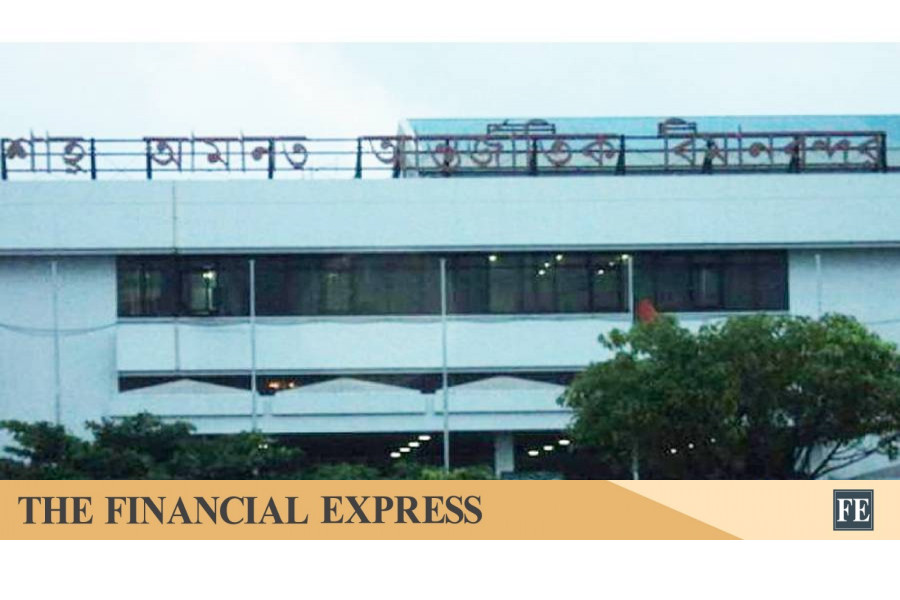
Vehicles, visitors barred from Shah Amanat International Airport terminal over security concerns

bdnews24.com
Published :
Jan 06, 2026 21:00
Updated :
Jan 06, 2026 21:00

1767746031792.webp

Vehicles and visitors have been barred from entering the terminal driveway of Chattogram’s Shah Amanat International Airport, citing security concerns ahead of the general election.

The decision was taken at the airport security committee’s monthly coordination meeting on Tuesday, according to a notice issued by spokesperson Mohammad Ibrahim Khalil.

The notice said the restriction reflects the wider security situation and the need to protect the airport, which is designated a first-category Key Point Installation (KPI).

Until further notice, only passengers will be allowed access to the terminal driveway. All other visitors, as well as vehicles not carrying passengers, will be turned away.

Vehicles dropping off or picking up passengers have been asked to use the main parking area or the cargo parking area for boarding and disembarking.

Airport authorities also said vehicles entering the main parking area only to drop off passengers will not be charged a parking toll, until further instructions.

In cases involving state dignitaries entitled to use the VIP lounge, a single authorised protocol representative will be allowed to enter, along with the passenger and accompanying family members. Access will require a designated protocol pass.​
 
Analyze

Analyze Post

Add your ideas here:
Highlight Cite Fact Check Respond
  • Like (+1)
Reactions: Bilal9

Oh Happy Day!

---------------------------------------​

Biman Bangladesh approves purchase of 14 Boeing aircraft, including 787-10 Dreamliners


Ricardo Meier
January 2, 2026

Order covers widebody and narrowbody models as carrier targets operational and network expansion

Biman Bangladesh Airlines Boeing 787
Biman Bangladesh Airlines Boeing 787 (Biman)

Biman Bangladesh Airlines has decided to acquire 14 Boeing aircraft after its annual company meeting held in Dhaka on Tuesday.

The board approved an order comprising eight 787-10 Dreamliners, two 787-9 Dreamliners, and four 737-8 MAX jets.

The purchase remains subject to price negotiations and final terms, as per recommendations from Biman’s technical and financial committee.

“The addition of the new aircraft is expected to significantly expand Biman’s operational capacity and route network,” said Bosra Islam, General Manager Public Relations at Biman.

The meeting was chaired by Sheikh Bashir Uddin, Advisor for Aviation and Tourism and Chairman of the Board of Directors. The order was finalized after further evaluation and analysis by the airline’s committees.


Bangladesh’s caretaker government previously pledged to purchase Boeing aircraft as part of efforts to reduce the trade deficit with the United States.

Biman currently operates a mixed fleet of Boeing widebodies and narrowbodies. The carrier has a history of incremental fleet renewal, with the 787-10 representing the largest variant of Boeing’s Dreamliner family.

I find it interesting that Biman chose 787-10s for their new fleet addition, but it makes eminent sense, being that most of their flights are mid-range hops to the Gulf and Saudi as well as to KUL and S'pore. The 787-10s can also be pressed into DAC-LHR or ZYL-LHR leg. And if new routes can be explored, even to longer mid-range routes like PEK (Peking), Istanbul (Turkey) or NRT/HND (Tokyo).

Although the 777-300ERs Biman currently operates have far more range than the 787-10s, the latter are not going to replace the 77Ws (777-300ER). Current 77Ws will be replaced by 777x's being flight tested right now - and probably in another five years, when the 77W's are ripe for replacement.

On a different note the new Boeing 737 MAX 8 can operate flights from Dhaka (DAC) to Narita (NRT) which is a long, thin route - which will possibly be operated once or twice a week. Biman used a 787 previously for this, which was not profitable because of low load factor, even at once a week frequency.
 
Last edited:
Analyze

Analyze Post

Add your ideas here:
Highlight Cite Fact Check Respond
Beyond open tendering

How PPP and G2G deals can secure Bangladesh's maritime horizon


S M Moniruzzaman
Published :
Jan 13, 2026 00:17
Updated :
Jan 13, 2026 00:17

1768265245240.webp

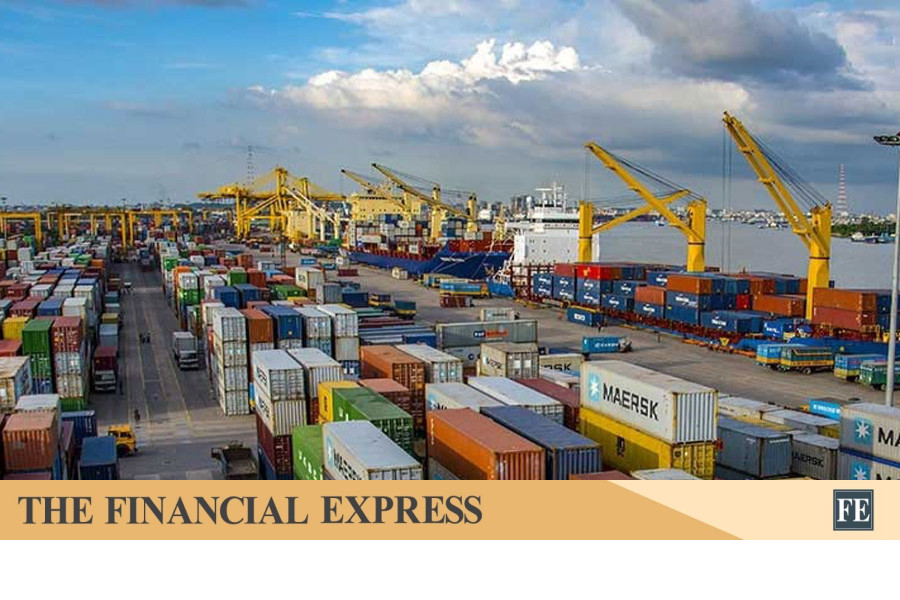
A view of Chittagong Port —Agency Photo


As Chairman of the Chittagong Port Authority, I welcome the decisive shift of the Nobel Laureate Dr Muhammad Yunus-led government towards port-centred maritime development as a foundation of Bangladesh's economic transformation. More than 92 per cent of our international trade passes through Chittagong, necessitating quick movement to clients and markets, which makes immediate modernisation non-negotiable. The issue before us is not whether expansion is required, but rather the method through which it should be achieved. While institutional debt financing can underwrite port infrastructure expansion, it imposes material constraints-credit exposure, collateral pledges, and long-term repayment obligations. By contrast, structuring port concession models to attract foreign direct investment (FDI) delivers a more strategic capital solution: it accelerates modernisation, enhances operational competitiveness, and mitigates sovereign debt accumulation, thereby safeguarding fiscal resilience while unlocking sustainable growth. I can clearly state that concessions awarded to reputed foreign operators through Public-Private Partnerships (PPP) and Government-to-Government (G2G) arrangements are far more effective than the traditional open-tendering route. This position is not shaped by preference. It is rooted in evidence, practical experience, and the principles of the PPP Framework together with the associated rules and regulations for foreign operator engagement.

Open tendering, in theory, aims to deliver transparency and competitive pricing. In practice, it often fails to uphold international standards, best practice benchmarks, and essential compliance requirements. The PPP Law outlines strict procedures for due diligence, negotiation, and risk sharing because open tendering has repeatedly shown its limitations in ensuring these protections. The law requires feasibility studies that cover financial, legal, commercial, and environmental aspects and states that a project may proceed only if the Net Present Value (NPV) is above 1. This is not administrative clutter. It represents disciplined financial safeguards that defend the national interest. Open tendering, by contrast, often encourages decision-making based on the lowest bid or highest bid, which can undermine long-term sustainability. It often prioritises the lowest or highest bidder, risking substandard maritime infrastructure and operational delays. This model lacks the strategic long-term investment, specialised technology transfer, and direct foreign capital commitment. For any greenfield port project, attracting credible international operators depends on embedding global standards from the earliest phase. Ensuring this standard of quality is conditional upon PPP and G2G concessions with dependable partners. Such arrangements mitigate the inherent risks of lowest-bidder procurement models, while facilitating sustained foreign capital inflows, access to specialised maritime expertise, and the integration of international best practices that collectively enhance operational efficiency beyond what open tendering can deliver.

The Special Purpose Company (SPC) model, which forms a core component of the PPP system, strengthens each concession through comprehensive due diligence.

International rates of return assessments prevent speculative or short-sighted investment. Legal vetting ensures full compliance with domestic legislation and relevant international conventions. Commercial studies link capacity planning to real trade patterns, while environmental evaluations help prevent ecological degradation, including reduction of carbon emissions. This combination demonstrates the level of sophistication that PPPs offer. They balance national priorities with the assurances demanded by international investors. Negotiations within the PPP framework are structured rather than improvised and are designed to reach revenue-sharing arrangements that benefit both sides. Bangladesh gains reliable long-term income streams, and operators secure conditions that support stable profitability.

The landlord port model under which Chittagong Port operates strengthens this approach further. As a landlord port, we retain ownership of land and core infrastructure, while foreign operators invest in and manage operations under Build-Operate-Transfer (BOT) concessions. For Bangladesh, the financial benefit is clear. There are no liabilities, no debt burdens, and guaranteed returns based on mutually agreed terms. When the concession period ends, the assets return to us, enhanced by years of operation that follow international standards.

The advantages of involving reputed operators are visible and immediate. Capacity expansion is essential as Bangladesh's export and import trade continues to grow at double-digit rates. Effective port management reduces cargo dwell time and lowers logistics costs, which directly assists our garment exporters who operate with very narrow profit margins. Vietnam's deep-water hubs and foreign terminal operators slashed turnaround times, accelerating speed to market by 11 days. As a peer competitor, Vietnam now dominates high-spec electronics; Bangladesh must upgrade its port infrastructure and transition from basic apparel to high-value manufacturing. Such a transition will allow Chittagong Port to remain globally aligned with best practices and gain a competitive edge.

Each port concession attracts vital Foreign Direct Investment (FDI), strengthening national reserves and signalling robust economic confidence. This capital injection ensures terminal operations meet global standards, while parallel infrastructure development (logistics parks) and collaboration (industry-academia training) upskill local human resources, securing long-term economic growth. This is how Bangladesh positions itself for competitiveness in a region where Colombo, Singapore and Port Klang are advancing quickly. Revenue generated through PPP concessions is stable and predictable, and the establishment of such partnerships sends a wider message of confidence to foreign investors across sectors. It demonstrates that Bangladesh has evolved into a dependable investment environment. International connectivity grows as feeder services and shipping opportunities increase, drawing us more deeply into global trade pathways.

The figures embedded in our PPP Law and foreign operator frameworks reinforce this point. The requirement for an NPV greater than 1 acts as a safeguard against waste. The law's detailed provisions on negotiation, equity contributions and risk sharing show a level of maturity that tendering can neither match nor ensure. The foreign operator documents outline structured assemblies, executive sessions and long-term planning, which reflects Bangladesh's commitment to forward-looking strategy. These are not abstract ideas. They form the foundation of a maritime future that aligns with international best practices, transparency and sustainability. Open tendering, on the other hand, struggles to enforce compliance and leaves gaps that weaken competitiveness. In a sector as strategic as maritime trade, such gaps cannot be accepted.

Bangladesh's maritime future rests on the choice that we make now. By adopting PPP and G2G concessions, we can ensure that our ports are developed to global standards, operated with international levels of efficiency, and fully connected to global supply chains. We would attract foreign investment, strengthen the skills of our workforce, lower costs, and generate revenue without taking on liabilities. We will be able to communicate to the world that Bangladesh is prepared, competitive and secure. As Chairman of the Chittagong Port Authority, I declare with conviction that strategic concessions are not merely transactions, they are powerful instruments of progress. They deliver greater value, foster long-term partnerships, and embody the very essence of international best practices. Open tendering may serve a purpose, but it is strategic concessions that truly unlock our potential and position us on the global stage.


Rear Admiral S. M. Moniruzzaman, OSP, NDC, NCC, PSC is the

Chairman of Chittagong Port Authority​
 
Analyze

Analyze Post

Add your ideas here:
Highlight Cite Fact Check Respond

Members Online

Latest Posts

Latest Posts

Post