New Tweets

[๐Ÿ‡ง๐Ÿ‡ฉ] Sea Ports/Air Ports/River Ports/Bridges/Mega Projects

G Bangladesh Defense
[๐Ÿ‡ง๐Ÿ‡ฉ] Sea Ports/Air Ports/River Ports/Bridges/Mega Projects
198
8K
More threads by Saif

Oh Happy Day!

---------------------------------------​

Biman Bangladesh approves purchase of 14 Boeing aircraft, including 787-10 Dreamliners


Ricardo Meier
January 2, 2026

Order covers widebody and narrowbody models as carrier targets operational and network expansion

Biman Bangladesh Airlines Boeing 787
Biman Bangladesh Airlines Boeing 787 (Biman)

Biman Bangladesh Airlines has decided to acquire 14 Boeing aircraft after its annual company meeting held in Dhaka on Tuesday.

The board approved an order comprising eight 787-10 Dreamliners, two 787-9 Dreamliners, and four 737-8 MAX jets.

The purchase remains subject to price negotiations and final terms, as per recommendations from Bimanโ€™s technical and financial committee.

โ€œThe addition of the new aircraft is expected to significantly expand Bimanโ€™s operational capacity and route network,โ€ said Bosra Islam, General Manager Public Relations at Biman.

The meeting was chaired by Sheikh Bashir Uddin, Advisor for Aviation and Tourism and Chairman of the Board of Directors. The order was finalized after further evaluation and analysis by the airlineโ€™s committees.


Bangladeshโ€™s caretaker government previously pledged to purchase Boeing aircraft as part of efforts to reduce the trade deficit with the United States.

Biman currently operates a mixed fleet of Boeing widebodies and narrowbodies. The carrier has a history of incremental fleet renewal, with the 787-10 representing the largest variant of Boeingโ€™s Dreamliner family.
 
Last edited:
Analyze

Analyze Post

Add your ideas here:
Highlight Cite Respond
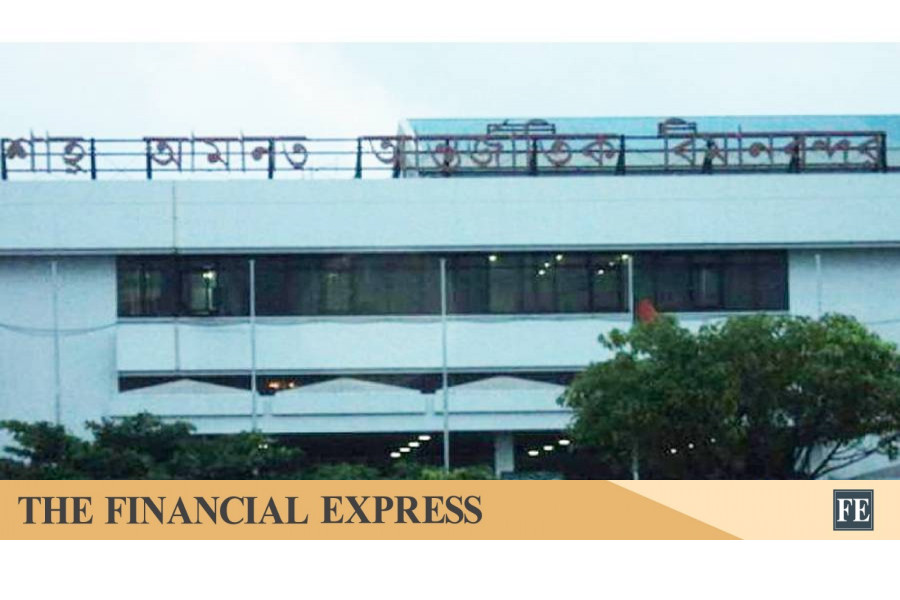
Vehicles, visitors barred from Shah Amanat International Airport terminal over security concerns

bdnews24.com
Published :
Jan 06, 2026 21:00
Updated :
Jan 06, 2026 21:00

1767746031792.webp

Vehicles and visitors have been barred from entering the terminal driveway of Chattogramโ€™s Shah Amanat International Airport, citing security concerns ahead of the general election.

The decision was taken at the airport security committeeโ€™s monthly coordination meeting on Tuesday, according to a notice issued by spokesperson Mohammad Ibrahim Khalil.

The notice said the restriction reflects the wider security situation and the need to protect the airport, which is designated a first-category Key Point Installation (KPI).

Until further notice, only passengers will be allowed access to the terminal driveway. All other visitors, as well as vehicles not carrying passengers, will be turned away.

Vehicles dropping off or picking up passengers have been asked to use the main parking area or the cargo parking area for boarding and disembarking.

Airport authorities also said vehicles entering the main parking area only to drop off passengers will not be charged a parking toll, until further instructions.

In cases involving state dignitaries entitled to use the VIP lounge, a single authorised protocol representative will be allowed to enter, along with the passenger and accompanying family members. Access will require a designated protocol pass.​
 
Analyze

Analyze Post

Add your ideas here:
Highlight Cite Respond
  • Like (+1)
Reactions: Bilal9

Oh Happy Day!

---------------------------------------​

Biman Bangladesh approves purchase of 14 Boeing aircraft, including 787-10 Dreamliners


Ricardo Meier
January 2, 2026

Order covers widebody and narrowbody models as carrier targets operational and network expansion

Biman Bangladesh Airlines Boeing 787
Biman Bangladesh Airlines Boeing 787 (Biman)

Biman Bangladesh Airlines has decided to acquire 14 Boeing aircraft after its annual company meeting held in Dhaka on Tuesday.

The board approved an order comprising eight 787-10 Dreamliners, two 787-9 Dreamliners, and four 737-8 MAX jets.

The purchase remains subject to price negotiations and final terms, as per recommendations from Bimanโ€™s technical and financial committee.

โ€œThe addition of the new aircraft is expected to significantly expand Bimanโ€™s operational capacity and route network,โ€ said Bosra Islam, General Manager Public Relations at Biman.

The meeting was chaired by Sheikh Bashir Uddin, Advisor for Aviation and Tourism and Chairman of the Board of Directors. The order was finalized after further evaluation and analysis by the airlineโ€™s committees.


Bangladeshโ€™s caretaker government previously pledged to purchase Boeing aircraft as part of efforts to reduce the trade deficit with the United States.

Biman currently operates a mixed fleet of Boeing widebodies and narrowbodies. The carrier has a history of incremental fleet renewal, with the 787-10 representing the largest variant of Boeingโ€™s Dreamliner family.

I find it interesting that Biman chose 787-10s for their new fleet addition, but it makes eminent sense, being that most of their flights are mid-range hops to the Gulf and Saudi as well as to KUL and S'pore. The 787-10s can also be pressed into DAC-LHR or ZYL-LHR leg. And if new routes can be explored, even to longer mid-range routes like PEK (Peking), Istanbul (Turkey) or NRT/HND (Tokyo).

Although the 777-300ERs Biman currently operates have far more range than the 787-10s, the latter are not going to replace the 77Ws (777-300ER). Current 77Ws will be replaced by 777x's being flight tested right now - and probably in another five years, when the 77W's are ripe for replacement.

On a different note the new Boeing 737 MAX 8 can operate flights from Dhaka (DAC) to Narita (NRT) which is a long, thin route - which will possibly be operated once or twice a week. Biman used a 787 previously for this, which was not profitable because of low load factor, even at once a week frequency.
 
Last edited:
Analyze

Analyze Post

Add your ideas here:
Highlight Cite Respond
Beyond open tendering

How PPP and G2G deals can secure Bangladesh's maritime horizon


S M Moniruzzaman
Published :
Jan 13, 2026 00:17
Updated :
Jan 13, 2026 00:17

1768265245240.webp

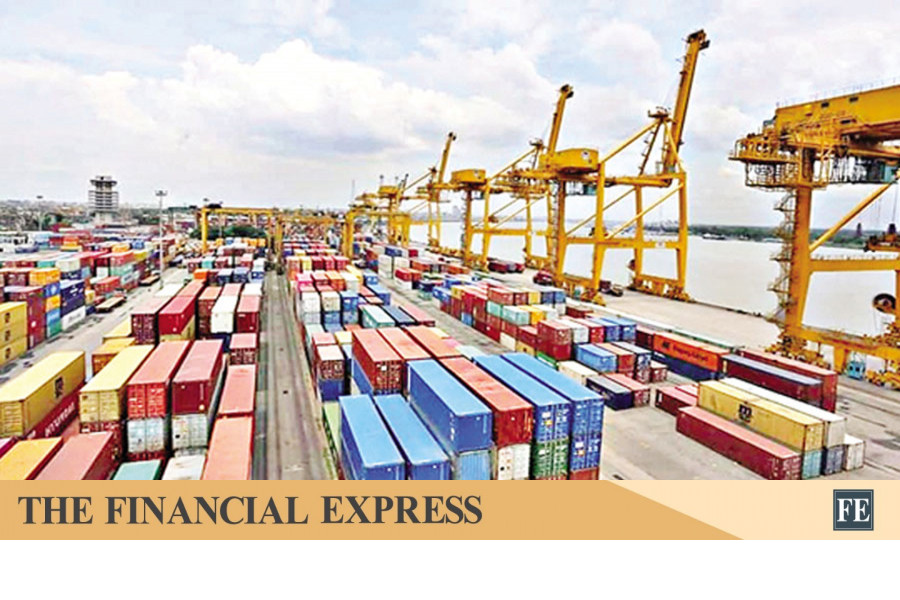
A view of Chittagong Port โ€”Agency Photo


As Chairman of the Chittagong Port Authority, I welcome the decisive shift of the Nobel Laureate Dr Muhammad Yunus-led government towards port-centred maritime development as a foundation of Bangladesh's economic transformation. More than 92 per cent of our international trade passes through Chittagong, necessitating quick movement to clients and markets, which makes immediate modernisation non-negotiable. The issue before us is not whether expansion is required, but rather the method through which it should be achieved. While institutional debt financing can underwrite port infrastructure expansion, it imposes material constraints-credit exposure, collateral pledges, and long-term repayment obligations. By contrast, structuring port concession models to attract foreign direct investment (FDI) delivers a more strategic capital solution: it accelerates modernisation, enhances operational competitiveness, and mitigates sovereign debt accumulation, thereby safeguarding fiscal resilience while unlocking sustainable growth. I can clearly state that concessions awarded to reputed foreign operators through Public-Private Partnerships (PPP) and Government-to-Government (G2G) arrangements are far more effective than the traditional open-tendering route. This position is not shaped by preference. It is rooted in evidence, practical experience, and the principles of the PPP Framework together with the associated rules and regulations for foreign operator engagement.

Open tendering, in theory, aims to deliver transparency and competitive pricing. In practice, it often fails to uphold international standards, best practice benchmarks, and essential compliance requirements. The PPP Law outlines strict procedures for due diligence, negotiation, and risk sharing because open tendering has repeatedly shown its limitations in ensuring these protections. The law requires feasibility studies that cover financial, legal, commercial, and environmental aspects and states that a project may proceed only if the Net Present Value (NPV) is above 1. This is not administrative clutter. It represents disciplined financial safeguards that defend the national interest. Open tendering, by contrast, often encourages decision-making based on the lowest bid or highest bid, which can undermine long-term sustainability. It often prioritises the lowest or highest bidder, risking substandard maritime infrastructure and operational delays. This model lacks the strategic long-term investment, specialised technology transfer, and direct foreign capital commitment. For any greenfield port project, attracting credible international operators depends on embedding global standards from the earliest phase. Ensuring this standard of quality is conditional upon PPP and G2G concessions with dependable partners. Such arrangements mitigate the inherent risks of lowest-bidder procurement models, while facilitating sustained foreign capital inflows, access to specialised maritime expertise, and the integration of international best practices that collectively enhance operational efficiency beyond what open tendering can deliver.

The Special Purpose Company (SPC) model, which forms a core component of the PPP system, strengthens each concession through comprehensive due diligence.

International rates of return assessments prevent speculative or short-sighted investment. Legal vetting ensures full compliance with domestic legislation and relevant international conventions. Commercial studies link capacity planning to real trade patterns, while environmental evaluations help prevent ecological degradation, including reduction of carbon emissions. This combination demonstrates the level of sophistication that PPPs offer. They balance national priorities with the assurances demanded by international investors. Negotiations within the PPP framework are structured rather than improvised and are designed to reach revenue-sharing arrangements that benefit both sides. Bangladesh gains reliable long-term income streams, and operators secure conditions that support stable profitability.

The landlord port model under which Chittagong Port operates strengthens this approach further. As a landlord port, we retain ownership of land and core infrastructure, while foreign operators invest in and manage operations under Build-Operate-Transfer (BOT) concessions. For Bangladesh, the financial benefit is clear. There are no liabilities, no debt burdens, and guaranteed returns based on mutually agreed terms. When the concession period ends, the assets return to us, enhanced by years of operation that follow international standards.

The advantages of involving reputed operators are visible and immediate. Capacity expansion is essential as Bangladesh's export and import trade continues to grow at double-digit rates. Effective port management reduces cargo dwell time and lowers logistics costs, which directly assists our garment exporters who operate with very narrow profit margins. Vietnam's deep-water hubs and foreign terminal operators slashed turnaround times, accelerating speed to market by 11 days. As a peer competitor, Vietnam now dominates high-spec electronics; Bangladesh must upgrade its port infrastructure and transition from basic apparel to high-value manufacturing. Such a transition will allow Chittagong Port to remain globally aligned with best practices and gain a competitive edge.

Each port concession attracts vital Foreign Direct Investment (FDI), strengthening national reserves and signalling robust economic confidence. This capital injection ensures terminal operations meet global standards, while parallel infrastructure development (logistics parks) and collaboration (industry-academia training) upskill local human resources, securing long-term economic growth. This is how Bangladesh positions itself for competitiveness in a region where Colombo, Singapore and Port Klang are advancing quickly. Revenue generated through PPP concessions is stable and predictable, and the establishment of such partnerships sends a wider message of confidence to foreign investors across sectors. It demonstrates that Bangladesh has evolved into a dependable investment environment. International connectivity grows as feeder services and shipping opportunities increase, drawing us more deeply into global trade pathways.

The figures embedded in our PPP Law and foreign operator frameworks reinforce this point. The requirement for an NPV greater than 1 acts as a safeguard against waste. The law's detailed provisions on negotiation, equity contributions and risk sharing show a level of maturity that tendering can neither match nor ensure. The foreign operator documents outline structured assemblies, executive sessions and long-term planning, which reflects Bangladesh's commitment to forward-looking strategy. These are not abstract ideas. They form the foundation of a maritime future that aligns with international best practices, transparency and sustainability. Open tendering, on the other hand, struggles to enforce compliance and leaves gaps that weaken competitiveness. In a sector as strategic as maritime trade, such gaps cannot be accepted.

Bangladesh's maritime future rests on the choice that we make now. By adopting PPP and G2G concessions, we can ensure that our ports are developed to global standards, operated with international levels of efficiency, and fully connected to global supply chains. We would attract foreign investment, strengthen the skills of our workforce, lower costs, and generate revenue without taking on liabilities. We will be able to communicate to the world that Bangladesh is prepared, competitive and secure. As Chairman of the Chittagong Port Authority, I declare with conviction that strategic concessions are not merely transactions, they are powerful instruments of progress. They deliver greater value, foster long-term partnerships, and embody the very essence of international best practices. Open tendering may serve a purpose, but it is strategic concessions that truly unlock our potential and position us on the global stage.


Rear Admiral S. M. Moniruzzaman, OSP, NDC, NCC, PSC is the

Chairman of Chittagong Port Authority​
 
Analyze

Analyze Post

Add your ideas here:
Highlight Cite Respond
  • Love (+3)
Reactions: Bilal9
Advanced 5G network inaugurated at Ctg Port
Staff Correspondent 13 January, 2026, 01:42

1768438993590.webp

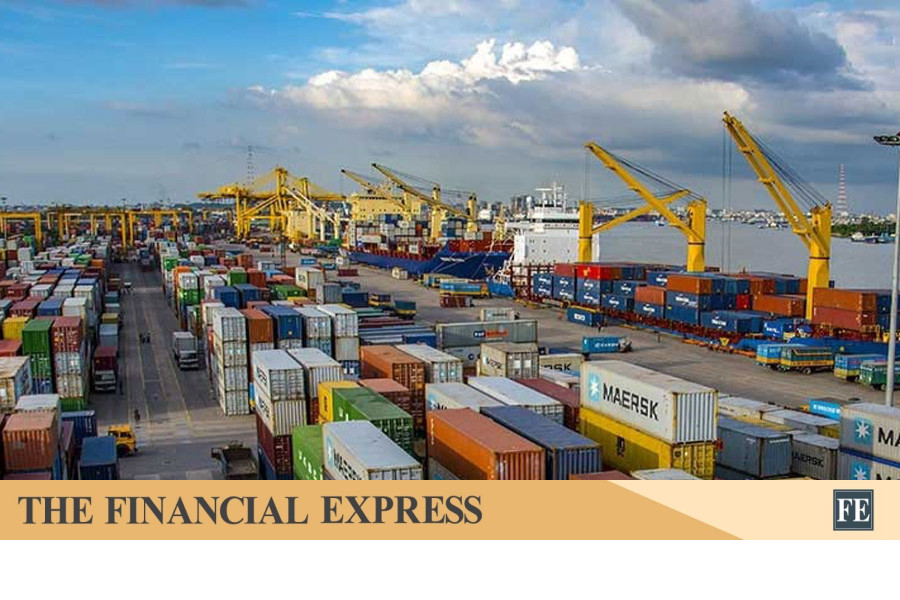
The state-of-the-art 5G network installed by Axentec PLC is inaugurated at the Chittagong Port in Chattogram on Monday. | Press release photo

The Chittagong Port has achieved a new milestone in ensuring uninterrupted and high-speed communication system with the aim of developing modern and technology-based port management.

The state-of-the-art 5G network installed by Axentec PLC was inaugurated at the port in Chattogram on Monday to make the digital activities of the port more dynamic, safe and effective, said a press release.


At the ceremony, the chairman of the Chittagong Port Authority, Rear Admiral SM Moniruzzaman, was present as chief guest and announced the inauguration of the 5G network.

The speakers present at the ceremony expressed their views that the launch of this 5G network will play an important role in the automation of the port, information exchange, security monitoring and implementation of the future smart port.

Chittagong Port Authority expresses hope that the 5G network will activate the technological capabilities in port operations.​
 
Analyze

Analyze Post

Add your ideas here:
Highlight Cite Respond

Revenue control pushes Chittagong Portโ€™s profit to 5-year high
bdnews24.com

Published :

Jan 17, 2026 00:48
Updated :

Jan 17, 2026 00:48
Share this news


FE
For all latest news, follow The Financial Express Google News channel.
Chittagong Port has recorded a net profit of Tk 31.43 billion in 2025, the highest in the past five years.

Non-VAT and tax revenues contributed Tk 18.05 billion to the government treasury, also a five-year high.

Port Administration Director Md Omar Faruk said, โ€œSince 2021, revenue has grown continuously. By maintaining service quality while cutting unnecessary spending, surpluses have risen from 2024. As a result, the 2025 surplus surpassed the previous five-year record.โ€

According to port data, total income in 2025 reached Tk 54.60 billion, while expenditures amounted to Tk 23.18 billion, yielding the profit.

Revenue growth has been accompanied by controlled expenditure. From 2021 to 2025, the portโ€™s revenue grew at an average annual rate of 13.08 percent, while expenses increased by 7.59 percent per year. Profit growth averaged 18.42 percent annually.

Md Omar Faruk added that strict adherence to the policy of avoiding unnecessary spending has kept expenditure growth in single digits over the past two years.

Over five years, the port has deposited a total of Tk 75.80 billion into the state treasury, including VAT, taxes, and non-tax revenue.

In 2025 alone, Tk 18.05 billion was remitted, up 5.41 percent from 2024. The cumulative five-year deposits include Tk 35.53 billion in taxes, Tk 34.27 billion in VAT, and Tk 6 billion in non-tax revenue.

Chittagong Port Revenue and Expenditure (2021โ€“2025):


Year Earnings Spendings Profits

2021 Tk 33.62 billion Tk 17.28 billion Tk 16.33 billion

2022 Tk 35.69 billion Tk 18.35 billion Tk 17.34 billion

2023 Tk 41.65 billion Tk 20.22 billion Tk 21.43 billion

2024 Tk 50.77 billion Tk 21.54 billion Tk 29.23 billion

2025 Tk 54.60 billion Tk 23.18 billion Tk 31.43 billion

 
Analyze

Analyze Post

Add your ideas here:
Highlight Cite Respond

Pangaon terminal commences operations under MEDLOG Bangladesh

FE ONLINE DESK
Published :
Jan 17, 2026 19:52
Updated :
Jan 17, 2026 19:52

1768695907756.webp


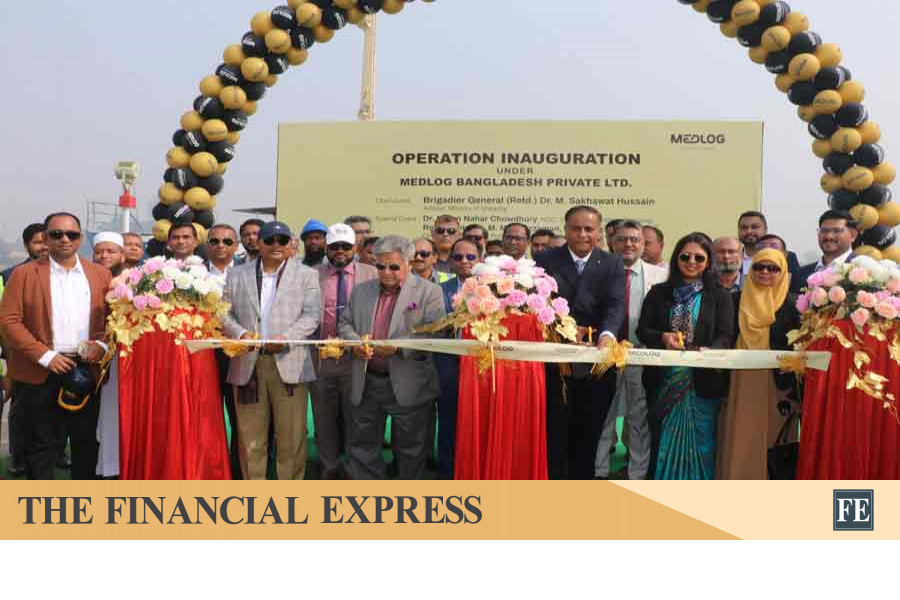
The Pangaon Inland Container Terminal (PICT) at West Keraniganj in Dhaka district has commenced operation under the management of MEDLOG Bangladesh Private Ltd.

The operation was formally inaugurated on Saturday on the premises of the terminal, a strategically located facility near the capital, with the aim of enhancing inland container movement and strengthening multimodal connectivity, accordign to a press statement.

MEDLOG Bangladesh Private Ltd, a concern of Switzerland-based global leader in inland logistics MEDLOG, will operate, manage and modernise the terminal in partnership with the Chittagong Port Authority (CPA) under a 22-year concession agreement signed two months ago.

Brigadier General (Retd) Dr M Sakhawat Hussain, Shipping Adviser, attended the program as the chief guest. Dr Nurun Nahar Chowdhury, Secretary of the Ministry of Shipping, and Rear Admiral M Moniruzzaman, Chairman of the Chittagong Port Authority, were present as the special guests.

A. T. M. Anisul Millat, Managing Director of MEDLOG Bangladesh Private Ltd, delivered the welcome speech, outlining the vision and operational roadmap of the terminal under MEDLOGโ€™s management.

The government bestowed the operation and management of the container terminal on MEDLOG as the facility was sustaining losses. Built at a cost of around Tk 1.55 billion, the terminal had accumulated significant operational losses over the past decade.

The concession agreement is expected to reverse that trend and facilitate governmentโ€™s earning of huge revenue by introducing global best practices, advanced technology and efficient operational management.​
 
Analyze

Analyze Post

Add your ideas here:
Highlight Cite Respond

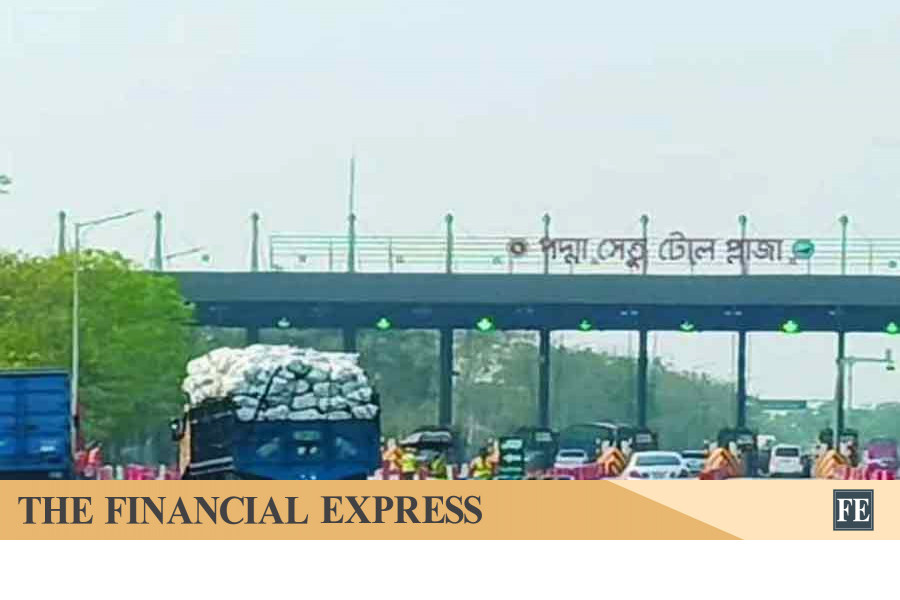
Padma Bridge draws Tk 30.0 billion as toll since 2022 opening

BSS
Published :
Jan 20, 2026 20:41
Updated :
Jan 20, 2026 20:43

1768955437251.webp


The government has collected so far Tk 30.0 billion as revenue from the users of the Padma Bridge since its June 25, 2022 opening, Bangladesh Bridge Authority (BBA) said in a statement today.

It said the bridge that connected 21 southwestern districts with the rest of the country was increasingly drawing various types of motorized traffic to fatten the government exchequer.

โ€œThe Padma Bridge is not just an infrastructure. It is the lifeblood of our economy,โ€ the statement read.

It said the state-of-the-art electronic toll collection (ETC) system was installed at both ends of the Padma Bridge at Mawa and Jajira points, which accelerated the toll collection process without long queues at the toll plaza.

โ€œThe automatic toll collection through Radio Frequency Identification (RFID) cards has made travel faster and easier,โ€ the statement said.

It said Road Transport and Bridges Ministry Adviser Muhammad Fouzul Kabir Khan, Secretary of the Bridge Division Mohammad Abdur Rouf, who is also BBAโ€™s executive director, and concerned officials were continuously monitoring the entire process.

The statement said alongside saving travel time the bridge created employment as well to play a positive impact on the growth of the country's gross domestic product (GDP) facilitating the agriculture, fisheries & livestock and industries.​
 
Analyze

Analyze Post

Add your ideas here:
Highlight Cite Respond

Members Online

Latest Posts

Back
PKDefense - Recommended Toggle