Bangladesh Defense
Saif
Senior Member
- Jan 24, 2024
- 21,494
- 9,744
- Nation

- Residence
- Axis Group


Rethinking seaport financing
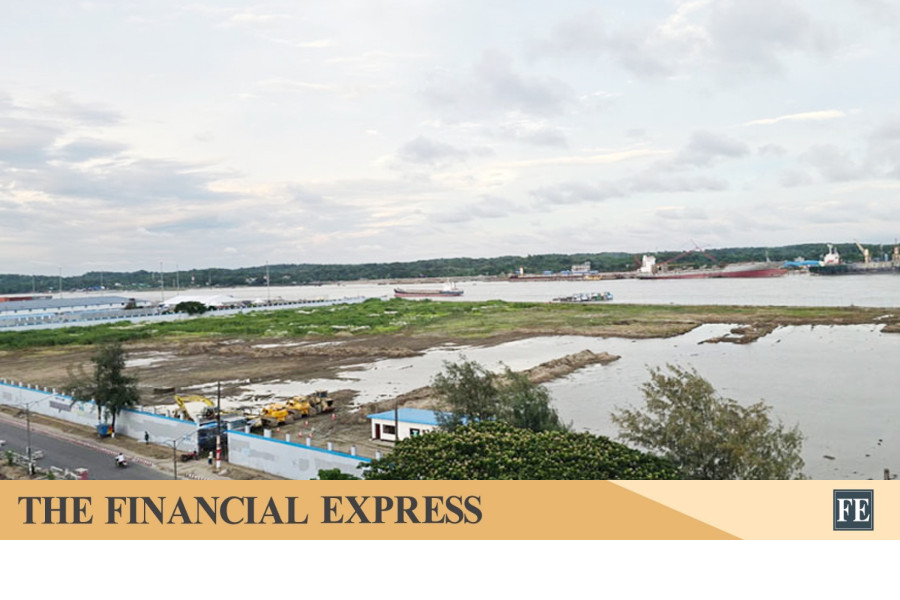
THE port sector is at a critical turning point. Private berth operators have demonstrated unprecedented confidence by submitting a Tk 7,650 crore proposal to renovate Chattogram Port’s ageing general cargo berth. At the same time, exporters and importers are grappling with recent tariff...
 www.newagebd.net
Rethinking seaport financing
THE port sector is at a critical turning point. Private berth operators have demonstrated unprecedented confidence by submitting a Tk 7,650 crore proposal to renovate Chattogram Port’s ageing general cargo berth. At the same time, exporters and importers are grappling with recent tariff increases imposed by the Chattogram Port Authority, which risk raising the cost of doing business. Should Bangladesh continue relying on foreign loans and periodic tariff hikes to fund port expansion, or is it time to adopt a more modern, inclusive financing approach?Bangladeshi Culture Course
The general cargo berth illustrates this tipping point. Built in stages between 1954 and 1979, the terminal has outlived its economic life long ago. Private berth operators, who now manage roughly half of Chattogram’s container throughput and four-fifths of its bulk cargo, have operated under short-term tender contracts for years. Their long-term investment proposal demonstrates both the commercial viability of the port sector and the potential of untapped domestic and foreign capital, which has remained largely inaccessible under the current institutional structure.
Bangladesh distinguishes itself from other maritime leaders in this regard. While the Chattogram Port Authority functions as a statutory body under bureaucratic constraints, ports worldwide have modernised their governance and financing. Shanghai International Port Group raised billions through the Shanghai Stock Exchange. DP World became a global operator after listing on NASDAQ Dubai. Hutchison Port Holdings Trust in Singapore allows ordinary investors to hold units in a port-related company, generating steady returns. The Port of Rotterdam frequently taps European bond markets while India’s Adani Ports relies heavily on the stock market to fund expansion. These cases show that high-cash-flow, strategically dominant ports are naturally suited to corporate governance reforms and stock-exchange listing.
Bangladesh’s dependence on foreign loans and tariff adjustments is increasingly unsustainable. Modern ports require continuous investment in dredging, jetty construction, gantry cranes, digital systems, logistics zones and green energy transitions. Foreign loans carry long approval processes, currency risks and politically sensitive repayment obligations. Tariff hikes, by contrast, immediately raise the cost of trade. Even a modest 10 per cent increase in port fees can add more than $20 per container, undermining export competitiveness and inflating import costs. In a country with narrow trading margins, fee-based funding is inefficient.
A forward-looking alternative is to mobilise capital directly from the public via stock-exchange listing. By incorporating the port authority under the Companies Act and offering a minority share on the Dhaka Stock Exchange, Bangladesh could tap domestic savings, strengthen transparency and spread investment responsibility across a broad spectrum of shareholders. Citizens could directly own national infrastructure, while the port sector would gain a reliable, predictable source of capital. With stable cash flows and natural monopoly characteristics, ports could also anchor long-needed confidence in the DSE, attracting institutional investors and serving as a model for corporate governance in other sectors.
The Tk 7,650 crore general cargo berth proposal makes this case compelling. Significant funding is clearly available domestically, with investors recognising the commercial potential of port infrastructure. Under the current public-private partnership model, however, these benefits are restricted to a small set of operators and partners. A corporatised, partially listed CPA would enable public and institutional investors to participate, while private operators continue managing day-to-day operations, as is standard in ports such as Singapore and Shanghai.
Stock-market listing is not without challenges. Concerns about excessive foreign ownership, undervaluation of state assets, political influence and labor restructuring are genuine. Yet these issues can be managed. Foreign ownership can be limited through statutory caps and golden shares. Transparency can be ensured via independent boards, audited reports, and robust accounting standards. Labor concerns can be addressed through job security policies, retraining and structured transitions. When carefully designed, corporatisation strengthens accountability rather than diminishing it.Politics
A viable reform path could begin with incorporating CPA under the Companies Act and publishing audited financial statements and operational performance reports. Pilot listings could then be launched for strategic terminals, such as the GCB or Bay Terminal, before expanding to Mongla, Payra, and future deep-sea ports like Matarbari. This staged approach balances ambition with caution, allowing policymakers to refine the model based on early outcomes.
The impact on the capital market could be transformative. The DSE has long struggled with speculative trading, weak governance, and a shortage of large, revenue-generating listings. Ports, with predictable earnings and natural monopolies, could serve as flagship listings, attracting institutional investment, deepening market liquidity and providing benchmarks for corporate governance across industries.
Funding requirements for ports are substantial. The Bay Terminal alone requires Tk 13,525 crore in marine infrastructure. Payra Port needs extensive dredging and Matarbari deepsea port will demand long-term investment to realise its growth potential. Even routine upgrades necessitate significant annual capital. Reliance on foreign borrowing or tariff hikes alone is insufficient. Capital-market funding, coupled with carefully structured PPPs and infrastructure bonds, offers a more sustainable, inclusive route.
Bangladesh’s seaports are more than logistical facilities; they are national assets that shape competitiveness, industrial growth, and economic prosperity. The private berth operators’ Tk 7,650 crore proposal illustrates that investment-led transformation is possible. What is required now is a bold policy shift: corporatisation, transparency, and broad-based public ownership. With these reforms, Chattogram, Mongla, Payra, Matarbari and the Bay Terminal could evolve from maritime gateways into engines of shared national development. Ports should not merely move goods; they should generate wealth, opportunity and economic sovereignty for the nation.Bangladeshi Culture Course
Sayeed M Hassan, a retired navy captain, is an adjunct faculty at the Bangladesh Maritime University.
THE port sector is at a critical turning point. Private berth operators have demonstrated unprecedented confidence by submitting a Tk 7,650 crore proposal to renovate Chattogram Port’s ageing general cargo berth. At the same time, exporters and importers are grappling with recent tariff increases imposed by the Chattogram Port Authority, which risk raising the cost of doing business. Should Bangladesh continue relying on foreign loans and periodic tariff hikes to fund port expansion, or is it time to adopt a more modern, inclusive financing approach?Bangladeshi Culture Course
The general cargo berth illustrates this tipping point. Built in stages between 1954 and 1979, the terminal has outlived its economic life long ago. Private berth operators, who now manage roughly half of Chattogram’s container throughput and four-fifths of its bulk cargo, have operated under short-term tender contracts for years. Their long-term investment proposal demonstrates both the commercial viability of the port sector and the potential of untapped domestic and foreign capital, which has remained largely inaccessible under the current institutional structure.
Bangladesh distinguishes itself from other maritime leaders in this regard. While the Chattogram Port Authority functions as a statutory body under bureaucratic constraints, ports worldwide have modernised their governance and financing. Shanghai International Port Group raised billions through the Shanghai Stock Exchange. DP World became a global operator after listing on NASDAQ Dubai. Hutchison Port Holdings Trust in Singapore allows ordinary investors to hold units in a port-related company, generating steady returns. The Port of Rotterdam frequently taps European bond markets while India’s Adani Ports relies heavily on the stock market to fund expansion. These cases show that high-cash-flow, strategically dominant ports are naturally suited to corporate governance reforms and stock-exchange listing.
Bangladesh’s dependence on foreign loans and tariff adjustments is increasingly unsustainable. Modern ports require continuous investment in dredging, jetty construction, gantry cranes, digital systems, logistics zones and green energy transitions. Foreign loans carry long approval processes, currency risks and politically sensitive repayment obligations. Tariff hikes, by contrast, immediately raise the cost of trade. Even a modest 10 per cent increase in port fees can add more than $20 per container, undermining export competitiveness and inflating import costs. In a country with narrow trading margins, fee-based funding is inefficient.
A forward-looking alternative is to mobilise capital directly from the public via stock-exchange listing. By incorporating the port authority under the Companies Act and offering a minority share on the Dhaka Stock Exchange, Bangladesh could tap domestic savings, strengthen transparency and spread investment responsibility across a broad spectrum of shareholders. Citizens could directly own national infrastructure, while the port sector would gain a reliable, predictable source of capital. With stable cash flows and natural monopoly characteristics, ports could also anchor long-needed confidence in the DSE, attracting institutional investors and serving as a model for corporate governance in other sectors.
The Tk 7,650 crore general cargo berth proposal makes this case compelling. Significant funding is clearly available domestically, with investors recognising the commercial potential of port infrastructure. Under the current public-private partnership model, however, these benefits are restricted to a small set of operators and partners. A corporatised, partially listed CPA would enable public and institutional investors to participate, while private operators continue managing day-to-day operations, as is standard in ports such as Singapore and Shanghai.
Stock-market listing is not without challenges. Concerns about excessive foreign ownership, undervaluation of state assets, political influence and labor restructuring are genuine. Yet these issues can be managed. Foreign ownership can be limited through statutory caps and golden shares. Transparency can be ensured via independent boards, audited reports, and robust accounting standards. Labor concerns can be addressed through job security policies, retraining and structured transitions. When carefully designed, corporatisation strengthens accountability rather than diminishing it.Politics
A viable reform path could begin with incorporating CPA under the Companies Act and publishing audited financial statements and operational performance reports. Pilot listings could then be launched for strategic terminals, such as the GCB or Bay Terminal, before expanding to Mongla, Payra, and future deep-sea ports like Matarbari. This staged approach balances ambition with caution, allowing policymakers to refine the model based on early outcomes.
The impact on the capital market could be transformative. The DSE has long struggled with speculative trading, weak governance, and a shortage of large, revenue-generating listings. Ports, with predictable earnings and natural monopolies, could serve as flagship listings, attracting institutional investment, deepening market liquidity and providing benchmarks for corporate governance across industries.
Funding requirements for ports are substantial. The Bay Terminal alone requires Tk 13,525 crore in marine infrastructure. Payra Port needs extensive dredging and Matarbari deepsea port will demand long-term investment to realise its growth potential. Even routine upgrades necessitate significant annual capital. Reliance on foreign borrowing or tariff hikes alone is insufficient. Capital-market funding, coupled with carefully structured PPPs and infrastructure bonds, offers a more sustainable, inclusive route.
Bangladesh’s seaports are more than logistical facilities; they are national assets that shape competitiveness, industrial growth, and economic prosperity. The private berth operators’ Tk 7,650 crore proposal illustrates that investment-led transformation is possible. What is required now is a bold policy shift: corporatisation, transparency, and broad-based public ownership. With these reforms, Chattogram, Mongla, Payra, Matarbari and the Bay Terminal could evolve from maritime gateways into engines of shared national development. Ports should not merely move goods; they should generate wealth, opportunity and economic sovereignty for the nation.Bangladeshi Culture Course
Sayeed M Hassan, a retired navy captain, is an adjunct faculty at the Bangladesh Maritime University.