[🇧🇩] Semiconductor Industry in Bangladesh

[🇧🇩] Semiconductor Industry in Bangladesh
36
4K
More threads by Saif

G Bangladesh Defense
The value addition possibilities in the Semiconductor sector can be divided into 3 sections,

1. Design

2. Fabrication

3. Testing/Packaging/Assembly/QC

Design (#1) is being already done in Bangladesh - and you need all sorts of CAD training and people, which Bangladesh possesses. Ultimately this is where labor value addition for Bangladesh for educated workforce will bear fruit.

Fab (#2) is incredibly expensive. requiring humongous capital outlay (in the order of hundreds of Billions) and existing status quo players like Taiwan/Korea/US are unwilling to share that tech. So that is out for Bangladesh. But....

Packaging/QC/Testing (#3) is also a remote possibility for Bangladesh, though that is certainly less labor intensive than #1. Maybe not right now, but five/six years down the line, will be very appropriate option.

So for now - Design is the number one prerogative for Bangladesh in Semiconductor sector, and the one we should focus on.
Very informative post:)
 
Last edited by a moderator:

National Semiconductor Symposium 2025 kicks off

1752800212654.webp

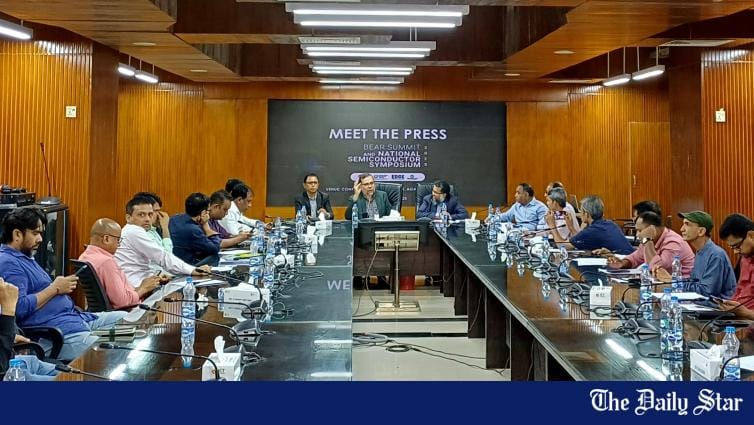
Press conference ahead of BEAR Summit and Bangladesh National Semiconductor Symposium 2025 on July 15. Image: Md. Zahidur Rabbi.

The inaugural session of the country's first Biotic Electronics AI and Robotics (BEAR) Summit and Bangladesh National Semiconductor Symposium 2025 was held at Dhaka on July 16.

The two-day event, taking place on July 16 and 17 at the National Science and Technology Complex in Agargaon, is jointly organised by the Information and Communication Technology (ICT) Division, the EDGE Project, and the Bangladesh Computer Council.

Earlier, at a press conference on July 15, ICT Division Secretary Shish Haider Chowdhury described the event as a landmark collaboration between the government, the semiconductor industry, academic institutions, and members of the Bangladeshi diaspora. He noted that the government is prepared to provide full policy support to foster growth in this sector, adding that a draft of the National Semiconductor Policy has already been prepared and will soon be finalised.

Shish Haider Chowdhury also stated that proposals have been submitted to policymakers to offer cash incentives of five to ten percent for the export of semiconductor-based products and services. He projected that with a workforce of 20,000 skilled professionals, Bangladesh could generate USD 150 billion in semiconductor exports over the next decade.​
 

ACI to enter property, semiconductor businesses

16 January 2026, 13:06 PM
UPDATED 16 January 2026, 13:06 PM

1768612103329.webp


ACI Ltd, one of the leading diversified conglomerates in Bangladesh, plans to enter the property and semiconductor businesses.


The group will form two new subsidiaries—ACI Properties Ltd and ACI Semiconductor Ltd—according to decisions by the ACI board, taken on Thursday.

The group has 17 subsidiaries and five joint ventures.

ACI, in disclosures made through advertisements, said it would form ACI Properties Ltd with an authorised capital of Tk 100 crore and a paid-up capital of Tk 10 crore.

ACI will hold 85 percent of the shares, subject to the approval of the concerned authority.

The group operates under five strategic business units, spanning health, consumer care, agribusiness, and motors, and said its semiconductor subsidiary will also have an authorised capital of Tk 100 crore and a paid-up capital of Tk 10 crore.

In this case, ACI will hold 85 percent of the shares.

The conglomerate said the formation of the subsidiaries is subject to the approval of the concerned authority.

The group suffered losses for the third consecutive year in the financial year 2024–25.

ACI, however, posted a profit in the first quarter of the fiscal year 2025–26.​
 

BSIA, SICIP team up to build semiconductor workforce

FE REPORT
Published :
Feb 18, 2026 12:45
Updated :
Feb 18, 2026 12:45

1771461660556.webp


The Bangladesh Semiconductor Industry Association (BSIA) on Tuesday signed a contract with the Skills for Industry Competitiveness and Innovation Programme (SICIP) to implement a large-scale, industry-oriented semiconductor workforce development programme.

Mohammed Walid Hossain, executive project director of SICIP, and M A Jabbar, president of BSIA, signed the contract on behalf of their respective organisations at the SICIP office in Dhaka.

Under the agreement, BSIA will train 3,500 graduates from EEE, ECE, CSE, applied physics and other relevant disciplines through six specialised courses, says a press statement.

The courses are IC Design & Layout Engineering; Advanced Physical Design Program: RTL to GDSII; DFT and Verification Engineering Program for ASIC Designers; Applied Semiconductor Systems: Power Devices and Industrial Integration; Smart Systems Engineering: Embedded Design and Semiconductor Application Interfaces; and Packaging and Testing. Each course will run for three months (240 hours).

The total cost of the programme is Tk 351.4 million, and the implementation period will run from February 2026 to December 2028.

Speaking on the occasion, SICIP Executive Project Director Mohammed Walid Hossain emphasised the importance of ensuring high-quality training delivery, strong monitoring throughout implementation, and achieving at least 65 per cent job placement of certified trainees in line with the programme's objectives.​
 

Govt eyes chip industry growth with extended tax concessions until 2031

1781233845144.webp


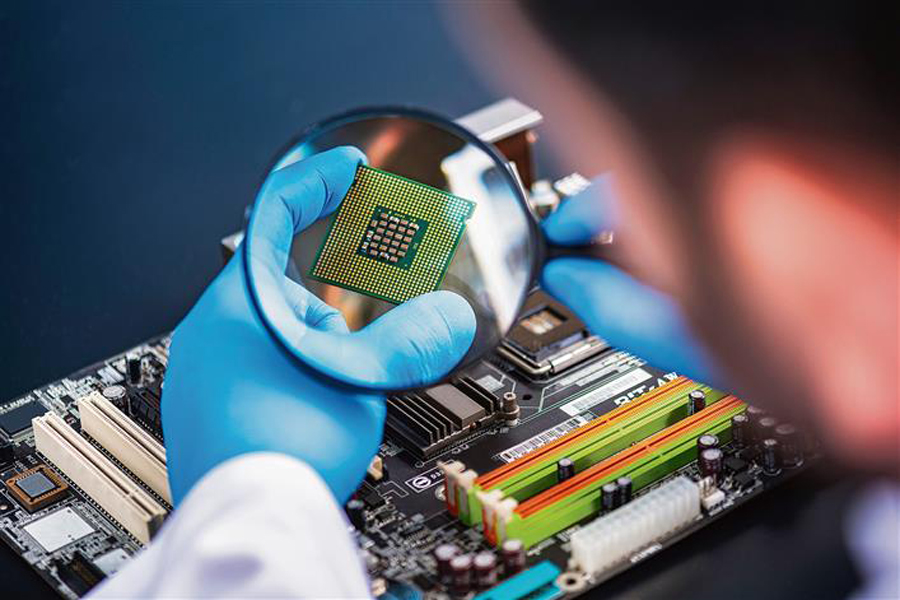
Image: He Junhui/Unsplash

The Bangladesh government has proposed sweeping tax concessions for the semiconductor industry, including reducing import duties on key raw materials to 1 percent until mid-2031, as part of its fiscal year 2026-27 budget.

Semiconductors are a critical component in modern electronics, powering products ranging from smartphones and computers to industrial equipment and vehicles.

Under the proposal, raw materials used in semiconductor and chip design, testing and packaging would be exempt from regulatory duty, supplementary duty, value-added tax and advance tax. A 1 percent import duty would remain in place. The concessions would apply until 30 June 2031.

Presenting the budget, finance and planning minister Amir Khosru Mahmud Chowdhury said, “Every year, our universities produce many qualified engineers, and many more are contributing globally as part of the Bangladeshi diaspora.”

The proposed incentives are aimed at leveraging that talent pool, creating skilled jobs and supporting export-oriented growth, according to the minister.​
 

Latest Posts

Back