Home Watch Videos Wars Movies Login

[🇧🇩] Sheikh Hasina's/Awami League's activities in India to harm Bangladesh

[🇧🇩] Sheikh Hasina's/Awami League's activities in India to harm Bangladesh
14
137
More threads by Saif

G Bangladesh Defense

NCP demands Indian envoy be summoned over Hasina’s Delhi press conference

Asif Mahmud accuses India of using the ousted prime minister as a “pawn” to undermine Bangladesh’s sovereignty

Star Online Report
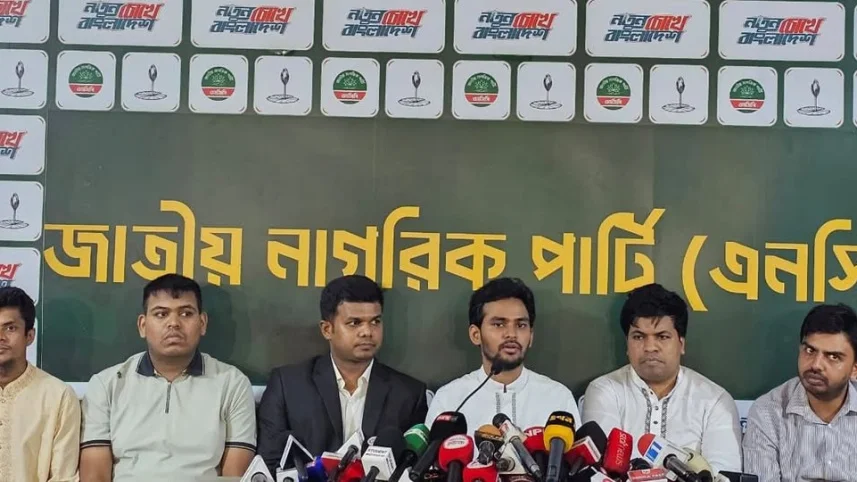
1786059477564.webp

Photo: Courtesy

National Citizen Party (NCP) spokesperson Asif Mahmud Shojib Bhuyain today accused India of using ousted prime minister Sheikh Hasina as a "pawn" to undermine Bangladesh's sovereignty and demanded that the government summon the Indian high commissioner over her media appearance in New Delhi.

Speaking at an emergency press conference, he said Hasina's media interaction was a threat to Bangladesh's sovereignty and alleged that India was using her to disrupt the country's democratic environment.

He claimed the government had failed diplomatically to prevent Hasina from making political remarks from Indian soil. He urged stronger diplomatic efforts to stop her political activities in India and secure her return to Bangladesh.

Asif warned that the NCP could abandon its earlier position that reconciliation with the Awami League might be considered after justice for the July Uprising killings if such activities continued.

“If this continues, perhaps in the future we too will have to demand that there be no reconciliation, and we may have to take an all-out organisational position,” he said.

He criticised former Bangladesh cricket captain Shakib Al Hasan for participating in the Delhi event, saying it had clarified his political position.

Earlier, NCP Joint Member Secretary Alauddin Mohammad read out a statement calling on India to return Hasina under the extradition treaty and criticising the Bangladesh government for what the party described as insufficient efforts to bring her back and enforce court verdicts against her.

Asif also criticised some Bangladeshi media outlets for airing Hasina's remarks, saying that a government order restricting the Awami League's activities prohibits registered media outlets from broadcasting the party's political statements and programmes.

He blamed the information and broadcasting ministry for failing to enforce the restriction.​
 
Analyze

Analyze Post

Add your ideas here:
Highlight Cite Respond
  • Love (+3)
Reactions: Bilal9

Hasina remarks from Indian soil affront to Bangladesh’s sovereignty: govt
Diplomatic Correspondent 05 August, 2026, 23:56

1786060888526.webp

Sheikh Hasina. | File photo

Bangladesh on Wednesday said that remarks made by ousted prime minister Sheikh Hasina from Indian soil constituted an affront to Bangladesh’s sovereignty.

‘On a day when the people of Bangladesh are observing the second anniversary of the July Revolution, this interaction by Sheikh Hasina on the Indian soil stands as an affront to the sovereignty of Bangladesh and a grievous insult to the martyrs of the July Revolution,’ the foreign ministry said in a press release issued in Dhaka on Wednesday.

Dhaka deeply regretted that, despite conveying its concerns in advance to the Government of India about the potential impact of the event on efforts to reset bilateral relations, Hasina’s public interaction was allowed to proceed, according to the foreign ministry statement.

It further said Bangladesh was outraged that Sheikh Hasina, whom it described as an absconding convicted criminal, was allowed to participate in a live media interaction from New Delhi, where she and other Awami League leaders allegedly made hostile remarks against Bangladesh and its people.

On Wednesday, Sheikh Hasina virtually addressed a press conference hosted by the Foreign Correspondents’ Club of South Asia in New Delhi. She was joined by her son, Sajeeb Wazed Joy, who joined the event virtually from the United States, and several leaders of Awami League, activities of which are now banned in Bangladesh for July atrocities.

Former education minister Mohibul Hassan Chowdhoury attended the press conference in person while former lawmaker and cricketer Shakib Al Hasan joined it virtually from Sri Lanka.

Although the event was held via video link, Hasina, who fled to India amid a student-led mass uprising on August 5, 2024 and was sheltered there since then, participated through audio only.

During the press conference, a journalist asked Sheikh Hasina whether she regretted the violence and deaths that occurred during the July protests.

She did not respond to the question. Instead, Sajeeb answered on her behalf, arguing that the question of an apology could not arise while the interim administration and the incumbent government had granted what he described as ‘blanket indemnity to protesters accused of killing police officers and Awami League members’.

‘The Awami League would express regret only after the protesters who killed police officers, civilians and Awami League members are arrested,’ Sajeeb said.

The foreign ministry reiterated that Bangladesh sought to maintain a constructive, mutually beneficial and forward-looking relationship with India based on sovereign equality, mutual respect, non-interference in each other’s internal affairs, and respect for national dignity.

Dhaka, however, expressed disappointment that Bangladesh’s repeated requests for Sheikh Hasina’s return under the 2013 Bangladesh–India Extradition Treaty had not received any response.

It added that allowing her to publicly address the media under any pretext had deeply hurt public sentiment in Bangladesh and undermined efforts to strengthen bilateral ties.

According to the ministry, denying findings established by the United Nations regarding the killings of civilians, including children, during the July–August 2024 unrest amounted to an attempt to rewrite history.

It asserted that the people of Bangladesh had rejected such narratives in the past and continued to do so.

The statement concluded by stating that, in keeping with the spirit of the July Revolution, the people of Bangladesh remained determined never to return to what it described as an era of fascism and that the country would never become a client state.

It also declared that Sheikh Hasina and her political organisation would have no future role in Bangladesh’s political landscape.​
 
Analyze

Analyze Post

Add your ideas here:
Highlight Cite Respond
  • Love (+3)
Reactions: Bilal9

Nahid blames Hasina's Delhi briefing on government's diplomatic 'weakness', marks it as failure

1786147007935.webp


National Citizen Party (NCP) Convenor and Chief Whip of the opposition Nahid Islam on Friday said Sheikh Hasina was able to hold a press briefing in Delhi because of the BNP government's failures and diplomatic weakness.

"This is a diplomatic failure of the government. The foreign ministry is trying to earn praise by issuing a press release over fascist Hasina's Delhi briefing. This is mere rhetoric, what we colloquially call empty posturing. Big words are used in the press release, but no diplomatic action is being taken," Nahid told reporters.

He made the comments after visiting a photo exhibition titled "July Still Not Over," organised by Bangladesh Jamaat-e-Islami on the premises of the opposition leader's official residence.

Nahid said the Awami League had announced the press briefing in advance and the Delhi government had cooperated with them. “The Indian High Commission should have been summoned and strongly condemned by the government.”

He added that the government should make public what diplomatic measures it plans to take against such incidents in future.

Alleging that the government is attempting to turn authoritarian, Nahid said if structural reforms are not carried out, the present government too will become autocratic, noting that such a tendency already exists within it.

He said history shows that a "failed Awami League" has repeatedly tried at different times to reassert itself in that mould but has failed in the face of public resistance, citing 1996 as an example. He warned that any fresh attempt now would again meet public resistance.

NCP's chief organiser for the northern region Sarjis Alam, spokesperson Asif Mahmud Shojib Bhuiyan and chief coordinator Nasiruddin Patwary, among other senior leaders, were present during the visit.​
 
Analyze

Analyze Post

Add your ideas here:
Highlight Cite Respond
  • Sad (0)
Reactions: Bilal9

India doesn’t endorse Hasina’s comments: Jaiswal Correspondent

New Delhi
Published: 07 Aug 2026, 22: 02

1786147290062.webp


Indian Ministry of External Affairs spokesperson Randhir Jaiswal.Screengrab from a video published on the website of India's Ministry of External Affairs

The Government of India does not endorse anything said by Bangladesh's ousted and convicted former prime minister Sheikh Hasina during a press conference held in New Delhi.

Indian Ministry of External Affairs spokesperson Randhir Jaiswal made the remarks on Friday while responding to questions at the ministry's weekly media briefing in New Delhi.

He said, "The Government (of India) does not endorse anything said at the forum, especially with regard to the duly constituted Government of Bangladesh."

Sheikh Hasina, who has been sentenced to death in connection with crimes against humanity committed during the July uprising and remains a fugitive, joined a press conference via audio call on Wednesday evening. The event was organised by the Foreign Correspondents' Club South Asia (FCC South Asia) in New Delhi.

Before the event, the Bangladesh government had formally conveyed its objection to India. It had also warned that allowing Sheikh Hasina to engage in political activities from Indian soil could hinder efforts to normalise bilateral relations.

Responding to the objection, India's Ministry of External Affairs had said the Government of India had no connection with the event.

Despite Bangladesh's objection, the programme went ahead. Hasina joined via audio call, delivered a statement and also answered several questions from journalists. Later that night, the Bangladesh government issued a strong reaction.

In a statement, Bangladesh's Ministry of Foreign Affairs said, "Bangladesh is outraged that the absconding convicted genocider Sheikh Hasina was allowed this evening to engage in live interaction with the media in New Delhi where she and her henchmen launched venomous vitriol against the State of Bangladesh and her people."

The ministry's statement also said that Hasina's interaction with journalists from Indian soil on the second anniversary of the July mass uprising was an affront to Bangladesh's sovereignty and a grave insult to those martyred during the uprising.

On Thursday, State Minister for Foreign Affairs Shama Obaed Islam told journalists that the incident had raised concerns about the future of Bangladesh-India relations.

At Friday's briefing, journalists raised several questions on the issue. In response, Jaiswal said, "I have already stated government's position on the issue before the press conference happened. You would have seen those remarks, you were present here. I am reiterating it here: Government had no role to play in what was an event by a private media entity, and government does not endorse anything said at the forum, especially with regard to the duly constituted government of Bangladesh.”

Jaiswal had made essentially the same remarks in response to questions on the previous day.

However, on Friday he added that, "especially with regard to the duly constituted Government of Bangladesh." He said, “The government (of India) has no involvement whatsoever in it and does not endorse any views that may be expressed at the forum,” He repeated the same point in Hindi after making it in English.

During the New Delhi event, Sajeeb Wazed, who joined virtually from the United States, said Bangladesh was rapidly turning into another Pakistan. Referring to that remark at Friday's briefing, a journalist asked whether India endorsed the allegation and how concerned it was about the situation in Bangladesh.

In response, Jaiswal said, “We keep a close watch on all the developments in our neighbourhood. India pays particular attention to its national security and takes appropriate steps in response to any development or situation."

Jaiswal did not comment on whether India endorsed or rejected Sajeeb Wazed's allegation.​
 
Analyze

Analyze Post

Add your ideas here:
Highlight Cite Respond

Allowing Sheikh Hasina to speak in Delhi to the media is disrespectful to Bangladesh

ANM Muniruzzaman
Published: 07 Aug 2026, 17: 56

1786147458441.webp

ANM Muniruzzaman File Photo

Sheikh Hasina’s engagement with the media in Delhi has, for the time being, hindered efforts to move Bangladesh-India relations forward in a constructive manner. The former Prime Minister of Bangladesh fled to Delhi while facing allegations of responsibility for mass killings. Therefore, it would not have been possible for her to speak to the media in Delhi without the permission of the Indian government. The Bangladesh government had accordingly requested that India not allow her to use its territory for such a purpose.

Ignoring that request, India allowed Sheikh Hasina to address the media. On the anniversary of the July Mass Uprising, this has been viewed as an act of disregard toward Bangladesh and has deeply hurt the sentiments of the Bangladeshi people.

Sheikh Hasina, who has been convicted in connection with mass killings, continues to engage in activities against Bangladesh while in India. She has persisted in efforts to destabilise the country. In her remarks following the brutal mass killings, she expressed not the slightest remorse; instead, she once again revealed herself as a cold-blooded killer. Last Wednesday, Sheikh Hasina made numerous false claims and attempted to portray Bangladesh in an entirely negative light. This campaign of misinformation is in no way acceptable to the people of Bangladesh.

Bangladesh has consistently stated that it seeks to advance its relationship with India on the basis of mutual respect, dignity, and sovereign equality. In its relations with New Delhi, Dhaka has continued to emphasise the importance of a good-neighborly approach.

However, the same attitude has not been evident from India. In recent times, political leaders from West Bengal, Assam, and other parts of India have made highly insulting and provocative remarks about Bangladesh. Such statements by Indian politicians are creating obstacles to the development of positive relations between the two countries.

Attempts at illegal push-ins across the Bangladesh-India border are entirely unacceptable and must be brought to a complete halt. In addition to Sheikh Hasina, around 1,200 leaders of the Awami League, which has been banned from political activities in Bangladesh, are reportedly in hiding in India. Furthermore, several military officers who fled Bangladesh are also said to be residing in India.

These individuals from Bangladesh who have taken refuge in India are engaging in activities against their home country. Their actions have become a significant obstacle to the relationship between Bangladesh and India. India needs to recognise the seriousness of this issue.

As a neighboring country, Bangladesh believes in the principle of peaceful coexistence in South Asia. This relationship, however, must be based on mutual respect, dignity, and sovereign equality.

* Major General ANM Muniruzzaman (retired) is President, Bangladesh Institute of Peace and Security Studies (BIPSS).​
 
Analyze

Analyze Post

Add your ideas here:
Highlight Cite Respond
  • Like (+1)
Reactions: Bilal9

Jamaat calls Hasina’s Delhi press conference a ‘gross violation’ of diplomatic norms

Party urges govt to step up efforts to bring the former prime minister back to Bangladesh

Star Online Report

1786148370864.webp


Bangladesh Jamaat-e-Islami has described India’s decision to allow former prime minister Sheikh Hasina, who is currently staying in the country, to address a press conference in New Delhi as a “gross violation” of diplomatic norms.

In a statement issued on Friday, Jamaat Secretary General Mia Golam Porwar alleged that the Indian government was disregarding Bangladesh’s diplomatic appeals by continuing to shelter Hasina. He also urged the government to take more effective steps to bring her back to Bangladesh.

Hasina, who has been sentenced to death in a crimes against humanity case, addressed a press conference in New Delhi on Wednesday night (August 5), coinciding with the second anniversary of the July Uprising. The Bangladesh government has already expressed strong resentment over the development.

In the statement sent by Jamaat's central publicity department, Porwar said Bangladesh remains committed to maintaining diplomatic relations with all countries, including neighbouring India, on the basis of mutual respect and equality. He added that Bangladesh also respects the independence and sovereignty of other nations.

He alleged that Hasina was continuing to conspire against the people of Bangladesh from New Delhi, and India had ignored Bangladesh's diplomatic requests to stop such activities and continued to provide her with shelter.

"This is a gross violation of international norms and diplomatic etiquette," Porwar said.

Referring to repeated requests by the interim government for Hasina's extradition, the Jamaat leader said India appeared to be patronising the Awami League -- whose activities remain banned -- instead of standing by Bangladesh.

He also alleged that India was disregarding the existing bilateral prisoner exchange agreement between the two countries.

"We expect the Indian government to revise its position and hand over convicted Sheikh Hasina to Bangladesh," Porwar said.

Claiming that the current government has so far failed to bring Hasina back to the country, he called for more effective measures, including seeking an Interpol red notice and assistance from the United Nations.

“If the government shows diplomatic laxity, it will have to answer to the people,” Porwar added.​
 
Analyze

Analyze Post

Add your ideas here:
Highlight Cite Respond
  • Love (+3)
Reactions: Bilal9

India must rethink friendly ties if it allows Hasina political activities: Home Minister

Staff Correspondent
Dhaka
Published: 08 Aug 2026, 18: 29

1786233553936.webp

Home Minister Salahuddin Ahmed addressed a programme at Dhaka University on 8 August. Prothom Alo


Home Minister Salahuddin Ahmed has warned India over the political activities of former prime minister Sheikh Hasina, who is currently staying in the country.

He said India would need to reconsider its friendly relations with Bangladesh if it allows Hasina, who fled the country amid the mass uprising, to conduct political activities from Indian soil.

“You will play the Hasina card and seek friendly relations with Bangladesh; remember, the two are contradictory. I hope the Indian authorities and the Indian government will understand this,” the home minister said.

He made the remarks on Saturday as the chief guest at a discussion held at the Nawab Nawab Ali Chowdhury Senate Building at Dhaka University to mark the second anniversary of the July mass uprising.

The discussion, titled “The Role of University Teachers in the Fall of the Fascist Government,” was organised by the Dhaka University White Panel and the University Teachers’ Association of Bangladesh (UTAB).

Salahuddin Ahmed urged India not to allow Sheikh Hasina to make political statements or support activities against Bangladesh. He said Bangladesh wanted to maintain friendly diplomatic relations with neighbouring India based on mutual interdependence and respect for sovereignty.

‘The mass uprising was not a 36-day movement’

Salahuddin Ahmed said the mass uprising was not a sudden event but the result of 17 years of sacrifice and political movements.

Addressing leaders of a newly formed political party, he said there was no substitute for experience and maturity in politics.

He said it was unrealistic to think that all the achievements came from a 36-day movement while ignoring the history of 17 years of struggle.

“If students at the elementary level of political education behave like university professors... it would be a mistake to think that the 17 years of continuous movements had nothing to do with the 36-day movement,” he said.

He urged BNP’s student wing to avoid falling into various conspiracies and provocations. According to Salahuddin, attempts were being made to provoke violence, and “some of our student friends” had already fallen into such traps in several places.

Calling on students to remain patient, he said, “Abuse or propaganda must be answered through democratic protest. But under no circumstances should anyone become involved in violence.”

Criticising the opposition for not participating in the constitutional reform committee, the home minister said the BNP would undertake constitutional reforms that would have long-term significance for building a future Bangladesh.

‘No one group can claim credit for July’

BNP Senior Joint Secretary General Ruhul Kabir Rizvi spoke as a special guest at the discussion.

Highlighting the long movement by students, the public and the BNP against fascism, he called for institutional and constitutional reforms as well as changes in the mindset of political leaders.

The BNP leader said no single group could claim sole credit for the July mass uprising. He said Tarique Rahman, who was in London at the time, and the party’s top leaders had regularly provided guidance during the movement.

Rizvi said the BNP had extended full support to programmes such as the “March for Justice” and “Bangla Blockade.” He also claimed that 142 leaders and activists of the party’s student wing, Chhatra Dal, were killed during the July movement.

Rizvi also referred to the recent screening of a documentary on Bangladesh’s history at the official residence of Jamaat-e-Islami Ameer Shafiqur Rahman.

He alleged that although the documentary mentioned Bangabandhu Sheikh Mujibur Rahman, it made no reference to former president Ziaur Rahman as the declarer of independence.

Rizvi questioned whether recent developments were an “extension” of the opposition’s “approach of amnesty” after 5 August, when it had spoken of forgiveness and adopted a softer tone towards everyone.

He described the matter as “significant and mysterious.”

‘Teachers’ opinions were ignored’

Dhaka University Vice-Chancellor Professor ABM Obaidul Islam said the university was subjected to extreme authoritarian control during the period of fascism.

He said freedom of thought was restricted and decisions were imposed despite the opinions of ordinary teachers being ignored.

The vice-chancellor also alleged that protesting teachers faced psychological and administrative harassment.

At the same time, he said teachers had stepped outside classrooms and joined protests when students launched legitimate movements for their rights and when the country faced a democratic crisis.

Professor Md Nurul Islam, organising secretary of UTAB and vice-chancellor of Dhaka Central University, delivered the welcome address.

Shafiul Alam, father of Md Wasim Akram, who was killed in Chattogram during the July uprising, urged political groups not to treat the uprising’s legacy as their “paternal property” in their efforts to claim credit for it.

He called on everyone to ensure that the sacrifices of young students who gave their lives to end discrimination did not go in vain.

The discussion was moderated by Professor Md Mohiuddin, a leader of the Dhaka University White Panel. Professor Md Morshed Hasan Khan, secretary general of UTAB and convener of the university’s White Panel, chaired the event.

Also speaking at the event were National University Pro-Vice-Chancellor Professor Lutfur Rahman; Abu Hossain, brother of slain protester Abu Sayed; Mir Mahbubur Rahman Snigdha, brother of slain protester Mir Mahfuzur Rahman Mughdha; Nazma Khatun Lipi, mother of police officer Ikramul Haque Sajid, who was killed during the July movement; and leaders of UTAB and the Dhaka University White Panel.​
 
Analyze

Analyze Post

Add your ideas here:
Highlight Cite Respond

Latest Posts

Back
 
G
O
 
H
O
M
E