☕ Support Us
[🇧🇩] - Ship Recycling Industry in Bangladesh | Page 2 | PKDefense

[🇧🇩] Ship Recycling Industry in Bangladesh

Reply (Scroll)
Press space to scroll through posts
G Bangladesh Defense
[🇧🇩] Ship Recycling Industry in Bangladesh
13
2K
More threads by Bilal9

We are one of the largest ship breaking industries in the world. The German investors can provide technology and money to make our ship breaking industry greener. Profit in this sector in guaranteed.

Agreed. Most of the terms for green ship recycling is agreed on the Hong Kong Convention. Ship recyclers from Alang in India and Gadani in Pakistan were certified last year, but some from Bangladesh may also have already certified (PHP Bangladesh in particular). PHP followed Green ship recycling far earlier than most other recycling companies in South Asia. You can see from the matrices below that cost of ship recycling in Bangladesh per ton is lower than India, but higher than Pakistan.


------------------------------------------------------------------------

Hong Kong Convention Demystified: A Practical Guide to Green Ship Recycling

August 21, 2024

green-ship-recycling-hkc.jpg


Navigating the complexities of ship recycling has become increasingly crucial for ship owners as environmental regulations tighten across the globe. The Hong Kong International Convention for the Safe and Environmentally Sound Recycling of Ships, known simply as the Hong Kong Convention, sets the international standard for recycling ships in a manner that protects both human health and the environment. As this convention gains traction worldwide, ship owners must understand its requirements and how to comply effectively. This guide provides practical insights and resources, including certified recycling facilities, cost-benefit analyses, and compliance strategies, ensuring that your ship recycling process is both compliant and efficient.


** Please fact check data as there may be inaccuracies and these figures can change over time. Please send comments / suggestions to editor @ shipuniverse.com **

Understanding the global landscape of ship recycling is essential for making informed decisions. This table provides a snapshot of the leading ship recycling countries, highlighting their compliance with the Hong Kong Convention and the availability of certified facilities. It offers valuable insights for ship owners looking to responsibly recycle their vessels.

CountryStatus of Hong Kong Convention RatificationNumber of Certified Recycling YardsKey Environmental and Safety RegulationsAverage Cost of Recycling (USD)
IndiaRatified92Compliance with Supreme Court guidelines; Occupational Safety Standards$300-$400/ton
BangladeshIn Progress20National Policy for Shipbreaking; Environmental Impact Assessments$250-$350/ton
PakistanNot Ratified10Minimal regulatory oversight; Some adherence to ILO guidelines$200-$300/ton
TurkeyRatified22Strict adherence to EU and IMO standards; Environmental management systems in place$350-$450/ton
ChinaRatified100+Comprehensive national regulations; Advanced waste treatment facilities$400-$500/ton

Complying with the Hong Kong Convention involves adhering to several key requirements designed to ensure safe and environmentally sound ship recycling. This table outlines some of these critical requirements, including the necessary steps for compliance, estimated costs, and potential challenges that ship owners might face.

Requirement


DescriptionCompliance StepsEstimated CostPotential Challenges
Inventory of Hazardous Materials (IHM)Ships must maintain an inventory of all hazardous materials onboard.Survey and document all materials; Update inventory regularly.$10,000-$30,000Costly and time-consuming for older ships.
Certified Recycling FacilitiesShips must be recycled at facilities certified to handle hazardous materials safely.Select a certified yard; Ensure proper documentation and certification.Varies by location and yard capacity.Limited availability of certified facilities.
Ship Recycling Plan (SRP)Develop a plan that outlines how the ship will be dismantled and recycled.Work with a certified recycling yard to create a compliant SRP.$5,000-$15,000Requires close collaboration with the recycling yard.
Safe Working ConditionsEnsure the health and safety of workers involved in the recycling process.Implement safety protocols; Provide training and PPE.$5,000-$20,000Enforcing compliance in countries with weaker regulations.

An Inventory of Hazardous Materials (IHM) is a mandatory component of compliance with the Hong Kong Convention. This table identifies the most common hazardous materials found on ships, their typical locations, associated risks, and safe disposal methods, helping ship owners prepare for recycling in a responsible manner.

MaterialLocation on ShipPotential HazardsSafe Disposal MethodsRegulatory Requirements
AsbestosEngine room, insulation, pipingCarcinogenic; respiratory issuesSealed removal and disposal at certified hazardous waste facilityStrict regulation under international conventions; requires IHM documentation
Polychlorinated Biphenyls (PCBs)Electrical equipment, cables, transformersCarcinogenic; toxic to environmentIncineration at high temperatures in licensed facilitiesBanned or restricted use in most countries; must be identified in IHM
Heavy Metals (e.g., lead, mercury)Batteries, paints, ballast water tanksNeurotoxic; environmental contaminationRecycling or disposal at hazardous waste facilitiesStrict disposal requirements under MARPOL and other conventions
Ozone-Depleting SubstancesRefrigeration systems, fire extinguishing systemsContributes to ozone layer depletionRecovery and destruction in certified facilitiesSubject to phasing out under international agreements; must be recorded in IHM
HydrocarbonsFuel tanks, bilge water, lubricantsFire hazard; environmental pollutionRecycling or disposal through certified waste management companiesControlled under MARPOL Annex I; needs careful handling and disposal

Choosing the right ship recycling facility is crucial for compliance with the Hong Kong Convention. This table lists certified ship recycling facilities across major recycling countries, providing details on their certification status, capacity, and services offered, enabling ship owners to make informed decisions about where to recycle their vessels.

Facility NameLocationCertification StatusCapacity (DWT)Key Services Offered
Leela Ship RecyclingAlang, IndiaCertified under Hong Kong Convention1,000,000 DWTComplete recycling, hazardous material management
Gadani Shipbreaking YardGadani, PakistanNot Certified500,000 DWTScrapping, basic waste management
SmedegaardenEsbjerg, DenmarkCertified under EU Ship Recycling Regulation200,000 DWTDecommissioning, green recycling, hazardous waste handling
Aliaga Ship RecyclingAliaga, TurkeyCertified under Hong Kong Convention800,000 DWTComprehensive recycling, environmental management
China National Ship Recycling Co.Shanghai, ChinaCertified under Hong Kong Convention2,000,000 DWTComplete recycling, hazardous material management

Investing in compliance with the Hong Kong Convention can have significant long-term benefits for ship owners. This table provides a cost-benefit analysis of the key factors involved in compliance, illustrating how initial costs can lead to savings and advantages over time, both financially and environmentally.

Cost FactorEstimated Cost Range (USD)BenefitLong-Term Savings
Inventory of Hazardous Materials (IHM)$10,000 - $30,000Ensures compliance, reduces environmental and health risksAvoids fines, reduces potential liability costs
Using Certified Recycling Facilities$300 - $500 per tonComplies with international standards, supports worker safetyPotentially higher scrap value, lower insurance premiums
Ship Recycling Plan (SRP)$5,000 - $15,000Structured and compliant recycling processMinimizes risks of non-compliance, avoids delays in decommissioning
Training and Safety Protocols$5,000 - $20,000Improves worker safety, reduces accident risksLowers long-term insurance and liability costs
Environmental Management Systems$15,000 - $50,000Reduces environmental impact, enhances corporate reputationPotentially lowers environmental taxes and improves brand value

Navigating the green ship recycling process requires careful planning and execution. This table offers a step-by-step guide to recycling a ship in accordance with the Hong Kong Convention, detailing the key actions, timelines, and resources needed at each stage, ensuring a smooth and compliant recycling process.

StepDescriptionKey ActionsTimeframeResources Needed
1. Inventory of Hazardous Materials (IHM)Document and assess hazardous materials on boardConduct a survey, prepare IHM documentation1-2 monthsCertified hazardous material surveyor, documentation tools
2. Selection of Recycling FacilityChoose a certified yard that complies with the Hong Kong ConventionEvaluate facilities, verify certification, negotiate contracts1-2 monthsFacility certifications, legal and negotiation team
3. Develop Ship Recycling Plan (SRP)Create a detailed plan for safe and compliant recyclingCollaborate with recycling yard, draft SRP2-4 weeksEnvironmental consultant, legal team
4. Decontamination and PreparationRemove hazardous materials and prepare ship for recyclingDecontaminate, remove oils, prepare structure2-3 monthsSpecialized cleaning teams, decontamination equipment
5. Recycling and DismantlingExecute the recycling process according to the SRPMonitor operations, ensure compliance with SRP3-6 monthsOn-site supervisors, compliance auditors
 
Last edited:
Cite Fact Check Highlight Respond
  • Love (+3)
Reactions: Saif

Stuck in red, shipbreaking slow to turn green

1745629083889.webp

Photos: Rajib Raihan

Transitioning from dangerous and polluting shipbreaking yards to green ship recycling facilities remains a priority, particularly as key deadlines loom, but the sluggish pace of progress continues to delay the shift in Bangladesh.

This lack of impetus is not only causing environmental harm but also creating serious business challenges, especially as Bangladesh must shift to green ship recycling by June 2025 in accordance with the Hong Kong Convention or run the risk of others refusing to send vessels to the country.

Bangladesh began the green transition in 2017, when PHP Ship Recycling Yard became the first entity in the country to receive international green certification.

Yet, only seven shipbreaking yards in the country have received similar certification as of March this year, according to the Bangladesh Ship Breakers and Recyclers Association (BSBRA).

To put things in perspective, the country has 248 shipbreaking yards, as per data from the Department of Inspection for Factories and Establishments. However, only 30 to 35 of these shipbreaking yards are operational due to various reasons, according to the BSBRA.

Taslim Uddin, owner of KR Ship Recycling, a green yard, told The Daily Star that the slow transition is due mainly to a lack of financial incentives.

For example, he mentioned that converting a small yard into a green shipyard currently requires an investment of Tk 30 to Tk 40 crore.

"In return, it may take at least 10 to 12 years or more to recover this amount through profits, which reflects the slow return and uncertainty on investment in this sector," he said.

Moreover, he added, due to the long time needed to break even and low profitability thereafter, financial institutions are often reluctant to provide loans to businesses in the shipbreaking industry.

Besides, uncertainty over the business continuity due to sudden government actions is another major factor hindering progress, he said.

After the deadline in June this year, recycling facilities located in countries that do not adhere to the HKC will be unable to receive ships for recycling.

This would jeopardise the people that are employed in the sector, totalling around 8,000 to 9,000 direct employees, according to the BSBRA and those indirectly dependent on it.

Labour rights activists say that yard owners have little incentive to convert their facilities into green shipyards as traditional methods are faster, cheaper, and require significantly less investment.

Fazlul Kabir Mintu, a long-time labour rights activist working in the shipbreaking sector, told The Daily Star, "The cost of dismantling ships in green yards is significantly higher than in traditional ones."

Since profit margins would shrink as a result, many yard owners are hesitant about the transition, he added.

Mohammed Zahirul Islam, president of the BSBRA, told The Daily Star, "The Ministry of Environment has listed our sector as high-risk, placing it on the red list. As a result, we are not eligible for green financing facilities from the Bangladesh Bank.

"Banks only provide short-term loans for purchasing ships, but they are not willing to finance the development of shipbreaking yards. This lack of financial support makes it difficult for shipbreakers to invest in green infrastructure," he added.

Bangladesh urgently needs to transition to green shipbreaking to address the serious environmental and economic challenges caused by traditional methods, which involve beaching large ships and manually breaking them apart without proper safety or environmental controls.

As a result, the surrounding environment -- land, air, and sea -- is subjected to intense pollution.

A 2010 World Bank study identified the presence of hazardous materials such as lead, chromium, cadmium, mercury, asbestos, and heavy metals in the soil of the Sitakunda coastal belt, an area known for shipbreaking.

The study estimated that from 2010 to 2030, a total of 79,000 tonnes of asbestos, 240,000 tonnes of PCB, 1,978,000 tonnes of organic liquid waste, 775 tonnes of inorganic waste, and 210,000 tonnes of ozone-depleting substances would be deposited into the soil and water of the area.

Prabal Barua, a researcher who has worked on the environmental impact of shipbreaking for years, told The Daily Star, "Waste from shipbreaking yards often seeps into the Bay of Bengal, contaminating marine ecosystems and affecting biodiversity."

Soil and groundwater contamination are particularly alarming, he added. Moreover, the air quality in surrounding regions is deteriorating due to the burning of cables, oil residues, and insulation materials, releasing carcinogenic substances.

Barua added, "Marine life is under threat as oil spills and paint residues disrupt breeding cycles in the Bay of Bengal, affecting fishing communities by reducing production."

Another major concern is that workers in traditional shipbreaking yards face some of the most dangerous working conditions in the world. Most of these labourers -- often poor and unskilled -- work without basic protective equipment such as helmets, gloves, or boots.

The dismantling process, which involves cutting through thick steel with gas torches, often occurs on unstable, oily surfaces, exposing workers to explosions. Falls from great heights and the inhalation of toxic fumes are other daily hazards.

According to the NGO Shipbreaking Platform, at least 231 workers died and over 300 were seriously injured at shipbreaking yards between 2009 and 2023.

In addition to fatal accidents, workers are regularly exposed to asbestos, lead, and toxic fumes, leading to chronic illnesses such as respiratory diseases, skin conditions, and cancer.

This stands in stark contrast with green shipbreaking facilities, which emphasise worker safety by promoting proper equipment and regulated work environments, drastically reducing accidents and long-term health risks.

"In green yards, wearing safety gear while working is mandatory, ensuring better protection for the workers," Mohammed Ali, who has been working at a green yard for nine months, told The Daily Star.

Abul Kalam, another employee of a green yard, said, "Compared to traditional yards, wages in green shipbreaking facilities are not only higher but are also paid on a regular basis, providing financial stability.

Chan Meah, another worker at a green yard, told this newspaper, "We receive annual festival bonuses, a benefit often absent at traditional yards. These improvements make green yards a safer and more rewarding place to work."

When asked what action would be taken if foreign companies stop supplying ships to traditional Bangladeshi yards after June 2025 under the Hong Kong Convention, BSBRA President Zahirul Islam said, "Some yards are in the process of transitioning to green practices. We have requested the Ministry of Industry to take measures to allow foreign companies to supply ships to both green yards and those in the process of implementing green practices.

"Otherwise, this industry will face significant challenges and may come to a standstill."

Bangladesh remained the global shipping industry's first choice for scrapping vessels in 2024, with NGO Shipbreaking Platform stating that of the 409 ships dismantled globally in 2024, 130 were taken apart in Bangladesh.​
 
Cite Fact Check Highlight Respond

Shipbreaking and systematic sacrifice of workers
Wasit Zawad Ismam and Raidah Khan Rakhma 06 May, 2025, 00:00

SHIP breaking refers to the process of either partially or completely dismantling ships that are at the end of their product life cycle. The recovered components of the used vessels are things such as steel and scrap iron for recycling or reuse. Since ship breaking is a labour-intensive sector, it is quite costly for developed nations due to the high cost of domestic labour. This is why countries in the Indian subcontinent, such as India, Bangladesh and Pakistan, have flourished in this industry.

Looking at the beginning of our ship breaking history, during the Liberation War in 1971, bombing caused the ruination of a ship called ‘Al Abbas’ from Pakistan, which was then later reclaimed and carried on to the Fauzdarhat sea shore. There, Karnafully Metal Works Limited bought it as scrap in the year 1974, which then led to the introduction of the infamous commercial ship-breaking industry in Bangladesh. It is estimated that the government of Bangladesh collects around Tk 10 billion from the ship breaking industry in the form of revenue via yard taxes, import duties and other types of levies. In addition to this, around 50,000 people in Bangladesh are directly employed in the ship-breaking industry, with another 100,000 people indirectly dependent on it.

But despite being a major industry, the working conditions for labourers in Bangladesh are appalling and completely deplorable due to the continuous negligence of the corporate giants that control this massive enterprise. The concept of ‘value chain responsibility’ for ship owners refers to the corporate ship owners’ duties to safeguard the environment and to guarantee the socioeconomic and workplace safety of their workforce. This responsibility, however, has been largely ignored.

The Ministry of Labour and Employment set minimum wage rules for ship-breaking workers, ranging from Tk 615 to Tk 1,225 per day, which were supposed to be implemented in 2018. However, the workers employed in this sector still receive only around $2 or Tk 240 per day, even after working in this hazardous trade for 12 years. Most of the time, they cannot even claim higher wages, as they are not issued appointment letters, and there is no formal contract between the employer and the employee in most of the yards.

According to the Bangladesh Labour Act, regular working hours are limited to 8 hours daily as per Section 100, and 48 hours weekly according to Section 102, though an adult worker can work in an establishment for a maximum of 10 hours a day. However, in practice, workers are often forced to work more than 13 to 14 hours a day without receiving any overtime pay. Children are employed in this hazardous sector due to the absence of formal contracts and proper regulatory enforcement. Yet, in Bangladesh, child employment is outright forbidden by Section 42 of the Labour Act.

Bangladesh is the world’s leading location for ship breaking, accounting for around 47.20 per cent of all vessels broken. But Bangladesh lags far behind in terms of safety. Data collected by Greenpeace and the International Federation for Human Rights indicates that 1,000 individuals have perished in Sitakunda as a result of toxic waste exposure or accidents. Every year, many individuals fall ill from breathing in harmful vapours in the scrap yards. Toxic elements used by the shipbuilding and repair sectors — including lead, polychlorinated biphenyls, and cadmium—pose severe health risks. These workplaces hardly ever provide protective glasses, clothing, gloves, or other safety precautions. Even when there’s a clear threat to life, ship-breaking authorities have failed to halt work until the danger is addressed.

Asbestos, a known carcinogen, is frequently exposed to soil and water, putting workers at heightened risk. Toxins from shipyards often leach into waterways, altering water quality. The mixture of sand, oil, and water is dumped into the ocean before ships are dismantled, while airborne asbestos fibres endanger both the local population and workers. Despite the high risk of illness associated with this work, healthcare services remain substandard. Furthermore, it is difficult to ascertain the exact number of deaths or injuries, as labour registers are not even maintained. The primary causes of accidents and fatalities in the sector include poor safety systems, hazardous working conditions, the use of traditional ship-cutting methods, the absence of appropriate emergency responses, and a lack of preventive measures.

The safety concerns for labourers in ship-breaking sites have even been acknowledged in court verdicts. In the case of ‘Bangladesh Environmental Lawyers Association vs Bangladesh’, the court held that the shipbreaking industry exposes workers to severe physical dangers, including toxic chemical exposure, risk of cancer, injuries from falling metal, deaths from explosions and harmful noise pollution — all worsened by poor living and working conditions. In another case, a Bangladeshi shipbreaker named Md Khalil Mollah died after falling while dismantling a vessel at an unsafe yard in Chattogram. His wife, Hamida Begum, later filed a lawsuit against the UK-based company that sold the ship, arguing that the company was aware of the dangerous conditions it was sending the vessel into. Many workers like Khalil Mollah have suffered the same fate due to the negligence and inadequate safety measures implemented by vessel owners and shipyard operators.

The High Court of Bangladesh issued an order on May 17, 2009 that forbids the importing of vessels by ship breaking yards unless they have acquired an Environmental Clearance Certificate from the Department of Environment. However, there is no clarity as to whether this certificate is for the yard or the ship itself. The Ministry of Environment and Forests issued the ‘Hazardous Waste and Management of Hazardous Waste in Ship Breaking–2011’ regulation. Under this rule, yard owners are required to acquire a no objection certificate, by submitting a stock catalogue that lists all the hazardous materials onboard before importing the ship, along with the environment clearance certificate of the yard in question. Following numerous accidents, mishaps and deaths, legal pressure from environmental groups led to a temporary halt in all shipbreaking operations in 2010.

In 2004, the International Labour Organization issued safety guidelines for shipbreaking in Asia and Turkey, but these are largely ignored by the authorities and are rarely enforced. The Hong Kong International Convention, established in 2009, aims to ensure safe and sustainable ship recycling. However, its impact in Bangladesh remains negligible due to the absence of a Treatment, Storage and Disposal Facility, which is both costly and complex to establish. The convention also requires ship recycling facilities to be affiliated with recognised organisations, a standard that Bangladesh continues to struggle to meet. Given that the risks fall squarely on Bangladeshi workers and the environment, the main profit-generating corporations in this industry have a moral and legal obligation to invest in Treatment, Storage and Disposal Facility infrastructure within the country.

Apart from these, several other international treaties and standards exist to regulate shipbreaking practices — such as the Basel Convention, the Marine Pollution Convention, and the International Organization for Standardization. Yet none of these are implemented effectively in Bangladesh. Despite the existence of domestic legislation, global guidelines, treaties and conventions, enforcement remains weak due to the overwhelming influence of multinational shipping corporations. Consequently, workers continue to be injured and die from hazardous working conditions and exposure to harmful substances.

The government must intervene decisively and compel these corporations to rectify the dangerous gaps in their operations. If not, this will not merely be a failure of legal enforcement, but a glaring moral failure — one that allows the exploitation of cheap labour to continue fuelling an industry built on human suffering and environmental degradation.

Wasit Zawad Ismam and Raidah Khan Rakhma are law students and undergraduate teaching assistants at the North South University.​
 
Cite Fact Check Highlight Respond

New rules may not change dirty and deadly ship recycling business
AFP Chattogram
Published: 18 Jun 2025, 13: 17

1750291896392.webp

In this photograph taken on 19 February 2025, Mizan Hossain, a former employee at a shipbreaking yard, shows a scar from an injury he sustained in an accident at the yard, on the outskirts of Bangladesh's southern port city of Chittagong. AFP

Mizan Hossain fell 10 metres (33-foot) from the top of a ship he was cutting up on Chittagong beach in Bangladesh -- where the majority of the world's maritime giants meet their end -- when the vibrations shook him from the upper deck.

He survived, but his back was crushed. "I can't get up in the morning," said the 31-year-old who has a wife, three children and his parents to support.

"We eat one meal in two, and I see no way out of my situation," said Hossain, his hands swollen below a deep scar on his right arm.

The shipbreaking site where Hossain worked without a harness did not comply with international safety and environmental standards.

Hossain has been cutting up ships on the sand without proper protection or insurance since he was a child, like many men in his village a few kilometres inland from the giant beached ships.

1750291934203.webp


This aerial photograph taken on 18 February 2025 shows a general view of a shipbreaking yard at the PHP Ship Breaking and Recycling facility in Bangladesh's southern port city of Chittagong. AFP

One of his neighbours had his toes crushed in another yard shortly before AFP visited Chittagong in February.

Shipbreaking yards employ 20,000 to 30,000 people directly or indirectly in the sprawling port on the Bay of Bengal. But the human and environmental cost of the industry is also immense, experts say.

The Hong Kong Convention on the Recycling of Ships, which is meant to regulate one of the world's most dangerous industries, is set to come into effect on 26 June.

But many question whether its rules on handling toxic waste and protecting workers are sufficient or if they will ever be properly implemented.

Only seven out of Chittagong's 30 yards meet the new rules about equipping workers with helmets, harnesses and other protection as well as protocols for decontaminating ships of asbestos and other pollutants and storing hazardous waste.

No official death tolls

Chittagong was the final destination of nearly a third of the 409 ships dismantled globally last year, according to the NGO coalition Shipbreaking Platform. Most of the others ended up in India, Pakistan, or Turkey.

1750291990143.webp


Infographic with map of the world showing the countries where end-of-life ships were dismantled in the last ten years, along with the top 10 countries of ownership, based on data from the NGO Shipbreaking Platform AFP

But Bangladesh -- close to the Asian nerve centre of global maritime commerce -- offers the best price for buying end-of-life ships due to its extremely low labour costs, with a minimum monthly wage of around $133 (115 euros).

Chittagong's 25-kilometre stretch of beach is the world's biggest ship graveyard. Giant hulks of oil tankers or gas carriers lie in the mud under the scorching sun, an army of workers slowly dismembering them with oxyacetylene torches.

"When I started (in the 2000s) it was extremely dangerous," said Mohammad Ali, a thickset union leader who long worked without protection dismantling ships on the sand.

"Accidents were frequent, and there were regular deaths and injuries."

He was left incapacitated for months after being hit on the head by a piece of metal. "When there's an accident, you're either dead or disabled," the 48-year-old said.

At least 470 workers have been killed and 512 seriously injured in the shipbreaking yards of Bangladesh, India and Pakistan since 2009, according to the Shipbreaking Platform NGO.

1750292037573.webp

This photograph taken on 18 February 2025 shows a worker standing at a shipbreaking yard of the PHP Ship Breaking and Recycling facility in Bangladesh's southern port city of Chittagong. AFP

No official death toll is kept in Chittagong. But between 10 and 22 workers a year died in its yards between 2018 and 2022, according to a count kept by Mohamed Ali Sahin, founder of a workers' support centre.

There have been improvements in recent years, he said, especially after Dhaka ratified the Hong Kong Convention in 2023, Sahin said.

But seven workers still died last year and major progress is needed, he said.

The industry is further accused of causing major environmental damage, particularly to mangroves, with oil and heavy metals escaping into the sea from the beach. Asbestos -- which is not illegal in Bangladesh -- is also dumped in open-air landfills.

Shipbreaking is also to blame for abnormally high levels of arsenic and other metalloids in the region's soil, rice and vegetables, according to a 2024 study in the Journal of Hazardous Materials.

'Responsibility should be shared'

PHP, the most modern yard in the region, is one of few in Chittagong that meets the new standards.

1750292084870.webp

This photograph taken on 18 February 2025 shows workers cutting down metal parts at a shipbreaking yard of the PHP Ship Breaking and Recycling facility in Bangladesh's southern port city of Chittagong. AFP

Criticism of pollution and working conditions in Bangladesh yards annoys its managing director Mohammed Zahirul Islam.

"Just because we're South Asian, with dark skin, are we not capable of excelling in a field?" he told AFP.

"Ships are built in developed countries... then used by Europeans and Westerners for 20 or 30 years, and we get them (at the end) for four months.

"But everything is our fault," he said as workers in helmets, their faces shielded by plastic visors to protect them from metal shards, dismantled a Japanese gas carrier on a concrete platform near the shore.

1750292118371.webp

Infographic with a satellite image and details about a shipbreaking yard operated by PHP Ship Breaking & Recycling Industries just outside the port city of Chittagong, Bangladesh, where dozens of shipyards stretch along the coastline AFP

"There should be a shared responsibility for everyone involved in this whole cycle," he added.

His yard has modern cranes and even flower beds, but workers are not masked as they are in Europe to protect them from inhaling metal dust and fumes.

But modernising yards to meet the new standards is costly, with PHP spending $10 million to up its game.

With the sector in crisis, with half as many ships sent for scrap since the pandemic -- and Bangladesh hit by instability after the tumultuous ousting of premier Sheikh Hasina in August -- investors are reluctant, said John Alonso of the International Maritime Organization (IMO).

Chittagong still has no facility to treat or store hazardous materials taken from ships.

PHP encases the asbestos it extracts in cement and stores it on-site in a dedicated room. "I think we have about six to seven years of storage capacity," said its expert Liton Mamudzer.

1750292155248.webp

Infographic explaining the common steps for dismantling ships AFP

But NGOs like Shipbreaking Platform and Robin des Bois are sceptical about how feasible this is, with some ships containing scores of tonnes of asbestos.

And Walton Pantland, of the global union federation IndustriALL, questioned whether the Hong Kong standards will be maintained once yards get their certification, with inspections left to local officials.

Indeed six workers were killed in September in an explosion at SN Corporation's Chittagong yard, which was compliant with the convention.

Shipbreaking Platform said it was symptomatic of a lack of adequate "regulation, supervision and worker protections" in Bangladesh, even with the Hong Kong rules.

'Toxic' Trojan horse

The NGO's director Ingvild Jenssen said shipowners were using the Hong Kong Convention to bypass the Basel Convention, which bans OECD countries from exporting toxic waste to developing nations.

1750292191954.webp

This photograph taken on 20 February 2025 shows a general view of a shipbreaking yard in Bangladesh's southern port city of Chittagong. AFP

She accused them of using it to offload toxic ships cheaply at South Asian yards without fear of prosecution, using a flag of convenience or intermediaries.

In contrast, European shipowners are required to dismantle ships based on the continent, or flying a European flag, under the much stricter Ship Recycling Regulation (SRR).

At the Belgian shipbreaking yard Galloo near the Ghent-Terneuzen canal, demolition chief Peter Wyntin told AFP how ships are broken down into "50 different kinds of materials" to be recycled.

Everything is mechanised, with only five or six workers wearing helmets, visors and masks to filter the air, doing the actual breaking amid mountains of scrap metal.

A wind turbine supplies electricity, and a net collects anything that falls in the canal. Galloo also sank 10 million euros into water treatment, using activated carbon and bacterial filters.

But Wyntin said it is a struggle to survive with several European yards forced to shut as Turkish ones with EU certification take much of the business.

While shipbreakers in the EU have "25,000 pages of legislation to comply with", he argued, those in Aliaga on the western coast of Turkey have only 25 pages of rules to respect to be "third-country compliant under SRR".

Wyntin is deeply worried the Hong Kong Convention will further undermine standards and European yards with them.

"You can certify yards in Turkey or Asia, but it still involves beaching," where ships are dismantled directly on the shore. "And beaching is a process we would never accept in Europe," he insisted.

Illegal dumps

Turkish health and safety officials reported eight deaths since 2020 at shipbreaking yards in Aliaga, near Izmir, which specialises in dismantling cruise ships.

"If we have a fatality, work inspectors arrive immediately and we risk being shut down," Wyntin told AFP.

In April, Galloo lost a bid to recycle a 13,000-tonne Italian ferry, with 400 tonnes of asbestos, to a Turkish yard, Wyntin said.

Yet in May, the local council in Aliaga said "hazardous waste was stored in an environmentally harmful manner, sometimes just covered with soil."

"It's estimated that 15,000 tons of hazardous waste are scattered in the region, endangering human and environmental health due to illegal storage methods," it said on X, posting photos of illegal dumps.

In Bangladesh, Human Rights Watch and the Shipbreaking Platform have reported that "toxic materials from ships, including asbestos" are sometimes "resold on the second-hand market".

In Chittagong everything gets recycled.

On the road along the beach, shops overflow with furniture, toilets, generators and staircases taken straight from the hulks pulled up on the beach a few metres away.

Not far away, Rekha Akter mourned her husband, one of those who died in the explosion at SN Corporation's yard in September. A safety supervisor, his lungs were burned in the blast.

Without his salary, she fears that she and their two young children are "condemned to live in poverty. It's our fate," said the young widow.​
 
Cite Fact Check Highlight Respond

Ship-breaking industry slows as regulatory hurdles mount

Monira Munni
Published :
Jul 23, 2025 09:49
Updated :
Jul 23, 2025 12:08

1753317602561.webp


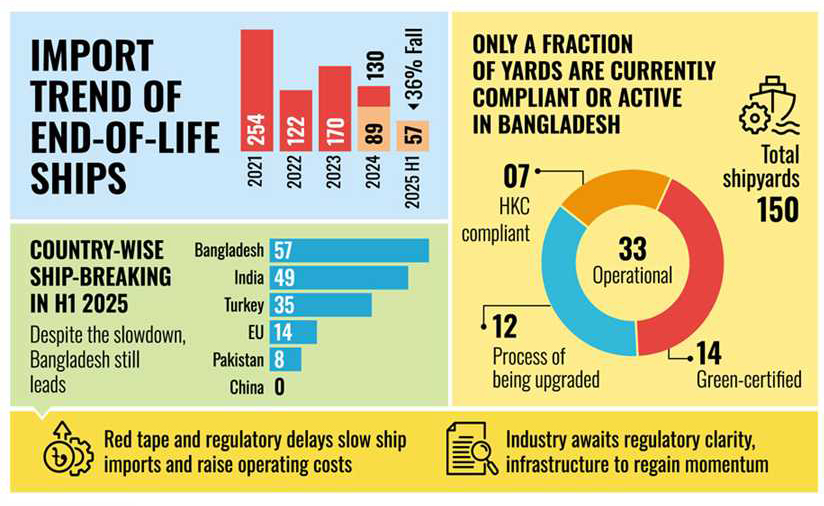
Bangladesh's ship-breaking industry is facing significant headwinds, with imports of scrapped vessels plunging by 36 per cent in the first half of 2025.

The setback is largely due to new regulatory requirements, delayed clearances, and procedural complications under a stricter global compliance framework.

The country imported a total of 57 end-of-life ships during the January-June period this year, down from 89 ships in the same period of 2024, according to data released Monday by the NGO Shipbreaking Platform (NSP), a global coalition advocating for safer and greener dismantling practices

It noted that the downturn comes as Bangladesh transitions into compliance with the Hong Kong Convention (HKC), which officially took effect on June 26, 2025.

Annual data also reflects a broader slowdown. Bangladesh dismantled 130 vessels in 2024, compared to 170 in 2023, 122 in 2022, and 254 in 2021. The number stood at 144 in 2020, 236 in 2019, and 185 in 2018.

Globally, India brought in 49 scrapped ships in the first half of 2025, Turkey 35, the European Union 14, and Pakistan eight. China, which had been a major ship-recycling destination, dismantled none during this period.

Industry insiders blame the sharp drop on the absence of DASR (Document of Authorization to Conduct Ship Recycling), which is now mandatory under the HKC regime.

The government has yet to finalise the necessary criteria for issuing DASR, making it impossible for local yards to import vessels legally.

"We're unable to bring in ships because no yard has been issued the required DASR yet," said Kamal Uddin Ahmed, adviser to the Bangladesh Ship Breakers and Recyclers Association (BSBRA).

"Without it, no import is permitted under the Hong Kong Convention that Bangladesh has ratified."

Ahmed added that ship-breakers are now facing multiple bureaucratic hurdles, including prolonged delays in obtaining environmental clearance and other approvals.

"No Objection Certificates (NoC) have not been issued since March. The industry's reclassification from 'orange' to 'red' has only increased paperwork and waiting times."

He claimed that it now takes an additional one and a half to two months to get the necessary permissions to dismantle a ship after it's beached. "These complications are financially hurting yard owners and discouraging new investment in the sector," he said.

Despite the current slump, Ahmed noted progress in environmental compliance, stating that 14 ship-breaking yards have achieved "green yard" status, and about a dozen more are in the process of upgrading. "Safety and compliance have significantly improved over the years," he asserted.

Responding to the situation, ASM Shafiul Alam, director general of the Ship Recycling Board under the Ministry of Industries, said that the board recently received final approval from the ministry and expects to complete regulatory groundwork "within a week."

Sources confirmed that the Ship Recycling Board, formed under the Ship Recycling Act 2018, had remained largely non-functional due to bureaucratic delays.

It is now becoming operational with the mandate to provide one-stop services for over two dozen permits and licences, including import clearance and ship-cutting permission.

According to NSP, seven Bangladeshi yards have so far obtained Statements of Compliance (SoC) with the Hong Kong Convention.

However, the establishment of a TSDF (Treatment, Storage and Disposal Facility)-a key environmental safeguard-is still pending. The absence of such a facility, the platform warns, continues to contribute to pollution in coastal areas.

The NGO urged the Ship Recycling Board not to focus solely on easing business processes but also to prioritise environmental and worker safety, given the industry's long history of environmental harm and

human rights concerns.

Ship-breaking remains a vital component of Bangladesh's economy, supplying raw materials to the country's steel and light-engineering sectors.

Although there are about 150 shipyards in the country, only 25 to 30 are currently operational, according to industry insiders.​
 
Cite Fact Check Highlight Respond

Protecting the shipbreaking industry

FE
Published :
Jul 25, 2025 22:53
Updated :
Jul 25, 2025 22:54

1753488377373.webp


There is no denying that Bangladesh's shipbreaking sector is now past its prime as it struggles on multiple fronts to keep itself sustainable. The headwinds it is facing have to do with regulatory and compliance issues as well as a slump in ship recycling business globally. Given the sector's notoriety as an environment polluter, a source of substances harmful to human health as well as ecology and its disregard for workers' safety, it is hardly surprising that the sector has long been in the crosshairs of the local and international rights groups and environmental lobbies. Classified Red by the Department of Environment (DoE) in 2007 and then reclassified back to Orange B in 2021, the sector needs to fast-track its efforts to meet the conditions of regulatory authorities concerned.

So, to remain in business, the ship recycling yards in Bangladesh have to go green as required by the Hong Kong Convention (HKC), which the country ratified in June 2023 and it (ratification) came into force on Jene 26, 2025 so that safe and environmentally sound ship recycling practices could be ensured. But due to procedural delays in getting the necessary clearances at home, thanks to the tardy bureaucracy, the country runs the risk of losing its competitive edge in the international shipbreaking market. Though the country's ship-breaking yards began their green transitioning since 2017 when one of the ship recycling yards got the required international certification, yet the process has remained rather slow, according to the Bangladesh Ship Breakers and Recyclers Association (BSBRA). That is why, so far only seven ship recycling yards could obtain Statement of Compliance (SoC) from HKC, says the NGO Shipbreaking Platform (NSP), an international body for greener and safer ship dismantling practices.

But unless, the shipbreaking yards get the necessary compliance certification from HKC, the local companies will not be able to import the scrap ships for recycling. Reports have it that local shipbreakers bought only 57 scrap ships between January and June of this year which is 36 per cent less than the number of end-of-life ships imported during the same period last year (2024) at 89. Such downturn is bad news not only for the local shipbreaking industry which once led the world with the highest number of scrap ship dismantled in 2021 at 254, it also means loss of livelihoods of those employed in this sector which according to an estimate numbered 40,000 workers and families dependent on them. The shipbreaking industry's decline is not a matter of highs and lows that happens in every type of business. On the contrary, it is a structural one, think some experts. Multiple global factors are also to blame for this including the Russia-Ukraine war that began in 2022 followed by the Red Sea crisis (starting in 2024) disrupting global shipping routes and supply chains.

All this has led to an emergency with the demand for additional shipping capacity. As a result, globally, the shipbreaking sector has fewer old ships earmarked for demolition. As expected, the global decline in the shipbreaking industry has threatened the viability of the domestic ship recycling sector, too. Some yards have reportedly shut down their operations. Under the prevailing circumstances, the government should expedite its work of issuing DASR (Document of Authorization to Conduct Ship Recycling (DASR), which is mandatory under HKC, to which Bangladesh is a party. Local industry insiders view the lack of DASR a barrier to their importing scrap hips for demolition. So, the faster the country's shipbreaking yards turn green, the better will be their prospect of growth and, again, become a thriving industry as before.​
 
Cite Fact Check Highlight Respond

Shipbreaking -- the urgent need for global compliance framework

Wasi Ahmed
Published :
Aug 05, 2025 23:41
Updated :
Aug 05, 2025 23:41

1754527125217.webp

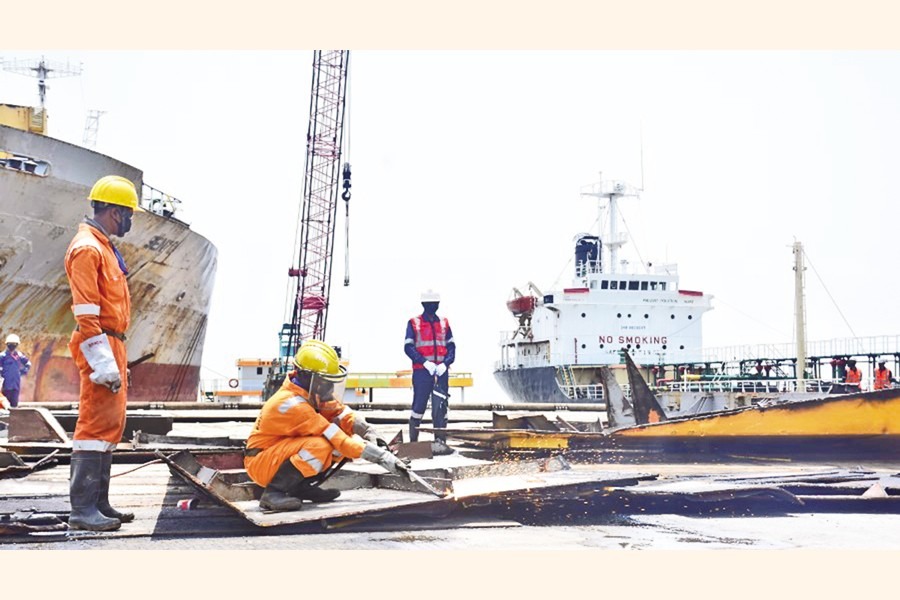
Workers at a ship breaking factory Photo : Agency Photo

The emergence of shipbreaking in the country decades ago has offered many positive and negative upshots. While the meteoric rise of the industry stirred by massive manual activities is highly risk-prone and environment-degrading, its contribution in terms of employment and feeding the country's booming steel and re-rolling mills can hardly be over exaggerated.

While the sector offers employment to around three hundred thousand workers, it has the proven capacity of supporting a vast array of heavy and light engineering industries. Iron rods and billets recycled from ship scraps, believed to be of high quality, meet a major portion of domestic requirement in the construction sector. Old ships meet 80 per cent of the demand of raw materials in the rerolling mills. Experts have opined that Bangladesh is a unique place for ship-breaking and ship-recycling as nearly all the products available from dismantled ships are being used locally. Moreover, as the advanced countries have given up on ship breaking because of the high cost of labour and accompanying compliance issues, ship breaking has all the prospects to thrive in countries like Bangladesh. It is thus of critical importance for those directly associated with the sector to make sure that the country is well poised to reap the gains from the opportunities offered by it. And this can only be done if the challenges associated with the task are met in a befitting manner.

The economic value of ship scrapping cannot be questioned, but there are serious concerns over safety and environmental hazards. There are threats too from potential sources of supply, such as the Norwegian Ship Owners' Association (NSA), not to allow recycling of their ships in Bangladesh, unless it is done in keeping with the Hong Kong International Convention for 'Safe and Environmentally Sound' recycling of ships. The Norwegian stand appears to be further reinforced by a reported move of the European Union, which accounts for 20 per cent of the total scrap vessels sold around the world, to ban export of scrap ships to Bangladesh and few other neighbouring countries. These, no doubt, are grave signals to reckon with, if the country is to see its ship breaking industry continue and thrive given the prospects. The concerns are not just expressions of anxiety as they used to be in the past, but are now clearly action-driven meant to cause a drastic cut in the availability of scrap vessels to be dismantled for recycling.

The fallouts have already begun to manifest. Currently, the country's ship-breaking industry is facing significant headwinds, with imports of scrapped vessels plunging by 36 per cent in the first half of 2025. The setback is largely due to new regulatory requirements, delayed clearances, and procedural complications under a stricter global compliance framework.

The country imported a total of 57 end-of-life ships during the January-June period this year, down from 89 ships in the same period of 2024, according to data released by the NGO Shipbreaking Platform (NSP), a global coalition advocating for safer and greener dismantling practices. Annual data also reflects a broader slowdown. Bangladesh dismantled 130 vessels in 2024, compared to 170 in 2023, 122 in 2022, and 254 in 2021. The number stood at 144 in 2020, 236 in 2019, and 185 in 2018. Industry insiders blame the sharp drop on the absence of DASR (Document of Authorisation to Conduct Ship Recycling), which is now mandatory under the HKC regime.

Lately it has been learnt that the Ministry of Industries has asked Bangladesh Ship Recycling Board (BSRB) to take necessary measures to issue DASR in favour of compliant yards for operating their ship recycling activities in line with the Hong Kong Convention. To this effect, the ministry last week issued a notification, acknowledging the necessity of issuance of the DASR after the final approval of the Ship Recycling Facilities Plan (SRFP) under the Hong Kong Convention.

Bangladesh had ratified the Hong Kong Convention in 2023, which came into force on June 26. Such a move came following a recent appeal from the ship breakers and recyclers in this regard. In this situation, until the laws, rules and policies are updated to implement the Hong Kong Convention, it is highly important to take necessary measures to issue DASR in favour of compliant yards to conduct ship recycling activities in line with the Convention. According to sources, the BSRB has decided to issue the DASR and requested ship recycling facilities (SRF) to apply for the same. The DASR will be issued to yards, SRF plans of those have got approval from industries ministry, a source said. However, the SRFs those are yet to be compliant in line with the Convention and do not receive the SOC (statement of compliance) will require to submit a transitional plan with a gap analysis of progress within the stipulated timeframe by an accredited organisation. According to the sector insiders, a total of 14 ship-breaking yards are compliant, while more than a dozen are in the process of fulfilling the requirements. Some seven Bangladeshi yards have so far obtained SoC with the Hong Kong Convention, according to NSP (NGO Shipbreaking Platform), a global coalition advocating for safer and greener dismantling practices.

Given the situation, expediting compliance with the Hong Kong convention demands urgent attention.​
 
Cite Fact Check Highlight Respond

Members Online

Latest Posts

Latest Posts