[🇧🇩] Strategic Aspect of Bangla-Japan Relation

[🇧🇩] Strategic Aspect of Bangla-Japan Relation
98
6K
More threads by Saif

G Bangladesh Defense

Japan Festival returns to Dhaka after seven years

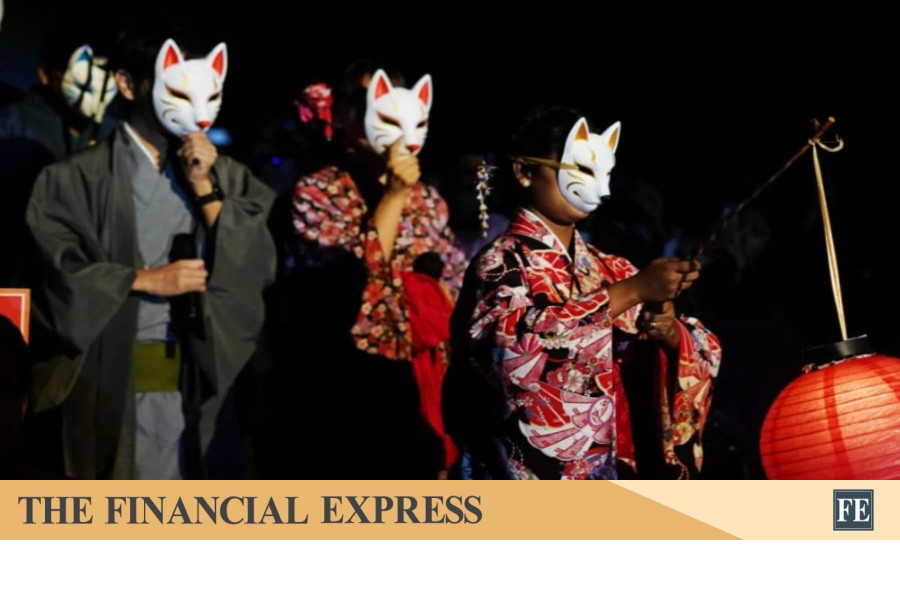
Japan Festival 2026 was held at Bangladesh Shilpakala Academy (BSA) on Friday, bringing together Japanese traditional performances, martial arts, music, cuisine and hands-on cultural experiences.

The Embassy of Japan in Bangladesh, in cooperation with the Ministry of Cultural Affairs and Bangladesh Shilpakala Academy, organised the festival, which was held in Bangladesh for the first time in seven years, reports UNB.

Japanese Ambassador Saida Shinichi and Minister of Cultural Affairs Nitai Roy Chowdhury attended the opening ceremony, where they delivered remarks.

Following the opening ceremony, visitors enjoyed a series of performances showcasing different aspects of Japanese culture.

The stage programme featured an introduction to Kabuki, followed by a Nihonbuyo performance, a form of traditional Japanese dance. Demonstrations of Karate and Kendo were also presented during the programme.

The Japanese singer duo Bajna Beat later performed at the festival, joining Bangladeshi artists for a special musical presentation celebrating cultural exchange between the two countries.

The programme concluded with a performance of Kabuki Shishi, a traditional Japanese dance, presented by Japanese dancer Senju Einojo.

Alongside the stage performances, the festival featured a range of Japanese cultural exhibition stands and interactive activities. Visitors had the opportunity to experience Sado, the traditional Japanese tea ceremony, as well as view displays of Bonsai and Ikebana.

Japanese cuisine prepared by a chef from the Embassy's official residence was also served to visitors.

Students attending the festival also had the opportunity to consult an adviser about study-abroad opportunities in Japan.

The festival provided visitors with an opportunity to experience the diversity of Japanese culture through traditional arts, performance, cuisine and other cultural practices, while also highlighting cultural exchanges between Japan and Bangladesh.​
 

PM's Upcoming Japan Tour: Dhaka to seek $1.0 billion budget-support credit
Funds meant for tackling shocks from energy crisis, ME conflict


1791676817074.webp


Bangladesh is set to seek US$1.0 billion in budget support from Japan during Prime Minister Tarique Rahman's tour later this month.

Officials have said the total sum will be sought in two instalments--$500 million in the current fiscal year and as much in the next year.

The prime minister is expected to undertake a 4-day Japan tour on October 26 for talks aimed at advancing bilateral cooperation, particularly in fields of trade, investment and economy.

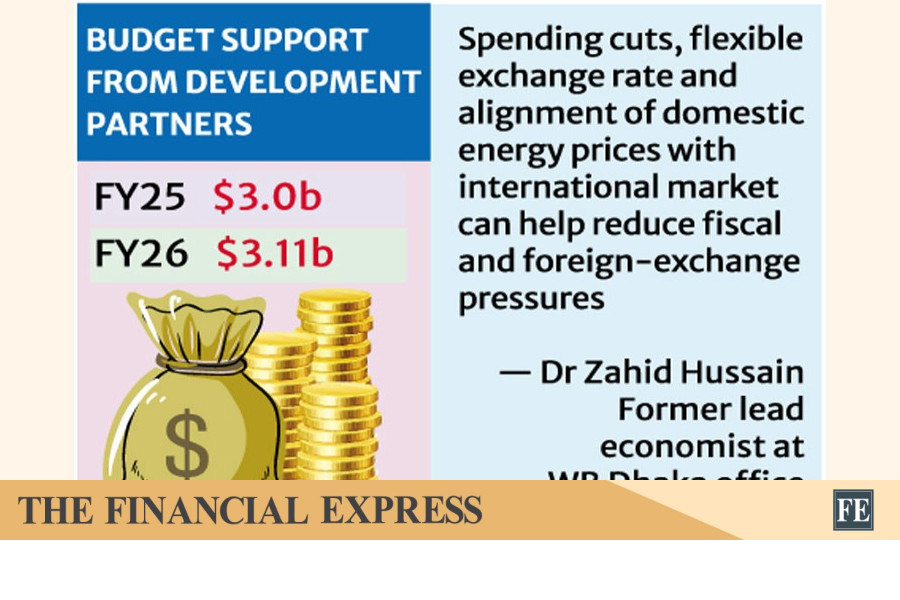
The country received some $3.11 billion in budget support from the development partners in the fiscal year 2025-26 to tackle the economic shocks stemming from the prolonged conflicts in the Middle East.

Bulk of the money went for financing higher import costs of fuel oils, liquefied natural gas (LNG) and food items in particular.

Most of the amount came from the World Bank, the Asian Development Bank (ADB), Japan International Cooperation Agency (JICA) and the Asian Infrastructure Investment Bank (AIIB).

In FY 2024-25, Bangladesh had received some $3.0 billion in budget -support credits from the development partners.

However, according to Finance Division officials, the country is yet to receive any budget-support credit during the last three months of the current fiscal year.

Final negotiation is now set to begin to secure some $100 million from the OPEC Fund for International Development (OFID) as budget support that the government sought from the agency last year to cushion shocks from energy crisis. In FY'25, Bangladesh got $110 million from OFIDF as budget support.

According to officials concerned, presently no discussion is ongoing with the Japan International Cooperation Agency or JICA for any budget-support credit. In the last fiscal year, Bangladesh got $316 million from JICA and $414 million in FY'25.

Thus, the budget credit will be sought from JICA to manage higher spending for sourcing fuel oils and liquefied natural gas as their prices mounted due to conflict in the Middle East.

At present, initial discussion is going on with the Asian Development Bank to secure a number of budget-support credits but those may not be finalised before next March, officials say.

Bangladesh's economy began facing severe crisis since early 2022 when Russia invaded Ukraine that caused huge disturbance to the global economy, pushing up inflation significantly across the world.

The price hike of key commodities globally and fall of remittance inflows and export earnings had lowered the foreign-exchange reserves, forcing the government to take severe austerity measures.

To tackle the crises the government was forced to seek financial support from the International Monetary Fund (IMF) to support its dwindling economy. Subsequently, the IMF in January 2023 approved $4.7-billion loan for Bangladesh.

The Middle East conflicts early this year further pushed up fuel-oil and LNG prices following production and transportation disruptions, making the government spend millions as subsidy.

The subsidy spending is growing over the years, raising the operating expenditure of the government. So the government is looking for higher budget-support funds, to tackle the energy-price shock.

Dr Zahid Hussain, a former lead economist at the World Bank's Dhaka office, earlier told The Financial Express getting budget-support credit from development partners in many aspects depends on government's comfort position with the IMF.

"We need to cut budgetary spending as much as possible to face the crisis," he said, adding that containing spending will help lower import and thus the requirement of foreign currency will lessen.

He has suggested maintaining exchange-rate flexibility and ensuring that no gap remains between domestic and international energy prices.​
 

PM's Japan visit to prioritise economic partnership, investment: Humaiun

BSS
Dhaka


1791678768336.webp

BNP acting chairman Tarique Rahman File photo

State Minister for Foreign Affairs Humaiun Kobir today, Saturday said strengthening bilateral relations, deepening economic partnerships and increasing investment would be Bangladesh's main priorities during Prime Minister Tarique Rahman's upcoming visit to Japan.

"Our main priorities during the Japan visit will be to strengthen bilateral relations, deepen economic partnerships and increase investment," he told journalists after attending a seminar titled "From Workforce to Strategic Partnership: Reimagining Bangladesh-KSA Relations".

Prime Minister Tarique Rahman will leave for a four-day visit to Japan on 26 October.

Humaiun Kobir said Bangladesh would prioritise trade, investment and development partnerships across various sectors during the visit, consistent with its approach to engagement with other countries.

Bangladesh now seeks reciprocal investment partnerships with countries around the world in clearly defined areas of cooperation, he added.

Describing Japan as one of Bangladesh's largest and longstanding development partners, Humaiun said Japanese investment in several mega projects had helped build strong diplomatic and investment ties between the two countries.

He recalled that the prime minister had previously attended an energy summit in Japan as an invited guest of the Japanese premier when that country faced an energy crisis.

The state minister said that engagement had helped foster the Japanese government's confidence in Bangladesh's prime minister.

The forthcoming visit would feature detailed discussions on sector-specific cooperation and opportunities for reciprocal investment, he said.

Regarding Prime Minister's Saudi Arabia visit, Humaiun Kobir said Saudi Arabia's Crown Prince had invited Prime Minister Tarique Rahman to visit the Kingdom and the premier had accepted the invitation.

"He has accepted and will do so at some point very soon," he said.

The Saudi Crown Prince had also expressed interest in visiting Bangladesh, Humaiun said, adding that Dhaka would welcome him at a mutually convenient time.

Responding to a question on protecting the holy cities of Makkah and Madinah, Humaiun said Bangladesh's position was clear and uncompromising.

He said Bangladesh, as one of the world's largest Muslim countries, would stand ready to provide necessary support if its cooperation or assistance was sought for initiatives to protect the Muslim world's holy sites and mosques.

The seminar was jointly organised by the Bangladesh Institute of International and Strategic Studies (BIISS) and the Center for Migration Studies of North South University (NSU).

Foreign Ministry Secretary (Bilateral) Dr Md Nazrul Islam and Expatriates' Welfare and Overseas Employment Secretary Md Mokhtar Ahmed spoke as special guests.

BIISS Director General Major General A S M Ridwanur Rahman and NSU Vice-Chancellor Professor Abdul Hannan Chowdhury also addressed the seminar.​
 

Latest Posts

Back