[🇧🇩] Strategic Aspect of Bangla-Japan Relation

[🇧🇩] Strategic Aspect of Bangla-Japan Relation
119
6K
More threads by Saif

G Bangladesh Defense

PM TARIQUE'S VISIT TO JAPAN

Bilateral relations await yet another boost

1792970395911.webp


During the four-day official visit of Bangladesh Prime Minister Tarique Rahman to Japan, starts from today, two friendly Asian nations will be seeking to stand together as they face a range of challenges amid the ongoing global economic downturn arising out of the conflicts in the Middle East and Europe. The geopolitical tug-of- war at the regional level is also an issue that has to be dealt with. In that context, matters concerning shared diplomatic and economic interests will assume particular importance during the visit of the Bangladesh Prime Minister.

Despite the wide gap between the two countries' economic circumstances, it is hoped that the desire to strengthen the good relations between their governments and peoples and to expand close cooperation will be reflected in the many initiatives and expressions of interest. Economic cooperation, bilateral trade, and investment interests have taken center stage in the modern phase of the two countries' diplomatic relationship, but its foundations lie much deeper in history.

Among the OECD member states, industrialised Japan was the first to recognise the independent and sovereign Bangladesh. When Japan recognised Bangladesh on February 10, 1972, it was still within the sphere of influence of the United States (US) foreign policy. Japan regained political control of Okinawa Island under a long-term defence treaty with the US in the same year. Also in 1972, Japan and China eased their longstanding tensions and established diplomatic relations.

Both USA and China were opposed to our independence struggle and they sided with Pakistan. Against this backdrop, Japanese government and people supported Bangladesh's struggle for independence, and Japan decided to recognise Bangladesh soon after its victory. In doing so, Japan demonstrated diplomatic foresight of considerable significance and far-reaching consequence. At a time when regional powers are vying for influence over Bangladesh, it is essential to consolidate the country's close bilateral ties with Japan.

Japan sees Bangladesh a bridge between Asia-Pacific and the Central Asian-Europe. It considers Bangladesh's diplomatic efforts to promote Asian unity, its pursuit of economic self-reliance, and its geographic and political position to be especially significant.

Three Bengalis played pioneering roles in establishing good relations between modern Japan and Bangladesh: poet Rabindranath Tagore (1861-1942), Netaji Subhas Chandra Bose (1897-1945), and Justice Radhabinod Pal (1886-1967). Known to the Japanese as "Chandra Basu," Netaji Subhas Chandra Bose remains a figure of particular reverence in Japan. His ashes are still preserved at the Renkoji Temple in Tokyo. Justice Dr Radhabinod Pal is remembered by the Japanese as a bridge of friendship and amity between Bangladesh and Japan. He was born in Salimpur, Kushtia. He served as a judge of the Calcutta High Court (1941-43) and as vice-chancellor of Calcutta University (1943-44). Although appointed by the British government as a member judge of the International Military Tribunal for the Far East (IMTFE), known as the Tokyo Trial, he delivered a dissenting opinion in favour of the Japanese. His 1,235-page typed judgment restored confidence and courage to the defeated Japanese, and fostered a sympathetic and open-minded view of them among Bengalis.

Among the Japanese, Takeshi Hayakawa (1917-1982) made an unforgettable contribution to strengthening Japan-Bangladesh relations. He served continuously for 40 years as an elected member of Japan's national legislature, the Diet, and was given the title "Father of the Diet." As an influential Diet member, Hayakawa played a forceful behind-the-scenes role in extending the support of the Japanese people and government to the people of Bangladesh in their struggle for liberation.

Within a month of Japanese recognition of Bangladesh, the Embassy of Japan began operations in Dhaka. On March 13-14, 1973, a three-member Japanese parliamentary delegation led by Hayakawa made the first visit to Bangladesh. After returning home, Hayakawa submitted a report to Prime Minister Satõ on March 24, proposing that Japan (a) immediately provide Bangladesh with an emergency grant of US$10 million and (b) mediate between Pakistan and Bangladesh over Bangladesh's share of assets. On Prime Minister Satõ's instructions, and in line with Hayakawa's recommendation, Japan sent its first economic survey mission to Bangladesh on March 28, 1972. Since then, Japan has continued to play a strong role in assisting Bangladesh through times of financial crisis.

President Shaheed Ziaur Rahman (1936-1981) also played a far-reaching role in strengthening Japan-Bangladesh relations. Takeshi Hayakawa wrote a memoir about Bangladesh where he wrote in details President Zia's outstanding contribution to the development of Japan-Bangladesh relations.

"The news of President Ziaur Rahman's sudden and untimely death filled me with a grief too profound for words. It felt as though I had lost a beloved member of my own family", Hayakawa wrote in his memoir.

In August 1981, Hayakawa made his final visit to Bangladesh for the opening of the Sonargaon Hotel, established with Japanese assistance as he had hoped.

He died in Tokyo on December 6, 1982, aged 66. In accordance with his last wish, his ashes were placed in a special vessel and preserved at a Buddhist temple in Kamalapur, Bangladesh, on November 9, 1983. A bust of Hayakawa was installed at the Pan Pacific Sonargaon Hotel in Dhaka on November 10, 1985. Inscribed on it are the final two sentences of his memoir, which express the essence of his diplomatic philosophy:

"In the present age ... humanity must become one family in order to survive. My love and passion for Bangladesh are a challenge to this ideal, and an experiment in it."

It is hoped that Tarique Rahman's visit will open a new horizon in Japan-Bangladesh economic cooperation. A major dimension of Bangladesh-Japan relations is the growth of economic cooperation and commercial exchange over the past 55 years. It is worth observing that, in the modern phase of the relationship, economic cooperation and the ups and downs of bilateral trade have been key indicators of its depth and direction.

As noted earlier, soon after Bangladesh gained independence in 1971, the Japanese government stepped forward to help rebuild the country's war-ravaged economy. Japanese businesses have consistently shown interest in trade with Bangladesh and, in turn, in investment there. Japan is one of the major destinations in Asia for Bangladeshi exports. Japanese goods, meanwhile, account for a large share of Bangladesh's imports.

In the 1980s, Japan provided import assistance for Bangladesh's energy and power sectors through commodity aid. It also returned to Bangladesh, as debt-relief grants, repayments made on Japanese project loans that carried very low interest rates.

Bangladesh can look to Japan for more flexible terms on investment support for several major megaprojects. It should also make an invitation to make generous investments in infrastructure, implement the Japan-Bangladesh Economic Partnership Agreement (EPA), signed in Tokyo on February 6, 2026, after a long wait, and extend generous budget support to help meet crises. The EPA is Bangladesh's first comprehensive agreement of its kind with another country, and Japan's only EPA with a least developed country (LDC).

Dr Abdul Mazid is a former Secretary to the Government, a former Chairman of the National Board of Revenue (NBR) and a former Commercial Counsellor at Bangladesh Embassy in Japan (1994-2000)​
 

What Bangladesh can gain from PM's Japan visit

AKM Ahsan Ullah

University Teacher and Researcher

1792971870467.webp


The upcoming visit of Prime Minister Tarique Rahman to Japan presents a significant opportunity to strengthen Bangladesh's economic potential and international partnerships. According to government statements, the primary focus of this visit, scheduled for 26 October, is bilateral relations, economic partnerships, and investment. To transform these expectations into sustainable achievements, clear preparation and consistent implementation are necessary.

The foundation of this relationship was established during the post-independence reconstruction period. On 10 February 1972, Japan recognised Bangladesh, and diplomatic relations were established. Since then, the continuity of relationships and cooperation has been maintained during various governments. This five-decade trust is a valuable diplomatic asset for Bangladesh.

Collaboration on projects like the Jamuna Multipurpose Bridge, Japanese financing, and technical involvement in Dhaka's metro rail and Jamuna railway bridge have significantly contributed to the communication system. The Bay of Bengal Industrial Growth Belt (BIG-B) initiative in 2014 unveiled the integrated potential of infrastructure, industry, and regional connectivity. Matarbari and Araihazar are the foundations for expanding that cooperation. Evaluating the achievements of existing projects and the potential of ongoing initiatives can enhance production, employment, and local businesses.

The first priority could be preparing to leverage the benefits of the Economic Partnership Agreement (EPA) signed on 6 February 2026. Joint action plans on essential processes for implementing the agreement, tariff regulations, rules of origin, certification, and customs procedures are required. Guidelines for small and medium exporters and training for officials will be helpful. Besides garments, market research can be conducted on leather goods, processed food, and light engineering sectors. To transform market advantages into sustainable trade, standards, punctuality, and consistent supply are essential.

In investment discussions, specific proposals, including prepared land, electricity, water, transport connections, and approval systems, could be fruitful. Based on the Araihazar Economic Zone, feasibility studies on machinery, electrical equipment, packaging, and food processing can be conducted. Encouraging joint ventures among Japanese medium-sized enterprises and Bangladeshi entrepreneurs, considering local suppliers, skilled workers, and market demand, is essential alongside large corporations.

Administrative reliability will support these efforts. A system for resolving investors' issues within a specified timeframe can increase predictability in approvals, tariff applications, and financial transactions. If the benefits of similar reforms reach domestic businesses as well, the overall investment environment will improve.


1792971912794.webp

Prime Minister Tarique Rahman BSS

In infrastructure cooperation, connecting the development of Matarbari Port and the Maheshkhali-Matarbari area with roads, railways, warehouses, customs, and industrial zones is crucial. Joint initiatives to reduce the time and cost of goods transportation through digital customs, risk-based inspections, operational training, and information exchange can be undertaken. Considering loan terms, foreign currency repayment obligations, usage, and maintenance expenses in new projects will enhance the economic sustainability of cooperation.

Collaboration with Japanese partners on joint research and practical training with universities, polytechnics, and industrial enterprises will be beneficial in this regard. Cooperation can be increased in machinery maintenance, quality control, water management, and disaster-resilient construction. Alongside technology acquisition, capabilities in management, repair, and adaptation to local needs must be developed.

In human resource collaboration, the 2019 framework on skilled workers needs to be more effectively linked with the practical needs of employers. Joint curricula could emphasise language and technical training, comprehensible employment contracts, cost transparency, prevention of unscrupulous mediation, and grievance resolution. With an increase in worker numbers, equal importance must be given to improving skills, income, and protection.

The long-term goal should be to enrich the country's production and knowledge base alongside overseas employment. Training in Japanese institutions, joint factories in Bangladesh, and opportunities for returning workers to become entrepreneurs can be integrated into a single plan. The recognition of qualifications, research environment, and investment facilities will encourage voluntary return and the dissemination of skills within the country. This will extend the benefits of migration beyond remittances.

Bangladesh's industrial history provides significant examples in this context. In the late 1970s, the country's garment sector spread production and management knowledge across the clothing industry with the assistance of trained workers and South Korea's Daewoo. This experience shows that the enduring achievements of international cooperation lie in the learning capabilities of people and institutions. In the current partnership, it is essential to consider what skills remain in the country after a project's completion.

Collaboration with Japanese partners on joint research and practical training with universities, polytechnics, and industrial enterprises will be beneficial in this regard. Cooperation can be increased in machinery maintenance, quality control, water management, and disaster-resilient construction. Alongside technology acquisition, capabilities in management, repair, and adaptation to local needs must be developed.

In environment and energy sectors, the cooperation memorandum of February 2026 can be utilised to assess opportunities for energy savings, waste management, rooftop solar power, and disaster preparedness in industries. Considering local capability and long-term operational costs, choosing initiatives will reduce production costs and environmental risks.

These Japan-focused initiatives need to be part of Bangladesh's integrated East Asia strategy. The production and supply network of China, Japan's industrial technology, and quality management, combined with South Korea's production and technology experience, can be coordinated with Bangladesh's priorities.

Bangladesh's strategic position of development-centric autonomy can be useful. Recognising the unique value of each relationship, mutual trust, national interests, and freedom of decision-making must be maintained. Closer cooperation with Japan and close ties with China can create complementary developmental opportunities. Common standards in loan sustainability, transparent procurement processes, information security, environment, and effective state control over critical infrastructure will make this position credible.

Utilising its location in the Bay of Bengal, Bangladesh can be an effective connector between the markets of South Asia and the production systems of East Asia. For this, along with integrated transportation and customs, mutually agreed trade systems with neighbours are necessary. If local production, repair services, research, and suppliers are developed, the benefits of the connection will remain within the country. Diversity in financing, technology, and import sources will also increase economic resilience.

In a five to ten-year East Asia cooperation plan, priority industries, supplier capabilities, training, joint research, and production stages can be determined. Opportunities for local procurement and learning on mutually agreeable terms need to be increased. Indicators of evaluation will be realistic investment, domestic value addition, worker income, local orders, and technical capabilities.

There are opportunities to expand cooperation in maritime security, disaster assistance, international law, and peaceful dispute resolution. Japan's consistent diplomatic involvement is expected in creating a conducive environment for humanitarian aid for the Rohingya and for safe, voluntary, and dignified repatriation.

After the visit, publishing an implementation list with responsible agencies, timelines, and a review process will be helpful. In the six-month and one-year progress assessments, announced investments, actual cash flow and production, and training and employment need to be considered separately. Five decades of trust can be the foundation for the next decade's industrialisation if production is linked with infrastructure and knowledge is intertwined with migration.

#AKM Ahsan Ullah is Professor, University of Brunei Darussalam, Brunei.​
 

The mistake keeping Bangladesh from tapping into Japan’s labour market

Selim Reza


1792972127800.webp

Bangladesh and Japan Flags BSS

Japan’s labour shortage, driven by its ageing population, has created a major opportunity for Bangladesh. However, we have fallen behind due to gaps in skills, Japanese-language proficiency and demand-driven training.

By measuring labour migration in terms of numbers rather than skills, failing to formulate effective policies and plan ahead, and being unable to build effective partnerships with employers, we have failed to turn our demographic advantage into sustainable employment despite having a large young population.

There are several clear examples of Bangladesh’s past failures in accessing Japan’s labour market. In July 2005, an agreement between Bangladesh and Japan was signed to create opportunities for Bangladeshi workers to receive technical training and work in Japan. However, over the following eight years, Bangladesh managed to send only 41 workers to Japan under the agreement, 12 through the government agency, the Bureau of Manpower, Employment and Training (BMET), and 29 through private recruitment agencies.

This was an embarrassing example of policy failure on Bangladesh’s part. Yet Japanese small and medium-sized enterprises had a demand for Bangladeshi workers. Inadequate language skills, inappropriate worker selection, lengthy administrative procedures and a lack of coordination among the organisations concerned stood in the way of capitalising on that opportunity. Our failure to move forward was not due to a lack of opportunities, but rather an inability to turn those opportunities into actual employment.

Although an agreement was reached with Japan’s IM Japan in 2015 to train 500 Bangladeshis, and a new initiative was launched in 2017 to provide one-year training in the manufacturing and construction sectors, Bangladesh failed to demonstrate the capacity to turn these initiatives into large-scale, sustained employment programmes.

Even after Bangladesh signed a memorandum of cooperation with Japan on a framework for sending Specified Skilled Workers (SSW) on August 27, 2019, overcoming limitations in language education, skills assessment and transparent recruitment has remained an urgent priority.

More significantly, surveys conducted by Japan’s immigration authorities among technical trainees from various countries have revealed that many fall into debt after paying large sums of money to recruitment agencies and intermediaries in their home countries. In light of this risk, Bangladesh’s failure to establish a transparent and accountable recruitment system needs to be reassessed.

These experiences demonstrate that signing a memorandum of understanding is not, in itself, a measure of success. True success lies in translating such agreements into skilled workers, lower migration costs and sustainable employment.

First mistake: Training before demand, investment without job guarantees

One of the major weaknesses of Bangladesh’s labour export system is the disconnect between training and actual recruitment. Training programmes should be designed based on data showing how many workers are needed in each sector, what qualifications employers require and which skills tests candidates must pass. However, the tendency to measure success by the number of training centres, trainees or certificates issued has obscured the actual outcomes.

Learning Japanese, acquiring professional skills and passing qualification tests are time-consuming processes. When training centres vary in quality and there are no genuine employment opportunities after training, young people end up wasting both time and money. As a result, many aspiring to work in Japan fall behind even at the preparation stage.

The question is: why has Bangladesh not done enough to establish partnerships with Japanese employers and introduce training programmes tailored to their needs? Why has the country failed to develop the capacity to assess demand in foreign labour markets based on data rather than assumptions?

This failure cannot be attributed to any one individual; it reflects longstanding weaknesses in policymaking and institutional management.

Second Mistake: Failing to treat language as a core skill requirement

Japanese-language proficiency is not merely an additional qualification for working in Japan. It is essential for understanding workplace instructions, communicating with colleagues, maintaining safety and managing daily life. Yet Bangladesh has failed to make the expected progress in establishing a comprehensive system that makes Japanese-language education accessible, affordable and of consistent quality.

The concentration of opportunities in Dhaka, high training costs and a shortage of qualified teachers create barriers for prospective workers. For a young person in a rural area, covering the costs of language classes, examinations and documentation can often be difficult. In other words, in a labour market where preparation is crucial for entry, access to that preparation is not equal for everyone.

The state’s responsibility was not simply to establish training centres, but to integrate language education, vocational training and recruitment into a single system. The absence of such a coordinated approach has put Bangladesh at a disadvantage.

Third mistake: Failing to establish a reliable, low-cost recruitment system

Complaints about intermediaries, opaque fees, fraud and excessive costs have long plagued Bangladesh’s migration system. Preparing to enter a market such as Japan is already expensive. When uncertainty over recruitment is added to the equation, the risks for young workers and their families increase manifold.

Japanese employers, meanwhile, want partners who can reliably provide suitable workers. If Bangladesh cannot ensure transparent recruitment, verified training and reasonable costs, it cannot gain a competitive advantage simply by virtue of its abundant workforce.

Our mistake has been to leave migration largely dependent on individuals’ own initiative and financial capacity. The state, however, should have taken responsibility for controlling recruitment costs, effectively monitoring licensed recruitment agencies and establishing channels for direct engagement with foreign employers. When workers fall into debt before even leaving for a job abroad, much of the benefit of securing higher-paying employment is undermined.

Fourth mistake: Failing to recognise the importance of competitors

Bangladesh is not alone in Japan’s labour market. Other labour-sending countries are also working to expand language education, technical training and cooperation with employers. Some benefit from decades of labour migration experience, established recruitment networks and familiarity with the Japanese language and culture.

Bangladesh’s policymakers should have analysed the experiences of competing countries to identify the country’s own weaknesses. A sustained strategy was needed to determine which sectors offer Bangladesh a comparative advantage, where training needs to be expanded and how employers’ confidence could be earned. However, the complacency associated with being a major labour-sending country prevented us from fully appreciating the importance of such competitive preparation.

What is needed now is accountability, not promises

To overcome these failures, the first step should be to develop a five-year action plan for Japan’s labour market, with measurable targets. Clear indicators must specify how many workers are to be sent to Japan in each sector, how many will receive language and skills training, how many will secure jobs and how many will remain employed. The performance of training institutions must be measured not by the number of certificates issued, but by actual employment outcomes and workers’ earnings.

Direct partnerships must be established with Japanese employers, industry associations and training institutions. At the same time, access to language education and skills testing must be expanded beyond Dhaka, financial assistance for training must be provided, recruitment costs must be fully disclosed, and swift action must be taken against fraud.

Employment contracts must clearly specify wages, working hours, accommodation costs and procedures for filing complaints. Bangladeshis working abroad must also have access to legal assistance in Bangla and an effective grievance redress mechanism.

Most importantly, diplomatic visits and memorandums of understanding must not be presented as substitutes for success. Success should be measured by how many Bangladeshis actually secure decent jobs, how little they have to spend to migrate and how safely they can work abroad.

Japan’s labour market presents a major opportunity for Bangladesh, but there is no guarantee that this window of opportunity will remain open indefinitely. Unless we learn from past mistakes, new initiatives will simply repeat old failures. Bangladesh must establish itself not as a source of cheap labour, but as a partner capable of delivering skilled, reliable workers while safeguarding their rights.

The question, therefore, is not merely how many workers Bangladesh can send to Japan. It is whether, having failed for so long to adequately prepare despite the opportunities available, we now have the political will to take responsibility for those failures and correct them.

* Dr Selim Reza is an associate professor and coordinator of the Centre for Migration Studies (CMS) at North South University.​
 

Tarique-Takaichi summit today
PM seeks Japan's help to set up technological village, innovation city in Bangladesh
He also calls for budget support, Japanese investment in renewable energy, agricultural modernisation
1793060232317.webp

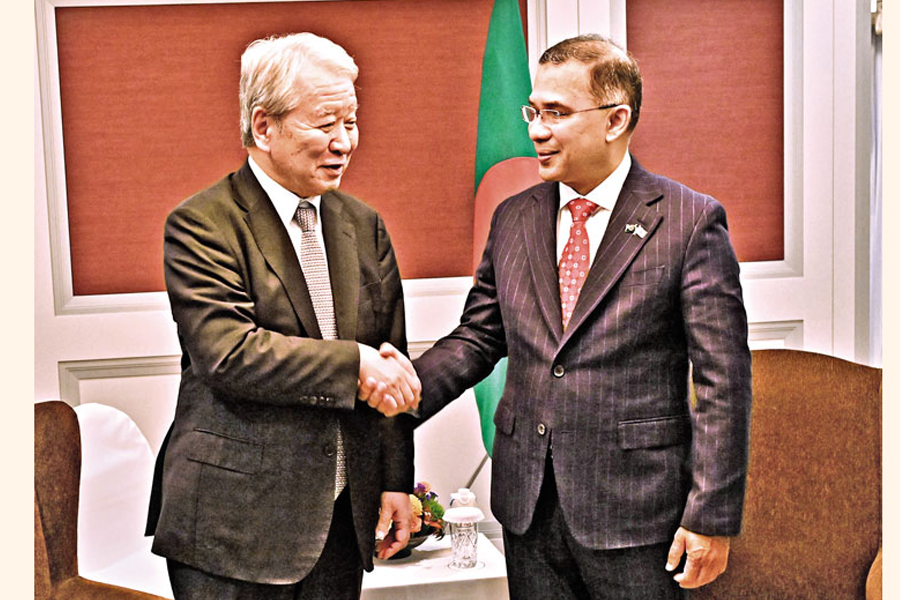
Prime Minister Tarique Rahman and Japan International Cooperation Agency (JICA) President Dr Tanaka Akihiko shake hands during a meeting at Hotel Imperial in the Japanese capital of Tokyo on Monday. — PMO

Prime Minister Tarique Rahman on Monday sought Japan's cooperation in establishing Technological Village and Innovation City in Bangladesh, alongside expanding collaboration in agricultural modernisation, agro-processing and light engineering.

He made the call during a meeting with Japan International Cooperation Agency (JICA) President Dr Tanaka Akihiko at the Imperial Hotel in Tokyo at 5:10pm local time, said PM's Deputy Press Secretary Shahadat Hossain Shadhin, report agencies from the Japanese capital.

The Prime Minister also sought JICA's continued support for Bangladesh's development priorities, including infrastructure and energy security.

During the meeting, Bangladesh proposed expanding cooperation in skills development under the Bangladesh-Japan Skills Partnership.

It stressed the need to continue receiving concessional loans from Japan and expand technical cooperation in line with the country's current development priorities, Shahadat said.

In view of the current global energy situation, Bangladesh also requested budget support, as provided last year, to help meet the country's energy needs and ensure energy security.

The Prime Minister recalled his fruitful meeting with the JICA president in Dhaka during Tanaka's visit to Bangladesh in July this year and expressed gratitude for Japan's long-standing cooperation and JICA's significant contribution to Bangladesh's socioeconomic development.

He said Japan's support has played an important role in developing Bangladesh's infrastructure, advancing socioeconomic progress and realising the country's development aspirations.

Tarique Rahman stressed the need to deepen the long-standing friendship between the two countries and continue cooperation to promote Bangladesh's development and improve people's living standards.

The two sides also emphasised completing major development projects supported by Japan within their scheduled timeframes and discussed expediting the approval and implementation of priority projects awaiting approval.

JICA President Tanaka reaffirmed his commitment to working together to help Bangladesh achieve prosperity.

The Prime Minister expressed hope that the proposed initiatives will further strengthen the strategic partnership between Bangladesh and Japan and contribute to the shared prosperity of the two countries.

Finance and Planning Minister Amir Khosru Mahmud Chowdhury, Civil Aviation and Tourism Minister M Rashiduzzaman Millat, Prime Minister's Adviser on Finance and Planning Rashed Al Mahmud Titumir, State Minister for Foreign Affairs Humaiun Kobir, State Minister for Power, Energy and Mineral Resources Aninda Islam Amit, PM's Adviser on Posts, Telecommunications, ICT and Science and Technology Rehan Asif Asad, Prime Minister's Special Assistant for Overseas Employment in the Asia-Pacific Region Dr Md Shakirul Islam Khan, Economic Relations Division Secretary Shahriar Kader Siddiky and Prime Minister's Additional Press Secretary Atikur Rahman Rumon were present.

JICA Senior Vice-President Hara Shohei and other senior officials of the agency also attended the meeting.

Meanwhile, Prime Minister Tarique Rahman is set to hold a bilateral summit with his Japanese counterpart, Sanae Takaichi, in Tokyo today (Tuesday) to strengthen the strategic partnership, boost trade and investment, and expand cooperation in key sectors between Bangladesh and Japan.

The meeting will begin at 11:45am local time at the Japanese Prime Minister's Office, known as the Kantei, following a guard of honour to be given to Tarique Rahman from 11:30am to 11:40am.

The two leaders will hold talks until 12:10pm, followed by a joint press announcement from 12:15pm to 12:25pm.

Takaichi will then host a luncheon for the Bangladesh Prime Minister from 12:30pm to 1:10pm.

At the beginning of the lunch, she is scheduled to deliver a brief welcome remark and propose a toast, followed by a short reply and return toast from Tarique Rahman.

According to Prime Minister's Deputy Press Secretary Shahadat Hossain Shadhin, the two leaders will discuss strengthening bilateral relations, expanding business, trade and investment, Japanese cooperation in various sectors and international issues.

At a curtain-raiser press conference back in Dhaka, Foreign Secretary Asad Alam Siam said the Prime Minister's four-day visit is expected to open new avenues for bilateral cooperation and attract fresh Japanese private investment in Bangladesh.

He said the talks would focus on the effective implementation of the Bangladesh-Japan Economic Partnership Agreement (EPA), signed in February 2026, expanding access for Bangladeshi products to the Japanese market and strengthening business engagement.

The two sides are also expected to explore cooperation in renewable energy, agriculture, science and technology, digital transformation, skills development and human resource development.

Siam said several memorandums of understanding (MoUs) are being discussed for signing during the visit. Draft agreements cover agriculture, fisheries, human resource and skills development, domestic aviation, trade, environmental conservation and the modernisation of local government.

"We hope that many of these MoUs will be signed during the visit," he said.

During the visit, Tarique Rahman is also scheduled to deliver the keynote address at the Japan-Bangladesh Economic Forum and meet Japanese business leaders.

The Prime Minister arrived in Tokyo on Monday morning on a four-day visit at the invitation of Takaichi.

He was received at Narita International Airport by Japanese State Minister for Foreign Affairs Nakasone Yasutaka.

Tarique Rahman is leading a high-level delegation that includes Finance and Planning Minister Amir Khosru Mahmud Chowdhury, Prime Minister's Adviser on Finance and Planning Rashed Al Mahmud Titumir, State Minister for Foreign Affairs Humaiun Kobir, State Minister for Power, Energy and Mineral Resources Aninda Islam Amit, and Prime Minister's Adviser on Posts, Telecommunications, ICT and Science and Technology Rehan Asif Asad.

Prime Minister Tarique Rahman on Monday called for increased Japanese investment in Bangladesh's promising sectors, including ICT, renewable energy and advanced manufacturing, through foreign direct investment (FDI) and public-private partnerships (PPP).

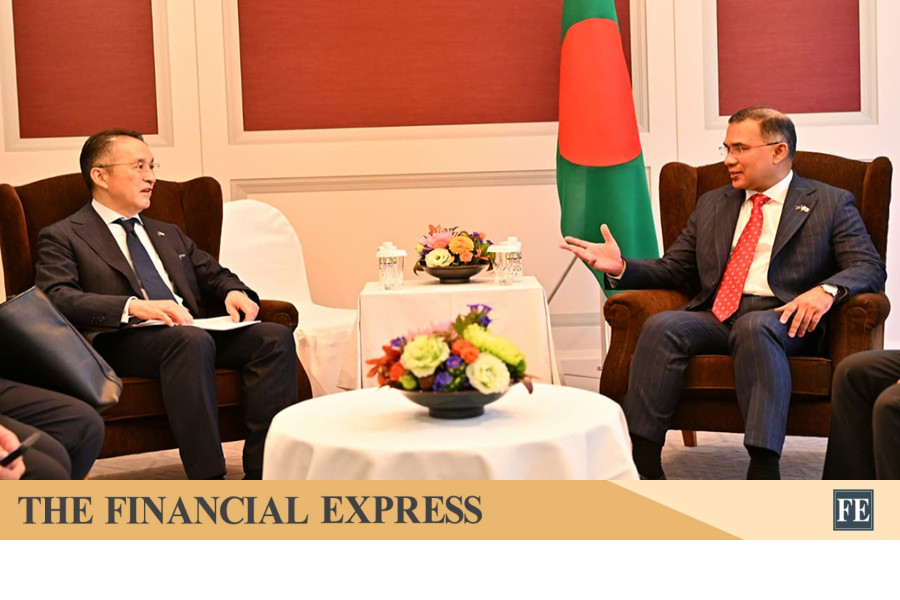
He made the call when Masumi Kakinoki, chairman of Marubeni Corporation and the Japan-Bangladesh Committee for Commercial and Economic Cooperation (JBCCEC), met him at the Imperial Hotel in Tokyo at 3:45pm local time, said Prime Minister's Deputy Press Secretary Shahadat Hossain Shadhin.

During the meeting, the Prime Minister highlighted various opportunities for Japanese entrepreneurs in promising sectors like information and communication technology (ICT), green energy and advanced manufacturing. "There are opportunities for investment in these sectors through foreign direct investment and public-private partnerships," he said.

Kakinoki expressed hope that effective implementation of the Economic Partnership Agreement (EPA) between Bangladesh and Japan will help expand bilateral trade, increase Japanese investment and create new business opportunities between the two countries.

Tarique Rahman also sought Japanese cooperation to modernise the Karnaphuli Fertiliser Company Limited (KAFCO) and assess the feasibility of setting up a second fertiliser plant in Bangladesh.

He called for the support of the JBCCEC and Marubeni Corporation for the development of the Bangladesh Special Economic Zone (BSEZ).​
 

Greater Japanese investment: It's time to remove bottlenecks


1793060482930.webp


As Prime Minister Tarique Rahman visits Japan, the familiar promise of closer economic ties between Dhaka and Tokyo has acquired renewed urgency. Bangladesh wants more Japanese investment, greater access to advanced technology and a stronger industrial base. Japan, meanwhile, is looking for opportunities to diversify its manufacturing networks, expand into emerging markets and build more resilient supply chains. On paper, the two countries appear to have much to offer each other.

Yet there is a fundamental question that Bangladesh must confront: is it ready to accommodate the investment it is so keen to attract?

The challenge is not simply to persuade Japanese companies to look at Bangladesh. It is to convince them that investing here is commercially viable, administratively manageable and sufficiently predictable to justify committing capital for decades. Without that assurance, even the most promising diplomatic initiatives risk producing announcements rather than factories, memorandums rather than money, and goodwill rather than jobs.

Bangladesh has several compelling advantages. With a population of about 170 million, a growing middle class and an expanding consumer market, it offers manufacturers access to a substantial domestic customer base. Its relatively competitive labour costs, established garment industry and strategic position on the Bay of Bengal also make it an attractive potential production and distribution hub.

Japan has recognised this potential for years. Its Bay of Bengal Industrial Growth Belt initiative, commonly known as the BIG-B initiative, envisages closer economic integration through industrial development, infrastructure and connectivity. The strategy reflects Japan's interest in supporting industrial growth in Bangladesh while strengthening economic links across the wider region.

Bilateral trade has expanded over the years, driven in significant part by Japanese demand for competitively priced Bangladeshi apparel. Bangladesh's exports to Japan have grown substantially, demonstrating that local manufacturers can compete in a demanding market when costs, quality and market access align.

The signing of the Bangladesh-Japan Economic Partnership Agreement in February 2026 offers another opportunity to deepen this relationship. If implemented effectively, the agreement could improve market access, encourage investment and help businesses build more durable commercial links.

There are also encouraging signs of corporate interest. Senior executives from major Japanese companies, including Toyota, Mitsui and Marubeni, have visited Bangladesh and held discussions with government officials about potential business opportunities. Such engagement deserves serious attention. But corporate visits should be treated as the beginning of a process, not evidence that investment is already secured.

The distinction matters because Japanese investors do not make long-term decisions on the strength of diplomatic relations alone. They assess operating costs, infrastructure, market access, policy stability, supply-chain efficiency and the risks associated with moving money into and out of a country. Bangladesh must compete on these practical considerations with established manufacturing destinations such as Vietnam and Thailand.

This is where its ambitions encounter their greatest obstacles.

The first is regulatory uncertainty. Investors need to know what rules will apply when they establish a business, import machinery, source raw materials, employ workers and sell their products. Sudden changes in taxation, customs procedures or regulatory interpretation can undermine business plans prepared years in advance. Lengthy approval processes and overlapping responsibilities among government agencies add further costs.

For a company deciding where to establish a production facility, uncertainty is itself an expense. It affects financing, insurance, delivery schedules and the ability to honour contracts. A country may offer cheaper labour, but those savings can quickly disappear when shipments are delayed, approvals become unpredictable or compliance requires repeated visits to government offices.

Bangladesh needs a more transparent and consistent regulatory environment. Investment-related rules should be published clearly, applied uniformly and changed only through predictable procedures. Investors should also have access to effective mechanisms for resolving administrative disputes without prolonged uncertainty.

The second obstacle is energy security. Industrial investors cannot operate efficiently when electricity and gas supplies are unreliable. Interruptions disrupt production schedules, damage equipment, increase operating costs and make it difficult to meet delivery commitments. Companies that depend on uninterrupted power may have to invest in backup systems, further eroding the advantage of low labour costs.

Reliable energy is therefore not a secondary infrastructure concern. It is central to industrial competitiveness. Bangladesh must improve the reliability of electricity and gas supplies, strengthen transmission and distribution networks, and provide credible information about the cost and availability of energy before investors commit to projects.

The same principle applies to ports, roads, railways and customs facilities. Efficient transport and logistics are essential for manufacturers operating within international supply chains. Delays at ports or border-clearance points can be as damaging to competitiveness as high production costs.

Third, access to foreign exchange and the repatriation of profits must become more predictable. Foreign investors need reasonable assurance that they can pay for imported machinery and raw materials, service legitimate financial obligations and transfer dividends or sale proceeds in accordance with the law. Restrictions or delays that leave companies uncertain about their ability to move funds can discourage investment, regardless of the size of the domestic market.

Bangladesh's authorities must address these concerns through transparent foreign-exchange procedures, timely decisions and clear communication with businesses. Legitimate safeguards against financial misconduct are necessary, but they should not create avoidable uncertainty for compliant investors.

Taxation and customs administration also require attention. Businesses need consistent rules on duties, exemptions, valuation and tax treatment. Where policies change, the government should communicate the changes clearly and provide appropriate transition arrangements. Investors should not have to build excessive contingencies into their budgets because the practical application of regulations is uncertain.

A permanent Bangladesh-Japan investment mechanism should be established, or an existing mechanism strengthened, with clearly assigned responsibilities and measurable targets. It should bring together the relevant ministries, investment authorities, customs officials, utility providers and representatives of Japanese businesses. Rather than discussing investment in broad terms, the mechanism should identify specific projects and resolve the practical obstacles facing each one.

For every serious proposal, there should be a designated government contact, a clear approval timetable and a coordinated plan covering land, electricity, gas, water, transport, customs and financing. Delays should be tracked, responsibilities made explicit and unresolved problems escalated to senior officials.

The private sector has a role, too. Bangladesh needs stronger local supplier networks, better vocational training and closer collaboration between Japanese companies and domestic businesses. Technology transfer and managerial expertise can raise productivity across the economy, but only if local firms and workers are equipped to absorb them.

The government should also ensure that the benefits of foreign investment extend beyond headline export figures. Better employment opportunities, skills development, improved workplace standards and stronger domestic supply chains would make Japanese investment more valuable to Bangladesh's broader development.

The prime minister's visit provides an opportunity to move the relationship beyond diplomatic promises. The immediate objective should not be to produce the largest possible list of proposed investments, but to create the conditions under which viable projects can proceed without unnecessary delay.

Bangladesh has good reasons to pursue closer economic ties with Japan. The two countries have complementary interests, and the economic partnership agreement provides a framework for further cooperation. But opportunity is not the same as readiness.

Japanese investors will ultimately judge Bangladesh by what happens after the meetings end: whether permits arrive on time, whether factories receive dependable power, whether customs procedures work efficiently and whether profits can be transferred under clear and reliable rules.

The test of this visit will therefore be measured less by the warmth of official statements than by the reforms that follow. If Bangladesh removes the bottlenecks that have long constrained investment, Japanese capital could help diversify its economy, create better jobs and strengthen its industrial capabilities.

If it does not, the promise of greater Japanese investment will remain elusive. The message is straightforward: Bangladesh must make itself ready for investment before expecting investment to transform Bangladesh.​
 

PM, Nippon Foundation discuss possible cooperation on vaccine plant in Bangladesh


1793060967910.webp


Prime Minister Tarique Rahman has discussed possible cooperation with the Nippon Foundation in setting up a vaccine manufacturing plant in Bangladesh to help control infectious diseases.

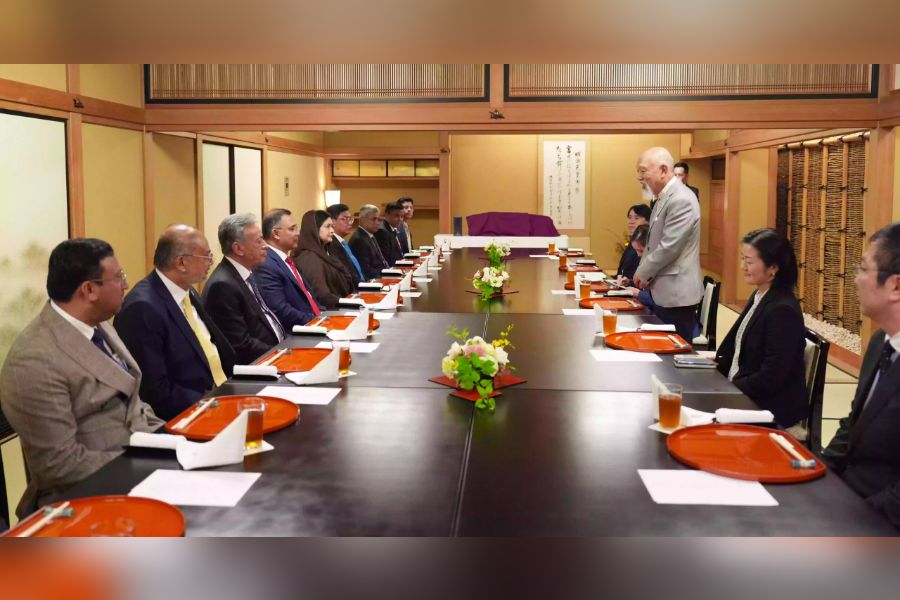
The issue was discussed at a dinner hosted in honour of the Prime Minister by Yohei Sasakawa, honorary chairman of the Nippon Foundation and the Sasakawa Peace Foundation, in Tokyo on Monday night.

“The discussions also covered possible cooperation in setting up a vaccine manufacturing plant in Bangladesh to help control infectious diseases,” Prime Minister’s Deputy Press Secretary Shahadat Hossain Shadhin said.

The dinner was held at Hanagasumi Restaurant at Meiji Kinenkan, he said.

Prime Minister’s wife Dr Zubaida Rahman also attended the dinner, reports UNB.

Finance and Planning Minister Amir Khosru Mahmud Chowdhury, Civil Aviation and Tourism Minister M Rashiduzzaman Millat, Prime Minister's Adviser on Finance and Planning Rashed Al Mahmud Titumir, State Minister for Foreign Affairs Humaiun Kobir, State Minister for Power, Energy and Mineral Resources Aninda Islam Amit, Prime Minister's Special Assistant for Overseas Employment in the Asia-Pacific Region Dr Md Shakirul Islam Khan and Protocol Officer-2 Kamrul Islam were present.

Nippon Foundation Executive Director Takashi Arikawa and other senior officials also attended the dinner.

During the dinner, Tarique Rahman recalled his meeting with Sasakawa in Dhaka in September and thanked him for his long-standing contributions to humanitarian assistance, education and public health sectors in Bangladesh.

Sasakawa paid a courtesy call on the Prime Minister during his visit to Bangladesh in September.​
 

PM’s Japan visit to renew investment ties, recover lost opportunities: Humaiun


1793061126321.webp


Prime Minister Tarique Rahman’s visit to Japan offers an opportunity to recover business and investment opportunities missed over the past 15 years and build a renewed bilateral partnership based on transparency, accountability and sustainable investment.

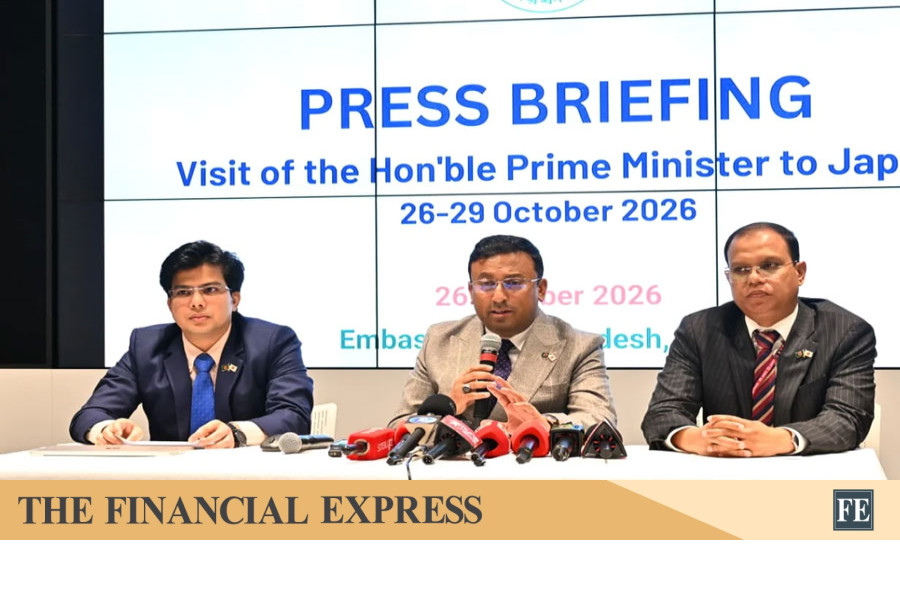
“A trust deficit and corruption had hindered bilateral relations and business opportunities under the previous Sheikh Hasina government, while the country’s democratic transition had opened the way for a renewed partnership with Japan,” State Minister for Foreign Affairs Humaiun Kobir said at a press briefing at the Bangladesh Embassy in Tokyo on Monday evening, marking the first day of the prime minister's four-day visit to Japan.

The state minister said, “Through this democratic transition, we want to build a relationship with Japan that has transparency, accountability and a sustainable, promising investment partnership.”

“Bangladesh no longer wants to move forward through dependency. It will now stand on its own feet and become a partner on the basis of investment,” he added.

The state minister said the visit had generated international interest in Bangladesh following the democratic transition after the August 5 uprising and the formation of an elected government.

He said the country’s foreign and economic policies and the activities of the new government had attracted interest from stakeholders in different parts of the world. He also pointed to interest among Japanese government officials and private-sector representatives in engaging with Bangladesh and exploring investment opportunities.

Describing the visit as an important milestone in Bangladesh-Japan relations, Kobir recalled that Shaheed President Ziaur Rahman visited Japan in 1978 and 1980, while former Prime Minister Khaleda Zia visited the country in 1994 and 2005.

He said the current visit offered an opportunity to carry forward the historical relationship and identify new areas of cooperation.

On the first day of the four-day state visit, Prime Minister Tarique Rahman held meetings with a high-level Japanese parliamentary delegation led by former Prime Minister Taro Aso, Marubeni Corporation Chairman Masumi Kakinoki and Japan International Cooperation Agency (JICA) President Dr Akihiko Tanaka.

The discussions covered strengthening bilateral relations, expanding trade and Japanese investment, technology transfer, skills development and cooperation in infrastructure and other development priorities.

During the meeting with Aso, the prime minister recalled their meeting in Japan in 2006 and acknowledged Aso’s contribution to strengthening bilateral relations. He also invited Aso to visit Bangladesh again, Kobir said.

At the meeting with Kakinoki, discussions covered expanding trade and investment, implementing the Economic Partnership Agreement (EPA) signed in February, and Japanese investment in information and communication technology, energy and advanced manufacturing.

The prime minister also discussed modernising Karnaphuli Fertilizer Company Limited and exploring the possibility of establishing a second fertiliser factory.

During the meeting with JICA President Tanaka, the Prime Minister discussed continued Japanese support for infrastructure and economic development projects, faster implementation of ongoing projects, and proposals for a Bangladesh-Japan Skills Partnership and a Technological Village and Innovation City. Agricultural modernisation, agro-processing, light engineering and energy security were also discussed.

Kobir said the meetings demonstrated the scope for expanding economic cooperation and creating new investment opportunities in Bangladesh.

The day’s final engagement was a dinner hosted in the prime minister’s honour by Nippon Foundation Chairman Yohei Sasakawa.

The state minister said the visit would continue with further engagements over the next three days, including bilateral talks between Tarique Rahman and Japanese Prime Minister Sanae Takaichi on Tuesday.

“Through this visit, we want to build a relationship that is based on transparency, accountability and a sustainable investment partnership,” Kobir said, expressing hope that the engagement would help Bangladesh and Japan advance their relations on the basis of mutual interests.

Prime Minister’s Additional Press Secretary Atikur Rahman Rumon, Deputy Press Secretary Shahadat Shadhin, members of the Prime Minister’s Press Wing and senior officials of the Bangladesh Embassy in Tokyo were present at the press briefing.​
 

Tarique urges Japan to invest in ICT, renewable energy, advanced manufacturing


1793061935928.webp


Prime Minister Tarique Rahman on Monday called for increased Japanese investment in Bangladesh’s promising sectors, including information and communication technology (ICT), renewable energy and advanced manufacturing, saying there are significant opportunities for investment in these sectors through foreign direct investment (FDI) and public-private partnerships (PPP).

He made the call when Masumi Kakinoki, chairman of Marubeni Corporation and the Japan-Bangladesh Committee for Commercial and Economic Cooperation (JBCCEC), met him at the Imperial Hotel in Tokyo at 3:45pm local time, said Prime Minister’s Deputy Press Secretary Shahadat Hossain Shadhin.

During the meeting, the Prime Minister underscored the need for strengthening the Bangladesh-Japan economic partnership, according to a UNB report.

He said the government is committed to creating an investment-friendly environment and is working to expand opportunities for Japanese businesses through regulatory reforms, simplified investment approval procedures and stronger public-private partnerships.

Kakinoki expressed hope that effective implementation of the Economic Partnership Agreement (EPA) between Bangladesh and Japan will help expand bilateral trade, increase Japanese investment and create new business opportunities between the two countries.

Tarique Rahman also sought Japanese cooperation to modernise the Karnaphuli Fertiliser Company Limited (KAFCO) and assess the feasibility of setting up a second fertiliser plant in Bangladesh.

He also sought the support of the JBCCEC and Marubeni Corporation for the development of the Bangladesh Special Economic Zone (BSEZ).

The Prime Minister praised Kakinoki’s leadership in strengthening trade and economic cooperation between Bangladesh and Japan and thanked him for his role in expanding Japanese investment in Bangladesh and improving business ties between the two countries.

Finance and Planning Minister Amir Khosru Mahmud Chowdhury, Civil Aviation and Tourism Minister M Rashiduzzaman Millat, Prime Minister’s Adviser on Finance and Planning Rashed Al Mahmud Titumir, State Minister for Foreign Affairs-1 Humaiun Kobir, State Minister for Power, Energy and Mineral Resources Aninda Islam Amit, Prime Minister’s Adviser on Posts, Telecommunications, Information and Communication Technology and Science and Technology Rehan Asif Asad, Prime Minister’s Special Assistant for Overseas Employment Affairs in the Asia-Pacific Region Dr Md Shakirul Islam Khan, Bangladesh Bank Governor Md Mostaqur Rahman and Prime Minister’s Additional Press Secretary Atikur Rahman Rumon were present.

On October 11, a Marubeni delegation, led by its President and CEO Masayuki Omoto, met Tarique Rahman at the Prime Minister’s Office in Dhaka.

They discussed expanding Japanese investment in Bangladesh and cooperation in information technology, artificial intelligence, cybersecurity, fertiliser and energy sectors.

Earlier in the morning, the Prime Minister arrived in Tokyo on a four-day state visit, leading a 16-member high-level delegation.​
 
Back
Top